Yellow Leaves on Philodendron White Knight: Causes, Checks
Quick answer
On Philodendron White Knight, white section tip browning in dry air often appears before full yellowing from wet roots-check soil moisture at 3–5 cm depth and whether the burgundy node stays firm. First step: pause watering until the top layer dries and move to bright indirect light if the pot has stayed heavy.
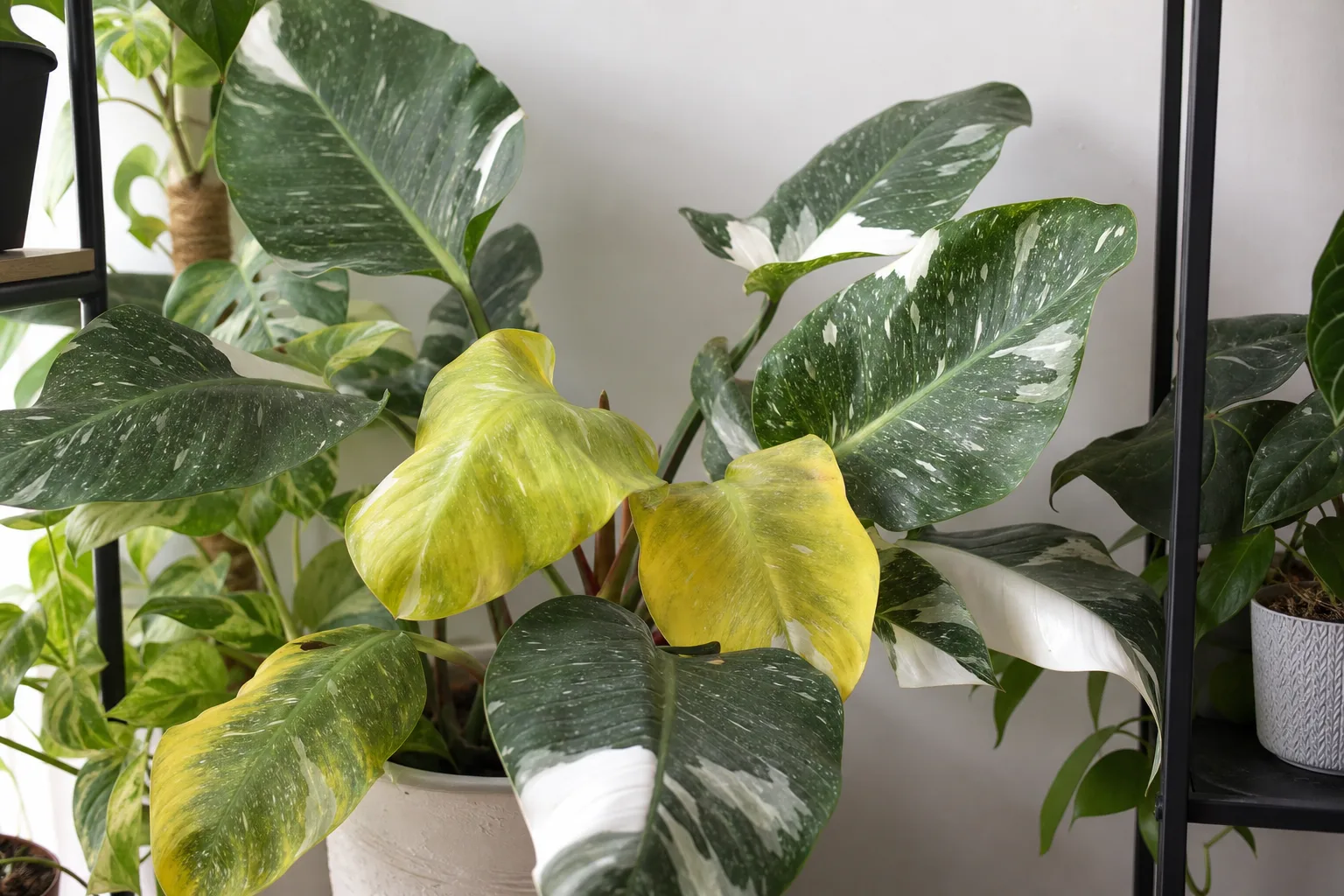
Yellow Leaves on Philodendron White Knight: Causes, Checks & Fixes
This guide covers yellow leaves on Philodendron White Knight. See also the general Yellow Leaves guide, watering, and light pages for this plant.
Yellow Leaves on Philodendron White Knight: Causes, Checks & Fixes
Quick answer
On Philodendron White Knight (Philodendron erubescens ‘White Knight’), yellow leaves are usually a root-zone or light mismatch, not random bad luck. White variegated tissue browns at tips in dry air before whole leaves yellow from wet roots-so check both humidity at leaf height and whether the top 3–5 cm of mix has dried.
First step: pause watering until the top 3–5 cm of mix is dry, and move the plant to bright indirect light if the pot has stayed heavy for days. Do not fertilize, repot, or prune heavily on day one.
Judge recovery by new growth, not old yellow blades. Spent yellow tissue rarely re-greens. Success means yellowing stops spreading and new leaves emerge with balanced green-and-white contrast on firm burgundy stems within two to four weeks after care stabilizes.
This page is the symptom entry for yellow foliage on White Knight. Confirmed wet-soil or mushy-root cases belong on our overwatering and root rot guides; dim-corner and variegation-fade patterns on not enough light; white tip browning without wet soil on low humidity. For full species context, see the White Knight overview.
Philodendron is toxic to cats and dogs if chewed-remove fallen yellow leaves from pet reach when you inspect the plant.
What yellow leaves look like on White Knight - pattern table
White Knight climbs on burgundy to purple-dark stems with sectoral white variegation. Yellowing follows patterns that point to different fixes:
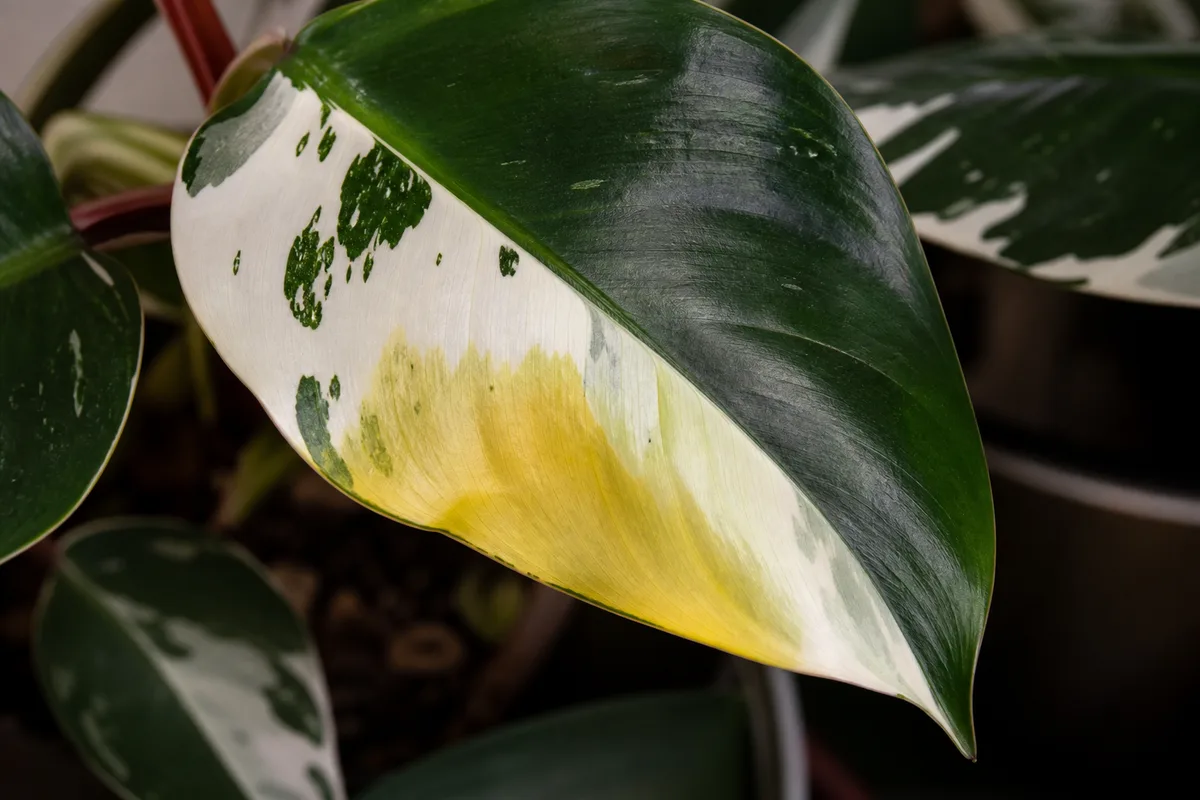
Yellow Leaves symptoms on Philodendron White Knight - compare with healthy tissue on the same plant.
| Pattern | What you see | Soil / pot | Burgundy node | Likely cause |
|---|---|---|---|---|
| Wet-soil yellowing | Lower, older leaves pale to solid yellow; growth stalls | Heavy pot; top stays damp for days | Firm at first; softens if rot advances | Overwatering or early root rot |
| Light-stress yellowing | Yellowing with long internodes, fading variegation toward green, lean toward window | May dry normally but plant looks washed out | Firm | Not enough light slowing water use |
| White-tissue humidity browning | Tips and margins on white sectors brown or tan; green tissue still glossy | Moderate moisture; roots firm | Firm | Low humidity - not systemic rot yet |
| Underwatering | Crisp brown edges on white sections; limp burgundy stems | Very light pot; dry 3–5 cm down | Firm | Underwatering |
| Sun scorch | Yellow-brown patches on white sectors facing the window | Normal weight | Firm | Too much direct sun on fragile white tissue |
| Spider mite stippling | Fine yellow dots on green tissue, not solid yellow leaves | Often dry-to-normal; webbing on undersides | Firm | Spider mites in dry warm air |
| Normal aging | One oldest leaf at base fades slowly over weeks | Normal dry-down between drinks | Firm; active spear healthy | Senescence - no fix needed |
| Nutrient misdiagnosis | Uniform pale yellow on many leaves after years in same peat | Normal moisture rhythm | Firm | Rare; rule out water and light first |
Decision shortcut: white tip browning + firm burgundy node + normal soil moisture → humidity or tap-water stress. White tip browning + soft node + sour wet soil → rot. Lower solid yellow + heavy wet pot → overwatering.
Why White Knight gets yellow leaves
The variegation–light–water trap
White Knight is a variegated climbing cultivar of Philodendron erubescens with heavily white sectoral leaves on burgundy stems. Variegated tissue photosynthesizes less than green tissue, so the plant uses water more slowly than solid-green philodendrons in the same pot. A watering rhythm that worked in summer can leave roots oxygen-starved by winter-especially when dim light keeps soil wet longer than the plant can use.
Philodendron erubescens prefers moist, well-drained soil-not constantly saturated mix. Overwatering can cause root rot and yellow foliage; on White Knight, wet soil with limp stems is the pattern to treat before fertilizer.
Low light compounds wet soil
Indoors, partial shade and bright filtered light suit Philodendron White Knight overview. Dim corners slow photosynthesis and water uptake. Soil that would dry in a brighter spot stays wet for days, and lower leaves yellow first while variegation fades toward green. Compare placement with our light guide before blaming nutrients.
White tissue fails before green tissue
White sectors lack chlorophyll and lose water faster in dry air. Chronic low humidity often browns or yellows white tips while green tissue stays healthy-a lookalike that does not need more water. Mostly-white leaves may yellow faster than balanced green-and-white leaves when any stress hits because they carry minimal photosynthetic tissue.
Underwatering, cold drafts, and pests
Underwatering yellowing pairs with a light pot, dry mix through the top 3–5 cm, and crisp edges on white sections. Cold drafts can yellow or blacken variegated margins suddenly without sour soil. Spider mites leave stippling on undersides in the same dry winter air that crisps white tissue-see our spider mites guide when dots and webbing appear, not solid lower yellowing on a heavy pot.
Fungus gnats as a wet-soil signal
If soil stays damp for days, fungus gnats often follow-they do not cause yellowing directly but confirm the root zone is too wet for too long.
How to confirm the cause
Work through this checklist in order before Philodendron White Knight repotting guide or fertilizing:
- Moisture depth - Probe 3–5 cm down. Wet for days after watering suggests overwatering; dusty dry throughout suggests underwatering.
- Pot weight and drainage - Heavy pot plus slow drainage holes points to saturated roots. Lift the pot; empty saucers after every drink.
- Light level - Long internodes, fading variegation, and lean toward the window suggest light stress overlapping yellowing. Bright indirect light should hold variegation without hot direct sun that scorches white sections.
- Newest growth - Clean new leaves with balanced variegation mean the problem may be aging; yellow spears or collapsed active growth mean act on roots and water now.
- Burgundy node texture - Firm stem at soil line is normal. Softening, sour smell, or collapse overlaps root rot-unpot the same day.
- White tissue vs. whole leaf - Tip browning only on white sectors with firm node and normal moisture points to low humidity; solid yellow lower leaves on wet soil do not.
- Root check if unsure - Unpot only when yellowing continues after correcting water and light, or when soil smells bad. Dull yellow leaves with brown soft roots indicate overwatering damage.
The first fix to try
Pick one path from your checklist. Do not stack repot, prune, fertilizer, and light moves the same day.
Wet-soil path (most common)
Stop watering until the top 3–5 cm dries. Move to brighter indirect light so the mix cycles moisture. If yellowing continues after one full dry-down cycle on firm roots, you are still in overwatering territory-adjust the top-layer dry rule before surgery.
Roughly 7–10 days between drinks in active growth and 10–14 days in winter works in many homes-but that is an estimate. Always confirm dryness at 3–5 cm depth; calendar watering fails on slow-growing variegated roots.
Confirmed root rot path
Unpot when mix smells sour, the burgundy node softens, or multiple leaves collapse on a heavy wet pot. Trim mushy roots to firm tissue, let cut surfaces air-dry briefly, and repot into fresh chunky aroid mix sized to the root ball. Full numbered steps live on the root rot page.
Light-stress path
If internodes stretch, variegation fades to mostly green, and soil dries normally, move to bright indirect light per our not enough light and light guides after moisture is stable. Do not blast stressed plants with direct sun-white sections burn first.
Humidity path for white tip browning
If only white sectors brown at tips, the burgundy node is firm, and soil moisture is moderate, raise humidity toward 55–70% at leaf height per the low-humidity guide before soaking the pot.
Step-by-step recovery
- Pause watering until the top 3–5 cm is dry; empty any saucer water.
- Relocate to bright indirect light if the plant was in a dim spot.
- Remove fully yellow leaves only after moisture stabilizes-do not heavy-prune a stressed plant before you know the cause.
- If yellowing continues after two dry-down cycles, unpot and check for mushy roots; trim and repot if needed.
- Resume watering only when the dryness check passes-follow the watering guide, not a rigid calendar.
- Judge recovery by new firm leaves with balanced green-and-white variegation on stiff burgundy stems, not old yellow tissue.
Recovery timeline
Mild yellowing from one overwatering episode or short dim-corner stress often stabilizes in 7–14 days after dry-down and brighter placement. If root rot was involved, expect three to six weeks before enough clean new foliage offsets older yellow leaves. Mostly-white leaves may drop sooner than balanced leaves under the same stress.
Signs you are winning:
- New leaves open with stable green-and-white contrast
- Burgundy node and stem stay firm at soil line
- Yellowing stops spreading up the vine
- Pot weight lightens predictably between drinks
Signs the problem is worsening:
- Active spear collapses on wet soil
- Sour smell returns within days of repotting
- Multiple leaves yellow in a week on a heavy pot
- Burgundy base softens while mix stays saturated
What not to do
- Do not water because leaves look limp when the pot is already wet-rotting roots cannot take up water even in damp mix.
- Do not fertilize a yellowing plant before checking moisture and roots.
- Do not repot repeatedly unless soil failure or rot is confirmed.
- Do not assume all yellow leaves mean overwatering-confirm dryness first.
- Do not expose stressed plants to direct sun to “fix” yellowing; direct sunlight should be avoided and scorches white sections first.
- Do not discard fallen yellow leaves within pet reach-philodendron contains calcium oxalate crystals toxic to cats and dogs.
How to prevent yellow leaves next time
- Water when the top 3–5 cm dries-wait until the top of the compost dries out before the next soak.
- Use chunky aroid mix with perlite and bark in a right-sized pot-not an oversized decorative container.
- Give bright indirect light so White Knight uses moisture at a steady rate and holds variegation.
- Maintain 55–70% RH near leaves in heating season when white tips brown before whole leaves yellow.
- Refresh tired mix every one to two years; reduce watering when the plant moves to cooler or dimmer conditions.
- Scout undersides weekly in dry months for mite stippling before patches spread.
When to worry
Act the same day when yellowing spreads fast, the burgundy node softens, soil smells sour, or the active spear collapses. Those signs overlap with root rot and need immediate unpotting-not another wait-and-see dry-down.
Slow yellowing of one or two bottom leaves on an otherwise healthy White Knight pushing clean new growth is lower urgency-likely normal aging on a climbing aroid.
Conclusion
Yellow leaves on Philodendron White Knight usually trace to wet roots, weak light, dry air on white tissue, or normal aging-not a missing nutrient. Use the pattern table, confirm moisture at 3–5 cm depth and burgundy-node firmness, then follow the matching first-fix path. Judge recovery by new variegated growth on firm stems, not by old yellow blades re-greening.
Related White Knight guides:
- Overview - species ID, burgundy stems, and general care hub
- Watering - top-layer dry rhythm and saucer discipline
- Overwatering - wet-soil stress before roots decay
- Root rot - soft burgundy node and mushy roots
- Not enough light - variegation fade and leggy growth
- Low humidity - white-tissue tip browning lookalike
- Underwatering - dry pot and crisp white edges
- Light - variegation maintenance without scorch
When to use this page vs other Philodendron White Knight guides
- Philodendron White Knight watering guide - Use for routine moisture checks before assuming yellow leaves is the main issue.
- Philodendron White Knight problems hub - Browse all 10 common issues on this species.
- Root Rot on Philodendron White Knight - Different entry point when symptoms overlap with yellow leaves.