Philodendron Pink Princess Light Needs: Best Window, Sun &
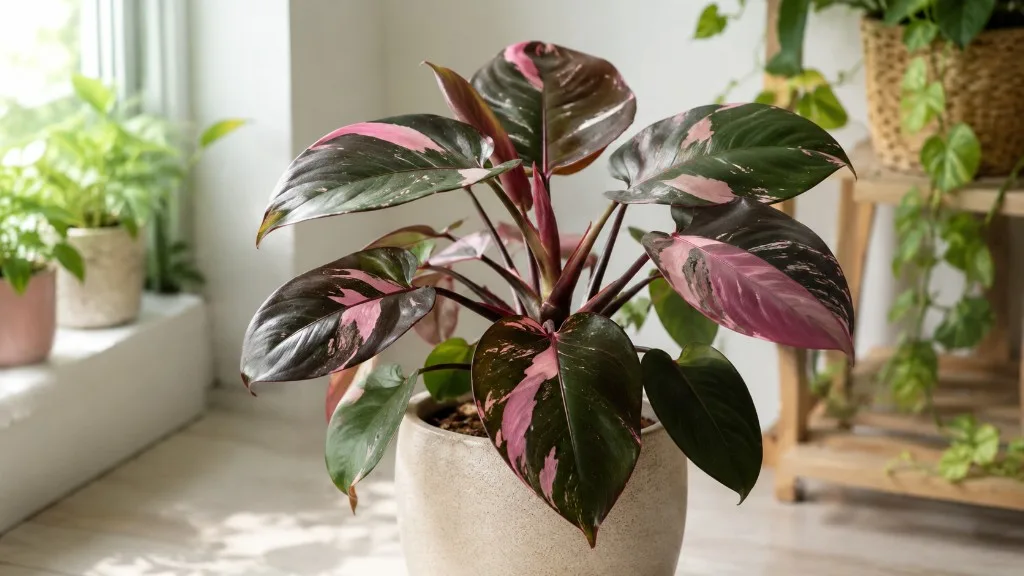
Philodendron Pink Princess Light Needs: Best Window, Sun & Warning Signs
Philodendron Pink Princess Light Needs: Best Window, Sun & Warning Signs
The fastest way to lose Pink Princess variegation is not underwatering - it is placing the pot where the room looks bright to you but the leaves receive weak plant-facing light for most of the day. Philodendron Pink Princess (Philodendron erubescens ‘Pink Princess’) is a variegated climbing philodendron where pink tissue carries little chlorophyll and cannot photosynthesize at the same rate as green sections. That biology makes light placement the primary control for pink balance, internode length, and whether new leaves emerge splashed or revert toward solid green.
Quick Answer
Give Pink Princess bright indirect light - roughly 400 to 1,000 foot-candles (about 4,000 to 10,000 lux) at the leaf surface for most of the day. An east-facing window with the pot 30–60 cm (12–24 inches) from the glass, or a filtered south or west window set back behind sheer fabric, is the safest default for most homes. NC State Extension lists Philodendron erubescens cultural conditions as partial shade and warns to avoid direct sunlight indoors. Judge success by newest-leaf variegation and internode length, not by how photogenic one older half-moon leaf looks. If natural light is weak from October through February, supplement with a full-spectrum LED grow light 30–45 cm (12–18 inches) above the canopy for 10–12 hours daily.
Why PPP Light Is Not About Room Brightness
A well-lit living room can still starve a moss-pole Pink Princess. Light falls off sharply with distance from glass, and climbing vines place their newest leaves above the window line where ambient brightness is lower than at the sill. A pot on a side table three metres from an east window may look fine to your eyes while the canopy receives low-light survival levels.
Plant-Facing Exposure vs Room Ambience
Run a simple shadow test on a clear day. Hold your hand between the plant and the window. A soft shadow with readable edges near the top leaves usually means bright indirect light. A faint or absent shadow means the plant is too far back or the window is too dim - common on north exposures and interior shelves. If pink sections feel warm within an hour of sun hitting them, exposure is too direct.
The new-growth test is more reliable than room aesthetics: compact nodes, firm leaf texture, and mixed pink-and-green color on the newest unfurling leaf mean today’s placement works. Long gaps between leaves, smaller new foliage, or consecutive all-green leaves mean plant-facing light is limiting growth - even if older leaves still look acceptable.
Best Light for Philodendron Pink Princess Indoors
Pink Princess is not a low-light philodendron. Iowa State Extension notes that philodendrons with brightly colored foliage need moderate to bright indirect light indoors, unlike heartleaf types that tolerate very dim corners. Clemson HGIC describes most philodendrons as preferring indirect or curtain-filtered sunlight - a useful baseline before you adjust for variegation.
For Pink Princess specifically, aim for enough brightness to keep mixed variegation on new growth without pushing pink tissue into scorch. Too little light triggers more green chlorophyll production and longer internodes; too much direct sun bleaches or browns pink sections first because pale cells lack pigments that deflect intense rays.
Foot-Candle Benchmarks for Variegated Erubescens
Indoor targets that match collector practice and extension-backed partial-shade guidance:
| Light level | Approximate foot-candles | What Pink Princess typically does |
|---|---|---|
| Too dim long-term | Below 200 FC | Leggy stretch, pink fade, consecutive green new leaves |
| Maintenance | 200–400 FC | Survives; slow growth; variegation often dulls |
| Target range | 400–1,000 FC | Firm new leaves; stable mixed pink on nodes |
| Too intense unfiltered | Above 2,000 FC at leaf surface | Pink patches bleach or crisp before green tissue |
These ranges are practical heuristics, not laboratory requirements. Your goal is consistent plant-facing brightness in the target band, then read the newest leaf.
Best Window Placement by Direction
Window direction changes both intensity and heat - critical for a cultivar where pink tissue fails before green. NParks Singapore notes that Philodendron ‘Pink Princess’ grows best under bright but indirect sunlight and that direct hot sun causes burn damage.
| Window | Typical indoor PPP outcome | Placement tip |
|---|---|---|
| East | Strong default: morning brightness plus steady indirect day | Moss pole top 30–60 cm from glass; rotate weekly |
| North | Often maintenance-only without supplemental light | Add grow light or accept slower growth and duller pink |
| West | High afternoon heat risk on pink tissue | Sheer curtain or 60–90 cm setback; watch summer scorch |
| South | Brightest; scorch risk without filtering | Sheer fabric or 60–120 cm back; never move here suddenly from a dim shop |
East, North, West, and South Windows Compared
East windows deliver the best balance for most Pink Princess setups: enough intensity to preserve variegation without the sustained heat load of afternoon sun. Place the top of the moss pole, not just the pot base, within roughly 30–60 cm of the glass so climbing new leaves stay in the light column.
North windows work only when the room receives reflected brightness or you add artificial light. Expect longer internodes and fading pink through winter unless you supplement.
West and south windows can support vigorous growth when filtered, but pink variegation scorches first. Use sheer curtains and increase distance before you increase duration of direct sun.
Climbing habit matters: a self-heading philodendron on a tabletop sits entirely in the window light cone. A moss-pole Pink Princess puts its growing tip higher and often closer to the glass - exactly where heat and intensity peak. Account for vine height, not pot position alone.
Can Pink Princess Take Direct Sun?
Limited early-morning direct sun through east glass is tolerable for many acclimated plants - think one to two hours when leaves were produced in similar brightness. NC State explicitly recommends avoiding direct sunlight for P. erubescens indoors, and Pink Princess pink sections fail faster than green under harsh rays.
Never move a plant straight from a dim nursery shelf to an unfiltered south or west sill. Leaves hardened in lower light lack the structural and pigment protection needed for strong beams. Warning signs of too much direct exposure include bleached pink patches, crisp brown edges on variegated tissue, leaf curl during peak hours, and sudden collapse after a relocation.
If you want brighter placement, follow the acclimation sequence below rather than accepting cosmetic damage as normal.
Low-Light Limits, Pink Fade, and Reversion
Low light is a poor long-term strategy for Pink Princess. The plant may persist for months on stored energy, but new leaves usually emerge smaller, greener, and farther apart. Pink splashing dulls because the plant prioritizes chlorophyll production where photosynthesis is possible.
Distinguish two problems growers conflate:
- Pink fade from insufficient light - overall variegation softens across several new leaves; internodes lengthen; fixing placement can improve the next leaves if nodes still carry pink streaks.
- Node-level reversion - a stem produces three or more consecutive all-green leaves while the node pattern has lost pink; light alone may not restore color on that runner. See our pruning guide for reversion cuts above the last variegated node.
A single spectacular half-moon leaf does not predict the next leaf color. Variegation stability follows stem nodes, not one photogenic leaf. Inspect the stem when buying - balanced color along several nodes beats a cheap cutting with one pink leaf and a green growth point.
When Light Change Helps vs When Pruning Is Needed
Try brighter, filtered placement first when pink is fading but stems still show pink mottling at nodes and internodes are only slightly elongated. Wait for two to three new leaves before deciding.
Reach for pruners when a stem segment has clearly reverted all-green while other variegated stems remain - light cannot rewrite node genetics on that runner. Link leggy all-green stretch to our leggy growth guide and chronic dim conditions to not enough light.
Do not confuse Pink Congo or painted scams with light-related fade. Pink Congo produces fully pink leaves that are unstable; Pink Princess carries dark green bases with pink splashes. If entire leaves are uniform hot pink without green, question the plant identity before adjusting light.
Using Grow Lights for Philodendron Pink Princess
When window light is weak - especially north rooms and short winter days - a full-spectrum LED is the most reliable fix. Clemson HGIC indoor light guidance groups philodendrons among houseplants that benefit from adequate light near appropriate windows; grow lights extend that when geography or building orientation fails.
Hours, Distance, and Heat Monitoring
Practical starting points for a single moss-pole pot:
- Duration: 10–12 hours daily on a timer
- Distance: 30–45 cm (12–18 inches) from the top leaves for typical household LED grow lamps
- Heat check: if the canopy feels warm to touch after two hours, raise the fixture or reduce intensity
- Coverage: angle the lamp toward the growing tip, not only the base foliage
Grow lights should deliver steady plant-facing brightness in the 400–1,000 foot-candle target band without replacing the need to watch new leaves. Combine a modest east window with a supplemental lamp through winter if the vine stretches despite open curtains.
How to Move or Acclimate PPP Safely
Sudden jumps in exposure cause scorch, leaf drop, or stalled growth - especially on pink tissue. Use incremental moves over 10–14 days:
- Days 1–3: Shift the pot 30 cm closer to the target window during morning hours only; return to the previous spot for harsh afternoon sun if needed.
- Days 4–7: Leave the plant in the brighter position full-time behind sheer curtain if west or south.
- Days 8–10: Remove one layer of filtering or move 15–30 cm closer if no bleaching appears on new growth.
- Days 11–14: Set final position; stop adjusting water and fertilizer until a new leaf unfurls.
Worked example: A Pink Princess on a moss pole sits 2 metres from an east window with fading pink and 10 cm internodes. You move it to 45 cm from the glass using the schedule above. At day 12, a new leaf opens with dark green base and clean pink splashes and shorter internodes - light placement confirmed. If pink bleaches instead, pull back 30 cm and repeat more slowly.
Change one variable at a time. Do not simultaneously repot, fertilize heavily, and jump to a south sill.
Warning Signs: Too Much vs Too Little Light
| Symptom | Likely cause | First response |
|---|---|---|
| Long internodes, small new leaves, dulling pink | Too little plant-facing light | Move closer or add grow light; check moss pole height |
| Three or more all-green new leaves on one stem | Low light and/or node reversion | Improve light; prune reverted runner per pruning guide |
| Bleached pink patches, crisp variegated edges | Too much direct sun or heat | Filter window or increase distance |
| Sudden leaf curl at midday | Heat + intensity spike | Sheer curtain; move back 30–60 cm |
| Old leaf scars unchanged but new growth healthy | Past damage only | Keep current placement; do not overcorrect |
Judge by new growth after any move, not old blemishes from a previous location.
Light Changes Watering - What to Adjust
Light and water move together. A Pink Princess in brighter exposure transpires faster and dries its mix sooner. After you increase light, revisit the top 3–5 cm dry checkpoint from our watering guide rather than keeping the old calendar.
If you move dimmer to slow a scorch issue, extend the dry window - roots consume less oxygen demand when photosynthesis drops, and soggy mix in low light invites rot. Pair light corrections with the soil mix that drains fast enough for the new dry-down rhythm.
Do not compensate for pink fade with fertilizer. Color stability follows light and node genetics first.
Know Your Plant: Variegated Climbing P. erubescens
Philodendron Pink Princess is a cultivated form of Philodendron erubescens, a climbing tropical perennial native to Colombia. Indoors, the species typically reaches about 3 feet tall and 16 inches wide - though a supported moss pole vine can present taller. NC State lists ‘Pink Princess’ as an upright, vining cultivar with dark purplish-green leaves and pink variegation.
Pink sections photosynthesize poorly relative to green tissue, so the plant cannot sustain all-pink leaves indefinitely - balanced splashes across nodes are healthier than chasing fully pink foliage. Support the stem on a moss pole so leaves stay oriented toward your light source instead of sprawling into shade.
Pet and human safety: NC State documents low-severity oxalate poisoning for cats, dogs, and children, plus contact dermatitis from sap. Clemson HGIC confirms philodendron parts contain calcium oxalate crystals that irritate mouth tissue if chewed. Keep Pink Princess away from pets and curious toddlers; wear gloves if sap sensitivity affects your skin.
Seasonal Light Adjustments
Day length and sun angle shift placement needs without any care change from you. Late autumn through winter, north and east rooms lose intensity - leggy stretch or pink dulling often appears even when summer placement seemed perfect. Add a grow light or move the vine 15–30 cm closer temporarily, then revisit in spring.
Late spring through summer, west and south glass gains heat. A spot that was safe in March may scorch pink tissue by July. Add sheer filtering or pull the pot back before leaves bleach.
Rotate the moss pole a quarter turn weekly so one side does not dominate growth toward the glass. Rotation manages shape; it does not fix a fundamentally dim room - relocate or supplement instead.
Common Pink Princess Light Mistakes
- Judging by room brightness instead of shadow test at the top leaves
- Chasing one half-moon leaf while the stem nodes are mostly green
- Moving straight from shop dim shelf to unfiltered south glass
- Ignoring moss pole height - the tip, not the pot, must sit in the light column
- Fertilizing when pink fades instead of increasing filtered brightness
- Confusing Pink Congo or painted plants with true PPP variegation patterns
- Changing light, water, pot, and fertilizer the same week - impossible diagnosis
For cluster context, see the overview guide, propagation for variegated cuttings, and pruning when reverted stems need removal.
Conclusion
Philodendron Pink Princess light success is variegation-aware placement: bright indirect exposure at the top leaves, east or filtered south/west windows for most homes, 10–12 hour grow-light supplementation when winter or north exposures fall short, and gradual acclimation that protects pink tissue. Read new growth for pink balance and internode length; distinguish temporary pink fade from node reversion that needs pruning. When you increase light, tighten the watering rhythm; when you filter harsh sun, expect slower dry-down. Get placement right first - fertilizer and scissors cannot replace photons on a variegated climber.
When to use this page vs other Philodendron Pink Princess guides
- Philodendron Pink Princess overview - Start here for whole-plant context before deep-diving this topic.
- Philodendron Pink Princess problems hub - Jump to symptom-specific fix guides when this care topic does not resolve the issue.
- Leggy Growth on Philodendron Pink Princess - Escalate here when light adjustments are not enough.