Philodendron Pink Princess Fertilizer: When, How
Philodendron Pink Princess Fertilizer: When, How, and Mistakes
Philodendron Pink Princess Fertilizer: When, How, and Mistakes
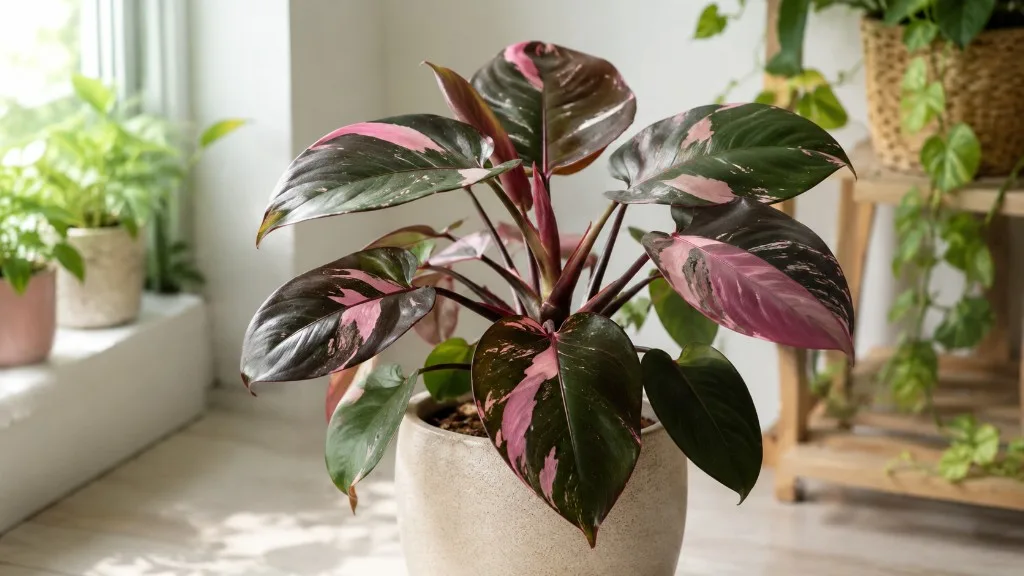
Philodendron Pink Princess fertilizer is not a generic philodendron feeding schedule with a cultivar name pasted in. Philodendron erubescens ‘Pink Princess’ is a single variegated climbing cultivar whose pink splashes contain far less chlorophyll than the dark green tissue beside them - which means the plant photosynthesizes through a smaller effective leaf area, grows more slowly than all-green P. erubescens, and shows green reversion on new leaves when excess nitrogen pushes chlorophyll production faster than the chimeric pink cells can compete. Feed Pink Princess like a heavy nitrogen vine and you often get lush all-green new growth; feed too little in depleted mix and variegation dulls from general weakness rather than reversion. The sweet spot is conservative, balanced, half-strength liquid feeding during active growth, timed to moist soil and matched to what you see on the newest leaves, not guilt about the calendar.
The practical default for most indoor Pink Princess: a complete water-soluble houseplant formula - balanced 10-10-10 or 20-20-20, or foliage-weighted 9-3-6 - mixed to half the label’s houseplant rate, applied every four to six weeks from mid-spring through early fall while the vine is unfurling new leaves, with plain-water leaching when white salt crust appears. Pause entirely from late fall through winter unless strong grow lights keep active growth going. Never feed dry soil, stressed plants, or roots fresh from repotting. Do not chase “fuller growth” with high-nitrogen formulas - on this cultivar, that often trades pink for green.
This guide covers variegation-linked feeding biology, a quick-reference card, seasonal timing, N-P-K choice, worked dilution math, flush recovery, small-pot salt dynamics for vining PPP, and how feeding connects to light, watering, and pruning for pink stability.
Reviewed by the LeafyPixels Review Board. Methodology: recommendations checked against NC State P. erubescens profile, Iowa State philodendron and fertilizer-rate guidance, UF/IFAS container-nutrient publications, NDSU Extension variegation notes, and LeafyPixels plant-care data before publication.
Why Fertilizer Matters for Variegated Pink Princess
Container-grown Pink Princess cannot access the nutrient cycling of Colombian forest debris on a tree trunk. UF/IFAS notes that plants in potting media must receive supplemental nutrients in liquid or granular form because substrates hold limited soluble nutrition that watering leaches over months. Without replacement, older leaves may hold color while new growth stalls, leaves shrink, and pink sectors look washed out - symptoms that overlap with low light and underwatering, so always rule those out before assuming hunger.
Fertilizer is maintenance for an actively growing variegated vine, not a shortcut to brighter pink. Anthocyanin pigment in pink sectors responds primarily to light quality and genetics at the node, not “pink booster” products. Nutrients support the green tissue that powers the whole leaf - including the pink sections that cannot photosynthesize efficiently on their own. Underfeeding weakens that engine; overfeeding with nitrogen supercharges green cell division and can reduce pink expression on successive new leaves. That tradeoff is the central Pink Princess feeding problem generic philodendron pages skip.
PPP Biology: Pink Variegation, Chlorophyll, and Vining Growth
Philodendron erubescens ‘Pink Princess’ is a cultivated chimeric form - not a separate species - bred for dark purplish-green leaves splashed with pink variegation. NC State Extension lists ‘Pink Princess’ as an upright, vining cultivar of red-leaf philodendron, typically reaching about 3 feet tall and 16 inches wide indoors with bright filtered light and support. The same profile documents ‘Pink Princess’ alongside other P. erubescens cultivars such as ‘Burgundy’ and ‘Black Cardinal’, underscoring that you are feeding one named cultivar, not a group of “Pink Princess species.”
Pink Princess climbs like other vining philodendrons: it extends stems, produces aerial roots, and benefits from a moss pole so leaves stay oriented toward your light source rather than sprawling into shade. Vining growth in a small nursery pot concentrates fertilizer salts in a limited soil volume faster than a self-heading philodendron in a wide floor container - another reason conservative dosing matters on collector-sized PPP.
Why Pink Sections Cannot Feed the Plant Alone
NDSU Extension explains that plant tissue is green because it contains chlorophyll, the pigment used in photosynthesis, and that white or pale leaf tissue does not produce food for the plant - the rest of the plant must work harder to support variegated sections. On Pink Princess, large pink splashes are visually striking but photosynthetically weak relative to dark green tissue. An all-pink or nearly all-pink leaf cannot sustain itself long-term; balanced mottling across nodes is healthier than chasing fully pink foliage.
That biology shapes feeding: you are supporting green engine tissue without stimulating so much nitrogen-driven chlorophyll production that green cells outcompete pink cells at the growing tip - the pattern collectors call reversion. Peer-reviewed work on chimeric variegation in other species documents that excess nitrogen fertilization can shift variegated tissue toward solid green by increasing chlorophyll in cells that retain photosynthetic capacity. Pink Princess shows the same practical outcome indoors: heavy nitrogen feeds often produce successive dark-green new leaves even when light is adequate.
Quick-Reference Feeding Card
| Factor | Pink Princess default |
|---|---|
| Formula | Complete water-soluble: balanced 10-10-10 or 20-20-20, or foliage-weighted 9-3-6 |
| Strength | Half the label’s houseplant rate (Iowa State fertilizer guidance) |
| Frequency | Every 4–6 weeks during active spring–summer growth; every 6–8 weeks in lean, fast-draining aroid mix or small pots that salt quickly |
| Soil rule | Apply only to evenly moist mix - never dry (Iowa State philodendron guide) |
| Winter | Pause late fall through early spring unless grow lights keep new leaves forming |
| After repot | Hold 4–6 weeks (UF/IFAS newly repotted guidance) |
| Salt warning | White crust, brown new-leaf tips → flush and pause feeding |
| Variegation rule | Avoid high-nitrogen lawn or “super green” formulas; balanced beats nitrogen-heavy |
When to Fertilize Pink Princess: Active Growth vs Rest
Feed when Pink Princess is metabolically active - pushing new leaves, extending stems, and drying its pot on your normal watering rhythm. Skip feeding when growth stalls, roots are damaged, or the plant is adjusting to a new environment. Iowa State Extension recommends fertilizing philodendrons lightly once or twice a month while actively growing in spring and summer with a balanced all-purpose fertilizer - useful as an upper bound if you stay at half strength and watch for salt crust.
Spring and Summer Feeding Window
From March through September in most temperate indoor homes, Pink Princess typically produces the year’s best variegated leaves when light and warmth align. Resume or increase feeding when you see firm new growth after winter - not merely because the calendar flipped. First feed of the season can wait until the top 3–5 cm of mix dry on your normal schedule and a new leaf is visibly expanding.
| Month | Typical indoor action |
|---|---|
| March–April | Resume half-strength feed when new growth appears; one feed per 4–6 weeks |
| May–August | Peak growth - maintain 4–6 week interval; leach if crust forms |
| September | Last regular feed for most setups; taper if growth slows early |
Plants under strong supplemental grow lights that produce new leaves all winter may need light half-strength feeding every 6–8 weeks through the cold months - but only while new foliage keeps forming and no salt symptoms appear.
Fall Taper and Winter Pause
Cut back as day length shortens and room temperatures drop. From late October through February, most Pink Princess vines slow root and leaf production even when old leaves look fine. Unused fertilizer accumulates as soluble salts that University of Maryland Extension links to brown leaf tips, reduced growth, lower leaf drop, and white crust on the potting surface. Dormant or near-dormant plants cannot process nitrogen efficiently; an idle winter feed mainly prepares green tissue to dominate the next spring flush - the opposite of variegation preservation.
Best Fertilizer Type and N-P-K for Pink Princess
The best Pink Princess fertilizer for most homes is a complete water-soluble houseplant formula with macronutrients and micronutrients on the label - iron, magnesium, and manganese matter because pale new growth on an otherwise well-watered plant sometimes traces to trace-element gaps in year-old peat mix rather than nitrogen hunger. Clemson HGIC advises fertilizing philodendrons regularly with a dilute water-soluble houseplant fertilizer, or using time-release products with awareness of salt buildup in small pots.
Liquid water-soluble formulas give the most control for collector-sized containers: you mix, dilute, and apply a known dose to moist soil. Slow-release granules can work in large floor pots but release unpredictably in 10–15 cm nursery pots common for young PPP; if slow-release is already mixed into fresh repotting media, skip overlapping liquid feeds for two to three months.
Balanced Formulas and the Variegation Caution
N-P-K numbers report percentages of nitrogen, phosphate, and potash by weight. For Pink Princess, prioritize balanced or foliage-weighted ratios at half strength over high-nitrogen “green growth” products:
- Balanced 10-10-10 or 20-20-20 - simple, widely available; safe at half strength during active growth
- Foliage-weighted 9-3-6 or 3-1-2 - aligns closer with foliage vine metabolism without pushing excess phosphorus
- Avoid high-nitrogen formulas (e.g., 30-10-10 lawn-type products) - nitrogen drives chlorophyll production; on variegated PPP, that often means greener new leaves and less pink splashing, especially combined with good light where green cells already hold a photosynthetic advantage
This is the corrected guidance where older template FAQs wrongly recommended “slightly higher nitrogen for fuller growth.” Fuller green growth is exactly what variegation-conscious collectors often do not want. If you want larger leaves, improve light and support on a moss pole first; use balanced nutrients second.
Skip high-phosphorus bloom boosters - Pink Princess is grown for variegated foliage, not indoor flowers. Skip routine foliar feeding: nutrients applied to leaves deliver a fraction of what roots absorb under home conditions, with burn risk on pink tissue that scorches easily. Organic options like diluted fish emulsion work at half strength or weaker if odor is acceptable indoors.
How Much and How Often: Dilution Math
If you remember one number for Pink Princess, make it half strength - never full label strength on container-grown variegated philodendrons unless you leach salts regularly and know your water chemistry. Iowa State Extension instructs home growers to mix general all-purpose fertilizers at half or quarter the strength outlined on instructions because houseplants grow slower than the outdoor plants label rates assume.
Worked example: Your bottle’s houseplant directions say 1 teaspoon of 10-10-10 concentrate per gallon of water. For Pink Princess, use ½ teaspoon per gallon. Mix in a watering can with a narrow spout; measure with a kitchen teaspoon or syringe. Water the day before if mix is dry, then pour the solution over moist soil until a little drains from the bottom; discard saucer water within 30 minutes.
Frequency reconciliation: Monthly feeding at half strength (roughly every 4 weeks) suits PPP in bright light on a moss pole with fresh, not overly lean mix. Every 6–8 weeks fits small pots in fast-draining chunky aroid mix, recently repotted plants, or setups that accumulate salt quickly - the two schedules are not contradictions; they reflect pot size, mix leanness, and observed salt symptoms. When in doubt, feed less and watch the next two new leaves for tip burn or green reversion before increasing.
Step-by-Step: How to Feed Pink Princess Safely
- Check the calendar and the plant. Confirm it is active growth season (or grow-light winter exception) and the plant is not wilted, dropping leaves, or within 4–6 weeks of repotting (UF/IFAS EP150).
- Inspect soil moisture. If the top 3–5 cm are dry, water with plain water first and feed the next day - Iowa State emphasizes moist, not soggy, evenly moist culture; fertilizer on dry roots burns.
- Mix half-strength solution per label houseplant rate in a clean watering can.
- Apply to soil surface, avoiding splashing concentrate on pink leaf tissue.
- Allow slight drainage from the pot bottom; empty the saucer.
- Log the date and watch the next unfurling leaf for color balance and tip health over 2–3 weeks before the next feed.
If white salt crust already rims the pot or soil surface, skip this cycle and flush per the section below instead of stacking another dose.
Signs Your Pink Princess Is Well Fed
Well-fed Pink Princess - given adequate light and water - shows steady but not explosive growth: new leaves open at a size consistent with recent leaves, dark green bases retain pink splashes or streaks at nodes that already carried variegation, petioles stay firm, and the soil surface stays free of white crystalline crust. Stems extend at moderate internode length rather than stretching pale and thin.
Fertilizer success on this cultivar is measured by variegation stability on successive new leaves, not sheer biomass. A dark, fast-growing all-green runner after feeding changes is a signal to dilute further, extend the interval, and review nitrogen source - not to feed again hoping color returns without fixing the dose.
Over-Fertilizing, Salt Buildup, and Variegation Stress
Over-fertilizing is among the most common preventable mistakes on container philodendrons. University of Maryland Extension lists excessive or frequent fertilizer use as a primary cause of high soluble salts, with symptoms including browning or dieback of leaf tips and margins, reduced growth, lower leaf drop, wilting despite wet soil, and white crust on the potting media surface - especially when bottom watering concentrates salts at the top.
On Pink Princess, watch the newest unfurling leaf first: thin texture, brown crispy margins on pink sectors, or sudden all-green color on a node that previously produced mottled leaves can follow heavy feeding even when older leaves look unchanged. Clemson HGIC notes that too much fertilizer can cause tips of leaves to curl and brown on philodendrons - the same symptom class salt burn produces on variegated tissue.
Slow growth with pale overall color can mean under-feeding - but on PPP, pale, washed-out pink with long internodes usually traces to insufficient light first. Fix placement per our light guide before increasing fertilizer.
How to Flush PPP After Over-Feeding
When salt crust appears or new leaves show tip burn after feeding, stop fertilizer immediately and leach the pot:
- Place the pot in a sink or tub.
- Irrigate with plain room-temperature water until it runs freely from drainage holes.
- Repeat two to three times, using a total water volume at least equal to the pot size (University of Maryland Extension).
- Let the plant drain completely; keep saucers empty.
- Pause all feeding for 4–6 weeks while new roots and leaves recover.
- Resume at half strength only when the next leaf opens clean - no crust, no progressive tip browning.
Badly scorched leaves will not heal; judge recovery by the second leaf after the flush pause. If crust returns within one month in a small pot, extend the interval to 6–8 weeks or repot into fresh mix per our repotting guide.
Repotting, Propagation, and Small-Pot Adjustments
Newly repotted Pink Princess should not receive fertilizer until roots re-establish. UF/IFAS guidance on newly repotted plants recommends holding fertilizer while roots recover from disturbance - typically four to six weeks for philodendrons in fresh mix, which often already contains starter nutrients.
Propagation cuttings rooting in water or moss should not get liquid fertilizer until they are potted and showing new growth - feeding unrooted or barely rooted tissue concentrates salts with nowhere to go. See our propagation guide for timing.
Small vining PPP in 10–15 cm pots salts faster because total soil volume is low and watering frequency is often high relative to pot size. Treat these as lean feeders: 6–8 week intervals, half strength, and proactive flushing every 2–3 months if your tap water is mineral-heavy. Cache pots without drainage hide salt accumulation at the inner pot rim - lift the nursery pot and check the soil lip, not only the decorative outer shell.
Fertilizer, Light, and Pruning for Variegation
Nutrients, light, and node genetics interact on Pink Princess - but light is the primary driver of variegation expression; fertilizer only supports healthy green tissue that powers the whole plant. Do not compensate for pink fade with nitrogen. If new leaves green out while light is dim, move the plant or add a grow light per our light guide before adjusting feed.
When a stem produces three or more consecutive all-green leaves after heavy feeding, treat it as possible node-level reversion, not a dose you can fix with more fertilizer. Improve light, then prune above the last visibly variegated node per our pruning guide so the plant redirects energy to variegated runners.
For the full care picture - placement, humidity, moss pole setup - start with the Pink Princess overview. Pair feeding with the soil mix that drains fast enough for your watering rhythm; soggy mix plus fertilizer accelerates root damage faster than either alone.
Pet note: Philodendron contains calcium oxalate crystals that irritate mouths if chewed. Keep fertilizer bottles and plants out of reach of pets and children; wear gloves if sap sensitivity affects your skin when handling cut stems.
Common Pink Princess Fertilizer Mistakes
Using high-nitrogen fertilizer for “fuller leaves.” On this cultivar, fuller often means greener, not pinker. Use balanced formulas at half strength.
Feeding every watering. Constant low-dose fertilizer builds salts faster than PPP uses them in small pots - especially variegated leaves that grow more slowly.
Applying to dry soil. Always moisten first; root burn shows on the next leaf’s pink margins within days.
Ignoring white crust. Crust is a visible salt alarm, not cosmetic dust. Flush and pause.
Feeding immediately after repot or propagation. Fresh mix and wounded roots need time; UF/IFAS withholding prevents burn on recovering root tips.
Chasing pink with specialty “variegation boosters.” No fertilizer replaces adequate light or stable node genetics; high-phosphorus gimmicks often add salts without improving pink anthocyanin expression.
Winter feeding on autopilot. Short days slow metabolism; salts accumulate while the plant cannot use them.
Conclusion
Philodendron Pink Princess rewards patient, balanced feeding tied to active growth - not calendar guilt and not nitrogen pushes borrowed from all-green vine advice. Use half-strength balanced or foliage-weighted liquid fertilizer every four to six weeks in spring and summer, apply only to moist soil, pause through winter, and flush when salt crust or tip burn appears. Watch successive new leaves: stable pink-and-green mottling on nodes that already variegated means your routine fits; consecutive dark-green new growth after feeding means dial back nitrogen and interval, fix light if needed, and prune reverted runners before they dominate the pot. When in doubt on this cultivar, less fertilizer beats more - Pink Princess tolerates a skipped month far better than a salt-burned root zone or a green reversion you cannot unfurl backward.
When to use this page vs other Philodendron Pink Princess guides
- Philodendron Pink Princess overview - Start here for whole-plant context before deep-diving this topic.
- Philodendron Pink Princess problems hub - Jump to symptom-specific fix guides when this care topic does not resolve the issue.