Leggy Growth on Philodendron Pink Princess: Causes, Checks
Quick answer
Leggy growth on Pink Princess is usually etiolation from low light. First fix: move it to brighter indirect light and support the vine; old stretched internodes will not shorten, so prune only after compact new growth resumes.
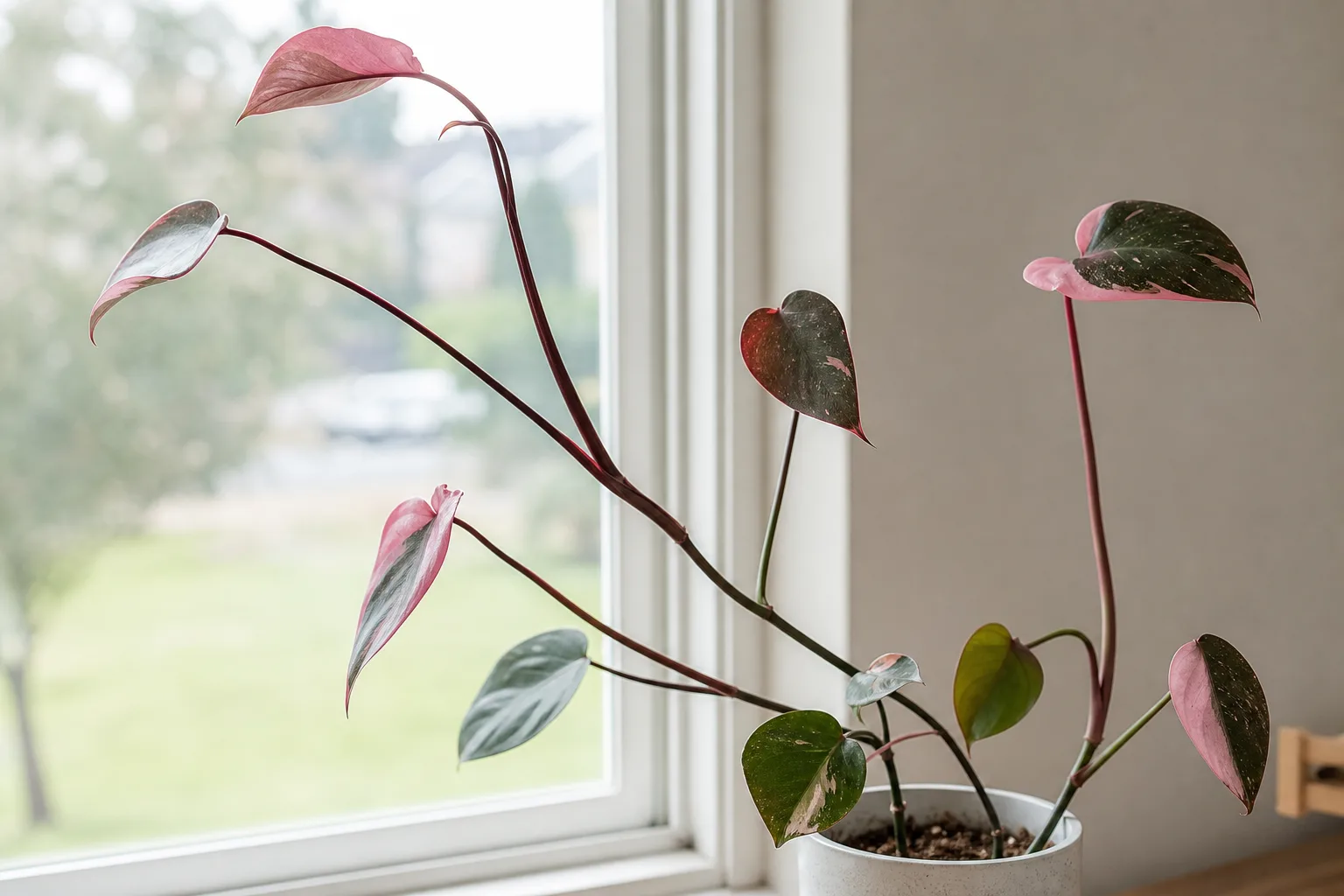
Leggy Growth on Philodendron Pink Princess: Causes, Checks & Fixes
This guide covers leggy growth on Philodendron Pink Princess. See also the general Leggy Growth guide, watering, and light pages for this plant.
Leggy Growth on Philodendron Pink Princess: Causes, Checks & Fixes
Quick answer
Leggy Pink Princess growth is usually etiolation: the plant stretches internodes to reach stronger light. The first fix is simple: move to brighter indirect light and give the vine support. Extension guidance for indoor plants notes that low light causes spindly, lanky growth and longer spacing between leaves, and improving light is the corrective step (University of Maryland Extension; University of Minnesota Extension).
For this cultivar, reduced pink in new leaves often happens alongside legginess because less-green tissue has lower photosynthetic capacity. Pink Princess is still a climbing Philodendron erubescens type and needs bright indirect exposure plus a structure to climb for compact growth (NC State Extension Plant Toolbox; RHS).
Use this page vs similar Pink Princess issues
Use this page when the main symptom is long internodes and stretched vine sections.
If your main issue is general dim-room decline, also check not-enough-light.
If stems are thin and weak without obvious internode stretch, also review thin-stems.
If the plant is mostly leaning but internodes are still tight, compare with plant-leaning.
What leggy growth looks like on Pink Princess
Look for this pattern together, not one symptom alone:
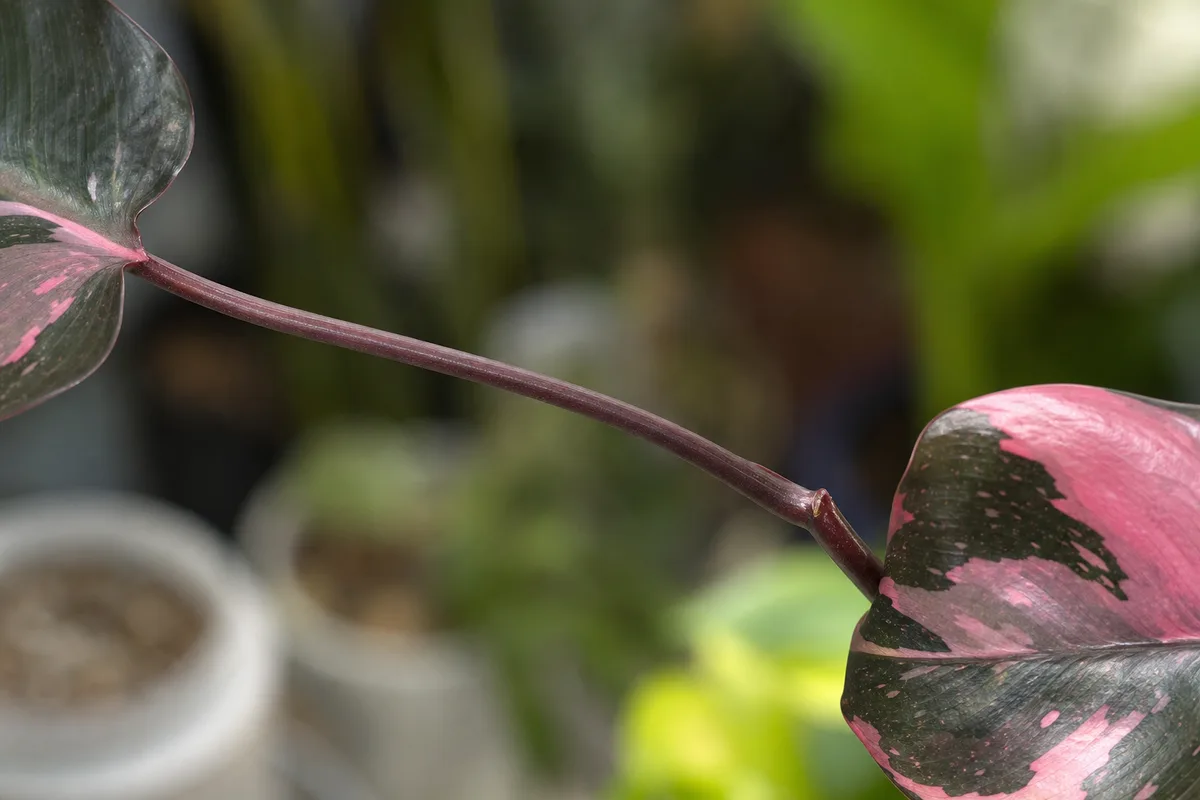
Leggy Growth symptoms on Philodendron Pink Princess - compare with healthy tissue on the same plant.
- internodes on new growth suddenly much longer than older sections
- smaller new leaves than earlier leaves on the same vine
- directional lean toward the brightest window
- new leaves trending greener with less pink patterning
Low light can produce these morphology changes even when the plant is not visibly wilted (University of Minnesota Extension). On Pink Princess, that makes leggy growth easy to underestimate because the plant can stay turgid while becoming sparse.
Why Pink Princess gets leggy
1) Light intensity is too low at leaf level
RHS notes philodendrons become leggy and make fewer, smaller leaves in inadequate light (RHS). This is the dominant cause in homes.
2) The vine is not climbing
Philodendron includes climbing types, and P. erubescens is one of them (NC State Extension Plant Toolbox). Without support, Pink Princess sprawls and stretches farther from usable light.
3) Too much fertilizer in dim conditions
UMD diagnosis guidance lists spindly growth with low light or excessive fertilizer salts, and recommends correcting light before feeding harder (University of Maryland Extension). Fertilizer cannot compress already stretched internodes.
How to confirm leggy growth in 5 checks
-
Compare old vs. new internodes
New sections longer than earlier sections usually indicate fresh light stress. -
Check window geometry
Distance from glass, blinds, and seasonal sun angle matter. Bright indirect conditions usually mean close to bright windows but outside harsh direct rays (RHS). -
Confirm climbing support
If the vine is hanging or flopping instead of climbing, growth often stays thinner and farther spaced. -
Rule out wet-root stress
If mix stays wet, leaves yellow, and stem bases soften, investigateroot-rotinstead of treating this as light-only. -
Track new growth for 2-3 leaves
Recovery is shown by tighter node spacing on new growth, not by old stretched tissue shrinking.
First fix: light first, then structure
Move the plant to a brighter indirect position first, then secure the vine to a moss pole or similar support. This order matters because leggy growth is primarily a light response.
- prioritize east exposure or bright filtered light near south/west windows
- avoid sudden harsh direct sun on variegated leaves to reduce scorch risk (RHS)
- hold fertilizer until new growth quality improves
If home light remains weak, add supplemental lighting rather than pushing fertilizer. Extension guidance specifically lists artificial light as a valid fix for insufficient natural light indoors (University of Maryland Extension).
Step-by-step recovery plan
Week 0: Correct light and support
Reposition the plant and attach the main vine. Keep watering conservative while it adjusts.
Weeks 2-6: Evaluate only new growth
You are looking for shorter internodes and larger leaves on newly formed nodes. Old stretched sections stay stretched.
After compact growth returns: prune strategically
Prune above a node with good variegation if you want branching and a denser canopy. Do this when the plant is actively growing, then continue strong indirect light so regrowth does not stretch again. For pruning technique, see pruning.
Recovery timeline and expectations
- 1-2 weeks: growth direction improves after repositioning
- 2-6 weeks: new nodes start tightening if light is adequate
- 6-12 weeks: noticeable improvement in canopy density after targeted pruning
What will not recover: already elongated internodes. Improvement is always measured in new growth structure.
Mistakes that keep Pink Princess leggy
- pruning heavily before fixing light
- feeding aggressively in dim rooms
- keeping the plant decorative-but-dark for color contrast
- skipping support on a climbing philodendron
- ignoring wet, stagnant mix that points to root trouble
If you see wet soil + yellowing + softness, move to overwatering or root-rot workflow immediately.
Prevention checklist for compact, variegated growth
- keep light bright and indirect year-round
- rotate weekly for balanced growth
- maintain a climbing support before the vine sprawls
- check node spacing monthly, not just leaf color
- adjust placement seasonally as window light changes
Pink Princess care sits inside the broader Philodendron erubescens profile, which is a climbing aroid that performs best with correct light and structure (NC State Extension Plant Toolbox).
When to escalate
Leggy growth alone is usually not an emergency. Escalate if any of these are present:
- persistent yellowing with constantly wet media
- mushy stem tissue or foul root smell
- rapid collapse instead of slow stretch pattern
For pet homes, remember philodendrons are toxic if chewed due to insoluble calcium oxalates, so keep pruning debris away from pets and contact a vet promptly after ingestion concerns (ASPCA Poison Control).