Seeds Not Germinating on Philodendron Birkin: Causes
Quick answer
Philodendron Birkin seed needs fresh aroid stock, warm soil near 24 °C (75 °F), and lightly moist sterile mix-not a cold windowsill or waterlogged tray. First step: confirm the seed is viable and fresh, then resow on sterile mix with bottom heat.
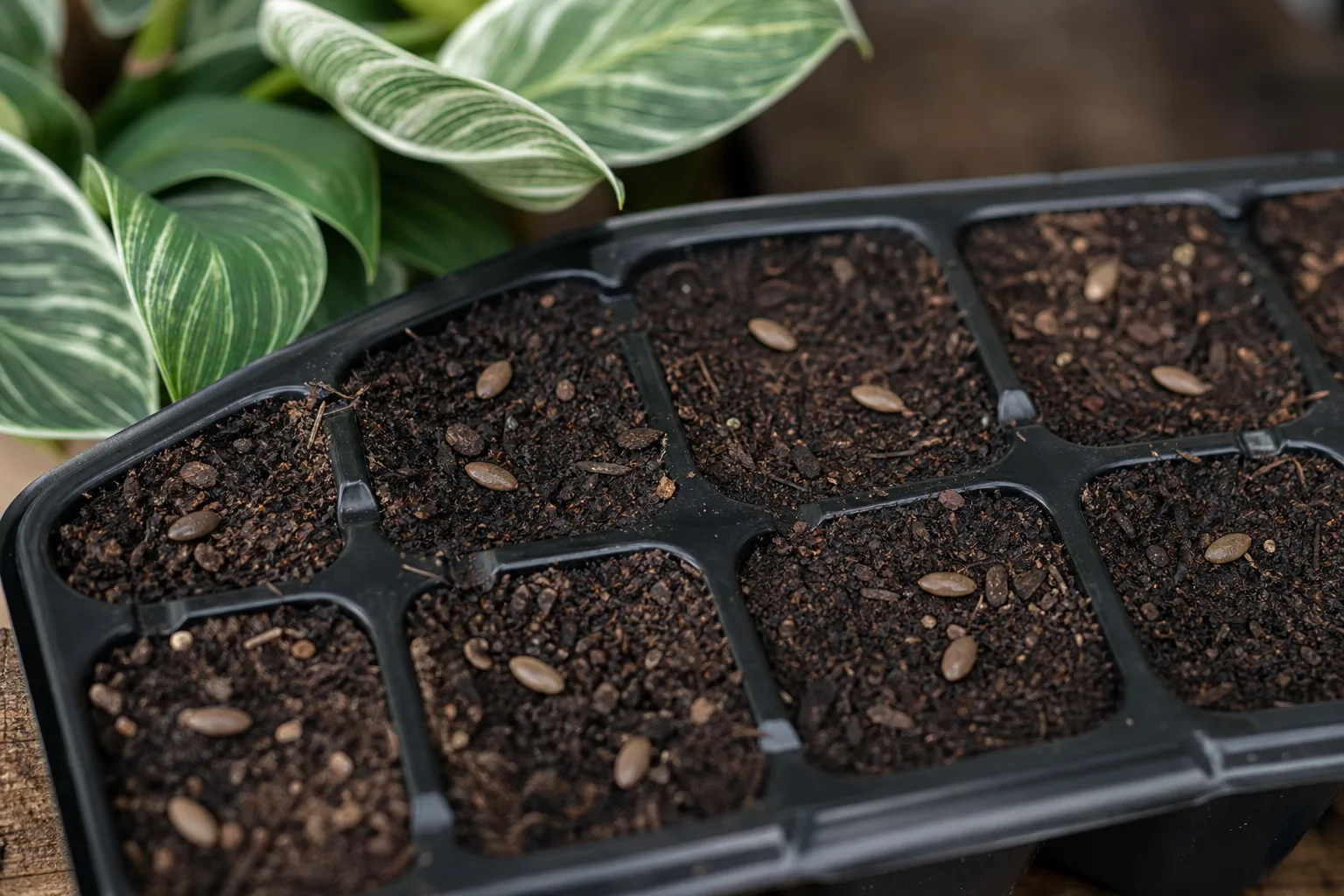
Seeds Not Germinating on Philodendron Birkin: Causes, Checks & Fixes
This guide covers seeds not germinating on Philodendron Birkin. See also the general Seeds Not Germinating guide, watering, and light pages for this plant.
Seeds Not Germinating on Philodendron Birkin: Causes, Checks & Fixes
Quick answer
Failed germination on Philodendron Birkin is frustrating because nothing visible changes for weeks-and Birkin is an unusual seed project to begin with. This compact self-heading aroid is propagated by stem cuttings in commercial and home settings, and mature plants rarely flower indoors. When you do sow, aroid seed behaves differently from common garden seed: it needs warmth, steady light moisture, and usually very fresh stock.
First step: test a few seeds for viability, then resow on sterile mix with bottom heat near 24 °C (75 °F). Do not flood the tray or leave seeds on a cold windowsill while you wait. Also accept that even successful germination may not produce the pinstriped Birkin look-this cultivar’s variegation is a chimeric mutation that seed usually does not pass on.
Why Philodendron Birkin seeds do not germinate
Birkin seed failure usually stacks several Birkin-specific realities with standard seed-starting mistakes.
Seed quality and identity. Most Birkin owners never harvest seed at home because houseplants rarely produce the spadix-and-spathe flowers indoors. Store-bought “Philodendron Birkin seed” may be old, mislabeled, or collected from plants that are not true Birkin. Viability drops as seed ages or stores poorly-and philodendron seed viability is very limited unless properly processed and vacuum-packed, according to UF/IFAS commercial production guidance.
The chimeric variegation problem. Birkin’s white pinstripes come from a spontaneous mutation in outer cell layers, not stable genetics in every reproductive cell. Chimeric variegated plants cannot be reproduced reliably from seed; they must be propagated vegetatively. Seedlings that do sprout often look like plain green philodendrons or revert toward the Rojo Congo parent type-not the striped Birkin you bought seed to grow.
Temperature. Birkin grows best at room temperatures from 65 to 85 °F as a mature plant. Seeds need warm soil in that tropical range-roughly 21–27 °C (70–80 °F)-not a winter windowsill that cools at night. Extension guides warn that windowsills are poor for seed starting because soil temperature lags behind air temperature and swings daily.
Moisture extremes. Aroid embryos need to imbibe water, but saturated mix drives out oxygen and can suffocate germinating seeds. Rotting, swollen seeds with surface mold mean the tray stayed wet without drainage. A tray that dries to powder between mistings stops germination before the radicle emerges. Birkin’s adult preference for evenly moist-but well-drained-soil does not translate to soaking a seed tray.
Sowing depth and freshness. Aroid seeds are generally sown fresh; many do not tolerate long dry storage. Small philodendron seed should sit on or just under the surface-a practical rule is to plant a seed about twice as deep as its width, which for tiny aroid seed means a light cover at most. Seeds buried too deeply may never break the surface even when alive.
What failed germination looks like on Philodendron Birkin
Empty tray after the expected window:
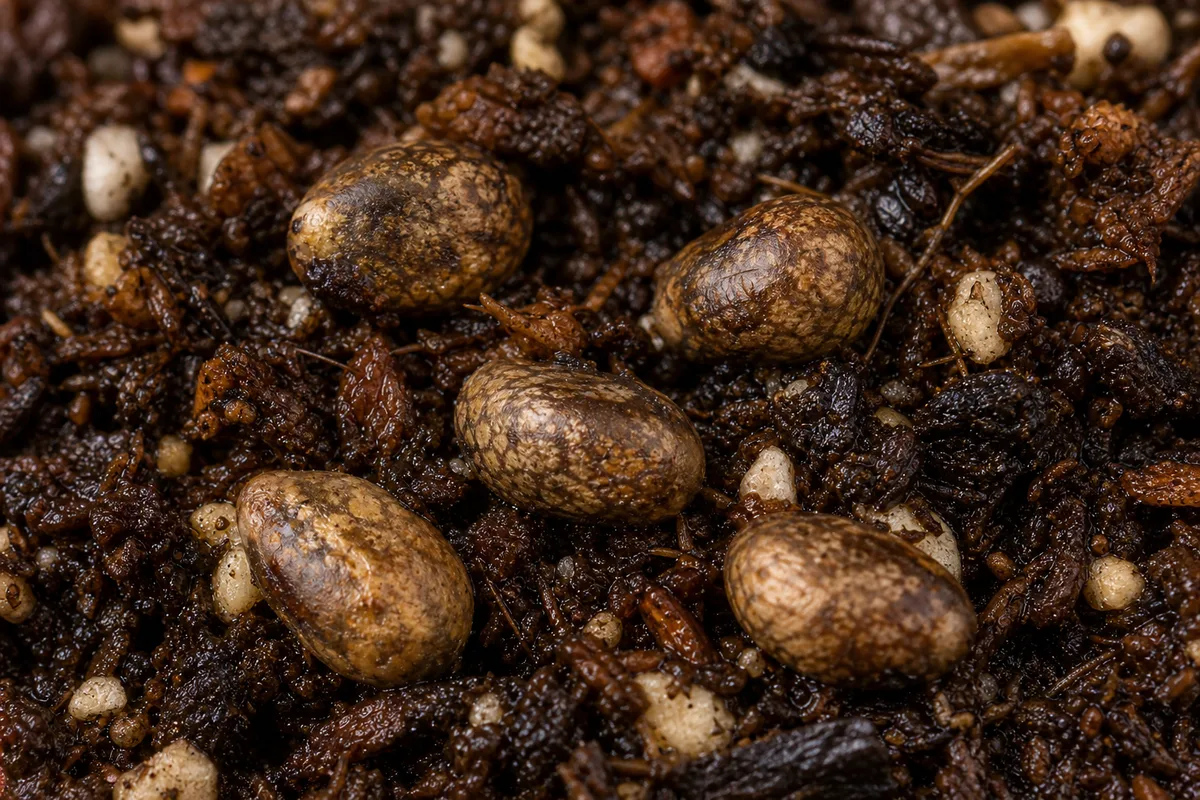
Seeds Not Germinating symptoms on Philodendron Birkin - compare with healthy tissue on the same plant.
- Mix surface unchanged-no cotyledons, no green dots-for six to eight weeks
- Seeds look identical to sowing day despite warm, moist conditions
- Packet was opened months ago or stored at room humidity
Moisture-related failure:
- White or green mold on the surface without seedlings
- Seeds swell, darken, and collapse-classic rot from saturation
- Humidity dome never vented; mix never dries slightly on top between waterings
Temperature failure:
- Tray on an unheated windowsill in late winter-soil cool while air feels warm
- No bottom heat despite room temperatures below seed optimum
- Heat mat turned off at night with the grow lights
Seed quality failure:
- Cut test shows hollow, brown, or mushy interior-dead batch
- Same packet failed twice with corrected moisture and heat
- Label vague-”philodendron mix” rather than a dated aroid seed lot
Successful germination, wrong plant:
- Seedlings emerge solid green without pinstripes-expected for chimeric Birkin seed, not a care failure
- New leaves resemble Rojo Congo or plain self-heading philodendron rather than striped Birkin
Damping off is a separate stage: seedlings appear, then collapse at the soil line. That means germination worked and post-emergence care failed-reduce moisture and improve airflow.
How to confirm the cause
Work through these checks in order:
- Label and expectations - Confirm the packet source and date. Understand that seed is unlikely to produce true Birkin pinstripes even if it sprouts.
- Seed age and storage - Aroid seed should be fresh. Do not rely on seed stored loosely for months without a viability test.
- Cut or float test - Soak a few seeds overnight. Cut one open: firm white embryo tissue suggests life; empty or brown interior means discard the batch.
- Soil temperature log - Insert a thermometer at seed depth. Target roughly 21–27 °C (70–80 °F); steady bottom heat beats room air temperature.
- Depth check - Seeds should sit on moist mix with only a light cover. If buried centimetres deep, resow shallower.
- Moisture pattern - Surface lightly moist, not glossy wet. Drain excess after bottom watering.
- Realistic timeline - Aroid seed often needs two to eight weeks at stable warmth. No change at day ten is normal; no change at three months with dead cut-test seed is not.
If viability checks pass and two sowings fail, suspect weak commercial stock-or switch to stem cuttings, which NC State lists as Birkin’s recommended propagation method.
First fix for Philodendron Birkin
Run a quick viability check on three to five seeds, then resow the rest on the surface of fresh sterile mix with bottom heat set near 24 °C (75 °F).
Soak test seeds in warm water for several hours. Cut one: viable tissue inside means the batch deserves another sowing. Press remaining seeds onto moist mix, add only a thin cover of vermiculite if needed, and place the tray on a seed-starting heat mat-not a windowsill. Mist or bottom-water so the surface stays lightly moist; pour off standing water from the tray.
Use a clear dome for humidity, but vent daily to limit mold. Do not flood the tray while waiting. Germination may take two to eight weeks; stable conditions beat repeated resoaks.
If your goal is a pinstriped Birkin specimen-not just any philodendron-plan stem cuttings from a healthy parent as the reliable backup from the start.
Step-by-step recovery
After the first resow:
- Label sow date and soil temperature so you judge failure fairly-usually six to eight weeks for fresh seed at proper warmth.
- Keep bottom heat steady - plug heat mats separately from light timers so night setbacks do not cool the soil.
- Bottom-water when the top dries slightly. Drain excess after 15 minutes.
- Vent the dome daily - lift for a few minutes to exchange air without drying the whole tray.
- Add grow lights immediately when sprouts show - seedlings need strong light within a few inches of the tops for 12–16 hours daily.
- Thin to one seedling per cell once true leaves form. Snip extras at soil level rather than pulling.
- Switch to stem cuttings if seed fails twice-or if seedlings lack pinstripes - stem cuttings are the recommended propagation strategy for Birkin and preserve the variegation pattern when taken from a striped parent.
Wear gloves when handling cut tissue-Birkin sap can irritate skin, and philodendron parts contain calcium oxalate crystals toxic to pets if ingested.
Recovery timeline
With fresh aroid seed, first sprouts often appear within two to four weeks at steady warmth. Some batches need six to eight weeks or longer-especially if seed was stored or conditions fluctuated. Judge the tray at six to eight weeks: no change with verified viable seed and correct depth usually means resow with new stock, not another month on the same sowing.
Once seedlings emerge, Birkin’s slow growth rate means months before they resemble a nursery specimen-even when conditions are right. Seed-grown plants without pinstripes may never develop them; that is a genetic limit, not a fertilizer problem.
Lookalike problems to rule out
Damping off - Seedlings appeared then wilted at the base. Fungal collapse in wet stagnant air, not failed germination. Dry the surface slightly, vent domes, improve airflow.
Leggy pale seedlings - Seeds germinated but shoots are tall and white. Light was insufficient after emergence; lower grow lights and extend photoperiod.
No flowers, so no home-harvested seed - A healthy Birkin with no blooms is normal indoors. That is not germination failure; you need purchased seed or a cutting-based plan.
Reverted green seedlings - Sprouts look like plain philodendron. Expected when chimeric Birkin genetics do not pass through seed. Switch to a striped stem cutting if pinstripes matter.
Cuttings failing beside seed - If both routes struggle, check warmth, bright filtered light, and evenly moist-not waterlogged-mix while rooting.
Mistakes to avoid
Do not expect store seed to produce identical Birkin pinstripes-the chimeric mutation does not breed true.
Do not bury tiny aroid seeds deeply because they are “tropical”-small seed still needs shallow sowing.
Do not leave humidity domes sealed for weeks without venting; mold and rot follow.
Do not rely on a south window as your only heat source-extension guidance recommends avoiding windowsills for seed starting.
Do not reuse moldy mix without sterilizing containers and fresh medium.
Do not wait three months on clearly dead seed without a viability retest.
Do not apply mature Birkin watering rules to a seed tray-saturated mix without drainage kills embryos before they emerge.
Do not fertilize a seed tray hoping to force Birkin striping on green seedlings-variegation is genetic, not nutritional.
Birkin care cross-check
Seedlings that sprout still need what mature Birkin expects: moist, well-drained, slightly acidic soil, bright filtered light without scorching direct sun, and 50 to 60% humidity with good airflow. Birkin is slow-growing and compact-plan for months of stable warm room temperatures in the 18–26 °C (65–79 °F) range before a seedling looks like a tabletop specimen.
If pinstriped foliage is the goal, stem cuttings from a healthy striped parent remain the practical route most growers use-faster and more predictable than fighting old seed for a chimeric cultivar.
How to prevent failure next time
Buy the freshest aroid seed available each attempt, or skip seed entirely and propagate Birkin by stem cuttings during active growth.
Use sterile seed-starting mix, clean trays, bottom heat, and grow lights from emergence. Label species, sow date, and soil temperature.
If a mature Birkin ever flowers and sets seed, sow fresh seed promptly rather than storing it loosely-aroid viability drops quickly once dried.
When seed is unreliable or seedlings lack striping, take a firm stem cutting with a node from a pinstriped section of the parent plant. That preserves the mutation chimeric seed cannot guarantee.
When to worry
Resow urgently when cut tests show dead embryos across the sample, mold is spreading while seeds collapse, or the packet is clearly old or mislabeled. Those trays will not recover without new seed or a different propagation method.
Give up on the current sowing when six to eight weeks pass with verified viable seed, steady bottom heat near 24 °C (75 °F), shallow depth, and correct moisture-yet zero sprouts. Two failed rounds with corrected technique mean switch to stem cuttings.
No sprouts at day seven with fresh seed is not an emergency-slow aroid germination is normal.
Green seedlings without pinstripes after eight weeks are not a germination emergency-they signal that seed was never going to produce Birkin as you know it. Take a cutting from a striped plant instead.
Conclusion
Philodendron Birkin seed failure is usually about seed age, temperature, moisture, or mislabeled stock-not a mysterious curse on the plant. Confirm viability, resow on sterile mix with bottom heat, and keep the mix lightly moist with daily dome venting. Remember that Birkin’s pinstripes are a chimeric trait seed rarely passes on-even successful germination may yield plain green philodendron seedlings. For the striped tabletop specimen most owners want, stem cuttings from a healthy parent remain the proven route.
When to use this page vs other Philodendron Birkin guides
- Philodendron Birkin watering guide - Use for routine moisture checks before assuming seeds not germinating is the main issue.
- Philodendron Birkin problems hub - Browse all 42 common issues on this species.