Mold on Soil on Phalaenopsis Orchid: Causes, Checks & Fixes
Quick answer
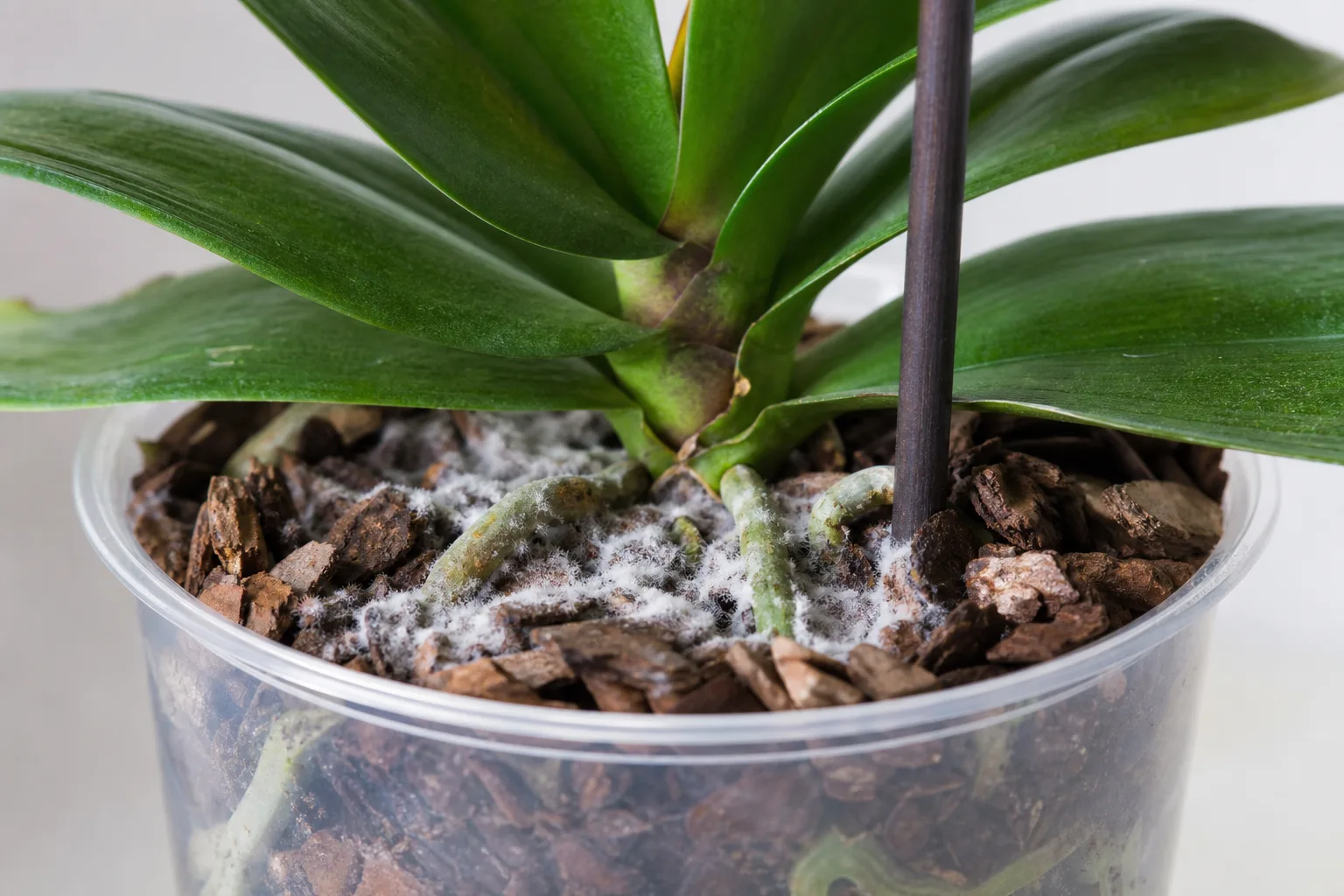
Fluffy white or gray mold on Phalaenopsis bark is usually harmless surface fungus on damp, decaying mix-not a leaf disease. First step: stop watering until aerial roots turn silver-grey, then scrape off the moldy top layer.
Mold on Soil on Phalaenopsis Orchid: Causes, Checks & Fixes
This guide covers mold on soil on Phalaenopsis Orchid. See also the general Mold on Soil guide, watering, and light pages for this plant.
Mold on Soil on Phalaenopsis Orchid: Causes, Checks & Fixes
Quick answer
Mold on a Phalaenopsis Orchid pot almost always means bark or moss on the surface has stayed damp too long-not that your orchid caught a leaf disease. Moth orchids are epiphytes that grow on tree bark in nature; indoors they live in chunky bark that should cycle wet to nearly dry. When that cycle stalls, harmless fungi colonize decaying organic matter on top.
The fluffy white or gray layer is usually saprophytic mold feeding on old bark, not a pathogen attacking living tissue. It is still a warning: chronic surface wetness is exactly what leads to root rot on Phalaenopsis Orchid on Phalaenopsis.
First step: stop watering until aerial roots turn silver-grey or dull white, then scrape off the moldy top layer of bark. Do not mist the crown, do not stand the pot in water, and do not repot on day one unless roots are already mushy or the mix smells sour.
What mold on bark looks like on Phalaenopsis Orchid
On moth orchids, “mold on soil” really means mold on potting media-orchid bark chips, sphagnum moss, or a bark-moss blend. You may see:
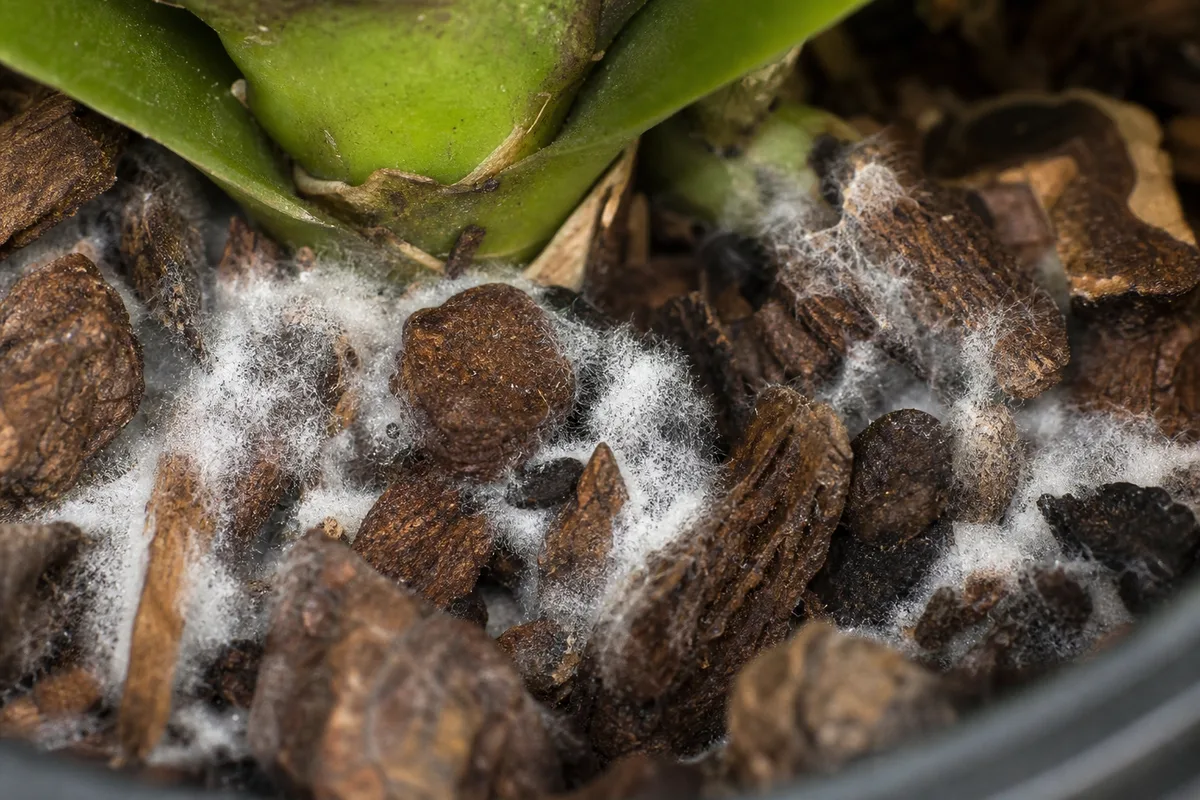
Mold on Soil symptoms on Phalaenopsis Orchid - compare with healthy tissue on the same plant.
- White or gray fuzzy film on the bark surface, especially after watering or in cool, dim months
- Damp bark that stays wet for many days while aerial roots stay bright green
- Musty smell from the pot, sometimes with tiny dark fungus gnats flying when you tap the rim
- White thread-like “snow mold” deeper in old, crumbly bark-not just a surface dusting
Healthy Phalaenopsis above the mix should still have firm, plump leaves and a hard crown where leaves meet the stem. Surface mold alone does not yellow leaves overnight.
Signs the problem is deeper than cosmetic mold:
- Leaves go limp and wrinkled even though bark feels wet
- Crown base softens or turns dark at the center
- Roots inside the pot are brown, hollow, or mushy when you unpot
- Mold returns within two to three days after scraping-mix is breaking down
The American Orchid Society notes that white filamentous snow mold in decaying mix is water-repellent; once it coats roots, they cannot absorb water and the plant can look dehydrated despite wet bark.
Why Phalaenopsis gets mold on bark
Moth orchids fail when their roots sit in stale moisture, not when bark briefly gets wet during a proper drench. Mold appears because several Phalaenopsis-specific factors overlap.
overwatering on Phalaenopsis Orchid on a calendar schedule is the most common trigger. UMD Extension recommends watering only when aerial roots shift from silver or white to pale green-typically no more than once a week under normal home temperatures. Watering while roots are still green keeps the surface soggy and feeds fungi.
Broken-down bark is the second major cause. AOS culture guidance notes that mature Phalaenopsis should be repotted when the medium starts to decompose-usually about every two years. As bark crumbles, it holds water longer, loses airflow, and becomes food for saprophytic molds. Root rot follows if plants stay in that soggy, decomposing mix.
Winter slow-dry conditions catch many growers off guard. Lower light and cooler rooms slow evaporation, but watering habits stay the same. Bark surface stays damp; mold colonizes. Poor airflow around crowded shelves makes it worse.
Wrong media accelerates everything. Standard peat-heavy potting soil or garden soil [compacts around epiphyte roots](https://extension.umd.edu/resource/potting-and-[Phalaenopsis Orchid repotting guide](/plants/phalaenopsis-orchid/repotting/)-indoor-plants) and stays wet far longer than orchid bark. Mold on top is an early clue the root zone is wrong.
Fungus gnats share the same habitat. Colorado State Extension explains that gnat larvae feed on fungi and decaying organic matter in moist growing media. Gnats flying around your moth orchid usually mean the bark has been wet too long-not that the mold itself invaded the plant.
How to confirm the cause
Work through these checks in order before repotting or spraying:
- Aerial root color - Silver-grey or white roots mean the plant is dry enough to wait. Pale green roots mean recent moisture; do not add more water. This is the most reliable Phalaenopsis watering signal at home.
- Crown firmness - Gently press the base where leaves attach. Firm tissue with surface mold only suggests environmental mold. Soft, dented crown tissue means rot risk-unpot next.
- Pot weight and smell - Lift the pot. Heavy, cold bark with a sour or swampy smell points to breakdown and possible root rot, not harmless fuzz alone.
- Mold location - Fuzz only on top of wet bark after recent watering is typical saprophytic mold. White threads through crumbly bark deep in the pot suggests decaying mix and possible snow mold.
- Leaf and root condition - Plump leaves and firm roots visible through a clear pot fit cosmetic mold. Wrinkled leaves with wet bark suggest roots are failing to take up water-inspect them.
- Gnat check - Tap the pot edge. Small flies rising from the bark confirm chronic surface moisture shared with fungal growth.
- Recent care changes - New decorative pot cover, moved to a darker spot, or bark older than two years all raise mold risk without any new “disease.”
If roots are silver, the crown is firm, and mold is a thin surface layer after one heavy watering, you likely have confirmed harmless surface mold on wet bark-fix the dry cycle first.
First fix for Phalaenopsis
Stop watering and scrape off the moldy top layer of bark once aerial roots turn silver-grey.
This single step addresses both the visible mold and the moisture habit that caused it. Hold all water until aerial roots look dull silver or white again-that confirms the bark has dried enough for Phalaenopsis. Then use a spoon or gloved fingers to remove the top 1–2 cm of fuzzy bark and discard it. Leave the crown dry; do not pour hydrogen peroxide or cinnamon into the center unless extension guidance for your situation recommends it.
Move the pot to Phalaenopsis Orchid light guide-an east window is ideal indoors per AOS-so the remaining bark dries evenly. Run a gentle fan nearby if air is stagnant, but avoid blasting cold drafts on buds.
Only after this dry-and-scrape cycle should you resume watering with a full drench in the sink, letting all excess drain before returning the plant to its saucer. Never let the pot sit in standing water.
Step-by-step recovery
If surface mold was recent and roots look healthy through a clear pot:
- Dry the bark fully - Wait for silver-grey aerial roots; this may take five to ten days in a cool room.
- Remove moldy surface bark - Scrape and discard; do not reuse moldy chips.
- Resume proper watering - Drench bark and roots in warm water for several passes over about ten minutes; drain completely.
- Monitor root color after each watering - Roots should green up briefly, then return toward silver before the next drink.
- Watch new growth - A firm crown and emerging root tips mean recovery is on track.
If mold returns quickly, leaves wrinkle, or bark crumbles when touched:
- Unpot the orchid - Soak the root ball if bark clings; gently tease away old media.
- Inspect roots - Trim soft, brown, or hollow roots with sterile scissors. Healthy Phalaenopsis roots are firm and pale green or white.
- Repot in fresh orchid bark - Use a pot sized to the root mass, not the leaf span. AOS recommends repotting when medium decomposes, typically every one to three years.
- Hold fertilizer until new root activity appears-stressed orchids do not need extra salts.
- Address gnats if present - Let the top of the mix dry between waterings and use yellow sticky traps for adults; fix moisture first.
Recovery timeline
Cosmetic surface mold on an otherwise healthy plant: Mold stops spreading within days once bark dries. Leaves stay plump; you can resume normal watering within one to two weeks. Old fuzzy bark you removed does not “grow back”-new mold only appears if the surface gets wet again too soon.
Mold with early bark breakdown but firm roots: After repotting into fresh mix, expect two to four weeks before root tips actively grow and Phalaenopsis Orchid watering guide feels predictable again. Blooms on the spike may finish normally if the crown stayed firm.
Mold with root rot or snow mold blocking uptake: Recovery takes one to three months or longer. Wrinkled leaves may rehydrate slowly as new roots form. Some damaged roots never recover-you judge success by new silver-tipped roots and a firm crown, not by the old moldy bark you removed.
When improvement stalls: If leaves keep wrinkling, the crown softens, or mold fills the pot again within a week after repotting, the plant may have lost too much root mass. Saving the crown on a severely rotted Phalaenopsis is not always possible.
Lookalike symptoms
Mineral crust from hard tap water - Flat white or tan chalky deposits on bark or pot rims, not fluffy. Flush the pot periodically and use lower-mineral water if buildup is heavy. UMN notes hard water can crust soil surfaces.
Perlite, limestone, or fertilizer residue - Sharp white granules scattered in mix, not a continuous fuzzy mat. No musty smell; does not spread after drying.
Mealybugs on roots or leaf axils - Cottony white clumps on living tissue, not a uniform film on bark alone. Wipe tests leave smeared insects; mold stays powdery on the medium.
Botrytis on flowers - Small brown spots on petals, sometimes gray fuzz on spent blooms in humid cool conditions-not a pot-surface issue. Remove infected flowers; improve airflow. Distinct from bark mold.
Green algae on bark - Slimy green film in very bright, constantly wet conditions. Still a moisture signal, but algae needs light; white fuzzy mold often appears in dimmer, cooler spots.
Mistakes to avoid
- Watering on the same weekly schedule through winter without checking aerial root color
- Scraping mold repeatedly while keeping bark constantly moist underneath
- Misting the crown or letting water sit in the leaf center-AOS warns this invites crown rot
- Repotting into standard potting soil because it “looks cleaner” than bark
- Using decorative pot sleeves that trap humidity at the bark surface
- Pouring hydrogen peroxide on healthy roots-fresh bark and corrected watering handle saprophytic mold; unnecessary chemicals stress roots
- Ignoring gnats as harmless while bark stays wet-larvae feed in the same decaying mix
- Cutting healthy aerial roots because mold appeared nearby; aerial roots are normal on Phalaenopsis
Phalaenopsis care cross-check
Mold is a moisture symptom. After you treat the surface, confirm the baseline care that keeps moth orchids dry enough between drinks:
- Light: Bright indirect-east window or shaded south/west. Too little light slows dry-down and weakens the plant.
- Water: Drench when roots are silver-grey; never on a blind calendar.
- Media: Orchid bark or moss only; refresh before it crumbles.
- Pot: Clear plastic with drainage holes helps you see root color and spot rot early.
- Humidity: 50–70% is fine, but airflow must accompany it-stagnant humid air plus wet bark grows mold faster.
- Temperature: Roughly 18–29°C (65–84°F) day; slightly cooler nights in autumn help reblooming but still require less frequent watering when growth slows.
If mold appeared right after purchase, the store mix may have been old or overwatered-quarantine, dry, and inspect roots before placing it beside other orchids.
How to prevent mold next time
- Water from root color, not habit - Silver-grey aerial roots are the green light to drench.
- Repot on bark age, not panic - Plan fresh bark every one to two years, or when chips crumble and stay wet.
- Keep the surface clean - Remove fallen bloom stems and dead leaf bits that decay on bark.
- Improve airflow - Space pots on a tray; a low fan in still rooms helps bark dry evenly.
- Empty saucers - Standing water encourages gnats and wet feet.
- Avoid oversized pots - Extra bark holds moisture long after roots have drunk enough.
- Scout in winter - When light drops, extend the dry window between waterings before mold appears.
When to worry
Treat mold as urgent when:
- The crown is soft or smells sour
- Leaves wrinkle and droop while bark stays wet-possible root rot or snow mold blocking uptake
- More than half the roots are mushy on inspection
- Mold returns within days after repotting into fresh bark-check for blocked drainage or a pot too large
- Bud drop or blackening flowers accompany wet, stagnant conditions-fix airflow and moisture before blaming mold alone
Cosmetic white fuzz on dry-bound bark after one overwatering, with firm leaves and silver roots returning within a week, is not an emergency-correct the watering cycle and scrape the surface.
Surface mold on Phalaenopsis bark is common, usually harmless on its own, and almost always honest about one thing: the mix stayed wet too long. Dry until aerial roots tell you otherwise, remove the fuzzy top layer, and refresh bark before it rots. Firm crowns, plump leaves, and new root tips mean you fixed the real problem-not just the mold you could see.
When to use this page vs other Phalaenopsis Orchid guides
- Phalaenopsis Orchid watering guide - Use for routine moisture checks before assuming mold on soil is the main issue.
- Phalaenopsis Orchid problems hub - Browse all 20 common issues on this species.
- Fungus Gnats on Phalaenopsis Orchid - Different entry point when symptoms overlap with mold on soil.
- Overwatering on Phalaenopsis Orchid - Different entry point when symptoms overlap with mold on soil.
- Root Rot on Phalaenopsis Orchid - Different entry point when symptoms overlap with mold on soil.