Fungus Gnats on Phalaenopsis Orchid: Causes, Checks & Fixes
Quick answer
Fungus gnats on Phalaenopsis Orchid mean bark or moss has stayed damp too long-gnats breed in moist organic mix, not on healthy dry bark. First step: pause watering until roots turn silver-grey, then set yellow sticky traps while you fix the wet-dry cycle.
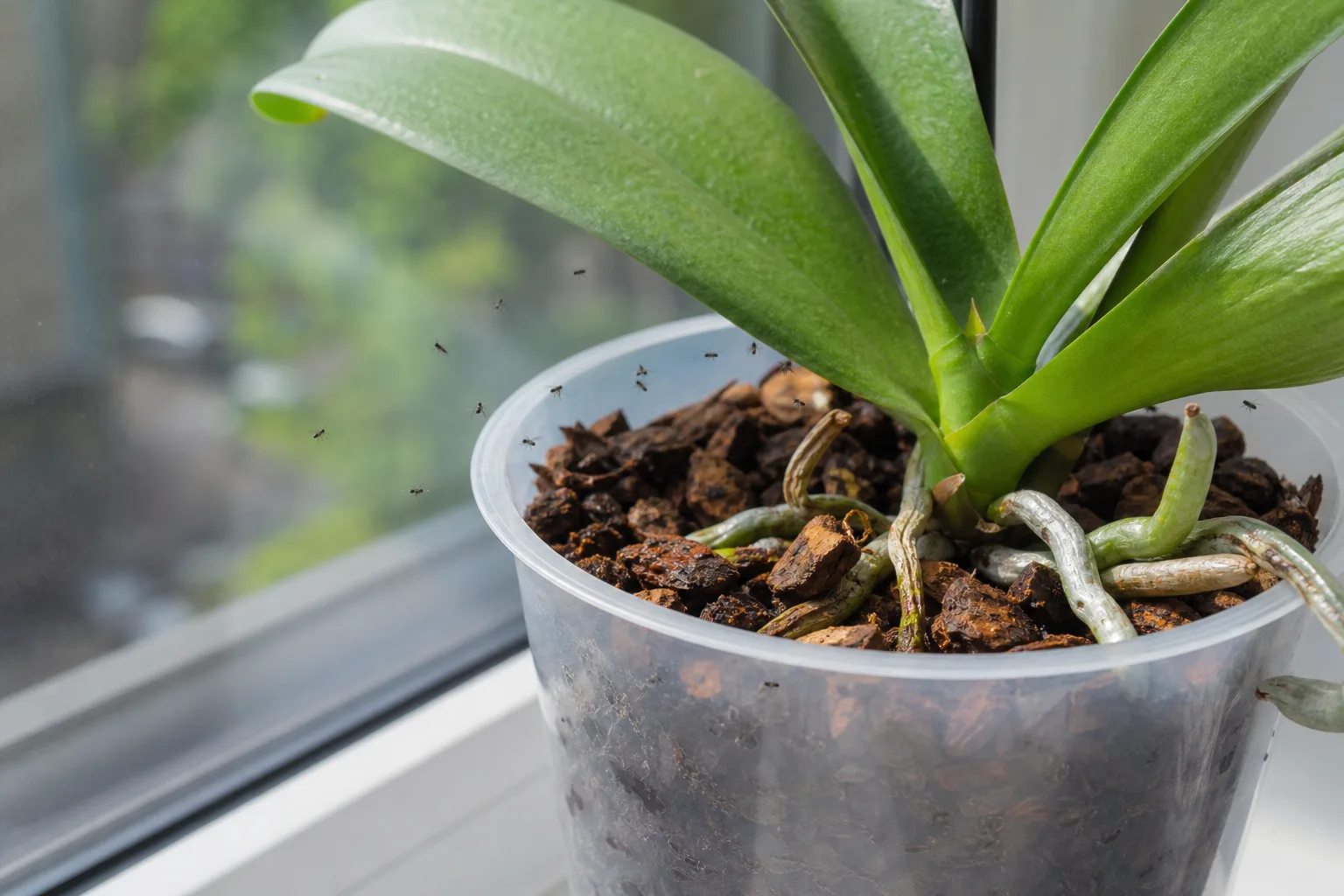
Fungus Gnats on Phalaenopsis Orchid: Causes, Checks & Fixes
This guide covers fungus gnats on Phalaenopsis Orchid. See also the general Fungus Gnats guide, watering, and light pages for this plant.
Fungus Gnats on Phalaenopsis Orchid: Causes, Checks & Fixes
Quick answer
Tiny flies hovering around your Phalaenopsis spp. (moth orchid) when you water are almost always fungus gnats-a sign that bark or sphagnum has stayed damp too long, not a random pest attack. Moth orchids need a wet-dry cycle: roots should turn silver-grey before you water again. When bark stays constantly moist, fungi grow in the mix, larvae feed on fungi and organic matter but also chew tender root hairs, and adults multiply.
First step: stop watering until roots show silver-grey through a clear pot-or until pot weight and a skewer probe confirm dry bark in an opaque cachepot-and place yellow sticky traps near the orchid to catch adults while the mix dries. Gnats are usually a nuisance on healthy plants, but on Phalaenopsis the moisture that breeds them is the real threat-it can lead to root rot long before fly numbers become annoying. For the full soak-and-drain rhythm, see the watering guide.
When to use this page vs other guides
| Your situation | Start here | Escalate to |
|---|---|---|
| Small flies rising when you water; bark surface damp | This fungus-gnat page - dry cycle + traps | Overwatering if roots stay bright green too long |
| Mushy roots, sour bark, soft crown | Gnats may be secondary | Root rot rescue workflow |
| White fuzzy growth on damp bark, few or no flies | Surface moisture signal | Mold on bark |
| Bark exhausted, fines hold water | Repot threshold | Repotting guide |
| Year-round culture background | Hub | Phalaenopsis overview |
What fungus gnats look like on Phalaenopsis Orchid
Fungus gnats are small, dark, delicate flies about 1/8 inch long with long legs and antennae. They resemble fruit flies but stay near pots rather than ripening fruit. On Phalaenopsis you will notice them in predictable moments:
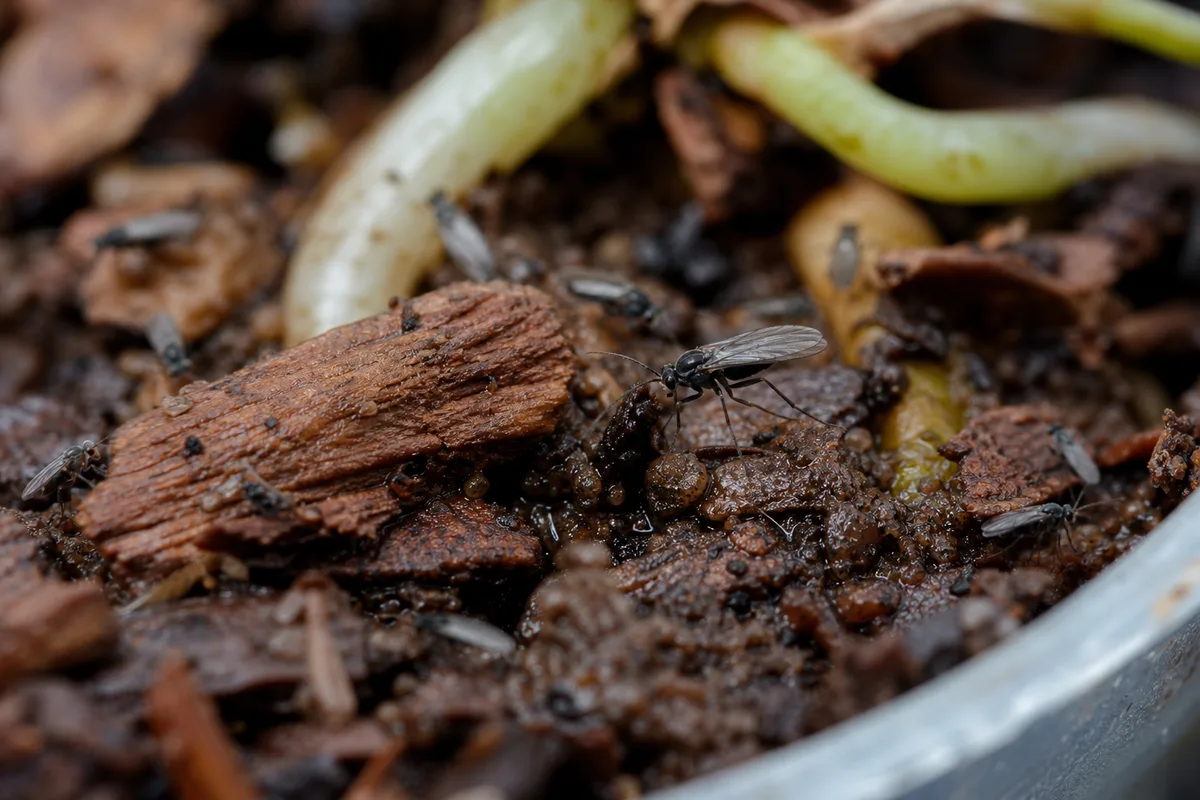
Fungus Gnats symptoms on Phalaenopsis Orchid - compare with healthy tissue on the same plant.
- A small cloud rises when you run water through bark or move the pot
- Flies run along the bark surface or pot rim, especially in the morning
- Adults collect on nearby windows where they are drawn to light
- Yellow sticky traps near the pot catch many tiny dark flies within a few days
The larvae are harder to spot. They are slender, translucent white maggots with shiny black heads, usually in the top inch of damp bark or moss. You may see them when repotting, clustered around decaying bark fines or soft root tips. A potato slice placed on damp bark for 48 hours can draw larvae to the surface for confirmation-extension services use this as a simple sampling method.
Phalaenopsis leaves and flowers are rarely chewed by fungus gnats. If you see holes, sticky residue, or webbing, look for thrips, mealybugs, or slugs instead. Gnat damage on moth orchids shows up indirectly through root stress when larvae feed on tender root hairs in persistently wet mix.
Why Phalaenopsis Orchid gets fungus gnats
Phalaenopsis is an epiphytic moth orchid adapted to airy, fast-draining conditions on tree branches. In a home pot, bark or sphagnum holds moisture between waterings-but only briefly if the mix and watering rhythm are correct. Gnats appear when that balance fails.
Overwatering on a calendar is the most common trigger. Many growers water weekly regardless of root color, keeping bark wet when the plant is not using moisture quickly. Lower winter light slows dry-down, but watering habits often stay the same, leaving the upper mix damp for weeks. The American Orchid Society culture sheet stresses watering only when the medium is nearly dry-not on a fixed schedule that ignores seasonal light.
Broken-down bark creates the same problem. Fresh orchid bark drains well; after 1–2 years it decomposes into water-retentive fines that stay wet on top while trapping moisture around roots. The American Orchid Society notes that fungus gnats are common in older, moister potting media rich with fungi-and that media breakdown from overwatering and over-fertilizing is a significant problem for cultivated orchids.
Wrong mix invites gnats fast. Standard peat-heavy potting soil holds far too much water for Phalaenopsis roots and decays quickly. Pure sphagnum moss can work for experienced growers but stays wet longer on the surface than coarse bark, making it easier for gnats to breed if you water before the top layer dries slightly.
Poor drainage habits-standing the pot in a full saucer, using pots without holes, or misting the crown while bark is already wet-keep the upper media moist without helping the plant. Ice-cube watering, a common moth-orchid shortcut, often leaves bark unevenly wet and the surface constantly damp.
Gnats do not mean your orchid is doomed, but they are a useful warning: the same conditions that breed fungus gnats also promote root rot on Phalaenopsis.
How to confirm the cause
Work through these checks before treating:
- Fly behavior - Gnats swarm from the pot when disturbed; fruit flies hover around food and trash. Shore flies, another lookalike, have heavier bodies and are often seen on algae-covered saucers.
- Root color through the pot - Bright green roots days after watering with damp surface bark confirm you are watering too soon. Silver-grey roots with a dry top inch suggest the gnat issue may be mild or seasonal. The RHS growing guide ties correct watering to keeping roots in good condition-not too wet or too dry.
- Bark age and texture - Dusty, crumbly bark that holds water like sponge confirms breakdown. Fresh chunky bark should not stay soggy on top for more than a day or two after watering.
- Smell on unpotting - Sour or rotten odor from bark means decay organisms are active-the same environment gnats prefer. No smell with slightly damp bark points to a lighter infestation.
- Sticky trap test - Place a yellow sticky card an inch above the pot for three days. Dozens of catches confirm an active adult population; a few flies may be normal in winter when houseplants dry slowly.
- Larval check - Slide a raw potato slice onto damp bark for 48 hours, then inspect the underside for white maggots with dark heads.
If traps catch gnats but roots are firm, bark smells neutral, and the crown is hard, you likely have a moisture-timing problem rather than advanced root damage. If mushy roots appear during inspection, treat root health first via the root-rot page-gnats are secondary.
Opaque pots: when you cannot see root color
Many decorative moth-orchid pots hide the clear grower pot inside. When gnats appear and you cannot read velamen colour:
- Lift test - Compare pot weight to right after your last soak. A noticeably light pot with dusty bark at mid-depth means dry enough to wait on watering.
- Skewer probe - Insert a bamboo skewer to mid-pot depth; pull it out and feel for dampness. Cool, dark skewer = wet bark; dry and room-temperature = closer to a safe soak window.
- Inner pot check - Slide the grower pot out of the cachepot weekly. Even opaque outer pots usually contain a clear inner pot you can inspect at the rim.
These workarounds mirror the checks in the watering guide for growers without transparent pots.
First fix for Phalaenopsis Orchid
Let bark dry until roots turn silver-grey-or pot weight and skewer confirm dry bark-before the next watering, and place yellow sticky traps at pot level to reduce adult flies.
This single step attacks both the pest and the underlying cause. Fungus gnat larvae need consistently moist upper media; allowing the surface of container media to dry between waterings kills eggs and larvae while making the pot less attractive to egg-laying females. On Phalaenopsis, silver-grey roots are your signal-bright green roots mean the plant still has adequate moisture.
Cut a yellow sticky card into strips if needed and wedge one near the bark surface where females run before flying. Replace traps when covered. Do not increase watering because leaves look slightly soft; moth orchids recover quickly once roots are healthy and moisture is corrected.
Wait to repot on day one unless bark is clearly broken down or smells sour. Most infestations shrink within two to three weeks once the wet-dry cycle is restored.
Step-by-step recovery
If drying and traps are not enough after two weeks, or larvae are visible in large numbers:
- Confirm root health - Knock the plant from its pot. Trim any mushy roots with sterilized scissors. Healthy Phalaenopsis roots feel firm and springy. Route advanced decay to root-rot rescue.
- Remove decayed surface bark - Scrape away the top inch of broken-down fines where larvae concentrate. Replace with dry fresh bark if the rest of the mix is still chunky.
- Repot if mix is exhausted - If bark crumbles in your hand or has been in the same pot more than two years, repot into fresh orchid bark in a pot with drainage holes sized to the root mass. Follow the repotting guide for depth and crown placement.
- Apply BTI drench if needed - Bacillus thuringiensis israelensis (BTI), found in products such as Mosquito Bits, targets fungus gnat larvae when applied as a watering drench. Repeat weekly for three to four weeks because BTI breaks down quickly. This is different from garden BT used for caterpillars. Note: BTI works in moist media-apply as a single soak when larvae persist, then resume the dry-surface cycle between drenches. You are not contradicting dry-bark control; you are hitting larvae during a brief targeted window while keeping the top layer dry day to day.
- Empty saucers - Never leave standing water under the pot after watering.
- Resume silver-grey watering - Run water through bark until it drains, then wait until roots silver before watering again.
Avoid spraying adult gnats with general insecticides indoors-they are a temporary fix and unnecessary when sticky traps and drying work. Do not use hydrogen peroxide drenches repeatedly; they can stress orchid roots without matching BTI effectiveness for larvae.
Recovery timeline and what to expect
Fungus gnats have overlapping life stages, so full suppression usually takes two to six weeks even with correct care. Adults live only a few days, but new ones emerge from larvae in damp bark until dry cycles break the pattern.
Signs you are winning:
- Fewer flies when watering each week
- Sticky traps catch declining numbers
- Roots firm and silver-grey between waterings
- No new sour smell from bark
- New root tips appear green after watering, then silver within days
Signs the problem is worsening:
- Gnat numbers increase despite dry bark
- Roots turn mushy or black on inspection
- Crown tissue softens at the base
- Lower leaves yellow while bark stays wet
- Traps fill faster each week
Mature Phalaenopsis with firm crowns recover well once moisture is corrected. Seedlings in constantly wet sphagnum may stall or lose root tips to larval feeding-keep them slightly drier on top while maintaining humidity around the plant, not in the pot surface.
Fungus gnats vs. other small flies
| Pest | Where you see it | What attracts it | Fix on Phalaenopsis |
|---|---|---|---|
| Fungus gnats | Rising from bark when watering; on pot rim | Damp, decaying bark or moss | Dry surface cycle; traps; BTI if larvae persist |
| Fruit flies (Drosophila) | Kitchen, trash, overripe fruit | Fermenting food, not orchid bark | Remove kitchen attractants; flies should leave orchid area |
| Shore flies | Algae on wet saucers and trays | Standing water, algae | Empty saucers; scrub tray; fix drainage |
| Surface mold (no flies) | White fuzzy film on damp bark | Same wet surface as gnats | Scrape, dry bark; see mold on bark |
| Root rot (with or without gnats) | Mushy roots, sour smell, limp leaves | Chronic wet bark | Root-rot rescue-gnats are a side signal |
Mistakes to avoid on Phalaenopsis Orchid
- Watering because gnats appeared, without checking root color first
- Using standard potting soil or garden soil when repotting
- Keeping ice-cube watering or saucer soaking while trying to dry bark
- Relying on sticky traps alone while bark stays constantly wet-adults are caught, but larvae keep hatching
- Stopping treatment after a few days when fly numbers dip briefly
- Repotting into fresh sphagnum without adjusting watering if you previously had gnat problems in moss
- Misting the crown or leaves while bark is already damp-Phalaenopsis needs dry crowns to avoid rot
- Applying caterpillar BT products instead of BTI formulations labeled for fungus gnats
- Treating cinnamon or diatomaceous earth as substitutes for drying bark and evidence-based larval control
Phalaenopsis care cross-check
Gnats often appear when several care factors drift together. Review these alongside your gnat treatment:
| Factor | Why it matters for gnats | LeafyPixels guide |
|---|---|---|
| Watering rhythm | Calendar watering in winter leaves bark damp | Watering |
| Chronic wet bark | Bright-green roots for days = gnat habitat | Overwatering |
| Bark age | Fines hold moisture and fungi after 1–2 years | Repotting |
| Light | Weak light slows dry-down; extend intervals | Light guide |
| Surface mold | Same wet bark as gnats; scrape and dry | Mold on bark |
| New plants | Nursery bark often arrives with gnats | Quarantine 2 weeks; overview |
How to prevent fungus gnats next time
Prevention on Phalaenopsis is mostly moisture discipline:
- Water when roots turn silver-grey, not on a fixed calendar
- Use coarse orchid bark or a bark-perlite blend-never standard houseplant soil
- Repot before bark breaks down into fines, typically every 1–2 years per the AOS culture sheet
- Empty saucers within 30 minutes of watering
- Keep yellow sticky traps in place during winter as an early warning
- Inspect and isolate new orchids before adding them to a collection
- Avoid over-fertilizing; excess nitrogen accelerates media decay and fungal growth in bark
Phalaenopsis Orchid is non-toxic to cats and dogs, so sticky traps and BTI drenches are household-friendly-but place traps where pets cannot contact them.
When to worry
Act promptly when gnats coincide with mushy roots, a soft crown, or sour-smelling bark-the wet conditions may already be causing root rot. A heavy infestation that persists more than two weeks after corrected drying warrants BTI or repotting into fresh bark.
Gnats alone on a firm, blooming Phalaenopsis with healthy silver-grey roots between waterings are a low-grade nuisance. Fix the dry cycle and monitor; the plant should continue blooming while fly numbers fall over several weeks.
Related Phalaenopsis problems
- Watering - silver-grey root signal and soak rhythm
- Overwatering - chronic wet bark before rot
- Root rot - mushy roots and crown softness
- Repotting - fresh bark when fines break down
- Mold on bark - surface fungi on the same damp mix
- Overview - full moth-orchid care hub
Conclusion
Fungus gnats on Phalaenopsis Orchid are less a standalone pest emergency than a moisture alarm. The flies breed in damp, decaying bark-the same environment that suffocates orchid roots. Dry the mix using root color, pot weight, or skewer checks as your guide, trap adults with yellow cards, and repot into fresh bark when the old mix breaks down. Most moth orchids recover fully once the wet-dry cycle returns; treat root softness as the urgent signal, not the fly count alone.
How we wrote and verified this guide: Recommendations were checked against UC IPM fungus gnat guidance, Colorado State University Extension potato-slice sampling, University of Maryland Extension Phalaenopsis care, the American Orchid Society fungus-gnat page, the AOS Phalaenopsis culture sheet, the RHS Phalaenopsis growing guide, and the ASPCA Phalaenopsis listing. Author: sai-ananth. Reviewer: LeafyPixels Review Board. Reviewed: 2026-06-17.