Transparent Leaves on Monstera Adansonii: Causes, Checks &
Quick answer
Transparent leaves on Monstera Adansonii usually mean leaf cells burst from a water-pressure imbalance-most often edema after a heavy drink on thirsty roots, or failing roots in wet soil. First step: check moisture at the bottom of the pot and note whether patches appeared right after watering.
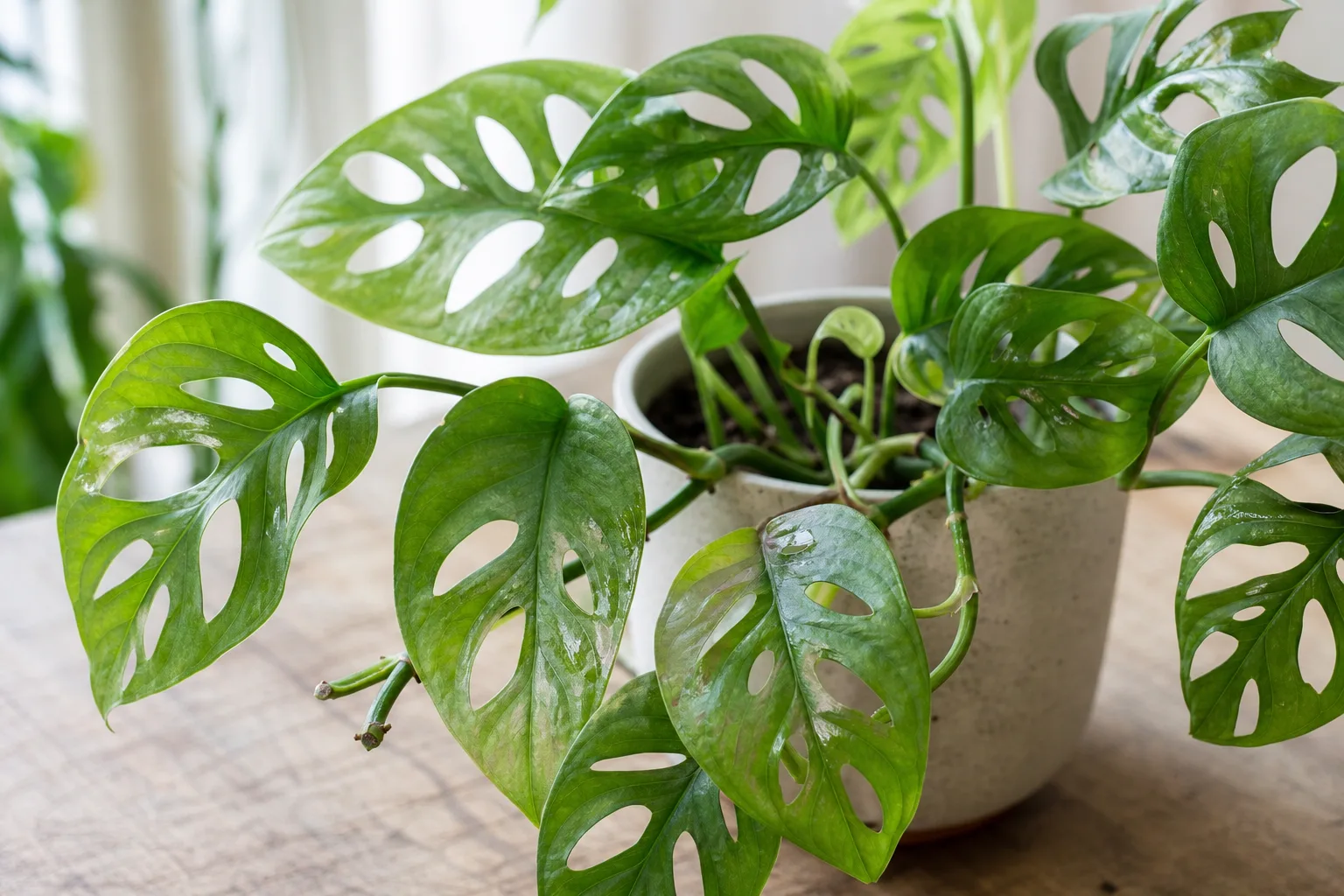
Transparent Leaves on Monstera Adansonii: Causes, Checks & Fixes
This guide covers transparent leaves on Monstera Adansonii. See also the general Transparent Leaves guide, watering, and light pages for this plant.
Transparent Leaves on Monstera Adansonii: Causes, Checks & Fixes
Quick answer
Transparent leaves on Monstera Adansonii (Monstera adansonii, Swiss cheese vine) mean leaf tissue has lost normal structure and become thin enough to see light through-not a fungal spot disease. On Monstera Adansonii overview, the look almost always traces to how water is moving between roots and thin fenestrated leaves.
The most common cause is edema (oedema): roots absorb water faster than leaves can release it, so internal cells rupture and leave water-soaked, translucent patches. Adansonii’s smaller, thinner leaves than Monstera deliciosa show this damage more dramatically than larger Monsteras.
First step: check moisture at the bottom of the pot and note whether transparency appeared within a day or two of a heavy watering. Oedema is caused when roots take up more water than leaves can transpire, leading to water-soaked patches. If soil is soggy for days with soft vines, root stress from overwatering is the more urgent path-not another drink.
What transparent leaves look like on Monstera Adansonii
Healthy Adansonii leaves are glossy green with oval fenestrations-opaque when backlit. Transparent damage stands out on this vine because each leaf is relatively thin and dries or swells quickly compared to Monstera deliciosa.
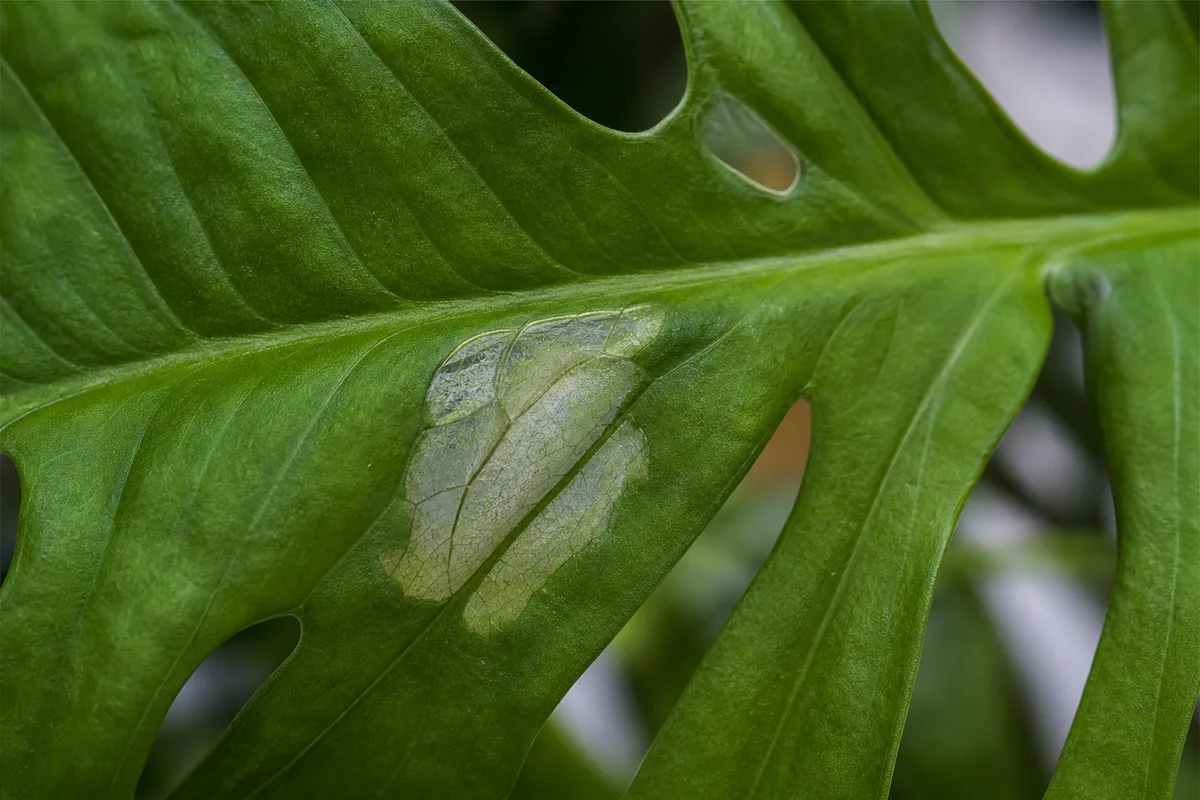
Transparent Leaves symptoms on Monstera Adansonii - compare with healthy tissue on the same plant.
Edema pattern (most common):
- Water-soaked, glassy patches-often on leaf undersides or near margins
- Spots may look blister-like before turning corky and tan
- Damage often appears within 24–48 hours after a thorough watering, especially if the plant was dry beforehand
- Soil moisture and roots may still look normal; the issue is uptake outpacing transpiration
- Scattered patches on one or a few leaves rather than whole-plant collapse
Overwatering and root-failure pattern:
- Leaves feel soft, heavy, and translucent-not just patchy
- Yellowing often starts on lower leaves while soil stays damp for a week
- Pot feels heavy; mix is wet at depth through drainage holes
- Vines droop even though you watered recently-damaged roots cannot supply water
- Sour smell from drainage holes suggests chronic wet mix
Low-light and poor-transpiration edema:
- Transparent patches on newer or lower leaves in a dim, humid corner
- No recent overwatering spike, but airflow is stagnant and light is weak
- Monstera gets leggy in lower light, slowing the leaf’s ability to release moisture
Sun or heat stress pattern:
- Bleached or water-soaked patches on leaves facing the hottest window
- Damage appears days after moving closer to glass or after direct sun exposure
- Direct sun can scorch Adansonii leaves; soil moisture is usually normal
Normal fenestrations are not damage-the oval holes are supposed to be there. Transparent tissue is patchy, water-soaked, or papery thin between fenestrations.
Why Monstera Adansonii gets transparent leaves
Adansonii evolved as a tropical rainforest climber with aerial roots and thin perforated leaves. Indoors, that physiology makes it sensitive to water-pressure swings and transpiration bottlenecks.
Drought-then-flood watering is the classic edema trigger. You let the top 3–5 cm go very dry-or the whole pot dries in a small hanging basket-then soak heavily. Thirsty roots pull water aggressively; leaves in dim or humid air cannot release it fast enough. Cell walls burst, producing see-through patches. Both complete dry-out and waterlogging impair root function-the swing matters as much as the volume.
Chronic overwatering keeps roots in oxygen-poor mix. As roots fail, leaves lose turgor and go soft and translucent even when soil feels wet-similar to underwatering symptoms but with a heavy pot. Overwatering can result in root rot on this species.
Low light plus high humidity slows transpiration. Adansonii prefers bright, indirect sunlight and warm, humid conditions-but without enough light to drive water movement, even proper watering can produce edema in stagnant air.
Dense trailing pots in open air dry unevenly. Multiple cuttings in one hanging basket may get a surface soak while inner roots stay dry, then flood on the next watering-exactly the inconsistency that produces patchy transparency on outer leaves first.
Cold drafts near window glass can damage thin leaves overnight. Avoid temperature drops below 50°F (10°C) and cold drafts that stress foliage already struggling with water balance.
How to confirm the cause
Work through these checks in order:
- Timing vs. last watering - Did transparent patches appear within one to two days of a heavy drink? Strong edema signal if yes.
- Soil moisture at depth - Insert a finger or skewer through the drainage hole. Damp throughout with soft translucent leaves points to overwatering. Dry throughout with thin papery leaves points to drought stress (less common for water-soaked transparency).
- Pot weight - Heavy for many days fits wet roots; very light fits drought.
- Leaf texture - Glassy water-soaked patches fit edema. Mushy whole-leaf transparency with yellowing fits root failure.
- Light and airflow - Dim corner, grouped plants, no fan, humidity above 60%? Environmental edema is plausible even with “correct” watering.
- Placement history - Recent move to hot south- or west-facing glass? One-sided damage suggests scorch.
- New growth - Firm new leaves with only old-leaf patches suggest edema or past stress, not active rot. Collapsing new growth on wet soil is urgent.
If wet soil and soft stems at the base both check out, treat as overwatering even if leaves look “thirsty.”
First fix for Monstera Adansonii
Pause the next watering and confirm whether the mix is still damp at depth before you trim leaves, repot, or soak again.
For likely edema (recent heavy watering, firm roots, patchy glassy spots): improve airflow and light so leaves can transpire normally. Move the vine to bright, indirect light, open a window briefly or run a fan on low nearby, and wait until the top 3–5 cm of mix is dry before the next thorough watering. Do not pick off edema-affected leaves-removing foliage can worsen the imbalance; let new growth replace damaged tissue.
For likely overwatering (wet soil for days, soft vines): withhold water until the mix dries appropriately, ensure drainage holes are open, and discard saucer water after every watering.
Do not fertilize stressed vines. Do not repot on day one unless roots are mushy and smell sour.
Step-by-step recovery
Once you know whether edema, wet roots, or sun drove the transparency, work in this order:
Edema and watering swings
- Let the top 3–5 cm dry, then water thoroughly until runoff exits drainage holes-discard saucer water.
- Avoid letting the vine go completely dry and then flooding; aim for steady cycles matching how fast your pot dries in your room.
- Increase Monstera Adansonii light guide slightly if the plant is in a dim spot-without jumping to direct midday sun.
- Improve airflow around crowded hanging baskets so leaf surfaces can release moisture.
- Judge success by new leaves opening opaque and firm, not old patches clearing.
Overwatering and root stress
- Withhold water until the top 3–5 cm is dry and the pot feels noticeably lighter-often one to two weeks indoors depending on season.
- If roots are brown, mushy, or the mix smells sour, unpot, trim rotted roots with clean scissors, and repot into fresh well-draining aroid mix with perlite and bark.
- Wait five to seven days after repot before the first light watering if you trimmed rot tissue.
- Reduce watering frequency in cool months when growth slows.
Sun or heat stress
- Pull the vine back from hot glass or filter intense afternoon rays.
- Acclimate gradually if you need brighter light for fenestration.
- Trim only fully collapsed leaves for appearance once new growth looks healthy.
Recovery timeline
Days 1–3 (edema): Stop new transparent patches from spreading once Monstera Adansonii watering guide and airflow stabilize. Existing glassy tissue will not turn fully green again-it may cork over into tan bumps.
Week 1–2 (mild overwatering): Withholding water and better drainage should stop spread. Old damaged leaves remain marked.
Week 2–4 (moderate root stress): After trim and repot if needed, new firm leaves along vine tips signal recovery.
Month 1+ (severe rot): Propagate healthy stem cuttings with nodes if the main root ball collapsed. Adansonii roots readily in water or moss when tissue is still firm.
Transparent leaf tissue does not heal back to solid green. Recovery always shows in new growth.
Lookalike symptoms
Pale leaves wash out evenly from low light or nutrient stress-they are not usually water-soaked and see-through. Check whether patches are glassy and localized.
Yellow leaves often accompany overwatering but may lack the translucent water-soaked texture. Wet soil plus yellowing lower leaves fits root stress; patchy glassiness after one watering fits edema.
Brown crispy leaves mean dried tissue-edges go papery. Transparency is about lost turgor and water-soaked softness, not brittleness.
Spider mites cause stippling and fine webbing on thin Adansonii leaves in warm dry winter rooms-not usually large translucent patches. Shake a leaf over white paper to rule them out.
Natural fenestrations are open holes, not thin patches. Do not confuse intentional perforations with cell damage.
Mistakes to avoid
- Watering again because leaves look limp while soil at depth is still damp
- Stripping every transparent leaf after edema-RHS advises against removing affected leaves because it can worsen the condition
- Drought-then-flood cycles that prime roots to over-absorb
- Keeping a summer watering schedule through slow winter growth in a cool room
- Monstera Adansonii repotting guide into a much larger pot while mix is still wet-extra wet mass worsens root stress
- Fertilizing to “green up” stressed leaves-wait until new growth is steady
- Misting as the only fix for edema-brief surface wetting does not fix transpiration bottlenecks
How to prevent transparent leaves next time
Match care to how Adansonii actually grows indoors:
- Watering: Let the top 3–5 cm dry, then water thoroughly; avoid bone-dry-then-flood swings in hanging baskets
- Light: Bright, indirect sunlight supports even transpiration; avoid direct scorching sun
- Humidity and air: Target 50–60% with good airflow-not stagnant ultra-humid corners in low light
- Mix and pot: Well-draining aroid mix with perlite and bark; drainage holes always open
- Support: A moss pole encourages larger leaves that handle moisture swings better than long cramped trailing stems
Transparent leaves on Monstera Adansonii are a water-balance signal, not a death sentence. Read timing against your last watering, stabilize rhythm and airflow, and judge recovery by new opaque leaves-not old see-through patches.
When to use this page vs other Monstera Adansonii guides
- Monstera Adansonii watering guide - Use for routine moisture checks before assuming transparent leaves is the main issue.
- Monstera Adansonii problems hub - Browse all 22 common issues on this species.