Mold on Soil on Marigold: Causes, Checks & Fixes
Quick answer
Mold on marigold soil is usually a moisture-management problem, not a fatal disease. Scrape the surface, let the top layer dry before watering again, and correct shade, drainage, and saucer water so the mix dries between drinks.
Mold on Soil on Marigold: Causes, Checks & Fixes
This guide covers mold on soil on Marigold. See also the general Mold on Soil guide, watering, and light pages for this plant.
Mold on Soil on Marigold: Causes, Checks & Fixes
Quick answer
For marigold, mold on the soil surface usually means the potting mix is staying wet too long. That is a culture issue first, not an automatic root disease diagnosis. Start by removing the moldy top layer, pausing irrigation until the upper mix dries, and restoring conditions marigold prefers: full sun and well-drained soil.
What mold on soil looks like on Marigold
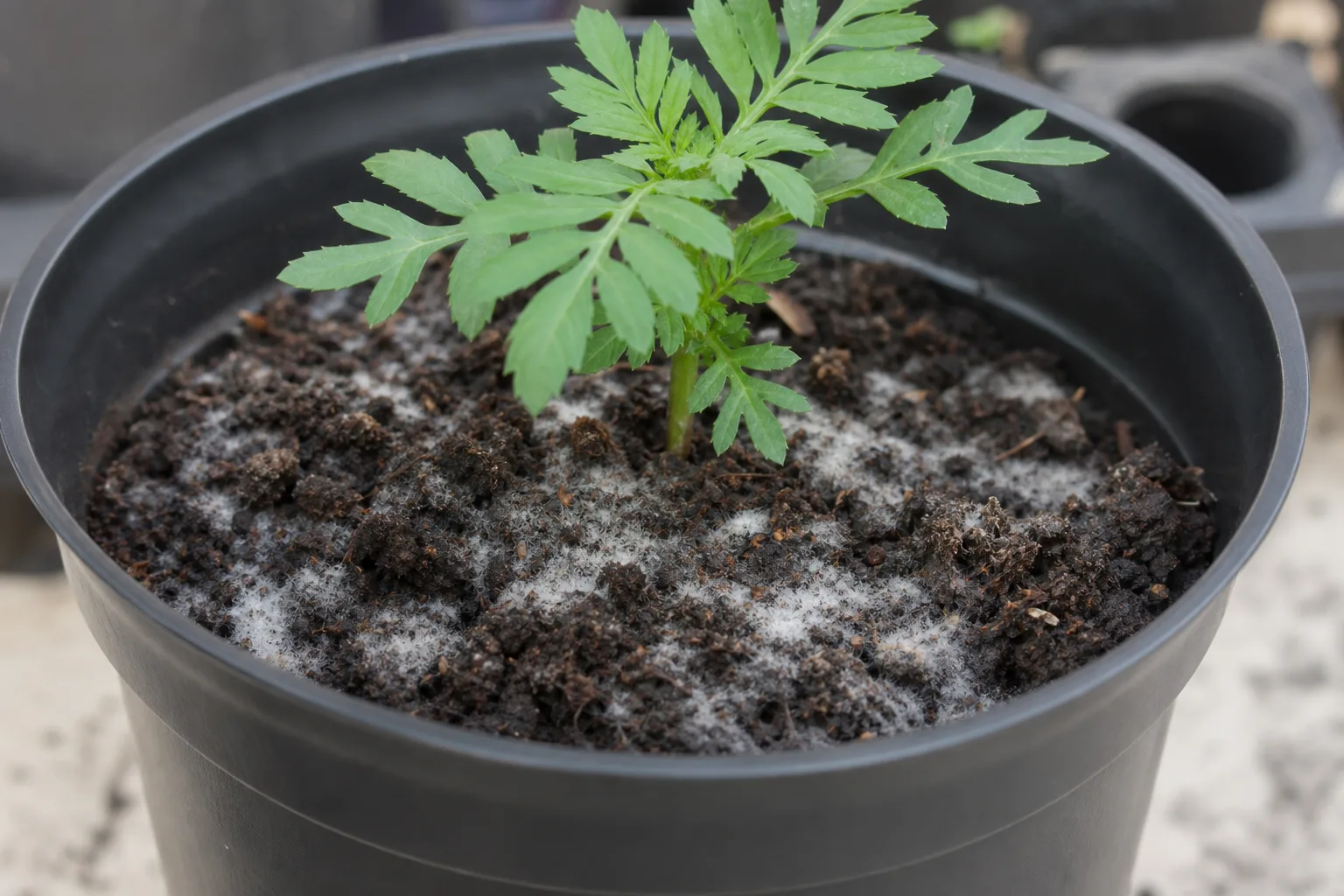
Typical surface growth appears as white fuzzy patches, gray film, or green algae-like sheen on the top of the mix. Algae and fungi can both develop on potting media under persistently moist conditions, and they often recur quickly if the surface never dries between waterings.
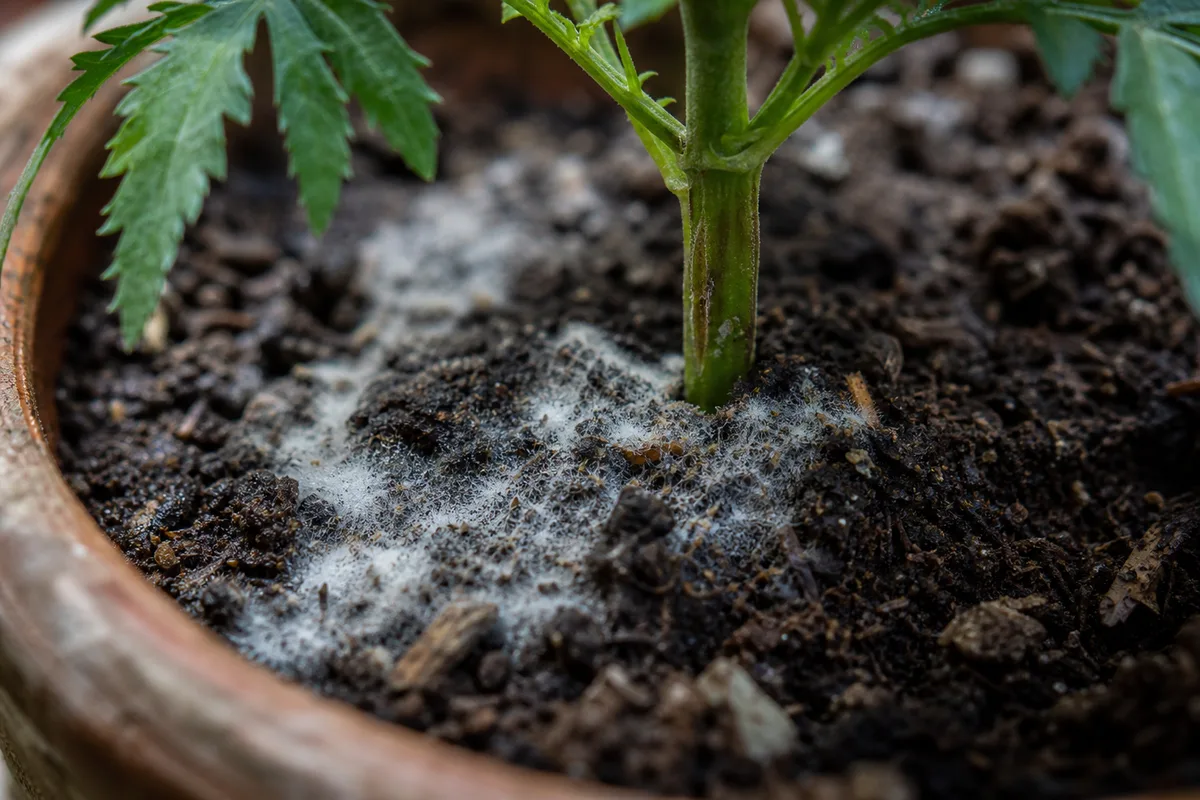
Mold on Soil symptoms on Marigold - compare with healthy tissue on the same plant.
The plant can look mostly normal at first. If wet conditions continue, you may then see yellowing lower leaves, weak growth, or wet wilt from root stress. Keep this separate from botrytis flower blight on marigolds, which shows up on petals and flower tissue rather than only on the soil surface.
Why Marigold gets mold on soil
Marigold tolerates drying better than chronic saturation. UMN notes marigolds are relatively drought-tolerant, so a schedule that keeps soil constantly damp is a common trigger for mold on containers.
Most cases combine several factors:
- low light or partial shade that slows dry-down
- dense or highly organic media that stays damp at the top
- frequent light watering instead of deep watering plus dry interval
- saucer water left under the pot
- crowded placement with poor airflow
Lookalikes to rule out first
Before you treat, confirm what you are seeing:
- Soil-surface mold/algae: growth sits on top of mix and is worst in persistently damp pots.
- Botrytis on blooms: flowers turn brown and can develop gray spore masses, often during humid weather.
- Powdery mildew: white dusty growth occurs on leaves and stems, not just the soil.
- Yellow houseplant mushrooms: species like Leucocoprinus birnbaumii are linked to moist media and indicate wet conditions rather than direct root attack.
- Advanced root rot on Marigold: sour smell, black mushy roots, and collapse despite wet soil point beyond cosmetic surface mold.
How to confirm the real cause on your marigold
Run this check in order:
- Dry-depth check: Is the top 2-3 cm still damp 24-48 hours after watering?
- Drainage check: Are there drainage holes, and is saucer water being emptied?
- Light check: Is this marigold actually getting full-day sun or mostly bright shade?
- Root-stress signs: Any yellowing, soggy wilt, or sour odor from the root zone?
- Pest pairing check: Are tiny gnats rising when disturbed? Fungus gnats breed in moist organic media.
- Flower/leaf check: Any gray fuzzy flowers (botrytis) or leaf powder (powdery mildew) indicating a different path?
First fix for Marigold
Your first move is one action set: scrape and dry. Remove the upper moldy crust, then do not water again until the upper layer is dry to touch at depth. Keep the plant in strong sun and airflow so the surface can reset.
Do not apply fungicide first. If moisture management is wrong, sprays usually do not solve recurrence.
Step-by-step recovery
- Remove visible surface growth and discard it.
- Pause irrigation until the upper layer dries.
- Shift to the sunniest suitable location; marigold performs best in full sun conditions.
- Resume watering deeply but less often, then let the surface dry again.
- Empty saucers after watering; do not let containers sit in runoff.
- If mix stays heavy and wet, repot into a more open, fast-draining blend.
- If gnats are present, manage moisture first and follow your dedicated
/plants/marigold/fungus-gnats/plan.
If symptoms are broader than surface mold (persistent wilt, yellowing, stem base softening), escalate to /plants/marigold/[overwatering on Marigold](/plants/marigold/overwatering/)/ and /plants/marigold/root-rot/.
Recovery timeline
Surface growth usually drops sharply within 7-14 days once dry-down is consistent. New healthy growth is the real success marker. Damaged old leaves may not recover, so judge progress by fresh leaves and stable stems, not by old cosmetic damage.
What not to do
Do not keep watering on a fixed calendar while soil remains damp. Do not top-dress with moisture-trapping moss or undecomposed organic debris. Do not confuse soil mold with flower blight and treat the wrong problem. Do not fertilize heavily while roots are stressed from wet media.
How to prevent it next time
Use a repeatable pattern:
- choose pots that drain quickly
- keep marigold in high light
- water at the base and avoid frequent shallow splashes
- allow the top layer to dry between waterings
- keep airflow between containers
For routine care alignment, cross-check /plants/marigold/watering/ and /plants/marigold/.
Marigold care cross-check
Treat this page as a triage point: mold on soil is often the earliest visible sign that watering and environment are out of balance. Correct those conditions first, then reassess whether any separate disease issue remains.
When to worry
Act urgently if mold appears with wet wilt, sour odor, stem collapse, or black mushy roots. For seasonal marigolds, severe root loss can make replacement more practical than rescue. If flowers are browning with gray fuzz during humid weather, treat as botrytis disease pressure rather than simple soil-surface mold.
Conclusion
Most marigold soil mold clears when you restore dry-down rhythm, drainage, and sun exposure. Diagnose first, use one clear first fix, and escalate only if root-rot or flower-blight signs appear.
When to use this page vs other Marigold guides
- Marigold watering guide - Use for routine moisture checks before assuming mold on soil is the main issue.
- Marigold problems hub - Browse all 20 common issues on this species.
- Fungus Gnats on Marigold - Different entry point when symptoms overlap with mold on soil.
- Overwatering on Marigold - Different entry point when symptoms overlap with mold on soil.
- Root Rot on Marigold - Different entry point when symptoms overlap with mold on soil.