Fungus Gnats on Marigold: Causes, Checks & Fixes
Quick answer
Fungus gnats on marigolds mean the top of the potting mix has stayed wet too long - usually from overwatering or poor drainage. Let the surface dry before the next watering, empty saucers, and use yellow sticky traps for adults. Indoor-started seedlings may need a BTI drench if flies persist after drying.
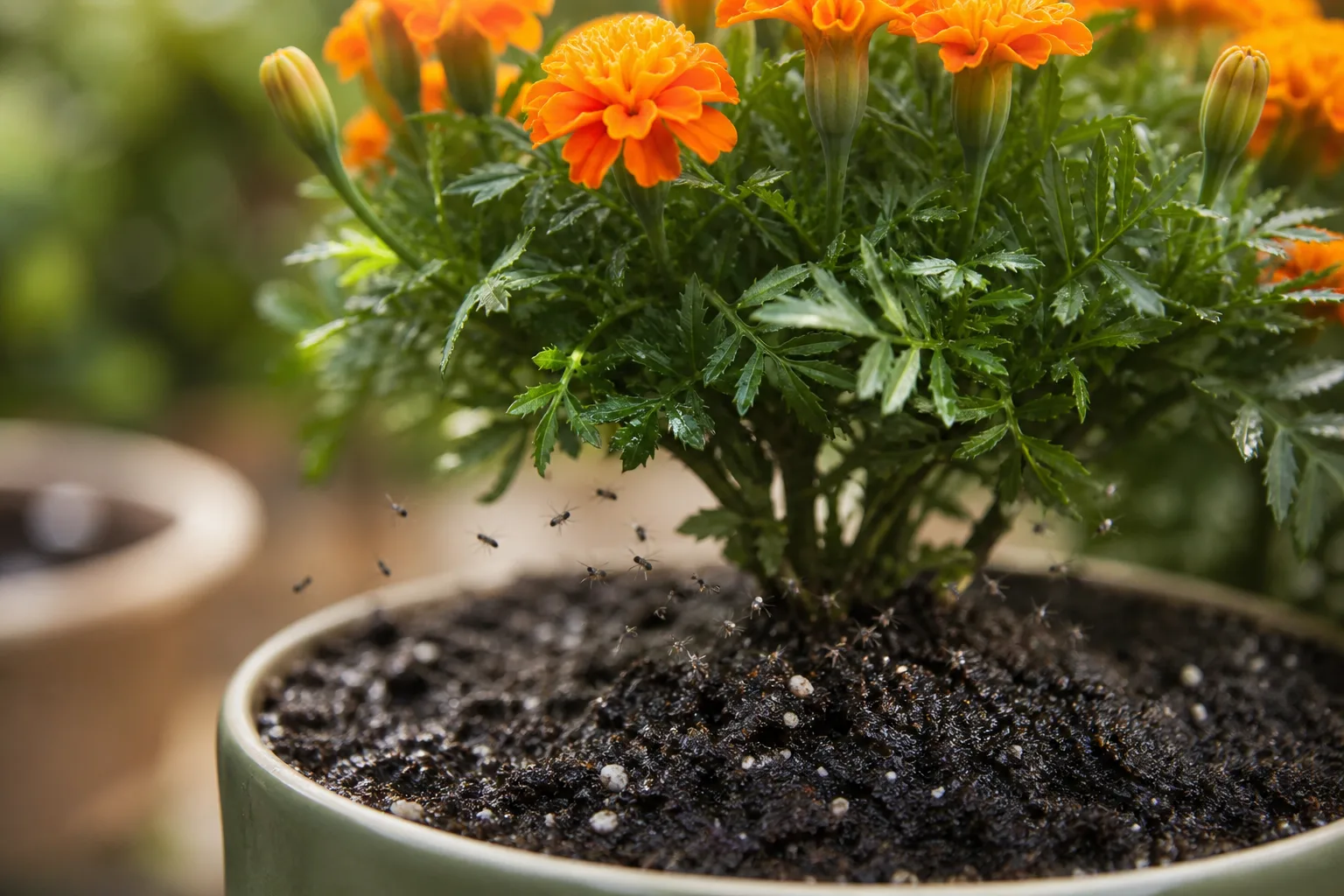
Fungus Gnats on Marigold: Causes, Checks & Fixes
This guide covers fungus gnats on Marigold. See also the general Fungus Gnats guide, watering, and light pages for this plant.
Fungus Gnats on Marigold: Causes, Checks & Fixes
Quick answer
Fungus gnats on marigold containers are almost always a wet-surface-soil signal, not a random pest attack. Adults are annoying; larvae live in the top layer of damp organic mix. First fix: stop watering until the top 3 cm feels dry, then water at the base and empty the saucer. If you are starting seedlings indoors under a dome, pair dry-down with yellow sticky traps at the pot rim - not fruit-fly strips in the kitchen.
Why marigold gets fungus gnats
Fungus gnat larvae feed on fungi and organic matter in moist potting media. Container watering that keeps the surface constantly damp creates ideal breeding habitat.
Marigolds attract gnats when culture fights their biology. Marigolds tolerate drought better than chronic sogginess and perform best in full sun with well-drained soil. A shaded balcony pot watered on a calendar - or an indoor seed tray misted daily - stays wet longer than a sun-baked container, and gnats follow that moisture.
Seasonal marigolds are often replaced mid-season, so harsh systemic drenches are rarely the smartest first move. Culture correction plus traps usually clears mild infestations on established bloomers. Seedlings started indoors are the exception: peat-heavy mix under humidity domes dries slowly, and larval root nibbling matters more on young roots.
What fungus gnats look like on marigold
On marigold pots you will usually see:
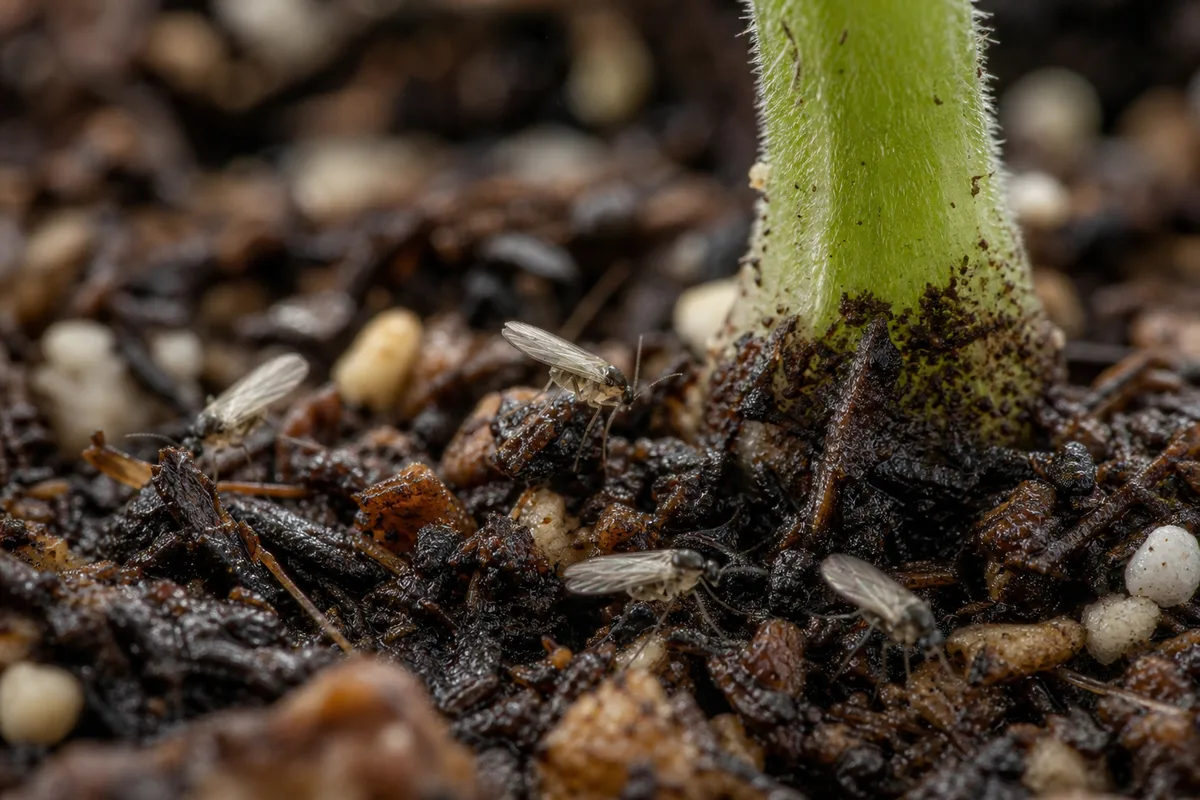
Fungus Gnats symptoms on Marigold - compare with healthy tissue on the same plant.
- Tiny dark flies hopping on the soil surface when the pot is bumped or watered
- More activity in the evening near windows where adults congregate
- Green algae or mold on the wet soil top - often alongside gnats; see mold on soil on marigold for that crossover
- Otherwise healthy foliage early; yellow lower leaves follow if wet culture continues
Established African marigolds (Tagetes erecta) in full sun may show flies but little leaf damage. French marigolds (Tagetes patula) in small pots can look stressed faster when larvae and wet roots combine.
Lookalikes to rule out
| Pest | Where you see it | Body shape | Breeding site | First check |
|---|---|---|---|---|
| Fungus gnat | Rises from marigold pot when soil is disturbed | Slender, long legs, weak fliers | Wet potting mix top | Surface stays wet for days |
| Fruit fly | Kitchen, compost bucket, near fruit bowl | Rounder, stronger flier | Decaying fruit and food waste | Flies ignore dry marigold soil |
| Shore fly | Greenhouse benches, constantly wet media | Stockier than fungus gnat | Algae on wet surfaces | Often on capillary mats or flood trays |
If flies appear only when you water the marigold and never near food waste, fungus gnats are the working diagnosis. UC IPM notes adult fungus gnats emerge from houseplant media and become a nuisance indoors - the same pattern applies to indoor-started marigold seedlings.
How to confirm the cause
- Disturb test: Brush the soil surface - fungus gnats rise in a small cloud.
- Moisture test: Stick a finger into the top 3 cm. If it is always damp, culture is confirmed as the driver.
- Root check (seedlings or yellowing plants): Gently tip the pot. Fine white roots should be firm; mushy roots point to overwatering or root rot, not gnats alone.
- Trap check: Yellow sticky traps at the pot rim catch adults but do not replace drying the mix - UMN Extension recommends traps alongside culture change.
First fix for marigold
Let the top 3 cm of mix dry before the next watering, then water at the base and discard saucer runoff. Move patio pots to brighter exposure if shade is slowing dry-down - marigolds need full sun for both bloom and faster soil dry-down.
Place yellow sticky traps at the pot rim to catch egg-laying adults while larvae decline in the drier top layer. Do not reach for chemical drenches on healthy seasonal bloomers until culture and traps have had two weeks.
Step-by-step recovery
- Adjust watering immediately using the top 3 cm dry test - full rhythm in the marigold watering guide.
- Empty saucers after every watering; never let pots sit in standing water.
- Scrape green algae from the surface if present and loosen a crusty top layer so air reaches the mix.
- Trap adults at the rim; replace sticky cards weekly until fly counts drop.
- Reassess roots if lower leaves yellow on wet soil - follow root rot rescue instead of repeating trap-only treatment.
Recovery example
A balcony African marigold in partial afternoon shade developed heavy gnats after daily top-watering through a saucer. Fly counts peaked within ten days of moving the pot to full sun, switching to base watering when the top 3 cm dried, and adding one sticky trap per pot. Adults faded within two weeks; blooms continued without a soil drench.
When drying alone is not enough
If adults persist after two weeks of proper dry-down - common on indoor-started seedlings in peat mix under domes - add a BTI (Bacillus thuringiensis israelensis) soil drench. UMN Extension notes BTI in mosquito-dunk products targets fungus gnat larvae and is safe for plants and pets. UC IPM recommends repeat applications at about five-day intervals because Bti does not persist indoors.
Apply per product label: soak the labeled amount in water, skim solids if directed, and drench the top few inches of mix. Continue surface dry-down and traps in parallel - BTI kills feeding larvae, not eggs or adults.
| Infestation level | What you see | First action | Escalation |
|---|---|---|---|
| Mild | Few flies on disturb; firm roots | Dry top 3 cm; empty saucer | Sticky traps at rim |
| Moderate | Daily flies; algae on surface | Watering reset + traps | BTI drench on seedlings or persistent pots |
| Severe | Yellow leaves on wet soil; stalled growth | Stop watering; inspect roots | Root rot protocol; repot only if roots fail |
Recovery timeline
Adult fly counts usually drop within one to two weeks once the surface stays dry between waterings. Seedling vigor improves as root-zone oxygen returns. BTI adds another one to two weeks for larval cycles when repeat drenches are needed.
Judge success on fading fly counts, firm roots, and new upright growth - not on whether you ever see a single fly.
What not to do
- Do not keep calendar watering while gnats persist.
- Do not drench healthy seasonal marigolds with harsh chemicals before fixing wet culture.
- Do not rely on sticky traps alone in constantly wet mix - larvae keep hatching.
- Do not confuse kitchen fruit flies with pot gnats and treat the wrong source.
- Do not salvage a severely rotted warm-season annual mid-season when replacement costs less than repot surgery - see when to worry below.
How to prevent it next time
Use perlite-heavy mix, full sun, and the top 3 cm dry test. Ensure well-draining soil before planting African marigolds in containers. For indoor starts, vent humidity domes daily and avoid misting peat mix on a fixed schedule. Skip undecomposed compost top-dress that stays wet and invites fungi and gnats.
In garden beds, water at the base and avoid flooding marigold crowns; bed edges in shade stay wet longer than open soil in full sun.
Marigold care cross-check
| Signal | Likely link | Next read |
|---|---|---|
| Wet top, flies on disturb | Fungus gnats + overwatering | Overwatering on marigold |
| Green film on soil surface | Algae / mold overlap | Mold on soil on marigold |
| Yellow lower leaves, wet mix | Root stress | Yellow leaves on marigold |
| Mushy roots, sour smell | Root rot | Root rot on marigold |
| Dry top, no flies | Culture fixed | Marigold watering |
Gnats are a wet-soil alarm for marigolds. Fix sun and base watering - not traps alone.
When to worry
Escalate when gnats pair with overnight wilt on wet soil, mushy roots, or collapsing seedlings. That pattern is root failure, not a fly problem. Repot and trim rot per the root rot guide rather than adding more traps.
On large store-bought patio marigolds you plan to replace in fall, urgent chemical treatment is usually unnecessary unless growth has already stalled.
Related marigold problems
- Marigold overview
- Marigold watering
- Overwatering on marigold
- Root rot on marigold
- Mold on soil on marigold
- Yellow leaves on marigold
- Marigold propagation - indoor seed-start humidity and gnat risk
Conclusion
Fungus gnats on marigolds mean the potting surface has stayed wet too long. Confirm flies rising on disturb, dry the top 3 cm before the next watering, trap adults at the rim, and link any yellowing on wet soil to root rescue - not pest sprays alone. Seedlings that stay wet under domes may need BTI after culture change; established seasonal bloomers rarely need more than watering correction and patience.
When to use this page vs other Marigold guides
- Marigold watering guide - Use for routine moisture checks before assuming fungus gnats is the main issue.
- Marigold problems hub - Browse all 20 common issues on this species.
- Overwatering on Marigold - Different entry point when symptoms overlap with fungus gnats.
- Mold on Soil on Marigold - Different entry point when symptoms overlap with fungus gnats.
- Root Rot on Marigold - Different entry point when symptoms overlap with fungus gnats.