Bud Drop on Marigold: Causes, Checks & Fixes
Quick answer
Bud drop on marigold means developing flower buds abort before opening-usually from moisture swings during hot weather, sudden sun moves, or pests on tender bud tissue. First step: check soil moisture at the base with the top 3 cm dry test before you spray, fertilize, or move the pot.
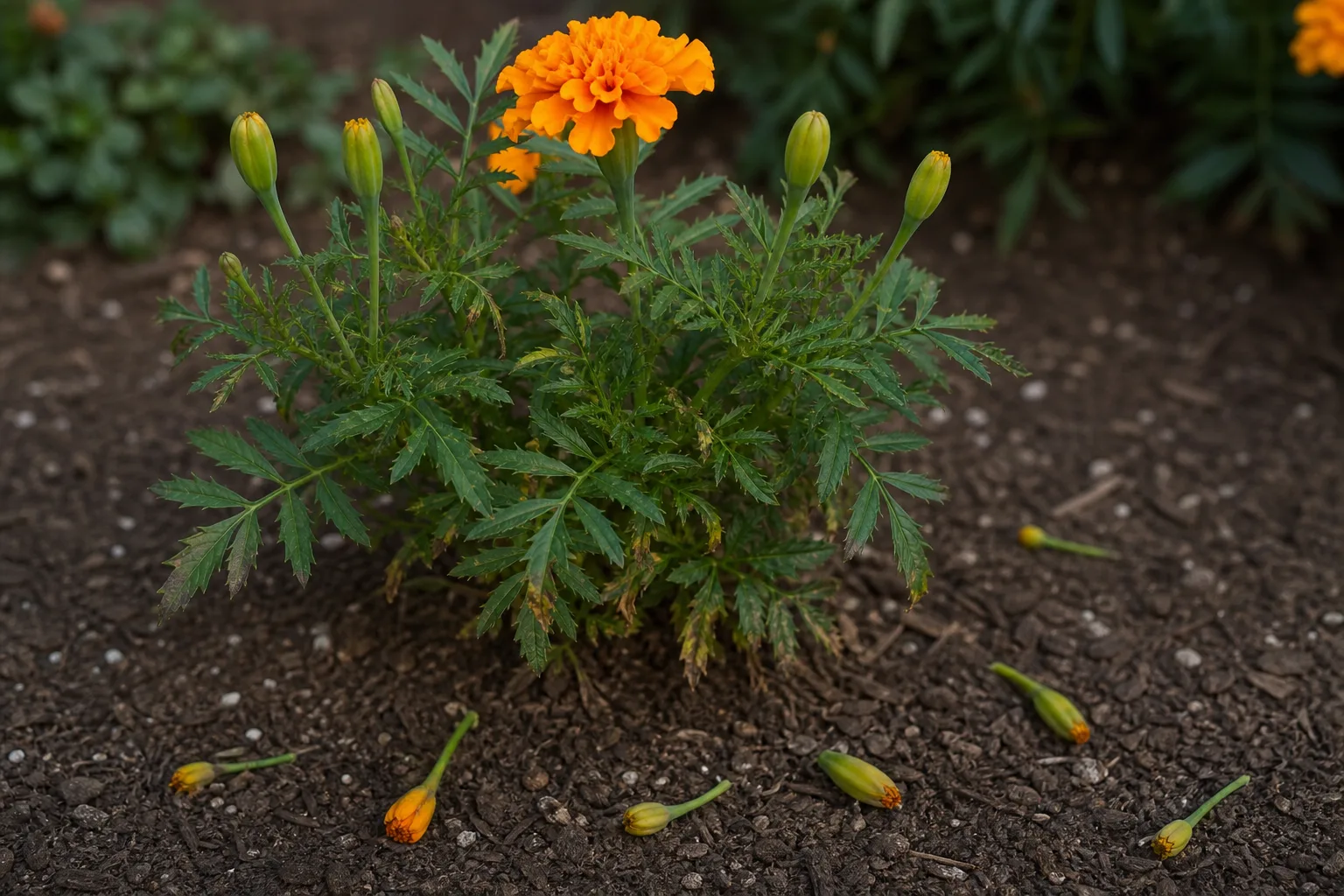
Bud Drop on Marigold: Causes, Checks & Fixes
This guide covers bud drop on Marigold. See also the general Bud Drop guide, watering, and light pages for this plant.
Bud Drop on Marigold: Causes, Checks & Fixes
Quick answer
Bud drop on marigold means developing flower buds detach before petals open-you find small tight buds on the soil, pot rim, or patio below the plant while leaves stay mostly green. On Tagetes erecta (African marigold), this almost always traces to stress during bud swell: drought in afternoon heat, soggy roots after overwatering on Marigold, a nursery-to-blazing-sun move without acclimation, or pests feeding on the softest tissue at stem tips.
First step: check soil moisture at the base before you fertilize, spray, or relocate the pot. Stick a finger 3 cm into soil beside the stem. If it is dry and leaves wilt in afternoon sun, water deeply at the base. If soil stays wet and heavy for days, hold water and check drainage-saturated roots abort buds too. For the full watering rhythm, see the marigold watering guide.
Developing buds are the most water-hungry tissue on the plant. Severe drought stress can lead to flower bud abortion because expanding buds need steady moisture for cell growth-marigolds in full sun containers dry fastest during July heat waves.
What bud drop looks like on marigold
Bud drop is about what falls and when, not simply fewer flowers at season end.
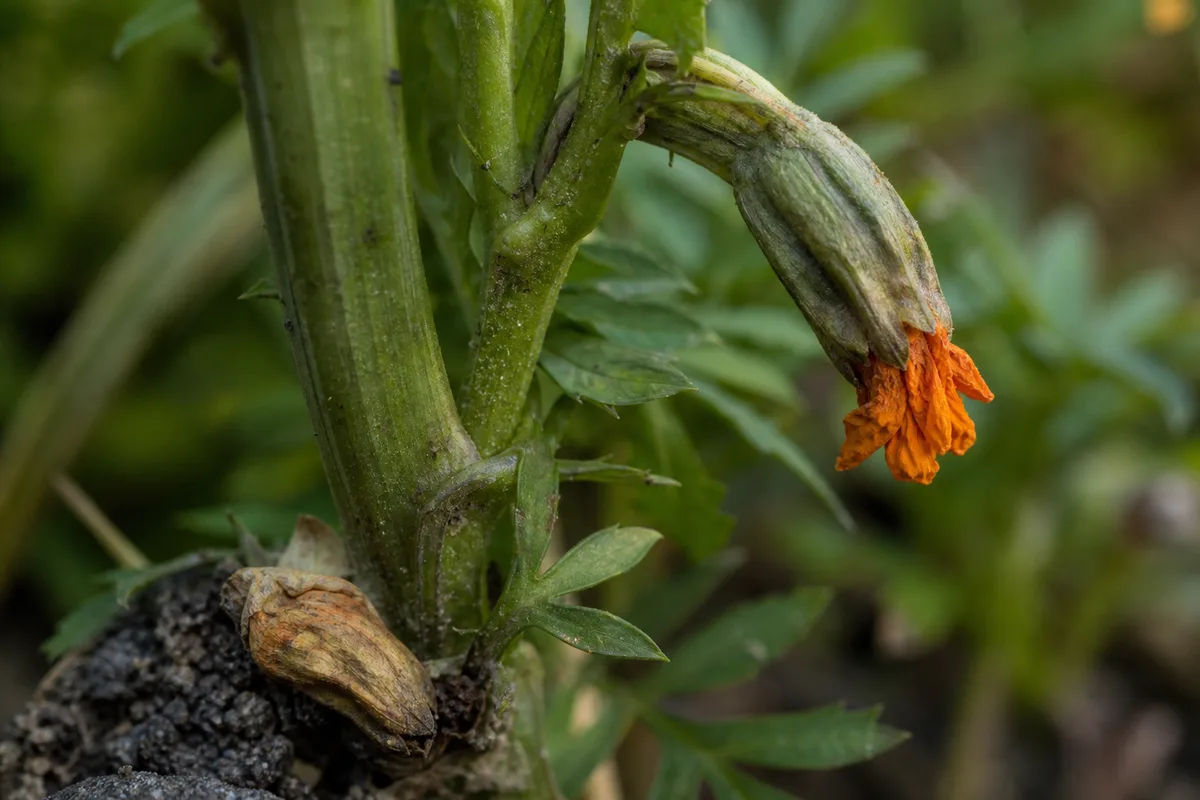
Bud Drop symptoms on Marigold - compare with healthy tissue on the same plant.
Typical bud-drop signs:
- Small unopened buds-pea-sized on French types, marble-to-golf-ball-sized on African marigolds-lying on soil or caught in foliage below the stem
- Bare pedicels where a bud was attached; the tiny stem tip may look cleanly broken or slightly dry
- Open flowers still present on lower stems while newer buds in the same cluster are missing
- Afternoon wilting on the same plant, especially in pots that dry fast on west-facing railings
- Recovery overnight after watering when drought caused the abort-stems stiffen by morning even though fallen buds do not return
What distinguishes stress bud drop from disease or pests:
- Botrytis flower blight shows brown flower parts with grey spore masses when wet-buds often shrivel in place on humid porches rather than falling cleanly green
- Aphids cluster on soft shoot tips and bud scales, leaving sticky honeydew; buds may distort before dropping-see aphids on marigold for full treatment
- Thrips scar bud tissue with silvery streaks; buds may fail to open or drop without obvious wilting when soil moisture is adequate
- Spider mites cause stippled leaves and fine webbing on stressed summer plants; heavy infestations weaken buds on dry container marigolds-cross-check spider mites on marigold
- Natural senescence affects opened blooms that fade and dry on the plant-that is deadheading territory, not bud drop
- Cold damage after nights below roughly 10°C turns buds and upper leaves dark or translucent; tissue does not recover
African marigolds abort buds more dramatically than French types because each head invests more energy in large double flowers-when stress hits during swell, the plant sheds the most expensive buds first.
Why marigold drops buds
Marigolds are heat-loving annuals bred for continuous summer color in full sun with well-drained soil. Flower buds are the first reproductive tissue sacrificed when the plant cannot balance water uptake with transpiration in heat.
Drought and heat stress. Peak afternoon temperatures dry container soil in hours. When the top 3 cm goes bone dry during active bud swell, marigolds wilt and abort buds to conserve resources. High temperatures in July and August can cause temporary declines in growth and bloom even in full sun-boom-bust watering (dry for days, then flooded) triggers repeated bud loss through midsummer. For drought-specific recovery steps, see underwatering on marigold.
Overwatering and root stress. Marigolds tolerate drought better than chronic sogginess. Soggy soil suffocates fibrous roots; stressed roots deliver less water and oxygen, and buds abort even when surface soil looks wet. Lower yellow leaves on constantly wet mix point toward root rot rather than simple drought.
Nursery-to-sun acclimation failure. Six-packs grown under nursery shade moved straight to intense west-facing afternoon sun often drop buds within 48 hours while stems stay firm and soil is moist-the softest bud tissue burns before leaves show obvious damage.
Transplant and repot shock. Root disturbance during active bud swell diverts energy away from flowers. Bud loss within days of planting, with moist soil and firm stems, fits shock rather than drought. Gradual loss over a dry week fits underwatering.
Botrytis and humid porch culture. Their blooms tend to rot easily in humid conditions. Enclosed porches, evening overhead watering, and poor airflow invite Botrytis cinerea on flower parts-grey fuzzy growth on wet bud tips that brown and abort before opening.
Aphids on tender bud tissue. Soft shoot tips attract aphids that suck sap and distort buds. Sticky residue on bud scales is a reliable clue. Heavy feeding can cause buds to fail without obvious wilting if soil moisture is adequate.
Thrips inside and on buds. Missouri Botanical Garden notes marigolds are susceptible to thrips. Western flower thrips scar petals and bud scales in hot dry weather; buds may shrivel, fail to open, or drop while leaves look only mildly stippled. Silvery streaks on bud tissue confirm thrips over drought.
Spider mites on stressed summer plants. Dry heat favors mites on container marigolds. Stippled leaves, fine webbing, and general decline weaken bud production. Mite pressure often overlaps with drought-fix moisture before escalating sprays.
Cold snaps and temperature swings. Marigolds are frost-tender annuals. Nights below roughly 10°C after warm days damage developing buds. Sudden heat after cold also stresses tissue. Bud drop after a weather swing points to environmental injury, not nutrient deficiency.
Excess nitrogen during bud swell. Too much fertilizer pushes foliage over flowers. While this more often causes no flowers or small flowers, heavy nitrogen on container marigolds during bud initiation can abort developing blooms when the plant prioritizes vegetative growth.
Ethylene exposure indoors. Ripening fruit, poorly vented gas heaters, and decomposing organic matter release ethylene-a gas that can abort flower buds at very low concentrations. Marigolds held overnight near ripening tomatoes in a closed porch may drop buds without obvious pests or drought.
How to confirm the cause
Work through these checks in order-the answer usually appears before you need sprays:
- Soil moisture at 3 cm depth - Dry with afternoon wilt confirms drought stress. Wet and heavy for several days with limp plant suggests overwatering or poor drainage.
- Recent move or transplant timeline - Bud loss within 48 hours of planting or sun relocation, with firm stems and moist soil, fits acclimation or transplant shock. Gradual loss over a dry week fits drought.
- Container vs in-ground - Pots on sunny balconies dry fastest; bud drop clustered on container plants strongly implicates moisture management.
- Bud and leaf inspection - Clean green fallen buds with no spots support stress. Brown fuzzy tips in humid weather point to botrytis. Silvery bud scarring suggests thrips.
- Pest check - Look at bud scales and shoot tips with a hand lens. Soft aphid clusters, thrips scarring, sticky honeydew, or fine mite webbing confirm insect pressure.
- Weather context - Record whether a heat wave, missed watering day, cold night, or porch humidity spike preceded the drop.
- Neighbor comparison - Nursery-shaded plants dropped buds after one sunny afternoon while acclimated neighbors kept theirs-isolates sun shock. Whole bed affected after dry spell implicates irrigation.
If soil was dry, plants wilted afternoons, and buds fell cleanly without spots, drought stress is the working diagnosis-fix water before anything else.
First fix for marigold
Check soil moisture at the base, then water deeply if the top 3 cm is dry-or stop watering if soil stays soggy.
For dry soil: soak at soil level until moisture penetrates at least 15 cm in beds or runs from container drainage holes. Water in the morning so roots recharge before peak afternoon heat. Do not mist foliage or flowers; water at the base, not over buds in humid evenings.
For wet soil: skip watering until the top 3 cm dries. Improve drainage in containers, loosen compacted bed edges, and remove mulch piled against stems if it holds moisture. Do not fertilize a stressed root system.
After correcting moisture:
- Acclimate sun moves gradually - Part shade for three to five days, then full sun, if the plant came from nursery shade
- Provide temporary afternoon shade only during extreme heat above 38°C for container plants-one to three days of shade cloth during the hottest hours, not permanent shade
- Rinse aphids from bud tips with a strong morning water stream if insects are confirmed-spray only after moisture is stable
- Remove brown botrytis-infected buds and improve porch airflow if grey fuzz is present
Do not apply fertilizer as a first response. Bud drop from stress is not fixed by feeding; nitrogen can make the problem worse.
Step-by-step recovery
Branch recovery by what you confirmed-do not stack every fix at once.
If drought or heat stress:
- Maintain even moisture for two weeks using the top 3 cm dry test-see marigold watering.
- Mulch container surfaces lightly during heat waves to slow evaporation.
- Scout new buds every three to four days for fresh green swell at tips.
If acclimation or transplant shock:
- Hold off on Marigold repotting guide or heavy pruning until new buds appear.
- Provide partial afternoon shade for three to five days, then return to full sun gradually.
- Keep soil evenly moist-not soggy-while roots re-establish.
If aphids or thrips:
- Rinse bud tips with water in early morning for light aphid infestations.
- Inspect with a hand lens every three days; treat confirmed thrips per label if scarring spreads-see aphids on marigold for aphid-specific steps.
- Do not spray stressed plants until moisture is stable.
If botrytis on humid porches:
- Remove infected buds and fallen debris; improve airflow.
- Switch permanently to base watering in morning.
- Space containers so leaves do not touch walls or neighboring plants.
If overwatering or root stress:
- Hold water until the top 3 cm dries; check for soft stems at the soil line.
- Follow root rot rescue if wet wilt accompanies total bud loss.
- Resume light balanced feed only after one week of stable moisture and visible new buds-marigolds are low feeders.
General for all paths:
- Deadhead spent blooms only - Remove flowers that already opened and faded. Do not strip healthy unopened buds unless they show brown disease spots.
- Resume light feeding only after new growth - Half-strength balanced fertilizer once new buds are visible, not before.
Recovery timeline
Drought-related bud drop: New buds typically appear within 7 to 14 days after moisture stabilizes. Afternoon wilting should ease within 24 to 48 hours of proper deep watering. Fallen buds never reopen.
Acclimation or transplant shock: Expect three to seven days before fresh bud swell when roots were moderately disturbed and soil stays warm and evenly moist. Large budded nursery packs may take two to three weeks and produce smaller blooms temporarily.
Pest-related loss: Aphid rinse plus stable moisture often shows new clean buds within 10 to 14 days. Thrips damage may need a full flush cycle before unblemished buds dominate.
Botrytis on porches: Removing infected tissue and switching to base watering slows spread; badly infected plants may need one full flush cycle before clean buds dominate.
Cold-damaged buds: Darkened buds are dead tissue. Recovery depends on warm weather and undamaged nodes pushing new shoots-often 10 to 14 days after the cold event.
Root-damaged plants: Bud recovery may take three weeks or longer; some mid-season annuals with repeated total loss are better replaced than nursed.
Judge success by new clean buds, not by old leaves returning to perfect form.
Lookalike symptoms
Several marigold problems overlap with bud drop. Separating them avoids wrong fixes:
| What you see | Likely cause | Key differentiator |
|---|---|---|
| Green buds on soil, afternoon wilt | Drought / heat | Dry top 3 cm; recovery after deep watering |
| Yellow lower leaves, wet soil, limp plant | Overwatering / root stress | Soil stays heavy; may link to drooping leaves |
| Sticky bud tips, soft aphids visible | Aphids | Insects on tender tissue; see aphids guide |
| Silvery bud scars, no wilting | Thrips | Bud scales scarred; soil moisture adequate |
| Stippled leaves, fine webbing | Spider mites | Dry heat stress overlap; see spider mites |
| Grey fuzz on brown bud tips, humid porch | Botrytis | Wet evenings, poor airflow |
| Dark translucent buds after cold night | Frost / cold snap | Weather event; tissue does not green up |
| Lush leaves, no buds ever formed | Shade / excess nitrogen | Zero bud formation-see no flowers |
| Open blooms browning in place | Botrytis / alternaria on flowers | Affects opened or nearly open blooms, not pre-open abort |
Wilting without bud loss - Afternoon heat wilt that recovers overnight without fallen buds is early drought warning; act before buds abort.
Causes to rule out
Before treating pests or feeding, rule out these common misreads:
- Shade stress - Marigolds in partial sun may drop buds while producing few replacements; confirm full sun hours per the light guide.
- End-of-season fade - Cool nights naturally slow bloom; not the same as mid-summer abort.
- Spent bloom drop - Old flowers fading on the plant is normal aging; deadhead spent blooms to redirect energy.
- Aster yellows - Witch’s-broom shoots from flowers and yellow-green narrow leaves indicate disease transmitted by leafhoppers-not ordinary bud drop. Remove affected plants.
Mistakes to avoid
- Fertilizing immediately when buds fall, hoping to boost blooms
- Overwatering daily after drought-alternating extremes causes repeated bud loss
- Overhead sprinklers that soak marigold flowers and spread botrytis spores on humid porches
- Moving pots daily between deep shade and blazing sun without acclimation
- Transplanting bud-heavy nursery packs during heat waves
- Ignoring container weight-light pots dry faster than calendar schedules predict
- Spraying fungicide or insecticide before confirming moisture, disease, or pests
- Assuming all fallen green buds mean drought when brown fuzzy tips or silvery scarring indicate disease or thrips
How to prevent bud drop next time
Prevention centers on steady moisture through bud swell, gradual sun acclimation, and early pest scouting:
Water at the base in morning. Keep soil evenly moist, not soggy. In peak summer heat, containers on railings may need water every two to three days; check the top 3 cm rather than relying on a fixed calendar. Full rhythm in the marigold watering guide.
Acclimate nursery plants to full sun over three to five days-partial afternoon shade first, then open exposure.
Mulch containers lightly during heat waves to reduce evaporation. Avoid packing mulch against stems.
Scout buds weekly during hot dry spells - Aphids, thrips, and mites build on tender tips; rinse or treat early before populations explode.
Deadhead spent blooms every two to three days - Redirects energy into new buds on established plants.
Avoid high-nitrogen feeds during bud swell - Use balanced or bloom-forward fertilizer at half strength only after buds are visible.
On humid porches - Base water only, improve airflow, and remove rotting flowers promptly.
Protect from late cold - Cover containers if frost threatens after buds form; marigolds are frost-tender annuals.
Marigold care cross-check
Bud drop recovery goes faster when baseline care matches what marigolds expect: full sun all day, well-draining moderately fertile soil, and deep base watering when the top 3 cm dries. African marigolds in full sun with well-drained soil still need steady checks in heat-not crash drought between deep soaks.
Related marigold guides:
- Marigold overview
- Marigold watering
- Underwatering on marigold
- Overwatering on marigold
- Aphids on marigold
- Root rot on marigold
- No flowers on marigold
- Small flowers on marigold
When to worry
Ordinary bud drop from a missed watering or hot afternoon is firm stems, fallen green buds, and recovery within two weeks after moisture fixes. Escalate when:
- All buds drop with wet wilt and soft stems at the soil line - investigate root rot immediately
- Grey botrytis spreads through most buds on a humid porch despite base watering and airflow fixes
- Silvery thrips scarring worsens on new buds after two weeks of stable moisture and rinsing
- All buds blacken after a cold night - frost kill; replant when weather stabilizes
- Witch’s-broom growth from flowers with yellow-green narrow leaves - aster yellows; remove affected plants
- No new buds for three weeks after correcting care - inspect roots for rot or reassess sun exposure
A single marigold that dropped buds after one dry spell rarely needs replacement. Repeated total bud loss on a container every heat wave means your watering rhythm or pot size-not individual plant weakness-needs adjustment. Mid-season annuals with no recovery window before frost may be better replaced with a fresh transplant than nursed indefinitely.
Bud drop on marigold follows clear stress patterns-match the timing event, fix culture first, and judge recovery on fresh bud swell at stem tips within one to two weeks on healthy stems.
When to use this page vs other Marigold guides
- Marigold watering guide - Use for routine moisture checks before assuming bud drop is the main issue.
- Marigold problems hub - Browse all 20 common issues on this species.