Slow Growth on Golden Pothos: Causes, Checks & Fixes
Quick answer
Golden Pothos is a fast grower in bright warm conditions but can stall for months in dim corners, root-bound pots, or wet soil. First step: compare the size and spacing of the newest leaves to older ones and check soil moisture 4–5 cm deep before fertilizing or repotting.
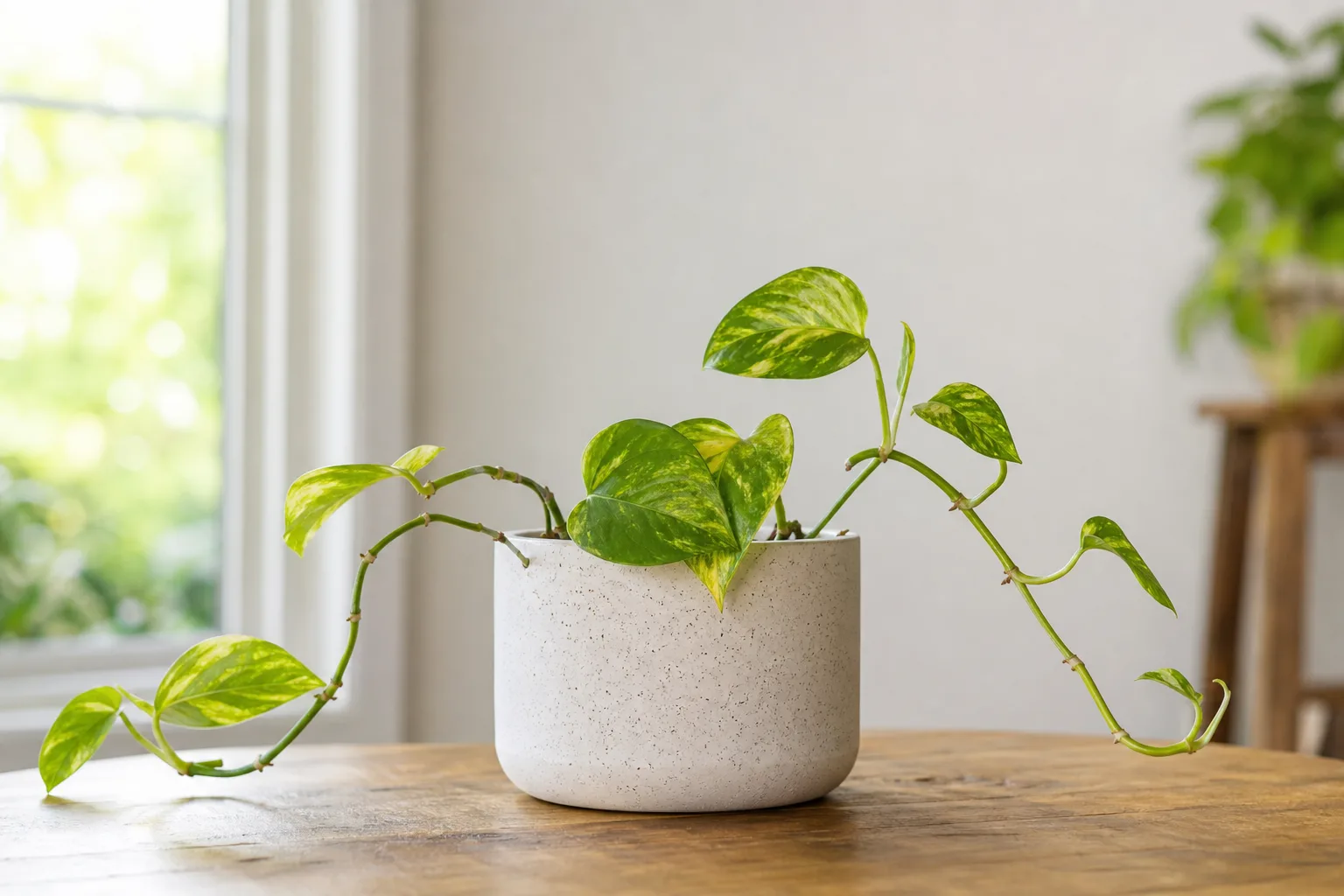
Slow Growth on Golden Pothos: Causes, Checks & Fixes
This guide covers slow growth on Golden Pothos. See also the general Slow Growth guide, watering, and light pages for this plant.
Slow Growth on Golden Pothos: Causes, Checks & Fixes
Quick answer
Golden Pothos (Epipremnum aureum) is marketed as an easy, fast-growing vine-and in bright indirect light with warm temperatures it can add new leaves every one to two weeks during active growth. When growth stalls, the plant is telling you that photosynthesis, root function, or seasonal conditions are limiting energy-not that it needs random extra care.
First step: look at the newest leaves and the gaps between nodes, then check soil moisture 4–5 cm deep. Tiny pale new leaves with long bare sections between them usually mean insufficient light. No new leaves for months while water races through the pot in seconds points to a root-bound container. Stalled growth on wet soil with yellow lower leaves suggests root stress from overwatering. A firm plant with no new nodes in a cool winter room may simply be resting.
Do not reach for fertilizer, a larger pot, or aggressive pruning until you know which pattern you have.
What slow growth looks like on Golden Pothos
Slow growth on pothos is not one uniform picture. The newest vine tips tell the story better than older foliage.
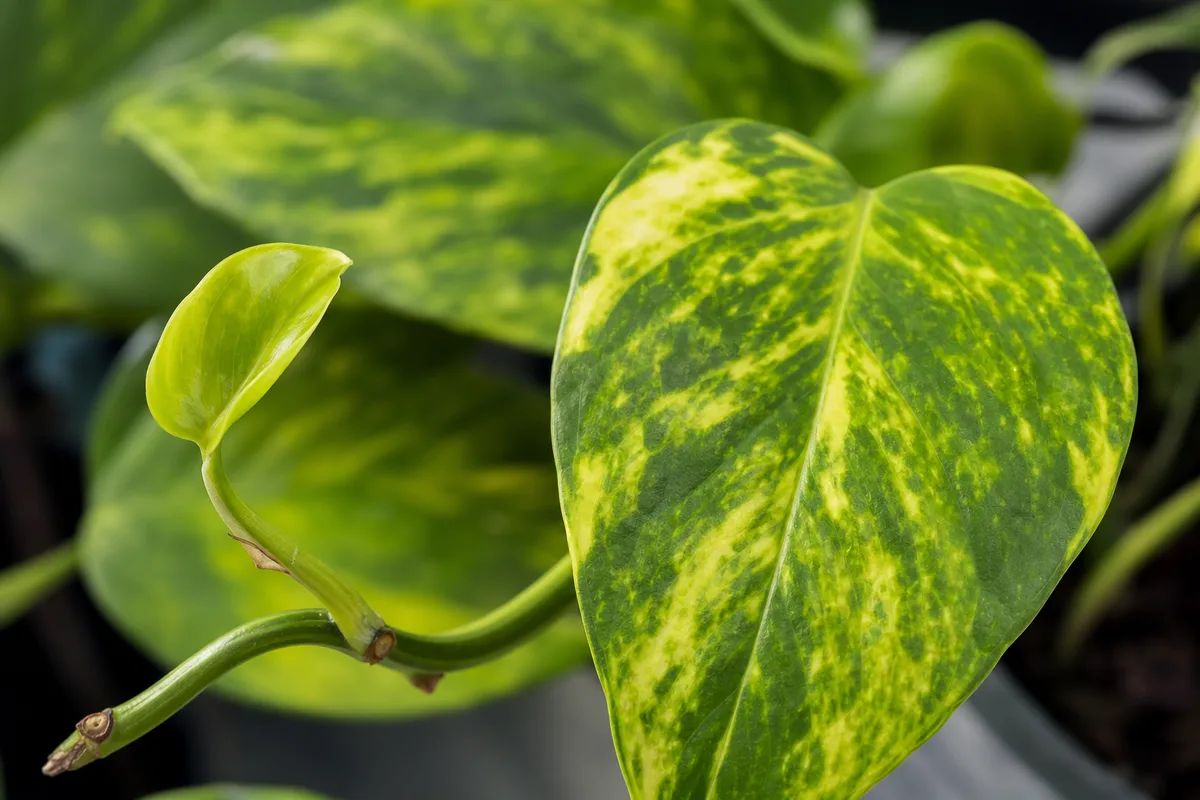
Slow Growth symptoms on Golden Pothos - compare with healthy tissue on the same plant.
Low-light stall - the most common indoor pattern:
- New leaves noticeably smaller than older ones on the same stem
- Long gaps between leaves on recent growth (internodes stretch)
- Gold variegation fading or absent on the freshest leaves
- Vines leaning toward the brightest wall or window
- Months pass with no new node opening despite otherwise normal watering
- Soil stays wet longer than expected because the plant is using less water
Root-bound stall:
- Water pours through the drainage hole within seconds of watering
- Pot feels very light again within a day or two despite frequent drinks
- No new leaves for weeks or months even in a bright window
- Roots visible at drainage holes or circling tightly when you slide the plant out
- Older leaves may yellow from nutrient exhaustion in depleted mix
Wet-soil root failure stall:
- Growth stops while soil stays damp for two weeks or more
- Lower leaves yellow; stems may soften near the soil line
- Fungus gnats hover over the pot surface
- New growth, if any, stays tiny and pale-not the robust leaves you would expect in good light
Normal winter pause:
- Plant looks otherwise healthy with firm green leaves
- No new nodes for several weeks when daylight is short and room temperatures dip below about 65°F
- Dry-down slows; growth resumes in spring without major intervention
Post-repot or move shock:
- Temporary stall for two to four weeks after Golden Pothos repotting guide, relocation, or a sudden light change
- Leaves may droop briefly; new growth resumes once roots settle
Slow growth vs. leggy growth vs. normal fast growth
These terms overlap but answer different questions.
Normal fast growth on Golden Pothos in bright indirect light (roughly 18–29°C / 65–85°F) shows compact node spacing-often an inch or two between new leaves-larger heart-shaped foliage with clear gold streaks, and a pot that dries noticeably within 7–10 days. Vines can extend several feet per year in ideal conditions.
Leggy growth is the visible stretch: long bare stems, small leaves at the tips, faded variegation. The plant is still producing leaves, but they are spaced far apart. See the leggy growth guide for pruning and structural recovery after light improves.
Slow growth means new nodes stop opening or appear rarely-sometimes for months. A pothos can be slow without looking dramatically leggy yet, especially if the last few leaves are small and the vine tip has simply stalled. A pothos can also be both leggy and slow when a dim corner has limited growth for a long time.
Key distinction from not enough light: that page goes deep on etiolation, placement targets, and the two-week light trial. This page covers the full stall differential-including root-bound pots, wet-soil failure, drought, and seasonal rest-when the main question is “why is nothing new happening?”
Why Golden Pothos growth stalls
Golden Pothos evolved as an understory climber that reaches toward brighter canopy light. Indoors, growth rate tracks how much usable light reaches the leaves, how healthy the roots are, and whether temperatures support active metabolism.
Insufficient light is the leading cause of stalled or near-stalled growth in homes. The plant survives in dim corners but allocates little energy to new leaves. Variegated tissue has less chlorophyll than solid green sections, so golden cultivars lose variegation and produce smaller leaves in weak light sooner than all-green vines.
Root-bound pots stop new leaf production even when you water often. Dense root mats leave little room for water-holding mix; water channels through without rewetting roots, mimicking drought stress while the surface looks briefly damp.
Chronic overwatering in low light compounds the problem. Dim rooms slow evaporation and reduce water uptake. Roots in stale wet mix lose oxygen, function declines, and new growth stops before obvious wilt appears. This is a common pathway to overwatering and root rot on trailing specimens in interior hallways.
Underwatering can also stall growth when a light dry pot stays dry too long-especially in bright windows where a root-bound plant cannot access moisture. Leaves may look thin and soft rather than boldly wilted.
Cool temperatures below about 50°F (10°C) or prolonged room temperatures in the low 60s°F slow pothos metabolism sharply. A plant on a cold winter windowsill may pause growth without looking sick.
Recent repotting or relocation temporarily redirects energy to root establishment. Expect a short stall, not a permanent one, if light and moisture are otherwise sound.
Lookalike symptoms to rule out
Before you change care, separate slow growth from problems that need different first fixes:
| Pattern | Points toward | Quick check |
|---|---|---|
| Tiny pale new leaves, long internodes, lean toward window | Low light | Measure distance from glass; trial brighter indirect light |
| Water races through; roots circling pot | Root-bound | Slide plant out; repot if mat is dense |
| Wet soil 2+ weeks; yellow lower leaves; gnats | Overwatering / root rot | Pot weight; smell soil; inspect roots |
| Light pot; dry 4–5 cm down; thin soft leaves | Underwatering | Soak and watch for perk-up within hours |
| Firm plant; no new nodes; cool short days | Winter rest | Wait for spring warmth and longer days |
| White webbing; stippled leaves | Spider mites | Inspect undersides-not a growth-rate issue |
Pests rarely stop growth entirely at first, but heavy spider mite feeding can weaken vines. Check leaf undersides if new growth looks distorted or speckled.
Lack of flowers is normal-pothos seldom blooms indoors and absence of blooms is not a slow-growth signal.
How to confirm the cause
Work through this checklist in order. Stop when one pattern clearly fits.
- New-leaf size test - Compare the last two or three leaves on a growing tip to leaves from six months ago on the same vine. Smaller, paler, or less variegated new leaves strongly suggest light is the limiter-variegated pothos lose color and new leaves stay small below about 150 foot-candles.
- Node spacing - Measure gaps between recent leaves. Gaps of several inches on new growth with no additional nodes opening for weeks fit low-light stall or seasonal pause; sudden stop on otherwise compact growth fits root or moisture stress.
- Light distance - Note how far the pot sits from the nearest window. More than 6–8 feet from glass in a typical living room is often marginal for maintaining active growth on variegated Golden Pothos.
- Moisture at 4–5 cm - Press your finger into the top 4–5 cm of mix. Bone-dry with a light pot suggests drought or root-bound channeling. Continuously damp soil for two weeks or more in a dim spot suggests overwatering risk.
- Pot weight rhythm - Lift the container before and after watering. A plant you water weekly that stays heavy and produces no new leaves may be overwatered; one that is always light hours after watering may be root-bound.
- Root inspection - Slide the plant partly out of the pot. White or tan firm roots with visible mix indicate healthy roots; brown mushy roots, sour smell, or a solid root mat circling the pot explain stalled growth.
- Temperature and season - Note room temperature and month. A healthy firm plant with no new growth in a cool northern winter room may need only patience until spring.
- Two-week placement trial - If light is suspect, move to the brightest indirect spot available without stacking other changes. Success means the next leaves emerge closer together and larger.
If light improves and growth resumes within two to three weeks, you have confirmed insufficient light. If not, move to root-bound, moisture, or pest checks.
First fix for Golden Pothos
Match one primary action to the dominant pattern-do not stack repot, prune, fertilize, and relocate on the same day.
If new leaves are small and pale with long internodes
Move the pot to bright indirect light-typically within 2–4 feet of an east- or west-facing window, or a few feet back from filtered south glass. Leave watering, fertilizer, and pot size unchanged for two weeks. Judge the next set of leaves, not the old stretched vines. Full placement guidance lives in the not enough light guide.
If water races through in seconds
Repot into a container one size larger with fresh well-draining mix. Water thoroughly once so the new mix settles, then resume watering when the top half dries. Do not fertilize immediately after repotting.
If soil stays wet and no new growth appears
Stop watering until the top half of the mix dries. Move to brighter indirect light if the plant is in shade-slow evaporation worsens wet soil. Inspect roots if leaves keep yellowing; trim mushy tissue and repot following the root rot guide if needed.
If the pot is light and dry 4–5 cm down
Water thoroughly until a little runs from the drainage hole, then empty the saucer. Recheck weekly; in bright light Golden Pothos often needs water every 7–10 days when actively growing.
If the plant sits in a cold draft or on a cold winter sill
Move to a stable 18–29°C (65–85°F) spot away from drafty glass. Growth may resume within weeks without other intervention.
If the plant was recently repotted or moved
Hold steady in consistent light and moisture for two to four weeks before making additional changes.
Step-by-step recovery by cause
After low-light correction:
- Move to bright indirect light using gradual acclimation if coming from a very dark room.
- Wait two weeks for the first new leaves; confirm tighter node spacing.
- Prune only after new growth looks healthier-stretched internodes do not compact on their own.
- Adjust watering to faster dry-down in the brighter spot.
After root-bound repot:
- Choose a pot one size up with a drainage hole.
- Loosen circling roots gently; trim only black mushy sections.
- Fill with well-draining houseplant mix; water once thoroughly.
- Expect new nodes within two to four weeks in warm bright conditions.
After wet-soil correction:
- Pause watering until the top half dries.
- Improve light and air circulation around the pot.
- Remove yellowed leaves and inspect roots if decline continues.
- Resume watering only when the top 4–5 cm is dry.
After winter rest:
- Avoid fertilizing a dormant-looking plant in a cold dim room.
- Shift closer to glass or add a grow light as days shorten if you want year-round growth.
- Resume normal watering checks when the plant starts using water faster in spring.
Recovery timeline
Expect the first new leaves after correcting light or repotting a root-bound plant within one to three weeks in warm active-growing conditions. Those leaves should be larger and more variegated than the stalled growth above them.
Root recovery from chronic overwatering takes longer-often several weeks to a few months-and severely damaged leaves will not green again. Judge progress by firm new growth at vine tips and a healthier dry-down rhythm, not by waiting for old yellow leaves to recover.
A winter pause may last four to eight weeks in cool short-day conditions without indicating a permanent problem. Growth typically accelerates when temperatures rise and daylight lengthens.
Signs you are on track:
- New nodes opening on vine tips
- Larger leaves with stronger gold variegation
- Pot dries on a predictable rhythm matched to light level
- Firm green stems with no mushy tissue at the base
Signs the problem is worsening:
- Yellowing spreads while soil stays wet
- Stem base softens despite dry surface soil
- No new growth after four weeks in confirmed bright indirect light with healthy roots
- Roots brown and mushy when inspected
What not to do
- Do not fertilize a stalled Golden Pothos in dim light before correcting placement and root health. Nutrients cannot replace photons, and salts can stress roots in wet mix.
- Do not repot into a much larger pot to “encourage growth”-oversized containers stay wet longer and often worsen stall.
- Do not stack repotting, pruning, and fertilizer on the same stressed plant. Make one change, then watch new growth for two weeks.
- Do not assume weekly watering regardless of light level. Dim corners need longer dry-down intervals; bright windows need faster checks.
- Do not wait for bare vine sections to refoliate along their length. Nodes on long bare stems often stay dormant until you prune back toward active growth near a light source.
- Do not ignore a wet heavy pot because leaves are not wilted yet. Growth can stop long before obvious collapse.
How to prevent slow growth on Golden Pothos
- Place new pots where bright indirect light is realistic most of the day-not only where a hanging basket looks decorative on an interior wall.
- Check the top 4–5 cm of soil before every watering; link frequency to light and pot weight, not a calendar.
- Repot when roots circle the pot or water channels through-typically every one to two years for fast-growing specimens.
- Rotate the container weekly for even light exposure on trailing vines.
- Add a full-spectrum grow light for 12–14 hours daily in offices, north rooms, or winter months if natural light is weak.
- Reduce watering frequency in fall and winter when growth naturally slows.
- Keep trailing vines out of reach of pets when inspecting or moving stressed plants-Golden Pothos is toxic to cats and dogs.
When to worry
Slow growth alone is usually a weeks-to-months problem, not a same-day emergency. Escalate promptly if:
- Soil stays soggy for weeks in a dim room and stems soften at the base-possible advancing root rot
- More than a third of leaves yellow within days while the mix stays damp
- No new growth after four weeks in confirmed bright indirect light with healthy firm roots-inspect for pests or hidden root damage
- The plant collapsed after exposure below about 50°F (10°C)
Golden Pothos is resilient. Even a vine that has stalled for months often resumes active growth once light and roots are corrected. The main limit is patience: old small leaves do not enlarge retroactively, but healthy new growth can make the plant look vigorous again within a season.
Golden Pothos care cross-check
Active growth needs bright indirect light, meaningful dry-down between waterings, and stable warm temperatures. In bright light, water when the top half of soil dries-often every 7–10 days. In low light, stretch toward 14–21 days and always verify with a finger test.
Match expectations to the plant’s biology: Golden Pothos tolerates lower light but does not grow vigorously there. Survival is not the same as healthy fast growth.
For full watering, light, soil, and temperature targets, see the Golden Pothos overview.
Related Golden Pothos problems
- Not enough light - deep diagnosis for low-light stretch, variegation loss, and placement trials
- Leggy growth - pruning and structural recovery after etiolation
- Overwatering - wet-soil stress before rot advances
- Root rot - mushy roots and stalled growth on damp mix
- Underwatering - drought stall and rehydration
- Golden Pothos overview - full care hub and growth benchmarks
When to use this page vs other Golden Pothos guides
- Golden Pothos watering guide - Use for routine moisture checks before assuming slow growth is the main issue.
- Golden Pothos problems hub - Browse all 16 common issues on this species.
- Not Enough Light on Golden Pothos - Different entry point when symptoms overlap with slow growth.
- Leggy Growth on Golden Pothos - Different entry point when symptoms overlap with slow growth.
- Yellow Leaves on Golden Pothos - Different entry point when symptoms overlap with slow growth.