Aphids on Ficus Tineke: Causes, Checks & Fixes
Quick answer
Aphids on Ficus Tineke cluster on the terminal bud and newest leaves. First step: isolate the plant and shower leaf undersides and the growing tip with lukewarm water before applying any spray.
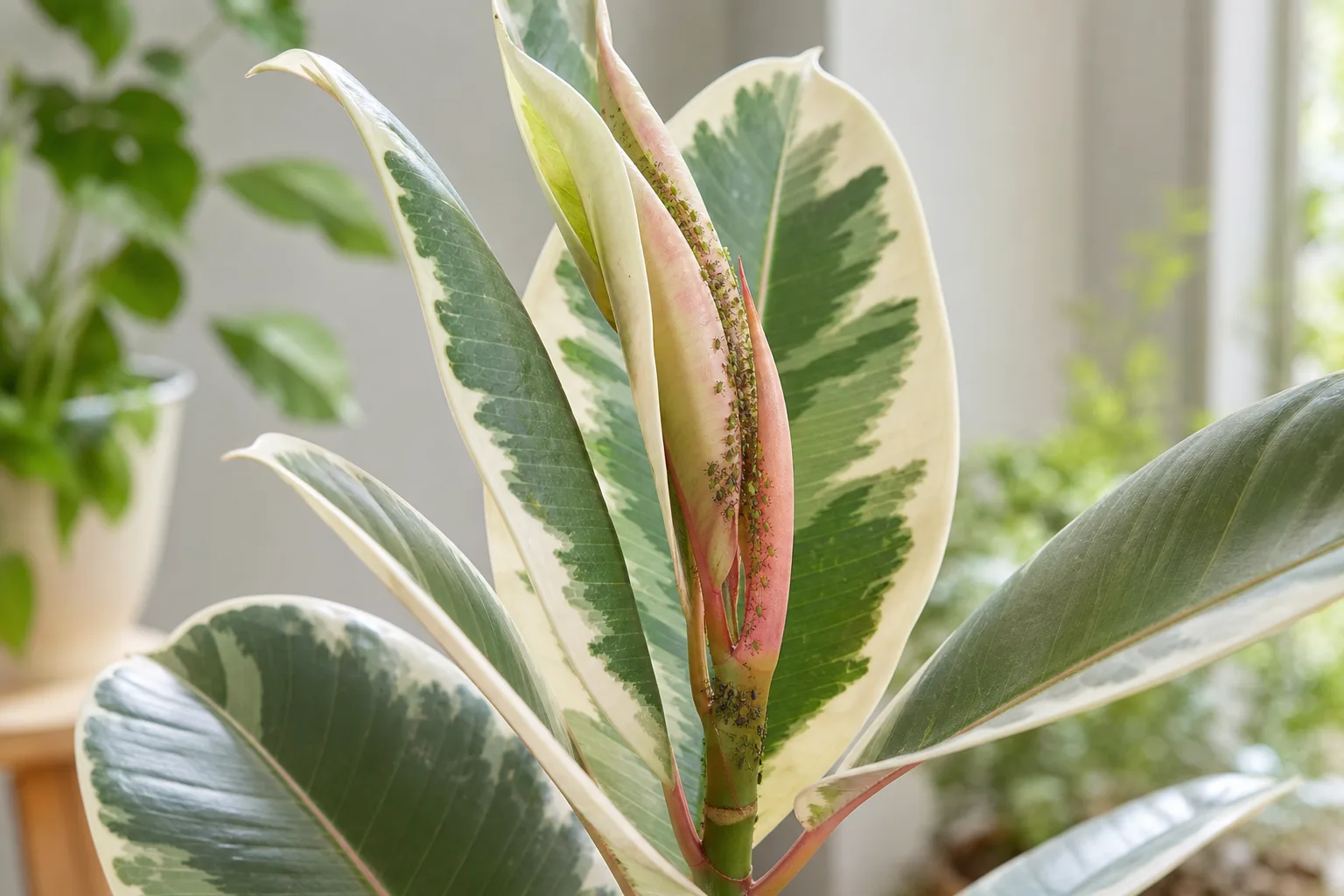
Aphids on Ficus Tineke: Causes, Checks & Fixes
This guide covers aphids on Ficus Tineke. See also the general Aphids guide, watering, and light pages for this plant.
Aphids on Ficus Tineke: Causes, Checks & Fixes
Quick answer
Aphids on Ficus Tineke are small, soft-bodied sap feeders that almost always show up on tender new growth-the pink-sheathed terminal bud, the leaf still unfurling below it, and the soft stem joints on the upper crown. You may see green, black, yellow, or brown insects in dense clusters, shiny honeydew on the cream variegation, or ants climbing the pot.
First step: move the plant away from others and rinse it thoroughly. Shower the foliage with lukewarm water, targeting leaf undersides, the growing tip, and stem joints where aphids hide. Wrap the pot in a plastic bag first so soil stays put. This single step confirms the pest, knocks down numbers, and buys time before you choose any spray.
Ficus Tineke has large, stiff, glossy leaves that generally tolerate a firm rinse better than delicate species-but the milky sap released when you crush insects or prune stems is irritant and toxic to cats and dogs, so wear gloves if you are wiping stems by hand.
What aphids look like on Ficus Tineke
Ficus Tineke grows as an upright rubber plant with thick, cream-and-green leaves. Aphids target the softest tissue, which on Ficus Tineke overview means:
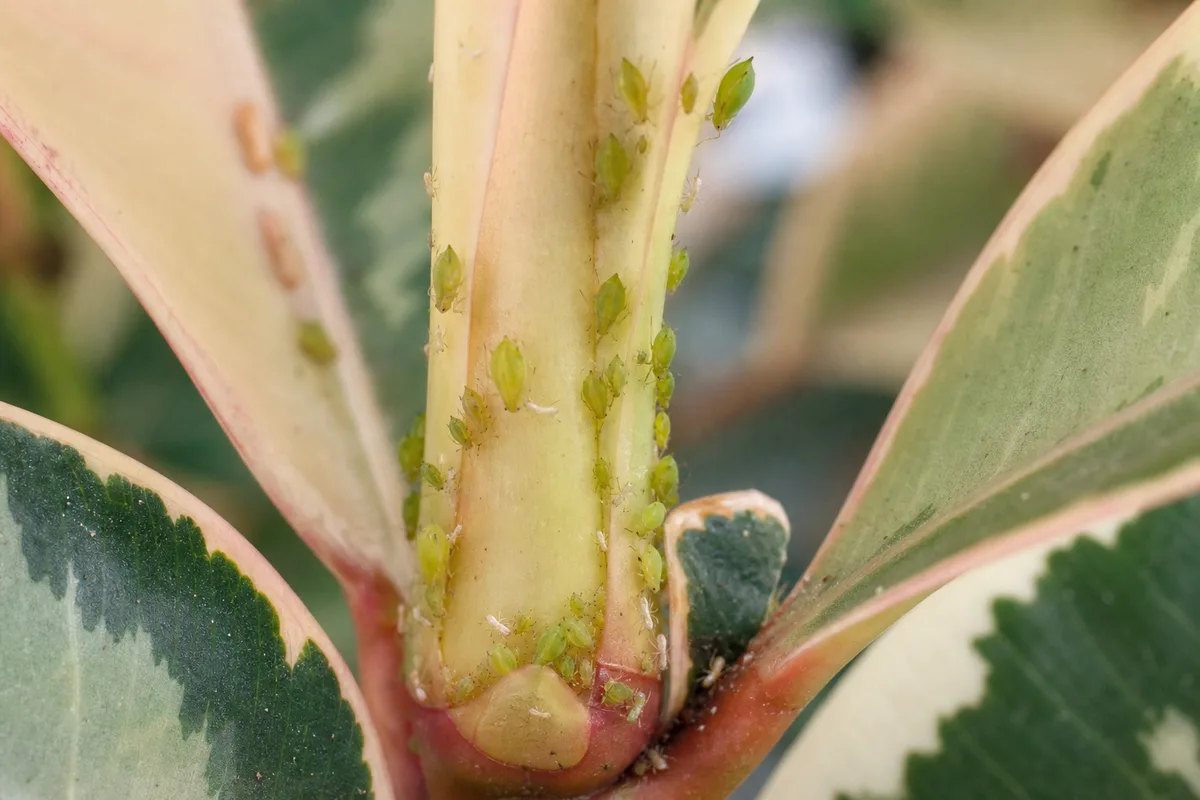
Aphid colony on the terminal bud and unfurling cream-variegated leaf of Ficus Tineke - soft crown growth is where colonies appear first on actively growing rubber plants.
- The terminal bud where the next leaf is wrapped in a pink or cream sheath
- The newest one or two leaves as they unfurl, especially along the midrib on undersides
- Stem joints just below active growth on the upper crown
- Occasionally lower leaves if the infestation has been ignored for weeks
Individual aphids are tiny-roughly 1/16 to 1/8 inch long-with pear-shaped bodies, visible legs, and antennae. Most are wingless and green, but species on houseplants can also appear black, brown, yellow, or pink. On Tineke, green or black aphids often stand out clearly against the pale cream sectors-a contrast that makes early detection easier than on solid-green rubber plants. When populations surge, winged adults may appear and drift to neighboring pots.
Damage on Ficus Tineke shows up as:
- Curled or puckered new leaves that fail to open flat, sometimes stunting variegation on the fresh blade
- Yellowing or stunted top growth while older, hardened leaves look normal
- Shiny, sticky honeydew on cream leaf panels, the pot rim, or the floor below
- Black sooty mold growing on honeydew, dulling the pale variegation
- White cast skins shed by growing nymphs, often mistaken for dust on glossy leaves
Because Tineke leaves are broad and held stiffly outward, honeydew on upper surfaces-especially the cream sections-is easy to spot from across the room.
Why Ficus Tineke gets aphids
Aphids rarely appear from nowhere indoors. The usual entry routes:
- New or recently moved plants that were not quarantined
- Open windows in warm weather, when winged aphids can drift in
- Spread from an infested neighbor on a shelf or windowsill
Once present, aphids thrive on Ficus Tineke for plant-specific reasons:
Active spring and summer growth. Tineke pushes new leaves regularly in Ficus Tineke light guide. Aphids prefer tender shoots and reproduce quickly on actively growing tissue-populations can increase with great speed on a well-fed plant pushing a flush of new blades.
Soft, nitrogen-rich new leaves. Monthly fertilizer during active growth produces lush shoots. Heavy feeding creates exactly the soft tissue aphids prefer-aphids thrive on lush new growth when nitrogen is high. Overfertilized Tineke often shows aphids on the newest flush at the crown while mature lower leaves look untouched.
Indoor conditions without predators. Outdoors, lady beetles, lacewings, and parasitic wasps keep aphids in check. Indoors, populations can climb unchecked unless you intervene.
Grouped plant displays. Tineke is often staged with pothos, philodendron, and other soft-leaved species on bright shelves-exactly the mix aphids colonize when one pot goes untreated.
Stress alone does not cause aphids, but a plant in weak light with soggy soil grows slowly and poorly-making it harder to outgrow damage once feeding starts on the only active growth point at the tip.
How to confirm the cause
Work through these checks before spraying anything:
- Location on the plant - Aphids cluster on living, soft tissue at the crown. If insects sit on brown crispy cream margins or old leaf scars, look elsewhere.
- Movement - Gently brush a cluster with a cotton swab. Aphids move slowly. Mealybugs feel waxy and smear white; scale adults are immobile brown bumps on stems and midribs.
- Honeydew test - Sticky shine on new leaves with insects present confirms sap feeders. Dry brown tips on cream margins without insects are more likely low-humidity damage on Tineke.
- Shape and color - Pear-shaped soft bodies with long legs point to aphids. Cottony white masses in leaf axils suggest mealybugs-a common lookalike on pale Tineke surfaces. Hard brown domes on stems are scale.
- Cast skins - Fine white specks that are shed exoskeletons, not live insects, still confirm an active aphid colony nearby.
- Nearby plants - Check all pots within a few feet. Aphids on one Tineke often mean a hidden colony on a newer purchase.
If you find sticky leaves but no insects after two inspections a week apart, wash the foliage and monitor-crawlers may have moved to another plant.
First fix for Ficus Tineke
Isolate the plant and rinse it with lukewarm water.
Move Ficus Tineke to a bathroom or shower stall away from other houseplants. Large specimens fit well in a walk-in shower-use that size to your advantage. Slip a plastic bag over the pot and tape it at the soil line so mix does not wash down the drain. Use a gentle but firm stream on leaf undersides, the terminal bud, and upper stem joints. Aphids drop off when disturbed; many will not climb back if you repeat rinses every few days.
Wear gloves if you are wiping stems by hand-Ficus sap is irritant to skin and the plant is toxic to cats and dogs if chewed.
Do not reach for insecticidal soap or neem oil as your opening move. Water rinsing confirms the diagnosis, reduces numbers safely, and avoids spraying a stressed or sun-heated plant. Oils and soaps can burn foliage when applied to plants in hot direct sun or drought stress.
After the first rinse, inspect with a hand lens. If a few aphids remain in tight leaf folds:
- Wipe them with a cotton swab dipped in rubbing alcohol, testing one leaf first
- Prune only heavily infested new leaves you can spare without removing the only growing tip
Step-by-step recovery
Once the first rinse is done, follow this sequence:
- Keep the plant isolated until you see no live aphids for at least two weeks after the last treatment.
- Repeat water rinses every three to five days until colonies disappear. Aphids reproduce quickly; one wash rarely clears them.
- Wash honeydew and sooty mold off leaves with lukewarm water and a soft cloth. Mold does not harm Tineke directly but blocks light on cream sectors and looks like a new disease.
- If rinsing fails after two weeks, apply insecticidal soap or neem oil labeled for houseplants, covering leaf undersides and stems thoroughly. Repeat every five to seven days until no live insects remain. Spot-test one leaf and wait 48 hours before treating the whole plant.
- Pause fertilizer until new growth looks clean for two weeks. Feeding during an active infestation produces more soft tissue for aphids to colonize.
- Check neighbors weekly while Tineke is in quarantine. Treat any new colonies before returning the plant to its usual spot.
Recovery timeline
With consistent rinsing, visible aphid numbers should drop sharply within one to two treatment cycles (roughly one to two weeks). New leaves emerging from the terminal bud should open flat, show clean cream-and-green patterning, and carry no insects-that is your best recovery signal.
Curled or yellowed leaves from earlier feeding will not fully flatten; stiff mature rubber-plant leaves stay cosmetically marked until you prune them or they age out naturally. Focus on clean new growth rather than saving every damaged blade.
Sooty mold clears within days once honeydew stops and you wipe leaves. If top growth stays stunted after four weeks of no live aphids, look for a secondary issue-overwatering on Ficus Tineke yellowing on cream sectors, cold drafts, or insufficient light-not a hidden aphid colony.
Lookalike symptoms
| What you see | Likely cause | How to tell apart |
|---|---|---|
| Sticky new leaves | Aphids, scale, mealybugs, whiteflies | Aphids = soft moving clusters on tender crown growth |
| Curled top leaf | Aphids, thrips, mechanical damage | Aphids leave honeydew and visible insects; thrips leave silvery scrape marks |
| Yellow lower leaves | Overwatering, natural aging | Lower-leaf yellow on cream sectors without crown insects is usually cultural |
| White fuzzy patches in axils | Mealybugs | Mealybugs are cottony and stationary in leaf bases; aphids are smooth-bodied on new tissue |
| Brown raised bumps on stems | Scale | Scale does not move; aphids do |
| Fine stippling, webbing | Spider mites | Mites thrive in dry air; no honeydew or pear-shaped clusters |
What not to do
- Do not apply oils or soaps to wilted, sun-stressed, or drought-stressed plants. Treat underlying stress first.
- Do not compost infested prunings indoors where crawlers can reinfest clean pots.
- Do not assume one treatment finished the job. Aphid nymphs hatch continuously; plan on multiple passes.
- Do not increase fertilizer to “help the plant recover.” Soft new growth feeds the next wave of aphids.
- Do not handle sap-covered stems without gloves if you have sensitive skin, and keep treated plants away from pets-the milky latex is toxic to cats and dogs.
- Do not repot on day one unless soil pests are also confirmed. Aphids on Tineke are almost always a foliage problem at the crown.
How to prevent aphids
Prevention on Ficus Tineke is mostly about catching hitchhikers early and avoiding overly lush, soft growth:
- Quarantine new plants for at least two weeks before placing them near Tineke.
- Inspect the terminal bud and leaf undersides during weekly watering-early colonies are easy to rinse away.
- Fertilize at half strength during active growth and skip feed when the plant is stressed or pest-affected.
- Keep bright indirect light and stable watering so growth is steady, not a sudden flush of tender shoots after neglect.
- Space plants slightly on shelves so you can see the crown and stem joints without lifting every pot.
- Wipe glossy leaves occasionally when dust builds up-clean cream panels are easier to inspect and catch light for variegation.
If aphids keep returning on an otherwise healthy Tineke, trace the source: a plant that goes outdoors in summer, a nearby herb garden on the windowsill, or shared tools that move between pots without cleaning.
When to use this page vs other Ficus Tineke guides
- Ficus Tineke watering guide - Use for routine moisture checks before assuming aphids is the main issue.
- Ficus Tineke problems hub - Browse all 16 common issues on this species.
- Mealybugs on Ficus Tineke - Different entry point when symptoms overlap with aphids.
- Spider Mites on Ficus Tineke - Different entry point when symptoms overlap with aphids.
- Yellow Leaves on Ficus Tineke - Different entry point when symptoms overlap with aphids.