Aphids on Ficus Elastica Ruby: Causes, Checks & Fixes
Quick answer
Aphids on Ficus Elastica Ruby cluster on soft new leaves and leaf sheaths. First step: isolate the plant and rinse new growth thoroughly to knock off live insects before any spray.
Aphids on Ficus Elastica Ruby: Causes, Checks & Fixes
This guide covers aphids on Ficus Elastica Ruby. See also the general Aphids guide, watering, and light pages for this plant.
Aphids on Ficus Elastica Ruby: Causes, Checks & Fixes
Quick answer
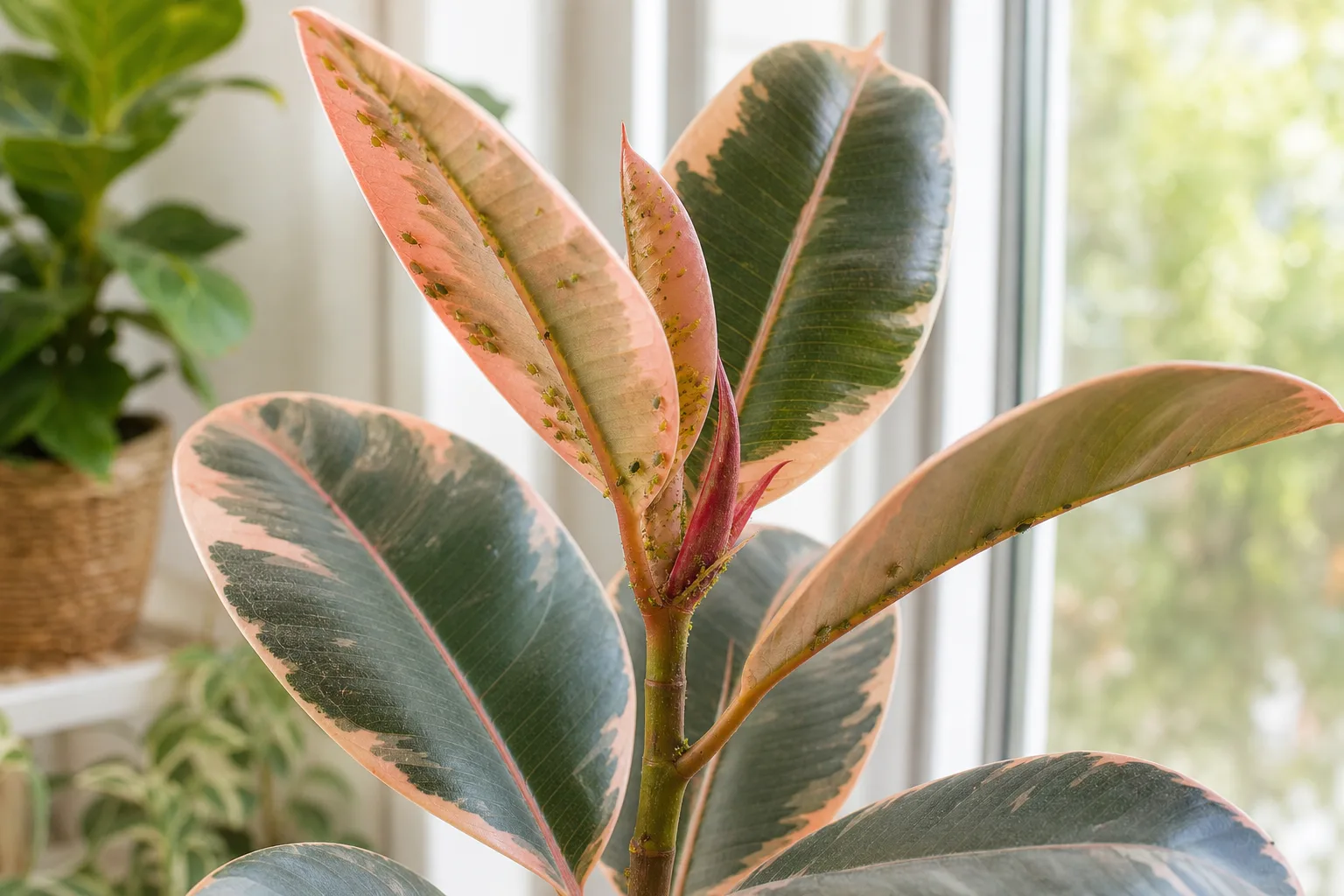
Aphids on Ficus Elastica Ruby are small, soft-bodied sap feeders that colonize the tenderest tissue-unfolding leaves, red leaf sheaths at stem tips, and the undersides of young foliage. On this variegated rubber plant, damage often shows first on pale pink and cream sections, which lose color and curl before the greener parts look stressed.
First step: isolate the plant and rinse new growth thoroughly. Move it away from other houseplants, then shower or spray the newest leaves, stem tips, and undersides with lukewarm water to knock off live aphids. Confirm you still see moving insects before reaching for soap or oil. Indoor populations can double within days, and the honeydew they leave attracts ants and sooty mold on glossy leaves.
What aphids look like on Ficus Elastica Ruby
Aphids are pear-shaped insects about 1/16 to 1/8 inch long with visible legs and antennae. Most colonies on houseplants are green, but you may also see black, brown, yellow, or pink individuals on the same plant. They cluster rather than scatter, and they move slowly when disturbed-unlike thrips, which jump or dart away.
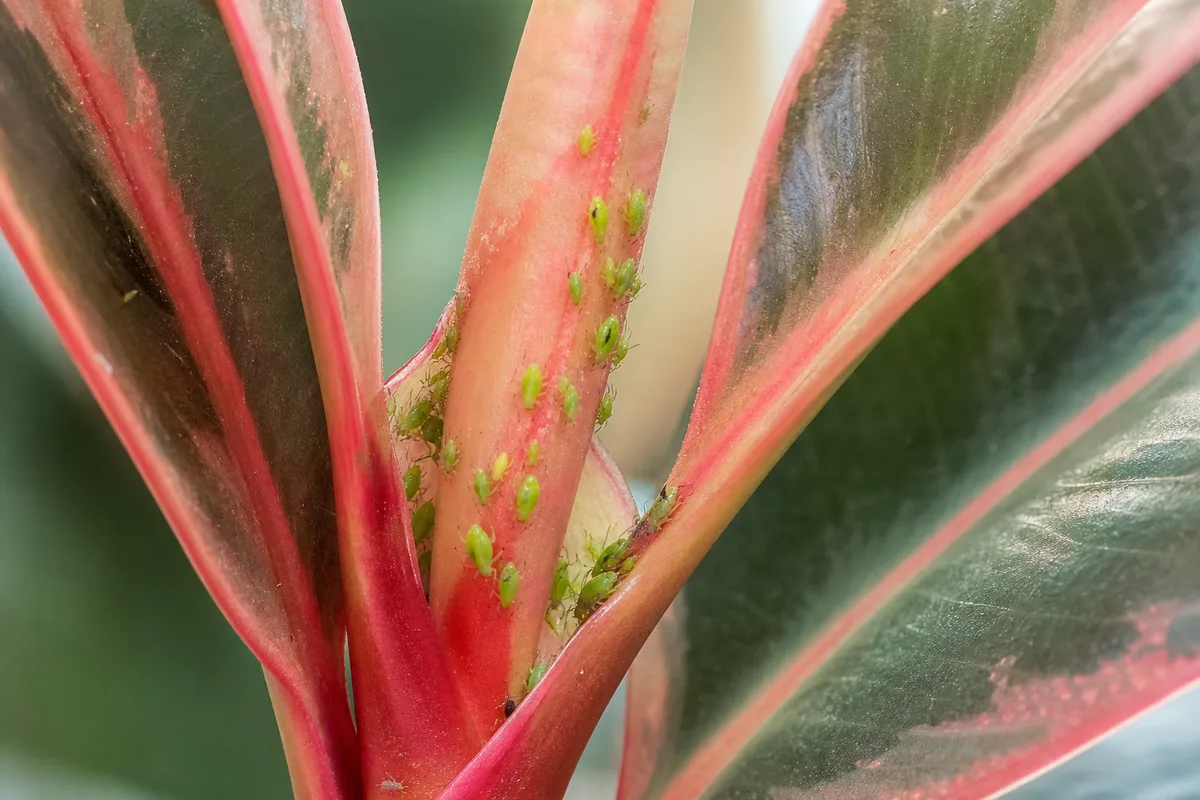
Pear-shaped aphids clustered on a pink emerging leaf sheath and soft new tricolor tissue - check stem tips and the newest two leaves first on Ruby.
On Ficus Elastica Ruby, check these spots first:
- Emerging leaf sheaths - the red or pink protective cap at each stem tip often hides dense colonies before you notice bugs on open leaves
- Undersides of the newest two or three leaves - soft tissue is easier to pierce than mature, waxy foliage
- Leaf petioles where they meet the stem - aphids line up along these joints on fast-growing spring and summer shoots
- Sticky leaf surfaces - honeydew makes glossy rubber-plant leaves feel tacky and can turn black with sooty mold
Early damage looks like slight leaf curling, dulling of pink variegation, or small yellow patches on pale tissue. Variegated sectors stress faster than green ones, so a mild infestation can look worse on Ruby than on a solid-green rubber plant. Heavy feeding stunts new leaves, leaving them small, twisted, or partially unfurled.
Why Ficus Elastica Ruby gets aphids
Aphids rarely appear from nowhere indoors. They hitchhike on new nursery plants, cuttings, or open windows in warm weather, then multiply on tender growth where natural predators are absent.
Several traits make Ficus Elastica Ruby a common target:
Fast spring and summer growth. In Ficus Elastica Ruby light guide, Ruby puts out frequent new leaves. Each flush provides fresh sap-rich tissue that aphids prefer. Populations can grow exponentially in warm rooms because females give birth to live young and nymphs can reach adulthood in about a week under favorable conditions.
Soft shoots from heavy feeding. Over-fertilized rubber plants push lush, nitrogen-rich growth that stays soft longer-exactly what aphids exploit. This plant needs only light monthly feeding in spring and summer; excess fertilizer does not help variegation and can invite pests.
Indoor conditions without predators. Lady beetles, lacewings, and parasitic wasps that control aphids outdoors rarely reach houseplant collections. A small colony on one new leaf can spread to neighboring pots before you notice stickiness on the shelf below.
Stress that does not cause aphids but worsens damage. Low light, drafty windows, or inconsistent watering weaken Ruby and slow recovery after feeding injury. Aphids did not arrive because the plant is unhealthy, but a stressed plant rebounds more slowly once insects are removed.
How to confirm the cause
Work through these checks in order before treating:
- Locate colonies on soft tissue - Peel back or gently open the red leaf sheath on the top shoot. Live aphids confirm the diagnosis; sticky residue alone does not.
- Test for movement - Touch a cluster with a cotton swab. Aphids shift slowly. Mealybugs leave a white smear; scale stays fixed to the leaf.
- Look for honeydew and ants - Shiny, sticky deposits on leaves or the pot rim point to sap feeders. Ants farming aphids on the container are a reliable red flag.
- Rule out lookalikes - Scale insects form hard brown or tan disks. Mealybugs look cottony in leaf axils. Thrips leave silver scarring and black specks, not dense clusters on stem tips.
- Inspect neighbors - Check other Ficus species, hibiscus, and pepper plants nearby. Aphids colonize many hosts and may have started on a different pot.
If you find only a dozen aphids on one new leaf and no honeydew elsewhere, a thorough rinse may be enough. If colonies span multiple shoots or leaves are curling shut, plan on repeated treatment cycles.
First fix for Ficus Elastica Ruby
Isolate the plant and rinse new growth thoroughly.
Move Ficus Elastica Ruby to a separate room or at least three feet from other plants. Small specimens go in a sink; larger ones in a shower. Spray lukewarm water at moderate pressure across the newest leaves, stem tips, and undersides, tilting the pot to reach leaf sheaths. Let the plant drain completely before returning it to its stand.
This single step removes a large share of live aphids and lets you see how heavy the infestation really is. Do not apply soap, neem, or alcohol on the same day as a full rinse unless you have confirmed persistent colonies after the water treatment-stacking treatments on wet, stressed foliage increases the risk of leaf spotting on pale variegation.
Wear gloves if you are handling many crushed insects or pruning heavily infested shoots. Ficus elastica sap can irritate skin and is toxic to pets if ingested.
Step-by-step recovery
Once isolation and rinsing are done, follow this sequence based on severity:
Light infestation (a few clusters on one or two new leaves)
- Repeat rinsing every two to three days for two weeks, focusing on stem tips and undersides.
- Wipe stubborn clusters with a cotton swab dipped in 70% isopropyl alcohol, touching each insect directly.
- Monitor weekly for new colonies on the next leaf flush.
Moderate infestation (multiple shoots, sticky leaves, early curling)
- Prune only heavily infested leaf sheaths you cannot rinse clean-use clean scissors and wipe blades with alcohol between cuts.
- Apply insecticidal soap labeled for houseplants, coating aphids on stems and leaf undersides until the solution drips slightly. Soaps work on contact only; they do not protect leaves after drying.
- Repeat every five to seven days for at least three applications to catch nymphs that hatch between sprays.
- Treat in early morning or evening away from hot windows. Avoid spraying when the plant is drought-stressed or when room temperatures exceed 90°F.
Heavy infestation (curling leaves, sooty mold, spread to nearby pots)
- Isolate all affected plants and inspect the entire collection.
- Combine rinsing, alcohol touch-kills on reachable clusters, and insecticidal soap on a five- to seven-day schedule.
- Consider neem oil as a follow-up if soap alone is not reducing live counts after three rounds-still a contact treatment requiring full coverage.
- Wash honeydew and sooty mold from mature leaves with a damp cloth once aphids are gone; the mold itself does not kill the plant but blocks light to pale tissue.
- Hold fertilizer until new growth looks normal for two weeks. Feeding a recovering plant pushes soft shoots before its pest load is clear.
Do not repot during active infestation unless soil-dwelling pests are also confirmed. Aphids on Ficus Elastica Ruby are almost always above the soil line.
Recovery timeline
Expect visible reduction in live aphids within three to five days of consistent rinsing or the first soap application. Plan on two to three weeks of repeated treatment before calling the plant clear, because eggs and nymphs hidden inside curled leaf sheaths survive single sprays.
Signs recovery is working:
- Fewer insects on stem tips when you inspect with a hand lens
- New leaf sheaths opening without visible clusters inside
- Honeydew no longer accumulating on leaves or furniture below
- Fresh leaves emerging with normal pink-and-green color
Signs the problem is worsening:
- Leaves curling so tightly that sprays cannot reach colonies inside
- Winged aphids appearing on other plants in the room
- Black sooty mold spreading despite rinsing
- New shoots stunted or failing to unfurl for multiple weeks after treatment
Damaged leaves that are already yellow, heavily curled, or distorted will not fully recover their shape. That is cosmetic, not fatal. Judge success by clean new growth, not by old blemished foliage.
Lookalike symptoms
| What you see | Likely cause | How to tell apart |
|---|---|---|
| Cottony white masses in leaf axils | Mealybugs | White waxy coating; no pear-shaped bodies |
| Hard brown disks on stems or leaves | Scale | Does not move when scraped; no cornicles |
| Silver streaks and black specks | Thrips | Insects are slender and fast; damage is scarring, not clustering |
| Sticky leaves, no visible insects | Residue or prior infestation | Wash leaf; if stickiness returns within days, re-check stem tips |
| Pale, crisp edges on variegation | Sunburn or low humidity | No insects on tissue; damage follows light exposure pattern |
Mistakes to avoid
- Treating once and stopping - Aphids reproduce quickly indoors; one spray rarely clears hidden nymphs in leaf sheaths.
- Using dish soap mixes - Homemade detergents can burn Ficus Elastica Ruby leaves, especially pale variegation. Use products labeled as insecticidal soap.
- Spraying only the tops of leaves - Colonies feed on undersides and inside sheaths; partial coverage leaves the population intact.
- Applying oil or soap to a wilted plant - Stressed rubber plants in soggy soil or extreme heat absorb chemicals poorly and may drop leaves.
- Returning the plant to the collection too soon - Keep it isolated until you have seen no live aphids for at least two weeks of monitoring.
- Ficus Elastica Ruby repotting guide or fertilizing on day one - Neither addresses above-ground aphids and adds stress during recovery.
Ficus Elastica Ruby care cross-check
After pest treatment, stabilize the conditions that help Ficus Elastica Ruby overview outgrow damage:
- Light - Bright indirect light with some morning direct sun supports steady, healthy new leaves. Weak light produces soft, stretched shoots that stay vulnerable longer.
- Watering - Water when the top 2–3 cm of mix is dry. overwatering on Ficus Elastica Ruby does not cause aphids but slows recovery and can compound leaf drop after spraying.
- Humidity - Average room humidity (40–60%) is fine. Avoid misting heavily onto folded leaf sheaths where moisture can trap pests.
- Leaf cleaning - Wiping mature glossy leaves monthly removes dust and makes new colonies easier to spot during weekly checks.
How to prevent aphids next time
- Quarantine new plants for two weeks before placing them near Ficus Elastica Ruby.
- Inspect stem tips during every watering in spring and summer, when new growth is fastest.
- Rinse foliage occasionally in the sink or shower-this knocks down early colonies before they spread.
- Avoid excess nitrogen fertilizer that produces long, soft shoots.
- Keep ants off pots if you see them farming honeydew; ants protect aphids from natural control.
- Check open windows in warm weather - winged aphids can drift in and land on tender indoor growth.
When to worry
Most Ficus Elastica Ruby plants recover fully from moderate aphid infestations once treatment is consistent. Escalate your response if:
- Colonies persist after four weekly treatment cycles
- Multiple plants in the same room show active infestations
- New growth stops entirely for more than a month despite clear pest counts
- Leaves drop faster than new ones emerge, leaving bare stems
Aphids alone rarely kill an established rubber plant, but unchecked feeding plus secondary mold and stress can leave a specimen sparse and slow to rebound. If the top shoot is heavily distorted and every new sheath is infested, cut back to firm stem tissue below the damage after the plant is insect-free, then wait for a side bud to break-Ruby responds to pruning when light and watering are stable.
Conclusion
Aphids on Ficus Elastica Ruby are a manageable pest when you catch them on new growth early. Isolate the plant, rinse stem tips and leaf undersides thoroughly, confirm live insects remain, then treat with direct-contact methods on a repeat schedule until colonies disappear. Old damaged leaves may stay blemished, but clean new pink-and-green foliage is the sign that your rubber plant is back on track.
When to use this page vs other Ficus Elastica Ruby guides
- Ficus Elastica Ruby watering guide - Use for routine moisture checks before assuming aphids is the main issue.
- Ficus Elastica Ruby problems hub - Browse all 16 common issues on this species.
- Mealybugs on Ficus Elastica Ruby - Different entry point when symptoms overlap with aphids.
- Spider Mites on Ficus Elastica Ruby - Different entry point when symptoms overlap with aphids.
- Yellow Leaves on Ficus Elastica Ruby - Different entry point when symptoms overlap with aphids.