Leggy Growth on Calathea Roseopicta: Causes, Checks & Fixes
Quick answer
Leggy Calathea Roseopicta shows long thin petioles, wide gaps between leaves, and faded painted bands as it reaches for light. First step: move the pot to the brightest filtered spot in your home - an east window or sheer-filtered south or west exposure - before pruning or fertilizing.
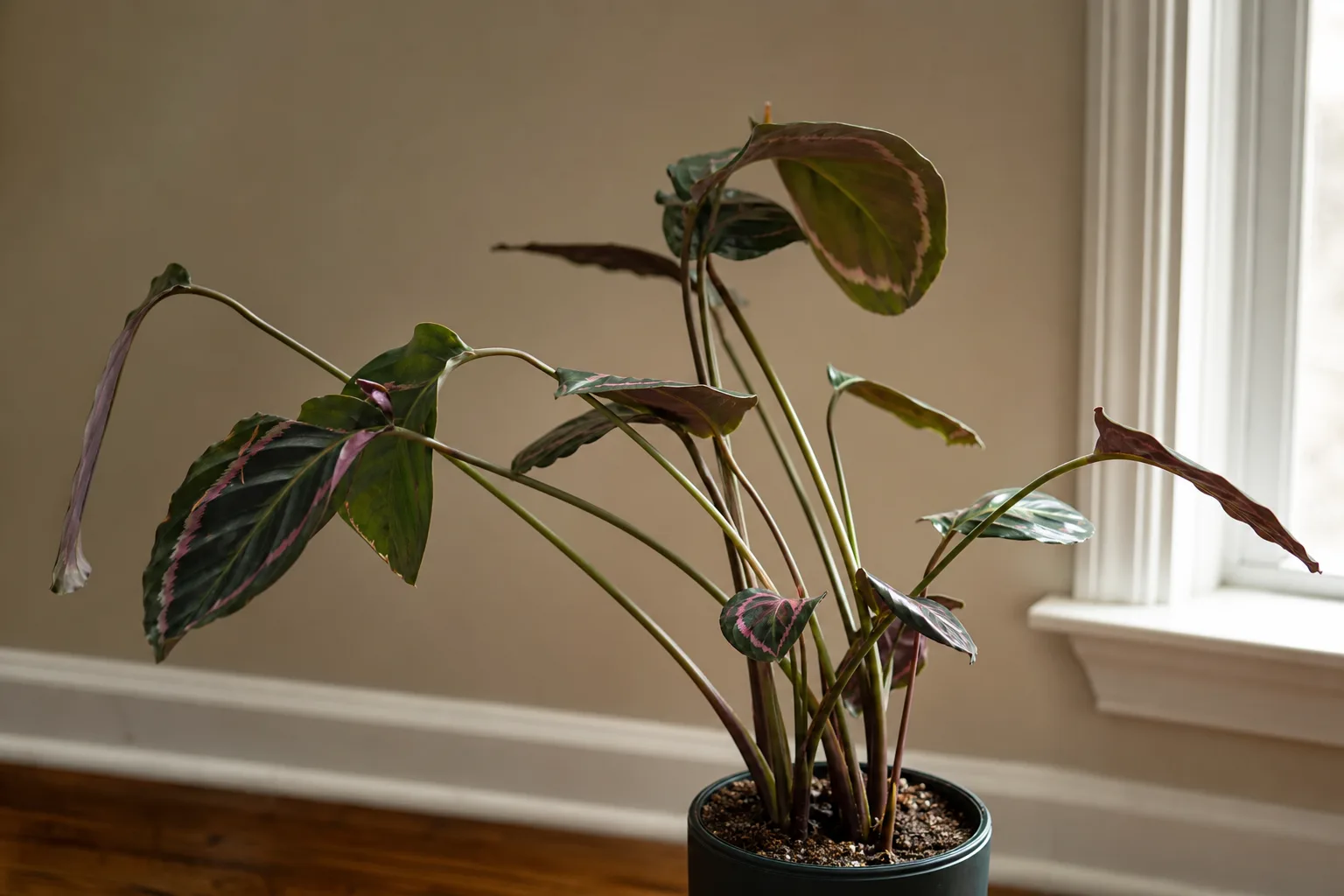
Leggy Growth on Calathea Roseopicta: Causes, Checks & Fixes
This guide covers leggy growth on Calathea Roseopicta. See also the general Leggy Growth guide, watering, and light pages for this plant.
Leggy Growth on Calathea Roseopicta: Causes, Checks & Fixes
Quick answer
Leggy growth on Calathea Roseopicta (Goeppertia roseopicta) is etiolation - the plant stretches stems and widens spacing between leaves to reach scarce light. On this color-focused prayer plant, faded pink or cream painted bands on new foliage often appear before stems look dramatically long, so legginess can sneak up on owners who only watch overall height.
First step: move the pot to bright, filtered light - not direct sun on the colored bands. An east-facing window, a spot several feet from a south or west window behind sheer curtains, or a shaded shelf under a full-spectrum grow light usually beats a far interior corner. Do not prune, repot, or fertilize until you have confirmed the plant is reaching for light rather than suffering root stress in a dim, wet corner.
What leggy growth looks like on Calathea Roseopicta
Leggy roseopicta rarely collapses overnight. It looks like the plant is losing its painted contrast and growing on stilts.
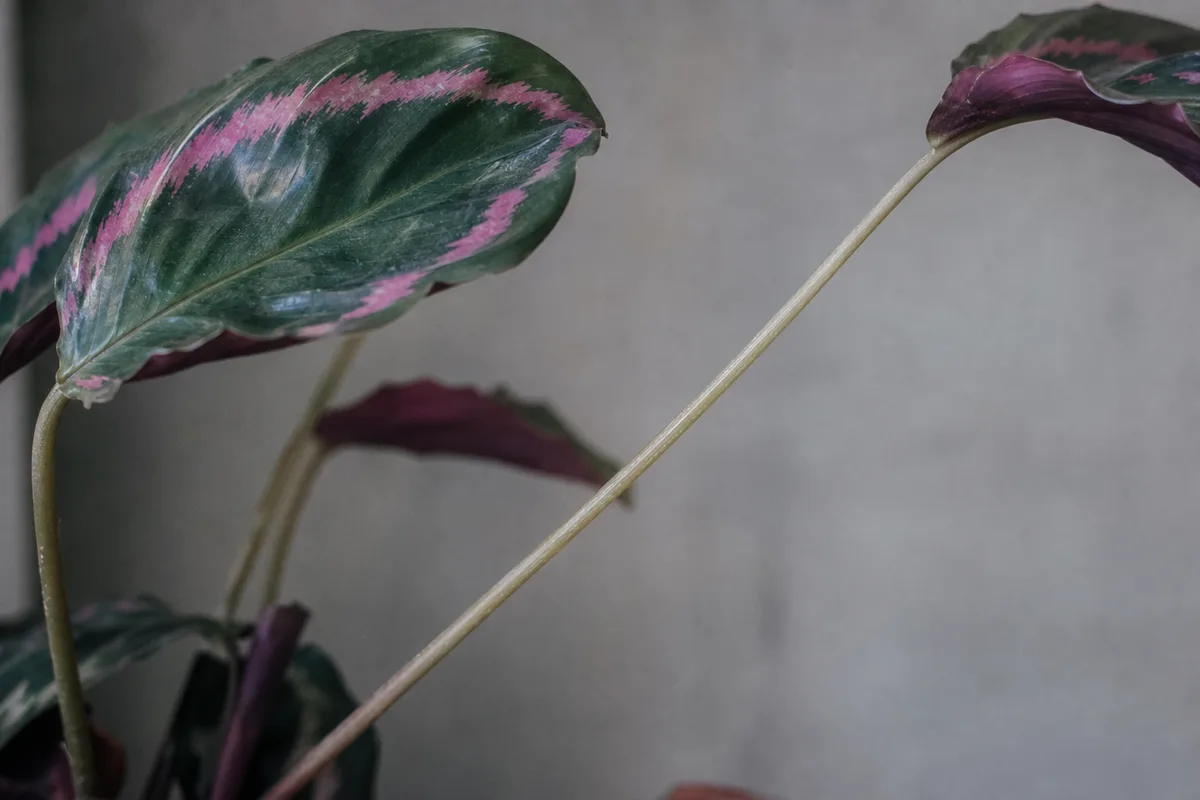
Elongated thin petiole with wide spacing and muddy, faded pink bands on a new leaf - classic etiolation from chronic low light.
Etiolation and stretched petioles
Watch the petioles - the leaf stems - not just the blades. Healthy roseopicta holds leaves in a fairly tight rosette. In low light, each new leaf rides on a longer, thinner petiole with wider gaps between neighbors. Older stretched stems at the base stay that way even after you fix light; only new growth can return to compact spacing.
Other structural signs include:
- Leaning or reaching toward the brightest side of the room
- Smaller new blades than mature lower leaves
- Reduced nyctinasty - leaves that no longer fold up noticeably at night
- Weak, floppy posture on stems that used to hold leaves upright
This matches the classic etiolation response in houseplants - elongated internodes and paler tissue as the plant hunts photons.
Faded pink or cream painted bands
Roseopicta is grown for rose-colored midribs and feathered margins on dark green leaves. In dim conditions, the newest leaves often open muddy, olive, or washed-out before stems look obviously long. The plant produces extra chlorophyll to capture weak light, which dulls the painted contrast that makes this cultivar distinctive.
Peacock Plant or Rattlesnake Calathea may keep a soft pattern in medium light; roseopicta often looks one-note and tired when bands fade - a useful early warning that leggy stretch is coming.
Leaning toward light
One-sided growth is common when light enters from a single window. The crown tilts toward glass; lower leaves on the shaded side may yellow if soil stays wet too long in the dim back of the pot. Rotating the pot regularly helps, but rotation alone cannot fix a spot that is fundamentally too dark.
Why Calathea Roseopicta gets leggy
In nature, roseopicta grows in tropical understory with bright but filtered light - never harsh midday sun on the leaf surface. Indoors it needs enough brightness for photosynthesis without scorching the colored bands. When light falls below that range for weeks, etiolation is the plant’s survival strategy, not a random defect.
Common triggers in homes:
- Far from windows - light intensity drops sharply with distance; a corner that feels fine to you may be low light for a pattern plant
- Decor-first placement - roseopicta on a bookshelf or hallway table more than 6 to 8 feet from glass
- Seasonal daylight loss - the same shelf that worked in June may be too dim by December without a grow light
- Blocked glass - heavy curtains, tinted film, or dirty panes cut usable light more than owners expect
Low light plus moist soil is a frequent overlap. Roseopicta in dim corners transpires slowly, so mix stays wet longer. Yellow lower leaves and fungus gnats can stack on top of stretch - fix both light and watering rhythm, not light alone.
Less common but worth ruling out:
- Over-fertilization in shade - weak stretched stems plus salty mix stress roots without solving light
- Root-bound stall in a dark spot - growth energy goes to survival, not compact foliage
How to confirm the cause
Run a short diagnostic before moving the pot or cutting stems.
Compare stem length on new vs. old growth. If the last two leaves sit on visibly longer petioles than leaves six months ago, suspect etiolation first.
Read the newest leaf pattern. Faded pattern on fresh leaves with firm roots and evenly moist (not soggy) soil strongly points to light. Yellowing lower leaves while the top 2 cm of mix never dries points to overwatering made worse by low light - see overwatering on Calathea Roseopicta.
Check placement. Stand at the pot and look toward the nearest window. Within about 2 feet of a window, most tropical foliage receives bright indirect light; farther back is usually medium or low. If you are beyond that range with no grow light, light is the limiter.
Do a two-week brighter placement test. Move roseopicta one step brighter while keeping watering tied to soil dryness. If the next leaf opens with sharper color and a shorter petiole, you have confirmed insufficient light driving leggy growth.
Rule out lookalikes. Fine pale stippling on undersides suggests spider mites, not etiolation. Zero new leaves through a warm season with firm humidity may be slow growth - different urgency, overlapping fixes. For early pattern fade without obvious stretch yet, also review not enough light.
First fix for Calathea Roseopicta
Move the plant to bright, filtered light - not direct sun.
Practical targets:
- East window - gentle morning light; usually safe without curtains if leaves do not touch hot glass
- South or west window - set the pot 3 to 6 feet back, or behind sheer curtains, so colored bands never sit in direct rays
- Dark room fallback - a full-spectrum LED grow light 6 to 12 inches above the foliage, on 12 to 14 hours daily with a timer
Make the move over a few days if you are jumping from a very dark corner to a much brighter spot. Roseopicta hates direct sun more than dim light; scorched pink bands do not recover. Increase exposure gradually.
Do not prune on day one. Fix light first. Cutting stretched stems before the plant has adequate brightness often produces more weak stretch from the remaining buds. Wait until two new leaves open with improved pattern and shorter petioles - then trim the worst offenders.
Do not change three things at once. Keep the same pot, water source, and humidity setup for the first two weeks so you can read the plant’s response to light alone.
When to prune above the rhizome
After light is clearly better and new growth looks compact, you can tidy stretched stems for appearance.
- Sterilize scissors and cut each leggy petiole flush at the rhizome crown where it meets the soil line - never mid-petiole or mid-blade. Roseopicta does not branch from stem cuts.
- Remove no more than one-third of green foliage in one session during spring or summer active growth.
- Leave the best two or three newest compact leaves so the plant keeps photosynthetic area while it replaces stretch.
- Skip heavy pruning in winter unless tissue is fully dead - dry indoor air slows recovery on cut crowns.
Full technique and division timing live in the Calathea Roseopicta pruning guide.
Recovery timeline
Expect two to four weeks before a clearly brighter leaf opens from the crown after a light move. Compare the newest petiole length to the one below it - gradual shortening on fresh growth is the win, not shrinkage on old stretch.
What recovers: sharper painted bands on new leaves, normal prayer movement, faster leaf production in warm months, more upright posture on new stems.
What does not recover: faded pigment on old leaves, length already added to mature petioles, sunburned brown patches from a too-sudden move into direct sun.
If lower leaves keep yellowing while soil stays wet even after light improves, inspect roots for rot before assuming brightness was the only issue.
What not to do
- Jumping to direct sun to “fix” legginess. Colored bands scorch first; burned tissue is permanent.
- Pruning before relighting. Weak new shoots follow scissors in dim corners.
- Over-fertilizing to force bushiness in a dark spot. NC State Extension recommends fertilizing only once monthly during spring through summer - fertilizer without adequate light worsens root stress.
- Watering on a calendar after moving to brighter light. Faster drying means the old schedule can underwater or, if you keep pouring, overwater.
- Judging success by old stretched leaves. Faded mature foliage can make you think the fix failed when new growth is already improving.
How to prevent leggy growth next time
Place roseopicta where you can see the leaf pattern up close - side table, plant stand, or shelf within a few feet of filtered daylight. It is not a background filler for deep corners.
Seasonal habits that help:
- Clean window glass in fall before daylight shrinks
- Run grow lights from October through March if your brightest spot still feels dim at noon - details in the light guide
- Rotate weekly for even growth
- Pair light with moisture awareness - when you improve light, recheck how fast the top 2 cm dries
Roseopicta rewards stable conditions: bright filtered light, even moisture, high humidity, and gentle water. When the pattern on the newest leaf is sharp and petioles stay short, light is usually in the right range.
Leggy growth vs. related problems
| What you see | More likely cause | Quick check |
|---|---|---|
| Long petioles, lean toward window, dull new bands | Leggy growth / etiolation | Improve filtered light; wait for compact new leaves |
| Dull pattern, no obvious stretch yet | Not enough light (early) | Move brighter before stems lengthen - see not-enough-light |
| No new rolls for months, firm old leaves | Slow growth | Humidity and root check - see slow growth |
| Yellow lower leaves, wet soil, gnats | Overwatering in low light | Top 2 cm stays wet; reduce water and improve light |
| Pale stippling on undersides | Spider mites | Fine webbing or moving specks with a magnifier |
Related Calathea Roseopicta guides
- Not enough light - early pattern fade before obvious stretch
- Light - placement, grow lights, and seasonal adjustments
- Pruning - where to cut stretched petioles at the rhizome
- Slow growth - when the plant is compact but stalled
- Calathea Roseopicta overview - full humidity, light, and watering baseline