Fungus Gnats on Asparagus Fern: Wet-Surface Warning &
Quick answer
Fungus gnats on asparagus fern almost always mean the top inch of mix stays damp too long-not a random pest invasion. First step: pause watering until the surface dries and press gently at the crown to confirm tubers are still firm.
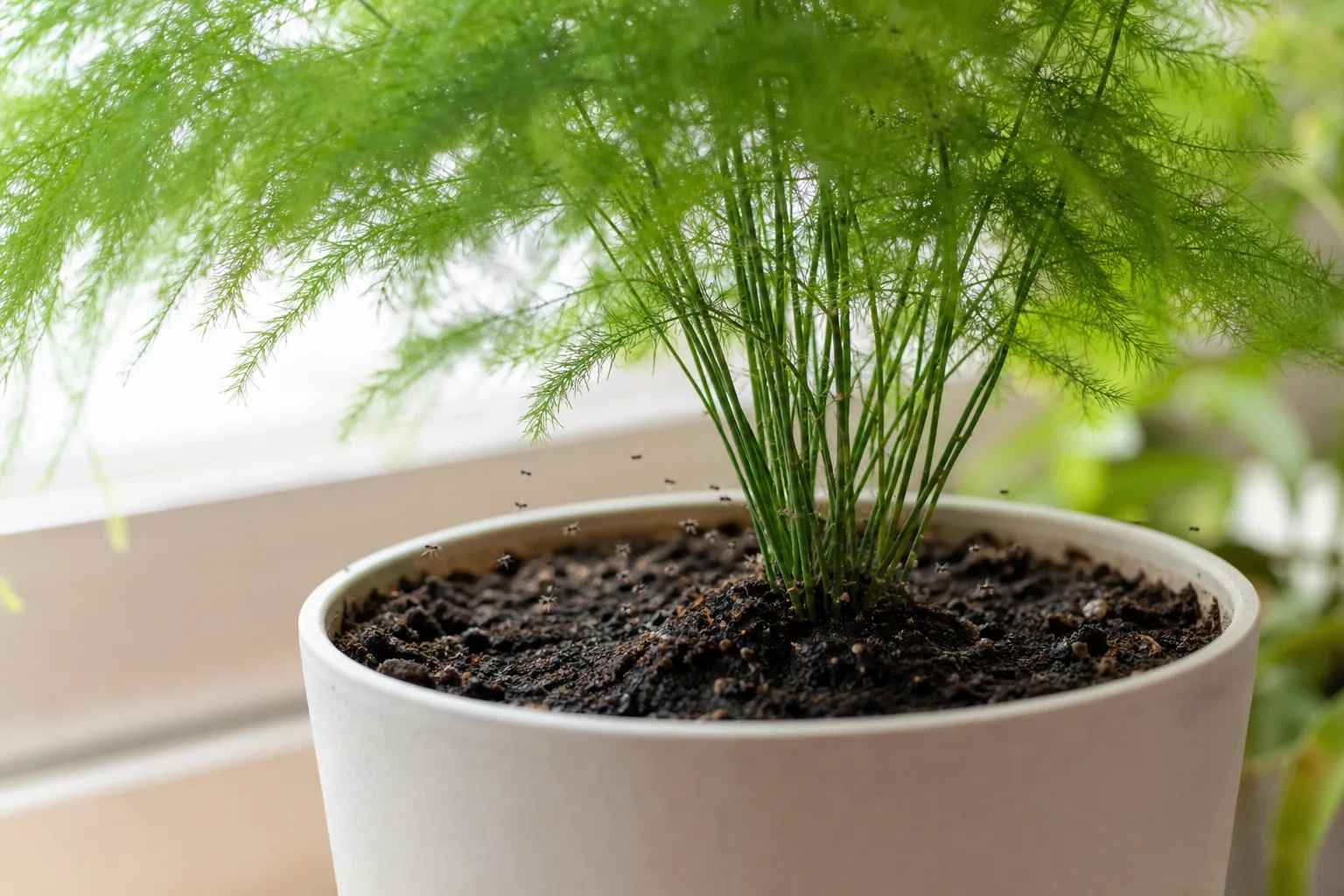
Fungus Gnats on Asparagus Fern: Wet-Surface Warning & Tuber-Safe Fix
This guide covers fungus gnats on Asparagus Fern. See also the general Fungus Gnats guide, watering, and light pages for this plant.
Fungus Gnats on Asparagus Fern: Wet-Surface Warning & Tuber-Safe Fix
Quick answer
When small black flies hover around your asparagus fern (Asparagus setaceus or Sprengeri-type A. densiflorus), the pest is telling you something about water-not attacking healthy dry soil. These plants are not true ferns; they grow from tuberous roots that store moisture below a dense canopy of fine cladodes. That combination creates a common trap: tubers can still feel firm while the top inch of peaty mix stays wet for days, especially when you water from above through arching fronds that slow surface evaporation.
First step: stop watering until the top inch of mix feels dry and the pot feels noticeably lighter. Before you add sticky traps or BTI, press gently where wiry stems meet the soil. Firm tubers mean you are likely catching a wet-surface problem early. Mushy bases, sour smell, or yellow cladodes with heavy wet soil mean gnats overlap with root rot-unpot and inspect tubers today, not after another week of traps.
Why asparagus fern gets fungus gnats (and not true ferns)
Fungus gnat adults lay eggs in consistently moist organic potting mix. Larvae live in the top 2 to 3 inches of soil, feeding on fungi, algae, decaying peat, and sometimes fine roots. The adults are a nuisance; the larvae signal that your watering rhythm and mix texture are out of balance.
Asparagus fern is especially prone when growers treat it like a moisture-loving Boston fern. NC State Extension describes Asparagus setaceus as needing a moist, well-drained, peaty potting mix with regular water spring through autumn and sparing water in winter. “Moist” means the root zone gets a real dry-down between drinks-not a constantly dark, cool surface. The tuberous roots buffer short drought; they do not protect against chronic surface wetness that breeds gnats and eventually rots storage tissue.
Several asparagus-fern-specific patterns invite gnats:
Dense cladode canopy over the pot rim. Cascading sprays shade the soil surface and catch splash when you top-water. Evaporation slows even while tubers deeper in the pot still hold reserves-so the plant can look fine briefly while larvae multiply in the top layer.
Retail peaty mix in small nursery pots. Fresh peat-heavy blend from the greenhouse dries slower in a dim living room than on a nursery bench. Without perlite amendment per the soil guide, the surface stays damp long enough for overlapping gnat generations.
Calendar watering without a soil check. Many indoor pots need water every 5 to 7 days in active growth and every 10 to 14 days in winter per the watering guide-but frequency must follow the finger test, not the day of the week. Watering because the plant “looks fern-like” while the top inch is still cool and clinging is the most common gnat trigger.
Fallen cladodes on damp soil. Needle-like cladodes shed naturally and decay on a wet surface, feeding the same fungi larvae eat-common on bushy plants and a overlap with mold on soil.
Cool winter rooms. When growth slows and water needs drop, the same summer schedule leaves unabsorbed moisture around tubers for weeks. Gnats persist because the surface never dries, not because the plant is actively drinking.
What fungus gnats look like on asparagus fern
Adults are tiny dark flies-often described as mosquito-like but harmless-that rise when you tap the pot or water. They hover near windows, lamps, and the soil line beneath arching cladodes. They are not fruit flies; vinegar traps do not monitor them reliably.
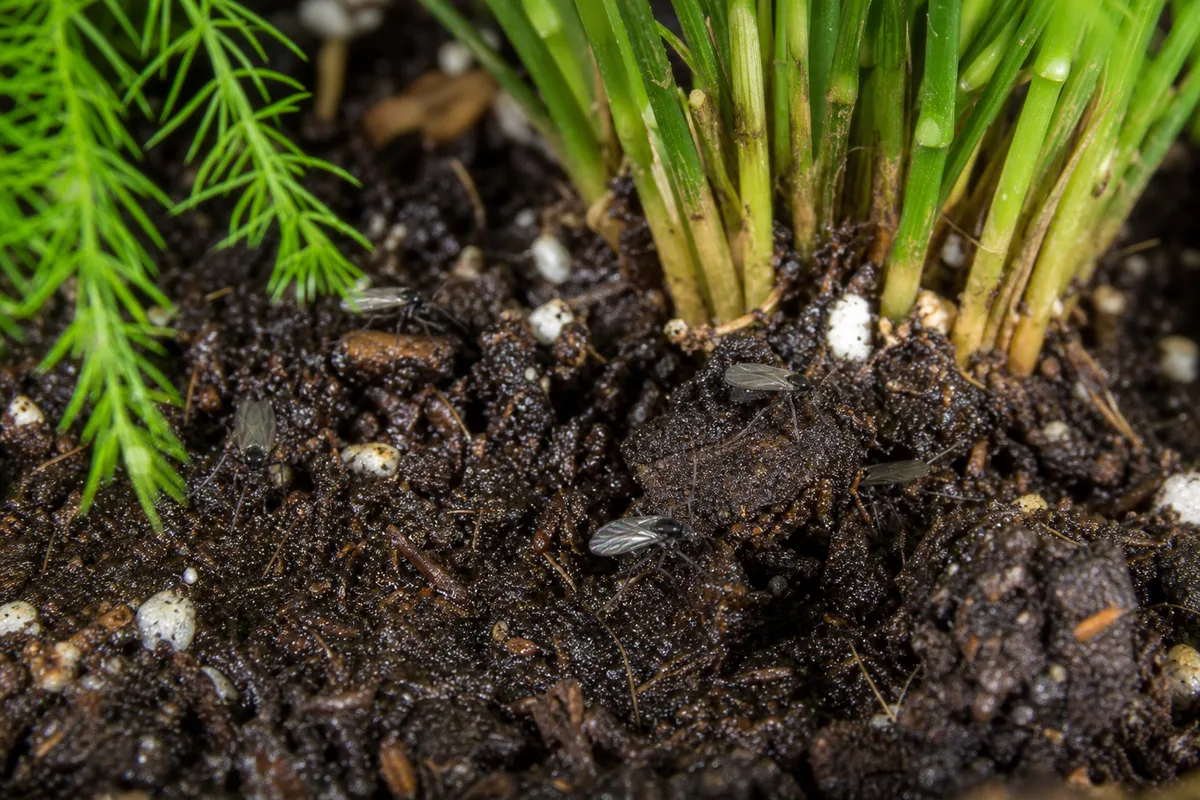
Fungus Gnats symptoms on Asparagus Fern - compare with healthy tissue on the same plant.
Larvae are small translucent worms in the top layer of mix. You may see them on the surface after watering or on the underside of a potato slice test (below). Plant damage from larvae alone is usually minor on established asparagus fern unless overwatering has already stressed roots-but the wet conditions that support larvae are the same conditions that rot tubers.
Watch for companion signs: white fuzz on the soil surface (mold), green algae on the pot rim, a sour smell from drainage holes, or outer cladodes yellowing while the mix stays heavy. Those point to the same moisture failure gnats flag-not separate random problems.
How to confirm gnats vs other pests
Work through these checks in order:
- Flight test after watering. If flies appear within a day of watering and counts drop when the surface has been dry for a week, gnats are confirmed. Persistent flies with a dry top inch suggest larvae in deeper wet peat-lift the pot and check weight and drainage.
- Potato slice test. Press ¼-inch raw potato slices into the soil surface for three to four days, then flip them to look for larvae on the underside. This confirms active larvae even when adults are few.
- Sticky trap count. Place yellow sticky cards at the soil line under the cladode canopy-not only near the window. Adults are attracted to yellow; rising catch counts mean females are still laying eggs in moist mix.
- Fruit fly rule-out. Fruit flies hover around kitchen waste and ripening fruit; fungus gnats stay tied to damp pots. Clean the kitchen first-if flies remain only at the plant, you are dealing with gnats.
- Soil moisture at 1 inch. Push a finger or skewer to the first knuckle. If it comes out dark and clinging day after day, the diagnosis is chronic wetness whether or not you see larvae yet.
Check tuber health before you treat
Gnats and overwatering share a cause; root rot is the escalation when tubers fail. Before investing in products, assess the crown:
- Firm tubers and solid stem bases when you press lightly at the soil line → proceed with dry-down and gnat controls below.
- Soft, collapsing tissue at the crown, sour-smelling mix, or yellow cladodes spreading from the base while soil stays wet → stop watering, unpot, and trim mushy tubers per the root rot guide before BTI or Asparagus Fern repotting guide.
- Light pot with dry top inch but limp cladodes → possible underwatering or rot-damaged roots; do not increase watering while gnats are present without checking tubers first.
This branch matters because asparagus fern can show gnats before obvious yellowing. Catching firm tubers at the gnat stage is far easier than rescuing a plant after tuberous roots turn jelly-soft.
First fix: dry the surface and break the life cycle
Pause watering until the top inch of mix is dry to the touch and the pot feels lighter. That single step kills larvae in the upper layer and removes egg-laying sites for adults. On a small indoor pot in warm active growth, surface dry-down often takes five to seven days; in a cool winter room it may take ten to fourteen days-acceptable if tubers stay firm and cladodes are not crisping from full root-ball drought.
While the surface dries:
- Pick up fallen cladodes resting on the mix.
- Move the pot to bright indirect light with a little airflow around the rim-see the light guide if the plant sits in a dim corner that slows evaporation.
- Empty any saucer or cachepot so water cannot wick back into the bottom.
Do not increase watering to “help” slightly limp cladodes while gnats are present and soil is still damp-that deepens the wet-soil problem tubers cannot survive.
Once the dry-down test passes, resume watering per the watering guide: soak until runoff, drain fully, empty the saucer within 30 minutes, and wait until the top inch dries again before the next drink.
When to escalate: BTI, traps, and top-layer refresh
If adults still appear two weeks after consistent surface dry-down, add controls in this order:
Yellow sticky traps at the soil line catch egg-laying females and help you track progress week to week. Replace cards when they fill; rising counts mean the surface is still too wet or larvae persist below.
Bacillus thuringiensis israelensis (BTI) targets fungus gnat larvae in moist soil. UC IPM notes that BTI does not persist indoors and may require repeat applications at roughly five-day intervals for three to four weeks to catch overlapping generations. Products such as Mosquito Bits or Gnatrol are mixed into water and applied as a soil drench on the top 1 to 2 inches where larvae feed-follow label rates. BTI is selective to fly larvae and is commonly used on houseplants when label directions are followed.
Top-layer refresh if the surface peat is algae-coated or moldy: scrape off the top 1 to 2 cm after dry-down, discard it, and top-dress with dry perlite-amended mix from the soil guide. This removes larval habitat without a full repot.
Repot only when dry-down, traps, and BTI fail after a full generation cycle, or when inspection shows mushy tubers, sour mix, or blocked drainage. Repot into a slightly larger pot with fresh airy mix-not a huge container that holds extra wet volume.
Recovery timeline and what success looks like
Adult counts on sticky traps should drop within one to two weeks once the surface stays dry between waterings. Full control often takes three to four weeks because gnat generations overlap-eggs, larvae, pupae, and adults can be present at once indoors.
Signs you are winning:
- Fewer flies when you tap the pot after the surface has dried
- Declining weekly catch on yellow cards
- Top inch dry before each watering without the whole root ball turning hard and shrunken
- New green cladode spears at the crown in warm months
Signs the problem is deeper than gnats:
- Trap counts rise despite dry surface attempts
- Yellow cladodes spread from stem bases while mix stays heavy
- Tuber tissue softens at the soil line or mix smells sour
- Gnats return within days of every watering because cachepots trap runoff
Damaged yellow cladodes will not turn green again. Judge recovery by new growth and firm tubers-not by saving every old needle-like frond.
What not to do on asparagus fern
Do not keep soil constantly moist because the plant looks delicate or “fern-like.” Chronic surface wetness rots tuberous roots faster than occasional dry spells brown a few tips.
Do not spray broad pesticide on fine cladodes. Residue on needle-like foliage causes browning that does not wash off, and foliar sprays do not reach larvae in soil. Avoid treatments that pool at the crown where wiry stems emerge.
Do not rely on vinegar traps-they monitor fruit flies, not fungus gnats.
Do not repot into a much larger pot on day one hoping to “dry things out.” Extra soil volume often stays wet longer around a small tuber mass.
Do not ignore gnats as harmless while soil stays soggy. The flies are the visible part of a moisture problem that leads to root rot on Asparagus Fern overview.
How to prevent gnats next time
Match watering to how fast your pot dries: check the top inch every few days, water deeply when dry, drain fully, and extend intervals in winter per the watering guide. Use perlite-amended mix from the soil guide, drainage holes, and empty saucers after every drink.
Remove fallen cladodes promptly. Give bright indirect light and a little space between pots so air reaches the soil surface. If you bottom-water routinely, limit soak time to 15 to 30 minutes and still verify the top inch dries before the next session-roots can drink from below while the surface stays less attractive to egg-laying adults.
Treat the first fly you see as a moisture alarm on asparagus fern-not a reason to stock pesticide. Fixing surface wetness early keeps tubers firm, cladodes green, and larvae out of the peaty top layer.
When gnats mean root rot - escalate here
Fungus gnats alone on firm tubers are a watering and mix fix. Gnats plus soft tubers, sour mix, collapsing stem bases, or spreading yellow cladodes on constantly wet soil mean tuberous roots may already be failing-follow the root rot guide for unpotting, trimming mushy tissue, and repotting into fresh well-drained mix. Fixing gnats without addressing rot leaves a plant that collapses on the next normal dry-down because its storage roots are gone.
If wet soil and yellowing are your main worry but flies are still few, read overwatering on asparagus fern first-gnats often appear a week or two into a chronically wet pot, not on day one of a single heavy watering.
When to use this page vs other Asparagus Fern guides
- Asparagus Fern watering guide - Use for routine moisture checks before assuming fungus gnats is the main issue.
- Asparagus Fern problems hub - Browse all 16 common issues on this species.
- Overwatering on Asparagus Fern - Different entry point when symptoms overlap with fungus gnats.
- Mold on Soil on Asparagus Fern - Different entry point when symptoms overlap with fungus gnats.
- Root Rot on Asparagus Fern - Different entry point when symptoms overlap with fungus gnats.