Aphids on Asparagus Fern: Causes, Checks & Fixes
Quick answer
Aphids on Asparagus Fern cluster on the softest new cladode tips and arching stems, often with sticky honeydew on the shelf below a hanging basket before you spot insects. First step: isolate the plant and shower every arching stem from multiple angles-dense feathery crowns shield aphids from a quick top-down rinse.
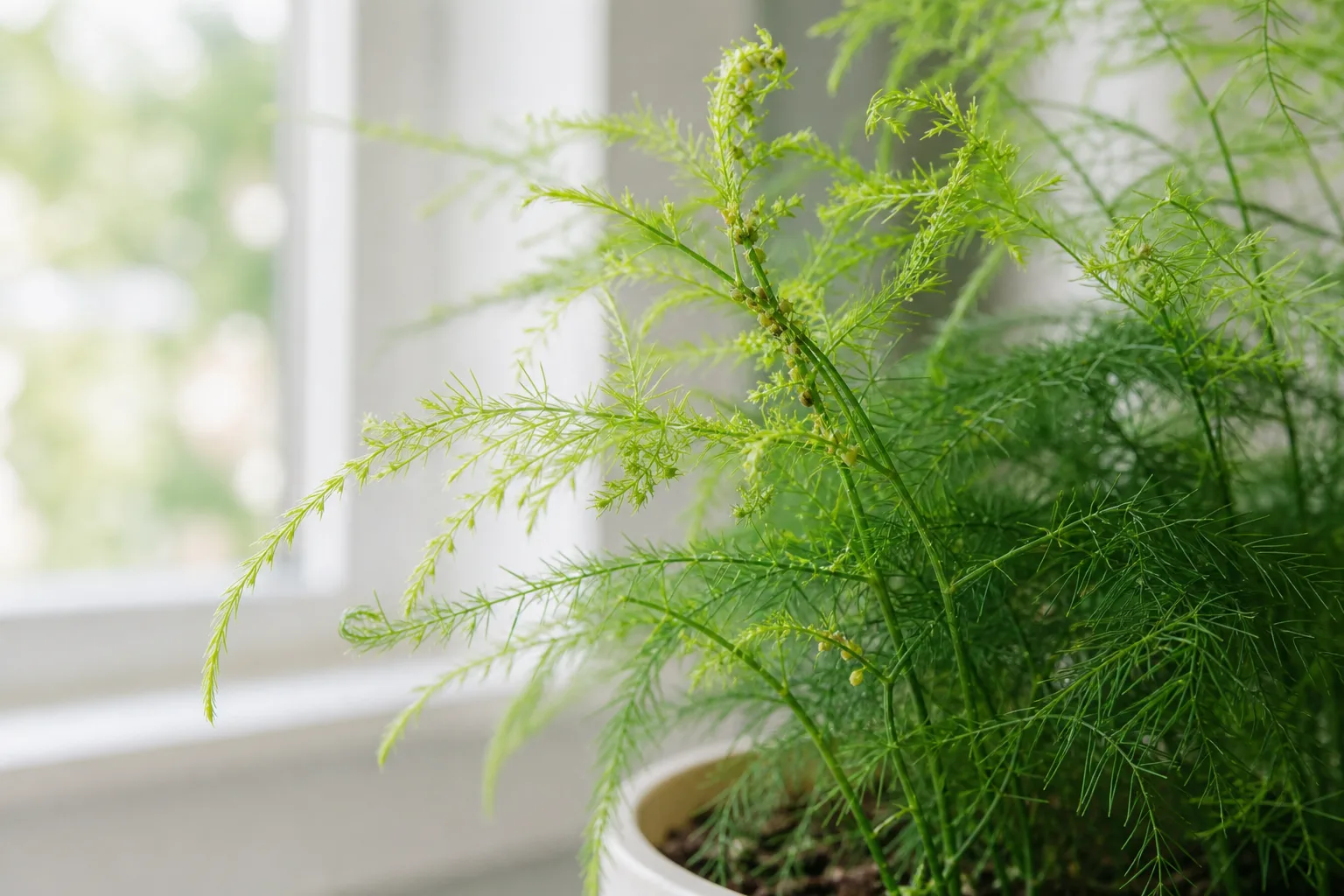
Aphids on Asparagus Fern: Causes, Checks & Fixes
This guide covers aphids on Asparagus Fern. See also the general Aphids guide, watering, and light pages for this plant.
Aphids on Asparagus Fern: Causes, Checks & Fixes
Quick answer
Aphids on Asparagus Fern are small soft-bodied sap feeders that cluster on the tender new growth this plant pushes constantly in bright indoor light. They are not a disease and they do not mean your watering routine failed-but they do need action before honeydew coats the feathery cladodes and sooty mold follows.
The classic first clue: sticky residue on the table or shelf beneath a hanging basket, while the outer cascade still looks healthy from across the room. Aphids feed on inner stem junctions and soft cladode tips the feathery spray hides from a casual glance.
First step: isolate the plant and shower every arching stem from multiple angles. Move it away from neighbors, take it to a sink or shower, and spray inner crown junctions-not just the outer cascade. Dense feathery crowns shield aphids from a quick top-down rinse; rotate the pot and hit stems from below as well as above. Only after knockdown should you consider insecticidal soap or neem oil on survivors.
What aphids look like on Asparagus Fern
Asparagus Fern (Asparagus setaceus) is not a true fern-it is a fast-growing asparagus relative with fine, needle-like cladodes on arching stems. Aphids exploit exactly that geometry: soft new tips and sheltered junctions along multiple cascading fronds.
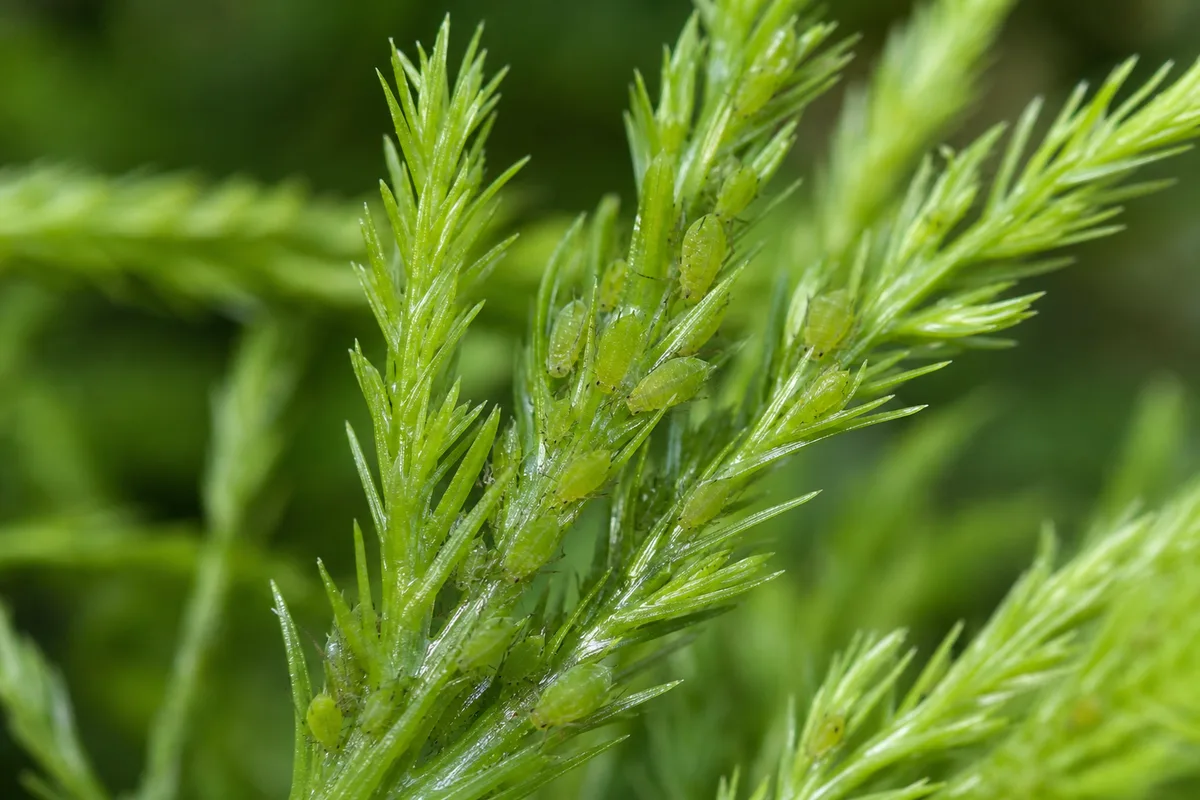
Aphids symptoms on Asparagus Fern - compare with healthy tissue on the same plant.
On this species, aphids usually gather where stems are softest:
- New cladode tips at the end of arching fronds
- Stem joints where fresh needles are unfurling
- Flower stalks, if your plant is producing the small white blooms that precede red berries
- Underside clusters tucked against the main stem beneath the feathery spray
Individual aphids are tiny-roughly 1/16 to 1/8 inch-pear-shaped, and often green, though black, brown, or gray forms occur indoors. They have visible legs and antennae and move slowly when you disturb them. Winged adults may appear when a colony gets crowded; those are the ones that spread to other pots.
Damage shows up around the feeding site before it spreads down the whole plant:
- Shiny sticky honeydew on cladodes, pot rims, hangers, or the shelf below a hanging basket
- Black sooty mold growing on that honeydew
- Ant trails on the hanger, table, or outer pot
- Curling or yellowing of the newest needles
- Stunted soft shoots that look smaller or twisted compared with clean new growth elsewhere on the plant
- Cast skins-pale shed exoskeletons left on stems after molting
Unlike mealybugs, which hide as cottony wax in cladode axils, aphids sit as naked pear-shaped bodies on the softest new tissue. Unlike spider mites, they form rounded clusters on tips-not fine stippling with webbing in dry air.
Why Asparagus Fern gets aphids on soft cladode tips
During spring and summer this plant produces a steady stream of soft new tips in bright indoor light, and aphids prefer exactly that tissue because the sap is easy to reach and rich in nitrogen. On Asparagus Fern, that means every arching stem becomes a row of feeding stations the outer green curtain conceals.
Hanging-basket geometry extends the problem. You water from above and see healthy fluff; aphids feed on upward-facing junctions inside the crown. Warm room temperatures and long days keep the fern producing new cladodes, which gives aphids a continuous food supply and lets populations multiply within days.
Most infestations start with introduction, not spontaneous generation. Aphids hitchhike on new nursery plants, cut flowers, open windows in mild weather, neighboring houseplants that were never quarantined, or-common for collectors-a summer move outdoors and return in fall. Asparagus Fern near a sunny window is especially exposed when winged adult aphids drift in during spring.
Soft, nitrogen-rich shoots also attract aphids. Heavy fertilizer during active growth can push lush tender cladodes that are easier for pests to pierce than firm mature needles. That does not mean withholding normal feeding on a healthy plant-it means excess nitrogen during an outbreak can speed reinfestation once insects return.
Stress weakens recovery, not always the initial cause. Chronically dry soil or dim corners yellow cladodes and slow new tips, but aphids still need introduction. If you see stickiness plus live insects on new growth, treat pests first; if yellowing spreads without colonies, cross-check watering and light separately.
Lookalike symptoms to rule out
| What you see | Likely cause | How to tell apart |
|---|---|---|
| Soft pear-shaped insects on newest tips | Aphids | Naked bodies on tender growth; sticky honeydew; slow movement when disturbed |
| White cottony clusters in cladode axils | Mealybugs | Removable wax; smears pink on crush; shelters in joints, not open tips |
| Fine yellow stippling with webbing | Spider mites | Moving specks on paper tap test; favors dry indoor air |
| Hard brown or tan bumps on older stems | Scale insects | Immobile shell; no legged clusters |
| Silvery streaks on cladodes | Thrips | Rasping damage; not round colonies on tips |
| Yellow clumps on dry soil, no stickiness | Underwatering | Soil pulls away from pot; no insects |
| Limp fronds with wet mix and sour smell | Overwatering or root rot | Mushy tubers; no sap-feeder colonies on new tips |
How to confirm the cause
Work through these checks in order before you spray anything:
- Locate the softest growth - Follow two or three arching stems to their tips and to the points where new cladodes branch off. Aphids cluster there; random yellowing on older lower needles without insects points to dryness or light stress instead.
- Inspect from below on hanging baskets - Lift outer fronds and shine a phone light into the inner crown. Sticky junctions above a clean-looking cascade are a high-yield aphid site on this species.
- Use magnification - A ten-power hand lens or phone magnifier makes pear-shaped bodies and cornicles on the rear obvious. If nothing moves and you see only dust, keep looking on inner stems.
- Test stickiness - Honeydew feels tacky and may turn black with sooty mold. Rub a suspicious cladode between fingers; pest honeydew smears. Dust or hard-water spots wipe off dry.
- Watch movement - Tap the stem gently. Aphids shift slowly. Spider mites are nearly invisible and leave stippling plus webbing, not rounded clusters. Whiteflies fly in a cloud when disturbed.
- Check flower stalks - If blooms or berry precursors are present, inspect those soft stalks separately from cladode tips.
- Scan the collection - Check plants above and below the fern, plus any recent purchase or plant that summered outdoors. Aphids on one asparagus fern often mean a second host nearby.
Confirmed diagnosis requires live insects on tender growth plus supporting signs like honeydew or cast skins-not stickiness alone, since other pests also produce honeydew.
First fix: isolate and multi-angle shower
Isolate the plant and shower every arching stem until water runs through the full cladode mass from several angles.
Move the pot away from other houseplants immediately. Aphids walk and winged forms fly; isolation limits spread while you treat. Place the fern in a sink, bathtub, or shower and use lukewarm water with moderate pressure-not so hard that you break brittle stems, but firm enough to dislodge insects from nested needles.
Tilt hanging stems so spray hits the inner crown and stem junctions, not just the outer cascade. Rotate the pot and repeat from below as well as above. Let foliage dry in bright indirect light the same day; avoid leaving the crown soggy overnight in a dark corner.
This single step is the correct first response because it removes a large share of the colony without chemical risk to the plant, your pets, or beneficial insects that may already be present. Do not apply soap or oil on day one before rinsing-you need to see how many insects remain after knockdown.
Do not repot, prune heavily, or fertilize during the first treatment. Repotting does not remove foliar aphids and adds stress. Fertilizer pushes more soft growth that new aphids will prefer.
If showering is not enough - soap, neem, and trim bad arches
After two or three thorough rinses spaced two days apart:
- Apply insecticidal soap labeled for houseplants if colonies persist. Coat stems and cladode clusters until spray runs off; contact products only kill insects they touch. Test one stem first and wait 48 hours before treating the whole plant-feathery cladodes can show phytotoxicity on sensitive specimens.
- Repeat soap every four to seven days for two to three cycles to catch nymphs that hatch from eggs left behind. One application rarely clears a dense infestation on layered foliage.
- Consider neem oil or horticultural oil only if soap fails and label directions allow indoor use. Apply during cooler morning hours in bright indirect light-not on wilted or drought-stressed cladodes. Coat inner junctions where aphids hide; fine needles dry quickly and stressed tissue burns more easily in warm rooms.
- Trim isolated bad stems if one arch carries a colony you cannot reach with spray. Snip the affected stem at a junction rather than pulling needles by hand.
Keep soap runoff from flooding tuberous roots at the pot base with every application. Asparagus Fern wants evenly moist-not waterlogged-soil per the watering guide.
Step-by-step recovery
After the initial shower:
- Re-inspect in two days - Check the same stem tips with a lens. If aphids return, repeat the shower from multiple angles.
- Apply insecticidal soap if colonies persist after two or three rinses. Work spray into cladode clusters on stem junctions; keep soap out of eyes and wash hands after handling-Asparagus Fern sap can irritate skin on sensitive people.
- Repeat soap every four to seven days for two to three cycles to catch newly hatched nymphs.
- Add horticultural or neem oil only on a passed patch test if soap cycles fail. Avoid oils on the hottest part of the day or on plants that have not rehydrated after drought stress.
- Wipe sooty mold off coated needles with a damp cloth once honeydew production stops. Mold is cosmetic but blocks light on heavily blackened sections.
- Manage ants on pot rims or shelves if they are protecting aphids from predators. Sticky barriers on hanging hooks or ant bait away from the plant help natural enemies work.
- Hold the plant isolated until you see at least one week with no live aphids on inspection after your last spray.
Recovery timeline
A moderate infestation on a healthy Asparagus Fern often shows clear improvement within three to five days after the first thorough multi-angle rinse. Soap cycles, when needed, usually take one to two weeks with label-interval repeats before new tips emerge without insects.
Distorted or yellowed cladodes from heavy feeding do not always flatten out. Watch the next flush of growth at stem tips-that tissue should look clean, firm, and evenly green. Old needles with sooty coating may stay dull until they age out or you trim them.
If new growth stops entirely while light and watering are normal, or colonies rebound within days of every treatment, escalation is warranted-either a persistent hidden pocket on the crown or reinfestation from an untreated neighbor plant.
Mistakes to avoid
Do not skip isolation because the infestation looks small. A few aphids on one tip can become a basket-wide problem within a week on a fast-growing fern.
Do not spray insecticide before rinsing and confirming live insects. Sticky furniture below the pot does not tell you whether the colony is still active.
Do not use dish detergent in place of products labeled for plants. Homemade soap mixes can burn tender cladodes and lack predictable contact action.
Do not assume a single top-down shower finished the job. Dense Asparagus Fern crowns need repeated knockdowns or soap cycles from several angles.
Do not return the plant to a mixed shelf the moment you stop seeing aphids. Hold it apart for at least a week of clean checks.
Do not increase nitrogen fertilizer to “help recovery” during an active infestation-that produces more aphid-friendly soft shoots.
Do not ignore a summer outdoor stint. Aphids picked up on garden hosts often ride back inside on the same arching stems that looked clean outdoors.
Asparagus Fern care cross-check
While treating aphids, keep the basics steady rather than overcorrecting:
- Light - Bright indirect light supports recovery and continuous clean new tips. Sudden moves to dim corners slow the flush you use to judge success-see the light guide.
- Water - Evenly moist soil without waterlogging. Let the top inch feel barely dry before watering again; chronic overwatering yellows fronds without removing pests.
- Humidity - Moderate humidity suits this species. Very dry air favors spider mites, a separate problem that can overlap with pest stress.
- Fertilizer - Hold heavy feeding until new growth looks clean for two weeks. Normal modest doses resume after the infestation clears.
If many lower cladodes yellow while only tips have aphids, split the diagnosis: treat pests on new growth and separately verify watering and light for the broader yellow-leaf pattern.
This plant is toxic to cats and dogs. Keep treated plants where pets cannot chew wet foliage after spraying, and wear gloves if sap bothers your skin during wiping or pruning. If your pet chews Asparagus Fern tissue or licks wet spray residue, contact ASPCA Animal Poison Control (888-426-4435) or your veterinarian immediately-do not wait for symptoms.
How to prevent aphids next time
Prevention on Asparagus Fern is mostly about early detection during its fast growth phases:
- Scout new tips weekly from spring through early autumn when cladode production is highest.
- Quarantine new plants for at least two weeks before placing them near your fern.
- Inspect before and after summer shade outdoors-aphids from garden hosts often reinfest when you bring the basket back inside in fall. Treat or rinse before merging with indoor collections.
- Feed at normal strength during active growth; avoid doubling fertilizer to push lush cascades.
- Keep airflow reasonable around crowded plant shelves so you can actually see inner stems.
- Preserve beneficial insects by avoiding broad-spectrum sprays unless necessary; lady beetles and lacewings sometimes control small aphid colonies if ants are not protecting them.
See the Asparagus Fern overview for baseline light, water, and soil standards that keep arching stems resilient.
When to escalate
Treat as urgent when most new tips on the plant carry colonies, ants farm honeydew across the pot and hanger, winged aphids show up on multiple houseplants at once, or the fern stops producing new cladodes during what should be active growth despite normal light and moisture.
Also escalate if sooty mold coats most visible fronds-heavy sap loss can weaken the plant over time even though aphids alone rarely kill a mature specimen-or if colonies rebound within days after every rinse and soap cycle.
Systemic options and professional help
When contact sprays fail on dense crowns you cannot coat thoroughly, extension guides list soil-applied systemic insecticides such as imidacloprid granules or spikes as a last resort for persistent indoor aphids-only on products labeled for houseplants and only after rinsing and soap cycles have failed. Systemics move through roots into foliage where aphids feed; they are not for herbs, vegetables, or edible plants, and they can harm beneficial insects. Follow label rates, keep treated pots away from pets until the application settles, and never combine systemics with biological controls on the same plant.
If three full contact-treatment cycles fail, neighbors keep reinfesting, or you are unsure whether winged aphids came from an outdoor summer host, contact your local cooperative extension office for pest-ID confirmation before stacking more chemicals.
When infestations become severe and treatment cycles fail repeatedly, consider discarding the plant rather than endlessly treating-especially if neighbors remain at risk.
A handful of aphids on one stem tip during spring growth, caught early, is not an emergency. Isolate, rinse from multiple angles, and monitor before reaching for stronger products. For related problems on the same plant, compare mealybugs, spider mites, and root rot before you treat the wrong symptom.
Related Asparagus Fern guides
- Asparagus Fern overview - species context and baseline care
- Watering - moisture rhythm without waterlogging tuberous roots
- Light - bright indirect placement for continuous new tips
- Fertilizer - nitrogen timing during active growth
- Spider mites - stippling and webbing in dry indoor air
- Mealybugs - cottony wax in cladode axils
- Overwatering - mushy tubers without insect colonies
- Yellow leaves - when yellowing is not aphids alone