Should You Mist Succulents? How to Water Them Instead
Should you mist succulents? Learn why sprays do not water the root zone, where species differ, and how to water without keeping pots or leaves wet year-round.
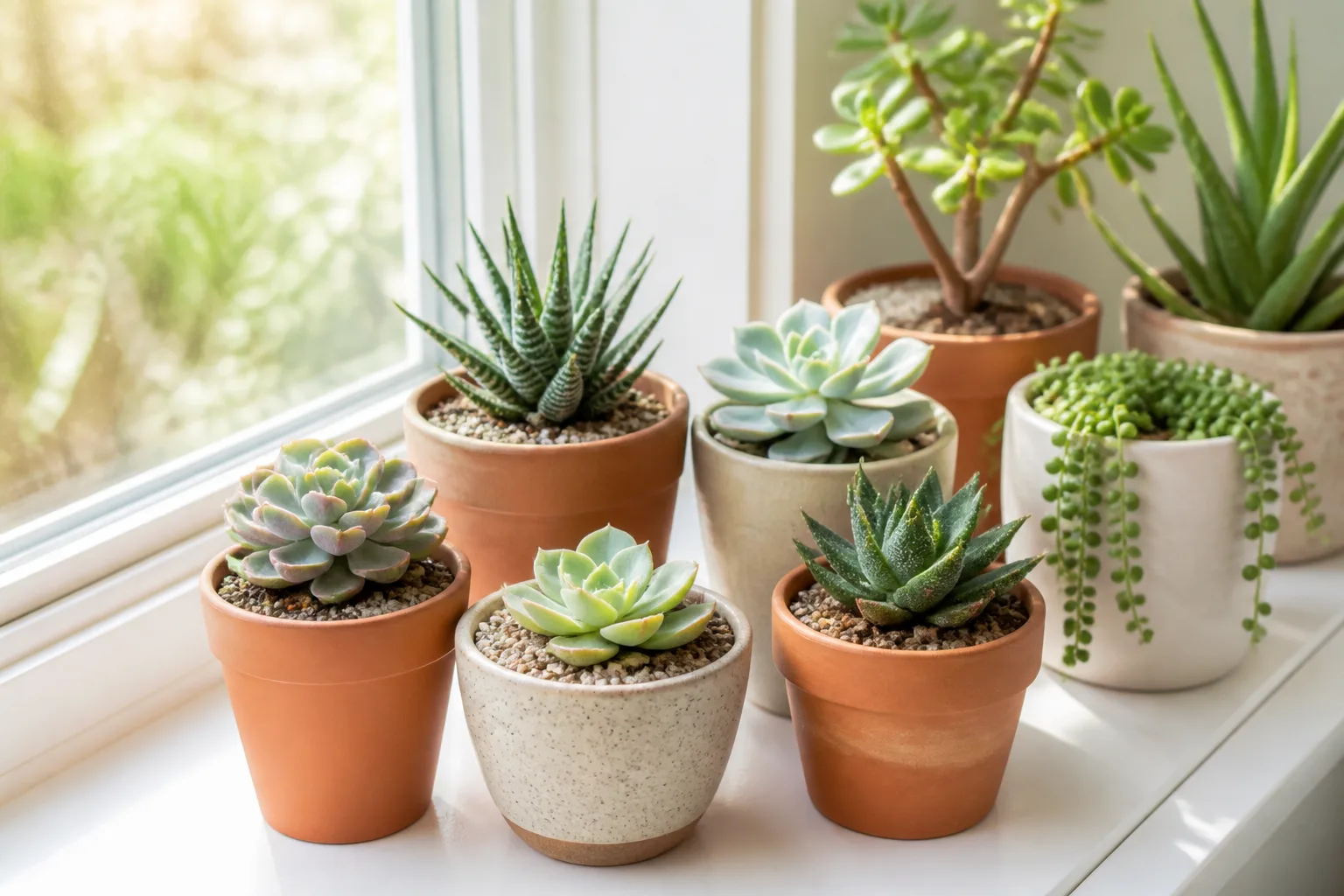
For most established succulents, routine misting is not useful: a spray wets the leaves and the soil surface, but it does not reliably hydrate the root ball. If your plant needs water, give the potting mix a thorough drink, let excess water drain, and wait until the root zone has dried enough before watering again. This is the practical advice for common indoor types such as echeveria, jade plants, and aloe, with important exceptions for succulents that evolved in rainforest conditions.
That does not mean one accidental splash will ruin a plant. The important questions are where the water goes, how long it stays there, whether air can move around the plant, and what kind of succulent you own. The WVU Extension guide to succulents and RHS growing guide for houseplant cacti and succulents both emphasize watering the growing medium and allowing excess water to drain, while also noting that varieties differ.
The short answer: skip routine misting
If by “mist” you mean spraying a mature succulent every few days as its main source of water, skip it. A fine spray may leave beads on foliage and dampen the top layer of mix, yet the deeper roots can remain dry; a light spritz is therefore a poor substitute for checking and watering the root zone.
If you mean, “Will one spray hurt it?” usually not. A brief wetting that dries quickly in a bright, ventilated place is not the same as weeks of repeated spraying or water sitting inside a dense rosette. Focus on the conditions that persist, not on treating every droplet as an emergency.
What misting does—and what it does not do
A spray bottle places liquid water on surfaces. Some droplets evaporate, some run into the top of the potting mix, and some can settle between leaves or in a crown; the exact result depends on the nozzle, room temperature, airflow, plant shape, and how much water you apply. None of that tells you whether the roots at the bottom of the pot have enough moisture.
Misting is also often confused with raising humidity. Relative humidity describes water vapor in the air, not liquid water resting on a leaf. The RHS explains that atmospheric humidity affects how quickly plants lose water through their leaf pores; a few sprays may briefly humidify the air immediately around foliage, but they do not maintain a stable room-level change. For that, use a hygrometer to measure the room and, if a particular species truly needs more moisture in the air, choose a controlled method such as a humidifier.
Leaf wetness is not room humidity
Imagine spraying one plant and then checking the room with a hygrometer ten minutes later. You may see no meaningful change in the room reading, even though the leaves still feel wet. The droplet and the surrounding air are two different moisture conditions, and the second—not a coating of water on the foliage—is what growers mean when they discuss ambient humidity.
This distinction matters because a plant can have wet leaves in a dry room or dry leaves in a humid room. Misting does not solve a genuinely dry root ball, and it is not a dependable way to create a more humid growing environment. If the plant’s leaves are dusty, clean them for cleanliness; do not turn cleaning into a watering schedule.
Why a spray bottle underperforms as a watering tool
Succulents store water in fleshy leaves, stems, or roots. That storage lets many species tolerate the soil drying between waterings, but an established plant still takes up most of the water it needs through its roots. A spray that wets only the foliage can create a misleading signal: the plant looks freshly watered while its growing medium remains dry below the surface.
Frequent shallow wetting can also keep the top of a pot damp while the lower mix dries unevenly, or encourage someone to water before the previous moisture has left the container. The main route to trouble is not that a droplet touches a leaf; it is a persistent mismatch between water and air around roots, especially in a dense mix, a container without a drainage hole, or a pot left standing in runoff. The Epic Gardening watering guide similarly recommends checking the mix and giving the root zone a thorough watering rather than relying on small surface applications.
“Succulent” covers plants with different moisture needs
Succulent describes a water-storing adaptation, not one uniform care schedule or habitat. Many familiar houseplant succulents come from dry regions and prefer bright light, a free-draining medium, and a pronounced dry period between waterings. Other succulents are adapted to humid forests or grow on trees, where moisture arrives differently and light is filtered.
The best rule is to identify the plant before changing its care. If a nursery tag gives a species name, search for that plant’s growing guide; if it does not, use its growth form as a clue, then adjust cautiously while observing how the pot dries. “Succulent” is a starting point, not a reason to assume every plant wants low humidity or an identical watering interval.
Desert and dry-climate succulents
Echeveria, jade plants, many aloes, and compact rosette-forming plants are common examples of succulents kept on bright sills. For these, routine foliage misting is unnecessary, and it can be counterproductive when droplets collect in a tight center or when the surrounding room is cool and still. Water the medium when it is ready, then let the pot drain completely.
The silver or powdery coating on some echeveria leaves is called farina. It helps protect the leaf surface and is easily rubbed off by fingers, cloth, or repeated handling; spraying can leave mineral marks or disturb the finish if the leaves are wiped afterward. Do not scrub a healthy plant to make it look glossy.
Rainforest cacti and other epiphytes
Christmas cactus, orchid cactus, and Rhipsalis are succulents too, but they are not desert rosettes. The RHS identifies these rainforest-adapted epiphytic cacti as exceptions that tolerate more regular watering and higher humidity than many arid-region succulents; their care should follow the species rather than a blanket “keep all succulents dry” rule.
Even for an epiphyte, misting is not automatically necessary. A spray is still a brief surface treatment, and whether to use one depends on the plant, airflow, temperature, and the goal. Keep its medium appropriately moist for that species without leaving the pot waterlogged, and use room humidity guidance if the real issue is dry air. Do not use a desert succulent’s watering interval for a holiday cactus—or assume a holiday cactus routine is right for echeveria.
Does water on the leaves cause rot?
Not by itself in every case. A healthy leaf that gets wet and dries promptly is usually not a crisis; the concern rises when moisture stays trapped for a long time in a tight crown, leaf axil, or damaged tissue, particularly in a cool, humid space with little airflow. That is why watering at the soil line is a sensible default for dense rosettes, even though “water touched a leaf once” is not a diagnosis.
Root rot is a separate problem associated with roots remaining in poorly aerated, persistently wet conditions. A wet crown, leaf spot, or softened stem may also involve injury, cold, disease, or other stress, so do not diagnose root rot from a single mark on a leaf. If water pools in the center after a spray or overhead watering, tip the plant gently and blot the standing droplet with the corner of a clean tissue; then let the plant dry in normal bright conditions with some air movement.
How to water an established succulent instead
Start by checking that the pot has an open drainage hole and the mix drains freely. When the plant is ready for water, direct a steady stream onto the mix rather than the foliage, wetting the soil across the root ball until a little water flows out of the bottom. Empty the saucer or outer cachepot once the runoff has drained; do not let the pot sit in it.
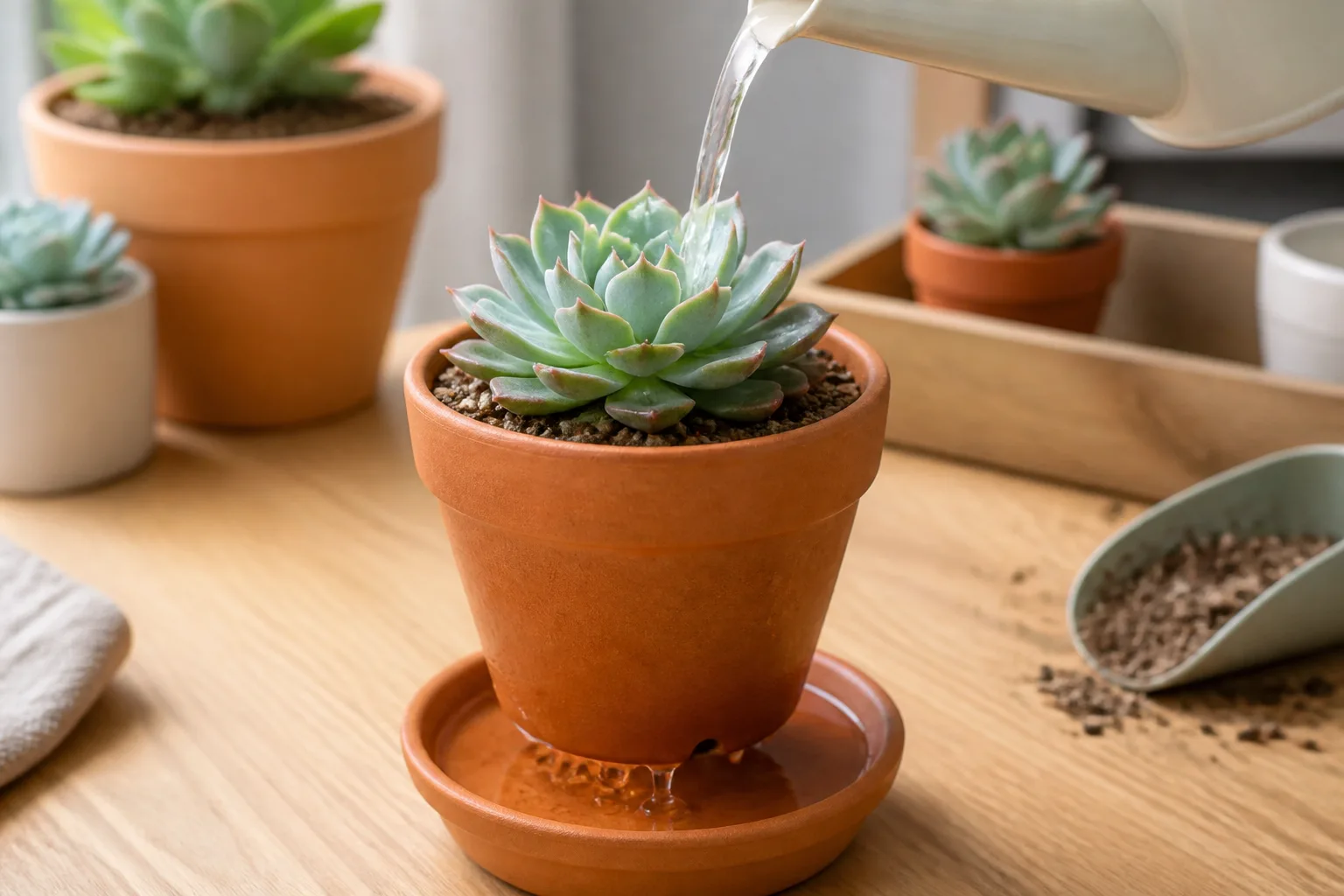
If the mix has pulled away from the pot walls and water rushes down the gap without soaking in, pause and let the root ball absorb water in stages. Apply a smaller amount to the soil, wait several minutes, then water again until it begins to drain; check that the mix has actually taken up moisture. The WVU Extension directions describe soaking container soil until water exits the drainage holes and avoiding frequent small amounts.
Bottom watering can be useful if a very dry mix repels water from above, but it is not required and it has a limit: remove the pot when the mix is evenly damp, then let it drain. Do not leave the plant sitting in a bowl as a substitute for checking drainage. The goal is to wet the root zone and then restore air spaces in the mix as it dries, not to keep the pot continually moist.
When to water: read the root zone, not the calendar
There is no reliable universal schedule such as every seven, ten, or fourteen days. Drying speed changes with the species, light, temperature, season, pot size, material, soil mix, airflow, and whether the plant is actively growing. A bright windowsill in a warm room can use water differently from a shaded office or a cool winter room.
Check more than the surface. Press a finger into the mix if the pot and plant allow it, use a wooden skewer in a deeper section, or learn how light the pot feels after watering and after drying. If the skewer comes out damp or the container still feels heavy, wait and check again in a few days. Once the mix is dry through the root zone, water thoroughly rather than sprinkling a little each day.
Iowa State Extension notes that even a rough two- or three-week interval varies with soil type, light, humidity, and container; that range is not a timer to follow blindly. The RHS seasonal guidance also adjusts watering for growth and winter rest, with exceptions for winter-flowering and rainforest-adapted types. Use a calendar as a reminder to inspect the pot, not as an instruction to water.
How soil, pot, light, and season change the interval
Fast-draining succulent mix helps excess water leave the root zone, but a mix that is almost entirely coarse grit may dry extremely fast and fail to support fine roots. Aim for a medium that drains promptly while holding enough moisture for roots to take it up; if a pot stays heavy and damp for many days, inspect the drainage hole, mix, and container rather than adding more water or misting the leaves.
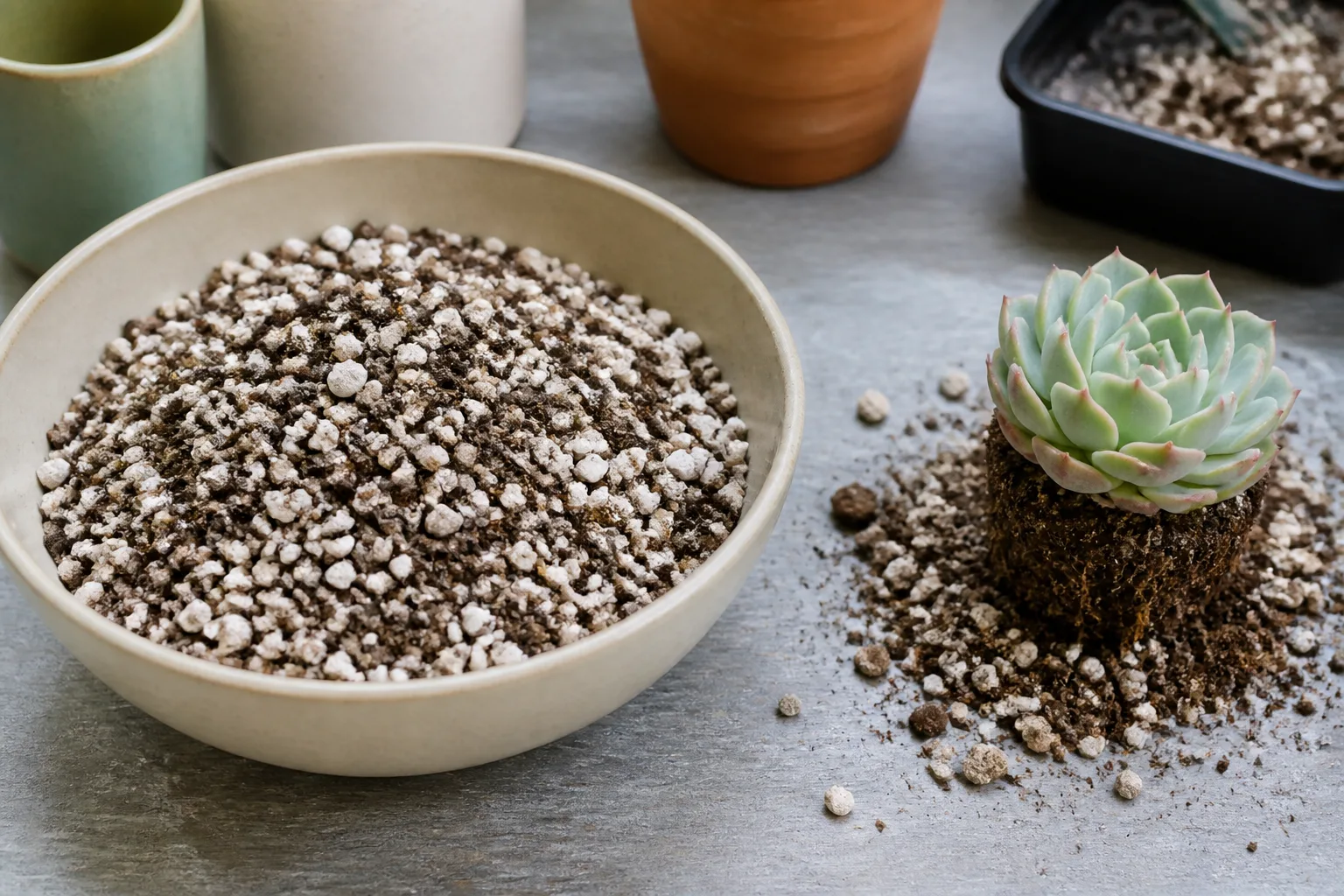
Pot size and material matter. A small plant in a pot much larger than its root system leaves a lot of unused mix that can remain wet, while terracotta loses water through its walls faster than glazed ceramic or plastic. A decorative sleeve can hide standing water, so remove the nursery pot when watering and check the bottom before putting it back.
Light and season affect both growth and water use. Many indoor desert succulents slow down in winter when light and temperatures drop; they often need less frequent irrigation then. But tropical epiphytes can have different seasonal patterns, and a plant in a heated, sunny room may dry sooner than one resting in a cool room. Observe the plant and pot together rather than applying one “winter succulent” rule to every species.
Keep droplets out of tight rosettes
Echeveria and similar plants form compact centers where water can linger between overlapping leaves. When watering, aim at exposed soil along the pot edge or use a narrow-spout can so you can reach the medium without flooding the crown. If the plant has a thick bed of decorative stones on top, move a few aside so you can check the real soil and direct water accurately.
If you accidentally wet a rosette, first look for pooling, not merely a sheen. Tilt the pot gently so excess runs away from the center, blot a droplet you can reach without prying leaves apart, and keep the plant in its normal bright spot with ordinary air circulation. Avoid placing a wet plant in intense midday sun as a “drying trick”; abrupt heat and light can add stress or scorch foliage.
When fine mist may have a place in propagation
Propagation changes the problem because a leaf cutting or newly rooted offset may not yet have the same root system as an established plant. Follow a propagation method written for the species and stage: some methods begin with a callused cutting and nearly dry medium, while others keep the medium just lightly moist after roots form. WVU Extension advises allowing cuttings to callus before planting and then watering sparingly, rather than keeping them saturated.
If a method calls for a spray bottle, use it to moisten the propagation medium lightly and evenly, not to repeatedly soak the mother plant’s foliage. Keep the container airy, use clean tools and mix, and stop adding water if the surface remains wet or cuttings soften. A mist can be one small tool for a specific propagation stage; it is not the normal hydration plan for a mature succulent.
How to clean dust without a spray routine
Dust on smooth leaves can be wiped gently with a soft, barely damp cloth, supporting the leaf as you work. For a spiny cactus, use a soft brush rather than your fingers; for a plant with farina, avoid wiping or rubbing the coating away. If you rinse a plant to remove grime, protect the potting mix from becoming saturated and allow the foliage to dry with good airflow.
Avoid leaf-shine products, oils, or repeated polishing. They can leave a film and are unnecessary for plant health. If the goal is simply to make the plant look clean, remove loose dust occasionally and leave the natural surface alone.
Should you raise humidity around a succulent?
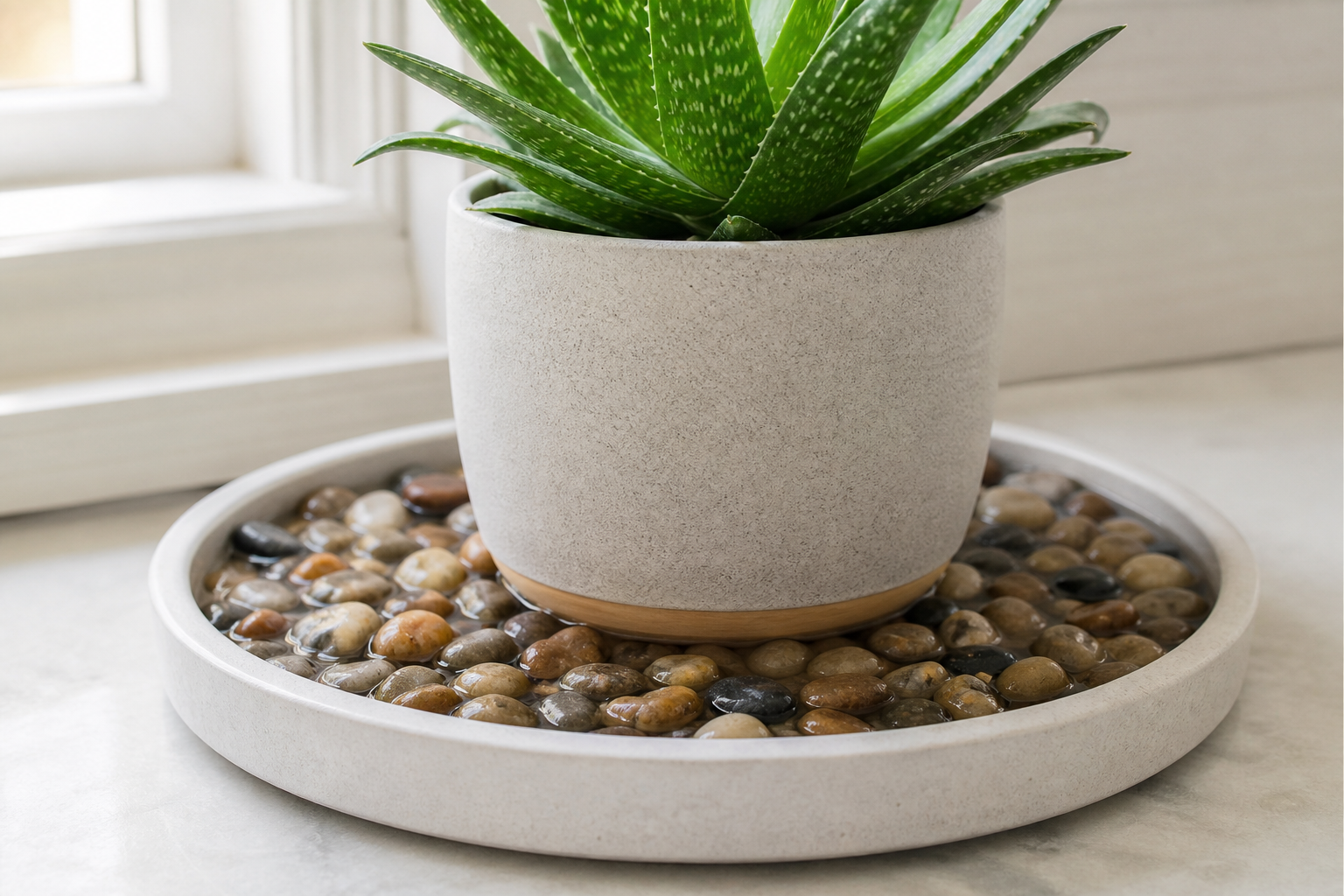
Most dry-climate succulents do not need a humidifier or pebble tray simply because indoor air feels dry to people. If you suspect a species is struggling with air that is too dry, measure relative humidity near the plant over time and identify the species before changing the room. A humidifier can affect a room more consistently than a spray bottle, but it should only be used where the plant benefits, with routine cleaning and enough air circulation.
For rainforest epiphytes, moderate humidity may be more relevant, but root watering and air humidity still solve different needs. A pebble tray may create only a small, localized effect and should never leave a succulent pot sitting in water. For a fuller explanation of measuring air moisture and choosing humidity tools, see the houseplant humidity guide.
Tell thirst apart from excess moisture
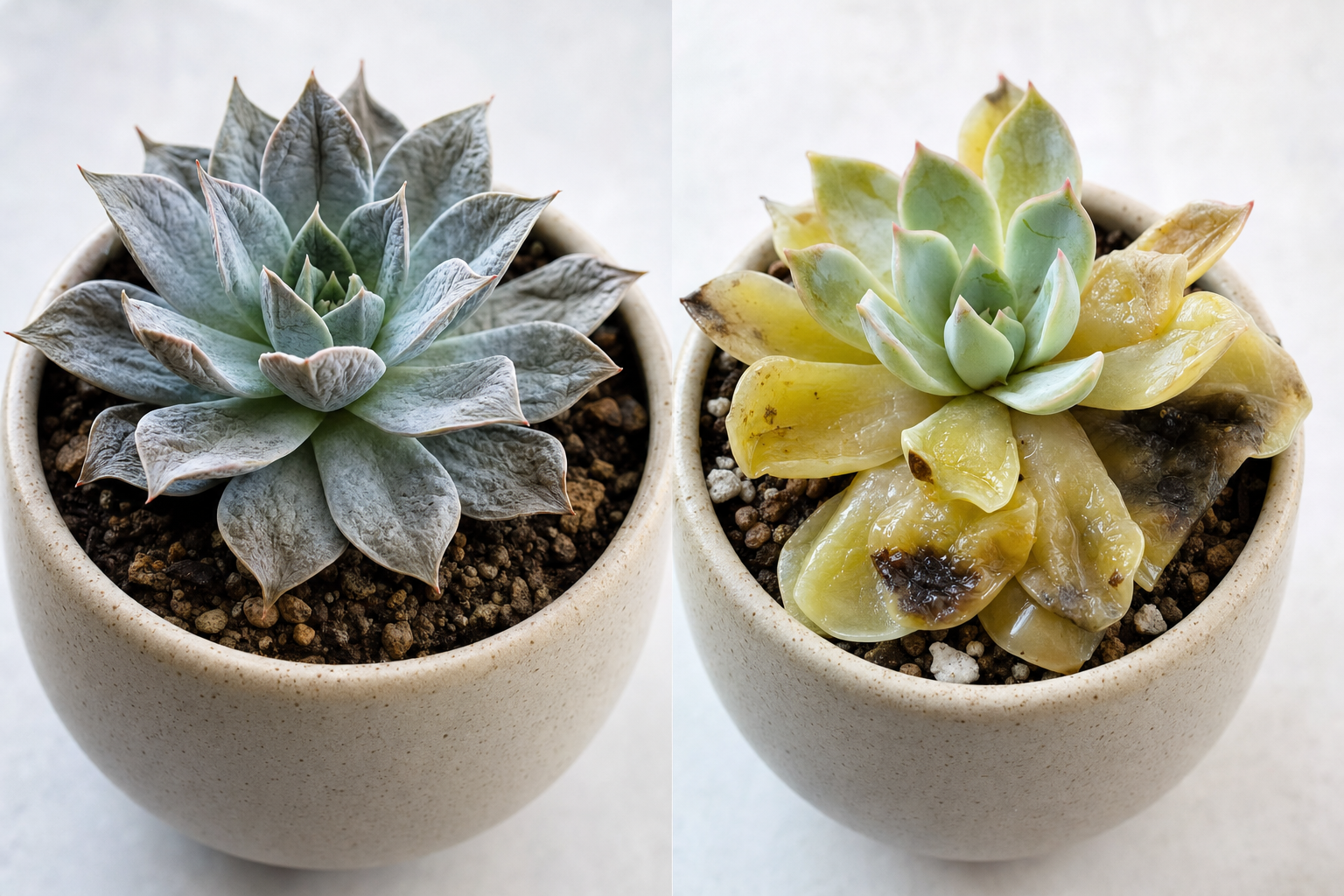
A thirsty succulent may develop thinner, wrinkled, or less firm leaves, especially after the mix has been dry for a while. Older lower leaves can also dry naturally as a plant grows, so judge the pattern: one aging leaf is different from many leaves shrinking while the pot is very light. If the mix is dry through the root zone and the plant shows a broader loss of firmness, water the soil thoroughly and let it drain.
Excess moisture looks different but can be confusing. Yellowing, translucent, mushy leaves or a soft base are concerning when the mix is still wet and the pot feels heavy; meanwhile, a wilted plant is not always thirsty, since damaged roots cannot take up water normally. Check the medium before reacting and avoid adding water to a plant that is already sitting in wet soil.
What to do if you have been misting often
Stop the routine spray and check the plant and pot calmly. If the soil is dry and the leaves are firm, switch to root-zone watering when the mix is ready; do not compensate for months of misting with a large soak before checking the drainage and moisture below the surface. If droplets remain in the crown, blot the ones you can reach without damaging leaves.
If the medium is damp, let it dry in bright, indirect-to-appropriate light with normal airflow. Do not repot a healthy plant just because you misted it; repot only if the pot has no drainage, the mix stays wet for an unusually long time, there is a sour smell, or the plant has signs of collapsing roots. When you do repot, remove clearly dead or mushy roots with a clean tool and use a pot and mix that drain well.
Common misting and watering mistakes
The first mistake is treating “small amounts often” as safer than a thorough watering. Frequent light sprinkles can wet the surface without reaching the roots and make it harder to tell when the whole mix is dry. A complete root-zone watering followed by a dry interval is usually easier to manage in a pot with drainage.
The second is using the soil surface as the only moisture test. A gritty top layer can look dry while the bottom remains damp, and a crusted surface can look wet while water has run through a channel without soaking the root ball. Combine a deeper skewer or finger check with pot weight, drainage, and the plant’s overall condition.
Another common error is assuming all succulents are desert plants, or that all leaf wetness causes disease. The Gardenia succulent care guide is useful for the broad soak-and-dry baseline, but species and conditions still matter; the RHS specifically treats epiphytic and winter-flowering cacti differently. Finally, do not place pots without drainage into standing water, leave a saucer full, or use a rigid schedule when the room, season, and soil have changed.
Conclusion
For most established indoor succulents, do not mist as a routine. It wets foliage for a short time, does not reliably deliver water to the root ball, and is not a substitute for changing ambient humidity. An occasional splash that dries quickly is rarely cause for alarm; prolonged pooling in a tight crown or wet, poorly aerated soil deserves attention.
Identify the plant, check moisture below the surface, water the mix thoroughly when it is ready, and let all runoff drain. Adjust the interval for light, pot, soil, season, and species. If you grow a rainforest cactus or propagate a cutting, follow that plant’s stage-specific instructions rather than applying a desert-succulent rule to the entire group.