10 Best Indoor Cactus Plants for Different Light Levels
Compare 10 indoor cactus plants by light, shape, and watering needs, from bright-window desert species to flowering jungle cacti for filtered light.

The best cactus for your home depends less on how “easy” a plant is and more on what your window can provide. A bright, sunny sill can support compact desert cacti such as Mammillaria and Rebutia; a room with bright filtered light opens up flowering holiday cacti, fishbone cactus, and trailing Rhipsalis.
That distinction matters because cactus is a plant family, not a single care type. All cacti are succulents, but some grow in deserts while others live in tropical forests, perched on branches or rocks. A forest cactus still has water-storing stems and belongs to Cactaceae, yet it can burn in harsh afternoon sun and suffer if treated like a dry desert globe. The University of Minnesota Extension’s cacti and succulents guide likewise notes that cacti include many forms and that abundant light and a drying root zone are central to indoor culture.
Compare the best indoor cactus plants at a glance
| Plant | Best fit | Light indoors | Watering style |
|---|---|---|---|
| Thanksgiving or Christmas cactus | Reliable seasonal flowers | Bright, filtered | Water when upper mix dries; do not leave bone-dry for long |
| Easter cactus | Spring blooms and rounded segments | Bright, filtered | Evenly moderate during active growth; excellent drainage |
| Fishbone cactus | Trailing foliage, indirect-light rooms | Bright, indirect | Water after the top portion dries |
| Mistletoe cactus | Hanging display, softer light | Bright, indirect | More often than a desert cactus, but never waterlogged |
| Monkey tail cactus | Hairy trailing stems, sunny basket | Bright light; some gentle sun | Thorough soak after full dry-down |
| Bunny ears cactus | Graphic upright pads | Strong light, some direct sun | Let mix dry thoroughly between soaks |
| Old lady cactus | Compact round form and pink blooms | Bright, direct light | Deeply water only after full dry-down |
| Moon cactus | Bright color in a small pot | Bright light, protected from scorching | Dry down fully; keep graft union dry |
| Crown cactus | Small globe with vivid flowers | Bright light, ideally a sunny window | Seasonal soak-and-dry; much less in winter |
| Peanut cactus | Spreading stems and summer flowers | Sunny window | Dry between thorough waterings |
Ten cactus varieties worth growing indoors
Thanksgiving and Christmas cactus
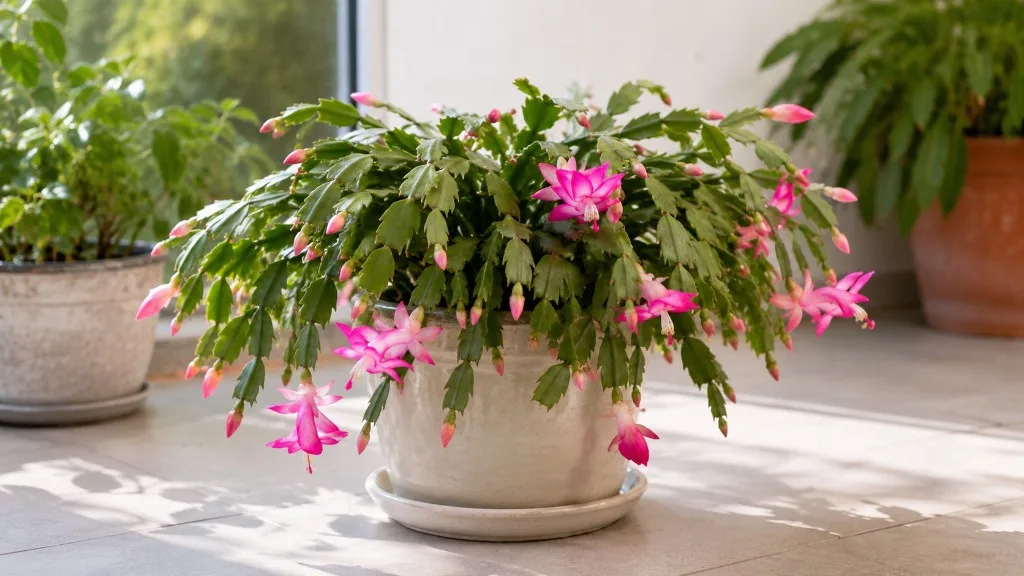
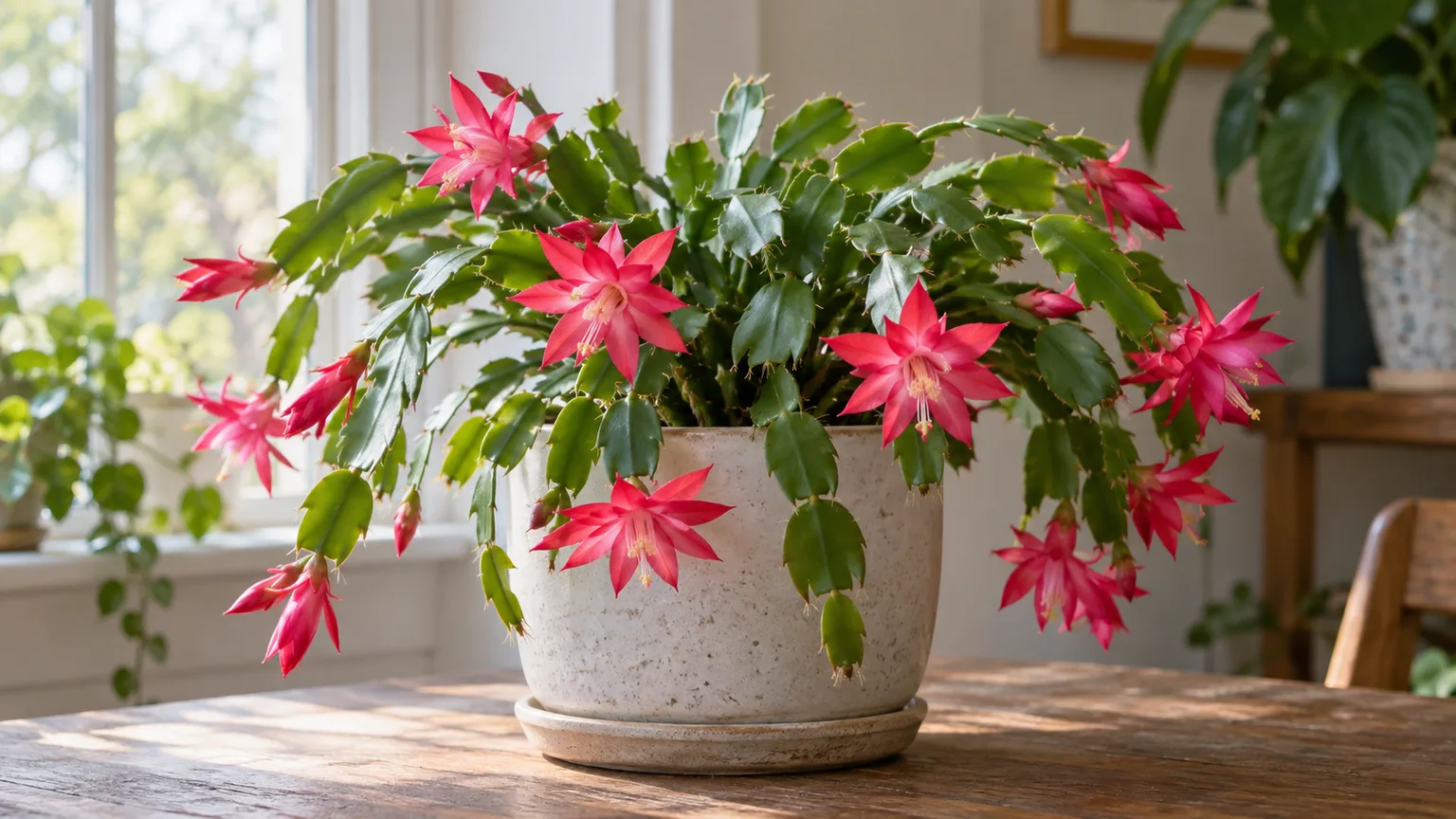
Holiday cactus is the best first choice if you want flowers and your home has bright light without hours of intense sun. Plants sold as Christmas cactus are often Thanksgiving cactus (Schlumbergera truncata) or hybrids; the sharp points on the stem segments help distinguish many Thanksgiving types from the smoother-edged segments of the true Christmas cactus group. Both are genuine cacti, despite their leaf-like stems and rainforest origin.
These are epiphytes from Brazilian forests, where they grow among branches rather than in desert sand. Give them bright, indirect light, a free-draining but humus-rich mix, and a drink when the top portion of the mix has begun to dry. Keep them away from hot glass and heating vents, especially while buds form. University of Minnesota Extension explains that holiday cacti need bright filtered light and a rest of shorter days and/or cool nights to set buds; their guidance notes about six weeks of short days for Thanksgiving and Christmas types. The RHS growing guide also recommends bright light rather than full sun.
Choose this group if you want a long-lived flowering plant that can sit on a bright shelf or in a hanging pot. Do not choose it as a “desert cactus” for a hot south-facing window or if you tend to ignore plants until the soil is bone-dry.
Easter cactus
Easter cactus (Hatiora gaertneri, also sold under the older name Rhipsalidopsis gaertneri) is another tropical forest cactus, but it usually flowers in spring. Its flat, segmented stems have rounded scallops rather than the sharper teeth seen on many Thanksgiving cactus segments, and its starry blooms make a cheerful seasonal display.
Treat it like a forest plant: offer bright filtered light, warmth, and an airy mix that holds a little more moisture than a desert-cactus blend. Water when the top layer begins to dry during active growth, then empty the saucer so roots do not sit in water. It should not be left dry for weeks just because it is a cactus. Iowa State Extension’s holiday cactus guide distinguishes the holiday species and explains how seasonal light and temperature shape flowering; the University of Minnesota gives a longer bud-setting period for Easter cactus than for Thanksgiving or Christmas types.
This is a strong choice for a grower who wants spring blooms and can provide a steady indoor spot. Avoid frequent moves while buds are developing; changes in temperature, light, or watering can interrupt the display.
Fishbone cactus
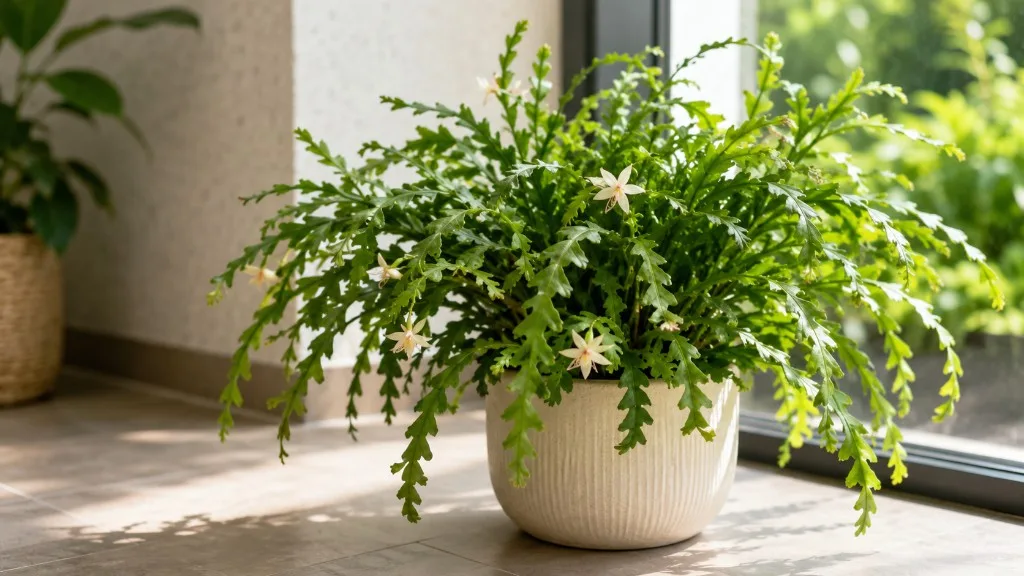
Fishbone cactus (Disocactus anguliger, sometimes sold as Epiphyllum anguliger) earns its place for foliage alone. Its long, flat stems have deep, alternating lobes that resemble a fish skeleton or zigzag ribbon, and they eventually spill over the edge of a shelf or hanging pot. It is a true cactus, but it evolved as an epiphyte in tropical Mexico, not on an exposed desert floor.
Give it bright indirect light; a little gentle morning sun can be fine, while strong afternoon sun through glass can scorch the stems. Use a chunky, airy mix with bark and perlite rather than dense soil or a nearly all-mineral desert blend. Water when the upper part of the mix dries, then let excess drain. BBC Gardeners’ World describes its need for bright indirect light and a humus-rich, well-drained mix; practical care details are also covered by Epic Gardening’s fishbone guide.
Pick fishbone cactus if your room has good ambient daylight but not a reliable patch of direct sun. It is not a plant for a dark hallway: insufficient light still means slow, weak growth and fewer chances of flowering.
Mistletoe cactus
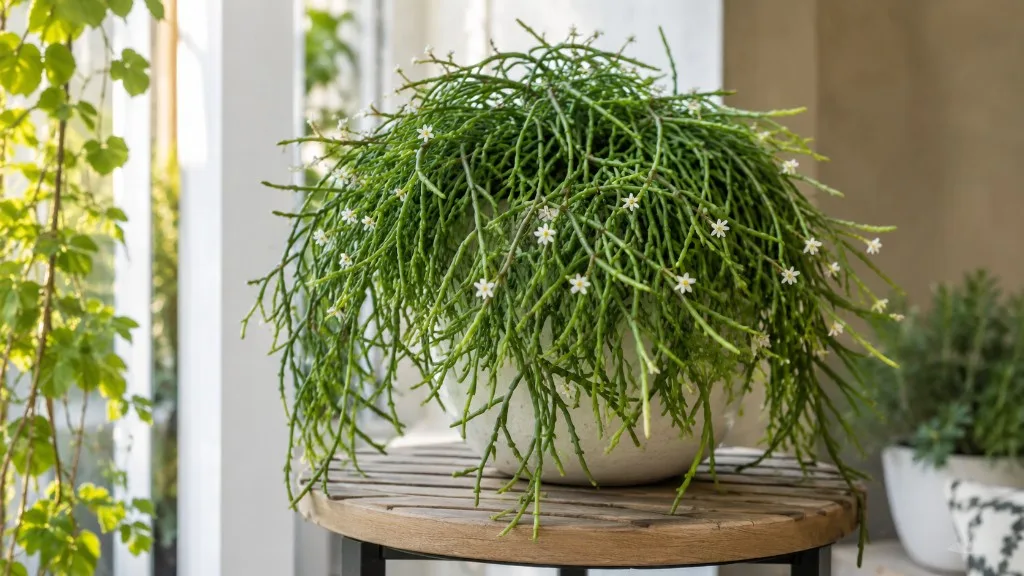
Mistletoe cactus (Rhipsalis baccifera) is a lightly spined or nearly spineless trailing cactus with thin, cylindrical stems and small white flowers that can develop into pale berries. In nature it grows epiphytically, so its roots are adapted to airy pockets of organic debris rather than compact desert soil. It is one of the gentler options for a home that receives bright light without direct midday sun.
Place it near an east-facing window or a few feet from a brighter window, where the light is strong but filtered. Use an epiphytic cactus mix or houseplant mix loosened with bark and perlite, and water moderately as the surface dries; it needs more regular moisture than an Opuntia or Mammillaria. The RHS profile for Rhipsalis baccifera describes its trailing epiphytic growth and recommends bright indirect light and a well-drained epiphytic compost.
Choose mistletoe cactus for a hanging display, narrow shelf, or a collection that needs a softer texture. Its long growth can eventually need trimming, but pruning is optional; keep the pot where trailing stems will not be repeatedly bumped.
Monkey tail cactus
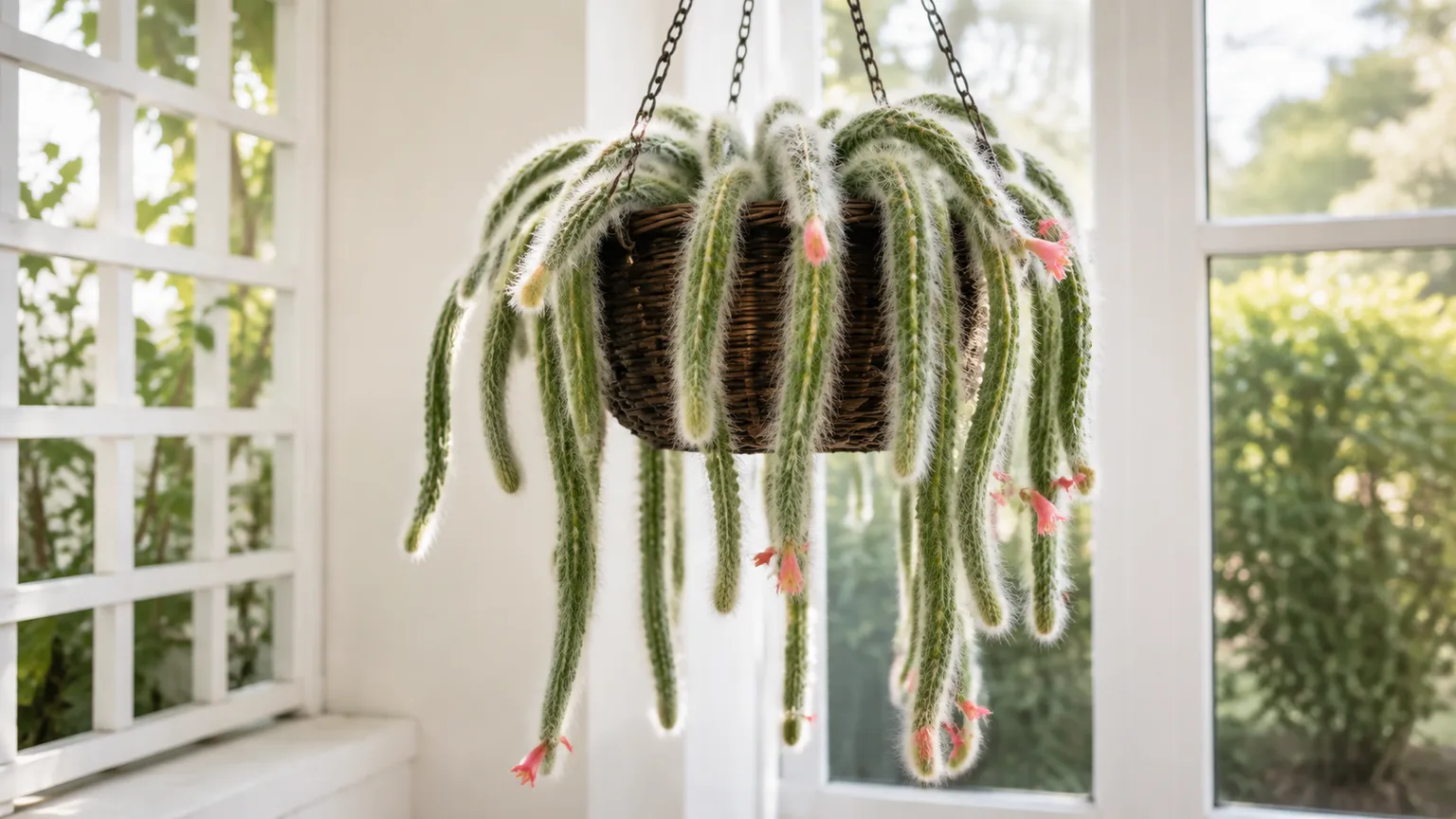
Monkey tail cactus (Cleistocactus colademononis, also encountered under older names such as Hildewintera colademononis) forms long, cascading stems covered in pale, hair-like spines. It makes a dramatic hanging plant, but the “fur” is still cactus armature and should not be treated as a soft pet toy. The RHS lists it among cacti grown under glass and recommends full light, low humidity, and moderate watering during growth in its plant profile.
Give it a bright position, with some direct light after gradual acclimation, and use a fast-draining cactus mix. During warm active growth, soak the mix and let it dry through before watering again; reduce water when the plant is cool and growth slows. A hanging basket keeps its stems visible and out of the way, but keep it beyond the reach of curious children and pets.
Select monkey tail cactus when you have a bright spot and want a trailing plant with more sculptural presence than a fine-stemmed Rhipsalis. It will not solve a low-light problem simply because its stems hang down.
Bunny ears cactus
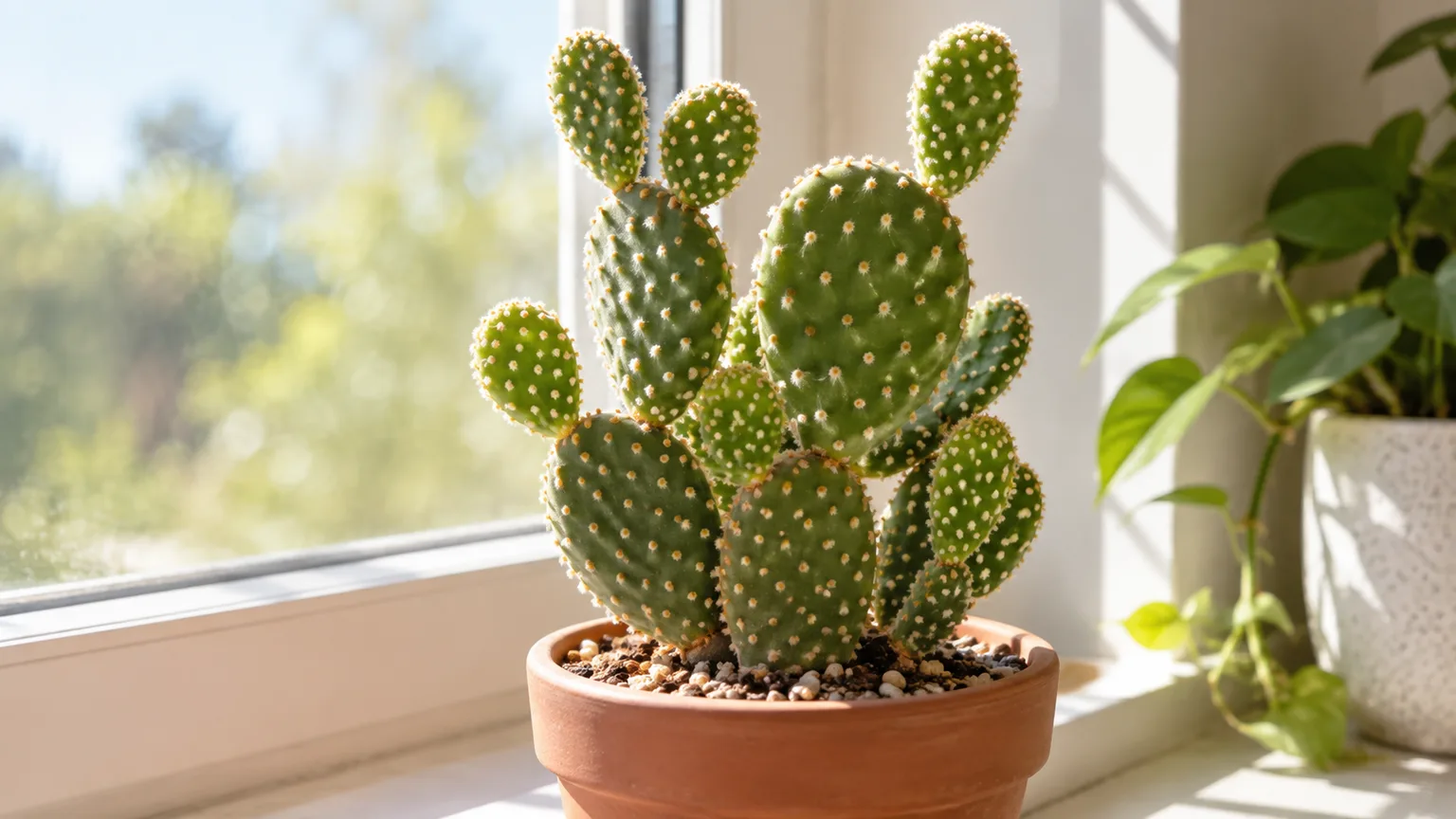
Bunny ears cactus (Opuntia microdasys) has paired, flattened green pads dotted with pale areoles. Those dots bear glochids—tiny, detachable barbed bristles that can lodge in skin—so this is a poor choice for a low shelf, a narrow desk, or a home where people or pets may brush against it. The NC State Extension species profile identifies the plant as a true cactus and specifically warns that its glochids detach with slight contact.
It can grow indoors if you can provide a very bright window and a dry, fast-draining root zone. Let the potting mix dry completely before watering, use a gritty cactus blend, and acclimate the plant gradually if you move it from a nursery or shaded room into stronger sun. It needs much more direct light than the forest cacti in this list. The practical care details in Epic Gardening’s bunny ears guide reinforce the full-sun preference and the handling hazard.
Choose it for bold architectural pads, not for cuddly looks. Handle the pot with tongs or a barrier, and do not place it beside a doorway or in a spot where sleeves brush its surface.
Old lady cactus
Old lady cactus (Mammillaria hahniana) is a small, rounded cactus with dense white bristles and fine spines; mature plants may produce a ring of rose-pink flowers around the crown. Its compact form suits a sunny desk or sill better than large columnar cacti, though it still needs strong light to hold its shape. The RHS profile describes its clustered stems, bristles, and flowers and recommends bright filtered light under glass with low humidity.
Use a small pot with a drainage hole and standard cactus mix amended with grit if the mix feels dense. Water thoroughly only after the root zone is dry, and reduce watering during a cool winter rest. Do not pour water over the plant’s bristly crown and leave it trapped there; direct the stream onto the soil instead. The University of Minnesota notes that some Mammillaria species can flower indoors when bright light and a cool, dry rest are provided.
This cactus works well for someone who has a genuinely sunny sill and wants a compact, flowering desert plant. If your window is dim, choose a holiday cactus or Rhipsalis instead.
Moon cactus
A moon cactus is a grafted combination, often a colorful Gymnocalycium mihanovichii top attached to a green cactus rootstock. Some vividly colored tops have little or no chlorophyll and rely on the lower cactus for photosynthesis. It is therefore not a single naturally occurring plant form, and the two parts can grow at different rates or the graft can eventually fail. NC State Extension’s moon cactus profile explains the grafted structure and identifies Gymnocalycium mihanovichii as the colorful top.
Keep the plant in bright light, but protect a neon-colored top from sudden, scorching direct sun. Use a freely draining mix and water only when the pot has dried through; avoid water sitting around the graft junction. Check the base when shopping: it should be firm and green, with the top attached securely and no dark, wet-looking tissue at the join. If you want a long-lived specimen that will grow into a large plant, a moon cactus is not the best choice; its appeal is compact color and the interesting graft.
Crown cactus
Crown cactus (Rebutia species, including Rebutia minuscula cultivars) stays small, forms offsets, and can produce bright flowers around the lower part of its rounded stems. It is a good pick for a sunny windowsill where a large cactus would be awkward. The RHS describes Rebutia minuscula ‘Marsoneri’ as a freely clustering cactus only about 5 centimeters tall, with spring flowers, in its plant profile.
Give a crown cactus full light and good ventilation, then water moderately during active growth once its mix approaches dryness. Keep it almost completely dry during the dormant, cool part of the year. Overpotting is a common mistake with small cacti: a large container leaves more wet mix around a small root system and takes longer to dry. The University of Minnesota lists Rebutia among cacti that can flower indoors when their seasonal needs are met.
Choose a crown cactus if you enjoy small globular plants and want the possibility of vivid flowers. It is less suitable for a north-facing room unless you can supplement daylight with a close, appropriately timed grow light.
Peanut cactus
Peanut cactus (Echinopsis chamaecereus, also called Chamaecereus silvestrii) spreads as a low mat of short, finger-like stems and can produce vivid orange-red flowers. It offers a different silhouette from a single round cactus and can be a good container specimen if you have space for offsets to spill over the rim. The RHS peanut cactus profile records its mat-forming habit, summer flowers, and need for a well-drained, gritty mix.
Give it a sunny window and allow the soil to dry between thorough waterings. Reduce water while the plant is dormant rather than following a warm-season schedule year-round. It may be less prickly than some globe-shaped cacti, but it is not spineless; use care when repotting or removing offsets.
Peanut cactus is a good match for growers who want a flowering, spreading desert cactus rather than a tall specimen. If you have little direct light, swap it for fishbone cactus or a holiday cactus, which are better adapted to filtered indoor light.
Give each cactus the conditions its roots evolved for
The ten plants above fall into two useful care groups. Desert and high-light forms include Opuntia, Mammillaria, Rebutia, Echinopsis, and the green rootstock of a moon cactus. Forest and epiphytic types include holiday cactus, Easter cactus, fishbone cactus, and Rhipsalis. They all belong to Cactaceae, but copying one group’s care onto the other is a reliable way to lose roots or growth quality.
Match the light to the cactus, not the room label
“Bright room” is too vague to plan around. A room can feel bright to you and still be dim at plant level, especially if the cactus sits several feet from a small window. Desert cacti usually need the strongest light you can give them; close to a bright window is a better starting point than a shelf in the middle of the room. If you see new growth becoming narrow, pale, or stretched toward the window, move the plant closer or add a grow light rather than watering or fertilizing more.
Forest cacti need bright ambient light but usually appreciate protection from harsh midday sun. An east-facing window often gives gentle morning sun; a west or south exposure may work when the plant is set back or filtered by a sheer curtain. Turn the pot occasionally for balanced growth, but avoid repeatedly moving a budding holiday cactus between different temperatures and light conditions.
Any cactus moved into stronger sun needs a gradual transition. Increase exposure over several days to a couple of weeks, watching for bleaching or dry, tan patches on the exposed side. Glass intensifies heat, and leaves or stems raised in shade do not become sun-adapted instantly. A plant that has been outdoors in summer may also need a gradual return to indoor light in fall.
Choose a mix and pot that dry at the right speed
Every cactus in this guide needs a pot with an unobstructed drainage hole. A layer of gravel at the bottom does not replace drainage; it can leave the root zone sitting above retained water. Use a container only modestly larger than the roots, and empty the saucer after watering. Terracotta dries faster than glazed ceramic or plastic, which can help a desert cactus in a humid home but may mean more frequent checks for a forest cactus.
A bag labeled “cactus mix” is only a starting point. For desert types, use a gritty mix with pumice or perlite so water flows through and air returns to the root zone quickly. For holiday cactus, fishbone, and Rhipsalis, blend in bark or a modest amount of organic potting mix; these epiphytes need aeration but not the rapid desert-style dry-down. Do not leave roots packed in dense, fine potting soil, and do not assume that one recipe suits all ten species.
Water by checking the root zone
A calendar cannot tell you when a pot is dry. The same cactus dries at different speeds in summer and winter, in terracotta and plastic, and near a sunny window versus a cool room. For desert species, check down into the mix and wait until it is dry through before soaking; for epiphytic types, water when the upper part of their airy mix is dry but before the whole root ball remains parched for a long stretch. In both cases, water thoroughly and let all excess drain.
A dry pot is lighter than a wet one, and a wooden skewer inserted near the pot wall can reveal moisture below the surface. Use those checks together instead of relying on a single visual cue. Wrinkling can indicate a dry cactus, but softness, darkening, or a persistently wet mix raises concern about rot; watering a rotting plant makes the problem worse. The University of Minnesota’s cactus care guidance recommends drainage holes, thorough watering followed by full drying for desert cacti, and less water during low-light winter months.
Why a cactus can struggle indoors
The most common problem is not “too much neglect” but a mismatch: low light paired with wet soil, or harsh sun after a plant has grown in shade. In low light, water evaporates more slowly and roots take up less; continuing to water on a summer schedule leaves the plant wet for too long. At the same time, a desert cactus kept far from the window may stretch, so additional watering cannot repair its shape.
Soft, yellowing, or blackened tissue at the base suggests that you should inspect the roots and mix before adding water. Remove a badly affected plant from its pot only if the symptoms point to rot, trim away dead tissue with a clean blade, and repot healthy remaining roots into fresh, dry mix. Keep the pot in bright light and wait before watering again. If the plant is merely wrinkled but remains firm and the mix is dry, a thorough drink may be appropriate; do not use that diagnosis for a cactus with mushy tissue.
Also inspect new purchases for mealybugs and scale tucked into areoles, stem joints, or the underside of segments. Isolate a plant with visible pests while you identify the insect and choose a treatment appropriate for that plant. Do not spray a sunlit cactus and return it to harsh light immediately; follow the product label and test first when the foliage is sensitive.
A final source of confusion is false “low-maintenance” labeling. A glued straw flower on a small store cactus is not a natural bloom, and a cactus cannot survive indefinitely in a windowless room just because it stores water. Buy by botanical name when possible, inspect the base and roots, and pick a plant whose conditions you can actually provide.
Choose your plant by window, space, and routine
For a sunny sill and hands-off watering, start with a crown cactus, old lady cactus, or thimble cactus. Bunny ears and peanut cactus also like bright light, but account for contact risk and room for growth. These plants tolerate a dry interval better than they tolerate stale, wet roots.
For a bright room without strong direct sun, choose holiday cactus, Easter cactus, fishbone cactus, or mistletoe cactus. Their roots need more frequent checks, but their filtered-light tolerance and seasonal flowers often make them a better indoor match than a desert plant placed in a dim corner. For a hanging display in a sunny spot, consider monkey tail cactus; for softer light, choose Rhipsalis or fishbone cactus.
If you want a vivid tabletop accent and accept that the plant is a grafted pair, a moon cactus may suit you. If you want a collection that will grow and flower over time, choose a rooted species such as Mammillaria or Rebutia instead. The right plant is the one whose light, growth habit, and dry-down needs fit the place you have—not the one with the most dramatic shop-floor flower.
Conclusion
Indoor cacti are easier to choose once you separate desert forms from tropical forest cacti. Give sun-loving Mammillaria, Rebutia, Opuntia, and Echinopsis a bright window and a dry, open root zone; give holiday cacti, fishbone, Easter cactus, and Rhipsalis bright filtered light and a mix that does not stay bone-dry for too long.
Start with the window, then decide whether you want a compact globe, hanging stems, unusual pads, or reliable flowers. Match the pot and mix to that plant, water only after checking the root zone, and account for hazards such as bunny ears’ glochids. That simple fit-first approach gives a cactus a far better chance than treating every plant with spines as if it came from the same place.