Buffalo Grass Lawn: Planting and Care Guide
See if buffalo grass suits your climate, sun, soil, and traffic. Get practical planting, watering, mowing, cultivar, and weed guidance.
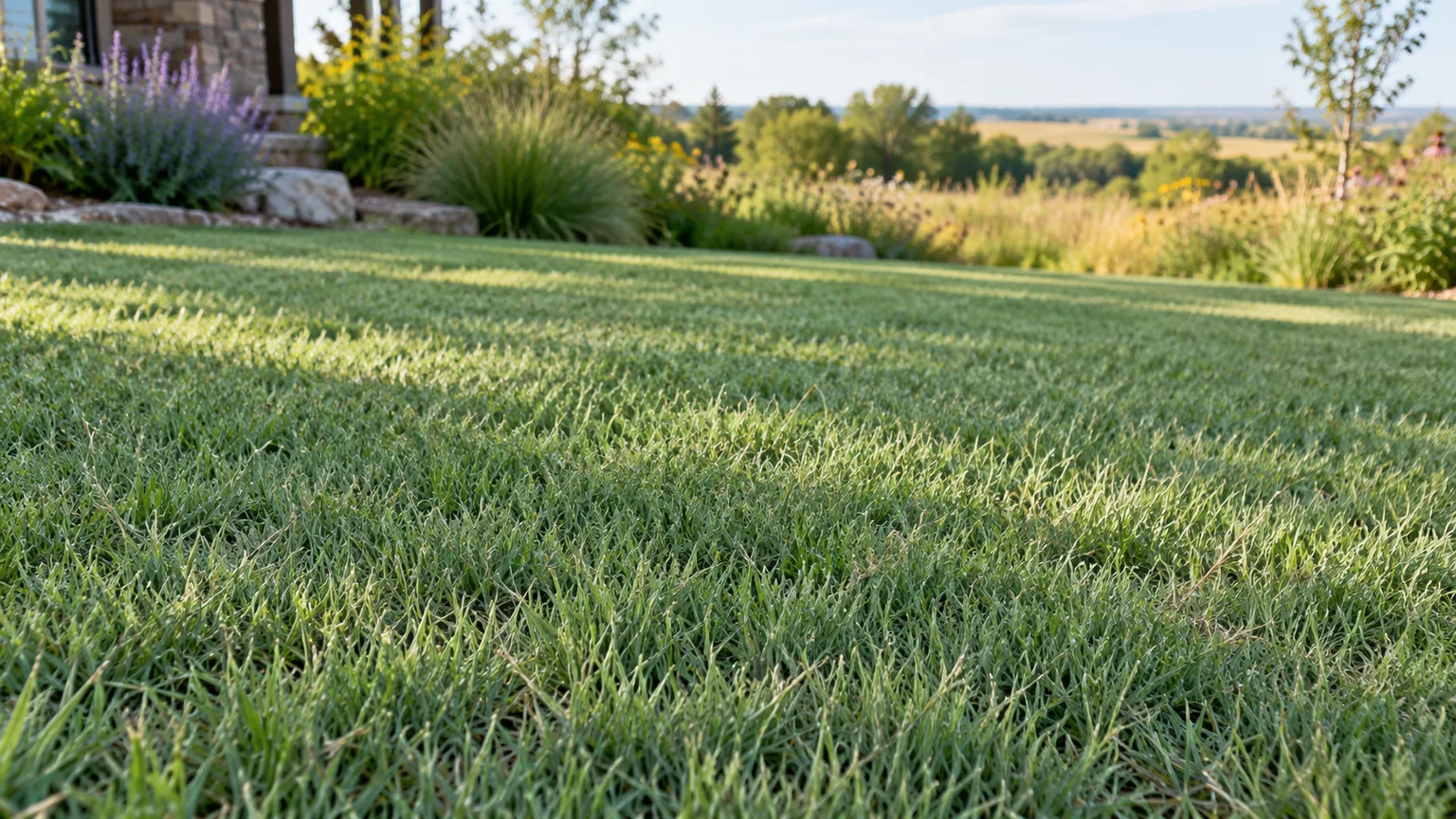
A buffalo grass lawn can cut mowing and irrigation after it is established, but the trade is specific: the grass wants sun, takes a season to knit together, and spends part of the year brown or straw-colored in many climates. It can be a sensible turf for a sunny Great Plains or semi-arid Mountain West yard; it is a poor shortcut for a shady play lawn or a homeowner who expects a uniformly green carpet from early spring through late fall.
The species is Bouteloua dactyloides, a warm-season native grass of the North American plains, also called buffalograss. Before buying seed or sod, decide what you need the lawn to do and whether your local climate matches the grass. The right answer depends less on a national watering calendar than on the site, rainfall pattern, cultivar, and look you are willing to accept.
What buffalo grass is and how it grows
Buffalo grass is a low-growing, sod-forming perennial in the grass family. It spreads sideways by aboveground runners called stolons, which root at their nodes and form new plants; that growth habit gradually closes small gaps but does not make a newly seeded lawn instant or uniformly dense. Its leaves tend to sit close to the ground, and its warm-season growth concentrates in late spring and summer rather than beginning with the first mild days of spring.
The plant evolved with the variable rainfall and dry spells of the Great Plains. Deep roots and a shorter active season help established turf use stored soil moisture and tolerate drought, but drought tolerance means the grass can survive a dry spell, not that it will remain green without water. Colorado State University Extension says unirrigated lawns commonly go dormant during summer and can be more vulnerable to weed invasion while brown; its regional guidance gives a very different picture from a promise of a permanently green, water-free lawn (CSU Extension).
Buffalo grass is usually dioecious: male and female flowers grow on separate plants. Male flower stalks rise above the leaves, while female seed burrs sit lower in the canopy. A mowed lawn hides much of that difference; an unmowed lawn shows a looser, prairie-like texture and may display male flower spikes. This is a useful design choice, not a defect: choose turf-type uniformity if you want a closer-cut lawn, or allow a more natural look if the site is a low-use landscape rather than a formal front yard.
Where a buffalo grass lawn makes sense
Its natural advantage is strongest where summers are warm, sunlight is abundant, and rainfall is limited or unreliable: much of the central Great Plains and parts of the semi-arid West. It can also work in some transition-zone landscapes when a locally suitable cultivar is available. The grass is not automatically appropriate throughout the entire United States just because it is native to North America; “native” is a regional statement, not a guarantee that it will thrive in every state’s rainfall, soils, and growing season.
A sunny, open yard with modest foot traffic is a better candidate than a narrow shaded strip between trees or the main route from a back door to a gate. Buffalo grass can handle occasional recreation once mature, but repeated concentrated wear from pets, children, sports, or a path can thin the sod. The resulting bare soil invites weeds, so a lawn that is expected to absorb daily running may cost more effort to repair than a more wear-tolerant turf.
Match your climate and season, not just a hardiness zone
A plant hardiness zone tells you about winter low temperatures; it does not describe summer rainfall, humidity, soil drainage, irrigation restrictions, or how long the lawn will look green. In the eastern Colorado example described by CSU Extension, buffalo grass may be green from roughly mid-May through September, while a cool-season lawn can stay green earlier in spring and later in fall. Those dates are a Colorado example, not a promise for every city or cultivar (CSU Extension’s regional overview).
In humid or frequently wet regions, the low-water advantage can shrink, and aggressive weeds or competing grasses may make an open, fine-textured stand harder to maintain. In the driest sandy soils, the grass may still need supplemental irrigation because the soil holds little water between rains. K-State Extension notes that buffalo grass grows best in full sun and well-drained loam; it tolerates some clay and compaction but establishes more slowly there (K-State Extension). If your local county extension office recommends a different turf for your soil or rainfall, follow its regional advice over a generic zone map.
What to expect from the turf
The strongest reason to choose buffalo grass is the lower maintenance after establishment. It naturally stays short, needs less mowing than many conventional lawns, and often needs little or no supplemental water once roots have settled into a suitable site. In the central plains, it can also provide a habitat-friendly, native alternative to a high-input lawn if you allow flowers, seed, and a few compatible plants to remain.
The drawbacks are practical rather than surprising. Spring green-up is later than cool-season grasses; winter dormancy changes the color; shade produces thin turf; dense traffic creates wear; and new lawns need deliberate weed management while runners spread. Brooklyn Botanic Garden’s turfgrass article describes the plant’s seasonal growth and the trade between a mowed, uniform turf and an unmowed, naturalistic one (Brooklyn Botanic Garden). If those features conflict with your home’s use, consider a mixed lawn or a different species rather than trying to force buffalo grass into a role it does not fill well.
Choose a cultivar that is actually available for your region
Buffalo grass sold for lawns includes seeded cultivars and vegetative selections that are installed as plugs, sprigs, or sod. The cultivar changes how the lawn looks and how it is sold; it can also influence color, density, green-up, and performance. This is why a cultivar name from a national list should not be treated as a universal ranking. Ask the local extension office or sod grower which turf-type cultivars have been tested or are reliably available in your region, and confirm whether the product is seed, plugs, or sod before planning the installation.
Seeded cultivars and vegetative selections are not interchangeable
For Colorado, CSU Extension lists Sundancer, Bison, Bowie, Cody, and Topgun as seeded options, and identifies Legacy and Prestige as vegetative choices with cold hardiness suited to Colorado winters. Nebraska Extension’s older cultivar guide also distinguishes seeded from vegetative material, but its Nebraska recommendations are tied to that region and document date. Those examples are useful for asking better questions at a nursery; they are not a nationwide guarantee of current stock or superiority (CSU cultivar guidance; Nebraska Extension).
The sex of the plants can matter if you plan to leave the lawn unmowed. Seed mixtures typically include male and female plants; all-female vegetative sod or plugs can produce a more even, lower-flowering look. If you intend to mow, flower visibility matters less. Rather than choosing by a catchy product name, read the label for cultivar, seed treatment, purity, germination or pure-live-seed information, and regional suitability. For plugs and sod, ask the seller to identify the cultivar and whether the material is rooted and actively growing.
Choose seed, plugs, or sod
There are three routes, each balancing price, speed, and control. Seed costs less per area but requires a clean seedbed, warm soil, timely planting, and close attention to moisture and weeds. Plugs allow you to choose a vegetative cultivar and place it precisely, but open soil remains between plugs as runners spread. Sod gives immediate cover and is easiest to visualize, but the choice may be limited and installation is usually the most expensive option.
Choose based on the lawn’s deadline. If you need coverage this season to stabilize a slope or finish a landscape project, sod or closely spaced plugs may be more dependable than seed. If budget is the priority and you can wait for a gradual fill-in, seed may be the sensible plan. For any method, compare the total installed area and first-season watering burden, not just the package price.
Start from seed when budget and patience allow
Plant in late spring or early summer, once soil has warmed enough for germination. Extension sources commonly place the germination threshold around 55–60°F, with exact timing dependent on region and the way the seed was treated. In Colorado, CSU Extension’s detailed guide allows spring through late July, while other regional programs narrow that window because seedlings need time to root before frost. Use your local extension calendar and the seed label; do not copy a date from a different state.
Prepare a firm, smooth seedbed and spread seed evenly in two passes, then lightly rake or roll it so seed contacts the soil without being buried too deeply. Buffalo grass seed rates differ among extension publications because they may describe different products, seed forms, and local conditions. Check the label’s pure-live-seed figure and use the product’s recommended rate or a regional extension rate for that exact seed form. A practical seed-selection guide explains why that label figure matters, but a state extension rate should still set the amount for your region (seed-selection guidance). Avoid treating a number for burs, treated seed, or another cultivar as interchangeable.
After sowing, keep the surface consistently moist but not saturated until seedlings emerge and begin rooting. This can mean short, light watering cycles rather than a deep soak, especially on hot, windy days or sandy soil. Do not use a pre-emergent weed product over seed unless its label explicitly permits the timing and use; many products prevent grass seed from germinating too. Seedlings grow slowly enough that weed control and patient mowing are central to success, not optional finishing touches.
Choose plugs or sod for faster, more predictable coverage
Plugs are small pieces of rooted turf installed in a grid. Closer spacing means faster coverage and less open soil for weeds, but increases the number of plugs and cost. CSU Extension describes pre-rooted plugs as a way to reach full cover in roughly six to twelve weeks under suitable conditions and spacing; that is a regional estimate, not a guaranteed deadline. Keep plugs moist while roots knit into the surrounding soil, and expect some temporary browning from transplant stress even when the plants are alive.
Sod offers the quickest visible result, but it still needs careful watering until roots bond with the soil below. Lay it on a prepared, level bed with firm soil contact and stagger the seams; avoid leaving air pockets under pieces. Gently lift an edge after watering to check whether the soil underneath is moist, then ease back as roots take hold. Newly installed sod can look brown for a short period before it produces new roots and leaves, so assess rooting and new growth rather than color alone. Do not let the root zone stay swampy; saturation can limit oxygen and encourage failure.
Prepare the site before planting
Start with sunlight and drainage, not a fertilizer bag. Observe the prospective lawn at different times of day; if a tree or building casts heavy shade for much of the day, choose another turf or groundcover there. Identify whether water runs off, ponds, or disappears quickly. Buffalo grass tolerates a range of soils, but compacted areas and extremely droughty sand can slow establishment; a soil test helps distinguish a nutrient issue from a texture or drainage problem.
If converting from an existing lawn, remove or suppress the competitive grass thoroughly before planting. Do not simply broadcast buffalo grass over an intact bluegrass or fescue lawn and expect the seedlings to win; mature cool-season turf can shade and outcompete them. Remove sod, prepare bare soil, and manage perennial weeds before planting, following local guidance if herbicides are part of the conversion. Level the area, break up hard compaction where appropriate, and firm loose soil so seed sits at a consistent depth and water does not pool in low spots.
Plan around nearby trees and irrigation. Buffalo grass will not solve the conflict between a thirsty tree’s root zone and a sunny lawn, and watering more often to satisfy one patch may create weed pressure in another. A design with buffalo grass in open sun and mulch or shade-tolerant planting under trees can be lower-input than trying to maintain one species across very different microclimates.
Establish the lawn through its first growing season
The establishment year is the part that disproves “no-maintenance grass.” New seed, plugs, and sod all need enough water for roots to form; Colorado State Extension emphasizes that a new buffalo grass lawn can need as much water as a conventional lawn during this period. A practical lawn-care guide likewise treats establishment as a distinct, more hands-on phase than maintaining rooted turf (buffalograss establishment guide). The savings arrive after roots and runners are established, and only if the site suits the grass.

Keep newly seeded soil moist at the surface but never flooded, and adjust watering to rainfall, heat, and soil texture. For plugs and sod, moisten the root ball and the soil just beneath it; shorter cycles may be needed on sloped or sandy ground so water reaches roots without running away. As the plants grow, slowly reduce watering frequency and encourage roots to explore deeper soil. A lawn that has been kept shallowly wet every day for too long will be less prepared for the deep, infrequent watering pattern of established turf.
Keep weed pressure down before planting and during the first months, when open ground gives opportunistic plants a foothold. Hand-pull small weeds near seedlings, or mow taller weeds above young buffalo grass if your local extension guidance recommends it and the turf is strong enough. Delay routine fertilizer until the grass is actively growing and use a soil test or regional recommendation; nitrogen can feed weeds as readily as young turf. Avoid aggressive mowing or foot traffic until plugs and sod have anchored and seed-grown areas are dense enough to tolerate it.
Water an established lawn by need, not by calendar
An established buffalo grass lawn does not need the same care as the new lawn you planted. In suitable parts of Nebraska and Colorado, turf may survive on rainfall alone after establishment, but it can turn brown during summer drought. If you want active green growth, supplemental irrigation can improve appearance and help runners spread; if you accept dormancy, conserving water may be reasonable as long as the turf is established and local watering restrictions allow it.
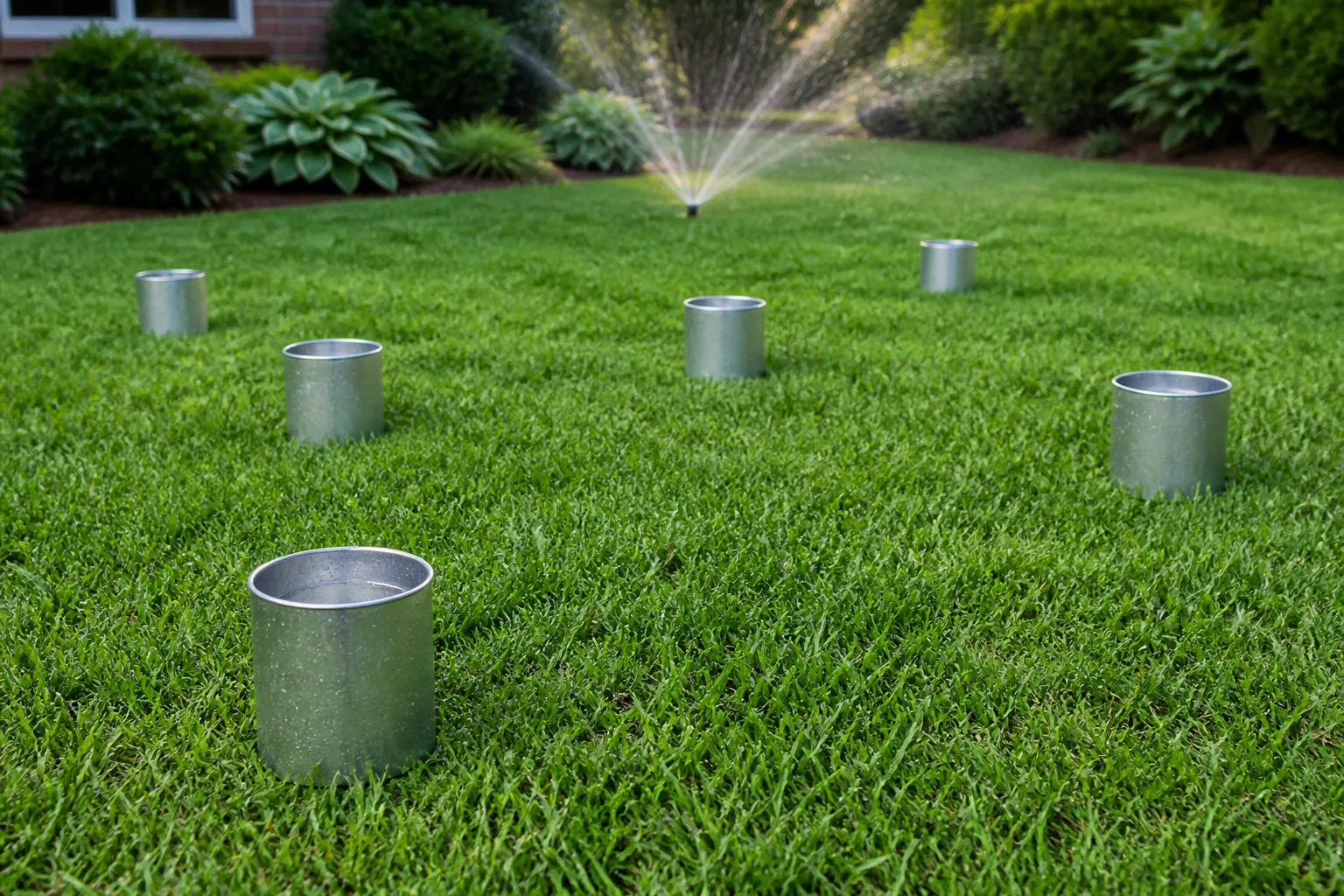
When you do irrigate, apply water deeply enough to moisten the root zone, then allow the surface to dry between waterings. Colorado State University’s regional guidance discusses roughly one to two inches of rain or irrigation every two to four weeks in summer to maintain active growth, while K-State describes deep watering about every two weeks during hot, dry Kansas weather and less for low-maintenance lawns. Those recommendations differ because local weather, soil, and desired color differ; neither is a universal schedule. Use a rain gauge or catch cups to see how much water the sprinkler actually delivers, and adjust for rainfall rather than running a fixed timer regardless of conditions.
Separate summer dormancy from turf loss
Brown buffalo grass is not automatically dead. If heat and drought have stopped top growth, the lawn may be dormant and recover when rain or irrigation returns. Check several spots: look for living crowns near the soil surface, firm rooted runners, and new green growth after a change in moisture or temperature. Dormant grass should not be fertilized in an attempt to force green color, because it cannot use nutrients normally and weeds may benefit instead.
On the other hand, a patch that remains bare after weather improves, lifts easily because it never rooted, or is being scalped and trampled may have failed. Before watering more, compare the patch with healthy turf and check whether the soil is dry, compacted, shaded, waterlogged, or washed out. Watering a dormant lawn back to deep green may be a conscious aesthetic choice, but it is not required for survival in every region; local conservation rules always take precedence over turf color.
Mowing, fertilizer, and weeds: keep inputs in proportion
Mowing is optional if you want a naturalistic lawn and can accept flower stems and a less formal surface. For a tidier look, mow high enough that the blades still shade soil and support roots; sources describe a practical range around 2½ to 4 inches depending on cultivar, season, and desired finish. Avoid removing more than one-third of the leaf at a time. Cutting too short creates a thinner, drier surface and can expose soil to weed seed.
Buffalo grass usually needs little nitrogen once established. K-State gives a range of zero to two pounds of actual nitrogen per 1,000 square feet per growing season, with about one pound as a typical average; use a soil test for phosphorus and potassium instead of automatically applying a balanced fertilizer. Fertilize only while the grass is actively growing, commonly in early summer in the Great Plains. Too much nitrogen, especially paired with frequent irrigation, can encourage excessive growth and weeds and erase the low-input advantage.
Weeds are often the most visible problem while the lawn is new or dormant. First correct the condition that leaves open soil: shade, sparse planting, excessive watering, excess nitrogen, or frequent close mowing. Hand removal can work in a small lawn. If you consider a herbicide, confirm that the product is labeled for buffalo grass, the cultivar and growth stage, and the specific weed; many broadleaf lawn products can discolor or injure actively growing buffalo grass. Follow the current label and local extension guidance rather than applying a familiar product intended for bluegrass or fescue (CSU Extension).
Troubleshoot thin, yellow, or brown areas
A patchy lawn needs diagnosis before treatment. A thin area beneath a tree points toward insufficient sun; a thin strip along a gate may indicate repeated traffic; seedlings that never filled in may have dried out, been buried too deeply, or lost a competition with weeds. A uniformly brown lawn during a hot dry period can be dormancy, while yellow turf during active growth may have a different cause such as waterlogged soil, nutrient imbalance, high-pH iron chlorosis, or herbicide injury.
Diagnose the site before adding water or fertilizer
Use a simple sequence. First, check recent rain and feel soil several inches down at both healthy and affected spots. Second, check the pattern: a narrow line or irregular patch often suggests foot traffic or sprinkler coverage, while shade-related thinning follows a tree canopy or building shadow. Third, review recent fertilizer and weed-control applications, including product labels and timing. Then change one likely cause at a time and watch for new growth during the grass’s active season rather than expecting dormant leaves to green overnight.
If yellowing persists in an actively growing lawn despite appropriate moisture, get a soil test and ask your county extension office about soil pH or possible iron chlorosis before adding iron or fertilizer. If a weed-control product may have injured the turf, do not apply a second product to correct the first; identify the active ingredient and contact the extension office or manufacturer. For a small, confirmed dead patch, remove the cause, loosen the soil lightly, and reseed or install a matching plug during the locally recommended warm-season planting window.
Compare buffalo grass with other lawn options
Choose Kentucky bluegrass or tall fescue when shade tolerance, a longer green season, or a traditional dense appearance matters more than summer water use. Choose bermudagrass in a warm climate if you need stronger recovery from repeated wear, while understanding that it can spread more aggressively and has its own regional and maintenance trade-offs. For very dry, low-use areas, a native meadow or a designed groundcover landscape may reduce mowing further than any turf, but it will not provide the same open, walkable surface.
Buffalo grass is the better match when the site is sunny, the climate supports its warm-season growth, you can water the establishment period, and you accept a seasonal color change plus moderate rather than heavy traffic tolerance. In mixed yards, zoning is often the realistic answer: buffalo grass in sunny open sections, a shade-tolerant choice under trees, and a durable path where people repeatedly walk. That layout avoids asking one grass to perform in three different microclimates.
Conclusion
Buffalo grass is a low-maintenance lawn after establishment only when the grass, site, and homeowner’s expectations match. It suits sunny, warm-season landscapes across much of the Great Plains and selected dry western or transition-zone sites; it struggles in shade, cannot replace a high-traffic play turf, and will not stay green through every dry spell without water. The first season still takes careful watering, weed control, and patience.
Choose a regionally recommended cultivar and the seed, plugs, or sod that fits your timeline, then prepare the site before planting. After the lawn roots in, water deeply and infrequently if you want active green growth, or accept seasonal dormancy where local conditions permit. If you make that trade knowingly, buffalo grass can be a useful way to have an open lawn while cutting repeated mowing and irrigation over the long term.