Blue Rug Juniper Care: Planting, Watering & Pruning
Plan a lasting Blue Rug juniper ground cover with realistic mature-size ranges, a clear planting method, an establishment watering plan, and pruning limits.

Blue Rug Juniper at a Glance
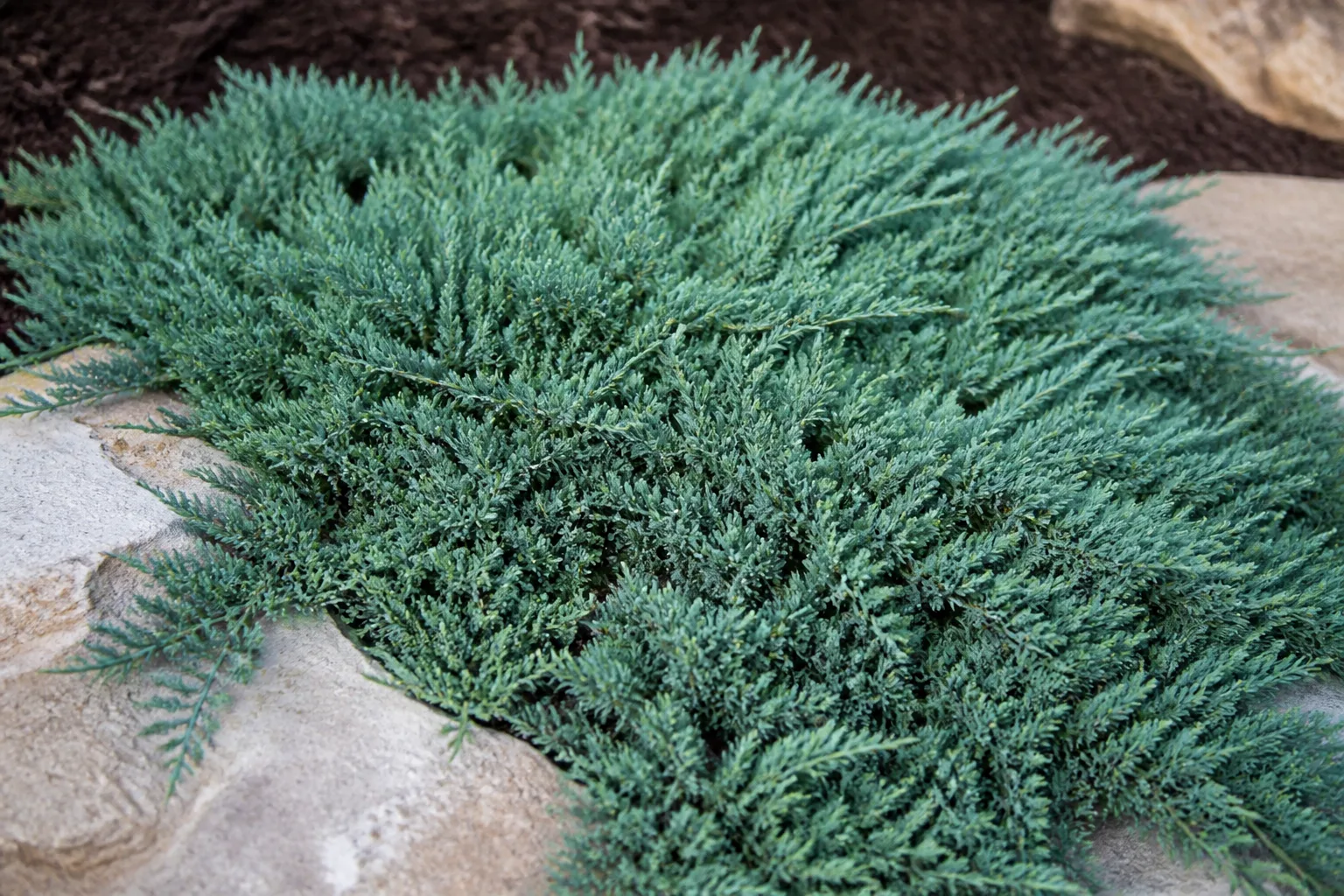
Blue Rug juniper is the cultivar Juniperus horizontalis ‘Wiltonii’: a low, spreading evergreen with silver-blue foliage that can turn plum or purple in cold weather. Give it full sun, fast drainage, room to spread, and steady moisture while new roots establish; once rooted, it tolerates dry spells far better than soggy ground.
| Care factor | Practical target |
|---|---|
| Light | Full sun, ideally at least six hours of direct light |
| Soil | Average to poor soil is acceptable if water drains freely |
| Mature form | Usually a few inches tall; plan for several feet of width |
| Spacing | Often 4–6 feet on center for quicker coverage; widen for slower fill |
| Water | Keep the original root ball from drying while new roots establish; later water only through prolonged drought |
| Pruning | Optional; cut back only to a point that still carries green foliage |
| Climate | NC State Extension Plant Toolbox lists USDA zones 4b–9b for ‘Wiltonii’; local stock and exposure matter |
The short version is useful when choosing a plant, but the details matter most in two places: the footprint you leave around it and how you water it before roots extend into native soil. Those decisions determine whether the plant forms a healthy mat or sits wet, thins, and browns.
Is Blue Rug Juniper Right for Your Site?
Use ‘Wiltonii’ where you want a low evergreen carpet on a sunny bank, rock garden, retaining wall, or open bed that dries between rains. Its trailing branches can soften hard edges and cover bare soil, but a young plant will not stabilize a steep slope overnight; on a site with active erosion, first slow runoff and secure the soil, then plant the junipers.
Skip it where the soil remains saturated, dense shade dominates, or people regularly walk across the planting. Juniper mats are ground-hugging, not a living path: repeated stepping breaks stems and leaves thin spots that take a long time to cover. For a shaded or wet site, choose a ground cover adapted to those conditions instead of trying to compensate with extra pruning or fertilizer.
Blue Rug juniper can handle wind and some salt exposure, useful along an exposed bank or near the coast. That tolerance is not a license to plant it in the splash zone of concentrated deicing salt; salty runoff and poor drainage can still damage roots and foliage.
It is also a poor substitute for a turf lawn if the goal is an even, walkable surface. Let it cascade over an edge or knit together around stones, and provide stepping stones where you need to reach a drain, slope, or irrigation line without crushing the branches.
Confirm You’re Buying ‘Wiltonii’
“Creeping juniper” names a species and a broad group of cultivars, not a single size or color. Look for Juniperus horizontalis ‘Wiltonii’ on the nursery tag; “Blue Rug” is commonly used for this selection, but other creeping junipers sold for similar jobs can be taller, greener, more upright, or much wider.
NC State Extension’s cultivar profile describes ‘Wiltonii’ as a dense, low-growing shrub with silver-blue scale-like foliage and long, floppy branches. In cold weather, healthy foliage may shift toward purple. That seasonal color change is different from a branch turning brown and dying back.
If the label lists only “juniper” or “creeping juniper,” ask the nursery for the cultivar name and mature width before buying. A photo on the pot may show a young plant whose eventual spread is impossible to judge by eye, and a color name alone does not establish that the plant is ‘Wiltonii’.
Mature Size and Spacing: Plan for the Width
Blue Rug juniper grows far wider than it grows tall. NC State lists a height of about 4–6 inches and a width of 4–6 feet, while the American Conifer Society describes a mature specimen reaching roughly 6–10 feet wide after ten years. Those are useful planning bounds, not a promise: age, climate, soil, and nursery stock can shift the final footprint.
Treat the upper end of the tag’s spread as the space claim. A 6-foot spread means the center of the plant may eventually reach about 3 feet in every direction; keep that radius clear of walks, drains, doorways, and neighboring plants unless you are willing to trim the edge. Do not plant close together just because the containers look small.
For an early continuous mat, 4–6 feet apart on center is a workable starting range for typical nursery plants, with the closer end filling sooner and costing more. On a broad slope where a slower fill is acceptable, wider spacing can work, but bare gaps remain exposed for longer and weeds need attention. If the tag gives a mature spread outside these ranges, use that figure instead; references do not publish one universal size for this cultivar.
Before purchasing a flat of plants, sketch the mature circles on the bed. This quick layout catches the common mistake of spacing by pot width rather than by the mature branch spread.
For a straight border, measure from the plant centers to the hard edge and leave enough room for branches to reach their intended stopping point. A row planted too close to a walkway may look tidy for the first year, then overhang just as the plants begin to fill; that is when repeated clipping can expose bare centers. The American Conifer Society’s 6–10-foot width estimate at ten years is a useful reminder to plan in years rather than by the nursery pot.
Sun, Soil, and Drainage Requirements
Choose a site that receives at least six hours of direct sun most days. In too much shade, the mat tends to grow loosely, keep a less vivid color, and dry more slowly after rain; a spot that receives morning sun and dense afternoon shade is a compromise, not the ideal.
Soil texture is flexible; drainage is not. ‘Wiltonii’ can grow in sandy, rocky, loamy, or even clay-influenced soil when water moves through it, but a bed that puddles after ordinary rain or stays wet around the root ball is a poor match. The RHS profile lists the cultivar for several soil types while still specifying well-drained conditions, and NC State also calls for good drainage.
Watch the site after a heavy rain before you plant. If water pools, correct the broad grade or build a broad, stable raised planting area with an outlet for excess water; simply filling one deep planting hole with loose soil can leave the root ball sitting in a wet basin. Do not add a layer of gravel to the bottom of a hole as a substitute for drainage.
When and How to Plant Blue Rug Juniper
Plant in early spring or early fall when the soil is workable and the weather is mild enough to keep the root ball from drying immediately. Avoid planting during a heat wave or just before a period when you cannot irrigate; a cool window gives roots time to move into surrounding soil before the plant faces seasonal stress.
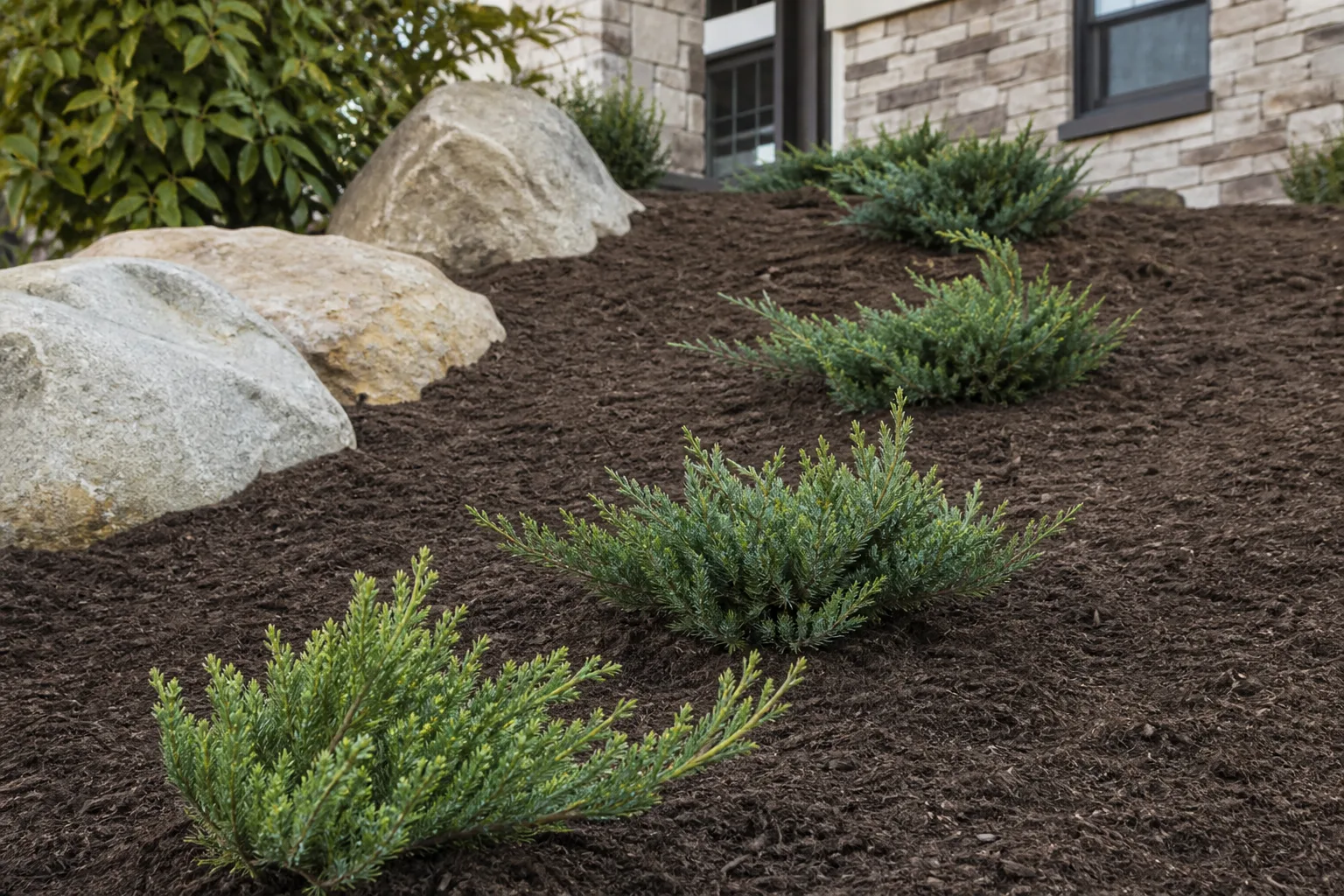
Set plants at the spacing you chose from mature width, staggering them on a slope so runoff does not travel through a straight line of bare soil. Dig each hole no deeper than the root ball and wider than it, loosen circling roots at the outer edge if they have formed a tight ring, and set the top of the root ball level with the surrounding grade. Do not bury the crown or pile soil over the lower stems.
Backfill with the soil you removed unless a soil test or local extension advice points to a specific amendment. Water slowly after planting so the root ball and the soil just beyond it are both wetted; on a slope, use a basin or short irrigation cycles to keep water from running off before it soaks in. Apply a thin layer of mulch to exposed soil if needed, but keep it off the crown and foliage.
Watering During Establishment and Afterward
Do not follow a fixed watering calendar without checking the plant. Container-grown roots may dry faster than surrounding clay or loam, while rain can leave a heavy site wet for days; the goal is to keep the original root ball evenly moist during establishment without keeping it saturated.
For the first few weeks, check both the root ball and the nearby native soil every few days. If the root ball is beginning to dry, water slowly at its base until moisture reaches several inches down; if soil is still damp and cool, wait and check again. A short surface sprinkle often wets only the top and encourages shallow rooting.
Continue checking through the first growing season, especially during hot, windy weather and on slopes where runoff is fast. A soaker hose or drip line under the foliage is easier to manage than frequent overhead sprinkling, which can keep foliage wet and increase disease pressure. Adjust timing after meaningful rainfall rather than watering because a calendar says it is time.
Check beside the root ball, not just in the open gap between plants. Nursery mixes can dry at a different rate from surrounding clay or loam, so the surface may look damp while the container-grown roots are dry, or the top may look dry while the soil below is still wet. A narrow trowel or finger probe gives a better signal than foliage color alone.
Once roots have spread beyond the container soil, established plants usually need supplemental water only during extended dry periods. Probe the soil beneath the mat before watering: if it is still moist several inches down, hold off. Drought tolerance helps this juniper survive lean conditions, but it does not mean a new transplant can be left dry or that an established plant can never suffer in prolonged heat.
Fertilizer and Mulch: Keep the Root Zone Simple
Routine fertilizer is rarely the fix for a sparse or slow-growing Blue Rug juniper. The cultivar is adapted to average and relatively poor soils; excess nitrogen can push soft top growth without correcting shade, waterlogging, or an unsuitable cultivar. Start with the site and the root zone, not a bag of fertilizer.
If growth remains weak and a soil test or local diagnosis identifies a nutrient deficiency, use a fertilizer whose label fits landscape shrubs and apply it at the specified rate. Do not fertilize a newly planted shrub simply to speed coverage; time, correct spacing, and adequate establishment watering matter more.
Mulch exposed soil between young plants to limit weeds and reduce surface drying, but keep it from covering the stems or foliage. Once branches knit together, remove mulch that has become trapped on top of the mat and clear out leaves or debris that stay damp against the plant.
Winter Color and Climate Limits
Blue Rug juniper stays evergreen, but “blue all year” does not mean identical color in every season. ‘Wiltonii’ often takes on a purple or plum cast in cold months; this can be normal, especially when the color change is fairly even across healthy foliage and the branch tips remain flexible.
Hardiness listings are not perfectly consistent. NC State’s Plant Toolbox places ‘Wiltonii’ in USDA zones 4b–9b, while Gardenia.net lists zones 3–9; use the local nursery’s cultivar tag and regional experience when you are near a zone edge rather than assuming every creeping juniper selection has the same limits. A hardiness zone describes expected winter minimums, not whether a humid, poorly drained site will suit the plant.
The most reliable climate strategy is to keep the plant in its preferred sun and drainage, then adjust establishment watering for local weather. In hot, dry regions, newly planted roots may need more frequent checks; in warm, humid regions, avoid crowding and overhead irrigation so foliage can dry quickly. In cold regions, do not mistake winter purpling for injury, but inspect for brittle, browned branch tips after winter or spring weather changes.
The zone number alone cannot resolve those differences. A plant within its listed winter range can still decline in a low spot that stays wet, while a plant near the edge may perform well in a sunny, sheltered site with sharp drainage; the opposite can happen on an exposed, windy bank. If your garden sits near a zone boundary, ask a local nursery or extension office whether this specific cultivar has performed reliably nearby.
Use the seasons as inspection prompts rather than as a rigid pruning or feeding schedule. In spring, clear fallen leaves lodged on top of the mat and look for new tip browning after wet weather; in summer, check newly planted root balls during heat and drought; in fall, inspect whether branches have room to spread and whether drainage carries rain away. In winter, leave normal purple foliage alone and wait until you can see which stems resume healthy growth before removing questionable tips.
Pruning Without Creating Bare Patches
You can leave Blue Rug juniper unpruned and let its branches form their natural mat. Prune only to remove damaged growth or to keep a branch from crossing a walk, drain, or neighboring plant; shape the edge selectively rather than shearing across the whole surface.
Make each cut back to a side branch that still carries green foliage. Junipers often do not push new growth from old, leafless wood, so cutting several inches into a bare interior can leave a permanent hole rather than a smaller, tidier plant. For the same reason, do not try to reduce a mature plant drastically in one session.
A few cuts can be made when needed, but dry weather is preferable when removing suspected blighted branches. Penn State Extension advises pruning infected juniper tissue in dry conditions; Epic Gardening’s pruning guidance likewise cautions against cutting into leafless wood. Wipe or disinfect tools between cuts if disease is suspected, and bag or discard diseased clippings instead of leaving them under the mat. For routine size control, use the plant’s growth boundary as a reminder to trim the outer edge before it becomes a major renovation.
Propagating ‘Wiltonii’ From Cuttings
Use cuttings if you want another plant that keeps the ‘Wiltonii’ habit and color. A seedling may not match the parent cultivar, so buying a correctly labeled plant or propagating vegetatively is more reliable when uniform mats are the goal.
Take semi-hardwood cuttings from healthy, non-flowering shoots during the growing season, remove foliage from the portion that will sit in the rooting medium, and use a clean, free-draining medium. Keep the medium lightly moist and the cutting in bright light without harsh direct sun while roots form; do not let a covered cutting sit in stagnant, waterlogged conditions.
Rooting is slower and less predictable than dividing a perennial, and young cuttings need time to develop before they are ready for a bank or border. Start more cuttings than you need, label them, and wait for evidence of roots before potting them on. The UConn Plant Database lists cuttings as a propagation method for creeping juniper, and Gardenia.net also recommends semi-hardwood cuttings for ‘Wiltonii’.
Troubleshooting Brown, Thin, or Bare Growth
Start by looking at where and when the color changed. Purple foliage in winter can be normal; modest browning deep inside an older, dense mat may come from shade and age. Neither pattern by itself proves that the plant needs fertilizer or fungicide.
Use this quick sort before you act:
- Even purple or bronze color in cold weather: monitor through spring for the return of blue-green growth.
- A few brown twigs inside an old mat: remove dead material if it is easy to reach, but avoid cutting surrounding living branches back into bare wood.
- New branch tips browning after a wet spring: inspect for blight and prune affected tips during dry weather.
- Whole sections yellowing where the soil stays wet: check drainage and root health before considering a disease treatment.
- Fine pale stippling or webbing in hot, dry weather: inspect the undersides of foliage for mites.
If the pattern is unclear, photograph the whole plant and a close-up of affected stems, note whether the soil has been wet or dry, and ask a local extension office or qualified nursery for diagnosis. A broad spray before identifying the cause can waste money and harm beneficial insects while leaving the underlying site problem untouched.
Also check whether the damage is confined to the side facing a road, sidewalk, or downspout. One-sided scorch points toward a local exposure or splash pattern; damage scattered through the plant is more consistent with a broader root, moisture, or pest issue. This does not identify a pathogen by itself, but it helps you collect useful evidence before cutting branches or changing irrigation.
Pests and Diseases: Prevent Before Treating
Junipers can host spider mites, bagworms, scales, aphids, and webworms, but the presence of a single insect does not automatically call for treatment. Inspect the plant closely; look for stippling and fine webbing with mites, bags attached to branches with bagworms, or clusters of insects and sticky residue with scale or aphids. Remove a small number by hand or with a directed water stream when practical.
Twig blights caused by fungi such as Phomopsis and Kabatina are more likely when foliage stays wet and plants are crowded. Penn State Extension describes spring browning at branch tips and recommends good air movement, avoiding overhead irrigation, and pruning infected branches in dry weather. These steps are useful prevention; fungicide timing depends on the disease, plant stage, and weather, so ask an extension diagnostician before applying one.
Wet soil is a separate warning. If decline begins across the plant while the root zone remains waterlogged, improving drainage is more important than spraying foliage. Do not replant another juniper into the same wet pocket until you have corrected the drainage or chosen a plant that tolerates it.
Where Blue Rug Juniper Works Best
Use the plant where its horizontal habit can do useful work: a sunny slope, a rock garden, the top of a retaining wall, or the foreground of a bed where its blue-green foliage can spill without blocking a path. It is also useful near exposed or coastal sites where wind and some salt are concerns, provided the soil still drains.

Treat it as a living shrub, not a weed-proof carpet. A mature mat can shade out some annual weeds, but seedlings may establish in gaps and perennial weeds can emerge through it; pull weeds while small, before their roots weave through the juniper. Leave access to drains and irrigation hardware, and avoid planting right up to a frequently used walkway.
For a mixed planting, pair Blue Rug with plants that want similar sun and drainage rather than thirsty shade plants that require frequent irrigation. On a slope, install edging or stepping stones where maintenance access is needed instead of walking over the foliage. If the site calls for a different creeping juniper or a broader mix of ground covers, use the plant label and mature dimensions to compare options before you buy.
Conclusion
Blue Rug juniper is easiest to maintain when you plan for the plant it becomes: a low mat several feet wide, not a small blue mound. Confirm the label says ‘Wiltonii,’ give it sun and well-drained soil, water the root ball responsively during its first season, then leave enough room for its natural spread.
Prune only into green, leafy growth and diagnose browning by pattern before treating. With those guardrails, Juniperus horizontalis ‘Wiltonii’ can cover a sunny bank or rocky bed with evergreen color while asking for little routine care.