How to Revive Wilted Roses After a Heat Wave
Wilted roses after a heat wave? Check soil moisture first, then use a slow root-zone soak, mulch, and selective pruning without making overwatering worse.
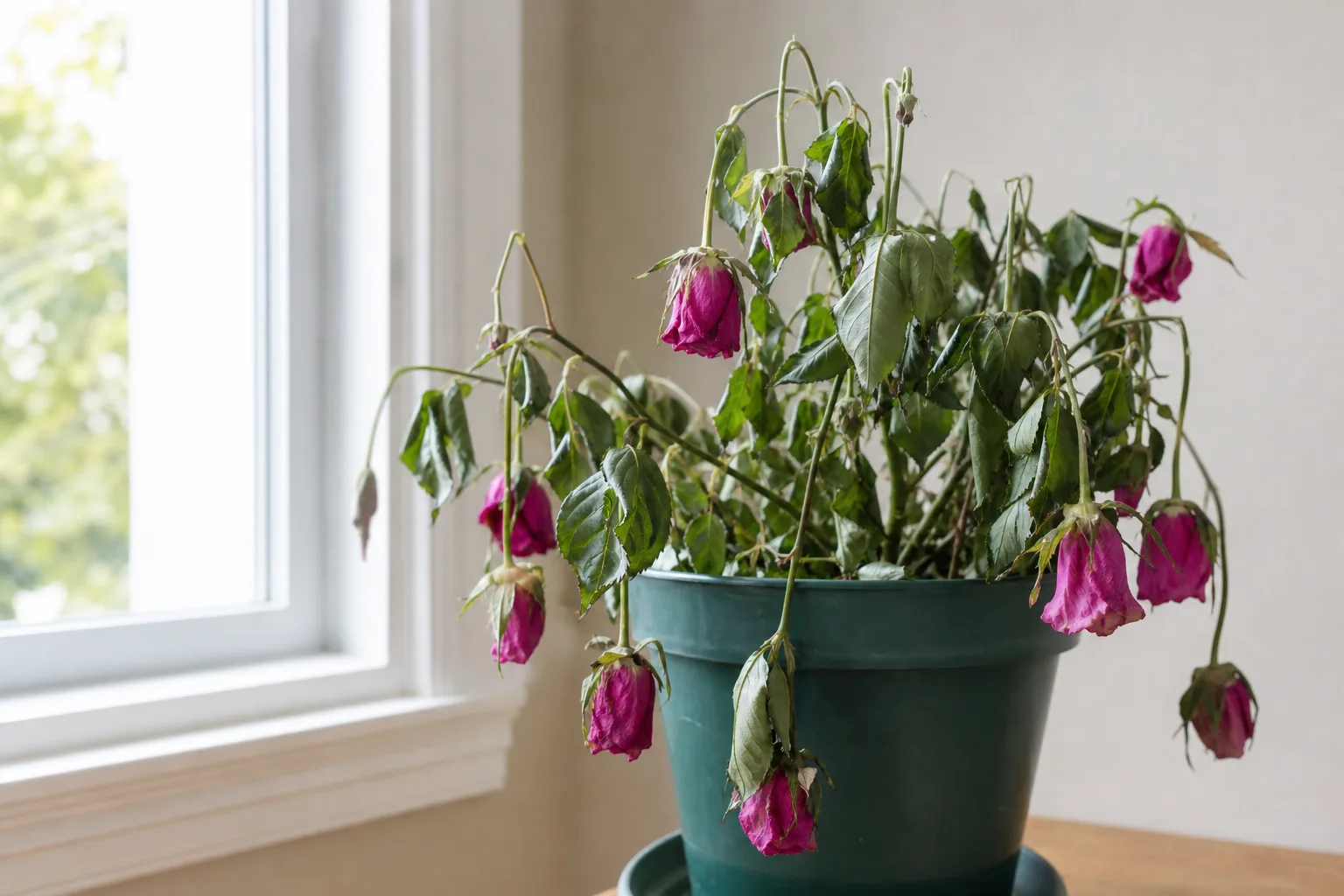
A rose that droops during a hot afternoon may need water, but the leaves cannot tell you that by themselves. Heat can make a rose lose water faster than its roots replace it for a few hours, and adding more water to already-soggy soil can deepen root stress instead of fixing it.
Start with two observations: when the wilt appears and how the soil feels below the surface. If the rose is limp only in direct afternoon sun but perks up by evening or the next morning, monitor it and protect the root zone. If it is still limp in the cool morning and the soil is dry several inches down, give it a slow, deep drink. If the soil is wet, pause before watering again and investigate drainage or root damage.
Start with a soil-moisture check
Heat stress and drought stress often overlap, but they are not identical. A rose can droop temporarily as leaves lose water under intense sun, while the soil still contains usable moisture. A broader review of plant heat responses describes changes to transpiration and water balance under high temperatures, which helps explain why a plant can look stressed before the root zone is completely dry; the review is about plants generally, not a rose-specific watering trial (Zhao et al., International Journal of Molecular Sciences).
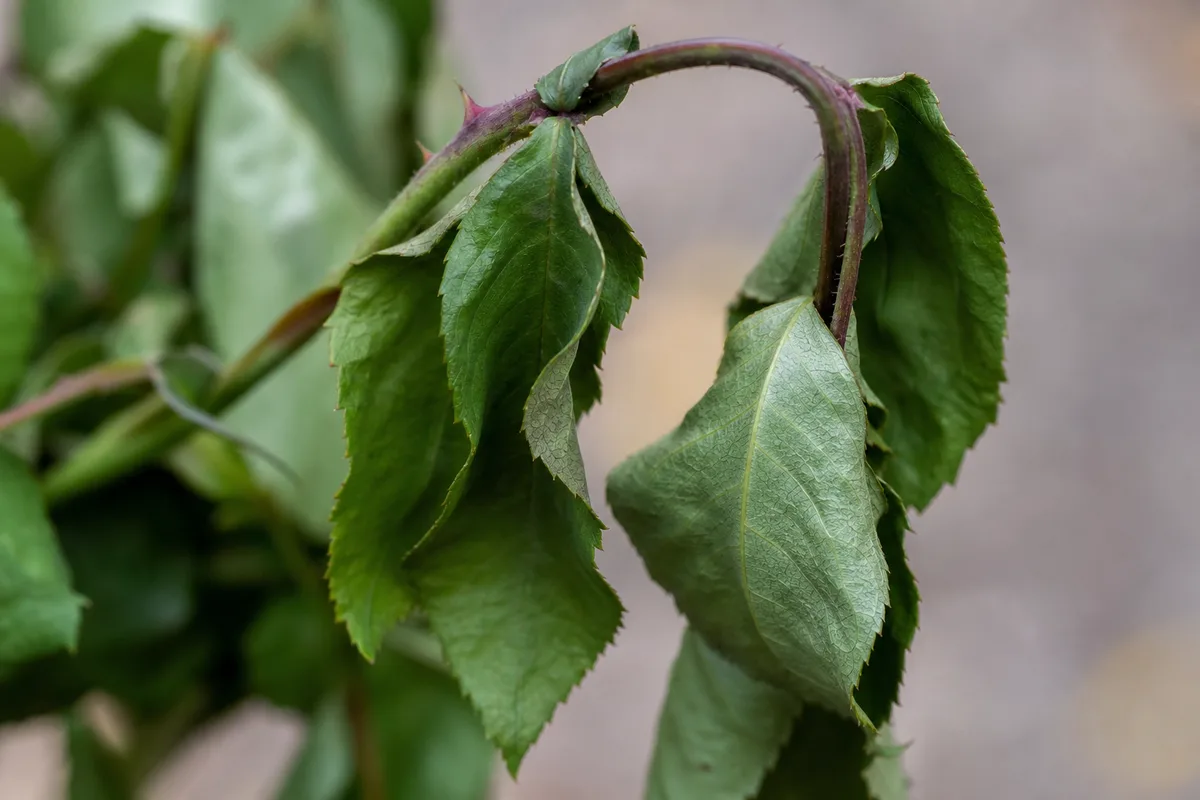
Drooping foliage is a cue to check the plant and soil, not proof that the root zone needs another watering.
Midday droop versus persistent wilt
Look at the rose before the day heats up, then again in late afternoon. If leaves and flexible young stems sag only at peak heat and recover as temperatures ease, the plant may be temporarily reducing water loss under high evaporative demand. UF/IFAS Extension specifically cautions that midday wilt in direct sun can be natural and recommends assessing plants in the morning or evening instead of treating a hot-hour snapshot as a diagnosis (UF/IFAS Extension).
Persistent morning wilt is more concerning, especially when the canes stay limp, leaves remain curled, or several parts of the shrub are declining. That pattern does not prove drought: saturated soil, a damaged root system, recent transplant shock, or a cane problem can also prevent water from reaching foliage. Use the soil check and the pattern of damage together rather than responding to the worst-looking moment of the day.
A single faded flower is a separate issue. Individual blooms age quickly in hot weather and may droop while the rest of the plant remains hydrated and firm. A spent blossom will not become fresh again after watering; assess the leaves, new shoots, and whole plant before changing the irrigation routine.
Check below the surface and around the roots
Test more than one spot in the root zone, ideally between the main canes and the outer edge of the plant’s canopy. Push a finger or narrow trowel about 2 to 3 inches into the soil. A dusty, crumbly feel at that depth points toward drying; cool soil that holds together lightly usually has moisture, while sticky, shiny, or sour-smelling soil may be too wet or poorly aerated.
Do not rely on the top half-inch of soil. Sun and wind can dry the surface while deeper soil is still moist, especially in clay; a dry crust is not a reason to soak the shrub automatically. Colorado State University Extension recommends checking actual soil moisture before irrigation and notes that clay can remain waterlogged below a dry-looking surface, while sandy soil drains faster (Colorado State University Extension).
Check both sides of the plant if the bed has mixed soil or a slope. A drip emitter can wet one small patch and leave the rest of the root area dry, while roof runoff or a low spot can keep one section saturated. If you use a moisture meter, treat it as another clue, not a verdict: probe in several places and confirm by feel.
Use a first-day triage, not a watering reflex
Your next step depends on what the root zone tells you. The short version is: dry soil calls for a slow soak, moist soil plus afternoon-only droop calls for observation and heat protection, and wet soil plus persistent wilt calls for drainage checks rather than another automatic watering.
| What you observe | First response | Avoid |
|---|---|---|
| Dry soil several inches down; wilt lasts into morning | Water slowly at the base until moisture reaches the root zone | A brief surface sprinkle that runs off |
| Moist soil; droop mostly at peak afternoon sun | Wait for cooler hours, recheck later, and reduce reflected heat if possible | Rewatering just because leaves sagged at 3 p.m. |
| Wet or soggy soil; persistent wilt or yellowing | Pause irrigation and inspect drainage and root-zone conditions | More water, fertilizer, or digging through roots in the heat |
If the root zone is dry
Water the soil around the rose rather than spraying the leaves. Apply a gentle stream close to the ground over a broad ring beneath the canopy, not only against the crown or trunk. A slow application gives water time to penetrate instead of racing over crusted soil or down a slope.
If the soil is extremely dry and water beads or runs off, water in two or three short rounds with a pause between them. The first pass softens the surface; the later passes can soak in more evenly. Stop when the root zone is moist rather than flooded, and make a small test hole nearby afterward to see how deep the water actually reached. One long hose session is not necessarily a deep soak if the water only spreads across the surface.
Newly planted roses need more frequent attention because their roots have not yet spread into surrounding soil. Water the original root ball as well as the nearby soil, and check it daily during an extreme hot spell until the plant establishes. This is different from watering an established shrub every day; container and newly transplanted roses can dry much faster than a mature rose in open ground.
If the soil is damp or soggy
Do not add more water just because the plant is drooping. Wet soil can deprive roots of oxygen, and injured roots may be unable to supply water to leaves even when water is present. Check whether the planting sits in a low spot, a clogged emitter is leaking, a sprinkler runs too long, or dense clay is holding water below the surface.
Let the surface dry toward a normal moist state before resuming irrigation. Do not dig around the base to expose roots during the heat; that adds disturbance to an already stressed plant. If the soil stays waterlogged for days, the rose smells sour, or the crown is soft and dark, focus on drainage and root health and seek local extension guidance for a diagnosis rather than repeatedly adding water.
A rose that is wilted in wet soil may also have a broken or girdled cane, recent root disturbance, or disease unrelated to watering. Note whether one branch or the whole shrub is affected. A single wilted cane with the rest of the rose looking firm suggests a localized injury; widespread wilt points more strongly to root-zone conditions or whole-plant stress.
Rehydrate a dry rose with a slow soak
For an established rose in the ground, the goal is not to keep the surface constantly wet. The goal is to replenish moisture through the active root zone, then let the soil condition—not a fixed calendar—determine when to water again. A soaker hose, drip line, or low-flow hose directed at the ground is easier to control than a fast spray that wets foliage and splashes soil.

A drip line applies water close to the soil so roots receive it without repeatedly wetting the rose’s foliage.
Set the hose to a slow trickle or use a watering wand with a soft setting. Move around the plant if one point begins to puddle. In compacted or sloped soil, pause between rounds so the water can infiltrate; repeated short applications can deliver more to roots than one fast flood. A simple check with a trowel after watering tells you whether to continue or stop.
There is no universal number of minutes because hose flow, soil, slope, and rose size vary. A weekly range sometimes used for established roses is a starting estimate, not a heat-wave prescription: Southern Living’s rose-care reporting cites an expert rule of thumb of about 1 to 2 inches of water weekly during the growing season, while also advising gardeners to adjust for soil, weather, age, and planting location (Southern Living). Rainfall counts toward that total, and sandy beds or containers may need closer checks than a deep, moisture-retentive loam.
Water at the base and choose a cool part of the day
When practical, water in the morning. That gives the soil a chance to absorb moisture before the hottest part of the day and leaves less time for foliage to stay wet overnight. Drip irrigation and soaker hoses also put water where the roots need it and reduce repeat wetting of leaves; Better Homes & Gardens recommends soaker-style watering for roses for this reason (Better Homes & Gardens).
If morning watering is impossible and the rose is genuinely dry, water it when you can rather than leaving it thirsty until the next day. Direct the stream to soil, avoid a forceful midday spray, and follow local watering restrictions. Watering at night is not inherently fatal, but repeatedly soaking foliage late in the day can keep it wet longer and favor foliar disease in susceptible gardens.
Do not mist rose leaves to cool them. Spraying the canopy briefly does little to hydrate roots, may evaporate quickly, and can leave foliage wet. A light shade cloth or temporary afternoon shade reduces direct sun load more effectively than repeatedly hosing the leaves.
Protect the root zone with mulch and temporary shade
A 2- to 3-inch layer of organic mulch can slow evaporation, moderate soil temperature, and reduce weed competition during a hot spell. Wood chips, shredded bark, or clean leaf mulch all work; keep a small open ring around the base of the canes instead of piling material against them. UF/IFAS Extension recommends 2 to 3 inches of mulch in landscape beds to reduce evaporation, while the right amount for your garden still depends on the existing layer and local conditions.
Do not bury the crown under a new mound because the plant looks distressed. If the mulch already sits several inches deep, adding more can restrict air exchange and keep the root zone too wet after a storm. Pull mulch back enough to inspect the soil, then restore a moderate layer once you know the bed drains normally.
For a young plant, a rose in a reflected-heat pocket, or a shrub facing several consecutive extreme afternoons, temporary shade can help reduce stress. Use a shade cloth or light canopy that blocks the harshest afternoon exposure while leaving room for air movement; do not wrap the entire plant in plastic or dark fabric. Mature roses usually should not be transplanted or permanently moved in the middle of a heat wave just because one week was unusually hot.
A pergola or shade structure is a long-term design choice, not an emergency cure. If the same rose suffers every summer despite adequate moisture and good drainage, consider whether nearby pavement, a south- or west-facing wall, or restricted airflow is creating a site problem. Make lasting changes after the heat wave, when you can judge the plant and plan without adding transplant stress.
Adjust recovery care for pots and new plantings
A potted rose can wilt faster than a rose in the ground because its root system is confined to a smaller volume of soil that warms and dries more quickly. Check the potting mix with a finger or wooden skewer, including near the middle of the root ball, and make sure the container has open drainage holes. If the mix is dry and pulling from the pot edge, water slowly until moisture reaches the full root ball and excess drains freely; empty any decorative cachepot or saucer afterward.
If a dry potting mix has become water-repellent, a fast pour may run straight down the gap between the mix and container wall. Apply a little water, wait several minutes, then repeat until the root ball begins to absorb evenly. A temporary move to bright shade during the hottest hours can help a container rose, but keep it outdoors and acclimate it back to its usual light once temperatures settle. Southern Living notes that container roses warm and dry faster and require more frequent moisture checks than in-ground roses, especially in porous clay pots.
New roses deserve extra monitoring for a different reason: they have fewer established roots to reach beyond the original planting area. During the first weeks after planting, test the root ball and surrounding bed rather than relying on the mature-rose schedule. Even a brief hot spell can dry the pot-shaped root ball while the surrounding soil still feels moist.
Avoid moving an established in-ground rose during extreme weather. If you need to add shade, use a temporary structure that does not crush branches or trap heat. Once the weather cools, reconsider the location only if the rose repeatedly struggles there and you can replant it at a season and time that reduce transplant shock.
Remove only blooms and growth that are truly spent
You can deadhead a flower that has finished or been badly scorched, but cutting it off will not rehydrate the rest of the bush. Snip the spent flower back to a healthy leaf or outward-facing bud if that is how you normally deadhead the variety. For single-blooming roses, avoid removing every fading flower if you want the plant to form hips later in the season.
Do not hard-prune a rose simply because it wilted in a hot afternoon. Wait until the plant is hydrated and you can distinguish living canes from dead tissue. If a cane is clearly brown and brittle along its length, scratch a tiny patch of outer bark with a clean fingernail or tool: green tissue beneath suggests it is alive, while dry brown tissue indicates dieback. Remove only confirmed dead or broken material, cutting back to healthy growth with clean, sharp pruners.
Leaves with crisp, tan margins may stay attached for a while even after the root problem is corrected. Removing every damaged leaf immediately can reduce the plant’s remaining photosynthetic surface and add another stress. Take off tissue that is fully dead, diseased, or likely to harbor a problem; let partly green leaves remain unless they are rapidly declining.
Fertilizer is not first aid. High-soluble fertilizer adds salts around roots and can increase stress when soil moisture is limited; extra nitrogen also does not fix a blocked, damaged, or saturated root system. Wait until the rose is growing steadily again, and fertilize only if its normal schedule and soil needs call for it. Do not apply fertilizer because a rose drooped once in the heat.
Look for causes beyond heat and drought
A useful diagnosis depends on the combination of soil moisture, the timing of wilt, and which parts of the plant are affected. Heat or dry soil often affects many leaves and tender shoots at once. Poor drainage may produce persistent wilt with damp soil and broad yellowing, while foliar disease usually leaves visible spots, lesions, powdery growth, or repeated leaf loss rather than a simple afternoon slump.
Compare dry soil, saturated soil, and visible damage
If the leaves are wilting and the soil is dry through the root zone, drought stress is plausible. If the foliage droops but the soil is wet, look for standing water, a blocked drainage path, recent digging, or a root disturbance. If only one cane is limp, inspect for a split, kink, borer damage, or a cut that may have severed water flow to that branch.
Heat damage can also appear as bleached, brown, or crispy patches on the sun-facing side of leaves and petals. These tissues will not turn green again, even if the rest of the rose recovers. If the damage continues spreading after temperatures drop and the soil moisture is appropriate, inspect both sides of the leaves for spots, insects, or a disease pattern rather than assuming the plant still needs more water.
Black spot typically produces dark, round leaf lesions and yellowing, often followed by leaf drop; it does not improve with extra irrigation. Powdery or downy mildew has its own visible signs. Avoid wetting foliage when watering, remove badly diseased fallen leaves from around the plant, and use a reliable local extension diagnostic if symptoms are ambiguous or spreading quickly.
Root rot is not confirmed by wilting alone. It is more likely when the soil stays saturated, drainage is poor, the plant continues to decline, and roots or the crown show decay. Do not dig out a mature rose just to inspect it after a single hot afternoon; first correct standing water or a faulty emitter and watch whether new growth remains firm.
Prevent another wilt during the next heat spell
The best prevention is a system that sends water to the roots and lets you notice drying before the rose reaches severe stress. Check the soil during the first hot days of a heat wave, then adjust based on how fast the root zone loses moisture. The same rose may need a different interval in sandy soil, in a pot, or beside a hot masonry wall than it did in spring.
Set a moisture-based watering rhythm
Think of watering frequency as the result of weather, soil, plant size, and root establishment—not a rule such as “every other day.” Southern Living quotes a rose expert’s general weekly range for established plants, but its source also emphasizes checking soil and adjusting for planting conditions. A weekly total can help you notice a dry stretch, but it cannot tell you whether a particular rose needs water today.
A practical routine is to check soil before watering during hot, dry stretches and after heavy rain. When the top few inches are drying and the plant shows persistent stress, water deeply enough to wet the root zone; then allow the soil to use that moisture before repeating. For a container, lift the pot if manageable or check the mix more frequently, since a small pot can go from moist to dry in a short time.
Keep an eye on irrigation coverage. A sprinkler that misses one side of a shrub, a kinked soaker hose, or a clogged emitter can create a hidden dry patch even when the rest of the bed is damp. During a heat wave, inspect the plant and the soil at different points rather than increasing the run time for every plant in the landscape.
Mulch helps conserve the water already in the soil but cannot replace irrigation during a prolonged dry period. Keep the layer moderate, pull weeds that compete for moisture, and avoid piling grass clippings or fresh organic material against canes where it can mat or hold excess water. Good drainage matters as much as moisture retention: roses need both water and air around their roots.
How long roses take to recover
A rose that was temporarily wilted by afternoon heat may look firmer later that day or the following morning, particularly if its soil was already moist. A genuinely dry rose may need the rest of the day to regain turgor after a thorough soak, but flowers that have browned, petals that have scorched, and leaves with dead edges will not be repaired by watering. Judge recovery by living stems, stable foliage, and new growth over the next several days—not by whether every old bloom stands upright again.
If the plant remains limp after a full day of cooler conditions and appropriate soil moisture, revisit your diagnosis. Verify that water reached the root ball, check drainage, and look for canker, broken canes, pests, or disease. A large, established rose can lose blossoms or some leaves and still recover, but repeated decline, extensive cane dieback, or a soft, decaying crown deserves help from a local extension office or experienced rosarian.
Avoid repeatedly watering on a short timer just to make leaves look better immediately. Frequent shallow watering can keep the surface wet while leaving deeper roots dry, and it may keep soil oxygen low where drainage is poor. One measured intervention followed by observation gives you better information than stacking water, fertilizer, pruning, and shade changes all at once.
Conclusion
To revive a wilted rose after hot weather, first check whether the wilt persists outside the afternoon heat and test moisture below the soil surface. If the root zone is dry, give it a slow, thorough drink at the base; if the soil is already damp, wait and investigate drainage or root damage instead of watering on reflex.
Mulch the bed moderately, protect vulnerable plants from the harshest temporary heat, and remove only spent blooms or confirmed dead canes. Roses often recover from short heat stress, but damaged flowers and scorched leaves may not. Watch for firm stems and healthy new growth, then let soil condition and weather—not a rigid schedule—guide the next watering.