How to Grow and Care for Privet
Learn how to grow privet with the right species, spacing, watering, and pruning—and check local invasive status and pet-safety concerns before planting.
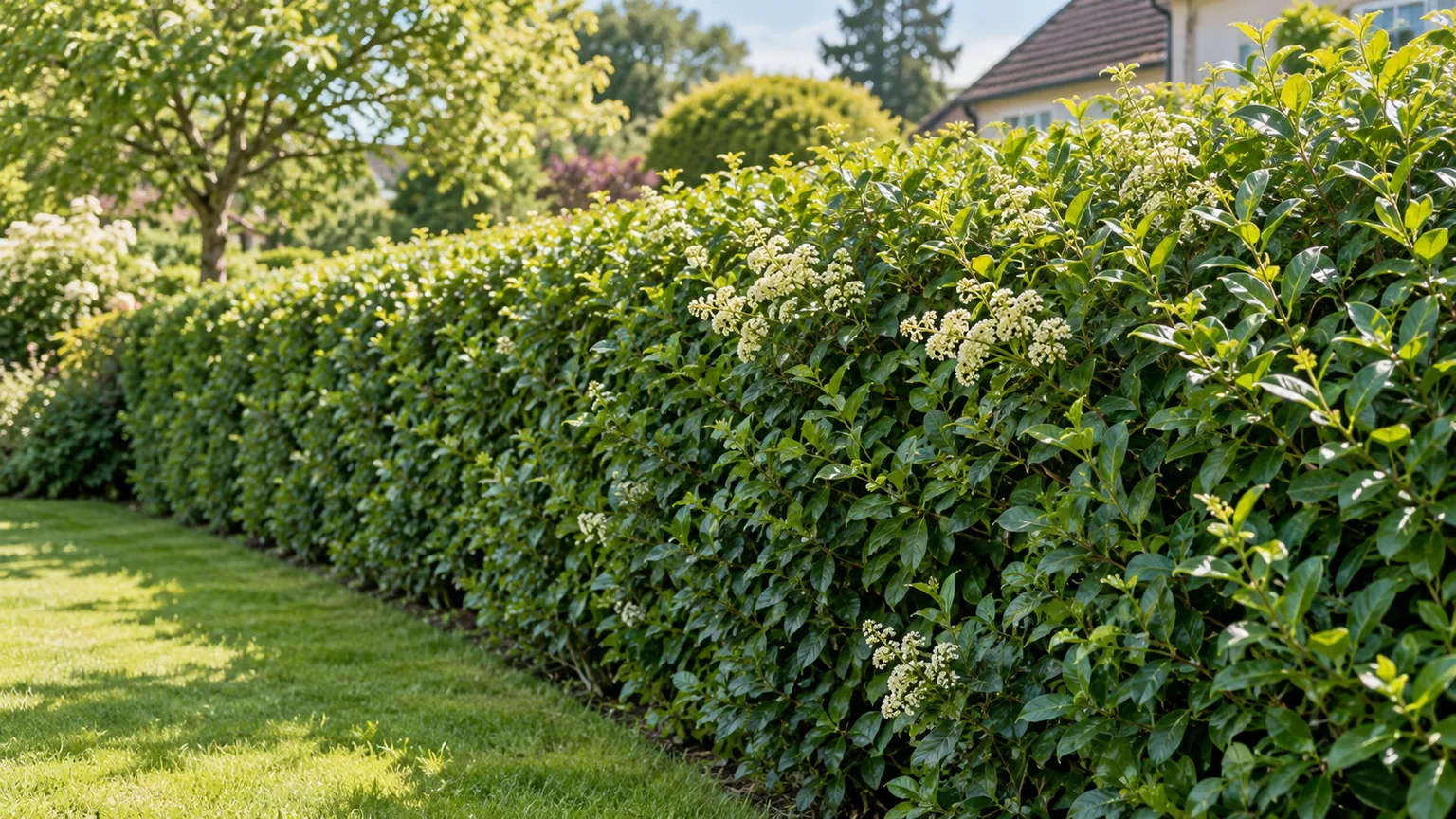
Privet (Ligustrum spp.) is popular for a straightforward reason: it grows quickly, tolerates clipping, and can make a compact screen where a fence is not the right fit. Those strengths also create the main drawback. A fast-growing hedge can become a recurring pruning job, and some species spread beyond the garden where they were planted.
Before buying, find the botanical name on the label and check your local invasive-plant guidance. Then match the plant’s mature size, winter leaf retention, and fruiting habit to your site. Once you have a locally appropriate privet, care is mostly about good drainage, steady water while roots establish, and pruning that lets light reach the bottom.
What Privet Looks Like, and Why Exact Identification Matters
Privets belong to the olive family, Oleaceae. Many have opposite pairs of smooth, oval leaves and small, four-lobed white flowers in clusters; flowers are followed by dark purple or black berry-like fruits called drupes. These traits are useful clues, but leaf size, color, seasonal leaf drop, mature size, and fruit production differ among species and cultivars.
That variation matters more than the shared common name. A compact variegated shrub sold as a privet and a large, rapidly growing species such as glossy privet are not interchangeable landscape plants. Look for the Latin name, cultivar, expected height and spread, and whether the plant is described as deciduous, semi-evergreen, or evergreen. If the tag only says “privet,” ask the nursery to identify it before purchase.
The same caution applies to online care advice. A watering or hardiness recommendation for one Ligustrum should not automatically be applied to another. Extension profiles and local invasive lists are usually organized by species, so an accurate identification is the first step toward a useful answer.
Decide Whether Privet Suits Your Yard Before Buying
Privet is worth considering when you want a clipped hedge, have enough room for the species’ mature width, and are willing to trim it during active growth. It is a poor fit when you need a plant that stays small without maintenance, want a hedge that remains fully green through severe winters but have not chosen a cold-tolerant species, or live where the proposed plant is listed as invasive or prohibited.
In the United States, invasive status is not a genus-wide yes or no. For example, NC State Extension’s Japanese privet profile and Chinese privet profile identify those species as invasive in North Carolina, while Virginia Cooperative Extension warns that many privet species are invasive and recommends asking local Extension whether a particular Ligustrum is appropriate. Other states and regions may classify different species or cultivars differently. Check a current state or regional list before buying, and ask about the named plant rather than searching only for “privet.”
Consider what happens after the hedge flowers. Birds eat the fruits of some privets and can carry seeds into nearby woodlots, roadsides, and stream edges. That can be a welcome food source in a location where the plant is acceptable, but a liability where seedlings escape. If your goal is wildlife habitat, compare locally native hedge plants first; a tidy, clipped exotic screen and an ecologically useful hedgerow are not always the same project.
Compare Common Privet Species and Cultivars
Species and cultivar names provide more useful guidance than broad claims that “privet” is hardy or evergreen. Use the table to narrow the choices, then verify the plant’s current local status and mature dimensions from a regional Extension source or the nursery’s full cultivar listing.
| Name on label | Typical character | Before you plant |
|---|---|---|
| Common privet (L. vulgare) | Often deciduous or semi-evergreen; commonly used as a hedge | It can naturalize in some regions; check your local list. |
| California or oval-leaf privet (L. ovalifolium) | Dense, fast-growing hedge shrub; leaf retention changes with winter conditions | The common name does not make it native to California; check regional status. |
| Japanese privet (L. japonicum) | Broadleaf evergreen in mild areas, with thick, glossy leaves | NC State lists it as invasive in North Carolina; its potential size can exceed a small hedge. |
| Chinese privet (L. sinense) | Commonly semi-evergreen, vigorous, and capable of spreading by seed and suckers | It is invasive in many eastern and southern U.S. landscapes; avoid it where local guidance advises against it. |
| Glossy or waxleaf privet (L. lucidum) | Large evergreen shrub or small tree, with glossy leaves | NC State reports a potential height far beyond an ordinary hedge; do not assume it will stay a shrub. |
Cultivars may have gold, cream-edged, or unusually shaped leaves, and compact selections can be smaller than the species. But a decorative name alone does not prove that a plant is sterile, non-invasive, or suited to your state. Confirm the exact cultivar, reproductive behavior, and legal status through a reliable local source. For a measured small hedge, buy for the mature size printed on the tag, not the plant’s appearance in its nursery pot.
What “Evergreen” Means in Your Winter
Some privets hold leaves in mild winters and drop many or most of them after colder weather. Even a species sold as evergreen can look thin after a hard freeze, while a deciduous type may be a perfectly healthy hedge that is simply leafless. Virginia Cooperative Extension’s broad privet profile describes privet as deciduous; species-level profiles show that other kinds are evergreen or semi-evergreen in suitable climates.
If privacy in winter is essential, confirm winter performance for the exact species and cultivar in your region. The Royal Horticultural Society’s hedge selection guide explains the privacy trade-off between evergreen and deciduous hedges, but local winter conditions still determine whether a particular privet holds foliage. Ask a local nursery to point out established plants nearby during the coldest part of the year. That real-world check is more useful than assuming that a picture of a lush summer hedge predicts January screening.
Choose Light, Drainage, and Hedge Position
Most common privets grow in full sun to partial shade, but a sunnier position generally encourages denser growth and more flowers. In a heavily shaded yard, expect slower fill-in and a thinner lower canopy; do not solve that problem by planting shrubs closer together, because crowding can intensify shade and reduce air movement.
Good drainage is more important than a perfect soil texture. Several species tolerate clay, loam, or sandy soil, but roots sitting in persistently saturated ground are vulnerable to decline. Avoid a low spot that stays puddled after ordinary rain. If the soil is compacted, improve the entire planting strip with organic matter as appropriate for the soil rather than creating a small, rich pocket that holds water around each root ball.
Lay out the hedge so mature plants have room on both sides for growth and maintenance. Check underground utilities, property boundaries, gates, meters, paths, and access for pruning equipment before digging. A hedge planted tight against a fence may be difficult to cut on the far side; a row whose mature width spills across a neighbor’s property can become a conflict even when the shrubs are healthy.
Plant a Privet Shrub or Hedge
Spring or early fall is a practical planting window in many climates because soil is workable and plants can establish before extreme heat or cold. Avoid installing a hedge immediately before a hot, dry period unless you can keep the root zone evenly moist. For a bare-root plant, keep roots damp while working and plant promptly; for a container shrub, slide it out and loosen tightly circling roots so they can grow into surrounding soil.
Dig a hole about twice as wide as the root ball and no deeper than the root ball. Set the root flare at soil level, backfill with the soil you removed, and water slowly to settle the soil around the roots. Do not bury the lower stems or pile mulch against the trunk. A two- to three-inch mulch layer can limit weeds and reduce evaporation, but leave a small clear ring around each stem.
For a hedge, prepare a straight planting strip and mark the center of every plant before digging. RHS planting guidance recommends planning a hedge for its intended function and spacing plants to suit the species; a long row can dry out while you are finishing the last section, so water each root ball as you plant. After planting, check that each shrub is upright and that the soil has not settled enough to bury its crown. A new hedge usually needs closer observation than a single specimen because roots compete along the row and plants at the sunny or windy end may dry faster.
Space Plants for Mature Width, Not Instant Screening
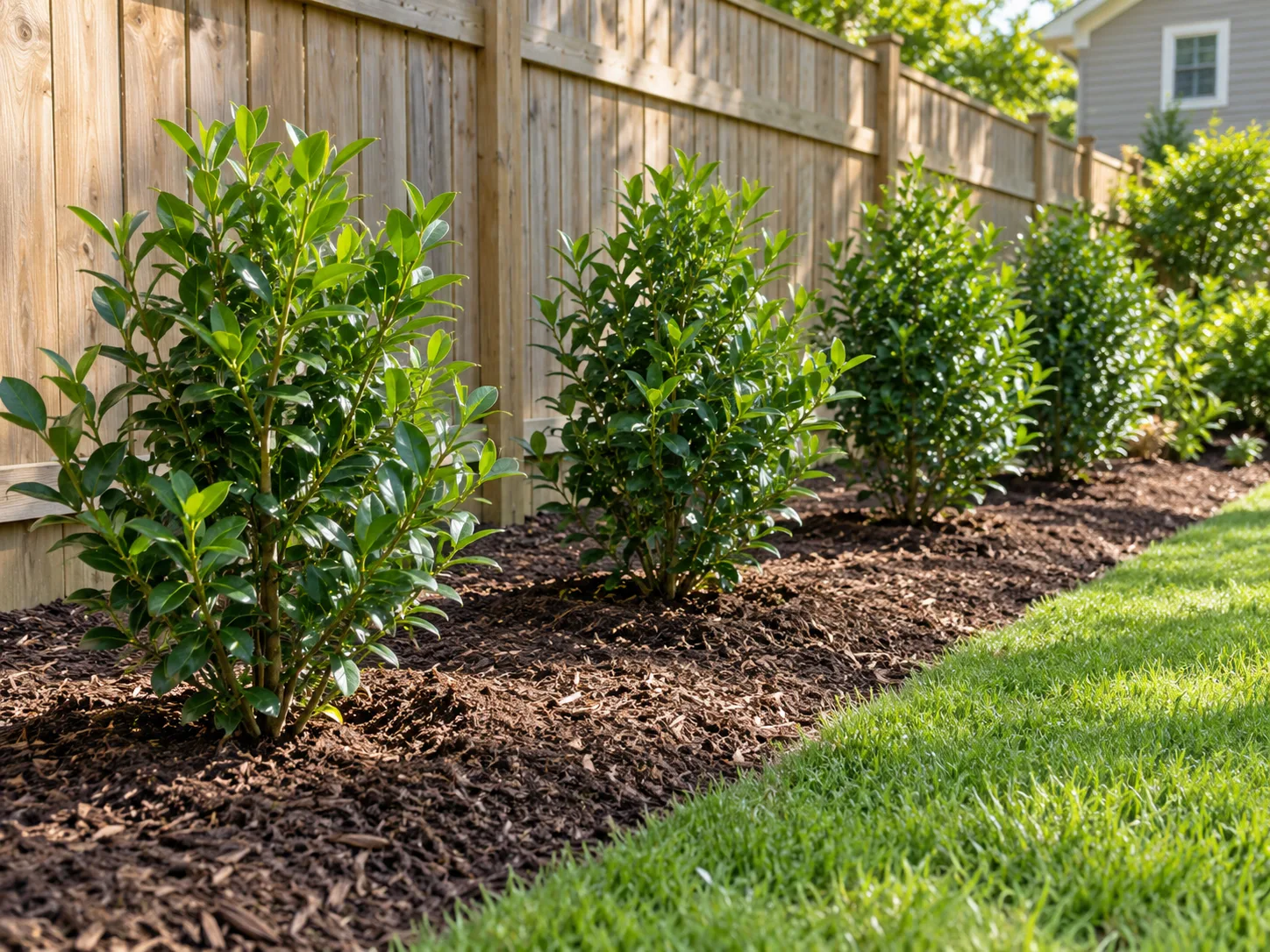
There is no reliable universal spacing number for every privet because species, cultivar, starting size, and intended hedge height all change the answer. Start with the mature spread on the plant tag. If a seller gives a hedge-spacing recommendation for that exact variety, use it as the baseline and adjust for your soil, climate, and how quickly you need a closed screen.
Plants set too close may look fuller sooner, but their branches and roots compete earlier, the interior becomes darker, and the hedge needs more frequent pruning. Plants set too far apart take longer to join into a screen, though they may establish with less competition. For a small, formal hedge, spacing centers about half the expected mature width is a common starting method; confirm the variety’s instructions before using it, especially for large species. Do not crowd a large-growing privet simply to block a view in the first year.
If you need immediate privacy, combine a correctly spaced hedge with a temporary fence or screen instead of overplanting. That lets the shrubs fill out on a healthier schedule and avoids a permanent row that is too dense to maintain.
Water Privet While Roots Establish
Water newly planted privet deeply enough to moisten the root ball and the surrounding soil. During the first growing season, check the soil every few days when weather is hot or windy; water when the upper few inches are beginning to dry, then let excess drain. The goal is moist soil around the roots, not a puddle that remains at the base of the plant.
Do not use a fixed weekly schedule without checking rain and soil. Gardening with Charlie’s privet guide also emphasizes regular water for young shrubs and reduced need after establishment; one deep soak may be enough in cool weather with steady rainfall, while a sandy site or heat wave may require another check sooner. A hedge row also has uneven exposure: the end next to pavement may dry before plants in the middle. A finger or trowel test beneath the mulch gives better information than the surface color alone.
Once established, many privets tolerate short dry spells better than new transplants, but drought tolerance is not drought immunity. Water slowly during extended dry, hot weather if soil is dry below the surface and leaves begin to wilt or scorch. Conversely, persistent yellowing, leaf drop, and soft or darkened roots can point to excess water or poor drainage. Correct the condition causing stress instead of adding water automatically.
Fertilize Only When Conditions Call for It
Privet does not need routine high-nitrogen feeding simply because it is a hedge. If it has normal leaf color and steady new growth, a layer of compost under mulch may be all the support it needs. Excess fertilizer can push tender shoots that need more water and more clipping, while contributing to runoff from a long row.
If growth is weak, first check drainage, root establishment, available light, and damage from pests or winter. A soil test can show whether a nutrient is actually low and whether a pH issue might be limiting uptake. When a test or local Extension recommendation supports fertilizer, use a product labeled for landscape shrubs and follow its rate and timing exactly. Do not fertilize a drought-stressed plant or apply a strong dose into the planting hole.
Prune for Dense Growth Without Losing Flowers
Young privet responds to formative pruning. Shorten long shoots modestly to encourage branching, remove broken or crossing stems, and shape the hedge gradually rather than cutting a new plant into a tight box on day one. Once the framework is established, light trims during active growth can maintain the outline; fast-growing varieties may need several passes in a season, while a looser hedge may need far fewer.
Timing depends on what you want. If flowers matter, wait until blooming finishes before shaping because cutting earlier can remove flower-bearing growth. If you prefer an unscented, fruit-free formal hedge, trim before berries develop, recognizing that frequent clipping removes much of the bloom and can reduce fruit for wildlife. Check the hedge for nesting birds before major work, and follow local wildlife and hedge-cutting rules; regulations differ by country and municipality.
Use sharp, clean shears and make a small test cut before taking off a large amount. Routine shearing maintains a surface; it does not correct a hedge that has become a thick, leafless shell around a shaded interior. For old or oversized plants, a staged renovation with selective thinning cuts can be safer and less shocking than removing most of the canopy at once. The exact species and condition determine how much old wood it can regrow from, so ask a local arborist or Extension office before severe renovation of a valuable or stressed hedge.
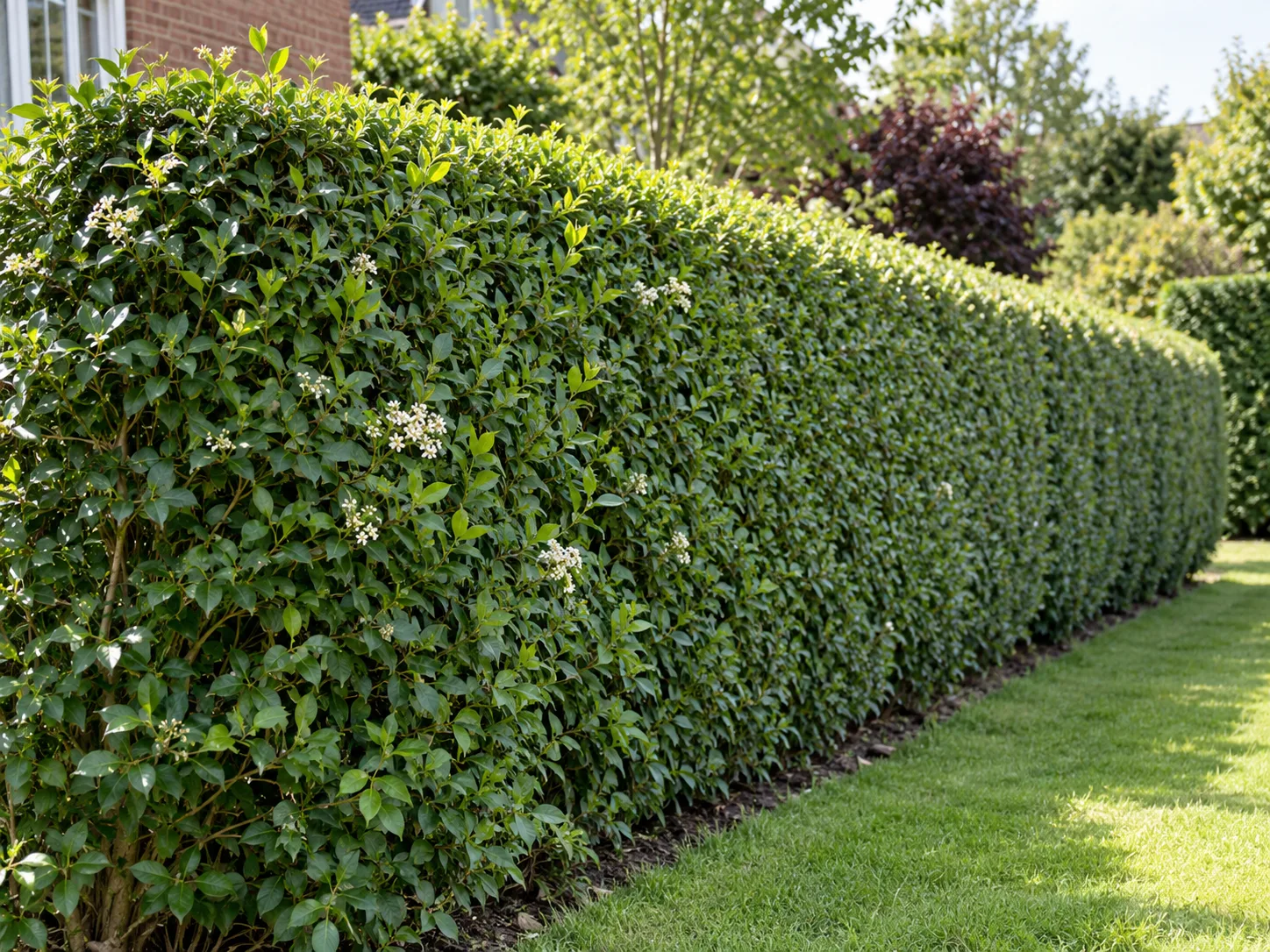
Keep the Hedge Wider at the Base
Shape both sides so the base is slightly wider than the top. That gentle taper lets sunlight reach lower leaves; a hedge that is widest at the top shades its own base, and the lower branches can thin until bare patches no longer fill easily. Virginia Cooperative Extension and GardenDesign’s privet care guide both recommend keeping the bottom broader for this reason.
Stand back and check the outline from the end of the row before trimming the full length. Use a taut string or a measured guide if a straight face matters, but do not shear so deeply that you expose brown, leafless wood. If the lower half is already bare, first look for shade from a wide top, overhead trees, and excessive crowding; more frequent surface clipping alone will not restore light to the interior.
Understand the Flowers, Berries, and Wildlife Trade-Offs
Privet flowers are small and pale, but their scent can be strong and unpleasant to some people. If fragrance is a concern, avoid planting near open windows, patios, or frequently used paths until you have smelled a flowering specimen of the exact species. Bloom time varies with species and climate, so a nursery photo may not reveal how the shrub will smell where you live.
Flowers can attract insects, and fruits can be eaten by birds. The same fruits may also spread seed, so wildlife value and invasive potential can be two sides of the same trait. Where local authorities identify a privet as invasive, preventing fruit is not a substitute for choosing an appropriate plant: berries can mature before a trim, and seedlings may come from neighboring plants. Select a non-invasive, locally recommended hedge instead.
Some privets retain leaves through mild winters; others drop them. Leaves and berries also fall, which may leave debris along walks or under a hedge. Before choosing privet, decide whether the flowers, scent, litter, and possible winter gaps fit the location—not just whether the plant looks dense in a summer photograph.
Propagate Only a Suitable, Permitted Privet
Privet can root from cuttings, but propagation is a decision about where the new plants will grow, not just whether you can make roots. Do not propagate a species or cultivar that local guidance identifies as invasive, restricted, or a poor landscape choice. Sharing cuttings can spread the same problem to another property, and seedlings from a fruiting plant may not reproduce the cultivar’s compact shape or foliage color.
For a permitted selection, take several healthy, non-flowering shoots in a season when the wood is firm but not fully mature. Remove lower leaves, place the cuttings in a clean, moist, free-draining propagation medium, and keep them humid and out of hot direct sun while roots form. Because rooting time varies, look for resistance to a gentle tug rather than assuming a fixed number of weeks; then pot rooted cuttings separately and keep them watered as they establish.
If you only need to fill a gap in a hedge, buying the same correctly identified cultivar may be simpler and more predictable than propagating a species-form plant. Match leaf color and mature size before planting, and keep the new shrub spaced in line with its neighbors rather than using it to plug a gap by crowding.
Troubleshoot Bare Bases, Leaf Damage, and Dieback
Privet tolerates clipping, but it is not immune to common shrub stresses. In warm, humid weather, powdery mildew can coat leaves with a pale, dusty growth; improving airflow and avoiding repeated wetting of foliage may reduce pressure. NC State and the Connecticut Agricultural Experiment Station also describe issues such as scale, mites, weevils, anthracnose, twig blight, and root rot, but a pest list is not a reason to spray a hedge preemptively.
Inspect both leaf surfaces, tender shoot tips, and branch unions before choosing a treatment. The Connecticut Agricultural Experiment Station’s privet handbook describes mites, weevils, leafrollers, and several fungal problems; sticky leaves or clusters of small insects may suggest sap-feeding pests, while stippling, bronzing, or distorted young leaves point toward other causes. Confirm the pest with a local Extension diagnostic service if damage is spreading, and use any pesticide only if the product is labeled for the plant and site and the label directions are followed. Avoid spraying open flowers where pollinators are active.
Match Symptoms to Water, Light, or Disease
Brown leaf edges during hot, dry weather often indicate water stress, reflected heat, or root disturbance, but brown leaves do not identify a single cause. Check moisture a few inches down, look for roots exposed by erosion or recent digging, and note whether the damage is on the sunniest side. A plant in saturated soil may also yellow, drop leaves, and decline because oxygen is limited around its roots.
Bare growth at the hedge base usually results from persistent shade: the top has widened, adjacent plants are crowded, or a tree canopy blocks light. Correct the shape gradually, open the hedge to air, and accept that very old bare wood may not leaf back uniformly. If one branch or one plant declines while its neighbors remain healthy, inspect for girdling, borer holes, cankers, or root damage rather than treating the entire row as if it had a contagious disease.
If leaf spots spread, stems die back, or roots smell rotten, photograph the symptoms and contact a local Extension office or qualified plant-health professional. Diagnosis matters because pruning, drainage correction, sanitation, or no treatment may be more useful than a fungicide. Remove diseased material with clean tools when advised, and avoid composting plant parts that local guidance says may carry a persistent disease or viable seed.
Manage Seedlings or Remove Unwanted Privet
If a locally acceptable privet has produced a few unwanted seedlings, pull them while small and remove as much of the root as practical. Monitor the bed and nearby fence lines after fruiting seasons; birds can deposit seed beyond the hedge, so checking only beneath the parent plant may miss new starts. Bag or dispose of fruiting cuttings in the manner recommended by your local waste or invasive-plant program rather than spreading them with garden compost.
For a large shrub or an established thicket, cutting at ground level may trigger vigorous resprouting, and digging mature roots can be laborious. Before removal, identify the species and ask the local Extension or invasive-species program for a region-specific method. Some programs recommend follow-up on regrowth or a label-approved cut-stump treatment; pesticide rules and permitted products vary, so do not improvise rates or use a product contrary to its label.
If removing a hedge because it is invasive or too large, replace its function at the same time. Choose a locally native or otherwise regionally recommended shrub with the required mature height, winter coverage, and tolerance for your soil. A replacement sized for the site is less likely to become the next plant you have to remove.
Protect Pets and People From Ingestion
The ASPCA lists privet as toxic to dogs, cats, and horses and identifies gastrointestinal upset as the most common sign; incoordination and increased heart rate are also listed, with death described as rare. NC State’s species profiles likewise flag toxicity for several Ligustrum species. Do not let children or pets eat leaves or berries, and do not use privet fruit in food or home remedies.
If a pet may have chewed privet, remove access to the plant and contact your veterinarian or ASPCA Animal Poison Control at (888) 426-4435 for case-specific advice. Keep a photo or plant label so the species can be identified. For a child or adult who swallowed plant material, contact local poison control or emergency services; do not wait for symptoms or try a home treatment based on an online plant list.
When pets routinely chew hedge plants, consider using a different shrub in their accessible run or adding a barrier that prevents chewing. A plant can be manageable in a back boundary and a poor choice beside a dog’s favorite path. Put the plant’s documented toxicity into the site decision before planting rather than relying on berries being out of reach.
Conclusion
Privet can make a useful hedge when the exact species fits the climate, available space, and maintenance you are prepared to do. The smart sequence is to identify the plant, check local invasive status, verify mature size and winter leaf retention, and only then choose a planting spot and spacing.
After planting, keep the root zone evenly moist while it establishes, avoid automatic fertilizer, and prune with the hedge’s shape and flowering goals in mind. A slightly wider base helps keep lower growth alive; monitoring for berries and seedlings matters where spread is a concern. If the local species list, pet exposure, or mature size makes privet a poor fit, choose another hedge before you dig.