6 Plants That Attract Pests and How to Manage Them
Eggplant, cabbage, cucumbers, watermelon, squash, and water lilies host different pests. Learn the signs, first response, and when removal makes sense.

Eggplant, cabbage, cucumbers, watermelon, squash, and water lilies can share space with insects that damage leaves, flowers, stems, or fruit. That does not make any of them plants you should automatically pull out. A few flea beetles on a vigorous eggplant, a butterfly passing over cabbage, and a squash vine borer inside a collapsing stem are three very different situations; the right response depends on what the insect is, how much injury it is causing, and whether the crop is at a vulnerable stage.
Use this guide to match each crop to its likely pests, recognize the evidence before treating, and start with the least disruptive control that can work. In most vegetable beds, the best sequence is to scout, protect young plants, remove a small number of pests by hand, then consider a labeled targeted product only when damage continues. Water lilies need a different correction: look at pond conditions and nearby standing water rather than treating the plant itself as a mosquito source.
Decide whether the pest is actually a problem
The word “pest” describes an insect’s relationship to a crop, not whether every individual insect must be killed. Many insects feed a little without reducing harvest, and a diverse garden also supports pollinators and predators that help keep outbreaks in check. Before acting, check the newest growth, the undersides of leaves, stems, and fruit; look for living insects, eggs, fresh droppings, sticky residue, or damage that is expanding rather than relying on one old hole.
| What you see | Likely feeding pattern | First useful move |
|---|---|---|
| Many tiny round or irregular “shot” holes on young eggplant leaves | Flea beetles chewing foliage | Check seedlings and cover them before damage builds |
| Ragged holes, caterpillar droppings, or clustered shield-shaped bugs on cabbage | Chewing caterpillars or sap-feeding harlequin bugs | Inspect leaf undersides and hand-remove eggs or insects |
| Curled, sticky cucumber leaves with clusters of small insects | Aphids | Rinse colonies off and reassess the next day |
| Yellow-and-black beetles on cucurbit flowers or leaves | Cucumber beetles | Protect young plants early and watch for wilt |
| Brown egg clusters or sudden vine wilt with frass at the stem base | Squash bugs or vine borers | Identify which sign is present; use different controls |
| Mosquitoes around a pond | Nearby water habitat may be supporting larvae | Inspect stagnant water and circulation, not the lily leaves |
One chewed leaf on a mature plant is usually a reason to inspect, not to spray or remove the crop. Escalate when the damage is accelerating, the plant is young, feeding reaches the growing point or edible part, or the plant is wilting or losing vigor. There is no single home-garden threshold that fits every crop, climate, and growth stage; a seedling can be set back by feeding that an established plant would shrug off.
Eggplant: flea beetles and leaf damage
The small holes that pepper eggplant foliage are often caused by flea beetles, tiny hard-shelled beetles that hop when disturbed. Their nickname comes from that jumping behavior; they are beetles, not fleas. A handful of pinholes on older leaves is different from a flush of fresh holes across the newest leaves of a recently planted seedling. Young plants have less leaf area to spare, so the same number of beetles can slow them much more than it slows a large, rooted plant.
Check leaf tops and undersides during a calm part of the day, then tap a leaf over a white sheet to see whether tiny beetles jump or fall. NC State Extension’s eggplant pest guide describes the characteristic shot-hole feeding and notes that flea beetles can be especially damaging to young plants. It also explains that adults overwinter in soil or crop debris and can use certain weeds as early hosts, which is why sanitation and weed management can help reduce pressure around a bed.
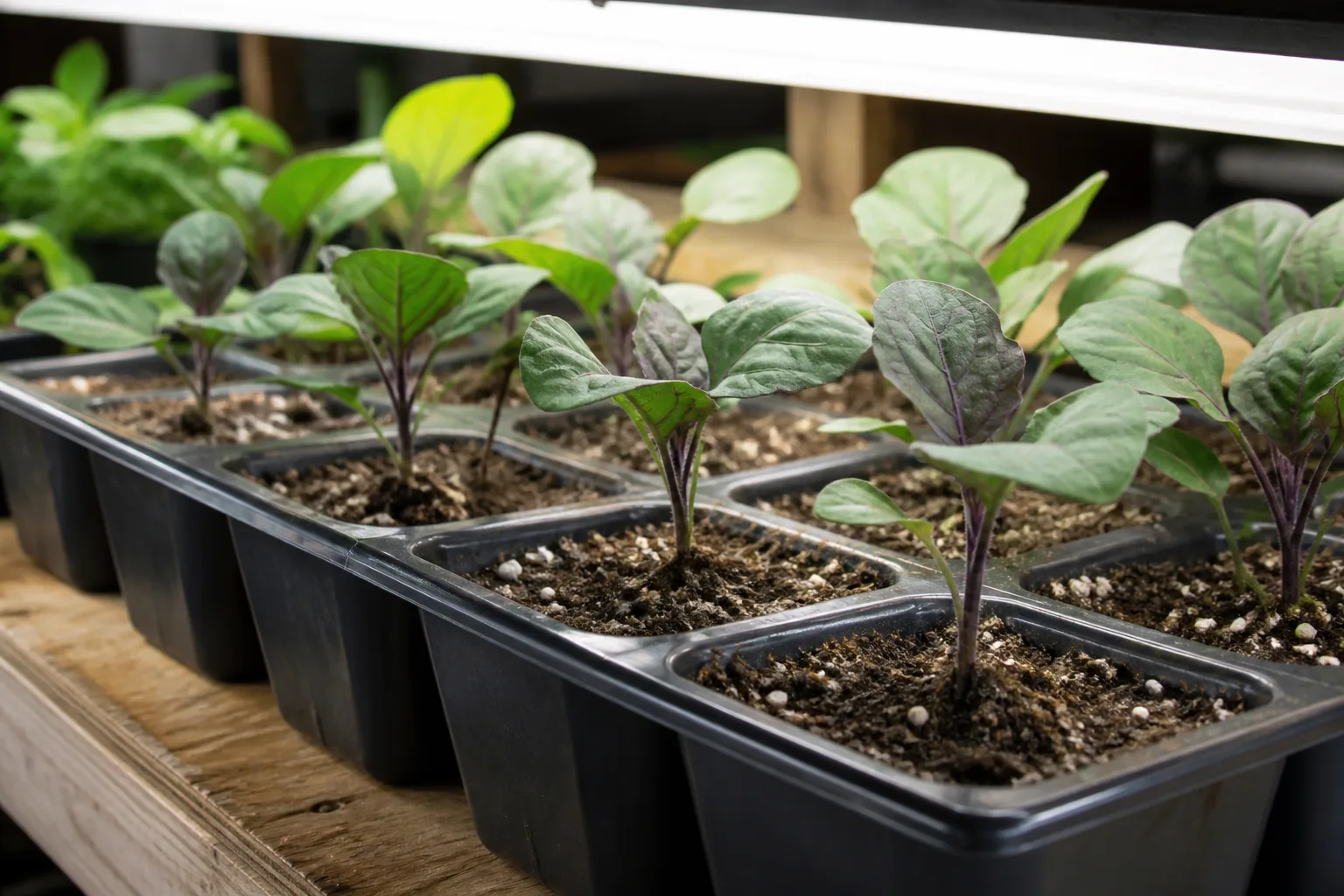
The simplest prevention is to start with sturdy transplants and cover them as soon as they go outside, before beetles arrive. Anchor the cover all around the bed so insects cannot crawl underneath, and remove it for inspection if plants are being stressed by heat. Keep the bed free of crop leftovers after harvest, but avoid tearing up healthy soil just to make the garden look bare. If a mature eggplant keeps growing and fruiting, keep monitoring it rather than treating every small hole as a crop failure.
Cabbage: caterpillars, harlequin bugs, and slugs
Cabbage can show several kinds of feeding at once. Imported cabbageworms and cabbage loopers chew irregular holes; check the leaf undersides and folds for green caterpillars and wet-looking droppings. Harlequin bugs are shield-shaped insects with bright markings that suck sap, leaving pale or mottled spots rather than clean chewing holes. Slugs usually feed at night and leave ragged edges or silvery slime trails, especially after damp weather.
The distinction matters because a cover can stop a flying butterfly from laying eggs, but it does not remove caterpillars already on a plant. Before covering transplants, inspect both sides of the leaves and remove any eggs or larvae you find. Keep lightweight insect netting sealed from the day of planting; cabbage grown for leaves or heads does not need insect pollination, so it can often stay covered while the crop is vulnerable. If you are saving seed, the cover must come off when flowers need pollination. NC State Extension’s crucifer pest reference covers cabbageworms and other brassica pests, including the way different insects leave different damage patterns.
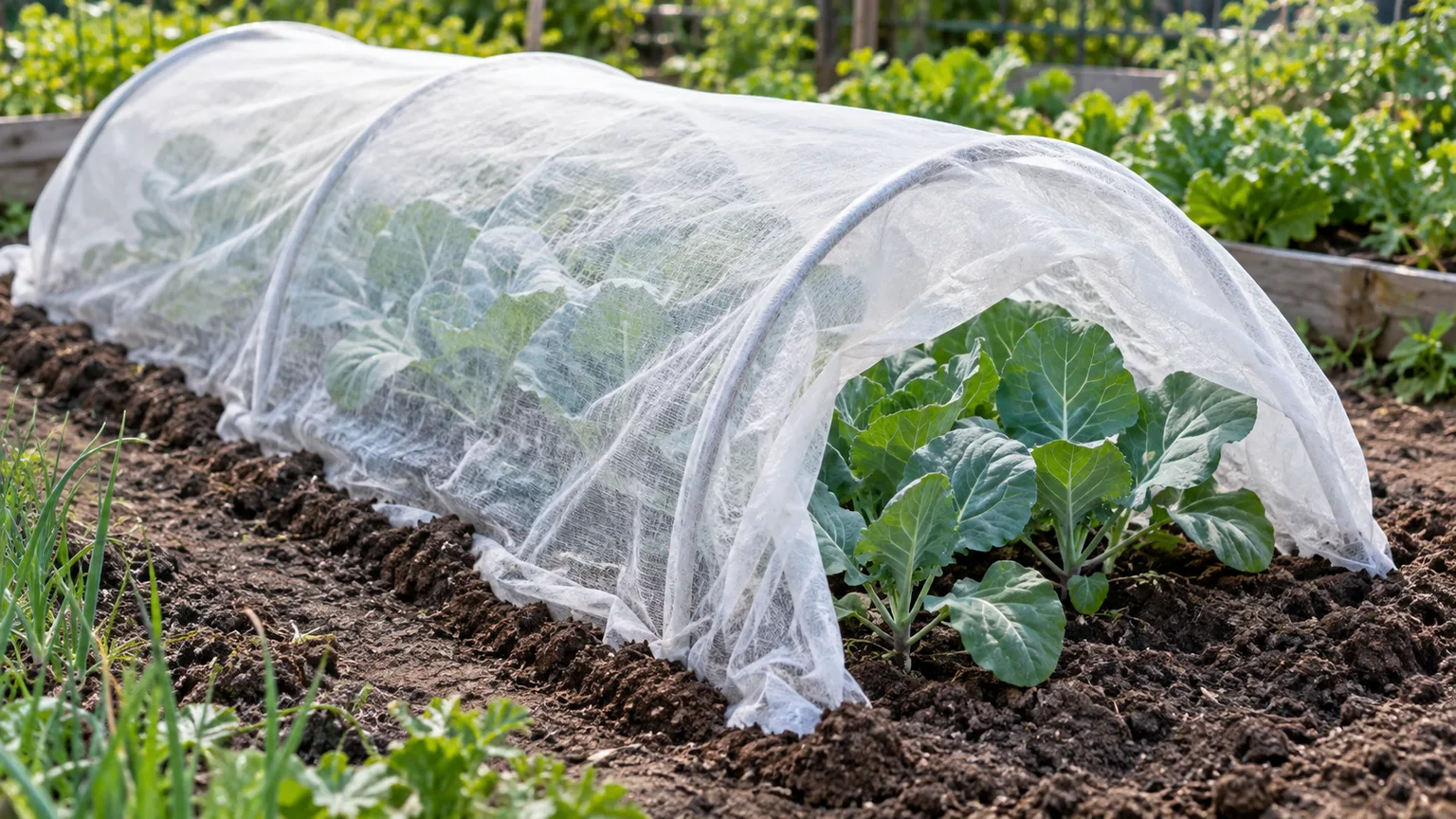
For a few caterpillars on a small patch, hand-picking is often quicker and more selective than spraying. Look inside the forming head, where leaves can hide larvae and droppings; remove the affected outer leaves if the edible center remains clean. To reduce slug damage, clear damp boards and debris where slugs hide, water near the soil in the morning, and check plants after dark rather than applying a broad insecticide. Mint, garlic, or onions may fit around a cabbage bed for culinary reasons, but do not rely on their scent as a substitute for netting or inspection.
Cucumber: aphids and cucumber beetles
Aphids collect in soft clusters, often under young cucumber leaves and near growing tips. Their sap feeding can curl or pucker new leaves, and the honeydew they leave behind makes foliage sticky. If you see only a small colony and new growth looks normal, rinse the underside of the leaf with a firm stream of water and check again in a day or two. That washes insects off without coating flowers, lady beetles, or other visitors with a spray.
Cucumber beetles look different: adults are yellow to yellow-green, with black stripes or spots depending on the species. They chew cotyledons, leaves, stems, flowers, and sometimes fruit. They are more concerning on seedlings and can transmit bacterial wilt among cucurbits; sudden, persistent wilting is not a symptom to “fix” by adding water alone. NC State Extension’s cucurbit pest guide describes the beetles, feeding injury, and disease risk. UC ANR’s eggplant and garden-crop IPM pages also make a useful point for the whole garden: site, soil, watering, and plant health are part of pest management.
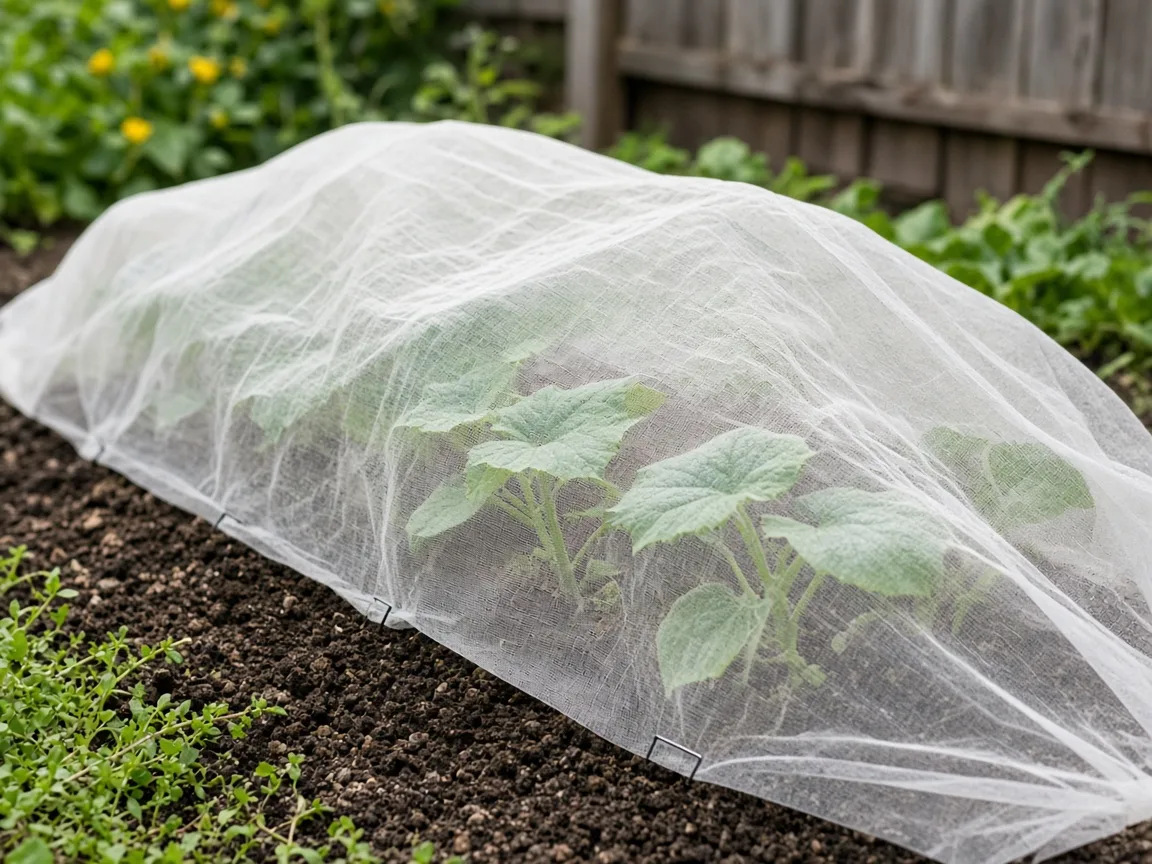
Put a cover over cucumber seedlings before beetles arrive, seal the edges, and inspect beneath it so you do not trap insects inside. Cucumber flowers need insect access for pollination on most garden varieties, so uncover plants once they begin flowering unless you are deliberately hand-pollinating or growing a variety that sets fruit without insect pollination. If beetles return, inspect the vines and flowers rather than dusting the entire bed; a broad spray can harm pollinators and may not solve an infection already inside a plant.
Watermelon: protect seedlings and flowering vines
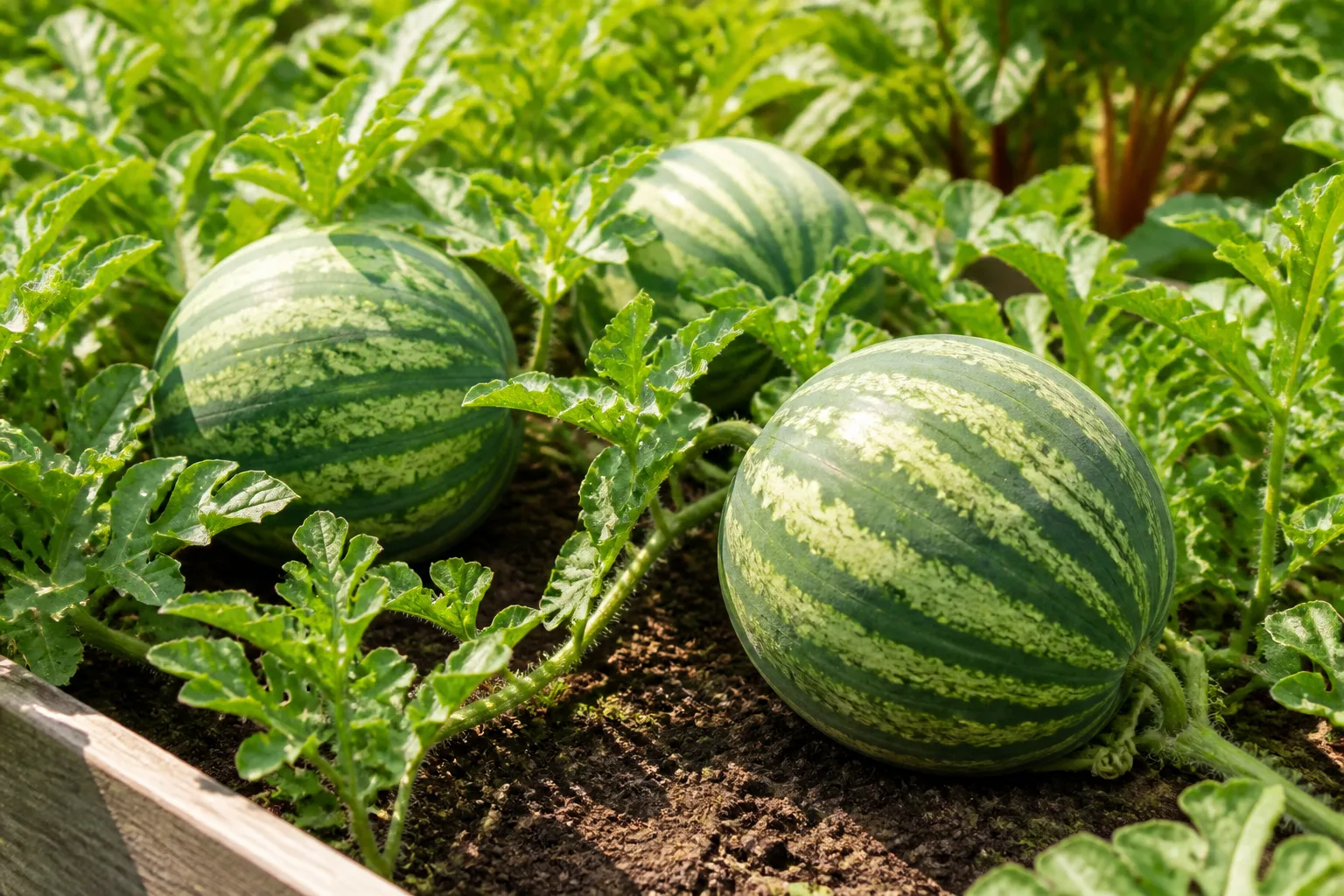
Watermelon is in the same cucurbit family as cucumbers and squash, so cucumber beetles and aphids can feed on it too. Seedlings are the stage when leaf-chewing beetles are most likely to set a plant back. Later, watch for insects on flowers and tender vine tips, but remember that the plant’s need for pollinating visitors is part of the control decision: a barrier that stays in place through bloom can protect foliage while also blocking fruit set.
Cover a new planting early, before you see beetles, and keep the cover from rubbing against young leaves. Check underneath at least weekly. Once flowering starts, uncover the vines so bees can reach the flowers; if beetles are a recurring problem and the planting is small, you can also inspect blossoms and remove individual beetles by hand. Keep the crop watered consistently at the root zone so heat or drought stress does not add to pest injury, and avoid confusing natural leaf aging or a single damaged leaf with a spreading infestation.
The most useful question is not whether watermelon “attracts” beetles, but whether beetle numbers and fresh injury are increasing while the plants are still small. Once a vine is large and actively setting fruit, modest feeding may be tolerable. If a vine wilts suddenly despite moist soil, inspect for disease or stem injury and seek a local diagnostic rather than assuming aphids are to blame. Companion herbs and flowers can add diversity and nectar sources, but no scent reliably shields a watermelon bed from a determined beetle population.
Squash: separate squash bugs from vine borers
Squash bugs and squash vine borers can both cause a squash plant to wilt, but the clues and prevention differ. Adult squash bugs are flat, gray-brown insects that cluster on leaves; females lay shiny bronze egg groups, often on leaf undersides. Nymphs gather after hatching, and sap feeding can leave leaves speckled or cause vines to weaken. A squash vine borer is a moth larva that tunnels inside a stem. Look for a small hole near the base, wet or sawdust-like frass, and a runner that wilts even though the rest of the plant still looks hydrated.
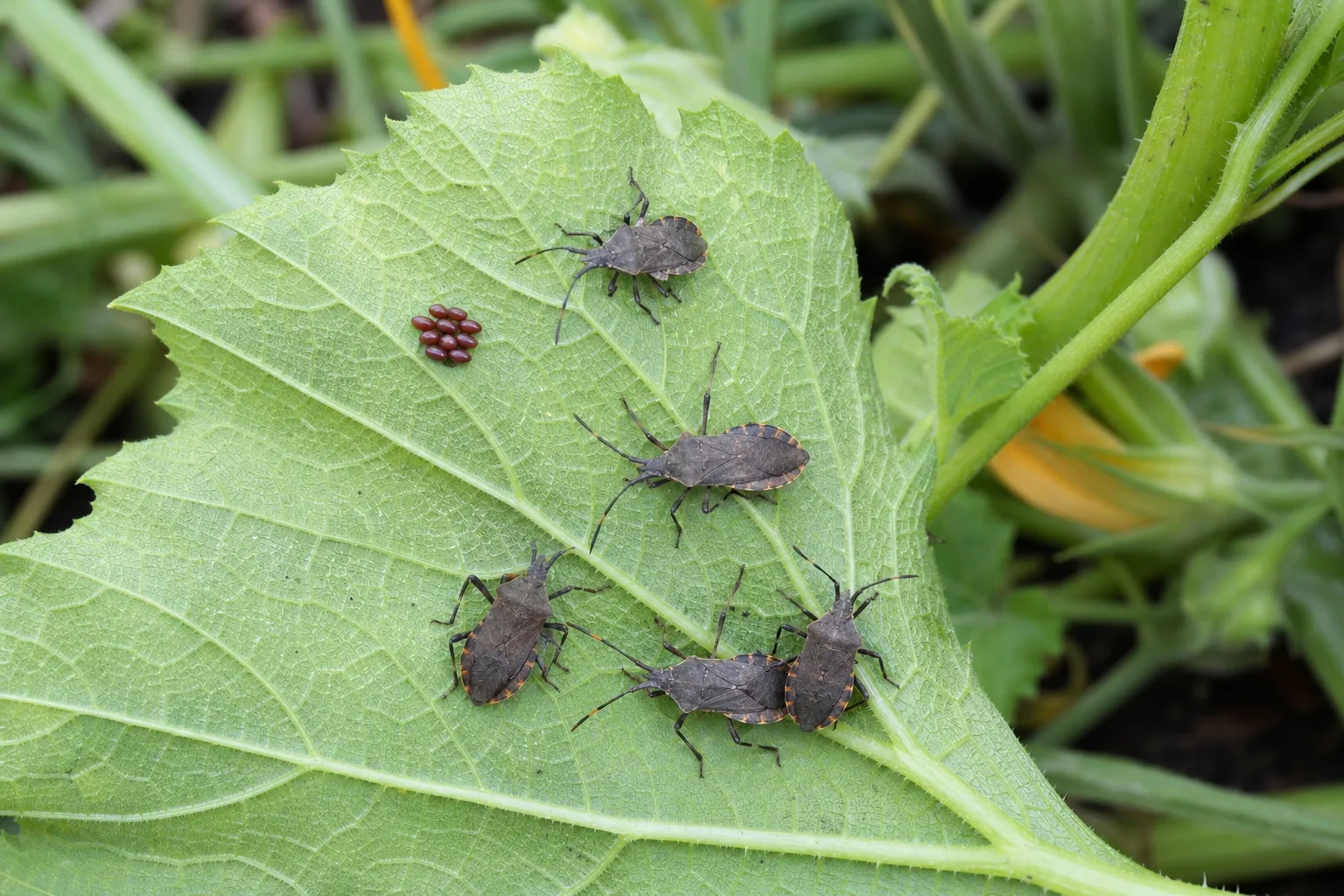
For squash bugs, check leaf undersides every few days once vines begin to run. Scrape off egg clusters, pick up adults and nymphs, and drop them into soapy water in a container away from the plant. A board placed beside a vine can offer a daytime hiding spot; check it early and remove any bugs you find. In a large planting, a trap crop can be useful only when you are willing to inspect and remove pests from it. GrowVeg’s practical guide to squash pests describes using early Blue Hubbard plants to draw squash bugs and borers away from the main planting, but that strategy is not a set-and-forget repellent; an unmanaged trap plant can become another place for pests to multiply.
For vine borers, row covers work only before the moth lays eggs, and they must be removed when squash flowers need pollination. Where borers return every year, gardeners sometimes protect lower stems with collars or select less-susceptible squash types, but resistance varies by species and cultivar. Once a larva is deep inside a stem, removing it is difficult and cutting into the vine can create new damage. Pam Dawling’s Sustainable Market Farming notes practical scouting and crop-protection measures; use local extension advice to select a method suited to your region and the squash you grow.
Water lilies: manage the water, not the flower
Water lilies do not produce mosquitoes. Mosquitoes lay eggs in water, and a pond or container with stagnant water can provide habitat whether or not a lily is planted there. Lily pads may simply make a pond look like the obvious source. Check the entire feature for still pockets, neglected containers, clogged filters, or water collected in a saucer nearby; correct the water problem before removing a healthy aquatic plant.

The CDC’s mosquito-control guidance identifies standing water as a place where mosquitoes lay eggs and recommends working with local mosquito-control or public-health officials when a persistent site is a concern. In a home pond, maintain the circulation and filtration the system was designed for, remove small containers that hold rainwater, and keep the feature clean enough to spot new problems. Do not pour dish soap, oil, or homemade mixtures into a pond; they can damage aquatic plants and animals without reliably solving the breeding problem. If a mosquito-control product is needed, choose one labeled for that water feature and follow the label and local guidance.
Use a simple integrated pest management routine
Integrated pest management, or IPM, is a decision process: identify the organism, monitor its numbers and damage, prevent problems where possible, then choose the least disruptive effective control. It does not mean never treating a pest. It means using treatment when the evidence justifies it and choosing a method that matches the pest rather than spraying every bed on a calendar. Pam Dawling’s field notes describe a similar farm approach: crop choice, beneficial insects, adequate water and fertility, regular scouting, and action when pest numbers become damaging.
Scout for patterns before acting
Pick two consistent days each week to inspect a few plants of every crop. Check new leaves and undersides, count insects on the same number of plants each time, and note whether damage is fresh or old. For small gardens, a simple phone note—“three beetles on five seedlings; new holes doubled since Tuesday”—is enough to show whether the problem is increasing. Check at dusk or after rain for slugs, and look under cabbage leaves for eggs and under squash leaves for bug clusters.
Do not treat beneficial insects as pests because they appear near damaged leaves. Lady beetles and their larvae, lacewings, spiders, and parasitoid wasps feed on or parasitize some garden pests. If aphid colonies have predators among them, leave part of the colony and return to assess the trend. Removing every insect can erase the natural checks that would have reduced the outbreak for free.
Use barriers at the vulnerable stage
Floating row covers and insect netting are most useful when installed before the target pest arrives. Secure the edges to the soil or bed frame, leave enough slack for growth, and lift the fabric to inspect the crop. A barrier put over a plant that already has eggs or insects can protect the pests along with the plant. NC State Extension discusses physical coverings and cultural controls among its pest-management tools, while GrowVeg’s squash guide emphasizes timing for barriers and trap crops.
Match the cover to the crop’s pollination needs. Leaf cabbage can generally remain covered until harvest when grown for heads or greens, but cucumbers, watermelon, and squash need pollinator access during flowering in most home-garden varieties. Mark an expected bloom check on your calendar rather than waiting until fruit fails to set. If a cover is no longer practical, use frequent inspection and hand removal instead of leaving it on by default.
Preserve predators and treat only the target
Start with water for aphids, hand removal for visible eggs and larger insects, sanitation after harvest, and covers for seedlings. If those steps are not enough, identify the pest and use only a product labeled for that crop and pest. Follow the label exactly, especially on edible plants. Insecticidal soaps must contact exposed soft-bodied insects and may injure any insect they reach; they do not work as a general shield after drying. Homemade dish-detergent sprays can burn foliage and are not interchangeable with a labeled insecticidal soap.
Avoid treating open flowers or spraying when pollinators are foraging. “Organic” or “natural” is not the same as harmless, and a product that kills a chewing beetle can also harm beneficial insects. If the pest does not match the label or the plant has a disease-like wilt, ask a local extension office or diagnostic service before applying anything.
Do companion plants solve pest problems?
Flowering herbs, nectar-rich annuals, and mixed plantings can make a garden more useful to beneficial insects and can break up long, dense blocks of one crop. That is a reasonable design goal. It is a different claim from saying that mint, marigolds, garlic, or parsley will repel a named pest from every nearby cucumber, cabbage, or melon. Pest responses vary with species, crop stage, spacing, weather, and how much of the pest’s preferred host is nearby.
Use companion plants for the benefits you can observe: food for pollinators, harvestable herbs, shade for soil, or a planned trap-crop experiment. Keep notes for a season and compare pest levels instead of assuming an anecdote is a guarantee. If you try a trap crop, place it intentionally, scout it more often than the main crop, and decide in advance how you will remove or manage the insects that gather there. Otherwise, a “decoy” can simply extend the buffet.
When removal is the right call
Remove a plant when it is dead or collapsing, when severe injury has stopped useful growth, or when a confirmed disease has no practical cure and leaving the plant risks spreading it. A squash vine that has collapsed from a borer may not be worth repairing; a healthy cabbage with a few holes usually is. A plant with mild, stable feeding and new healthy growth is generally a better candidate for monitoring than for removal.
If you remove a diseased or heavily infested plant, bag and dispose of it according to local garden-waste rules, then clean tools before moving to another bed. Avoid placing obviously diseased tissue in a home compost pile unless you know the pile reaches the conditions needed to destroy the relevant pathogen. At the end of the season, remove crop residues that can shelter pests, but do not strip out all habitat or beneficial flowering plants around the garden. The goal is to reduce the specific carryover problem, not to sterilize the yard.
Mistakes that make outbreaks harder
The first mistake is spraying before identifying the pest. A product intended for caterpillars may miss aphids; a contact spray may kill the lady beetle eating those aphids. The second is waiting until plants are covered with pests before installing a row cover. By then, eggs may be inside the barrier, and repeated opening may be needed to remove them.
Other common errors are treating every hole as severe damage, leaving cucurbit covers on after flowering begins, and assuming companion plants will do the work of scouting. Do not use dish soap, coffee grounds, essential oils, or grease on leaves, pond water, or blossoms as improvised pest remedies. These methods can harm plants or aquatic life and often do not address the insect’s life cycle. Choose a specific action, record what you tried, and check whether the next flush of growth improves.
A seasonal garden checklist
Before planting, rotate crop families when space allows, clear the previous crop’s diseased or pest-ridden residue, and choose varieties suited to your climate. Rotation is most useful when a pest overwinters in or near the same crop bed; it is not a guarantee against mobile adult insects. Start with clean transplants and keep weeds that are known hosts from crowding seedlings, especially around eggplant and brassicas.
At planting, install covers over young eggplant, cabbage, cucumber, watermelon, or squash before feeding starts. Inspect transplants first, seal the fabric edges, and label the bed with the date you need to check the cover again. Through the growing season, scout twice a week, hand-remove small outbreaks, and watch for the specific signs described above. Uncover flowering cucurbits so pollinators can reach blossoms, while keeping cabbage protected if it is still at risk and not being grown for seed.
After harvest, remove crop residue that can shelter the pest you saw, clean tools used on diseased plants, and make a note of which crop and pest were involved. For water gardens, check circulation and small water-holding containers after heavy rain. A few minutes of targeted cleanup and a written observation can make next season’s decisions much easier than pulling out a crop in frustration.
Conclusion
These six plants do not need to be banished simply because insects may feed on them. Eggplant flea beetles, cabbage caterpillars, cucumber aphids and beetles, squash bugs, vine borers, and mosquitoes around water all leave different clues and call for different responses. Protect seedlings early, monitor the parts of the plant where each pest feeds, and preserve beneficial insects while you act.
Remove a plant when injury or disease makes recovery unrealistic, not because a list labels it a pest magnet. With a clear diagnosis, a timely barrier, and a few repeatable scouting checks, you can keep growing the crops and water plants you value while reducing the damage that actually matters.