How to Grow and Care for Plectranthus Plants Year-Round
Plectranthus care varies by type. Identify popular plants, choose the right light and watering routine, propagate cuttings, and avoid frost and soggy soil.

Plectranthus is a broad group of mint-family plants grown for aromatic or velvety foliage, trailing stems, and spikes of tubular flowers. The label can refer to a hanging-basket Swedish ivy, the dark-leaved ‘Mona Lavender,’ or the thick, fragrant leaves of Cuban oregano. Those plants do not all want the same sun, water, or winter treatment, so identify the plant on its nursery tag before following a care schedule.
The reliable starting point is bright light without harsh midday heat, a pot or bed that drains freely, and watering based on how quickly the root zone dries. Then adjust for the plant’s form: fleshy, aromatic leaves usually handle a drier interval than a soft-leaved trailing type. NC State Extension’s profile of Plectranthus amboinicus and UF/IFAS’s Swedish ivy guide show why species-level details matter: even within this familiar group, sunlight and cold response differ (NC State Extension; UF/IFAS Gardening Solutions).
First, identify the kind of Plectranthus you have
Start with the label, not the common name. “Creeping Charlie,” for example, can describe Swedish ivy or an unrelated lawn weed; “Cuban oregano,” “Indian borage,” and “Mexican mint” are names used for the same aromatic species in some references. Ask the seller for the botanical name when the tag only says “spurflower” or “Plectranthus,” especially if you need to know mature size, pet risk, or whether it can stay outside year-round.
Names can also shift as botanists revise plant groups. NC State currently files silver spurflower under Coleus argentatus and notes its former name, Plectranthus argentatus. Older labels and gardening references may still use Plectranthus for the same plant, so searching both names can help you find accurate local information. The genus name is a useful clue, but it is not a complete care instruction.
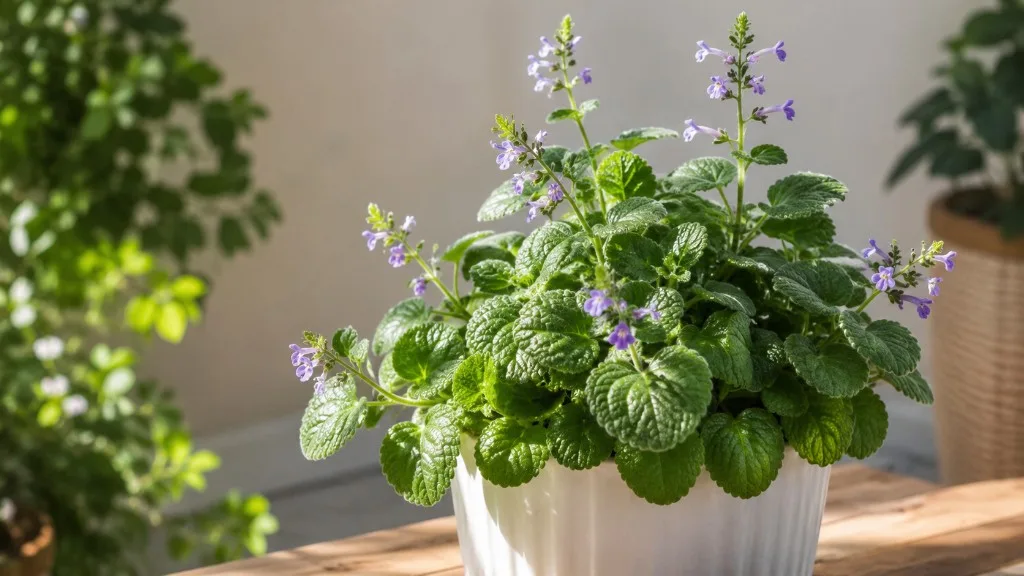
Check the plant’s shape as a second clue. Swedish ivy has flexible, trailing stems and rounded scalloped leaves; ‘Mona Lavender’ grows more upright and is prized for purple flower spikes; Cuban oregano has thick, fuzzy, strongly aromatic leaves. These differences tell you what to expect from pruning, watering, and placement even before you find the exact cultivar.
Choose the light to suit the plant’s leaves and habit
For many Plectranthus grown indoors, begin in bright indirect light or gentle morning sun. An east-facing window is often a straightforward place to try; a bright west- or south-facing window can also work if a sheer curtain or a little distance from the glass softens intense afternoon rays. Watch the newest growth for a few weeks rather than judging the spot from one bright afternoon.
Outdoors, partial shade is a safe default while you learn how your plant responds. Dappled light under a high tree or morning sun with afternoon shade suits many foliage types. That is not a rule for every species: NC State notes that P. amboinicus prefers protection from hot summer sun because full sun can burn its leaves, while some spurflowers tolerate more sun when the soil does not dry out too severely (NC State Extension; Gardening Know How).
Use the plant’s response to fine-tune the location. Long, widely spaced stems and small leaves usually mean the light is too weak; move the pot closer to a bright window or give an outdoor plant more morning sun. Bleached patches, dry brown edges on the window-facing side, or sudden midday droop after moving outdoors point to excessive direct heat. Shift it into filtered light and let new leaves show whether the change helped.
Build a quick-draining pot or garden bed
A container needs drainage holes and a potting mix that lets excess water leave after a thorough drink. A standard indoor potting mix amended with perlite, pumice, or fine orchid bark is a practical starting point; the goal is a loose root zone, not a special recipe. Avoid placing a nursery pot inside a cachepot full of standing water, and empty saucers after watering.
For garden planting, loosen compacted soil and improve drainage before setting the plant in. Plectranthus that like more moisture still need oxygen around their roots; “moist” does not mean permanently saturated. In heavy clay, a raised bed or container may be safer than trying to correct a waterlogged planting hole with a small amount of amendment.
Repot when roots circle the bottom, water runs straight through a dense root ball, or the plant dries much faster than it used to. Move up only one pot size and keep the crown at its previous soil level. A much larger pot holds unused wet mix around a small root system, which can keep the center damp long after the surface looks dry.
Water to match growth and the plant’s own leaves
Do not water by a fixed weekly calendar. Press a finger into the mix: when the upper inch is dry, water a Swedish ivy thoroughly and allow water to drain; if the mix still feels cool and damp, wait and check again. UF/IFAS uses this top-inch test for Swedish ivy and emphasizes that the plant should not sit in water (UF/IFAS Gardening Solutions).
Thick, succulent-like foliage changes the rhythm. Cuban oregano stores water in fleshy leaves and stems, so it usually needs a longer dry-down than a soft, trailing Swedish ivy. If you water both plants on the same schedule, the Cuban oregano is the one more likely to stay wet too long. Conversely, a hanging basket in hot, breezy weather may dry much faster than a compact plant in a cool room.
Check the whole root zone, not just the surface crust. A small wooden skewer pushed a few inches into the pot can show whether the middle is still damp; lift the pot to learn how its weight changes between watering. When it is time, soak the mix evenly until water exits the drainage holes, then discard the runoff. Frequent small sips can leave dry pockets deeper in the pot and encourage roots to stay shallow.
Keep temperatures warm and treat frost as a deadline
Many Plectranthus are frost tender, but cold tolerance depends on the species and cultivar. The UF/IFAS Swedish ivy guide advises protecting the plant from freezing temperatures; its note that Swedish ivy may tolerate brief exposure around 40°F should not be applied to the entire genus (UF/IFAS Gardening Solutions). Check a reliable local or botanical profile for your exact plant before treating it as a perennial outdoors.
If winters freeze where you live, grow the plant in a movable container or take cuttings before cold weather arrives. Bring the pot indoors before frost is forecast, inspect leaf undersides and stem joints for insects, and keep it separate from established houseplants at first. Outdoors, place it back only after frost danger has passed and acclimate it over several days, starting in shade and increasing light gradually.
Indoor plants also react to sudden changes. Cold window glass, a draft from an exterior door, or hot air from a vent can make leaf edges brown or cause leaves to drop even when watering is correct. Keep the plant in a stable bright spot and avoid letting a just-watered pot sit against a cold window on winter nights.
Feed only while the plant is actively growing
A Plectranthus in fresh potting mix may not need immediate feeding. Once it is producing new growth in spring and summer, a balanced, water-soluble houseplant fertilizer used according to its label is generally easier to manage than a strong, frequent dose. Reduce or stop feeding when growth slows in winter, especially in a dim room where extra nutrients cannot be used well.
Outdoor plants growing in decent soil may need little added fertilizer. If a plant is leafy but reluctant to flower, do not automatically increase feed: too much nitrogen can favor leaves over blooms. UF/IFAS mentions excess nitrogen and insufficient light as possible reasons Swedish ivy may not bloom; adjust light and feeding gradually instead of adding high-phosphorus fertilizer without checking the product label and soil context (UF/IFAS Gardening Solutions).
Pale growth is not proof of nutrient deficiency. Inspect the roots and drainage first, then check light, recent repotting, and whether the plant is growing actively. Fertilizer cannot repair roots that are oxygen-starved, and applying it to very dry soil can stress the root tips.
Prune for shape, branching, and healthy new growth
Plectranthus often responds well to pinching, but the right cut depends on the shape you want. For a fuller hanging plant, trim a long stem just above a leaf pair; for an upright shrub-like plant, shorten the tallest stems to encourage branching lower down. Use clean, sharp scissors and avoid removing so much foliage at once that the plant cannot photosynthesize and recover.
Remove dead leaves and spent flower spikes as they fade. This keeps the plant tidy and gives you usable stem cuttings, but it is not a guarantee of repeated blooms. UF/IFAS Extension Charlotte County notes that pinching can make ‘Mona Lavender’ bushier and improve its flowering display; the same response is a useful cue for other actively growing, branching types, not a reason to shear every plant on a schedule (UF/IFAS Extension Charlotte County).
If a plant has become leggy, first correct inadequate light, then prune it back in stages. Cutting a shade-grown plant hard and leaving it in the same dim corner usually produces another round of weak stems. Save healthy tips as propagation material so a plant that does not refill can be replaced without buying another one.
Propagate with stem cuttings or division
Stem cuttings are the simplest way to make more of most trailing or shrubby Plectranthus, and they preserve the parent plant’s traits better than seed. Choose a healthy, non-flowering stem and cut just below a node—the point where a leaf joins the stem. A 3- to 5-inch piece with several nodes gives you room to remove lower leaves and still leave enough stem to anchor in a small pot.
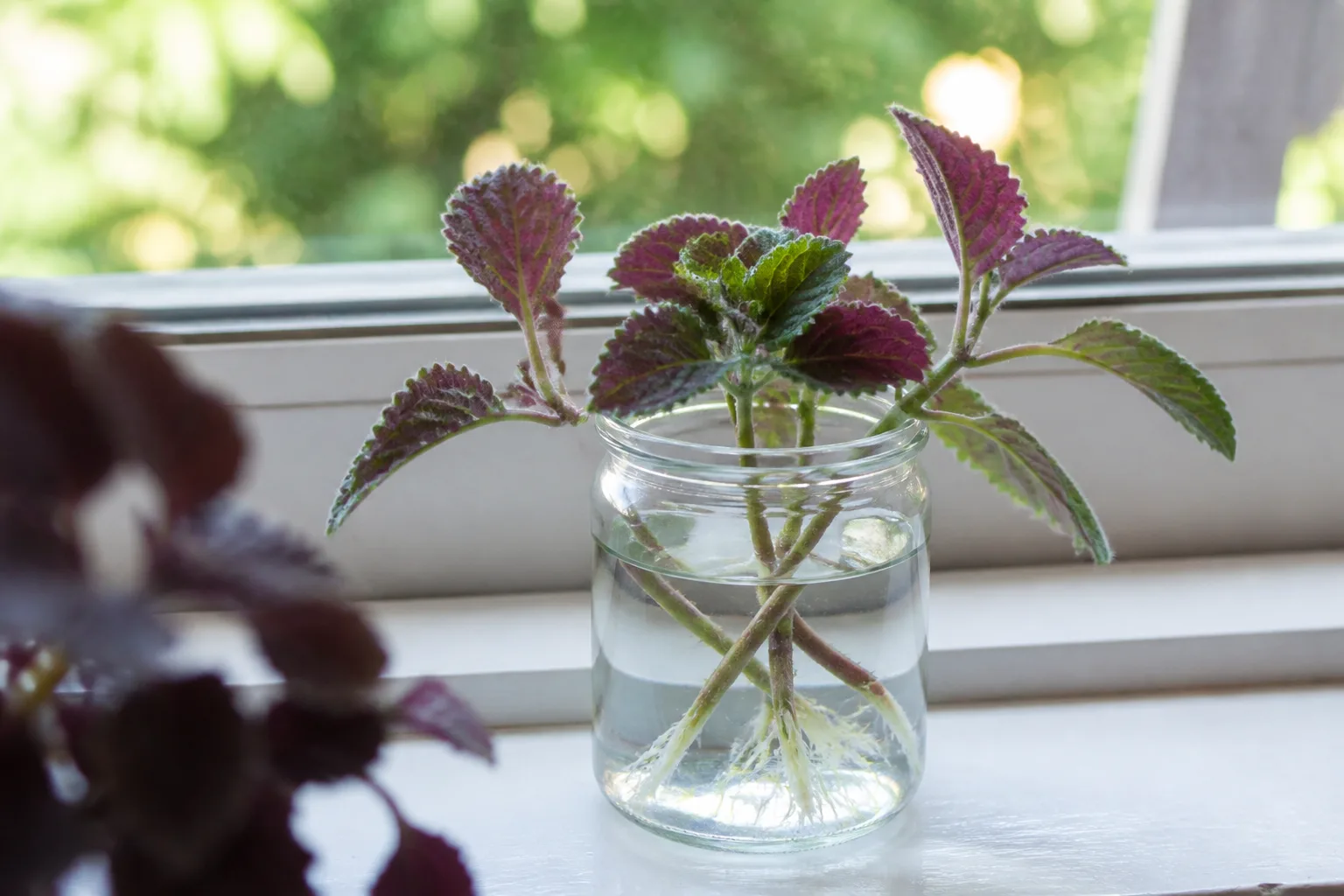
Set the cutting in a small container of lightly moist, free-draining mix, with at least one bare node under the surface and leaves above it. Keep it warm in bright indirect light; a loose clear cover can slow drying, but vent it daily and remove it if condensation stays heavy. New growth is a better sign of rooting than a fixed number of days, since temperature, stem maturity, and species all affect how quickly roots form. UF/IFAS reports that Swedish ivy stem tips can root within about a month in clean rooting media (UF/IFAS Gardening Solutions).
Water-rooting is convenient when you want to see roots form, but do not leave a cutting in water indefinitely. Change the water if it becomes cloudy, move the cutting to potting mix once roots are established, and keep the mix just moist while it adjusts. A soil-rooted cutting avoids that transition and is often a simpler choice for fleshy-stemmed plants. If the base turns dark or mushy, discard it and take a fresh cutting from firmer, healthy growth.
Division works when a plant forms several rooted crowns or has runners that can be separated with roots attached. Lift the plant during active growth, ease apart a naturally separate section, and pot or replant it at the same depth. Do not divide a single woody stem just to make more plants; use cuttings instead. If you grow a named cultivar for its flowers or leaf color, cuttings are also the more dependable way to keep that cultivar true to type. Fine Gardening likewise lists stem-tip cuttings and spring division among the general propagation options for Plectranthus (Fine Gardening).
Decide whether to grow indoors, outdoors, or both
Indoor growing is the easiest way to protect a frost-sensitive plant and control its drainage. Choose it if you have a bright window, want a trailing basket, or live where winters are too cold for the plant’s verified hardiness range. Rotate the pot occasionally so new growth does not lean toward the light, and do not assume a humidifier is required unless the leaves show a persistent problem that you have ruled out as watering, pests, or temperature stress.
Outdoor growing gives many Plectranthus more space and light for dense growth, but it also increases exposure to heat, wind, heavy rain, and pests. A container on a shaded patio is a flexible middle ground: it can go outside in warm weather, move into shade during a heat wave, and come indoors before frost. If planted in the ground, record the cultivar name and local hardiness guidance rather than relying on the genus label alone.
A plant moved outdoors needs a transition. Start it in a sheltered, shaded spot for a few days, then gradually add morning sun if its leaves remain undamaged. Reverse the process when bringing it indoors: check for insects, remove dead material, and give it a bright spot away from both cold drafts and heating vents. Sudden changes in light and temperature are common reasons a healthy-looking plant starts dropping leaves after a move.
How common Plectranthus types differ
Common names and botanical names do not always line up neatly, and labels can lag behind taxonomic changes. Use the table as a practical shortlist, then verify the exact name on your plant before making a permanent landscape or pet-safety decision.
| Commonly sold type | What it looks like | Useful starting point |
|---|---|---|
| Swedish ivy | Trailing stems, rounded scalloped leaves; white or pale-purple flowers | Bright indoor light; let the top inch of mix dry before watering; protect from frost |
| ‘Mona Lavender’ | Upright, deep green leaves with purple undersides and lavender flower spikes | Bright filtered light or part sun; pinch for branching; move or protect before frost |
| Cuban oregano / Indian borage | Thick, fuzzy, aromatic leaves and spreading stems | Free-draining soil; protect from hot afternoon sun and prolonged wetness |
| Silver spurflower | Velvety silver-green leaves and upright pale flowers | Partial shade and moist but well-drained soil; often listed as Coleus argentatus |
| Blue spurflower forms | Upright, shrubby growth with blue-purple flower spikes | Dappled light to partial shade; check local spread and hardiness information |
The table is a starting point rather than a universal care chart. NC State lists Cuban oregano as a fast-growing, frost-tender perennial with fragrant leaves, and its profile gives a broad size range of about 1 to 3 feet; by contrast, its silver spurflower profile describes an upright plant with velvety silver foliage and a different current genus name (NC State Extension: Cuban oregano; NC State Extension: silver spurflower). Fine Gardening also describes the group as including annuals, perennials, semi-succulents, and shrubs, which explains why a single universal watering rule falls short (Fine Gardening).
‘Mona Lavender’ is a popular ornamental selection, not a synonym for every Plectranthus. UF/IFAS Extension describes it as a cultivar that can grow to around 2 feet, work in containers or beds, and benefit from pinching; Swedish ivy is better known for its flexible trailing stems. If your plant’s label conflicts with a generic web profile, compare the leaf shape, growth habit, and botanical name before changing its routine.
Encourage flowering without sacrificing foliage
Flowers are not the only measure of a healthy plant. Some Plectranthus are grown mainly for leaves, while others produce showy spikes; age, light, pruning, and season all influence how much they bloom. Keep the plant growing strongly first with appropriate light and drainage, then remove spent spikes if you want a neater look or to encourage branching.
Photoperiod matters for some selections, but it is not safe to treat “12 hours of light” as a genus-wide switch. UF/IFAS Extension Charlotte County reports that shorter days trigger flowering in ‘Mona Lavender’ and describes its flowering season in Florida as extending from late summer into spring. That timing is regional; a plant in a different climate or indoor setup may flower at another time, so avoid cutting its light drastically just to force blooms (UF/IFAS Extension Charlotte County).
If a plant has lush leaves but few blooms, check whether it receives enough natural light and whether you have been feeding heavily with a high-nitrogen fertilizer. If stems are long and sparse, improve light and pinch selectively rather than removing every flower stalk. A bloom-free season is not automatically a sign that the plant is unhealthy, especially for foliage-first types.
Troubleshoot yellow leaves, wilting, and brown patches
When leaves turn yellow, check the soil before watering again. If the root zone is wet and the plant is losing lower leaves, empty the saucer, make sure drainage holes are open, and let the mix begin to dry; if the roots smell sour or look dark and soft, root rot may already be present. A plant that wilts in wet soil is not asking for another drink—take healthy cuttings as insurance and inspect the roots before deciding whether the parent plant can recover.
If the mix is dry all the way through and the stems are still firm, water thoroughly and see whether the plant perks up. A wilted plant that does not recover after watering may have damaged roots, while a drooping plant with dry, crispy leaves may be drying too quickly in sun or wind. Compare the affected leaves’ position: damage on the bright window side points toward scorch; widespread soft yellowing after repeated watering points more strongly toward root stress.
Brown patches can follow hot direct sun, cold drafts, mechanical damage, or a leaf-spot disease. Move a sun-scorched plant to filtered light and keep water off the foliage when leaves will stay wet for hours. Remove badly damaged leaves with clean scissors, but do not strip the plant of healthy foliage; new growth after correcting the cause is a better test than the appearance of leaves that were already injured.
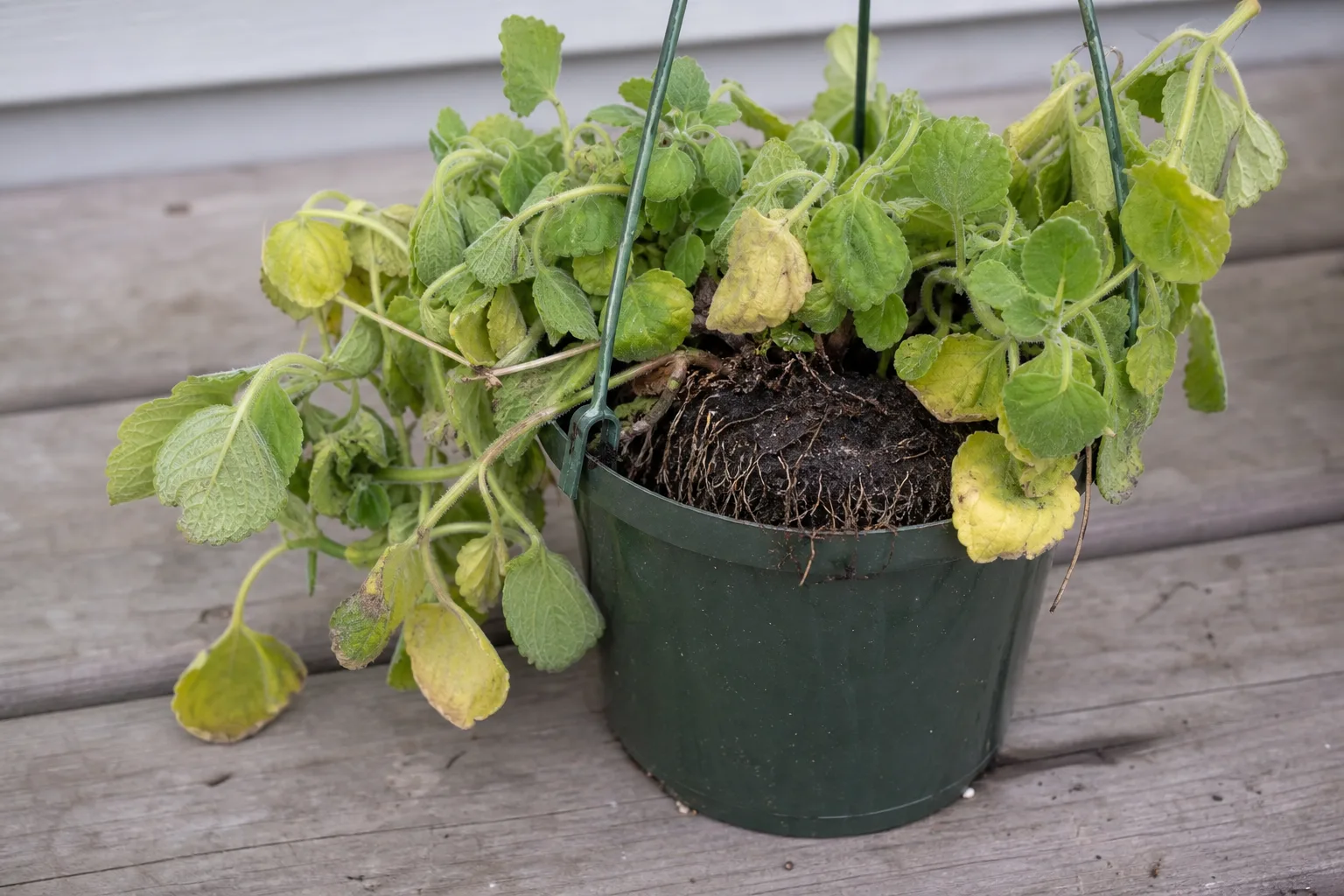
Keep a simple note of when you watered, moved, or repotted the plant if the decline continues. If symptoms spread despite stable care, inspect leaf undersides and stem joints for pests, then isolate the plant so insects do not move to nearby houseplants. Root problems, sun damage, and pests can look similar from a distance, so change one condition at a time rather than adding fertilizer, pesticide, and water all at once.
Check for pests and leaf diseases early
Mealybugs hide as white cottony clusters in leaf joints; spider mites can leave pale stippling and fine webbing beneath leaves; aphids and whiteflies may gather on new growth. Inspect both leaf surfaces and the stem tips when you bring a plant indoors, after pruning, or whenever its growth becomes distorted. A weekly glance is usually enough to catch a small population before it spreads through a group of plants.
First isolate the affected pot and rinse accessible insects off with a steady stream of water. For a persistent infestation, use only a pesticide labeled for the plant and its setting, and follow the label’s mixing, repeat-application, and safety directions; “natural” products can still injure foliage or pollinators. Keep any treatment away from pets and food crops unless the label specifically allows that use.
Leaf spots and stem or root rot are more likely when foliage stays wet, plants are crowded, or the potting mix drains poorly. Water near the soil surface, give leaves room to dry, remove fallen debris, and discard badly rotted tissue. Fine Gardening lists spider mites, mealybugs, leaf spots, and root rot among possible problems for the genus, while NC State identifies spider mites and mealybugs as potential pests of Cuban oregano (Fine Gardening; NC State Extension).
Keep pets and local ecosystems in mind
Do not assume every plant called Plectranthus is safe for pets. ASPCA Animal Poison Control lists Indian borage—also known by common names such as Spanish thyme—as toxic to dogs, cats, and horses; its listing identifies essential oils as the toxic principle and reports vomiting, diarrhea, depression, and reduced appetite among possible clinical signs (ASPCA Animal Poison Control). If an animal chews an unidentified plant, keep the label or a clear photo and contact a veterinarian or animal poison service promptly rather than waiting for symptoms.
A culinary name is not enough to identify a safe plant. NC State notes that Cuban oregano leaves are used as food, but ornamental plants may be mislabeled or treated with products not intended for edible crops. Only use leaves from a positively identified, food-grown plant, and follow the pesticide label if it has been treated.
Some spurflower types can spread beyond the planting area, and risk varies by species and location. Before planting one in the ground, check with a local cooperative extension or invasive-plant authority; if its status is uncertain, grow it in a container and dispose of viable cuttings securely rather than leaving stems where they can root. Gardening Know How likewise advises checking local extension guidance for spurflowers and notes that some types spread readily from seed or stem fragments (Gardening Know How).
Conclusion
Plectranthus care starts with the plant’s identity. Give most types bright filtered light, a draining root zone, and water only when the mix has begun to dry; then adjust for thick leaves, trailing stems, local heat, and the plant’s verified cold tolerance. That approach prevents the two most common setbacks: scorching a shade-grown plant and keeping its roots wet for too long.
Read the botanical name on the tag, test the soil before watering, and decide whether the plant can live safely outdoors through your winter. Prune or propagate during active growth, check the undersides of leaves when problems appear, and verify pet and invasive-plant risks for the exact species. With those checks, you can grow Plectranthus as a houseplant, patio container, or seasonal garden feature without treating the whole group as one interchangeable plant.