Syngonium Pink Watering: Schedule, Checks & Mistakes
Syngonium Pink Watering: Schedule, Checks & Mistakes
Syngonium Pink Watering: Schedule, Checks & Mistakes
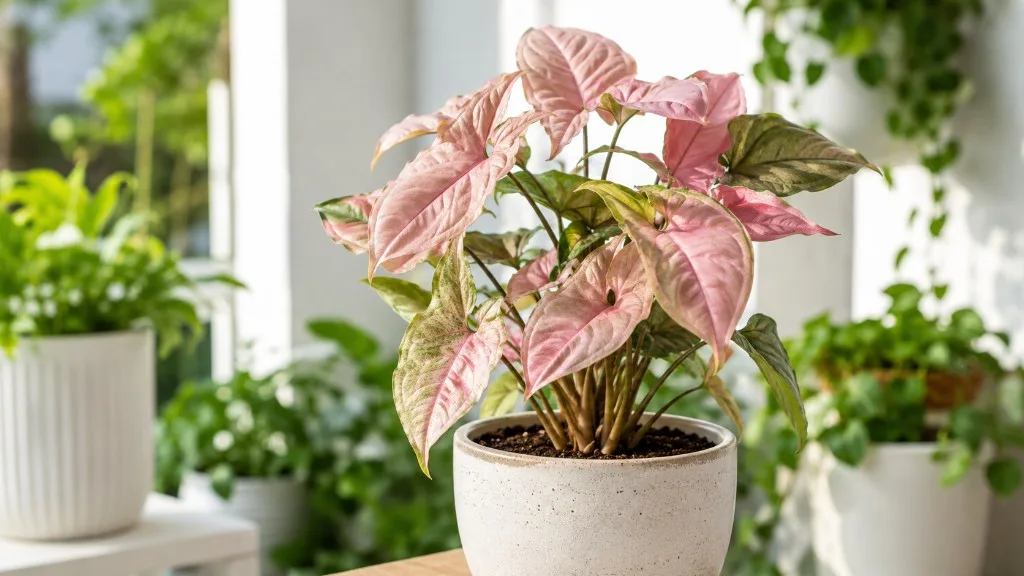
Syngonium Pink watering is less about memorizing a day of the week and more about reading what the pot is doing right now. Syngonium podophyllum ‘Pink’ - the blush-toned arrowhead vine sold as Pink Syngonium - has soft, arrow-shaped leaves that look like they want constant moisture. That appearance tricks a lot of growers. In practice, Syngonium Pink overview is an aroid with thick, oxygen-hungry roots that rot quickly when soil stays saturated, especially in low light, oversized pots, or decorative cachepots that trap runoff. Water thoroughly when the mix has dried appropriately, let the pot drain completely, and adjust the interval as light, temperature, and season change. That is the whole game.
The practical goal is straightforward: water when the top inch of well-draining aroid mix feels dry, confirm with a pot-weight or skewer check if you are unsure, soak until water runs from the drainage holes, and empty the saucer or cachepot immediately. In bright, warm months that might mean every five to seven days for a small pot; in a cool, dim winter room it might stretch to ten to fourteen days or longer. A calendar reminder to check the plant is fine. A calendar command to water regardless of soil moisture is how yellow leaves, mushy stems, and sour-smelling mix start.
This guide covers when to water, how to check moisture accurately, how to water cleanly, what overwatering and underwatering actually look like on Pink Syngonium, and the mistakes that cause more damage than skipping one watering ever would.
If symptoms persist, see the Leggy Growth on Syngonium Pink guide.
Why Watering Decides Whether Your Pink Syngonium Thrives
Water is the care decision that touches every other variable. Light determines how fast the plant uses moisture. Soil texture determines how long moisture lingers around the roots. Pot size determines how much dry-down the mix needs before the next drink. Temperature and humidity change evaporation from the soil surface and transpiration from the leaves. Get watering wrong and no amount of fertilizer, misting, or repositioning will rescue a plant whose root zone is either suffocating or repeatedly collapsing from drought stress.
Pink Syngonium is often marketed to beginners because it tolerates average home conditions better than many finicky tropicals. That tolerance has a limit. Missouri Botanical Garden notes that overwatering is among the most common causes of houseplant decline, because saturated soil excludes oxygen and roots cannot function normally (Missouri Botanical Garden - Houseplant Care). For an aroid like Syngonium, that risk is not theoretical. Yellow lower leaves, limp petioles despite damp soil, and a stalled flush of new pink growth are classic signals that the root system is struggling - not that the plant needs another splash on top.
The flip side matters too. Syngonium is resilient enough to bounce back from a single dry spell. Leaves may droop dramatically, then perk within hours after a thorough soak. Repeat that drought cycle, though, and fine roots die back. The plant then reacts badly when water finally returns, because a weakened root system cannot absorb moisture evenly. Good watering protects both the roots and the pink color you bought the plant for. Pale new leaves and washed-out variegation often trace back to stress from bad moisture rhythm, not a mysterious “lack of pinkness” that a product label promises to fix.
What Makes Syngonium Pink Different From a Thirsty Foliage Plant
Pink Syngonium is not a fern, and it is not a peace lily. Ferns and many moisture-loving plants evolved for consistently damp, organic surfaces. Syngonium is a tropical aroid - in the same broad Araceae family as philodendrons, monsteras, and anthuriums - with a growth habit shaped by climbing and rooting along tree trunks and forest floor litter in Central and South America. In that native context, roots get periodic rain, fast drainage through loose debris, and constant airflow. They do not sit in a sealed plastic pot with dense peat that stays wet for a week.
The cultivar sold as Syngonium Pink is selected for pink to salmon variegation on arrowhead-shaped juvenile leaves. Compared with Neon Robusta, Pink Syngonium often reads bolder and less pastel, though exact color depends on light and leaf age. As the plant matures, leaves can develop more lobes and the vine may want support. None of that changes the watering logic: roots still need a wet-then-dry cycle, not permanent dampness. Soft, thin-looking foliage suggests humidity and steady care, but it does not mean the soil should never dry.
University of Wisconsin-Madison Extension describes root rots of houseplants as problems that develop when soil remains too wet for too long, especially in cool conditions or poorly drained containers (University of Wisconsin-Madison Extension - Root Rots of Houseplants). Syngonium fits that pattern closely. The plant can look fine above soil while roots below are already compromised. That is why surface-level habits - watering because the leaves look soft, or because it has been seven days - fail so often.
Aroid Roots and Native Moisture Patterns
Aroid roots are thick, fleshy, and built to explore airy, chunky substrates. They absorb water efficiently during the wet phase, then rely on oxygen between drinks. When mix stays saturated, those roots shift from white and firm to brown, mushy, and foul-smelling as anaerobic conditions take over. Pythium and other water molds commonly associated with overwatered houseplants exploit exactly that environment.
In the wild, a Syngonium root might dry slightly between rain events even while humidity stays high. Indoors, humidity around the leaves can be moderate while the potting mix two inches down remains wet for days. Growers sometimes try to compensate by misting leaves or running a humidifier while ignoring a soggy root zone. Humidity helps leaf edges in dry heated air, but it does not replace proper soil dry-down. Water the root zone on the plant’s schedule, not the leaf surface on yours.
When to Water Syngonium Pink
Water Syngonium Pink when the top inch of the potting mix is dry and the deeper root zone is approaching dry but not bone-hard. That is the starting rule most experienced aroid growers use for container plants in well-draining mix, matching UF/IFAS guidance to allow the potting surface to dry slightly before irrigating. Pour only after you confirm dryness with a finger, wooden skewer, or noticeable lightening of the pot’s weight. If the top feels dry but the pot still feels heavy and cool at the base, the center of the mix is likely wet - wait.
Some sources recommend waiting until the top half of the soil dries, especially for established plants in deep pots with chunky aroid mix. That deeper threshold reduces risk in low light or winter when roots use water slowly. Both approaches are valid. The difference is not ideology; it is pot depth, mix structure, and current growth speed. A shallow 4-inch nursery pot dries fast; a 10-inch ceramic pot with two inches of pebble cachepot water sitting underneath behaves like a different ecosystem entirely.
Never water because the calendar says Tuesday. Never water because the leaves drooped without checking whether the soil is wet or dry. Drooping is a stress signal, not a directional arrow. Limp leaves with dry, lightweight soil point to thirst. Limp leaves with wet, heavy soil point to root trouble - and adding more water makes that worse.
The Top-Inch Dry Rule and When to Go Deeper
The top-inch dry rule works well for Pink Syngonium in a standard 6-inch pot with aroid-style mix containing bark, perlite, or coco chips. Push your finger to the first knuckle. If the surface is dusty dry and the material below feels barely cool without clinging moisture, it is time to water. If the surface looks pale and dry but your finger comes up with damp crumbs stuck to it, the surface has dried faster than the root zone - hold off.
Move to a deeper dry-down check - two to three inches, or roughly the top third in a tall pot - when any of these apply: the plant sits in low light and has yellowed while soil stayed wet near the bottom; winter growth has slowed sharply; you recently repotted into a much larger container; or the mix is dense peat-heavy soil that compacts and holds water at the core while the top looks ready. In those cases, insert a bamboo skewer to the bottom, leave it ten seconds, pull it out, and feel it along the length. Moisture halfway down means wait. Dry to the middle with only slight coolness at the tip often means go.
Pink Syngonium in active summer growth with Syngonium Pink light guide can safely use the shallower trigger because roots are pulling water steadily and new leaves are unfolding. The same plant in a north-facing winter window may need the deeper trigger even if both pots are the same size. Let the plant’s current metabolism - visible as new leaf production - guide which threshold you use.
How Often You’ll Actually Water
There is no honest universal answer in days. How often you water Syngonium Pink depends on pot size, mix composition, light intensity, room temperature, humidity, and season. In warm, bright conditions, many growers water every five to seven days for a medium pot. In cooler, dimmer months, ten to fourteen days is common, and some plants in large pots go longer. A plant under grow lights in a warm room may revert to a summer pace even in January.
What you can standardize is the check frequency, not the water frequency. Inspect moisture every three to four days in active growth, weekly in winter, and daily for the first two weeks after Syngonium Pink repotting guide while you learn the new dry-down curve. Over time you will recognize your plant’s rhythm: the pot weight when fully soaked, the weight when ready, the slight leaf softness that appears just before the ideal window closes.
| Condition | Typical check interval | Typical watering range |
|---|---|---|
| Bright indirect light, warm room, 6-inch pot | Every 3–4 days | Every 5–8 days |
| Medium light, average home, 6-inch pot | Every 4–5 days | Every 7–10 days |
| Low light or cool winter room | Weekly | Every 10–14+ days |
| Recently repotted into larger pot | Every 2–3 days | Often 10–14+ days until roots fill |
| Small pot, hot windowsill (acclimated) | Every 2–3 days | Every 4–6 days |
Treat the table as a starting framework, not a contract. Your dry closet, terracotta versus plastic pot, and whether the plant is root-bound all shift the numbers. Two Pink Syngoniums in the same room can dry on different schedules if one hangs in a breezy window and the other sits inside a glazed ceramic cachepot.
Soil Moisture Checks Before Every Drink
Reliable Syngonium Pink watering starts with a consistent moisture check you trust more than appearance alone. Leaves lie. Soil surfaces lie even more often - they dry first while the middle stays wet. Pick one primary method, combine it with pot weight as you build experience, and run the same check every time before you reach for the watering can.
The goal is to answer one question: has enough of the root zone dried to allow oxygen back in without stressing the plant into drought? You are not chasing dust-dry soil from top to bottom. You are chasing a rhythmic cycle where roots get a full drink, then access air before the next soak.
Finger, Skewer, and Pot-Weight Tests
The finger test is the fastest tool. Insert your index finger to the first or second knuckle depending on which dry-down rule you are using. Dry, loose mix that falls away cleanly means water. Cool, clingy mix means wait. If you dislike messy fingers, use a wooden skewer or chopstick the same way: push to the bottom, pause, withdraw, and feel for dampness along the shaft. Mark your skewer with a pencil line at the one-inch depth if you want consistency.
The pot-weight test is the skill that separates guesswork from calibration. Lift the pot right after a thorough watering - that is your heavy baseline. Lift it daily until you feel a clear drop in weight while the top still looks slightly muted in color. That middle weight, when the plant is ready or nearly ready, becomes your signal. Terracotta pots make this easier because walls breathe; glazed ceramics hide moisture longer and punish calendar watering.
Electronic moisture meters can help, but cheap probes often lie in chunky aroid mix where air gaps read as “dry.” If you use a meter, verify its readings against finger and weight tests for a few weeks before trusting it alone. No tool replaces observing the plant over time: how fast new pink leaves emerge, whether stems stay firm, whether older lower leaves yellow in clusters.
How to Water Syngonium Pink Step by Step
When checks say go, water thoroughly in one session rather than giving small daily splashes. Light top watering keeps the surface damp while deeper roots stay unevenly moist or never fully hydrate - a pattern that encourages weak root distribution and fungus gnats on the soil surface.
Use room-temperature water when possible. Cold water shocks warm roots and can slow uptake. Pour slowly at the soil surface, moving around the stem base until you see runoff from drainage holes. For very dry, shrunken mix that has pulled away from the pot edge, water once, wait ten minutes, then water again so the material re-expands and absorbs evenly instead of channeling down the gap.
If your tap water is very hard or heavily chlorinated and you notice persistent brown leaf tips despite good moisture rhythm, try filtered or rainwater for a month and compare new growth. Syngonium is not the most fluoride-sensitive aroid, but chemical stress plus moisture stress compounds quickly.
After soaking, empty the saucer within thirty minutes. If the plant sits in a decorative outer pot, lift the nursery pot out, dump standing water, and do not let the inner pot rest in a permanent puddle. That hidden reservoir is one of the most common causes of “I only water once a week but my Syngonium is dying” - the week interval is fine; the trapped runoff is not.
Some growers prefer bottom watering - setting the pot in a basin of water for twenty to thirty minutes so the mix wicks upward. That works if you still top-water occasionally to flush salts and if you remove the pot from the basin as soon as the surface glistens. Bottom-only routines without occasional top flush can accumulate minerals in the root zone over months.
Avoid wetting foliage unnecessarily. Pink Syngonium leaves can spot or develop fungal marks if they stay wet overnight in cool rooms. Water the soil, not the leaves. If you must clean dust, do it in morning hours so leaves dry before evening.
Seasonal Watering: Active Growth vs Cool Months
Syngonium Pink does not go fully dormant like a deciduous outdoor tree, but it slows markedly when light drops and temperatures cool. Metabolic demand falls. Roots pull less water. The same pot that needed a drink every six days in July may still feel heavy twelve days later in February. Seasonal adjustment is not optional - it is the difference between a stable plant and chronic winter root rot.
During active growth - typically spring through early fall for most homes, or any period when you see steady new leaves - maintain your shallower dry-down check and water thoroughly on the rhythm your pot establishes. This is also when the plant can handle the occasional missed check better; roots are regenerating and shoots are driving water flow.
During the cool, dim season, shift three habits at once: use a deeper dryness check before watering, extend the interval even if it feels uncomfortably long, and reduce or eliminate fertilizer unless strong grow lights keep the plant in obvious active growth. Overwatering in winter is so common that extension guides list it as a primary houseplant killer because growers maintain summer enthusiasm while the plant has quietly downshifted.
Summer and Winter Rhythms in Practice
In summer, pair watering with heat awareness. A Pink Syngonium on a bright shelf away from AC may dry two days faster than one directly under a cold vent, where soil evaporation slows but leaf transpiration can still stress the plant. AC-dry air can crisp leaf tips even when soil moisture is fine - that is a humidity issue, not an invitation to water more.
In winter, watch for the “wet and cold” combination. Soil that stays damp below 65°F (18°C) root zone temperature invites rot faster than the same moisture at 72°F (22°C). If your plant sits on a cold windowsill above a radiator cycle, the stress is environmental as much as hydrological. Sometimes the fix is moving the pot six inches inward, not changing the watering volume.
When days lengthen in late winter and new pink-tinged leaves appear, resume your summer check frequency gradually. Do not flood the plant the first sunny week; increase attention first, then volume, as root activity confirms it is ready.
Overwatering Signs and What to Do First
Overwatering Syngonium Pink shows up before roots are fully gone if you know what to look for. The classic pattern is yellowing lower leaves while soil remains wet, sometimes accompanied by limp stems and petioles that feel soft rather than merely flexible. New growth stalls or emerges smaller and paler. The soil may smell sour or musty. Fungus gnats hover at the surface. In advanced cases, the base of the stem turns mushy and leaves drop in clusters.
The confusing case - and the one that sends growers to water again - is wilting with wet soil. That usually means roots are damaged and cannot take up water, not that the plant needs more. If you water a wilted Syngonium without checking the skewer, you can drown an already compromised root system. Always pair leaf signals with soil evidence.
When you suspect overwatering, stop watering immediately and inspect. Slip the plant from the pot if it is small enough. Healthy roots are white or tan, firm, and smell like earth. Rotten roots are brown-black, slimy, and may fall away when touched. If damage is mild and some firm roots remain, let the mix dry toward the appropriate dry-down point before the next moderate drink, improve airflow, and ensure drainage. If more than half the root mass is mushy, trim rot with clean scissors, repot into fresh airy aroid mix in a pot sized to the remaining roots, and withhold water for a few days until the plant stabilizes.
Do not fertilize a stressed, overwatered plant. Do not mist heavily to “comfort” it. Reduce load, fix drainage, and let recovery happen at the plant’s pace.
Underwatering Signs and Safe Recovery
Underwatering is usually easier to read and easier to fix. Leaves lose turgor and droop noticeably, sometimes curling inward at the edges. The pot feels feather-light. Soil pulls away from the sides or becomes hard and pale on top. Older leaves may turn crispy brown at the margins while the plant overall looks deflated. Unlike rot-related wilting, these signs align with dry soil you can see and feel.
Pink Syngonium often recovers within hours of a thorough soak if roots are still healthy. Water slowly until the mix rehydrates, let excess drain, and wait before judging the bounce-back. If leaves perk by the next morning, you found the problem. If they stay limp with now-moist soil, revisit the overwatering-rot possibility - chronic underwatering can kill fine roots too, and the symptom overlap is real.
For severely dry, hydrophobic mix that sheds water down the sides, bottom-soak the pot in a basin for thirty minutes, then top-water to settle the medium. Going forward, avoid letting the plant crash repeatedly. One dry crisis is survivable; five in a row produces a stunted, pale plant that no watering perfection fully restores in the same season.
Crispy tips alone are not always underwatering. Dry air, salt buildup, and fluoride can mimic that edge burn. Cross-check soil dryness before you increase watering frequency.
Water Type, Temperature, and Pink Leaf Health
Water quality rarely matters as much as water timing and quantity, but it can matter at the margins. Municipal tap water with high chlorine is usually fine for Syngonium if it sits overnight in an open pitcher. Persistent brown tips on new leaves despite correct dry-down and good humidity may improve with filtered or rainwater - test for a month rather than assuming forever.
Temperature shocks roots. Room-temperature water integrates smoothly with indoor root zones. Ice-cold tap water in winter can slow uptake and stress a plant already struggling with low light. Warm water is not necessary; not-cold is enough.
Pink variegation itself does not change how much water the plant needs, but stressed plants often show weaker color on new leaves. If your Pink Syngonium pushes out pale green or washed-out salmon leaves, check moisture rhythm before chasing fertilizer or “pink booster” myths. Stable roots plus appropriate bright indirect light do more for color than any watering gimmick.
Pot Size, Mix, and Drainage You Cannot Ignore
The pot is part of the watering system. Drainage holes are non-negotiable for container Syngonium Pink. A holeless ceramic planter is a water prison unless you treat it strictly as a cachepot and never let liquid accumulate inside.
Oversized pots are an under-discussed overwatering cause. After repotting into a container two sizes too large, the extra mix holds moisture for days longer than roots can use it. The top inch dries on schedule while the mass below stays wet - exactly the pattern that rots aroids. Size up only one increment at a time, or keep the root ball in a snug nursery pot inside a decorative sleeve.
Mix composition sets dry-down speed. Chunky aroid blends with bark, perlite, pumice, or coco chips dry faster and hold more oxygen than straight peat or bagged “moisture control” soils. Dense, aged mix that has compacted over two years behaves like a sponge that never quite releases water at the core. Refresh soil on a one-to-two-year schedule for actively growing indoor Syngonium, or when water runs straight through dry pockets.
Terracotta breathes and forgives slight overwatering enthusiasm. Plastic and glazed pots demand sharper moisture reading. Choose the pot material with your habits in mind: if you love watering, terracotta helps; if you forget checks, plastic retains moisture longer but punishes overdoing it less visibly until roots complain.
Light, Humidity, and How They Shift the Schedule
Light and watering are linked variables, not separate care cards. Pink Syngonium in bright indirect light photosynthesizes actively, transpires more water through leaves, and dries its pot faster. The same cultivar in a dim corner uses water slowly and rots more easily if you maintain a bright-room schedule out of habit.
If you move a plant to a brighter spot, expect shorter intervals within two weeks. If you move it darker to reduce sun stress, extend intervals before the first winter-like overwatering appears. Acclimate light changes over seven to ten days, but adjust your moisture checks immediately - do not wait for leaf burn or etiolation to remind you.
Humidity affects leaf edges, not the fundamental need for soil dry-down. Average home humidity of 40–50% suits Syngonium Pink fine. Below 30% in heated winter air, you may see tip crisping even with correct watering. A small humidifier or grouping plants raises leaf comfort without replacing the soak-and-drain cycle in the pot. Misting leaves is a poor substitute for either; the effect lasts minutes and can spread spotting if water sits on foliage overnight.
Recovering From Root Stress and Bad Watering Habits
Recovery starts with honest diagnosis. List what the soil was doing when symptoms appeared: wet or dry, heavy or light, smelly or normal. Match that to root condition if you unpot. Then change one primary variable - usually interval length or drainage - before you also repot, move, fertilize, and prune in the same weekend.
For mild overwatering without mushy roots, dry the mix to your target dry-down, improve airflow, empty cachepots religiously, and resume watering at the deeper winter-style threshold until new growth confirms roots are active again. For moderate rot, trim damaged tissue, repot smaller if needed, and wait three to seven days before the first cautious drink. For severe collapse, propagate healthy stem cuttings with nodes as insurance while the mother plant recovers in fresh mix - Syngonium roots readily from cuttings and that backup can save a cultivar you care about.
Track recovery with new leaf quality, not old damage. Older yellow leaves may not re-green. What matters is whether fresh leaves emerge firm, with reasonable pink color, and without immediate wilting after you water. If new growth keeps failing, the root system still is not ready for the previous schedule.
Common Syngonium Pink Watering Mistakes
Watering on a calendar tops the list. Tuesday waterings ignore the fact that your plant dried out Monday or is still wet from last week. Use the calendar as a reminder to check, not as a command to pour.
Watering because leaves drooped without a soil check is second. Always verify moisture at depth before you respond to wilting.
Leaving runoff in cachepots creates a hidden swamp. Lift, dump, repeat - every single time.
Repeated light splashes keep the surface damp, encourage gnats, and never fully hydrate deep roots. Soak when you water; otherwise wait.
Using dense, undrained soil in low light pairs the two conditions aroids hate most. Fix the mix or the placement before you tweak the day count.
Repotting huge after buying a cute planter guarantees a long wet center. Match pot to root ball, not to shelf aesthetics.
Chasing pink color with more water is a dead end. Color responds to light and stable care, not perpetual dampness.
Ignoring winter slowdown ships more Syngonium to the compost than any single pest outbreak. When growth pauses, your watering should too.
Conclusion
Syngonium Pink watering comes down to a repeatable cycle: check the mix at the right depth for your season and pot, water thoroughly when dryness criteria are met, drain completely, and read the plant’s response on the next new leaves rather than on yesterday’s damage. The top-inch dry rule is your default in active growth with well-draining aroid mix; go deeper in winter, in low light, or after upsizing pots. Expect roughly five to seven days between drinks in warm bright conditions and ten to fourteen days or more in cool slow months - but let the pot teach you the real numbers.
Pink Syngonium rewards growers who respect aroid roots: moisture yes, suffocation no. Keep drainage open, cachepots dry, and calendar habits out of the decision. When yellow leaves or wilting show up, soil moisture at the root zone tells you whether to soak or to stop - not the softness of the foliage alone. Master that distinction and this easy-looking plant stays genuinely easy, with steady pink new growth to prove it.
When to use this page vs other Syngonium Pink guides
- Syngonium Pink overview - Start here for whole-plant context before deep-diving this topic.
- Syngonium Pink problems hub - Jump to symptom-specific fix guides when this care topic does not resolve the issue.