Syngonium Pink Pruning: When, How, and Mistakes to Avoid
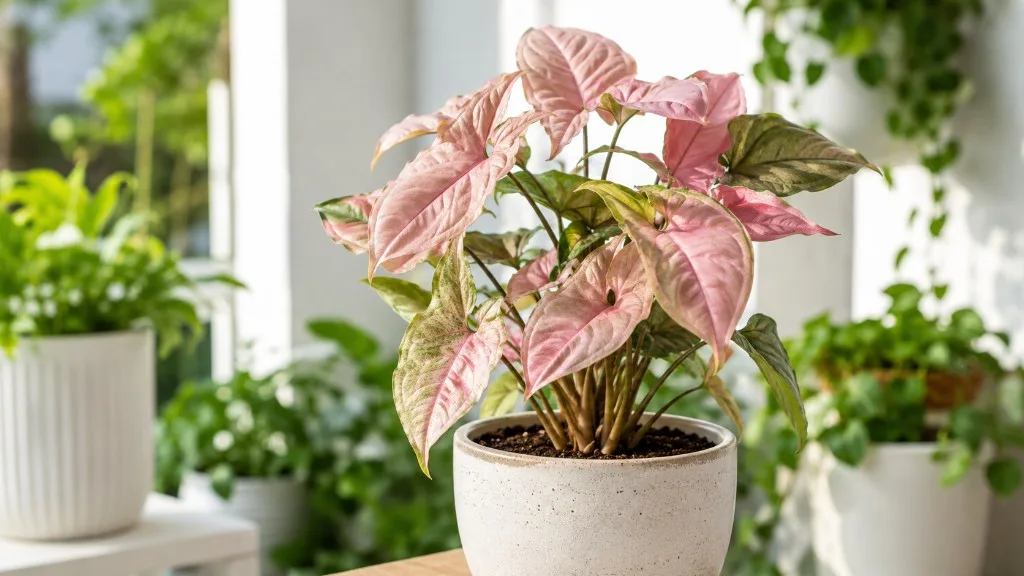
Syngonium Pink Pruning: When, How, and Mistakes to Avoid
Syngonium Pink Pruning: When, How, and Mistakes to Avoid
Quick answer
Syngonium Pink pruning shapes Syngonium podophyllum ‘Pink’ into a compact pink-forward tabletop plant or a supported climber - your choice, but you must decide early. First, remove only dead, yellow, or damaged leaves with clean sharp scissors. Then pinch or cut leggy stems 5–10 mm above a node during spring and summer active growth. NC State Extension describes syngonium as a climbing aroid that branches from nodes when apical tips are removed; Pink Syngonium vines more obviously as it matures, so regular pinching keeps the bold arrowhead look instead of long bare internodes with larger, greener mature leaves.
What pruning does for Syngonium Pink
Pink Syngonium responds well to pruning - that is one reason growers choose it over slower fillers. Without maintenance, stems stretch in dim light, pink wash fades on new leaves, and the plant shifts toward adult lobed foliage on long vines. Pruning does three useful jobs for this cultivar:
- Size and shape control - pinching breaks apical dominance so lateral buds at nodes push compact side shoots with juvenile arrow-shaped leaves.
- Color management - pruning does not repaint existing leaves, but new growth after a cut reflects current light. Syngonium Pink light guide keeps pink blush strong; deep shade after pruning produces greener, paler regrowth.
- Density - rooted stem cuttings from trimmings can fill sparse bases while you keep pinching above.
Pruning cannot fix chronic overwatering, root rot, or a permanently dark shelf. Fix the growing condition first, then trim.
When to prune Syngonium Pink
Pinch or cut during active growth from spring through summer, when the plant heals quickly and pushes new shoots within weeks. Light tip pinching every two to four weeks on fast extenders is normal tabletop maintenance - not a once-a-year event.
Remove dead or fully yellow leaves anytime they are clearly spent. Avoid heavy structural cutbacks in winter unless you are only cleaning damaged tissue; slow-season recovery stalls and pink color on new leaves suffers in weak light.
Garden Design’s arrowhead plant guide recommends pruning unwanted climbing or leggy stems just above a leaf node during spring through late summer while the plant is actively growing - the same window applies to Pink Syngonium indoors.
What to check before cutting
Walk the plant in good light before you reach for scissors:
- Newest leaves - judge pink color on the top few leaves, not old lower foliage. Pink Syngonium color varies by cultivar batch and light; some leaves blush strong rose, others come in pale green or salmon.
- Internode length - gaps longer than a few centimeters between leaves mean the plant is stretching for light. Pruning helps, but brighter placement matters more for lasting pink tone.
- Stem direction - identify the longest runners, bare-top vines, and plain-green revert sections that outpace pink growth.
- Nodes - locate the slight bumps where leaves meet the stem; cuts must leave the node on the parent plant.
- Pests and rot - sticky residue, collapsed stems, or sour soil mean delay shaping cuts until health stabilizes.
Decide your goal before cutting: compact pink mound (frequent pinching, no pole) or climbing arrowhead (one or two leaders on support, trim only excess runners).
The first cut to make
Start with sanitation, not shaping. Wipe scissors with 70% isopropyl alcohol, then remove only dead, brown, or clearly yellow leaves at the petiole base. Do not pinch healthy pink tips on the same day you are still assessing the plant.
Once damaged tissue is gone, make your first shaping cut on the longest bare or green-leaning stem, snipping 5–10 mm above a healthy node on that vine. One confident cut above a node activates that growth point; Clemson HGIC arrowhead vine guidance notes that syngonium is easily propagated from stem cuttings with nodes - the same anatomy drives branching after a tip removal.
How to prune Syngonium Pink step by step
Tip pinching for a compact pink mound
For a bushy shelf plant, pinch the terminal bud and top one to two leaf pairs on stems that are growing faster than the rest. This is light, frequent maintenance - not a hard cutback. Each pinch redirects energy to lower nodes, keeping juvenile arrowhead leaves small and pink-washed rather than letting vines race toward mature lobed form.
Repeat every two to four weeks through the growing season on stems that extend beyond your target silhouette.
Node cutbacks on leggy stems
When a stem has long bare sections or has turned mostly green, cut it back harder: trace down to a node with a healthy leaf or visible bud, and remove everything above, leaving 5–10 mm of stem past the node. Work stem by stem rather than shearing the whole plant into a ball unless you plan to pinch new shoots frequently afterward.
Missouri Botanical Garden’s Syngonium podophyllum profile notes that juvenile arrow-shaped leaves give way to lobed adult foliage as plants age and climb - Pink Syngonium follows that pattern, which is why early and repeated pinching preserves the look most people bought it for.
Climbing vs tabletop shape
Tabletop mound: keep pinching, avoid moss poles, root cuttings around the base for density, and accept smaller juvenile leaves.
Climbing vine: select one or two leaders, tie to a stake or moss pole, and trim only runners that exceed the support or lose pink color. Mature lobed leaves on a pole are a valid look - different from a compact pink shelf plant. Switching goals mid-growth means fighting the plant’s natural climbing habit.
Where to cut - and what to avoid
Cut here:
- 5–10 mm above a node on leggy or green revert stems
- At the petiole base when removing yellow or dead leaves only
- Just above a node when shortening a vine for propagation
Avoid:
- Mid-internode cuts with no node left on the parent - syngonium rarely branches from bare stem tissue
- Removing all pink growth at once in hope of forcing color - new leaves still follow light quality
- Shearing into a tight sphere without follow-up pinching - fast regrowth looks uneven within weeks
- Cutting the only healthy pink shoots when lower stems are already stressed
Wear gloves if sap irritates skin. ASPCA lists arrowhead plant as toxic to cats and dogs due to calcium oxalate crystals; bag trimmings and keep tools away from pets.
How much you can safely remove
Remove no more than one-third of healthy foliage in a single session. Pink Syngonium is a fast grower and tolerates light, frequent pinching better than one drastic winter chop.
If the plant is badly leggy, stage renovation across two or three summer weeks - hard cut one or two worst stems, let side shoots start, then trim the next runners. Sudden heavy removal in dim conditions leaves a sparse pot that takes months to refill.
Pruning yellow, brown, or damaged leaves
Yellow leaves from overwatering should come off once you have corrected watering - cut at the petiole base, not mid-stem. Brown tips on otherwise pink leaves can stay if the blemish is cosmetic; remove the whole leaf only if tissue is more than half damaged.
Do not prune aggressively to “fix” yellowing that is still active from wet soil or root stress. Stabilize watering and light first; trim after new growth looks firm.
Using cuttings from pruning
Pruning and propagation overlap naturally here. Each stem section with one or two nodes roots readily in water or moist potting mix - Clemson HGIC describes arrowhead vine as easily started from cuttings.
Plant rooted cuttings at the pot edge while continuing to pinch the parent above. Layering cuttings back into the same container is the fastest way to turn a thin Pink Syngonium into a full tabletop mound without buying a second plant.
Aftercare and recovery timeline
After pinching or moderate cutbacks:
- Keep bright indirect light - pink on new juvenile leaves depends on it
- Water when the top inch of soil dries; do not compensate for cuts with extra water
- Hold fertilizer for one to two weeks after a heavy session; resume lightly once new shoots are visible
- Maintain moderate humidity (50–60%) if your home is dry
Expect visible bud swell at nodes within one to two weeks during warm active growth. A noticeably fuller pot from layered cuttings and repeated pinching usually takes six to eight weeks in good light.
Signs pruning worked - or went too far
Pruning worked when:
- Side shoots emerge from nodes below your cuts within two to four weeks
- New leaves stay arrow-shaped and show pink blush in adequate light
- Internodes on regrowth stay short and the pot looks denser, not scalped
Pruning went too far or was badly timed when:
- Nodes stay dormant for more than a month in cool dim conditions
- New growth is thin, mostly green, and widely spaced - light is still too low
- The plant wilts after a heavy cut despite moist soil - possible root stress unrelated to pruning; do not cut again until it stabilizes
Mistakes to avoid
- Letting vines lengthen without pinching - Pink Syngonium reads bolder when young but vines fast; the window for easy tabletop shaping closes once stems are long and bare-topped.
- Pruning without improving light - scissors cannot replace bright filtered placement; legginess returns on weak regrowth.
- One drastic off-season cutback - staged summer trimming recovers faster than a winter hard chop in a dark room.
- Ignoring plain-green revert stems - cut them back to pinker nodes or they dominate the pot.
- Stacking repot, fertilizer, and heavy prune on the same week - pick one stress at a time.
- Unsafe handling - toxic sap and cuttings within pet reach; use gloves and elevated placement.
When not to prune
Delay shaping cuts when:
- The plant was just brought home - let it acclimate two to three weeks unless pests or rotting tissue demand removal
- Soil stays wet and leaves are yellowing from overwatering - fix drainage and Syngonium Pink watering guide first
- Active spider mites or mealybugs are present - treat infestation before spreading tissue via cuts
- You cannot provide bright indirect light for the next month - wait until placement improves, then pinch
Routine dead-leaf removal is fine during adjustment periods; hold major cutbacks until the plant is stable.
Conclusion
Syngonium Pink pruning is less about one perfect haircut than about early, repeated pinching above nodes while the plant still shows bold juvenile pink foliage. Remove damaged leaves first, cut leggy green runners back to healthy nodes in spring and summer, root trimmings into the same pot for fullness, and keep bright indirect light so new arrowhead leaves stay rosy. Choose tabletop or climbing form deliberately - then prune to match that goal, not both at once.
When to use this page vs other Syngonium Pink guides
- Syngonium Pink overview - Start here for whole-plant context before deep-diving this topic.
- Syngonium Pink problems hub - Jump to symptom-specific fix guides when this care topic does not resolve the issue.
- Leggy Growth on Syngonium Pink - Escalate here when pruning adjustments are not enough.