How to Prune Swedish Ivy: When, Where & What to Cut
How to Prune Swedish Ivy: When, Where & What to Cut
How to Prune Swedish Ivy: When, Where & What to Cut
Lift the hanging basket and inspect the crown where square stems meet the soil - snip any yellow, mushy, or clearly dead tissue first, cutting back into firm green square stems just above a healthy node. Swedish ivy (Plectranthus australis) trails fast from a shallow crown, and bare soil at the pot rim is usually visible long before the trailers look “too long.” A sanitation pass at the crown shows which square stems are still firm before you shorten anything for shape. For general culture - watering rhythm, light, and placement - see the Swedish ivy overview.
Quick Answer
Prune Swedish ivy for basket fullness from spring through early summer, when side shoots emerge quickly in bright indirect light. Make each shaping cut 5–10 mm (about ¼ inch) above a visible node - the point where an opposite leaf pair meets the square stem. Limit routine shaping to no more than one-third of total stem length per session on stressed plants; healthy baskets tolerate heavier trims because UF/IFAS notes Swedish ivy tolerates even severe pruning. Emergency removal of rotting or pest-damaged stems can happen any time. Pinching breaks apical dominance at the stem tip, but it cannot replace adequate bright indirect light - leggy growth returns quickly in a dim corner even after a hard trim.
| Season / situation | Cut type | Max removal | Expected recovery (bright indirect light) |
|---|---|---|---|
| Spring–early summer | Pinch soft tips or stem cutback | Up to one-third stem length (one-quarter if weak) | Side shoots in 1–2 weeks; basket fill in 4–6 weeks |
| Year-round | Sanitation of yellow/mushy stems | Remove all failing tissue immediately | Stabilizes crown within days |
| After flower fade | Pinch spent spike above node | Spike only | Redirects energy to foliage in 1–2 weeks |
| Late autumn–winter | Light tip pinching only | Minimal | Timeline may double until spring |
| Severe leggy basket | Staged cutbacks + same-pot cuttings | Spread over 2–3 sessions | Crown fill faster with rooted trimmings |
Why Swedish Ivy Pruning Starts at the Basket Crown
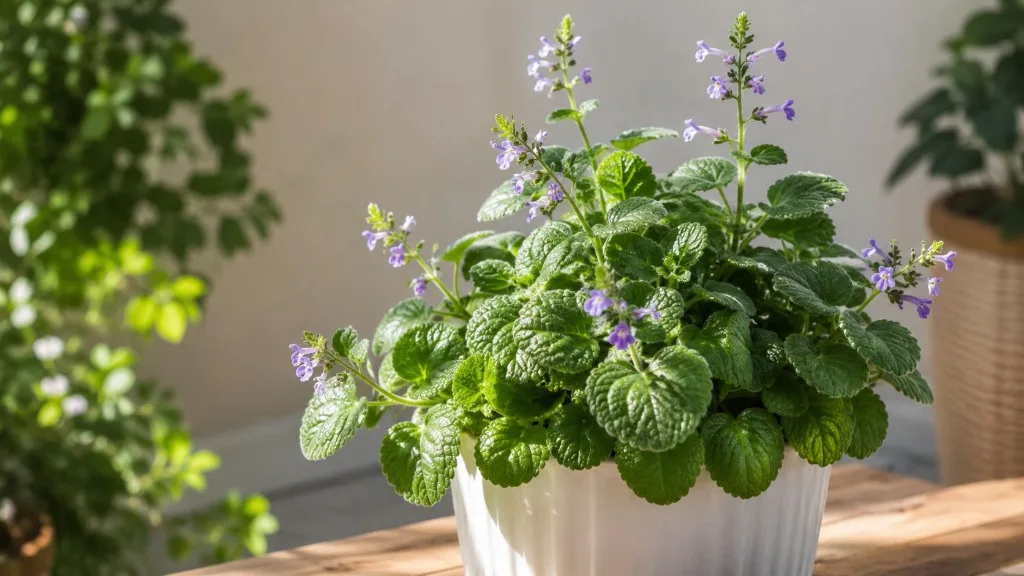
Swedish ivy is a fast-growing trailer in the mint family (Lamiaceae), commonly sold as Plectranthus australis though Missouri Botanical Garden notes nomenclature confusion with P. verticillatus in commerce. NC State Extension describes square stems with opposite glossy leaves - a useful visual cue when locating nodes on a hanging basket.
Without regular intervention, each stem follows apical dominance: the terminal bud at the growing tip suppresses side branches lower on the stem. The tip keeps extending, internodes stretch - especially in low light - and lower leaves age out, leaving bare ropes with foliage clustered at the trailer ends. That is why neglected baskets look empty at the crown while stems dangle past the pot rim.
Pruning can force branching at nodes, remove failing tissue before soft stems rot, shorten leggy trailers, and supply propagation material - stem tip cuttings root easily in water or moist mix. It cannot fix chronic under-lighting or overwatering. If new growth after a trim still produces long bare internodes, improve placement and let the top inch of soil dry before watering again.
Sanitation vs Pinch vs Cutback vs Same-Pot Fill
Match the tool to the problem before you touch live structure:
| Situation | Action | Tool | When |
|---|---|---|---|
| Yellow, mushy, or pest-damaged tissue | Sanitation cut | Scissors or snips | Any time - do this first |
| Soft tip outgrowing neighbors on a leafy stem | Pinch | Fingernails or snips | Warm season; stem still has leaves below |
| Bare middle section or hollow basket crown | Stem cutback above lower node | Bypass shears | Spring through early summer |
| Bare soil at pot rim after shortening vines | Same-pot fill from trimmings | Root cuttings in jar, replant at crown | Pair with spring/summer structural work |
| Spent pale purple or white flower spike | Deadhead above node | Snips | After bloom fade |
What to Inspect Before Any Cut
Walk the basket stem by stem in good light before blades touch tissue:
- Nodes on square stems - small swellings where opposite leaf pairs meet the stem; buds hide in the leaf axils
- Crown density - bare soil at the rim signals months without pinching or same-pot renewal
- Internode length - long leafless sections between nodes signal past stretch or leaf drop
- Stem firmness - soft, waterlogged square stems near the soil line suggest overwatering; address moisture before a heavy trim
- Pests - mealybugs and spider mites often appear on Swedish ivy first in a collection per UF/IFAS; treat or isolate before spreading trimmings around other pots
- Light exposure - if the basket sits far from a bright window, expect stretch to return unless placement improves
Mark mentally where you want fullness - usually two to four nodes above the pot rim on each trailing stem - before making the first shaping cut.
When to Prune - Active Season vs Emergency Trims
Swedish ivy tolerates light pinching year-round indoors, but timing changes speed, not survival. Structural cuts during active growth produce faster branching and shorter internodes. The same cuts in late autumn or winter may sit visually unchanged for weeks while light and temperatures are low.
Spring through early summer is the ideal window for basket renewal in most homes. By then daylight is increasing, the pot dries on a predictable rhythm, and new leaves are already unfurling. Missouri Botanical Garden recommends trimming new stem tips regularly to retain compact shape and encourage branching. UF/IFAS adds that individual stems can be pruned at any time of year - useful for maintenance pinching between heavier sessions.
After pale purple or white flowers fade, pinch back stems to redirect energy into foliage rather than spent spikes. Flowering is intermittent indoors and not essential to health, but removing faded blooms keeps the basket tidy.
Avoid major cutbacks in late autumn and winter unless you accept a slower response. Light tip pinching during the off-season is fine; hard rejuvenation is not.
Cuts that cannot wait:
- Yellow, mushy, or rotting stems - cut back into firm green tissue above a healthy node; sanitize blades between cuts on diseased material
- Stems with heavy active pest infestation - remove the worst sections once you have a treatment plan for the rest
- Fully brown, dry leaves - snip at the petiole base any time; they no longer photosynthesize
If the entire plant is wilting and does not recover after corrected watering, root rot may be advanced. UF/IFAS recommends taking healthy stem tip cuttings and disposing of a severely diseased parent rather than repeated hard pruning on failing roots.
The First Structural Cut on a Bare Trailer
After dead and damaged tissue is removed, identify the longest bare trailer - the stem that most disrupts the basket silhouette. Shorten it to a node roughly two-thirds of the way back toward the pot, leaving at least one healthy leaf pair below the cut so the plant has immediate photosynthetic surface while side buds activate.
Wipe bypass shears with 70% isopropyl alcohol before the cut. Position the blade 5–10 mm above that node at a slight angle - crushing the soft square stem slows healing. Make one cut, step back, and assess balance before shortening the next runner.
Do not start by randomly pinching every tip unless the plant is already compact and you only need maintenance. One deliberate cutback on the worst offender shows you how the plant responds before you trim the rest.
Step-by-Step Pruning on Square Stems
Where to cut for branching
Virginia Cooperative Extension defines pinching as removing about 2.5 cm (1 inch) or less of new stem growth just above a node - the same principle applies whether you use fingers or shears on Swedish ivy.
For each cut:
- Follow the square stem to a node with firm green leaves
- Position blades 5–10 mm above the node, angled slightly so the stub does not sit in a leaf axil where moisture collects
- Make one clean snip - never cut mid-internode on a bare section; the stub dries without sprouting
- Repeat on the next longest bare runner, working around the basket for even shape
How much foliage to remove
On a healthy, fast-growing basket in bright indirect light, removing up to one-third of total stem length per session is a safe starting point. UF/IFAS explicitly notes tolerance of even severe pruning - another reason this plant suits beginners willing to trim regularly.
On a weak, overwatered, or recently stressed plant, stay closer to one-quarter removal and wait two to three weeks before the next session. Mushy yellow stems do not count toward the limit - remove them immediately regardless of percentage.
For a severely leggy basket with bare crowns, spread renovation across two or three sessions during spring and early summer rather than one dramatic chop, unless the plant is otherwise vigorous and well rooted.
Pinch vs Cutback Compared
| Pinching | Cutting back | |
|---|---|---|
| Trigger | Soft tip outgrowing neighbors; stem still leafy below | Bare middle section, hollow crown, or lost lower foliage |
| Tool | Fingernails or snips | Bypass shears |
| Cut placement | Just above topmost node on extending tip | 5–10 mm above a lower node on a long bare runner |
| Best timing | Every 2–4 weeks during warm season | Spring through early summer for structural work |
| Recovery | Side shoots within 1–2 weeks in active growth | New branches at lower nodes; fuller silhouette in 4–6 weeks |
| What it cannot fix | Bare internode tissue below - only nodes branch | Dim placement; soggy crown from overwatering |
If your plant is already leggy, cutbacks come first. Once new side shoots are 5–8 cm long, switch to light pinching to maintain density.
Root Trimmings Back Into the Same Basket
Swedish ivy is one of the easiest houseplants to propagate from pruning waste. Missouri Botanical Garden notes it is easily propagated by cuttings. UF/IFAS reports stem tip cuttings root within about a month in clean rooting media - water rooting is often faster for small batches.
After pruning:
- Select 8–12 cm cuttings with at least two leaf pairs and no mushy tissue
- Remove the lowest leaf pair so a node sits below the water line or soil surface
- Root in a jar of water in bright indirect light, changing water weekly, or insert directly into moist potting mix at the pot edge
- When roots reach 2–3 cm, plant cuttings around the parent crown to fill bare gaps instantly
This same-pot layering is often more effective than pruning alone on a hollow basket - new rooted stems add density at the soil line where old stems have gone bare. For medium-specific rooting and troubleshooting failed cuttings, see the dedicated propagation guide.
Aftercare, Light, and Recovery Timeline
New side branches typically appear within one to two weeks during active growth in bright indirect light. Visible basket fullness develops over four to six weeks as secondary branches fill in. Pruning in autumn or winter can double that timeline.
| Phase | Timing (active spring/summer) | What to expect |
|---|---|---|
| Immediate | Days 0–3 | Cut faces callus; keep conditions stable |
| Bud swell | Days 7–14 | Visible enlargement at nodes below cuts |
| First side shoots | Weeks 2–3 | New branches emerge from leaf axils |
| Basket fill | Weeks 4–6 | Crown and trailer silhouette look denser |
After trimming:
- Light - return to bright indirect light per the light guide; direct hot sun can scorch leaves outdoors but indoors filtered light supports compact regrowth
- Water - resume when the top inch of soil dries per the watering guide; fewer leaves mean slower water use
- Fertilizer - hold feeding for two weeks after a hard trim, then resume lightly only if the plant is actively growing
- Rotation - turn the basket weekly so new side shoots develop evenly
Signs pruning worked: multiple fresh shoots from nodes below each cut, shorter internodes on new growth, and a crown that fills toward the pot rim.
Signs pruning was too aggressive or badly timed: stalled new growth for more than three weeks during warm months, continued yellowing at the crown, or soft stems turning mushy at the soil line after a heavy trim on wet mix.
Mistakes That Undo Basket Fullness
- Waiting until stems are long and bare before the first pinch - start pinching soft tips every few weeks during growth season
- Cutting mid-internode on bare sections - always cut just above a node with healthy leaves below
- Heavy prune in low light - move the basket to brighter filtered light before expecting lasting fullness
- Overwatering after a major trim on wet soil - reduced foliage transpires less water; soggy mix rots square stems at the crown
- Discarding every trimming - root viable cuttings back into the parent pot instead of composting material that could fill bare crowns
- Assuming true ivy toxicity - Swedish ivy is listed as non-toxic to cats and dogs by the ASPCA despite the common name - it is not Hedera and does not carry the same sap risks as English ivy. Still keep chewed plant material away from pets as a general precaution.
When to Wait
Delay major shaping when:
- The plant is actively wilting from drought or root rot - identify and fix the cause first
- Soil stays wet for days after watering - reduce moisture before cutting into stressed tissue
- The basket was just repotted within the last two weeks - let roots re-establish
- Cold drafts or temperatures below 10°C (50°F) persist - UF/IFAS notes Swedish ivy can tolerate brief cool periods down to about 40°F but growth stalls in cold stress
Light removal of fully dead leaves is fine any time; hard renovation is not.
Pre-Pruning Checklist
Before you cut for shape, confirm:
- Crown inspected for mushy square stems and pest residue
- Dead and yellow tissue removed first
- Nodes located on firm green stems with opposite leaf pairs
- Longest bare trailer identified for first structural cut
- Light placement adequate - or adjusted plan for post-trim leggy growth prevention
- Watering rhythm matches reduced foliage if doing a hard trim
- Viable trimmings set aside for same-pot fill or propagation
- Tools wiped with alcohol if removing diseased or pest-damaged tissue
Related Swedish Ivy Guides
- Swedish ivy overview - general care hub
- Light placement - prevent recurring legginess after pruning
- Watering - adjust rhythm after foliage removal
- Propagation - full rooting workflow beyond same-pot fill
- Leggy growth - when stretch is the root cause
- Mealybugs - inspect before trimming
- Spider mites - webbing on leaf undersides
- Overwatering - soft stems at crown
- All Swedish ivy problems
Recommendations were checked against UF/IFAS Swedish ivy culture, Missouri Botanical Garden Plectranthus australis notes, NC State Extension Plectranthus overview, Virginia Cooperative Extension pinching guidance, Iowa State University Extension tool-sanitization guidance, and ASPCA Swedish ivy toxicity data, plus LeafyPixels cluster guides linked above. Author: sai-ananth. Reviewer: LeafyPixels Review Board. Reviewed June 2026.