Fertilizer Burn on Snake Plant: Causes, Checks & Fixes
Quick answer
Fertilizer burn on snake plant usually shows as dry brown tips on firm sword-shaped leaves within one to two weeks of feeding - especially full-strength liquid, winter doses, or slow-release granules near rhizomes. Stop feeding immediately, run the double-flush protocol below, and wait at least four to six weeks before any half-strength spring feed.
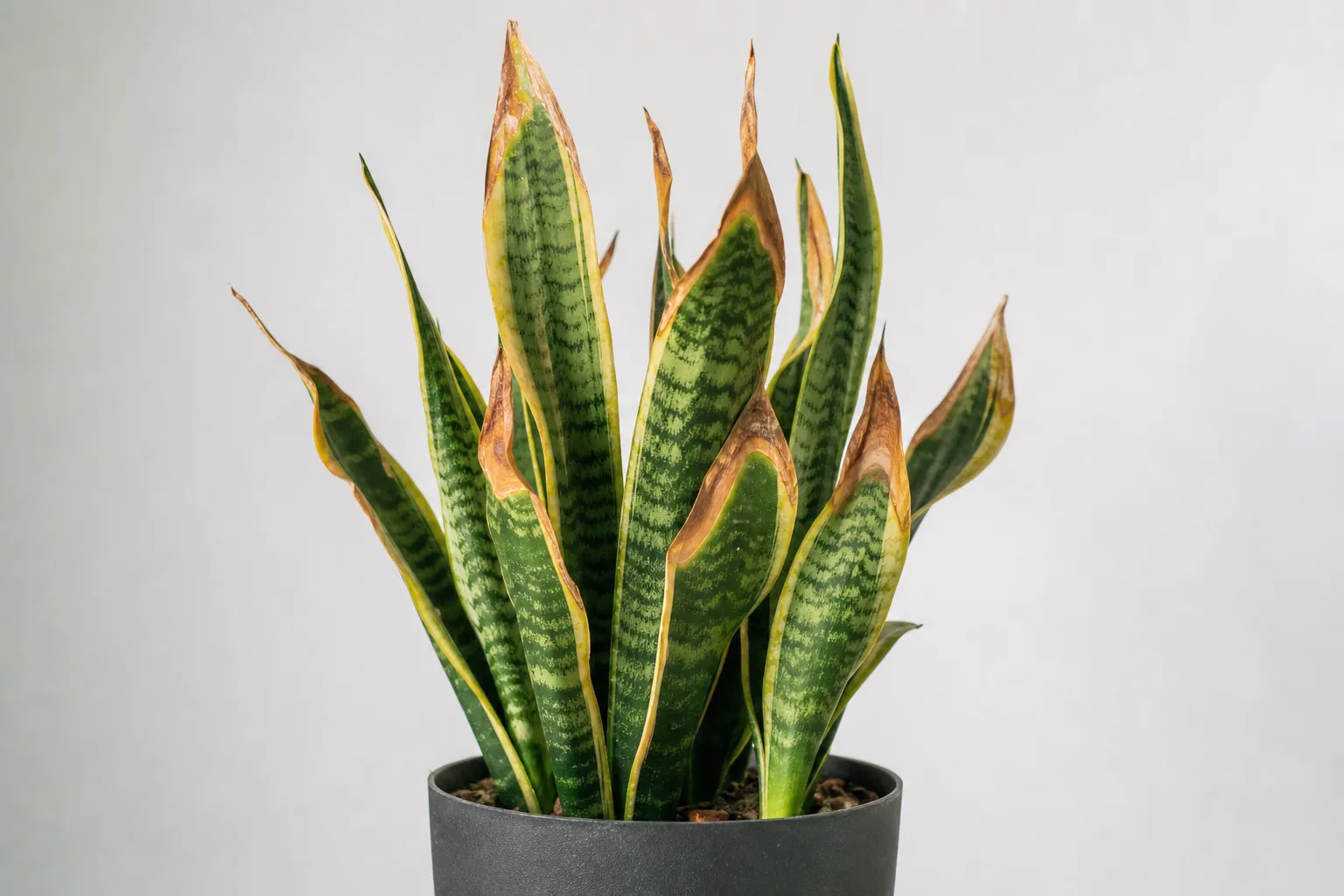
Fertilizer Burn on Snake Plant: Causes, Checks & Fixes
This guide covers fertilizer burn on Snake Plant. See also the general Fertilizer Burn guide, watering, and light pages for this plant.
Fertilizer Burn on Snake Plant: Causes, Checks & Fixes
Quick answer
If several snake plant leaves developed dry brown tips within one to two weeks of your last fertilizer application - especially after full-strength liquid, a winter feed, or slow-release granules sprinkled near rhizomes - suspect fertilizer burn before you change watering, light, or repot. On snake plant (Dracaena trifasciata), excess soluble salts injure fine root hairs first; University of Maryland Extension describes how high salts reduce water uptake through osmotic stress, which shows as crispy margins on thick upright leaves while the mid-blade stays firm.
First step: stop all fertilizer and run the double-flush protocol in the section below. Do not repot, move rooms, or trim heavily on the same day - you need to see whether burn stops spreading after salts leach out.
Use this page for acute tip scorch tied to a recent feed. For months of municipal tap water with pale-banded tips and crust but no fertilizer spike, start with salt build-up on snake plant. For general brown tips when the cause is unclear, see brown tips. Ongoing feeding schedules after recovery live on the snake plant fertilizer guide.
When to use this page vs. sibling guides
| Your situation | Start here | Read next |
|---|---|---|
| Tips browned 3–14 days after liquid feed or granules | This guide | Fertilizer guide for safe resume schedule |
| White crust + pale bands after years of tap water, no recent feed | Salt build-up | Return here only if a heavy winter feed preceded the flare |
| Brown tips but unsure of cause (vents, drought, light) | Brown tips | This page if feeding history points to salts |
| Mushy leaf bases, sour soil, wilt on wet mix | Root rot | This page first only if tips are firm and feed was recent |
What fertilizer burn looks like on Snake Plant
On snake plant, salt burn from overfeeding is usually cosmetic and margin-focused:
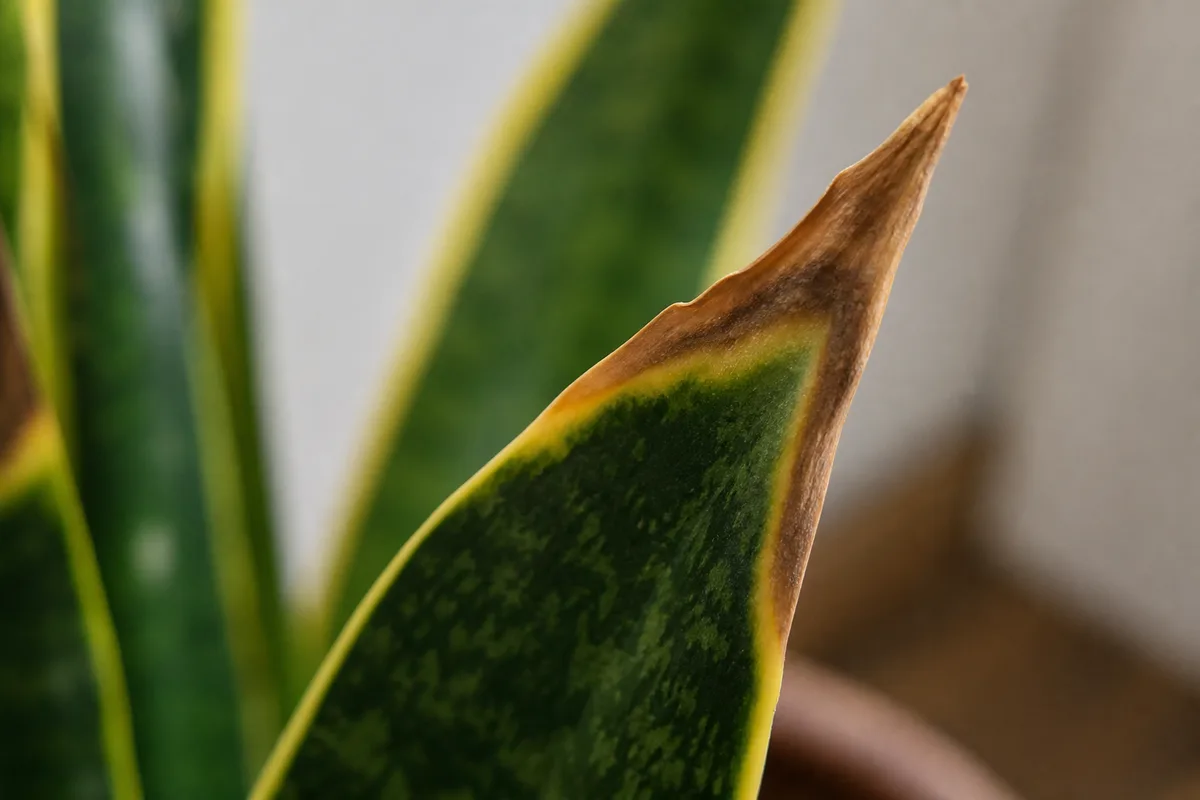
Fertilizer Burn symptoms on Snake Plant - compare with healthy tissue on the same plant.
- Dry brown, tan, or papery tips and thin margins while the mid-leaf stays green and stiff
- Damage on several leaves within one to two weeks of feeding, often lower or outer leaves first
- White or crusty residue on soil surface, pot rim, or saucer - UMD Extension links white crust on potting media to accumulated soluble salts
- No soft mushy tissue at the leaf base unless rot has developed from chronically wet salty soil
- New center growth may look clean in mild cases, or show fresh tip burn after continued feeding
This differs from root rot, where leaf bases turn yellow and mushy despite wet soil and the pot may smell sour. Sun scorch bleaches or browns patches on the window-facing side of stiff leaves rather than isolated tip necrosis across multiple blades.
Post-feed timing decision tree
Work through timing before treating tap water or drought:
- Did you fertilize in the last 14 days? Yes → strong fertilizer-burn signal; stop feed and flush.
- Was the dose full label strength, winter timing, or a second dose this season? Yes → higher confidence; proceed with flush protocol.
- Is white crust visible and damage appeared within days of that feed? Yes → fertilizer burn is the working diagnosis.
- No recent feed, but months of tap water and pale bands above tips? No → redirect to salt build-up for fluoride and mineral accumulation.
- Recent feed AND chronic tap water? Both → compound burn likely; flush salts first, then trial filtered water if new growth still browns (see table below).
Fertilizer salts vs. fluoride vs. other tip burn
| Symptom pattern | Fertilizer burn | Fluoride / chronic salt build-up | Underwatering | Root rot | Sun scorch |
|---|---|---|---|---|---|
| Trigger | Recent feed (days–2 weeks) | Months of tap water | Long dry spell | Wet, heavy soil | Direct sun on one side |
| Soil surface | White crust after feed | White crust, reappears on tap | Dry, dusty - no crystals | May be wet; no crust required | No crust |
| Tip texture | Dry, papery; firm leaf | Dry; pale band common on Dracaena | Crispy; leaves may wrinkle | Mushy base, not just tips | Bleached patch on exposed side |
| Leaf base | Firm | Firm | Firm | Soft, yellow, sour smell | Firm |
| First move | Stop feed + double flush | Flush + change water source | Deep soak per watering guide | Dry back, inspect roots | Move from direct sun |
| Read next | This guide | Salt build-up | Underwatering | Root rot | Light guide |
Why Snake Plant gets fertilizer burn
Snake plant is a light feeder adapted to lean soils in West African habitats. In homes, the most common trigger is feeding too often, at full label strength, or through winter when the plant is barely growing. Penn State Extension recommends fertilizing monthly at half strength during the growing season only - this page takes a more conservative twice-per-season approach because slow rhizome growth on a succulent houseplant tolerates even less than that maximum.
Excess fertilizer salts build up in potting mix and burn fine root hairs first. Damaged roots cannot regulate water uptake properly, and stress shows on leaf margins where water exits fastest. On thick Sansevieria leaves, that means tan-to-brown necrosis at tips and edges rather than uniform yellowing across the whole blade.
Dense or slow-draining soil traps salts longer. A snake plant in standard peat-heavy mix, an oversized pot, or a decorative cache pot without drainage holds fertilizer residue near rhizomes even when you water carefully. Pairing heavy feeding with fluoridated tap water can compound margin burn, because dracaenas - including reclassified snake plants - are sensitive to fluoride toxicity that also kills tissue at leaf tips.
Granular slow-release fertilizer applied too close to rhizomes or repeated liquid feeds without flushing between applications are secondary causes. Newly repotted plants rarely need fertilizer for several months if the mix already contains starter nutrients - see the fertilizer guide for when to resume after repotting.
How to confirm the cause
- Fertilizer history - Did you feed in winter, use full-strength product, or apply more than twice in one growing season?
- Soil crust - Is white mineral residue visible on the surface or inner pot wall?
- Timing - Did tips brown within days to two weeks of your last feed?
- Water source - Are you also using municipal tap water high in fluoride? Tip patterns can overlap; note both variables.
- Root zone - Is soil bone dry (unlikely salt-only issue) or heavy and slow to dry (salts trapped plus rot risk)?
- New growth - Are youngest leaves at the center still clean after you stop feeding and flush?
If only one tip browned after physical damage, watch one month before flushing. Pattern across multiple leaves plus recent feeding strongly favors fertilizer burn or salt buildup from that feed.
First fix - stop feed and double flush (canonical protocol)
This is the only flush procedure for this page. Later sections refer back here rather than repeating steps.
- Stop all fertilizer - including slow-release granules already on the soil surface.
- Flush once - Place the pot in a sink. Run room-temperature plain water slowly through for three to five minutes until roughly three times the pot volume has drained. Empty the saucer so salty water is not reabsorbed from a cache pot.
- Wait one week - Hold off on repotting, moving rooms, and trimming more than dead tips.
- Flush again - Repeat step 2 with plain water only.
- Pause feeding - Skip fertilizer for at least four to six weeks, longer if damage was severe.
Do not compensate with extra fertilizer to “help the plant recover.” Snake plant tolerates months without food; Illinois Extension recommends leaching houseplant pots every four to six months to limit salt buildup - this double flush is an emergency leach after overfeeding.
Step-by-step recovery
After the canonical double flush above:
- Trim - Cut only necrotic tip tissue with clean scissors at a slight angle matching the leaf point. Sterilize blades between leaves if any base feels soft.
- Water before future feeds - Lightly moisten soil before applying diluted fertilizer so salts do not concentrate on dry roots.
- Switch water if needed - If tips still brown on new growth after flushing and no feeding, trial filtered or rainwater to rule out fluoride overlap on this dracaena-class plant - details on salt build-up.
- Repot only if crust persists - If white buildup returns within two to three weeks after two flushes, repot into fresh gritty cactus mix without added fertilizer for two months.
- Resume feeding - Half strength once in spring and once in midsummer only when new growth looks clean. Full schedule on the fertilizer guide.
Make one correction at a time. Do not stack systemic pesticide, heavy pruning, and repotting into a larger pot on the same weekend.
Example recovery timeline (winter over-feed mistake)
A typical home scenario - full-strength liquid feed every month through winter on a snake plant in a 6-inch pot:
- Week 0: Owner notices tan tips on three outer leaves ten days after the last feed; white specks on soil rim.
- Week 1: Stop feed; first flush; saucer emptied after each drain.
- Week 2: Second flush; no new tip spread on center leaves.
- Weeks 3–4: Outer tips trimmed cosmetically; soil dries on normal schedule.
- Weeks 5–8: New center leaf emerges with clean margin - recovery confirmed.
- Week 10+: Optional half-strength feed once if spring growth is active; winter feeding discontinued permanently.
This timeline is editorial synthesis from extension leaching guidance, not a published case study. Your plant may stabilize faster in bright summer light or slower in a cool north window.
Recovery timeline
Existing brown tips will not revert to green. Mild burn on a few outer leaves often stabilizes within two to four weeks after the double flush and stopping feed. Expect to judge full recovery by clean new leaves emerging over four to eight weeks in spring and summer light.
If tip burn continues on fresh center growth despite no feeding and two flushes, inspect rhizomes for rot or mealybugs at the base - rarer but more serious; follow root rot if bases go soft. Severe salt damage may require repotting into entirely fresh mix.
What not to do
Do not feed a stressed snake plant to “green it up” - salts worsen burn. Do not increase watering because tips look dry; soggy soil causes root rot faster than cosmetic tip damage threatens the plant. Do not use full-strength fertilizer or slow-release granules piled on the soil surface.
Avoid fertilizing in autumn and winter when growth slows. Do not assume the plant needs monthly feeding year-round because other houseplants do. Do not reuse flush water or let the pot sit in a saucer full of salty runoff.
How to prevent fertilizer burn next time
Treat snake plant as a slow-growing succulent houseplant that needs little supplemental food. Feed at half strength at most twice during spring and midsummer when the plant is actively pushing leaves. Skip winter entirely. Use fast-draining cactus or succulent mix in a pot with drainage holes so salts flush out with normal watering.
Leach the pot on a four-to-six-month schedule if you feed regularly. Water lightly before applying fertilizer. When in doubt, skip a feeding - under-fertilizing rarely harms snake plant; over-fertilizing scorches tips and can damage roots. Keep the plant in bright indirect light so growth and nutrient use stay in sync with your feeding rhythm per the fertilizer guide.
When to worry - cosmetic vs. repot decision
| Severity | What you see | Action |
|---|---|---|
| Cosmetic only | Dry tips on outer leaves; firm bases; clean center growth after flush | Trim dead tips; wait for new leaves - no repot needed |
| Persistent crust | White buildup returns within 2–3 weeks after two flushes | Repot into fresh gritty mix without fertilizer for two months |
| Escalate to root rot | Entire leaves yellow within a week of heavy feed; mushy bases; sour soil; wilt on wet mix | Stop feed; inspect rhizomes; follow root rot guide |
Fertilizer burn alone is low severity on snake plant when leaves stay firm and new growth stays clean after the double flush.
What to do next
- Tips stable but ugly? Trim dead margins and wait - cosmetic damage only.
- Unsure if tap water compounded the burn? Compare timelines with salt build-up and the compound-burn table above.
- Ready to feed again after clean new growth? Use half-strength spring/midsummer doses on the fertilizer guide - not your pothos schedule.
- Mushy bases after heavy feed + wet soil? Switch to root rot triage.