Brown Tips on Prayer Plant: Causes, Checks & Fixes
Quick answer
Brown tips on prayer plant (*Maranta leuconeura*) usually mean dry air, fluoride or salt in tap water, or heating vents - not thirst. First step: switch to filtered or rested tap water and raise humidity to 50–70% at leaf height.
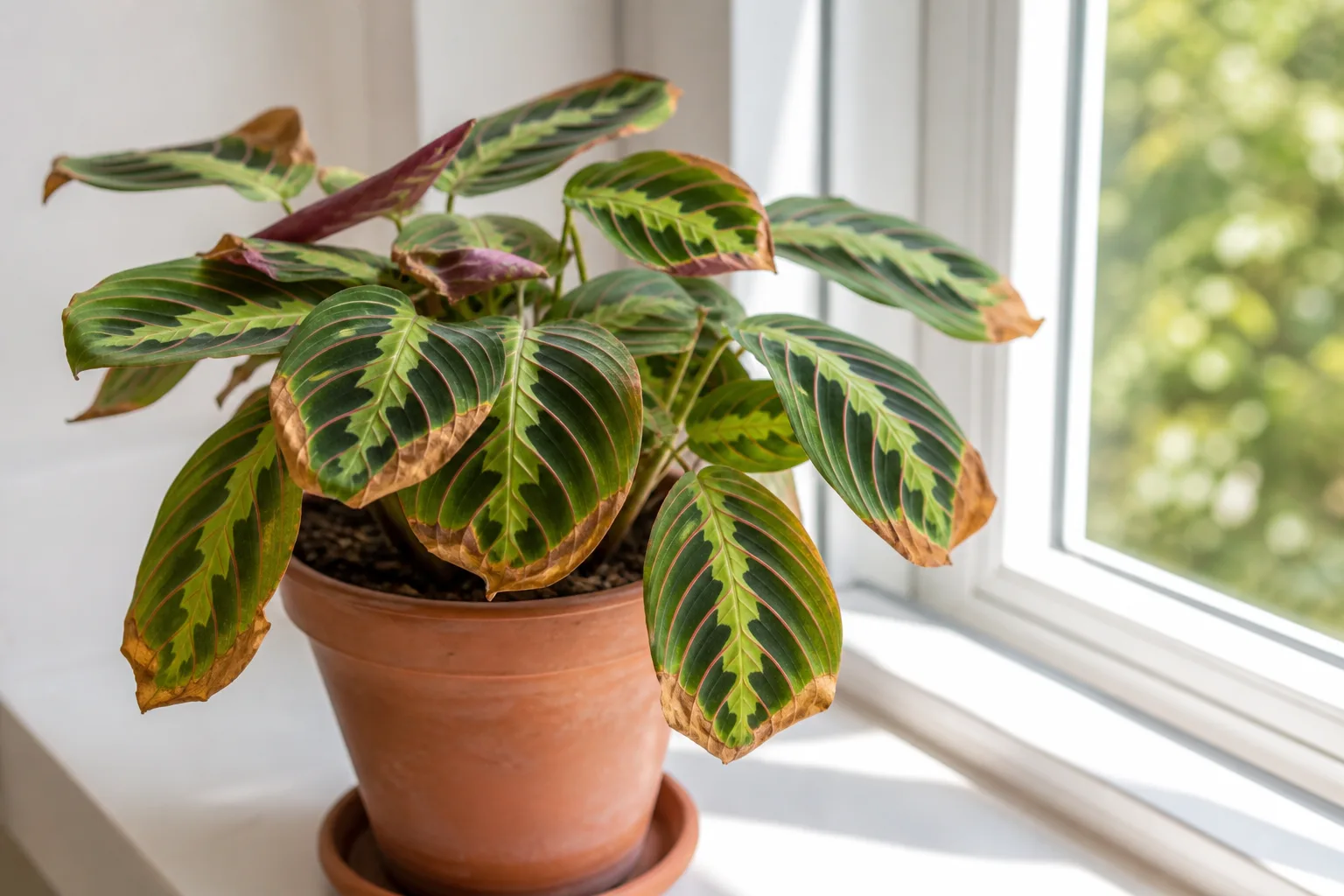
Brown Tips on Prayer Plant: Causes, Checks & Fixes
This guide covers brown tips on Prayer Plant. See also the general Brown Tips guide, watering, and light pages for this plant.
Brown Tips on Prayer Plant: Causes, Checks & Fixes
Quick answer
Brown tips on prayer plant (Maranta leuconeura) are almost always environmental, not disease. Tan-to-brown crispy margins on herringbone-patterned leaves while mid-leaf color stays vivid usually trace to dry indoor air, fluoride or minerals in tap water, or fertilizer salt buildup - not a simple need for more water.
The Marantaceae family shows edge damage early because thin leaf margins are the last tissue to receive moisture when humidity drops or roots take up minerals. Heating vents, winter furnace cycles, and hard municipal water are the usual indoor triggers after a shop purchase or desk move.
First step: switch to filtered, distilled, or overnight rested tap water and raise humidity to 50–70% at leaf height. Move the pot away from heating vents before you repot, fertilize, or trim heavily.
Brown tips vs. low humidity: Both show crisp margins, but this page focuses on water quality, salt crust, and combined air-plus-mineral stress. If a hygrometer reads below 45% near the foliage and edges crisp despite good watering, start with our low-humidity guide. Return here when white mineral crust sits on the soil, tips worsened after feeding, or filtered water plus humidity still leave new leaves burned.
This guide sits in the prayer plant hub. The same species appears under maranta-leuconeura elsewhere on LeafyPixels; see brown tips on Maranta leuconeura for extended botanical detail.
Brown tips vs. low humidity vs. crispy leaves - which guide to use
| What you notice | Most likely cause | Start here |
|---|---|---|
| Meter below 45% at leaf height, winter heat running, edges crisp on many leaves | Dry air | Low humidity |
| White crust on soil or pot rim, tips worse after fertilizer, hard tap water only | Salts or fluoride | This page - filter water and leach |
| Heavy wet pot, yellow lower leaves, sour smell, limp foliage on damp mix | Root stress | Root rot or overwatering |
| Light pot, dusty dry mix throughout, dramatic leaf curl | Drought layered on dry air | Underwatering plus humidity fixes |
| Stippling, dull bronzing, fine webbing on undersides | Spider mites after dry spell | Spider mites |
What brown tips look like on Prayer Plant
Tip burn on prayer plant has a recognizable pattern:
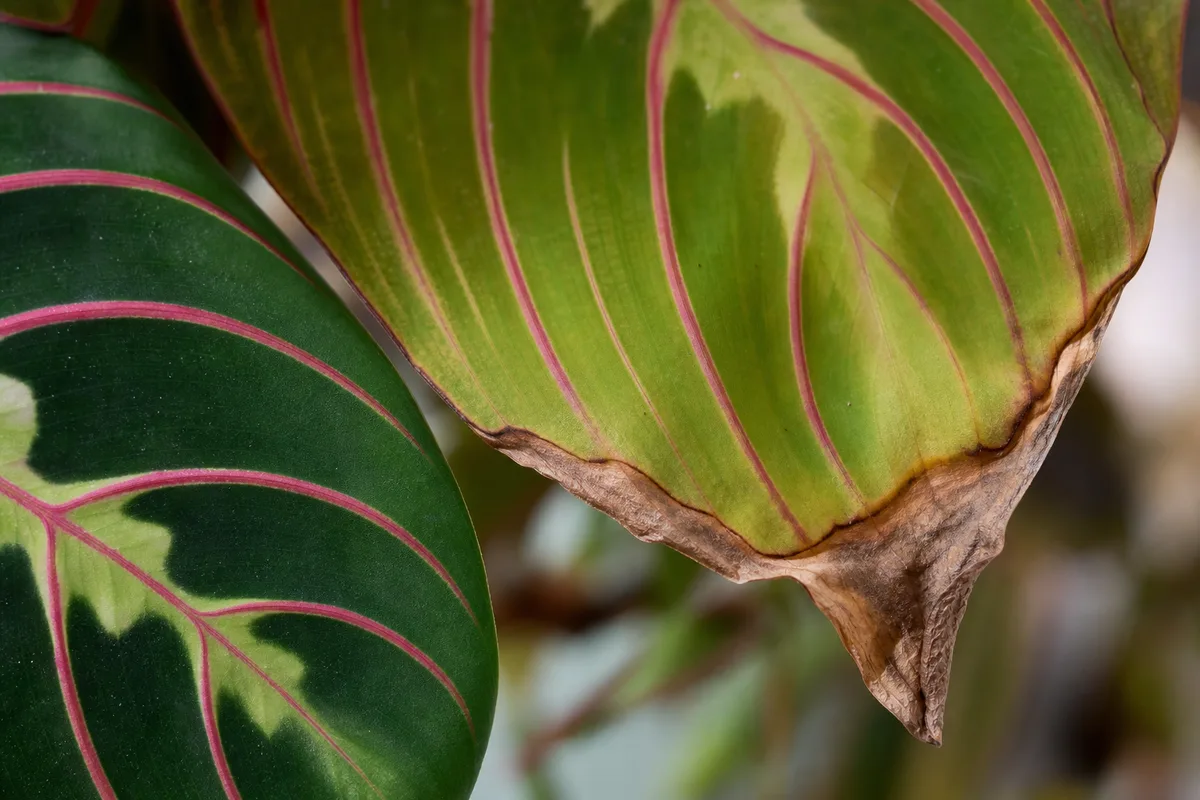
Brown Tips symptoms on Prayer Plant - compare with healthy tissue on the same plant.
- Dry tan-to-brown tips or margins on otherwise green, patterned herringbone leaves
- Damage starts at the leaf point or outer edge and creeps inward slowly - not overnight soft wet spots
- Mid-leaf color stays vivid; tissue feels papery and crispy, not mushy
- New rolled leaves may emerge with minor edge browning when water quality or humidity is off before older leaves show widespread damage
- White or tan crust on the soil surface or pot rim points to soluble salt accumulation from tap water or fertilizer
- No yellow halos with wet centers typical of fungal leaf spot; no stippling or webbing typical of mites unless dry air invited pests afterward
This differs from sun scorch, which bleaches attractive leaf colors on the face nearest a hot window - humidity fixes alone will not repair scorched tissue. Cold drafts near winter glass can mimic humidity damage; pair margin browning with placement checks per our light guide.
Cosmetic tip browning on one or two oldest leaves at the base is often slow urgency. Escalate when burn spreads to most new rolled leaves or pairs with limp stems on wet soil.
Why Prayer Plant gets brown tips
Maranta leuconeura is a Brazilian understory tropical that prefers high humidity and warm temperatures. Indoors, several factors push it toward margin burn:
Thin Marantaceae margins and fluoride sensitivity
Prayer plants are humidity-sensitive tropicals. Tip tissue is the last to receive water, so low humidity, inconsistent watering, and mineral buildup all show as crispy margins before the rest of the leaf fails. Prayer plant leaves burn with high fluorides and with over-fertilization - edge burn often appears before crown rot when crowns stay dry.
Winter heating, hard tap water, and salt buildup
Forced-air heat and AC remove moisture just when the plant sits in the brightest, warmest window. Dry indoor air stacks with tap-water minerals to produce recurring tip crispness. Each feeding adds soluble salts; without periodic leaching, salts concentrate at the root zone and symptoms include brown leaf tips.
Underwatering can crisp edges too, but the pot will feel light and mix dusty dry throughout - not heavy and wet. Compare your rhythm to the top-inch dry rule before blaming humidity alone.
Placement near vents and drafts
Heating vents and AC drafts accelerate the pattern by pulling moisture from thin margins while the rhizome zone may still hold adequate moisture. A plant on a radiator shelf or desk return vent can show tip burn even when you water on schedule.
How to confirm the cause
Work through these checks before repotting, fertilizing, or trimming heavily:
- Hygrometer at leaf height - Place the sensor within 30 cm of foliage for 24 hours. Below 45% with crisp margins supports dry-air stress; above 50% with ongoing tip burn points to water quality or salts instead.
- Water source - Did tips worsen after switching from nursery rainwater to city tap, skipping filtration, or increasing fertilizer strength?
- Pot weight - Heavy wet soil with brown tips suggests salts or root stress, not drought. A light pot with dry mix throughout fits underwatering layered on dry air.
- Soil surface inspection - White or tan crust on mix or pot rim suggests soluble salt buildup. Scrape surface crust before leaching if present.
- Light exposure - Direct sun bleaches patterns on the leaf face nearest the window; moving to bright indirect light per our light guide is required for scorch, not just a humidifier.
- New growth - If only oldest leaves brown slowly, aging may be normal. Spreading tip burn on new rolled leaves confirms an active stressor.
- Pest check - Hold white paper under a leaf and tap the blade. Stippling or webbing means spider mites - not humidity alone.
Confirmed environmental tip burn: firm stems, cycling soil moisture, pest-free leaves, and either low humidity, visible salt crust, or hard-water routine matching when damage started.
First fix for Prayer Plant
Switch to filtered, rainwater, or overnight rested tap water - then raise humidity with a humidifier while keeping soil evenly moist, not soggy.
- If humidity reads below 45%: Run a cool-mist humidifier until readings at leaf height stay in the 50–70% range. NC State Extension recommends a humidified room or tray of wet pebbles for prayer plant.
- If white salt crust is visible or you feed regularly: Leach the pot with plain water until excess drains freely, wait five minutes, then water again so salts flush out. Leach every four to six months to prevent soluble salt injury.
- If the pot sits near a vent or hot window: Move at least 60 cm from heating registers, AC returns, and cold winter glass before other fixes.
Make these changes first - do not repot and fertilize on the same day. Do not increase watering because tips look dry when the pot is already moist; that invites rot on a plant that needs moist but well-drained soil, not soggy crowns.
Filtered or rested tap water trial
Use room-temperature water. Overnight standing helps chlorine dissipate but does not remove fluoride - filtered or distilled water is the reliable fix when municipal supply is fluoridated.
Humidifier setup and 50–70% RH at leaf height
Target humidity at leaf height, not across the room. Pebble trays and plant grouping help in mildly dry spaces but rarely replace a humidifier when furnace heat holds whole rooms near 25–35% relative humidity.
Monthly salt flush during active growth
When you fertilize through spring and summer, leach with clear water monthly or every four to six months at minimum so fertilizer residue does not concentrate. Hold fertilizer for three weeks while edges stabilize.
Step-by-step recovery
After the first fix, support recovery in this order:
- Move away from heating vents and cold window glass - stabilize placement for one week before stacking more changes.
- Run a humidifier or group with other tropicals to hold 50–70% RH at leaf height through heating season.
- Water with low-fluoride water until a little drains; empty saucers so crowns never sit in runoff. Do not allow water to stand on crowns - stems rot easily.
- Hold fertilizer for three weeks while margins stabilize; resume at half strength only when new growth looks clean.
- Trim fully brown tips with clean scissors for appearance only - tissue will not re-green.
- Judge success by clean new leaves that still fold upward at night - healthy prayer plant leaves close upward in darkness; stalled or lost nyctinastic movement often means stress persists even before obvious yellowing.
- Inspect leaf undersides weekly during dry months - dry air invites spider mites after margin burn weakens foliage.
Hold repotting unless roots circle densely, mix never dries between drinks despite correct watering, or salt damage remains severe after leaching fails.
Recovery timeline and what improvement looks like
Stabilization: Humidity and water-quality fixes should stop new tip burn within one to two weeks. Existing crispy edges will not turn green again.
New growth: Clean herringbone-patterned leaves with full margins emerging over two to four weeks confirm the environment is working. Leaves that still fold upward at night are the best success signal on Maranta.
Worsening signs: Margins browning despite humidity above 50%, many leaves yellowing while soil stays wet, crown softening, or mite webbing spreading - recheck roots, salts, and pests rather than adding more water.
Lookalike symptoms to rule out
| Symptom pattern | Likely cause | Route to |
|---|---|---|
| Light pot, limp stems, mix dry throughout | Underwatering | Underwatering |
| Sour smell, yellow leaves, mushy roots on wet mix | Root rot | Root rot |
| Heavy wet pot, limp leaves, firm roots when spot-checked | Overwatering stress | Overwatering |
| Stippling, webbing on undersides in dry heat | Spider mites | Spider mites |
| Bleached or washed-out patterns on sun-facing leaf face | Sun scorch | Light guide - move to filtered indirect light |
| One or two oldest bottom leaves only | Normal aging | Monitor; no emergency |
What not to do
Do not increase watering because tips look dry when the pot is already moist - wet soil plus low humidity worsens rot risk on shallow rhizomes.
Do not allow water to stand on crowns after top-watering; stem bases rot easily in damp crowns.
Do not rely on occasional misting alone in heated rooms - lift humidity consistently at leaf height.
Do not apply full-strength fertilizer on stressed leaves or salty soil - salts often caused the burn.
Do not stack repotting, fertilizer, and heavy pruning on the same day while the plant is already margin-stressed.
How to prevent brown tips on Prayer Plant
- Use filtered water as default if hard tap or recurring tip burn is a pattern in your area.
- Keep bright indirect light without hot direct sun per our light guide.
- Water when the top inch dries per our watering guide - moist in growth, drier in winter dormancy.
- Monitor humidity with a hygrometer through heating season; run a humidifier before half the plant crisps.
- Leach the pot every four to six months when you fertilize during active growth.
- Inspect newest rolled leaves weekly - early tip crisping is easier to reverse than whole-leaf collapse.
Practical checks
Urgency check
Cosmetic tip browning on a few older leaves is slow urgency. Escalate if browning spreads to most new leaves, stems soften at the crown, several leaves collapse at once while the pot stays wet, or pests coat new growth.
Best inspection order
Newest rolled leaves and nyctinastic folding → hygrometer at leaf height → water source and white crust on soil → pot weight and moisture at one inch → light placement and vent distance → leaf undersides for mites → roots only if yellowing appears on wet mix.
Related Prayer Plant guides
- Prayer plant overview - species hub
- Watering - top-inch dry rhythm and winter adjustment
- Light - bright indirect placement without scorch
- Low humidity - dry-air-first routing
- Root rot - wet-soil collapse with sour mix
- Spider mites - stippling after dry spells
- Underwatering - light pot and dry mix throughout
Prayer plant brown tips are an environment-and-water-quality signal. Confirm dry air, tap minerals, or salt buildup, fix humidity and filtering first, and judge recovery on new patterned leaves that still fold at night - not old crispy margins.
Related tool
Use the Plant Problem Diagnosis Tool to narrow causes for brown tips on this plant before changing multiple variables at once.