Sunburn & Scorched Leaves on Pothos: Causes, Checks & Fixes
Quick answer
Sunburn on pothos happens when an understory vine takes too much direct sun-especially unfiltered south or west glass, outdoor moves without acclimation, or chasing brighter light after stretch. First step: pull the pot back to bright indirect light or filter the window; leave watering and repotting alone until scorch stops spreading.
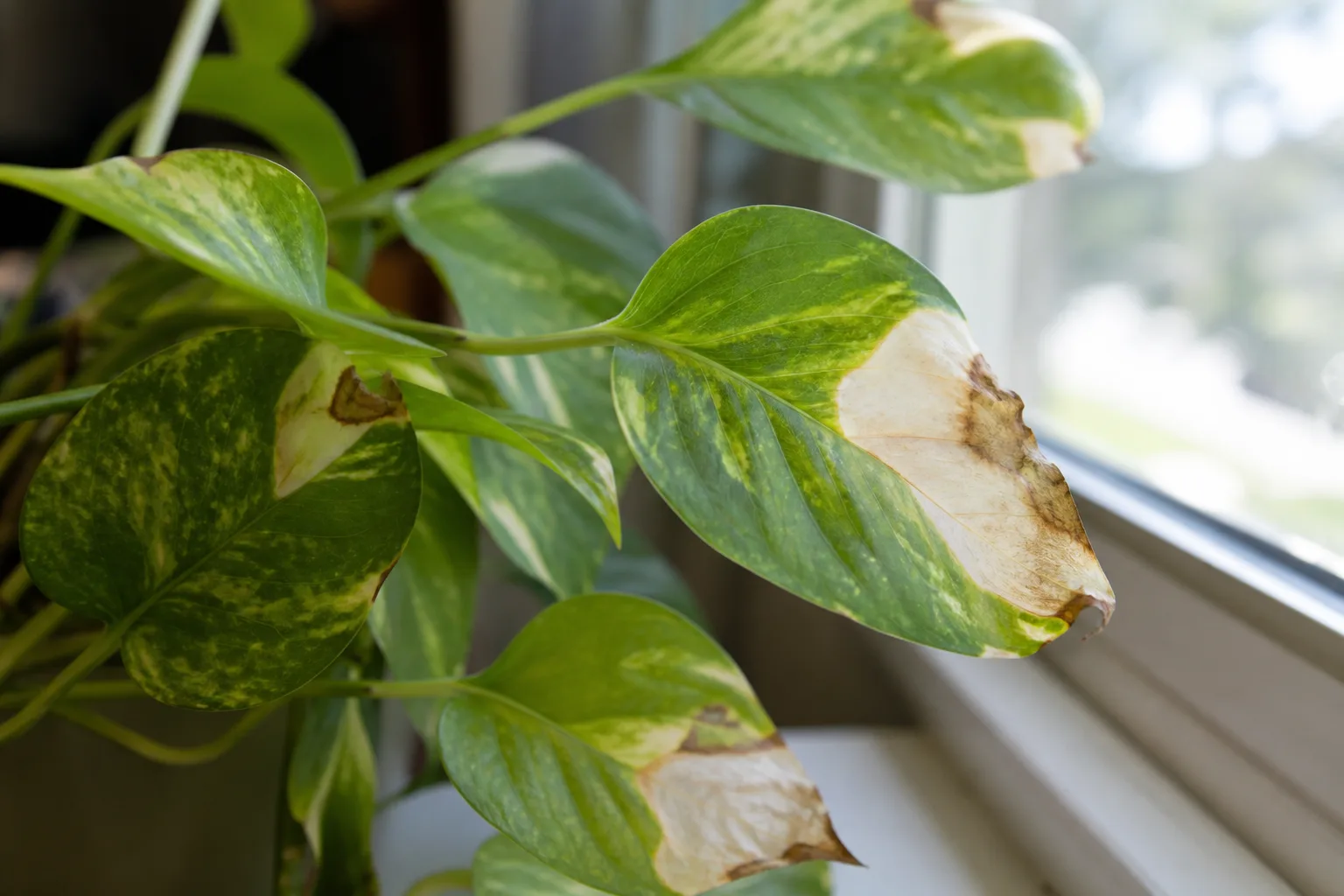
Sunburn & Scorched Leaves on Pothos: Causes, Checks & Fixes
This guide covers sunburn / scorched leaves on Pothos. See also the general Sunburn / Scorched Leaves guide, watering, and light pages for this plant.
Sunburn & Scorched Leaves on Pothos: Causes, Checks & Fixes
Quick answer
Sunburn on pothos (Epipremnum aureum) happens when an understory vine takes more direct sun than its leaves can handle-usually after a sudden move to hot afternoon glass, an unfiltered south or west window in summer, outdoor placement without gradual acclimation, or pushing a stretched vine into harsh sun to “fix” legginess. In nature, pothos climbs tree trunks toward dappled sunlight in tropical forest understories; it is not built for unfiltered midday beams indoors or out.
First step: pull the pot back from harsh direct sun-or add sheer filtering-and leave watering, trimming, and Pothos repotting guide alone until you see no new bleaching for several days.
Pothos prefers bright, indirect light but does not tolerate much direct sunlight. Sunburn is a light problem, not a watering crisis. Unlike underwatering, scorched leaves stay firm and papery rather than limp and wilted.
What sunburn looks like on pothos
Healthy pothos leaves are heart-shaped, glossy, and evenly colored for the cultivar-golden splashes on Golden pothos, lime chartreuse on Neon, or marbled white and green on Marble Queen. Sunburn damage stands out because it is directional and dry, not mushy or evenly scattered across the plant.
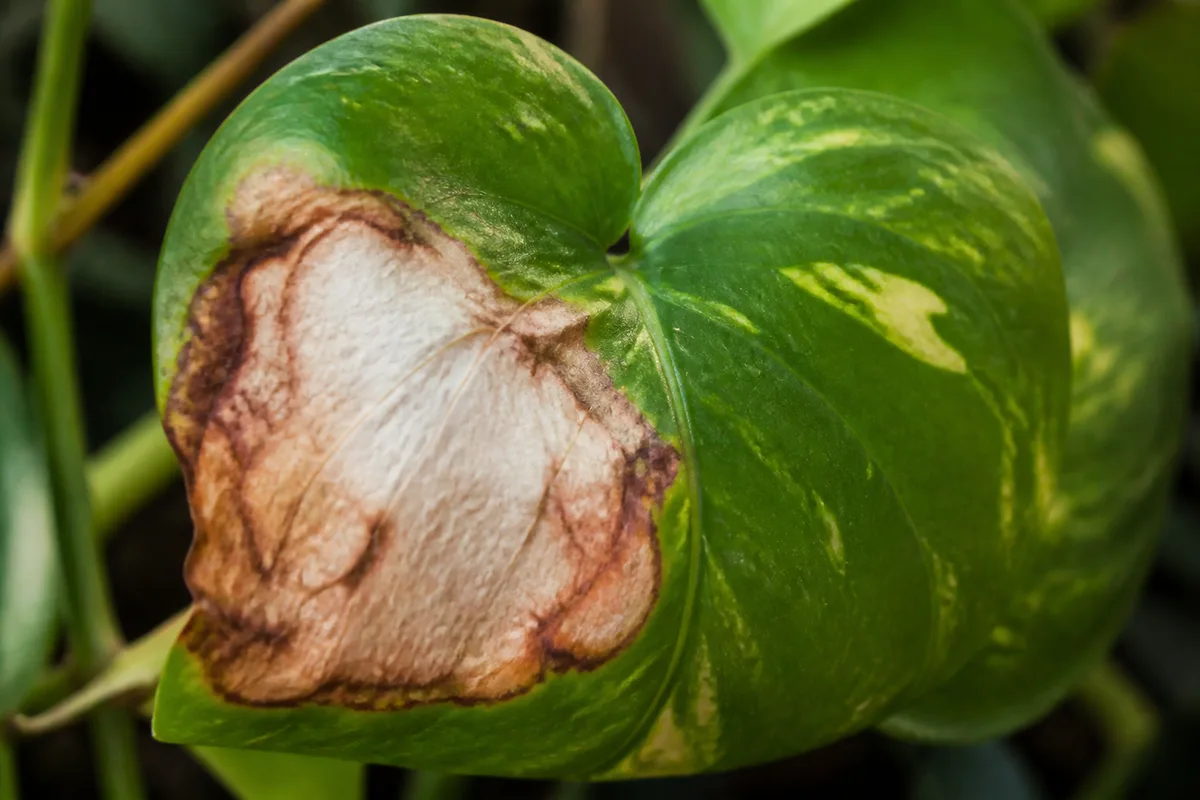
Sunburn / Scorched Leaves symptoms on Pothos - compare with healthy tissue on the same plant.
Typical sunburn pattern:
- Bleached white, silvery, or pale tan patches on leaves facing the window or hottest side of the pot
- Dry brown or black crispy margins, or whole sections that feel papery and crack when bent
- Damage concentrated on upper, outer leaves that catch the full beam-often the vine tips nearest the glass burn first
- Sudden appearance within one to three days after moving closer to glass, removing curtains, rotating the pot, or placing outdoors
- Firm stems and normal soil moisture despite ugly leaf tissue
- Newest unprotected leaves often show damage first because they have not hardened to stronger light
Variegated cultivars burn faster. Marble Queen, Snow Queen, Pearls and Jade, and N’Joy have large white or cream sections with less chlorophyll to handle excess light than solid-green Neon or Jessenia types. A Snow Queen pushed into direct sun can bleach within hours on a hot afternoon.
Sunburn rarely starts at the soil line. If stems blacken and turn mushy with sour-smelling mix, suspect root rot on Pothos or cold draft injury instead.
Why pothos gets sunburn
Pothos evolved as an understory climber that scrambles tree trunks toward brighter canopy gaps while young leaves develop in filtered shade. Indoor leaves formed in dim corners lack the protective pigments and cell structure needed for harsh direct rays. When you move that plant to unfiltered south glass or outdoor sun, UV and heat outpace what the tissue can manage.
Common triggers on pothos:
- Sudden light jump - Moving a shade-adapted vine from a hallway or office directly onto a sunny windowsill or patio
- Seasonal intensity - The same south window that was safe in winter becomes scorching when spring sun angle and heat rise
- Curtain or blind removal - Sheers filtered the beam until someone opened them for “more light”
- Rotation without thinking - Turning the pot so the previously shaded back side now faces the sun
- Chasing legginess - Placing an etiolated pothos in direct sun to fix stretch without gradual acclimation
- Outdoor summer moves - Hanging baskets on porches or balconies without a two-week light ramp-up
- Grow-light heat - LED panels placed too close can bleach foliage through intensity and warmth, not just duration
Clemson Extension lists leaf scorch and tip dieback as often caused by intense light alongside low humidity. On pothos, scorch from direct sun is the more common indoor culprit when damage appears as one-sided bleached patches after a recent move.
How to confirm the cause
Work through these checks before you repot, fertilize, or soak the plant:
- Light history - Did the plant move within the last one to two weeks? Did curtains come off, the pot rotate, or summer sun strengthen through the same glass?
- Damage pattern - Sunburn hits the sun-facing leaf surface first. Underwatering crisps edges more evenly on older leaves; overwatering yellows from the bottom up on wet soil.
- Tissue texture - Scorched patches are dry, firm, and papery. Root-rot leaves are soft, yellow, and often drop with mushy stems.
- Stem check - Firm green or brown vines at nodes support sunburn. Soft blackening at the soil line suggests rot or cold damage.
- Soil moisture - Stick a finger 2 inches into the mix. Sunburned pothos often has normal dryness; chronic wet soil with yellowing points elsewhere.
- Cultivar sensitivity - Heavy white variegation on Marble Queen or Snow Queen makes sunburn more likely than on Neon pothos in the same window.
- Window orientation - Unfiltered south and west glass in afternoon hours carry the highest scorch risk for shade-adapted pothos.
If you pull the plant back to Pothos light guide and no new bleaching appears within a week, light was the primary cause.
First fix for pothos
Relocate the pot to bright indirect light immediately-out of direct sunbeams hitting the leaves.
Move it a few feet back from the window, shift to an east-facing sill, or hang sheer curtains on south or west glass so light is filtered but still bright. RHS guidance for Epipremnum recommends bright light but not direct sun, which matches how most indoor pothos should live after scorch.
Do not compensate with extra water, fertilizer, or misting on day one. Stressed leaves do not need more inputs-they need stable, softer light. Do not repot unless roots are clearly failing; sunburn does not require a mix change.
Wait three to seven days and watch for new bleaching. If damage stops spreading, you chose the right retreat distance.
Step-by-step recovery
After the light move:
- Hold position for one to two weeks - Let the plant stabilize before any other changes. New leaves should emerge without fresh bleaching.
- Trim only severe damage - Cut fully scorched leaves at the base of the petiole with clean scissors. Leave mildly spotted leaves if they still look green enough to photosynthesize.
- Adjust watering to new light - Brighter indirect spots dry faster than deep shade. Recheck the top 2 inches of soil before each watering instead of following an old schedule from the dim corner.
- Wipe dust from leaves monthly - Clean foliage absorbs filtered light more efficiently during recovery.
- Acclimate if you need more light later - Increase exposure over one to two weeks: add an hour of gentle morning sun every few days, or move the pot one foot closer to the window every four to five days while watching for new bleaching.
- Match cultivar to placement - Marble Queen and Pearls and Jade require more bright indirect light than Neon but still need filtering from direct beams. Give them the brightest filtered spot, not the hottest direct one.
If you plan to grow pothos outdoors in summer, start with one hour of morning sun daily for a week, then add time gradually-never jump from indoor shade to full patio sun.
Recovery timeline
Expect scorch to stop spreading within three to seven days once direct exposure ends. New leaves opening two to four weeks after the move should look normal for your cultivar-unbleached, firm, and correctly colored.
Old burned patches do not turn green again. Those cells are dead. Judge recovery by new growth quality, not by hoping damaged tissue reverts.
Bare vine between existing nodes does not fill in from sunburn alone-that is normal pothos structure, not scorch damage. If growth stalls entirely after four weeks in corrected light with proper watering, inspect roots for rot or pest stress rather than pushing more sun.
Lookalike symptoms to rule out
Underwatering wilts leaves and crisps edges while soil pulls away from the pot. Sunburned pothos more often has firm leaves with dry patches on one side and normal soil moisture.
Overwatering and root rot yellow lower leaves on chronically wet mix with soft stems and sour smell. Light scorch keeps stems firm unless a second problem develops.
Low humidity tip dieback browns leaf tips on multiple leaves without the bleached white patches typical of direct sun. Clemson notes tip dieback can follow low humidity or intense light-check whether damage is tip-focused and bilateral versus one-sided bleaching from a window.
Cold draft damage can brown leaf edges near AC vents or winter window glass. It often follows cold nights rather than a light move and may affect leaves touching the cold pane evenly.
Not enough light causes stretch and fade over months, not sudden crispy bleaching in days. If vines were leggy before scorch, fix sunburn first, then hold in bright indirect light-not direct sun-to rebuild density through pruning.
Mistakes to avoid
Do not leave the plant in the same hot window “to see if it adapts.” Unacclimated pothos will keep burning.
Do not soak the soil or feed fertilizer to “help recovery.” Clemson recommends allowing soil to dry between waterings; extra water on stressed roots invites rot.
Do not strip every blemished leaf at once. Pothos needs foliage to photosynthesize while it pushes new growth-remove only leaves that are mostly dead tissue.
Do not assume variegated types can take the same direct sun as solid-green Neon. White sections burn first.
Do not jump from deep shade to harsh south glass to fix legginess. Acclimate through bright filtered light and optional grow lamps instead.
Pothos care cross-check
Light interacts with every other variable on Epipremnum aureum:
- Watering - Water when the top 2 inches of soil are dry. Brighter spots after a sunburn retreat may dry faster than the old dim location.
- Temperature - Pothos prefers 60°F to 85°F day and night ranges. Hot glass plus direct sun compounds scorch; move pots back from radiators and overheated sills in summer.
- Humidity - Average home humidity (30–60%) suits pothos. Misting does not reverse sunburn.
- Cultivar placement - Match window filtering to variegation level. Snow Queen and Pearls and Jade need the brightest filtered light in the home, not the most direct.
How to prevent sunburn on pothos
Place pothos in bright indirect light from day one-within a few feet of east windows or filtered south and west glass. Use sheer curtains wherever afternoon sun hits leaves directly.
Acclimate over one to two weeks whenever you increase light: move gradually, add morning outdoor hours slowly, or step a grow light closer inch by inch while watching new leaves.
Rotate pots weekly for even growth, but remember that rotation exposes previously shaded leaves to sun-watch for bleaching after each turn in strong windows.
Choose cultivars that match your windows. If you only have hot south glass, prefer Neon or Jessenia over Snow Queen unless you filter aggressively.
Keep windows clean but do not remove filtering sheers in summer without moving the plant back first.
When to worry
Sunburn alone rarely kills pothos-it is one of the hardier houseplants. Worry when scorch pairs with:
- Wet soil for weeks and spreading yellow leaves on soft stems
- Black mushy vines at the soil line or sour-smelling mix
- Complete halt in new growth for two months despite corrected light and stable watering
In those cases, unpot and inspect roots before assuming light adjustment solved everything. Wear gloves when trimming-pothos contains calcium oxalate crystals toxic to cats and dogs if chewed.
Practical checks
Urgency check
Act within days if yellowing spreads on wet soil, stems soften, or the pot smells sour alongside scorch-moisture stress may be compounding light damage. Cosmetic one-sided bleaching on firm stems is not an emergency.
Best inspection order
Recent light changes, window orientation and filtering, sun-facing damage pattern, leaf texture (dry vs mushy), soil moisture at 2 inches, stem firmness at nodes, then roots only if wet-soil symptoms appear.
When to use this page vs other Pothos guides
- Pothos watering guide - Use for routine moisture checks before assuming sunburn / scorched leaves is the main issue.
- Pothos problems hub - Browse all 39 common issues on this species.
- Brown Tips on Pothos - Different entry point when symptoms overlap with sunburn / scorched leaves.
- Curling Leaves on Pothos - Different entry point when symptoms overlap with sunburn / scorched leaves.