Underwatering on Philodendron Silver Sword: Causes, Checks
Quick answer
Underwatering on Philodendron Silver Sword shows as inward-curling silver-blue blades that look dull and feel papery, plus a light pot with mix dry 3-5 cm down. First fix: bottom-soak the pot 20-30 minutes, drain fully, and resume checking the top few inches before each watering.
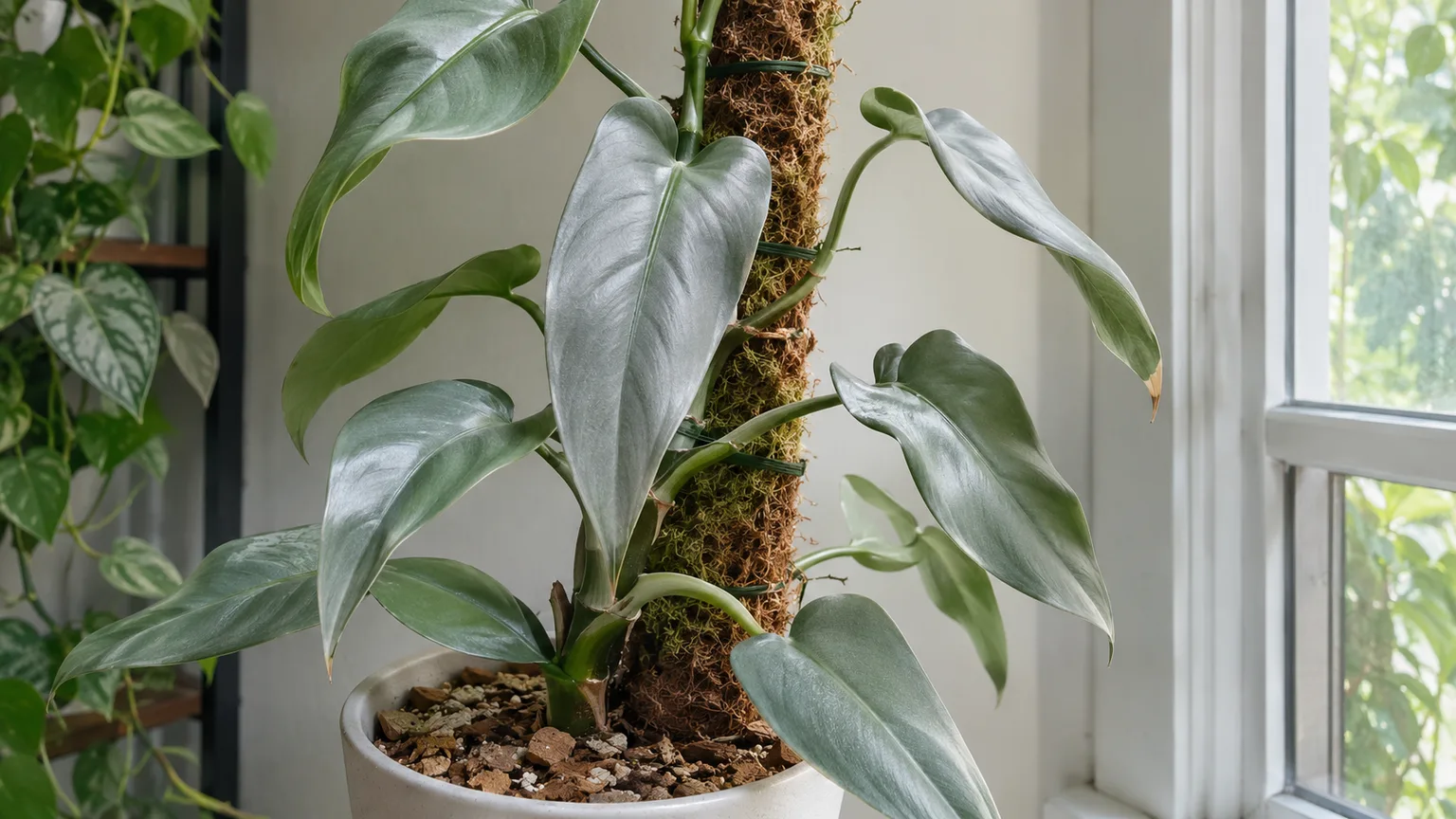
Underwatering on Philodendron Silver Sword: Causes, Checks & Fixes
This guide covers underwatering on Philodendron Silver Sword. See also the general Underwatering guide, watering, and light pages for this plant.
Underwatering on Philodendron Silver Sword: Causes, Checks & Fixes
Quick answer
An underwatered Philodendron Silver Sword folds its sword-shaped blades inward along the midrib, loses its metallic glow, and sits in a pot that feels suspiciously light. New spears may stall half-unfurled while older lower leaves yellow and drop.
First fix: set the pot in room-temperature water and let it soak for 20 to 30 minutes, then drain it completely. This one deep rehydration beats several days of small sips, which wet only the surface of bark-heavy mix. After that, follow the watering guide dry-down rhythm instead of guessing.
When to use this page vs other Silver Sword guides
Use this page when the pot is light, the mix is dry centimeters down, and blades curl inward with dull color. It covers acute thirst only.
- Watering guide — long-term frequency, seasonal shifts, and how far to let the mix dry between drinks
- Soil guide — chunky aroid mix recipes and when old bark has broken down or turned hydrophobic
- Light guide — bright indirect placement that keeps silver tone without accelerating dry-down to scorch
- Overview — whole-plant basics: support, humidity, feeding, and growth habit
What underwatering looks like on Silver Sword
Silver Sword tells on dryness through its signature blades. A well-hydrated leaf looks almost back-lit, with a smooth reflective silver-blue face. As water runs short, blades narrow and roll inward along the midrib like a closing book, the sheen flattens to matte gray-green, and the leaf feels thin and papery between your fingers. Edges and tips turn tan and crisp first, especially on leaves nearest a heat vent or bright window.
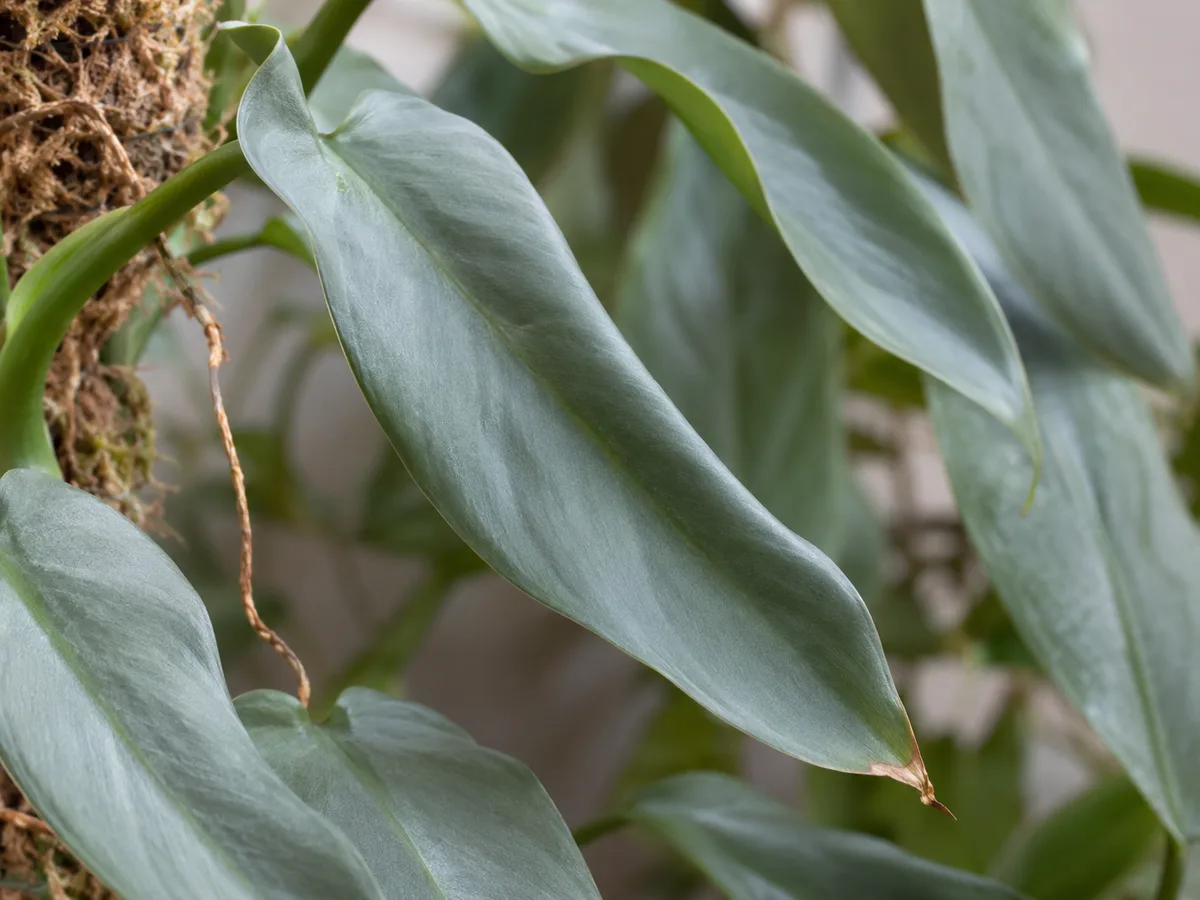
Inward midrib curl and loss of silver sheen are early signs; dry mix at depth helps confirm thirst.
Prolonged dryness moves down the vine. The plant sheds its oldest lower leaves one or two at a time while the rest curl — a survival response one Silver Sword grower describes as consistently yellowing off its oldest leaves in survival mode. New growth stalls: emerging spears stay small, unfurl slowly, or stick partway open. For how chronic dryness stresses houseplants in general, see our underwatering guide. On Silver Sword, the pattern usually shows up as inward midrib curl plus sheen loss on a light pot, not the floppy whole-plant collapse you see in peace lilies.
Check the climbing hardware too. Aerial roots that normally grip the pole turn silvery, shrivel, and pull away when the column dries out. Copper-toned leaf reverses may look unusually pale at the same time.
Why Silver Sword dries out
Silver Sword is a clinging climber, and a moss pole or trellis is needed to support it — but that same pole acts as a wick. A dry pole pulls moisture out of the surrounding mix and exposes aerial roots to air, so poled plants in bright spots can need water noticeably sooner than the calendar suggests.
The chunky bark-and-perlite blend this plant demands (see the soil guide) drains fast by design. In summer heat or near a sunny window matched to the light guide, a small pot of airy mix can go from perfectly damp to bone dry in days. Winter indoor heating does the same damage from the other direction: growth slows, owners water less, and dry air plus radiators desiccate blades faster than the reduced schedule replaces.
Two human habits finish the job. Calendar watering ignores weather, pot size, and growth spurts. And fear of root rot — Silver Sword does rot in soggy peat — pushes some owners so far the other way that the mix stays dusty for weeks.
How to confirm underwatering
Work through these in order before you water:
- Lift the pot. A markedly light container relative to its size is the single best thirst signal on this plant.
- Probe 3–5 cm deep. Push a finger or wooden skewer into the mix, not just the surface. Dusty, crumbly readings at depth confirm drought. Experienced Silver Sword growers let the top quarter to top half to dry before watering again — if yours is dry well past that, thirst is confirmed.
- Read the blades. Inward midrib curl plus matte color across several leaves fits underwatering. Single crispy tips alone may just be dry air.
- Inspect aerial roots and pole. Shriveled silvery roots and a dry pole corroborate a whole-column dry-out.
- Watch the first pour. If water races straight through and out the bottom in seconds while the pot stays light, the bark mix has gone hydrophobic and previous waterings were failing.
- Smell and squeeze stems. Neutral-smelling mix with firm stems supports a thirst diagnosis. Sour mix or soft stem bases point to rot instead.
Underwatering vs overwatering on Silver Sword
Both cause yellow leaves, so soil weight decides. Underwatered: light pot, dry mix, firm stems, curling dull blades, oldest leaves yellowing first. Overwatered: heavy pot days after watering, damp mix, soft or dark stem bases, limp yellowing across leaves of any age, sometimes with a sour smell.
When in doubt, trust the probe over the foliage. Watering a rotted root zone “just in case” is how a salvageable plant dies.
First fix for Silver Sword
Bottom-soak the pot, then drain it fully.
Set the nursery pot in a basin of room-temperature water up to the soil line and let it soak for 20 to 30 minutes so bark chunks and peat actually rewet instead of shedding water. Lift it out, let it drain until dripping stops, and tip out the saucer so the plant never sits standing in water. Mist the moss pole lightly at the same time so aerial roots rehydrate.
Do nothing else that day. No fertilizer, no repot, no hard prune — one variable, one response to read.
Step-by-step recovery
After the soak and drain:
- Return it to bright indirect light. Good light lets the vine convert the drink into growth. Keep it out of direct midday sun while blades are stressed.
- Wait for real dry-down. Do not water again until the top few inches dry out. Daily sips keep the crown damp while the core stays dry and invite the very rot you feared.
- Leave mostly-green leaves alone. Partially curled blades that still hold silver can recover and keep feeding the vine. Trim only fully brown, crispy tissue with clean scissors.
- Re-wet a stubborn pole. If aerial roots still look shriveled after two days, mist the pole on successive mornings until new root tips look plump.
- Resume feeding only after stability. Wait until a new spear emerges normally before restarting dilute fertilizer.
Recovery timeline
Expect blades to relax and look less papery within two to five days of the soak. Sheen returns gradually, not overnight. Crispy margins and dropped lower leaves never come back — that tissue is finished.
New spears tell the real story over the following two to four weeks. A fresh leaf unfurling full-size and flat means the root zone recovered. If curl persists on new growth despite confirmed moist mix, suspect hydrophobic pockets that the soak missed, and repeat the bottom-soak once before investigating roots.
Mistakes to avoid
Do not switch to daily small waterings after a drought scare — Silver Sword wants thorough drinks separated by real dry-downs, with soil kept evenly moist, but not soggy rather than constantly wet.
Do not fertilize a thirsty plant to “perk it up.” Salts on dry roots burn, and feeding never substitutes for water.
Do not repot on day one. Unpotting a dehydrated vine tears the fine roots it needs to drink, and fresh mix around a dry root ball often stays unevenly wet.
Do not rely on leaf misting as the fix. Damp foliage without root-zone water leaves the plant thirsty, and persistently wet leaves invite spotting.
How to prevent it next time
Check moisture, not the calendar. Feel the top few inches before every watering — home growers keeping Silver Sword in bark mix typically land near weekly checks in the growing season and every 10–14 days in winter, adjusting for their own light and heat. Keep the pole lightly and regularly moistened so it buffers rather than wicks.
Refresh aging mix on schedule per the soil guide since decomposed bark either compacts soggy or turns water-repellent — both break your watering rhythm. Group the plant away from heat vents, hold humidity in the moderate-to-high range it prefers, and size pots to the root ball so small plants are not stranded in big volumes of mix that dry unevenly. The watering guide carries the full seasonal routine once this acute episode is behind you.
When to worry
Act promptly if stems soften at the base, discoloration spreads daily despite a proper soak, or most leaves drop within days — recheck for hidden rot or a completely hydrophobic core. A vine that stays wilted 48 hours after confirmed rewetting deserves an unpotting inspection.
Firm stems, neutral-smelling mix, and new spears moving again mean patience is the right medicine.
Related Philodendron Silver Sword guides
- Overview — whole-plant care, growth habit, and toxicity basics; start here for general questions
- Watering — ongoing frequency and dry-down depth; use after this page’s emergency soak
- Soil — chunky mix recipes and repot timing; use when water runs straight through or mix stays soggy
- Light — bright indirect placement for silver tone; use when blades fade without any moisture problem
Related tool
Use the Plant Watering Calculator to narrow causes for underwatering on this plant before changing multiple variables at once.