Overwatering on Philodendron Silver Sword: Causes, Checks &
Quick answer
Overwatering on Philodendron Silver Sword shows as lower leaves yellowing one after another, a heavy pot, and mix that stays wet for days. First, lift the nursery pot out of its cachepot, empty all standing water, and let the top 3–5 cm of mix dry before watering again.
Overwatering on Philodendron Silver Sword: Causes, Checks & Fixes
This guide covers overwatering on Philodendron Silver Sword. See also the general Overwatering guide, watering, and light pages for this plant.
Overwatering on Philodendron Silver Sword: Causes, Checks & Fixes
Quick answer
Overwatering on Philodendron Silver Sword shows as lower leaves yellowing one after another, a heavy pot, and mix that stays wet for days. First, lift the nursery pot out of its cachepot, empty all standing water, and let the top 3–5 cm of mix dry before watering again.
For how chronic wet mix damages roots in general, see our overwatering guide. On Silver Sword, the pattern usually shows up first on the climbing vine: dull lower leaves, stalled silvery new growth, and a moss pole that never dries.
What overwatering looks like on Silver Sword
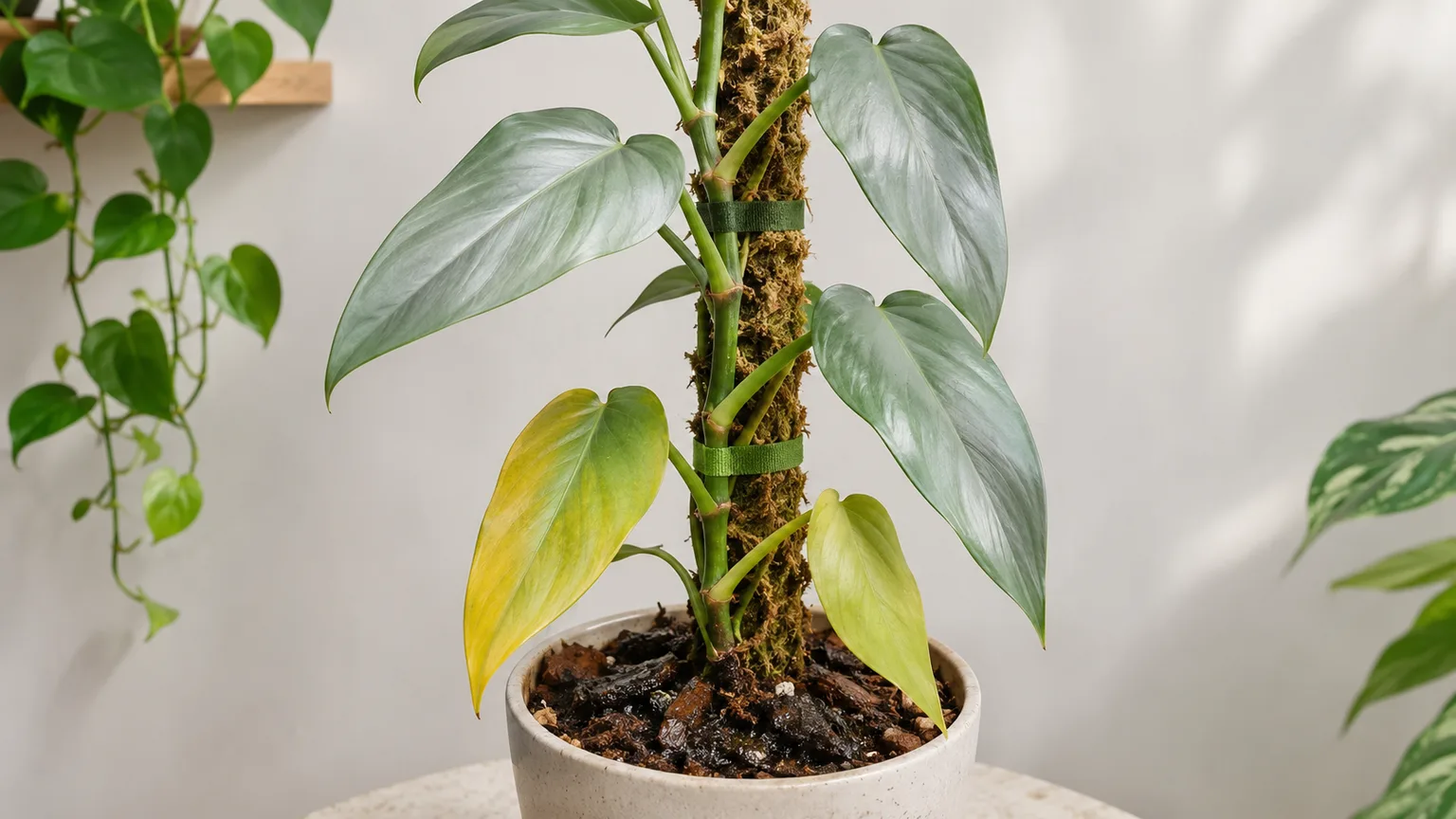
Healthy Silver Sword leaves are firm, powdery silver-blue arrows with copper-toned reverses on mature foliage. An overwatered vine loses that crisp metallic look first on the lowest leaves: they turn soft yellow, sometimes with dark mushy patches rather than dry brown edges. New leaves may stall halfway unfurled or emerge pale and limp instead of tight and silvery.
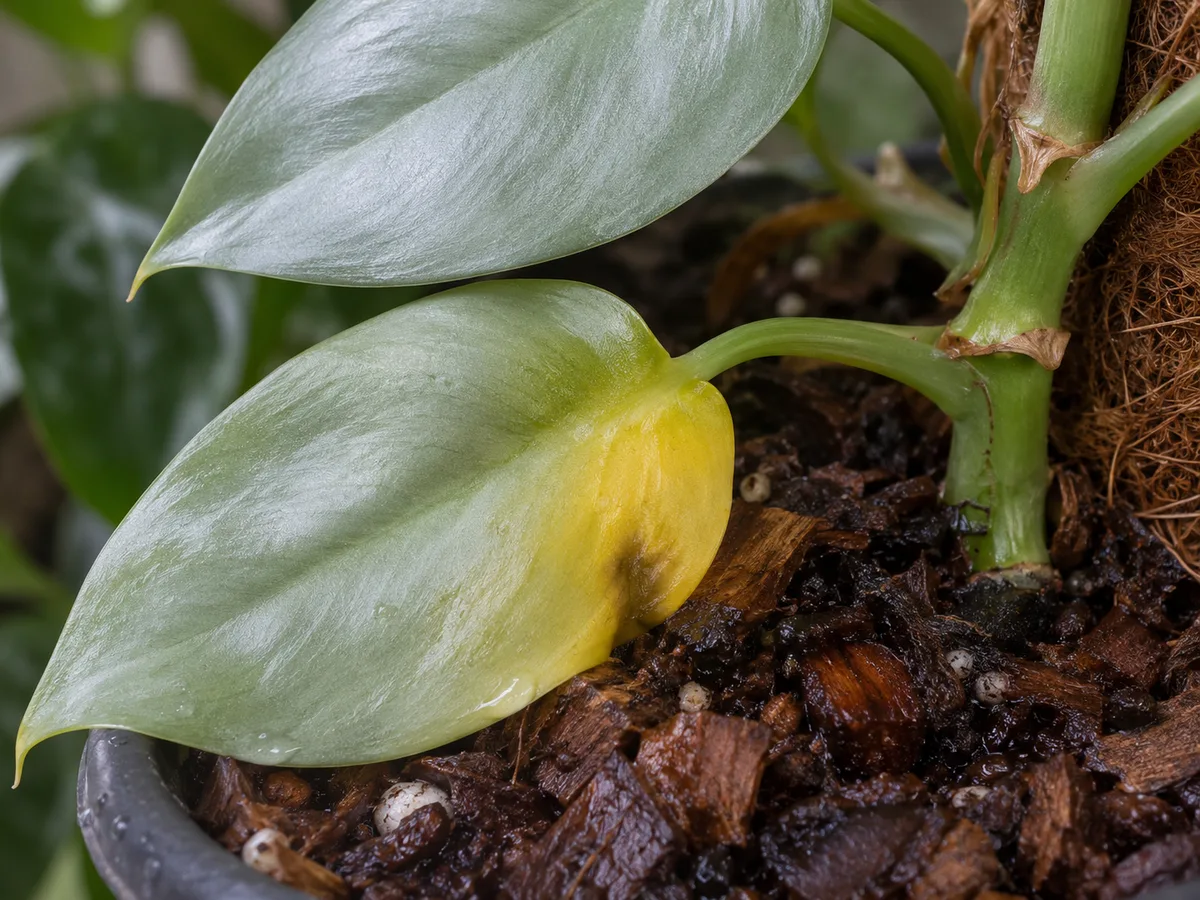
Overwatering softens and yellows lower leaves while the root mix stays damp and heavy.
The pot tells the story as clearly as the leaves. The mix stays damp days after watering, the pot feels heavy, and you may see white fuzzy mold, green algae, or fungus gnats on the surface. In advanced cases the stem base near the soil feels soft, and aerial roots along the vine turn brown and mushy instead of staying pale and firm.
Why a climbing Silver Sword stays wet longer
Silver Sword (Philodendron hastatum) is a true clinging climber that wants to grow upward on a moss pole or trellis. That vertical habit changes the water equation. A moss pole holds moisture against the vine, a dense climbing canopy slows evaporation from the pot surface, and a large decorative cachepot can trap water around the nursery pot where you never see it.
The second trap is the mix. Hastatum rots in heavy peat kept wet and needs a chunky aroid blend of potting mix, perlite, and orchid bark. Clemson notes that philodendron root rot usually results from a mix that does not drain quickly or from overly frequent watering, so soil that stays soggy is the core cause on this plant, not one heavy watering. Calendar watering makes it worse: a vine drinking normally in bright summer warmth nearly stops in a dim winter, yet the owner keeps the same weekly schedule.
How to confirm the cause
Work in this order before changing anything:
- Finger and weight test. Push a finger 3–5 cm into the mix and lift the pot. Wet mix at depth plus a heavy pot days after watering points to overwatering. The Spruce recommends letting the top inch dry slightly between waterings for this plant, using a moisture meter if you are unsure.
- Drainage check. Pull the nursery pot out of any cachepot. Standing water in the saucer or outer pot is a near-certain contributor, since philodendrons should never be left sitting in water according to Clemson extension.
- Stem-base squeeze. Gently feel the lowest stem near the soil. Firm with yellowing lower leaves only means early-stage trouble. Soft, dark, or collapsing stem tissue means root decay is underway.
- Smell and surface. A sour or musty smell, mold film, or clouds of fungus gnats confirm the mix has stayed wet too long.
- Growth pattern. Overwatering yellows the lowest leaves first and stalls new silver growth; uniform yellowing with crispy edges plus mix pulling from the pot edges points the other way, toward underwatering.
The first fix to try
Do one thing first: get the roots out of standing water and into air. Lift the nursery pot from its cachepot, pour off every drop of trapped water, and set the pot on a towel or saucer-free rack where air circulates underneath. Then leave it alone until the top 3–5 cm of mix is dry.
Do not fertilize, repot, prune the vine, or move it into harsh direct sun on the same day. A stressed Silver Sword cannot use feed, and stacking treatments hides which change helped. Clemson advises keeping philodendron soil evenly moist but never soggy, and never letting plants stand in water.
Step-by-step recovery
If the stem base is still firm and only lower leaves are yellowing, drying out is usually enough. Wait until the top layer dries, then resume watering with a full soak that drains freely, emptying the saucer after 15 minutes.
If the mix is still sopping after a week, stems feel soft, or damage spreads to new leaves, unpot the plant. Shake off wet mix, rinse roots under lukewarm water, and trim anything black, mushy, or stringy with sterilized snips, keeping firm pale roots. Repot into fresh chunky aroid mix in a pot with drainage holes, planting at the same depth, and water lightly once to settle. The Connecticut station recommends sterile mix and clean pots for philodendron root rot control, alongside avoiding crown overwatering.
Remove only leaves that are fully yellow or mushy, cutting at the petiole base. Keep partly green leaves working while the plant recovers. If a long vine section has collapsed but upper nodes still carry firm leaves and pale aerial roots, cut a healthy node section as backup and root it in damp moss while the mother plant recovers.
Silver-blue leaves and node rescue on an overwatered vine
Silver Sword’s value is its climbing silver foliage, and that changes salvage decisions. A bare lower vine with firm upper nodes is worth keeping, because hastatum readily pushes new growth from nodes below a cut. Snip a leggy or rotted section just above a healthy node with a firm aerial root, and that cutting becomes your insurance policy.
Do not strip every yellowing leaf at once on a climbing specimen. Each remaining leaf feeds the vine while roots regrow, and a moss-pole plant with no foliage cannot climb back. Keep the pole barely damp, not soaked, during recovery — a saturated pole against a soft stem base accelerates decay rather than helping the plant grip.
Recovery timeline
Mild cases stabilize within two to three weeks: yellowing stops spreading, the pot lightens normally between waterings, and the next leaf unfurls firm. Moderate cases that needed a repot take four to eight weeks before new arrow leaves emerge with proper silver tone. Waterlogged roots literally drown because saturated mix displaces the air roots need, which is why the RHS lists yellow leaves, root rot, and death as the waterlogging sequence.
Improvement looks like firm stem bases, new growth unfurling fully, and mix drying on schedule. Decline looks like spreading soft spots, blackening petioles, persistent sour smell, or sequential leaf collapse — all reasons to unpot if you have not already.
Mistakes to avoid
Do not move an overwatered Silver Sword into direct sun to “dry it faster.” Direct sun scorches foliage that is already weak; philodendrons want bright but indirect light. Do not feed a stressed plant, do not mist a soggy vine to raise humidity, and do not pot up into a larger container, which only adds more wet mix around damaged roots.
The most common repeat mistake is watering the moss pole daily while the pot is still wet. Treat pole and pot as one water budget: if the pole is soaked, the pot does not need water yet.
How to prevent it next time
Water by dryness, not by day. In summer that is roughly every 7–10 days, letting the top 3–5 cm dry; in winter stretch to 10–14 days as growth slows and light drops. Every soak should drain freely, and the saucer must be emptied. Philodendrons grow best around 65–85°F per NC State, and cooler rooms dry mixes far more slowly — adjust for that.
Keep the chunky mix chunky. If bark has broken down into fine sludge, refresh the mix at the next repot rather than watering less and less around failing soil. Terracotta dries faster than glazed ceramic or plastic, so match the pot to your habits: chronic overwaterers do better in breathable pots with generous drainage holes.
When to worry
Give up on individual leaves freely but on the whole plant slowly. A vine with firm upper nodes can be restarted from cuttings even when the lower root system is lost. Discard the plant only when the stem base is mushy along its full length, all roots are black and slimy, and no firm node remains to propagate — at that point decay has outrun rescue, as the Connecticut station notes that highly symptomatic philodendrons with advanced root decay rarely recover.
Related tool
Use the Root Rot Risk Checker to score drainage, pot, and watering-cadence risk for overwatering on this plant before changing multiple variables at once.