Root Rot on Philodendron Silver Sword: Causes, Checks &
Quick answer
If your Silver Sword yellows from the base up and wilts while the soil is still wet, suspect root rot. First step: slide the plant out of its pot and inspect the roots — firm cream roots mean a watering issue, brown mushy roots with a sour smell mean rot that needs trimming and fresh chunky mix.
Root Rot on Philodendron Silver Sword: Causes, Checks & Fixes
This guide covers root rot on Philodendron Silver Sword. See also the general Root Rot guide, watering, and light pages for this plant.
Root Rot on Philodendron Silver Sword: Causes, Checks & Fixes
Quick answer
A Silver Sword with lower leaves yellowing one after another and a vine that wilts even though the mix is damp is telling you about its roots, not its leaves. The single most useful action is to slide the root ball out of the pot and inspect it: firm, cream-colored roots with an earthy smell point to a watering-rhythm problem, while brown roots that feel soft and smell sour or musty confirm rot.
First step: unpot, rinse the root ball, and trim every mushy root back to firm tissue with clean scissors, then repot into fresh chunky mix. Everything else — light tweaks, fertilizer, sprays — waits until the root zone is fixed.
What root rot looks like on Silver Sword
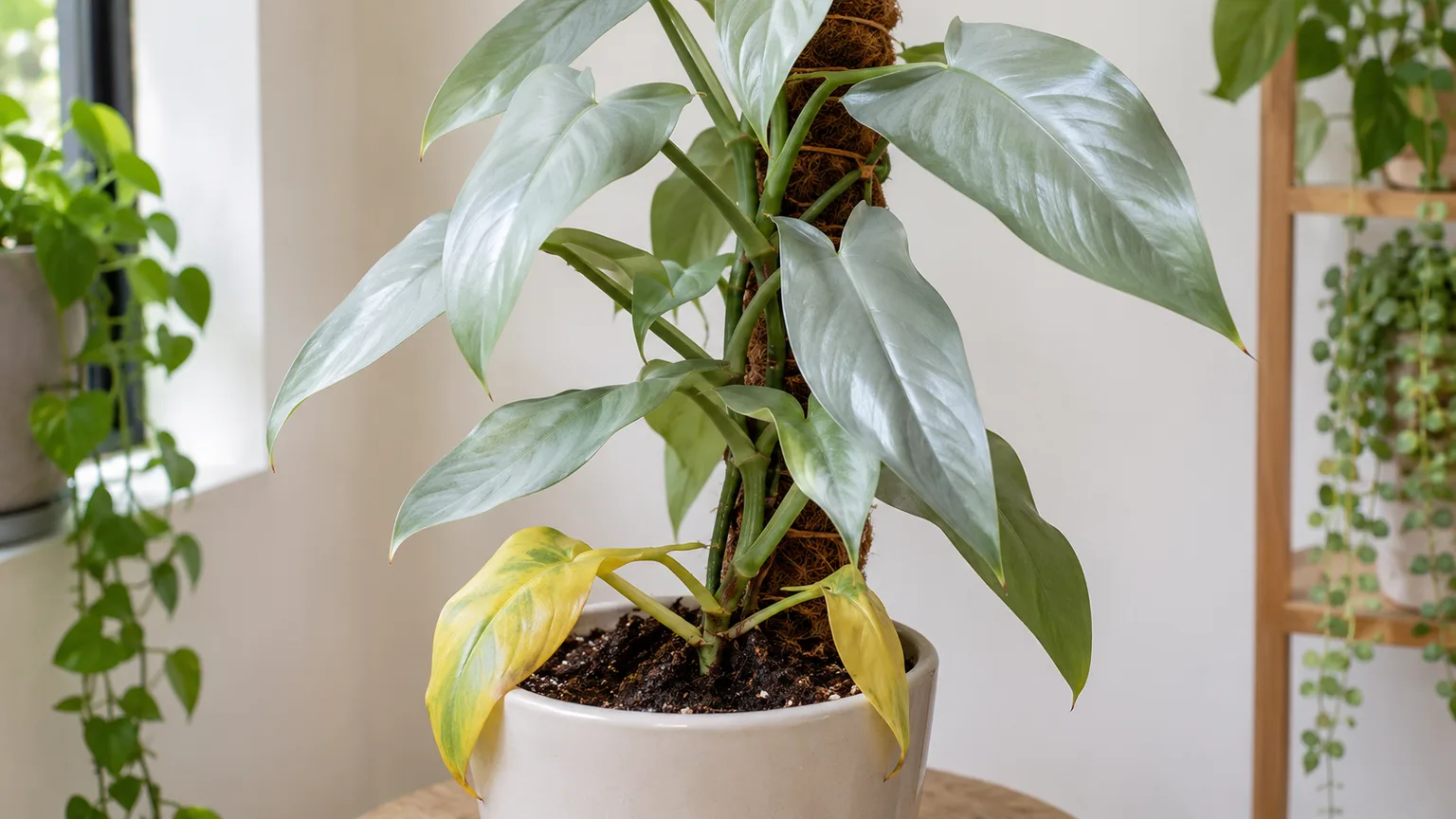
On this plant the sequence is fairly consistent. The lowest arrow leaves yellow first while the silvery upper growth still looks fine, then the vine wilts despite wet soil — the classic sign gardeners notice when roots are soft and brown and can no longer move water. Growth stalls, new leaves emerge small or not at all, and the stem base near the soil line may feel soft when you squeeze it gently.
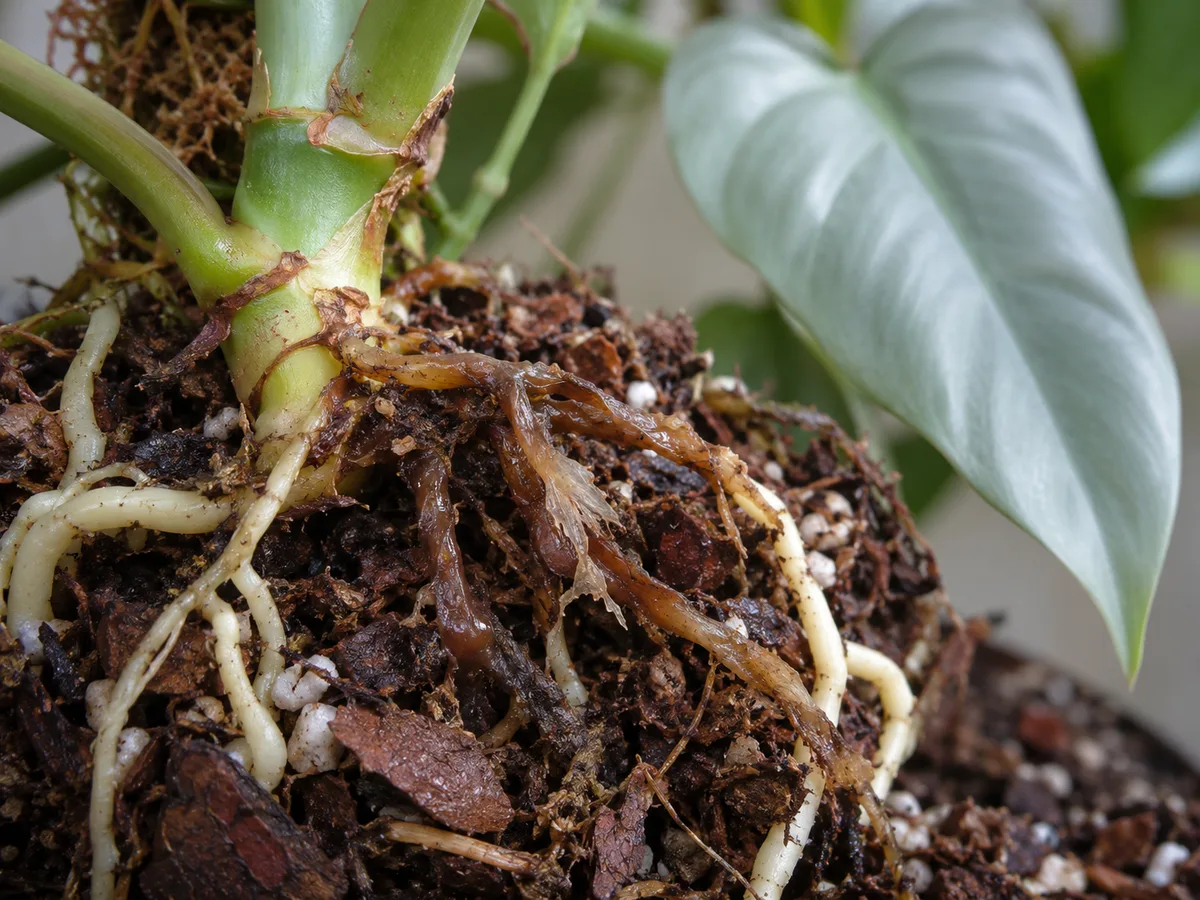
Root rot shows as brown, soft roots that slough apart beside firm cream roots; yellow lower leaves and wilt can appear while the mix remains wet.
Two Silver Sword–specific tells help. Check the aerial roots along the vine: healthy ones stay firm and pale, while a rotting root system often pairs with aerial roots that brown and shrivel instead. And smell the drainage hole before unpotting — a sour or stagnant odor from a pot that stays heavy days after watering is a strong early warning.
Severity note: This issue is marked medium for Philodendron Silver Sword — a triage clue, not a guarantee.
Why Silver Sword rots: three plant-specific traps
For how chronic wet mix damages roots in general, see our root rot guide. On Silver Sword, the pattern usually shows up through three traps tied to how this climbing aroid is grown.
The moss-pole moisture trap. Hastatum only performs when it climbs, and growers who mist or soak the pole daily can keep the base of the pot permanently damp. Water wicks down the pole into the crown while the owner believes the pot itself is drying normally. Keep the pole lightly damp for aerial roots, never dripping wet.
Peat-heavy mix that collapses. This species needs an airy bark-and-perlite structure around its roots, and soil that does not drain quickly is the documented cause of philodendron root rot. Dense peat feels fine for months, then compacts, and the pot suddenly stays wet a week after every soak. If your Silver Sword is still in nursery peat after a year, repot into chunky aroid mix before symptoms start.
Big pot plus winter schedule. A climbing vine in an oversized pot holds a reservoir of wet mix the roots cannot drink fast enough, and the problem peaks in winter when growth slows. Overwatering can cause root rot on this species, so stretch the summer 7–10 day rhythm toward 10–14 days in winter and always check the top 3–5 cm first.
How to confirm it
Do this unpot check before cutting or repotting anything:
- Water history: has the pot stayed heavy or damp more than a week after watering? Has water stood in the saucer or cachepot?
- Drainage-hole test: smell the hole and look at root tips. Sour odor or brown tips are suspicious.
- Slide the plant out: healthy roots are firm and cream to white. Rotted ones are soft with a bad odor, and the outer sheath may slough off leaving a thin string.
- Stem squeeze: gently pinch the stem base. Firm means the rot is still confined to roots; soft or translucent means it is advancing into the vine.
If roots are firm and white throughout, you do not have rot — skip the surgery section and go to lookalikes and the watering rhythm in the watering guide.
The first fix: unpot, trim, and repot
Take this one corrective sequence, in order, on the day you confirm rot:
- Rinse the root ball under lukewarm water so you can see what is firm and what is not.
- With scissors wiped in rubbing alcohol, cut every brown, mushy root back to firm cream tissue. Be thorough — leftover rot re-infects fresh mix.
- Repot into fresh chunky mix (potting mix plus perlite and orchid bark for drainage, since perlite and pine bark increase drainage) in a pot with drainage holes that let excess water escape. Do not reuse the old mix.
- Water once lightly to settle the mix, tip out the saucer completely, and place the plant in bright indirect light — the bright filtered light this species prefers, with no direct sun on stressed foliage.
- Then wait: do not water again until the top few inches of soil are dry.
Do not fertilize, mist heavily, or apply fungicide at this stage. Extension guidance specifically does not recommend chemical fungicides for houseplant root rots given limited home-gardener options, and instead emphasizes correcting soil moisture — so the repot and the new watering rhythm are the treatment.
Saving the vine: node cuttings as backup
Here Silver Sword’s climbing habit is an advantage most rosette plants lack. While the mother plant recovers, cut a healthy top section with at least one node and root it in damp sphagnum or water as insurance. If the stem base is soft but upper nodes are firm, this cutting — not the mother — becomes the plant.
Root the cutting in bright indirect light with high humidity around the leaves but air movement at the surface, and pot it up only once new roots are an inch or two long. Losing the original root system feels catastrophic, but a climber with nodes everywhere is one of the easiest plants to restart.
Recovery timeline
Expect stillness before progress. The plant should stop yellowing further within one to two weeks of the repot; continued rapid yellowing means rot was left behind and you should re-inspect. New growth — a firm spear or unfurling arrow leaf with good silver tone — typically follows in three to six weeks in warm conditions, since this species grows best around 65 to 85 degrees Fahrenheit.
Judge recovery by new firm leaves and a base that resists a gentle tug, not by old leaves re-greening. Yellowed leaves will not revert; drop them once they are fully spent so you can read the new growth clearly.
Mistakes to avoid
- Watering on a calendar instead of checking the top 3–5 cm. Let the compost dry slightly between waterings rather than topping up damp mix.
- Leaving the nursery pot sitting in a water-filled saucer or cachepot. Saturated compost can eventually cause root rot, so empty standing water every time.
- Fertilizing a freshly trimmed plant. Feeding stressed roots burns them; resume half-strength feeding only after new growth looks healthy.
- Reaching for fungicide first. Home-use products are limited and costly, and they cannot fix the soggy conditions that caused the rot.
- Potting up into a larger container “to help.” A smaller snug pot with fresh chunky mix dries correctly; an oversized one re-creates the swamp.
Lookalikes that are not rot
Simple underwatering also wilts Silver Sword, but the soil tells the story: bone-dry mix that rehydrates and perks the vine within hours is thirst, not rot. Cold drafts cause sudden leaf collapse with firm white roots underneath — keep the plant away from cold glass and vents in winter.
Brown leaf tips alone usually trace to fertilizer buildup or dry air rather than roots; flush the mix and check humidity before assuming the worst. And one or two oldest leaves yellowing over months while new silver growth continues is normal aging on a climbing vine, not an emergency. When in doubt, the unpot check settles it in minutes.
How to prevent it next time
Build the routine around air at the roots. Use chunky bark-and-perlite mix from the start, keep drainage holes open, and refresh the mix every one to two years before it compacts. Water deeply until it runs through, tip the saucer, and wait for the top 3–5 cm to dry — never leave plants standing in water.
Balance the moss pole separately from the pot: dampen the pole for aerial roots without soaking the container below. Give the plant the bright indirect light and warm temperatures it wants, since a vigorously growing vine drinks its pot dry on schedule instead of sitting wet. Full routines live in the Silver Sword overview.
When to let go
Sometimes the honest answer is to start over. If the stem is soft all the way up the vine, every root is mush with no firm tissue, and no healthy node remains for cuttings, the plant will not recover — extension guidance notes that discarding is often the most cost-effective answer for severe houseplant root rot. Compost the remains, sterilize the pot, and restart with a cutting or a new plant in fresh chunky mix rather than nursing a stump for months.
Related Philodendron Silver Sword guides
- Silver Sword overview — light, support, and full care baseline for this climber
- Watering — dry-down depth checks and seasonal rhythm that prevent soggy mix
Related tool
Use the Root Rot Risk Checker to narrow causes for root rot on this plant before changing multiple variables at once.
FAQs
How can I confirm root rot on my Silver Sword without guessing?
Slide the root ball out and look, feel, and smell. Firm cream or white roots with no odor mean the problem is watering rhythm, not rot. Brown, soft roots that pull apart easily plus a sour or musty smell confirm rot — trim those roots back to firm tissue.
What should I do first when I find rotted roots?
Trim every mushy root back to firm healthy tissue with clean scissors, then repot into fresh chunky aroid mix in a pot with drainage holes. Water once lightly to settle the mix, then wait until the top 3–5 cm dry before watering again.
Can my Silver Sword recover if most of its roots are gone?
Yes, if the vine still has firm stems and at least one healthy node. Silver Sword roots readily from stem cuttings with a node in moss or water, so root a top cutting as insurance while the mother plant recovers. New firm leaves and resistance when you tug the base signal recovery.
When is root rot on Silver Sword an emergency?
Treat it as urgent when the stem base near the soil turns soft, several leaves yellow within days, or the whole vine flops despite wet mix. Those signs mean rot is moving into the stem, so unpot that day and take a node cutting before the vine collapses.
How do I prevent root rot on Silver Sword long term?
Grow it in chunky bark-and-perlite mix, water only when the top 3–5 cm are dry, empty the saucer after every soak, and refresh compacted mix every 1–2 years. Balance moss-pole watering so the pole stays lightly damp without keeping the pot soggy.