Not Enough Light on Philodendron Silver Sword: Causes
Quick answer
Not enough light on Philodendron Silver Sword shows as dull green leaves that lose their silver sheen, stretched stems with wide gaps between leaves, and new arrow leaves that stay small. First fix: move the plant to bright, filtered indirect light near an east- or north-facing window and leave it there for several weeks before changing anything else.
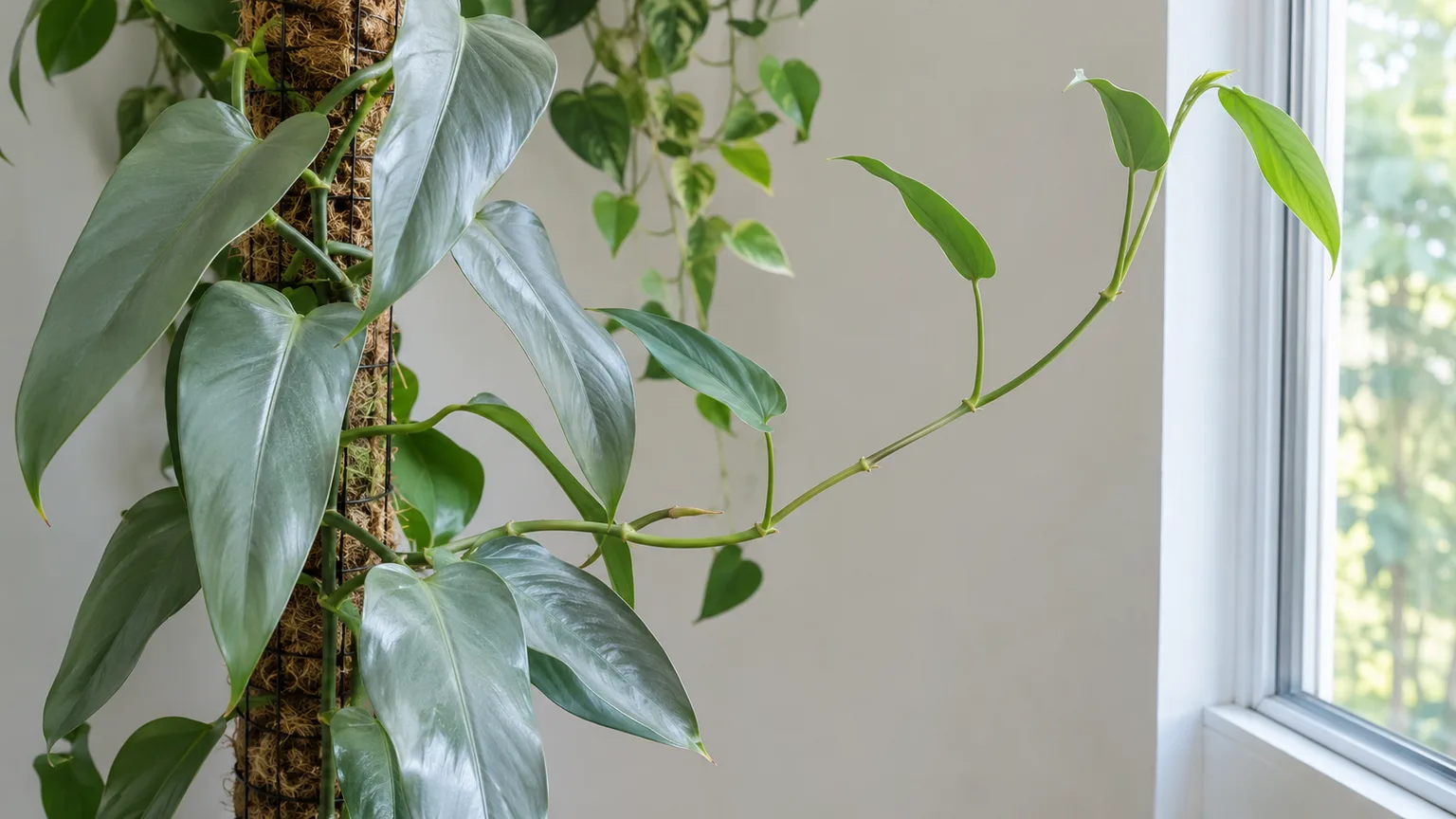
Not Enough Light on Philodendron Silver Sword: Causes, Checks & Fixes
This guide covers not enough light on Philodendron Silver Sword. See also the general Not Enough Light guide, watering, and light pages for this plant.
Not Enough Light on Philodendron Silver Sword: Causes, Checks & Fixes
Quick answer
Not enough light on Philodendron Silver Sword (Philodendron hastatum) shows as dull green leaves that lose their silver sheen, stretched stems with wide gaps between leaves, and new arrow leaves that stay small. For how dim conditions weaken houseplants in general, see our not enough light guide. On Silver Sword specifically, the pattern usually shows up as faded metallic blades plus a vine that reaches sideways instead of climbing. First fix: move the plant to bright, filtered indirect light near an east- or north-facing window and leave it there for several weeks before changing anything else.
What not enough light looks like on Silver Sword
Silver Sword advertises its light history on its blades. In good light the juvenile leaves hold a powdery silver-blue metallic finish; in weak light that finish fades first, leaving flat mid-green leaves that look like a different plant. Growth slows, new arrow leaves unfurl smaller than the ones below them, and the vine stretches with long bare internodes as it hunts for brightness. The Spruce notes that a lack of light on this species produces exactly this combination of lackluster-looking leaves and leggy, stunted growth.
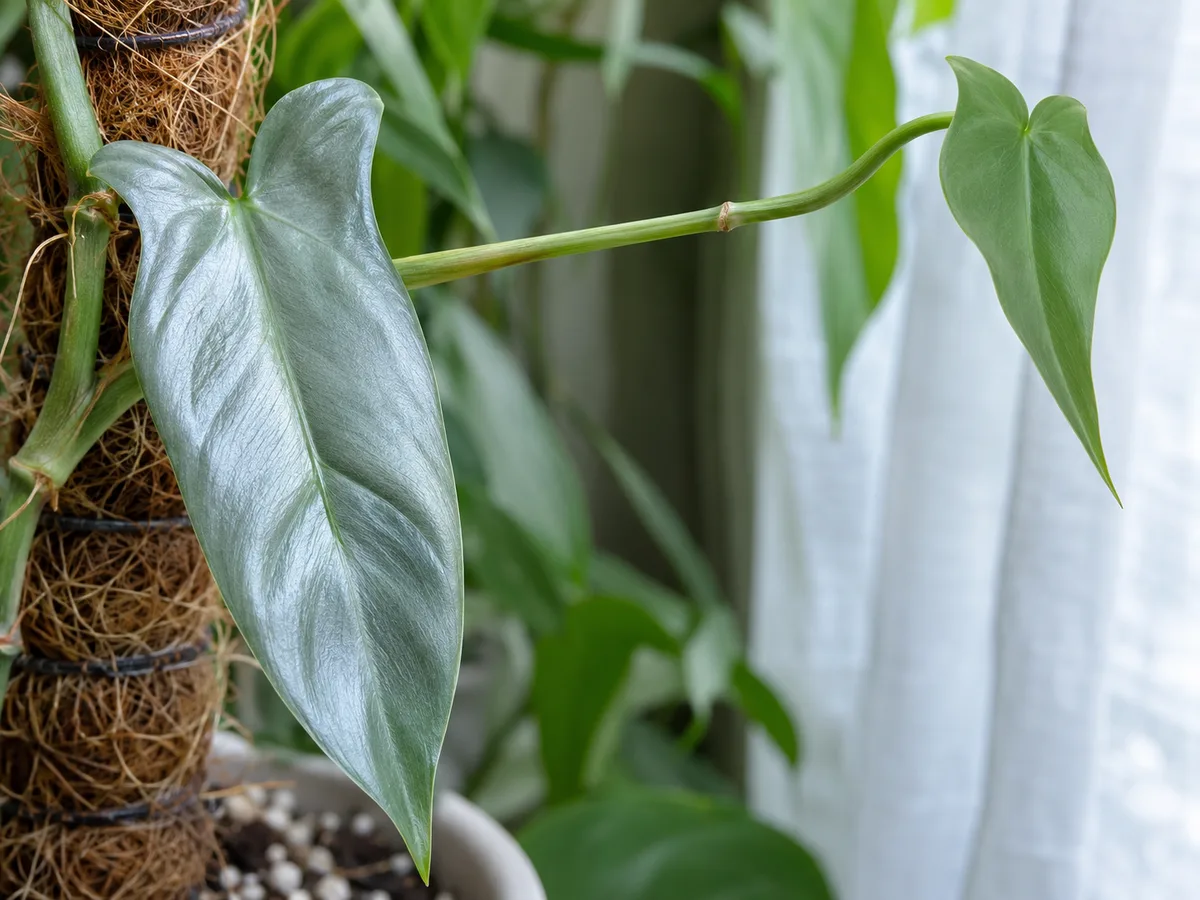
Low light can fade the metallic sheen first, then reduce new leaf size and stretch the spaces between nodes.
Because Silver Sword is a true climber rather than a tabletop rosette (see the Philodendron Silver Sword overview), low light also breaks its climbing behaviour. Aerial roots fail to grip the moss pole, the stem leans or flops sideways toward the nearest window, and lower leaves yellow and drop as the plant abandons growth it can no longer feed. If your plant matches this full picture — dull blades, stretched gaps, stalled small leaves — light is the diagnosis, not hunger or thirst.
Why Silver Sword suffers in dim rooms
Hastatum evolved as a rainforest understory climber climbing toward canopy brightness, so it expects strong filtered light all day. NC State Extension describes its needs as bright, indirect sunlight with protection from scorching direct sun. A shelf across a dark room or a desk metres from the nearest window delivers a fraction of that, and the plant responds by rationing: less silver pigment, smaller blades, longer reaches between nodes.
Three indoor situations cause most cases. The first is distance — every metre from the glass cuts usable light sharply, and Silver Sword placed as decor on a shelf or floor corner quietly starves. The second is direction without sky view: a south window blocked by buildings or a west window with the blinds permanently drawn can be dimmer than an open east window. The third is seasonal: a spot that worked in June fails in December when day length collapses, and the plant stalls just as dry winter air adds stress. Clemson Extension confirms the general philodendron pattern behind this, noting that yellowing lower leaves and dying growing tips follow too little light.
How to confirm the cause
Work through these checks in order before moving anything:
- Map the light. Stand where the plant sits at midday. Can it “see” a broad patch of sky? If it faces an interior wall or sits more than 2 metres from glass, light is suspect number one. Compare against the placement advice in the Silver Sword light guide.
- Read the internodes. Measure stem gaps between the last five leaves. Gaps clearly longer than on older growth mean the vine is stretching — classic etiolation, not a watering fault.
- Compare leaf size and sheen. New blades smaller and greener than established ones point to light shortage. Uniformly yellow soft leaves plus heavy wet mix instead suggest overwatering, so cross-check your routine against the Silver Sword watering guide.
- Check the timeline. Did growth stall when days shortened, after a house move, or when a curtain went up? A light-linked timeline confirms the diagnosis.
- Rule out passengers. One glance at leaf undersides and the soil surface excludes spider mites, mealybugs, and fungus-gnat build-up that also yellow leaves in dim stagnant corners.
The first fix to try
Move the plant to within a metre of a bright east- or north-facing window, behind a sheer curtain if the sun lands directly on the blades. That single relocation is the whole first fix — do not fertilise, repot, or prune on the same day. Shifting a starved plant into harsh unfiltered south- or west-facing sun can scorch leaves already thinned by shade, so filtered brightness matters as much as intensity. Then leave the plant alone for three to four weeks so new growth can tell you whether the move worked.
Step-by-step recovery
Once the plant sits in better light, support recovery in this order:
- Weeks 1–3: observe only. Water normally when the top few centimetres dry, and watch for a new leaf spike. No feed, no repot.
- Weeks 4–8: clean and rotate. Wipe dust from both blade faces with a damp cloth — the RHS advises keeping philodendron leaves dust-free so they absorb sufficient light — and rotate the pot a quarter turn every couple of weeks for even growth.
- After two healthy new leaves: prune the worst legginess. Cut stretched bare sections back to just above a leaf node in spring or early summer; the RHS recommends cutting back straggly specimens to encourage fresh leafy growth. Root the cuttings with a node in moss or water per the Silver Sword propagation guide rather than binning them.
- Only then: resume feeding. Restart half-strength balanced liquid feed on actively growing plants, and revisit the chunky aroid mix guidance in the Silver Sword soil guide if the pot has been wet and airless through the dim months.
Recovery timeline
Expect the vine to stop stretching within two to three weeks of the move. New leaves emerging around weeks four to eight should show brighter silver tone and tighter spacing — that is your proof of recovery. Existing dulled leaves seldom fully re-silver, so judge progress by fresh blades, not old ones. A severely starved plant that dropped many leaves may need a full growing season to rebuild a handsome vine, especially if you pruned it hard.
Lookalike symptoms
| What you see | More likely | How to tell |
|---|---|---|
| Lower leaves yellow, mix stays wet for days, pot feels heavy | Overwatering / root trouble | Soil never dries; stems soften at the base; light history is fine |
| Pale bleached patches on leaves facing the glass | Too much direct sun | Damage sits on the window side only; move back behind a sheer |
| Fine webbing, stippled dusty leaves | Spider mites | Webs and speckling under leaves; pests persist after a light move |
| Uniform tiny new leaves plus brown crispy tips | Underfeeding or dry air | Light placement is already bright; check feed schedule and humidity |
| Single old leaf yellowing occasionally | Normal ageing | Rest of vine grows strongly with good sheen; no action needed |
Mistakes to avoid
Do not swing the plant from a dark corner straight into unfiltered midday sun — scorched blades cannot photosynthesise at all. Do not fertilise a light-starved plant to “push” growth; without light to power it, feed accumulates and burns roots. Do not repot during the rescue unless the mix is genuinely sodden and sour, a job for the Silver Sword repotting guide on a stable plant. And do not stack a grow light inches from the leaves on day one; introduce strong light over a week.
How to prevent it next time
Give Silver Sword a permanent bright filtered position with a genuine sky view and keep the moss pole tie-ins snug so new aerial roots attach upward instead of sprawling sideways. Recheck the spot every autumn — daylight loss is gradual and easy to miss until internodes stretch. If your brightest window still leaves gaps widening, add a full-spectrum LED grow light on a 10–12 hour timer rather than accepting another dim winter. The Spruce’s general philodendron guidance puts it simply: too little light gives leggy growth with wide space between the leaves, so spacing is your early-warning gauge forever.
When to use this page vs other Silver Sword guides
Use this page when dull sheen, stretched internodes, and small new leaves arrive together. If the mix stays wet and stems soften, start with watering and root checks instead. If leaves bleach or crisp on the window side, the problem is excess sun rather than shortage. For day-to-day placement, brightness targets, and grow-light setup, the dedicated light guide is the reference; this page is the rescue manual for when that placement has already failed.
Related Philodendron Silver Sword guides
- Philodendron Silver Sword overview — growth habit, support needs, and when this climber suits your home.
- Silver Sword light guide — exact brightness targets and window placement for steady growth.
- Silver Sword watering guide — use when wet mix, not dim light, explains yellowing.
- Silver Sword soil guide — chunky aroid mix that keeps roots breathing in lower light.
- Silver Sword repotting guide — for stable plants that need fresh mix or a taller pole, not day-one rescues.
- Silver Sword propagation guide — turn pruned leggy sections into new plants.
Related tool
Use the Plant Problem Diagnosis Tool to narrow causes for not enough light on this plant before changing multiple variables at once. To check whether your window meets this climber’s brightness needs, try the Light Requirement Calculator.