Aphids on Philodendron Silver Sword: Causes, Checks & Fixes
Quick answer
Aphids on Philodendron Silver Sword cluster on the newest spear leaves and stem tips, where soft tissue is easiest to pierce. First, isolate the plant and rinse the new growth thoroughly with water, then confirm live insects before applying any spray.
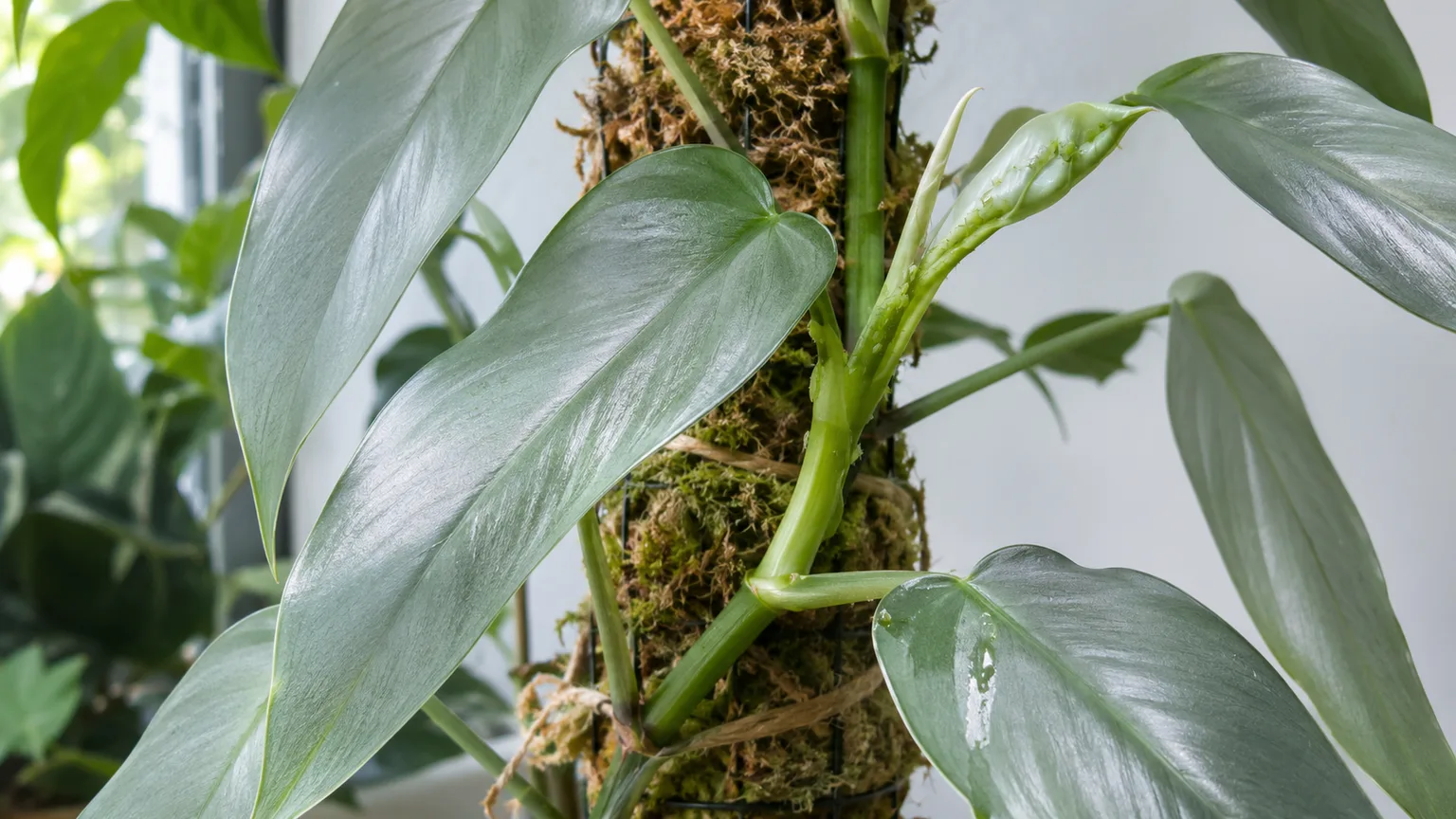
Aphids on Philodendron Silver Sword: Causes, Checks & Fixes
This guide covers aphids on Philodendron Silver Sword. See also the general Aphids guide, watering, and light pages for this plant.
Aphids on Philodendron Silver Sword: Causes, Checks & Fixes
Quick answer
Aphids on Philodendron Silver Sword gather on the softest tissue: unfurling spear leaves, stem tips, and the leaf axils along the climbing vine. Suspect them when new leaves emerge curled or sticky while older foliage still looks fine. First, isolate the plant and rinse the new growth thoroughly with water — then confirm live insects before reaching for any spray.
For the general mechanics of aphid feeding and honeydew, see our aphid hub. On Silver Sword, the pattern usually shows up as stalled spears and sticky narrow blades rather than whole-plant wilt.
What aphids look like on Silver Sword
Silver Sword’s narrow, silvery blades make aphid signs easy to spot once you know where to look. Colonies pack onto the unfurling spear, the tender stem just below it, and the upper leaf axils — rarely on mature hardened leaves first. The insects themselves are small pear-shaped bodies, often green, black, or pale, sitting still in groups rather than scattering.
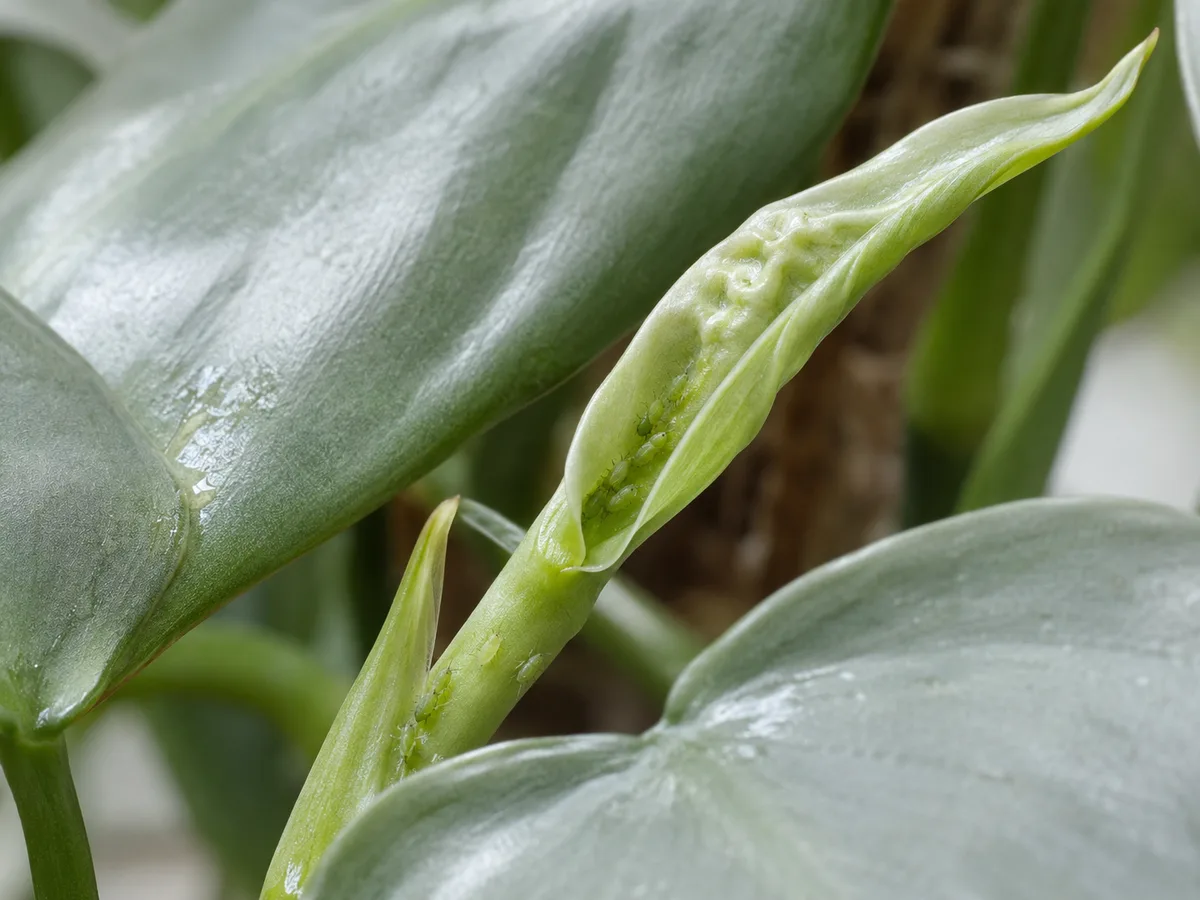
Aphid colonies favor the soft newest spear and stem tip, where feeding can distort the opening leaf.
Because the blades are pale and metallic, the secondary signs show fast: a glossy sticky film on leaves below the colony, distorted spears that open puckered, and in longer infestations a gray-black coating on the silver surface. That coating is sooty mold growing on honeydew, not a separate leaf disease.
Where they hide on a climbing Silver Sword
Silver Sword (Philodendron hastatum) is a true clinging climber, and its vertical habit shapes where aphids settle. Each new leaf emerges as a spear from the stem tip, giving aphids a sheltered feeding groove that a casual glance misses. Colonies also tuck into leaf axils along the vine and where stems press against a damp moss pole.
A plant trained up a pole can carry colonies at several nodes at once, so inspect the full length of the vine, not just the top. If your Silver Sword sprawls without support, check the tangled stem tips too — crowded soft growth is equally inviting. Your plant overview covers the climbing habit that drives this inspection route.
Why Silver Sword gets aphids
Indoors, aphids almost always arrive as hitchhikers on a new plant, an open window in warm weather, or a plant returning from outdoors. They stay when they find soft nitrogen-rich growth: a vine pushing fresh spears after feeding, repotting, or a move into brighter, warmer conditions. Silver Sword grows best around 65–85°F, the same warmth that lets indoor aphid colonies build quickly.
Overfeeding is the most common invitation. A heavy dose of fertilizer pushes a flush of tender tissue that aphids colonize first, which is why the fertilizer guide recommends light half-strength feeding only during active growth. Constantly damp moss poles and crowded, dusty blades add shelter, though humidity itself is not the cause.
How to confirm the cause
Work in this order, in good light with a magnifier or phone zoom:
- Unfurl check: gently open the newest spear and look inside the groove for clustered insects or shed white skins.
- Tip and axil scan: examine stem tips, leaf axils, and leaf undersides along the whole vine, including behind the moss pole.
- Touch test: run a finger over lower blades — sticky honeydew confirms sap-feeders rather than dust or spray residue.
- Neighbor check: inspect adjacent plants, since indoor aphids spread short distances to the nearest soft growth.
- Pattern check: aphids distort new leaves while old leaves stay normal; uniform yellowing of old leaves points to watering or light instead, covered in the watering guide.
Aphids feed in dense sap-feeding colonies and excrete sticky honeydew, so clusters plus stickiness together are a confident diagnosis. Single gnats hovering over soil, fine webbing, or white cottony tufts point to other pests.
The first fix to try
Isolate the plant and rinse the new growth thoroughly with water. Hold the vine over a sink or shower, angle the spray into the spear groove, stem tips, and leaf axils, and use your fingers to dislodge the clusters. A strong water rinse alone removes most indoor colonies without chemicals.
Let the plant drip-dry in bright indirect light with airflow, and do nothing else that day. Recheck in two to three days: if no live clusters return, the rinse plus isolation solved it. If live aphids reappear, move to the treatment steps below.
Step-by-step cleanup and treatment
- Prune only what blocks treatment — a fully distorted spear sheltering hundreds of aphids can be removed, but keep healthy leaves that power recovery.
- Rinse a second time, covering every node from tip to base, since pole-trained vines hide colonies at multiple points.
- Apply insecticidal soap strictly per label, coating the insects themselves on spears, tips, and undersides. Repeat at the label’s interval, usually 7–10 days, for two to three rounds to catch nymphs.
- Wipe honeydew off the silver blades with a damp cloth so light reaches the leaf and you can tell whether stickiness is new or old.
- If colonies persist after two full soap rounds, consider horticultural oil per label as the next step — but test one leaf first, since oil can mark silvery foliage.
Honeydew left in place grows black sooty mold, which blocks light on these light-hungry blades, so the wipe-down matters as much as the spray. Keep the plant isolated until a full week passes with no live aphids.
What not to do
Do not repot, prune hard, and spray all on the same day — a stressed vine cannot show you which intervention worked, and repotting is unnecessary for aphids. Do not fertilize to “help it recover”; fresh soft growth feeds the next colony, and feeding guidance in the fertilizer guide says to pause feeding on stressed plants. Do not use concentrated dish soap, alcohol drenches, or outdoor-strength insecticides on the narrow blades, which mark easily. And do not place the plant in direct sun to “burn off” pests — Silver Sword scorches, and the light guide keeps it in bright filtered light.
Recovery: what to expect
Spears that opened curled will not flatten — judge recovery by what emerges next, not by old damage healing. Within two to four weeks of clearing the colony, new spears should open flat with a clean metallic sheen and stems should resume climbing. Wipe lingering sooty film gently; it fades as honeydew stops and leaves are cleaned, though heavily coated blades may look dull until replaced by new growth.
Watch for warning signs: every new tip stalling, colonies returning within days, or stems softening at the tip suggest the infestation outruns spot treatment. In that case a healthy node cutting rooted separately can restart the plant faster than rescuing a fully colonized vine.
How to prevent it next time
Quarantine every new plant for two to three weeks where you can inspect its new growth before it joins the collection. Make spear checks a weekly habit during warm active growth — early colonies of a dozen insects rinse off in seconds. Feed lightly, keep the chunky mix draining freely per the soil guide, and wipe dust from blades so inspections and light capture stay easy. Good airflow around the pole discourages the sheltered, still pockets where colonies build unnoticed.
Lookalikes on Silver Sword
- Mealybugs: white cottony tufts in axils rather than smooth-bodied clusters; dab individuals with alcohol instead of whole-vine sprays.
- Spider mites: fine stippling and webbing on mature blades, worst in hot dry air — no honeydew stickiness.
- Thrips: silvery scratch marks and black specks on hardened leaves rather than clustered insects on spears.
- Fungus gnats: tiny flies over the mix, not on leaves; larvae live in soil, so leaf sprays do nothing.
- Edema or dust: bumpy or dusty blades without insects, stickiness, or distorted spears.
If the signs do not match clusters plus honeydew on new growth, run the symptoms through the pest tool below before treating.
Related Philodendron Silver Sword guides
- Philodendron Silver Sword overview — climbing habit, support, and placement context behind this pest pattern.
- Watering — use when older leaves yellow uniformly or the mix stays heavy; aphids distort new growth instead.
- Light — use when silver tone fades or internodes stretch without any insects present.
- Soil — use when the mix stays soggy or stems soften at the base, suggesting root trouble rather than pests.
- Fertilizer — use when flush soft growth keeps attracting pests or leaves pale from over- or under-feeding.
Related tool
Use the Pest Identifier Tool to narrow causes for aphids on this plant before changing multiple variables at once.