Aphids on Phalaenopsis Orchid: Causes, Checks & Fixes
Quick answer
Aphids on Phalaenopsis Orchid gather on soft new growth and flower spikes, suck sap, and leave sticky honeydew. First step: isolate the plant and rinse aphids off leaf undersides and spike tips-then confirm live insects before applying insecticidal soap on labeled intervals.
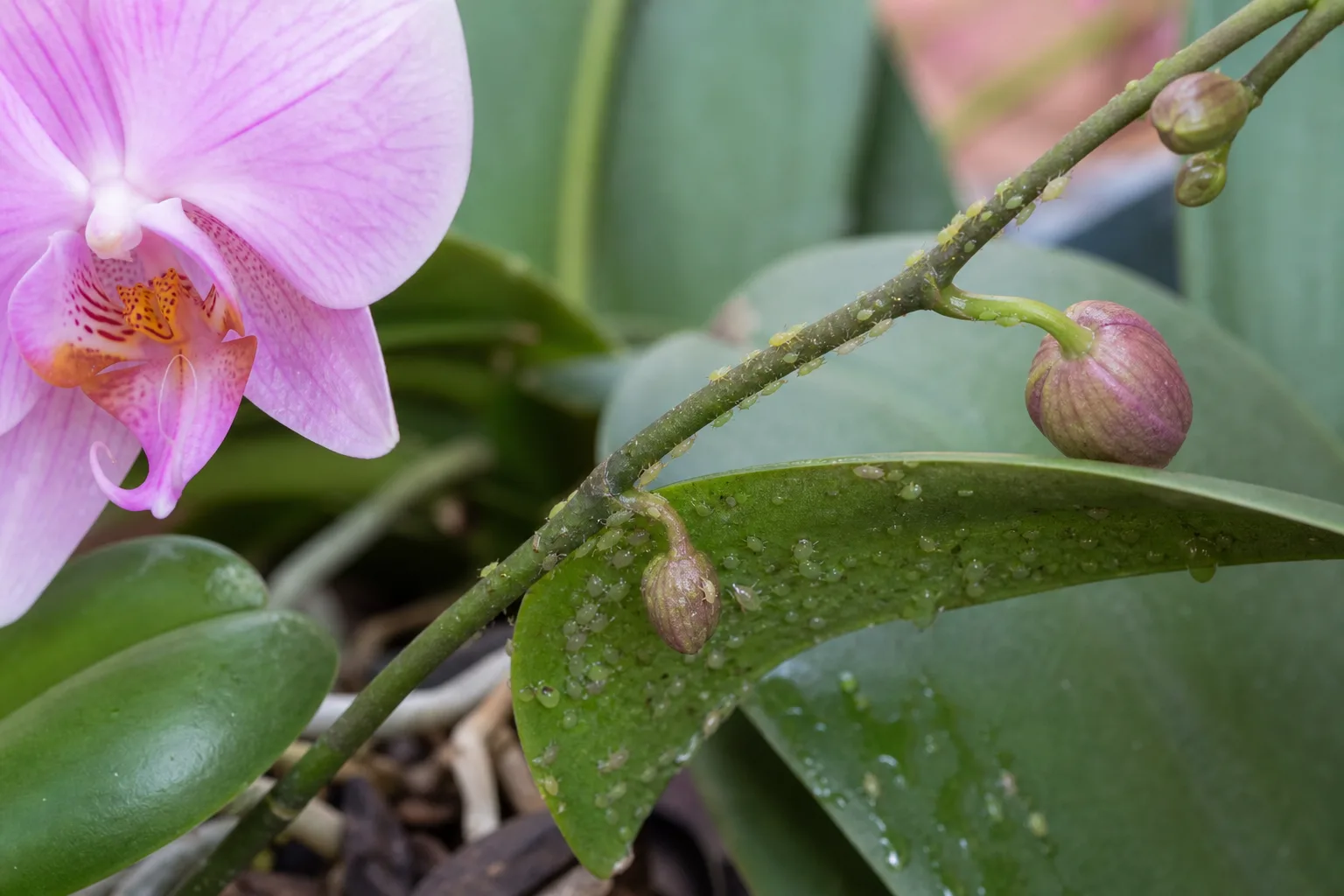
Aphids on Phalaenopsis Orchid: Causes, Checks & Fixes
This guide covers aphids on Phalaenopsis Orchid. See also the general Aphids guide, watering, and light pages for this plant.
Aphids on Phalaenopsis Orchid: Causes, Checks & Fixes
Quick answer
Aphids on Phalaenopsis Orchid are soft-bodied sap feeders that cluster on the tender tissue moth orchids produce during active growth-new leaf tips, flower spike nodes, and unopened buds. They excrete sticky honeydew, which can attract ants and sooty mold, and heavy feeding on buds can trigger bud blast on an otherwise healthy spike.
First step: isolate the plant and rinse aphids off spike tips and leaf undersides with lukewarm water. Tilt the pot so water runs through bark and out the drainage holes without pooling in the crown. Once you confirm live insects remain after rinsing, follow with insecticidal soap applied to labeled directions on repeat seven- to ten-day intervals.
What aphids look like on Phalaenopsis Orchid
Aphids on moth orchids are usually less than one-eighth inch long with pear-shaped bodies in green, black, pink, or whitish tones. They gather where nutrients concentrate-at the base of buds, along young flower spikes, on the undersides of new leaves, and sometimes on open flowers. Their feeding can curl or distort young leaves and leave mottled, misshapen blooms if buds were attacked before opening.
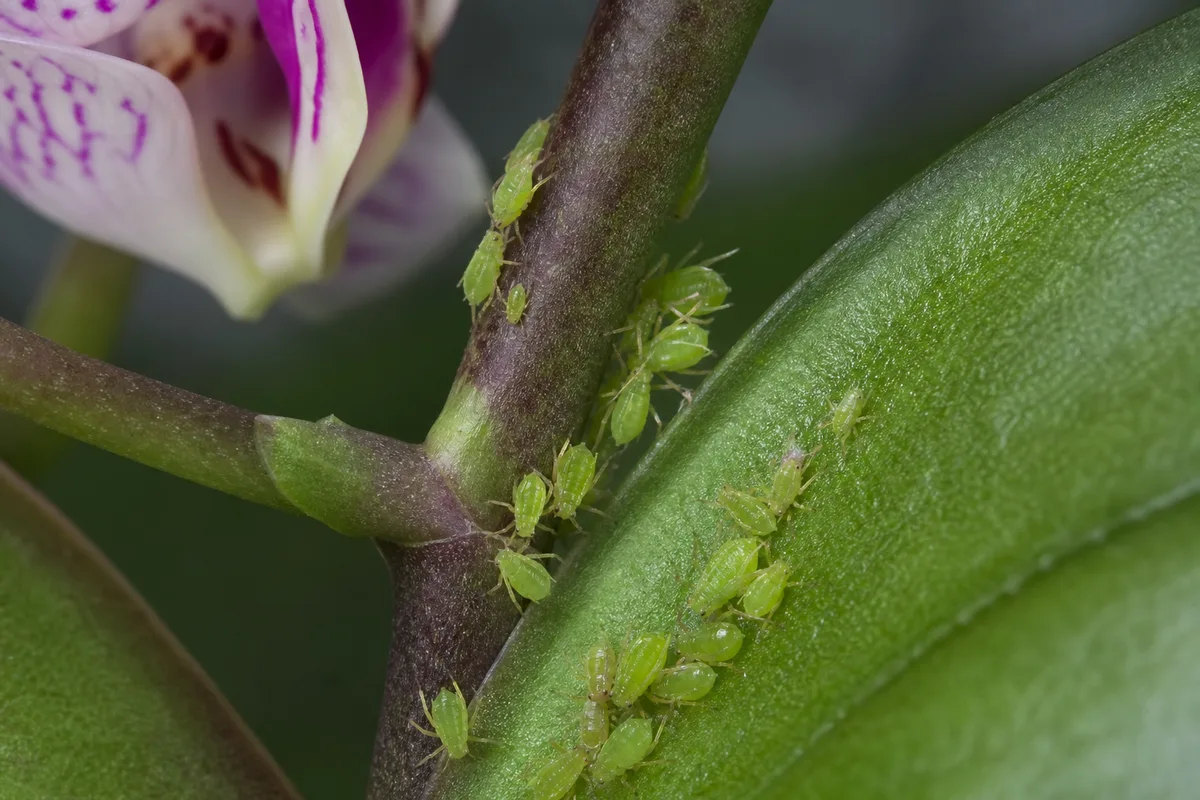
Aphids symptoms on Phalaenopsis Orchid - compare with healthy tissue on the same plant.
Two clues separate aphids from other orchid problems. First, you may see piles of white cast skins on upper leaf surfaces where aphids molted. Second, leaves and nearby surfaces feel tacky from honeydew-a shiny sap residue that ants harvest and that can support black sooty mold growth. Ants climbing the clear pot or shelf beneath the orchid often appear before you notice the aphids themselves.
Phalaenopsis spikes are especially vulnerable. A moth orchid may hold its bloom cycle for months; aphids on spike tips drain sap from buds that cannot easily be replaced. That makes early detection during spike development more important than waiting for obvious leaf yellowing.
Why Phalaenopsis Orchid gets aphids
Aphids are among the most common orchid pests and colonize clean plants most often through infested new purchases, crowded bench placement, or winged migrants that arrive on outdoor summer staging or greenhouse airflow. Phalaenopsis does not attract aphids because something is uniquely wrong with your culture-but moth orchids offer exactly what aphids prefer: soft, nutrient-rich new growth.
Indoor Phalaenopsis culture overlaps with aphid breeding conditions. Warm room temperatures, moderate humidity, and steady new leaf or spike production give aphids continuous feeding sites. Plants pushed with heavy nitrogen fertilizer produce extra tender shoots that aphids colonize quickly. Stressed specimens-recently repotted orchids, plants in dim corners, or pots kept too wet-also tolerate infestation longer because they grow slowly and hide pests among crowded leaves.
Ants change the equation. Ants protect aphid colonies from lady beetles and other predators, and may move aphids between pots to open new honeydew sources. If you see ant activity around orchid shelves, inspect spikes and new growth even when leaves look clean.
How to confirm aphids on your moth orchid
Work through these checks before choosing a spray:
- Spike and bud inspection - Follow the flower spike from base to tip. Aphids cluster just below unopened buds and on the youngest nodes. Buds that yellow, stick together, or drop with visible insects point to aphid feeding rather than ethylene alone.
- New growth check - Flip the newest leaf and examine its underside and the crown junction. Soft-bodied groups that move slowly when touched are aphids; cottony white clusters suggest mealybugs; flat brown disks suggest scale.
- Honeydew and mold - Rub a finger on a shiny upper leaf patch. Sticky residue that smears, plus wipe-able black sooty film, confirms sap-feeder honeydew. Uniform dryness without insects is not aphid damage.
- Cast skin search - White shed skins on leaf tops mean aphids have been present long enough to molt through at least one generation.
- Ant trails - Ants on pot rims, wires, or walls below the plant strongly suggest aphids or other honeydew producers on the orchid above.
- Neighbor scan - Check every orchid within a few feet. Aphids spread plant to plant when pots touch or when winged forms migrate.
If you find sticky residue but no insects, re-check in two days with better light. Aphids hide in crown crevices and under overlapping Phalaenopsis leaves.
First fix for Phalaenopsis Orchid
Move the infested orchid away from other plants, then rinse aphids off with lukewarm water directed at spike tips, leaf undersides, and crown crevices.
Hold the pot tilted so water flows through bark and exits the drainage holes. Avoid letting water sit in the crown center-Phalaenopsis crown rot starts when moisture pools overnight in tight leaf bases. Morning rinses let leaves and spikes dry in daytime light, which reduces fungal risk on wet tissue.
This single step knocks off many aphids and washes fresh honeydew before ants or sooty mold spread. Do not apply insecticide on day one if a thorough rinse removes all live insects and you find no new colonies within three days. Do not fertilize a pest-hit moth orchid hoping to push growth-that produces more tender tissue aphids prefer.
Step-by-step recovery
After the initial isolation and rinse:
- Repeat water dislodging every two to three days until hand-lens checks show no live aphids on spikes or new leaves.
- Apply insecticidal soap if colonies persist after several rinses. Cover undersides, spike nodes, and bud bases thoroughly. Repeat every seven to ten days through at least two follow-up applications to catch newly hatched nymphs.
- Dab isolated stragglers with a cotton swab moistened with 70% isopropyl alcohol on buds or tight crown crevices where spray coverage is difficult. Avoid flooding the crown with alcohol.
- Manage ants on shelves and pot hardware. Sugar-based ant baits help when ants farm aphids; controlling ants lets natural enemies reach colonies.
- Wash sooty mold off upper leaves with plain water once honeydew production stops. Heavy coating on old leaves may not fully clear; judge recovery by clean new growth and the next spike.
- Hold isolation until you see no live aphids for at least two weeks after the last treatment. Winged aphids can reinfest nearby orchids if you return the plant too soon.
Test any new product on one leaf or a small spike section first. Moth orchid leaves can be sensitive to oils and soaps applied in hot, direct sun.
Recovery timeline
A thorough rinse shows results within two to three days when populations are moderate. A full soap course typically takes two to three weeks with label-interval repeats because contact sprays kill only the insects they touch and do not leave long residual activity. Honeydew dries up within days once feeding stops; sooty mold stops spreading and can be rinsed away over one to two weeks.
Buds that dropped from heavy aphid feeding will not reopen. Track recovery by firm roots, new leaf growth, and the next spike developing without insects-not by salvaging aborted buds on the current stem.
Lookalike symptoms to rule out
Mealybugs form white cottony masses in leaf axils and crown crevices. They also produce honeydew, but the insects look waxy and fluffy rather than smooth and pear-shaped.
Scale insects appear as immobile brown or tan disks on leaves and pseudobulbs. Honeydew may be present, but you will not see soft clusters of walking insects.
Thrips scar buds and flowers with silvery streaks and may cause bud failure, but adults are slender and fast-not clustered pear-shaped aphids. Shake a spike over white paper to check for tiny moving specks.
Ethylene bud blast drops buds without visible insects when ripening fruit, gas appliances, or cold drafts expose Phalaenopsis to ethylene. Sticky leaves and ant trails point to aphids instead.
Spider mites cause stippling and fine webbing on leaf undersides in hot dry conditions. Mites rarely produce heavy sticky honeydew like aphids.
Mistakes to avoid
Do not spray the crown heavily and leave water pooled overnight-crown rot is a bigger long-term risk than a few remaining aphids if you dry the plant properly after treatment.
Do not stop after one soap application. Aphid nymphs hatch on a short cycle; two or three timed repeats are standard for contact treatments.
Do not ignore ants while treating only the orchid. Ants protect aphids from predators and move them between pots.
Do not use dish detergent mixes. Products not labeled for plants can burn Phalaenopsis leaves.
Do not overwater bark after repeated rinsing. Return to your normal wet-dry cycle-water when roots turn silver-grey, not on a panic schedule.
Do not repot into fresh bark solely because of aphids on foliage. Repot only if bark is broken down or pests are also in the root zone, which is uncommon for aphids.
Phalaenopsis care cross-check during treatment
While fighting aphids, keep the basics steady. Grow in Phalaenopsis Orchid light guide so leaves stay firm and the pot dries predictably between waterings. Maintain moderate humidity without enclosing the plant in stagnant plastic that traps wet foliage. Resume light feeding only after pest numbers stay down and new growth looks normal.
Because Phalaenopsis is generally non-toxic to cats and dogs, rinsing and soap treatment in the home is low risk for pets-but keep pets from drinking rinse water or licking wet leaves during application.
How to prevent aphids next time
Quarantine every new orchid for at least two weeks before placing it near established plants. Inspect spike tips and leaf undersides weekly during active growth phases. Space pots so leaves and spikes do not touch, which slows aphid walking between plants.
Avoid excess nitrogen during spike development; steady, moderate feeding produces tougher tissue. When summering orchids outdoors, inspect them before bringing them back indoors-winged aphids colonize from garden plants.
Scout after any ant activity on orchid shelves. Early rinsing prevents the sooty mold and bud loss that make late infestations harder to reverse.
When to worry
Treat aphids as urgent when colonies cover unopened buds on an active spike, when multiple orchids in the same area show honeydew, or when buds drop faster than normal cultural causes explain. Moth orchids can recover from moderate leaf feeding if roots stay firm and the crown is sound.
Consider the spike a loss if buds abort en masse despite prompt treatment-but the plant itself can still produce a new spike once pest pressure stays at zero for several weeks. A black, mushy crown or widespread leaf collapse points to problems beyond aphids alone and needs separate diagnosis.
When to use this page vs other Phalaenopsis Orchid guides
- Phalaenopsis Orchid watering guide - Use for routine moisture checks before assuming aphids is the main issue.
- Phalaenopsis Orchid problems hub - Browse all 20 common issues on this species.
- Mealybugs on Phalaenopsis Orchid - Different entry point when symptoms overlap with aphids.
- Spider Mites on Phalaenopsis Orchid - Different entry point when symptoms overlap with aphids.
- Yellow Leaves on Phalaenopsis Orchid - Different entry point when symptoms overlap with aphids.