Red Leaves on Monstera Deliciosa: Causes, Checks & Fixes
Quick answer
Red on Monstera Deliciosa is often normal on unfurling new leaves and petioles, then fades to green as the leaf matures. If mature foliage turns red or purple after a window move or cold night, check light intensity and room temperature before repotting or feeding.
Red Leaves on Monstera Deliciosa: Causes, Checks & Fixes
This guide covers red leaves on Monstera Deliciosa. See also the general Red Leaves guide, watering, and light pages for this plant.
Red Leaves on Monstera Deliciosa: Causes, Checks & Fixes
Quick answer
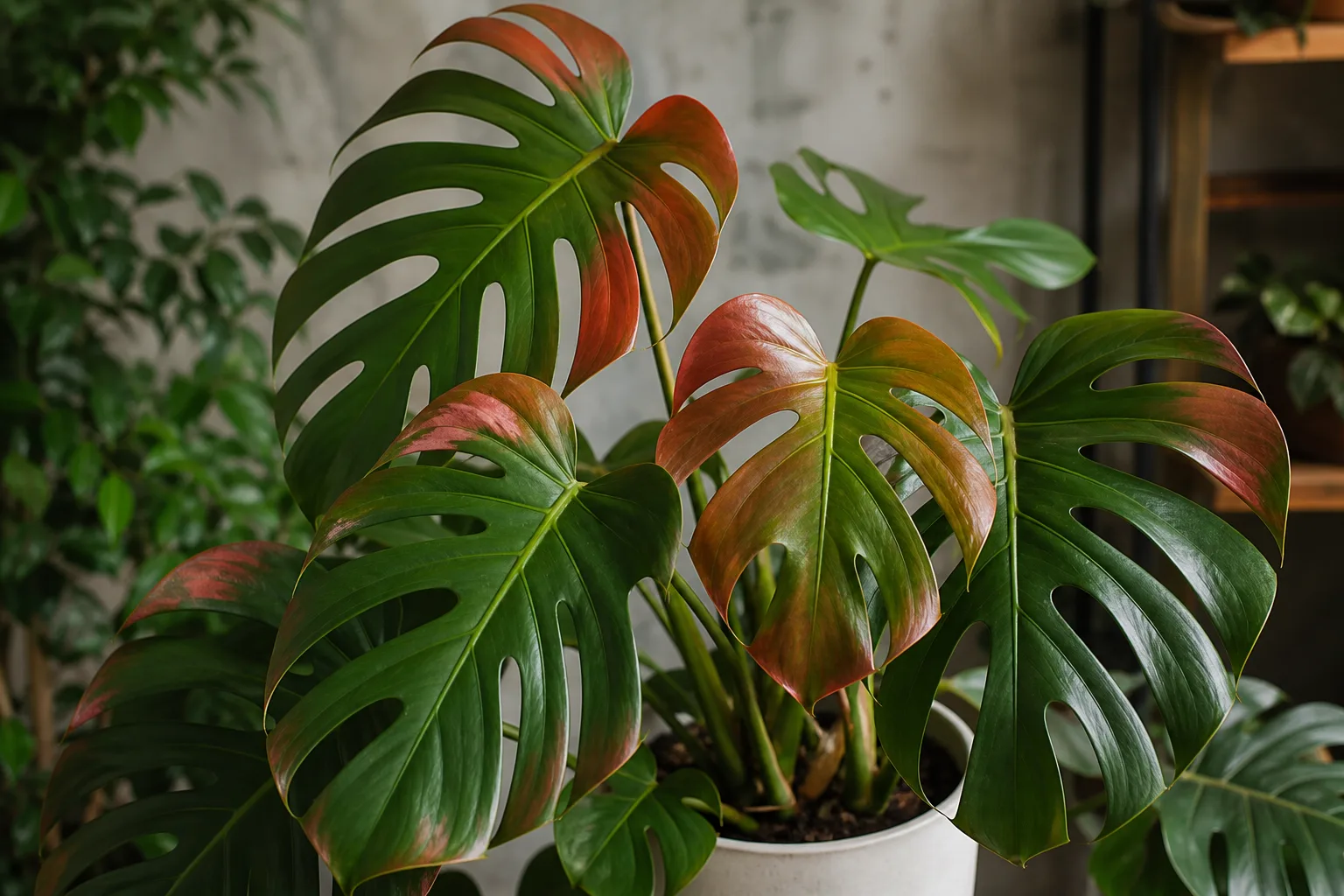
Red leaves on Monstera Deliciosa are not always a problem. On this large climbing aroid, the most common explanation is normal anthocyanin pigment on new growth-young leaves and petioles often open burgundy, pink, or bronze before maturing to the deep green you expect on split-leaf foliage.
Your first move: decide whether the red is on the newest unfurling leaf only or on mature leaves that were green last week. New-leaf flush that fades as the blade expands usually needs no fix. Red or purple on established leaves after a window move, cold night, or direct sun blast means environmental stress-and that is what you correct first.
What red leaves look like on Monstera Deliciosa
Monstera red color falls into distinct patterns. Mixing them up leads to unnecessary Monstera Deliciosa repotting guide or fertilizer.
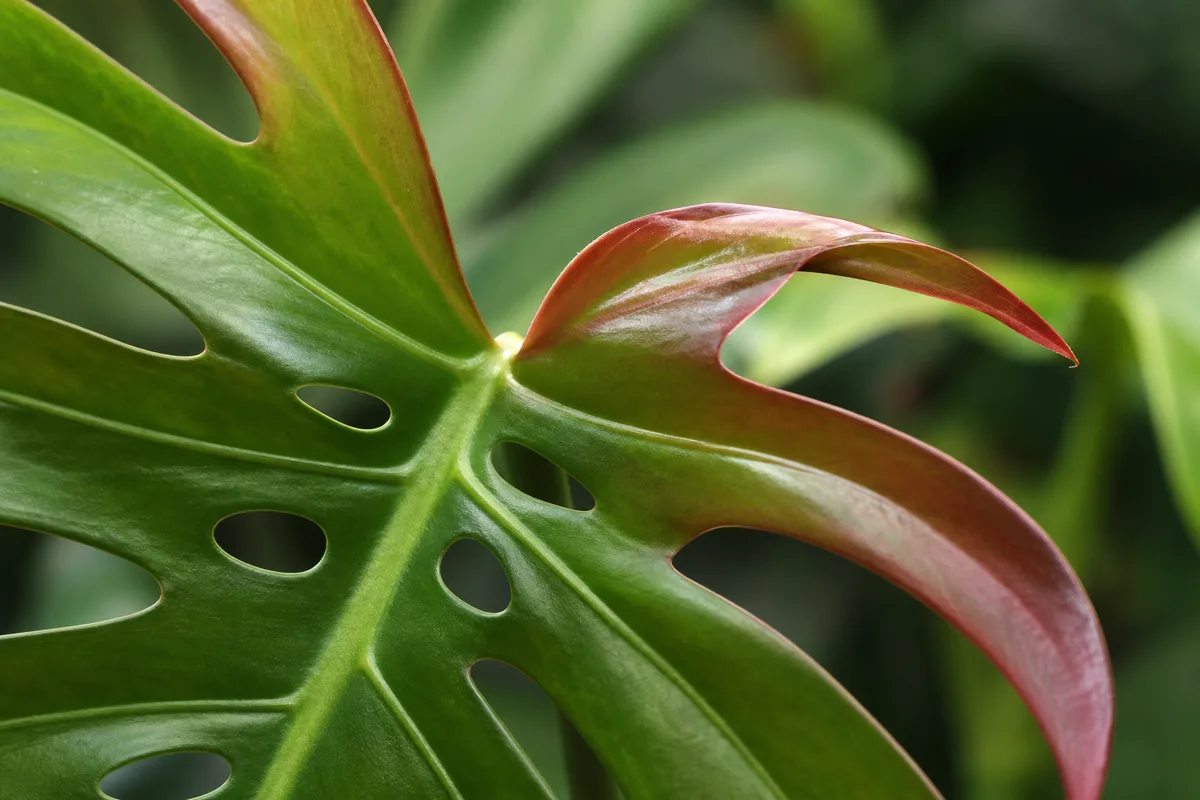
Red Leaves symptoms on Monstera Deliciosa - compare with healthy tissue on the same plant.
Normal new-growth flush (very common). The newest leaf emerges wrapped in a burgundy or pink-tinged sheath. Petioles may stay reddish for weeks even after the blade greens up. The red is often strongest at the margins and along the midrib, then fades to glossy dark green as fenestrations develop. This matches how many tropical aroids protect soft, expanding tissue with anthocyanins before chlorophyll dominates.
Sun-stress reddening. Leaves facing direct midday sun may show red-purple tinting on the exposed side before tan-brown scorch patches appear. Monstera deliciosa prefers moderate brightness but not direct sunlight-dappled or partial shade indoors, not a south window with unfiltered beams.
Cold-draft flush. After a cold night near glass or an AC vent, older leaves may develop red or purple margins while tissue stays firm. Anthocyanins accumulate under temperature stress much like autumn color outdoors. Monstera is comfortable between 60 and 85 °F; repeated cold exposure keeps the flush active.
Persistent red on mature foliage. If leaves that have been green for months turn uniformly red or purple without a recent move, look at chronic direct light, root stress from wet soil, or phosphorus imbalance-less common indoors but worth ruling out once sun and cold are excluded.
Not red leaves: The cream or white sectors on variegated cultivars (Albo, Thai Constellation) are variegation, not stress red. Brown crispy patches are scorch, not anthocyanin flush. Yellowing with wet soil points to overwatering, not typical red-leaf color.
Why Monstera Deliciosa gets red leaves
Anthocyanins on juvenile leaves and petioles
Young Monstera leaves are thin, soft, and still building chloroplasts. Many species produce anthocyanin pigments in juvenile leaves to protect expanding tissue from excess light and oxidative stress until the waxy cuticle forms. On standard green Monstera Deliciosa-not a red-leaf cultivar-this flush is developmental, not a nutrient crisis. Petioles often stay pink or red longer than the blade because supportive tissue keeps higher pigment levels.
Too much direct sun
Monstera evolved under rainforest canopy. Indoors it wants Monstera Deliciosa light guide. When light intensity spikes-especially unfiltered south or west window sun-the plant synthesizes anthocyanins as photoprotection. That reddening is a stress response: the plant is spending resources on defense rather than growth. If scorch follows, the tissue will not recover; only new leaves improve after you pull the plant back.
Cold drafts and low room temperature
Split-leaf monstera has no frost tolerance. Leaves pressed against cold glass in winter, or stems in the path of an AC vent, redden as cells respond to chill. Unlike normal new-leaf color, this pattern often hits mature leaves on one side of the plant and follows a identifiable cold event.
Root-zone stress (less common for red)
Leaf reddening when water is available can trace to poor drainage or compacted soil that limits oxygen to roots. On Monstera, chronic overwatering more often shows yellow lower leaves and limp stems first-but impaired roots can still trigger stress pigments on upper foliage if the plant cannot move water normally.
Variegated cultivars under high light
On Albo or Thai Constellation, intense grow lights or strong window sun can deepen pink-red tones on new growth and stems. Variegated cultivars need more light than solid green forms to maintain white sectors-but direct sun still scorches. Red flush on variegated new leaves sits in a narrow band between “enough light for variegation” and “too much sun for tissue health.”
How to confirm the cause
Work through these checks in order:
- Which leaves are red? Newest unfurling leaf or petiole only = likely normal. Multiple mature blades = environmental or root stress.
- Timeline - Did color appear within days of a window move, heat wave, or cold snap?
- Light check - Can you see direct sun beams on leaves between late morning and mid-afternoon? That favors sun stress.
- Temperature - Is any foliage touching cold glass or a draft path? Note if room drops below 60 °F at night.
- Soil and roots - Stick a finger 3–5 cm into the mix. Sour smell, constant wetness, or soft stems suggest root trouble, not harmless new-leaf red.
- Leaf undersides - Webbing, stippling, or orange raised pustules mean pests or fungus, not anthocyanin flush.
- Next leaf preview - Watch the leaf unfurling above the red one. If it opens green and stays green, an isolated red juvenile leaf was probably normal.
First fix for Monstera Deliciosa
If only the newest leaf or petiole is red and the plant is otherwise healthy: do nothing aggressive. Keep bright indirect light, wait for the leaf to harden off, and judge the next new leaf. Avoid repotting, heavy pruning, and fertilizer on the same week.
If mature leaves reddened after direct sun: move the pot so no leaf receives harsh midday sun. A sheer curtain or placement set back from the glass is usually enough. Trim fully scorched sections only after light is corrected.
If red margins followed a cold night: pull the plant away from the window or add a thin curtain; keep room temperature in the 60–85 °F range. Do not water with ice-cold tap water on stressed foliage.
If red persists on mature leaves with wet, sour soil: stop watering, inspect roots for mushy brown tissue, and repot only if rot is confirmed-not as a first guess.
One primary fix at a time. Do not stack repotting, fertilizing, and pruning on the same day.
Step-by-step recovery
- Classify the pattern: normal new growth, sun stress, cold flush, or root stress.
- Apply the matching first fix above.
- Watch the next one to two leaves-recovery on Monstera is judged by healthy green new growth with normal fenestration, not old red tissue re-greening.
- Wipe dust from mature leaves monthly so light is used efficiently once placement is stable.
- Provide a moss pole or sturdy support if the vine is leaning toward one light source-that uneven exposure can redden only the sun-facing side.
Recovery timeline
Normal new-leaf red or bronze typically greens within one to three weeks as the blade expands. Sun- or cold-stress flush on mature leaves often fades within one to two weeks after conditions stabilize, though damaged margins may stay tinted until you prune or the leaf ages out. Root-related stress takes longer: expect three to six weeks of stable watering before you trust new growth if roots were impaired. Fully scorched red-brown tissue does not revert to green.
Lookalike symptoms
| What you see | Likely cause | Key difference |
|---|---|---|
| Burgundy new leaf that greens as it unfurls | Normal anthocyanin | Only on newest growth |
| Red-purple on sun-facing side of mature leaves | Direct sun stress | Follows window move or summer sun angle |
| Red margins on multiple leaves after cold night | Cold draft | One side near glass; firm tissue |
| Orange raised spots on undersides | Rust or fungal disease | Spots, not uniform wash |
| Uniform yellow with wet soil | Overwatering / root rot on Monstera Deliciosa | Limp stems, sour mix |
| Cream-white patches on green | Variegation (cultivar) | Stable pattern since purchase |
Mistakes to avoid
Do not chase “red monstera” aesthetics by blasting the plant with direct sun-deeper red from stress costs growth and can scorch fenestrated leaves permanently. Do not assume red leaves mean phosphorus deficiency and dump fertilizer on a stressed vine; salts from overfeeding damage roots and show up as tip burn, not classic juvenile flush. Do not prune every red new leaf; you may remove healthy emerging foliage. Keep Monstera out of reach of pets-it contains calcium oxalate crystals toxic to cats and dogs if chewed.
How to prevent red leaves next time
Hold bright indirect light year-round and filter any direct sun that hits the leaf surface. In winter, back the pot away from cold glass or use a curtain buffer. Water when the top 3–5 cm of mix dries so roots stay aerobic without chronic wetness. Target 50–70% humidity if air is very dry, but prioritize stable light and temperature over chasing pigment. Rotate the pot every few weeks so the climbing vine does not lean hard toward one window-that uneven exposure is a common trigger for one-sided red stress color.
When to worry
Treat as urgent if red leaves turn black, water-soaked, or mushy, stems collapse at the soil line, or red spreads across most mature foliage within a week alongside wilting. Those patterns outrank cosmetic new-leaf flush. A single burgundy unfurling leaf on an otherwise green, firm Monstera Deliciosa is not an emergency-wait for the next leaf before escalating care.
When to use this page vs other Monstera Deliciosa guides
- Monstera Deliciosa watering guide - Use for routine moisture checks before assuming red leaves is the main issue.
- Monstera Deliciosa problems hub - Browse all 18 common issues on this species.