Drooping Leaves on Monstera Deliciosa: Causes, Checks &
Quick answer
Drooping leaves on Monstera Deliciosa mean the plant lost turgor-usually from underwatering or roots that cannot take up water in wet soil. First step: probe soil moisture at 5 cm depth and lift the pot before you water again.
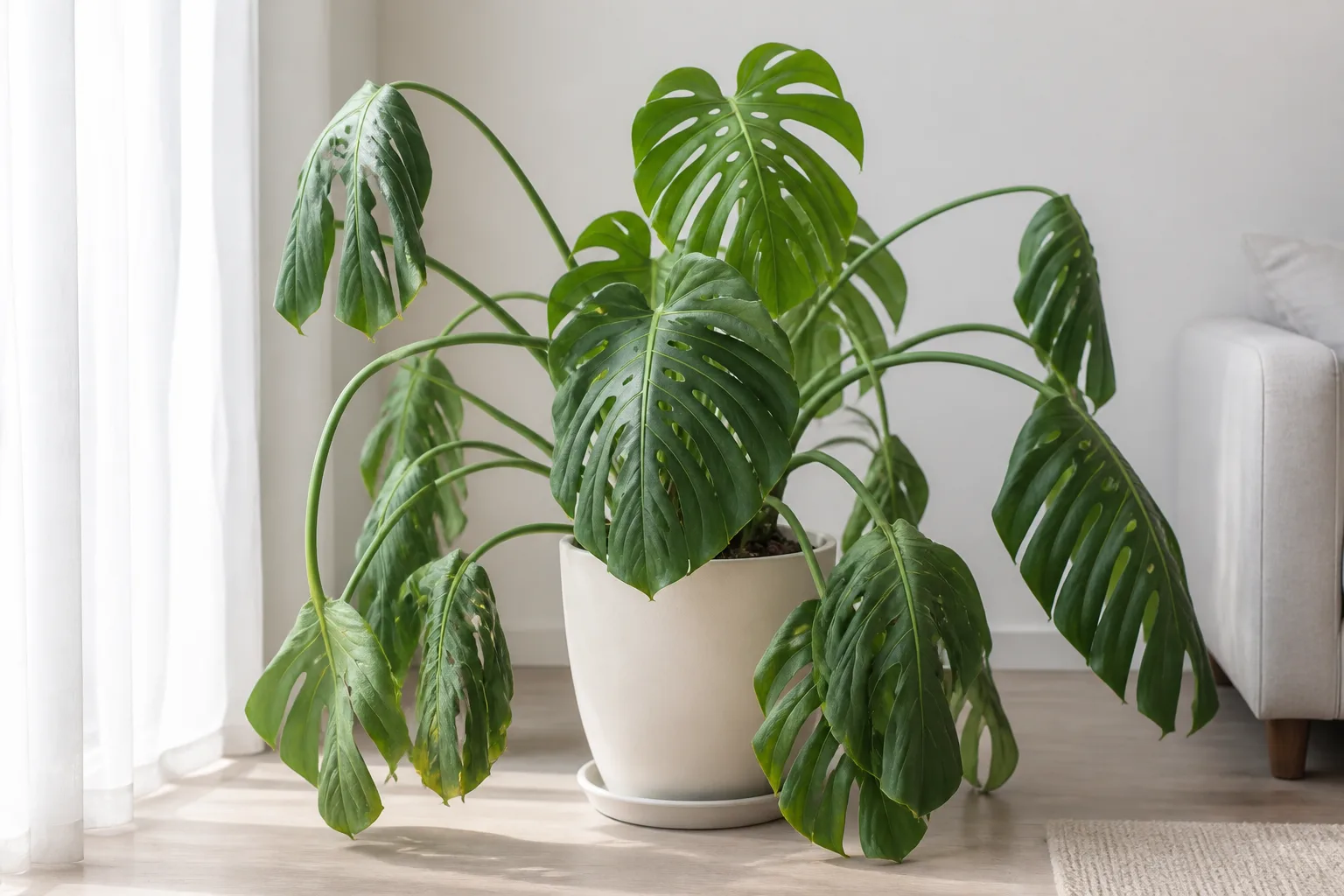
Drooping Leaves on Monstera Deliciosa: Causes, Checks & Fixes
This guide covers drooping leaves on Monstera Deliciosa. See also the general Drooping Leaves guide, watering, and light pages for this plant.
Drooping Leaves on Monstera Deliciosa: Causes, Checks & Fixes
Quick answer
Drooping leaves on Monstera Deliciosa (Monstera deliciosa) are a turgor problem-the large, leathery blades and long petioles hang when cells lose internal water pressure. That can happen from true drought, from roots sitting in soggy mix, or from environmental stress that outpaces what the root system can supply.
The trap with Monstera Deliciosa overview is that underwatering and overwatering look almost identical above the soil line. Wilted leaves may mean soil is too dry or too wet-rotting roots cannot take up water. Limp, soft leaves do not tell you which side of the line you are on. Only the root zone does.
First step: probe soil moisture at 5 cm depth and lift the pot. Do not reach for the watering can until you know whether the mix is dry, evenly moist, or waterlogged. Adding water to already-wet soil is the fastest way to turn a recoverable droop into root rot on Monstera Deliciosa on a Monstera that prefers drying between drinks.
What drooping leaves look like on Monstera Deliciosa
Healthy Monstera Deliciosa holds its glossy, heart-shaped leaves at a confident angle on stiff petioles. When turgor drops, the whole leaf plane sags-petioles curve downward and mature split leaves that normally stand out from the stem fold toward the floor.
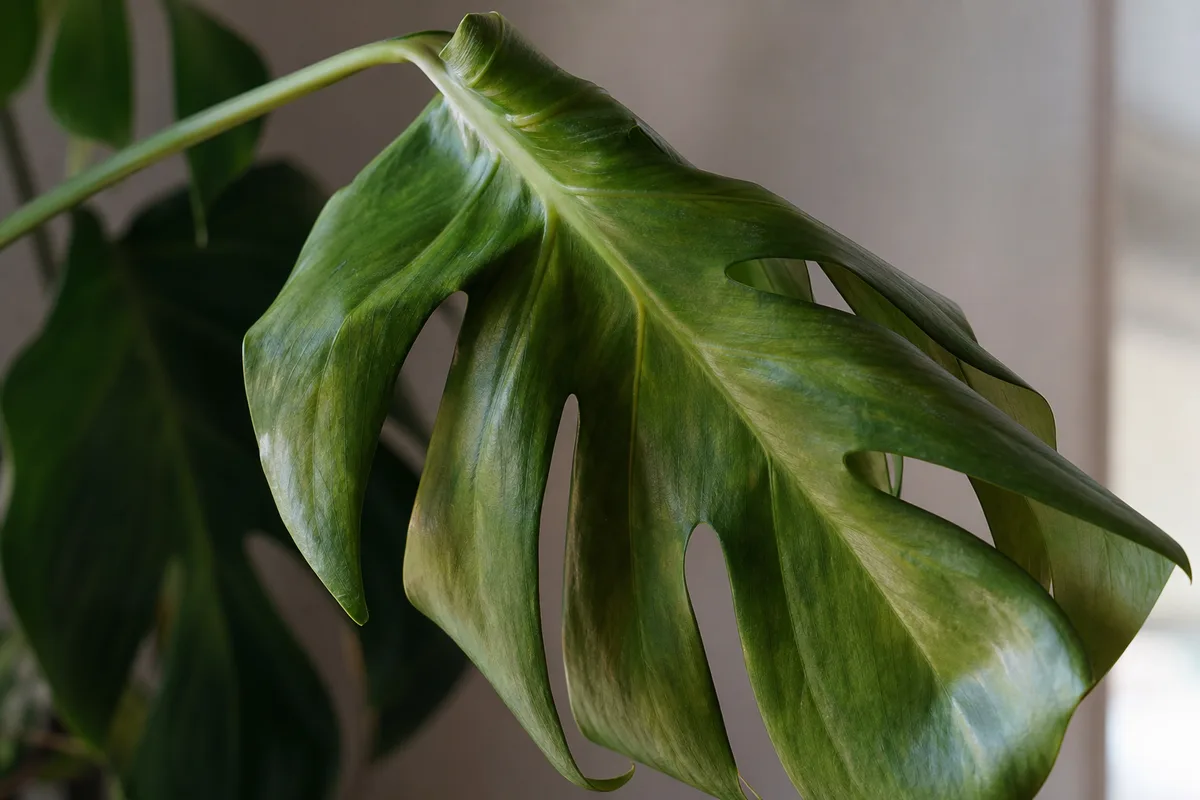
Drooping Leaves symptoms on Monstera Deliciosa - compare with healthy tissue on the same plant.
Typical droop patterns on this species:
- Whole-plant slump - Most leaves hang at once, often after missed watering, a heat spike, or chronic wet roots.
- Lower leaves first - Older foliage at the base droops before newer top growth, common with underwatering or root-bound stress.
- One-sided droop - The side facing a hot window or heating vent collapses while the rest stays firmer.
- Soft limp texture - Leaves feel flexible and rubbery, not crispy. Crisp edges with droop suggest a different problem (often low humidity or underwatering that progressed further).
- Green leaves still drooping - Color can stay green early on; yellowing often follows if the stress continues.
Monstera Deliciosa leaves are heavy relative to the petiole. A mature plant in a small pot can look dramatically wilted from one missed watering-even though the issue is simple thirst. Do not assume severity from drama alone.
Not the same as normal posture: New unfurling leaves stay curled and soft for days-that is growth, not droop. Aerial roots searching for support are normal. Drooping affects established open leaves that previously held their angle.
Why Monstera Deliciosa gets drooping leaves
This climbing aroid evolved in warm, humid forests with episodic rain and sharp drainage. Indoors, droop almost always traces to how water, oxygen, and light interact in the pot-not a mysterious leaf disease.
Underwatering and dry-down mismatch
Monstera Deliciosa uses water quickly in bright light and warm rooms. Its large leaf surface loses moisture through transpiration. When the mix dries beyond what roots can access-especially if peat has shrunk and pulled away from the pot wall-uptake stops and petioles collapse.
Calendar watering makes this worse. A plant that needed water every seven days in summer may still be fine at fourteen days in winter, or the reverse if you moved it to a brighter spot. The pot’s dry-down rate is the schedule, not the date on your phone.
Overwatering and root stress
Saturated mix drives out soil oxygen. Fine roots die; remaining roots cannot move water even though the soil is wet. The plant shows drought symptoms in abundance-limp leaves with dark, cool, heavy soil. This is the most dangerous misread on Monstera Deliciosa because the instinct to “help” with more water accelerates decay.
Heavy peat mix, pots without drainage, oversized containers, and dim rooms where evaporation slows all keep the root zone wet too long. Yellow lower leaves and fungus gnats often appear alongside droop when this pattern is chronic.
Root-bound or hydrophobic soil
A crowded root ball can dry out fast on the surface while the center stays compacted-or hold so little soil that water runs through without soaking roots. Either way, uptake fails and leaves droop after watering or between drinks. If the pot dries unusually fast after every soak, or roots circle the drainage holes, binding may be the driver.
Heat, light shock, and transpiration overload
Bright direct sun or a sudden move to a much hotter window increases water loss faster than roots replace it. Monstera Deliciosa prefers bright indirect light, not harsh midday sun on the foliage. Heat from radiators and dry AC blasts have the same effect-leaves droop to reduce exposed surface area.
Recent Monstera Deliciosa repotting guide or relocation
Disturbed fine roots temporarily reduce uptake. A Monstera moved from a stable corner to a brighter room, or repotted last week, may droop for several days even with correct moisture. Transplant shock droop is temporary if the base stays firm and soil moisture is balanced.
Low light plus slow evaporation
In a dim corner, the plant drinks slowly-but many owners still water on a summer schedule. The mix stays wet while metabolism is low, mimicking overwatering stress. Leggy stretched stems with soft drooping leaves often share this light-and-water mismatch.
How to confirm the cause
Work through these checks in order. Each step narrows the cause before you treat.
- Soil moisture at 5 cm - Insert a finger, skewer, or moisture meter probe to the middle of the root ball, not just the surface. Dry at depth with a light pot = thirst. Wet, cool, dark soil at depth with a heavy pot = pause watering.
- Pot weight - Lift the container before and after a normal watering when the plant is healthy so you learn what “dry” and “moist” feel like. If the pot is light, it needs water; a drooping plant in a feather-light pot almost always needs water; a drooping plant you can barely lift is likely oversaturated.
- Watering history - When did you last water? Did you bottom-water and leave the saucer full? Did someone “help” while you were away?
- Drainage check - Are holes open? Is the plant sitting in cached water? Is the mix chunky aroid blend or dense peat that stays soggy?
- Root peek (if soil is wet and droop persists) - Slide the plant partly out of the pot. Healthy roots are firm and light-colored; brown, mushy, smelly roots confirm rot-related droop-not thirst.
- Environment scan - New window, repot within two weeks, heater nearby, or a heat wave? Note whether droop is one-sided.
- New growth - Firm emerging leaves with only older leaves drooping often means localized stress or normal lower-leaf senescence, not whole-plant failure.
If dry soil and a light pot confirm dehydration, you do not need to unpot. If soil is wet and leaves have been limp for more than 48 hours, inspect roots before the next watering.
First fix for Monstera Deliciosa
Probe soil at 5 cm depth and lift the pot-then act on what you find, not on how sad the leaves look.
That single check prevents the two most common mistakes: drowning an overwatered plant or letting a thirsty one sit another day. Everything else follows from dry versus wet.
- If dry: Water thoroughly until a small amount runs from drainage holes, then empty the saucer. For severely dry mix that repels water, bottom-soak the pot in a basin for 20–30 minutes, then drain fully.
- If wet: Do not water. Move to brighter indirect light if the plant is in deep shade-faster dry-down helps. Wait until the top 3–5 cm of mix dries before reassessing. Unpot only if droop continues after the surface has dried appropriately.
Do not fertilize, mist heavily, prune half the plant, or repot into a larger container on day one. Those add stress before you know whether the problem is moisture balance or root damage.
Step-by-step recovery
Once you know dry versus wet, follow the matching path.
Thirst recovery (dry soil)
- Water deeply once, or bottom-soak if the mix has shrunk away from the pot edge.
- Drain completely-never leave the pot standing in water.
- Move the plant out of direct hot sun while it rehydrates.
- Recheck in 12–24 hours. Petioles should stiffen and leaves lift noticeably if thirst was the only issue.
- Resume watering when the top 3–5 cm dries again-typically every 7–10 days in active growth, longer in cool winter months.
Wet-root recovery (soggy soil, firm stem base)
- Stop watering until the top quarter to one-third of the mix dries.
- Ensure drainage holes are clear and the saucer stays empty.
- If droop persists after appropriate dry-down, unpot and trim mushy roots back to firm tissue with clean scissors.
- Repot into fresh, chunky aroid mix-standard potting soil with perlite and orchid bark-not a bigger pot unless roots truly filled the old one.
- Wait five to seven days after repot before the first light watering if you trimmed rot.
- Hold fertilizer until new growth looks healthy for two weeks.
Root-bound recovery
- Confirm circling roots at drainage holes and rapid dry-out after every drink.
- Repot in spring or early active growth into a container only one size larger.
- Loosen the outer root mass gently; trim only dead or circling mushy roots.
- Water once after repot, then let the top 3–5 cm dry before the next drink. Expect mild droop for several days-keep light and moisture stable.
Heat or light shock
- Move the plant to bright indirect light, filtering harsh afternoon sun with a sheer curtain.
- Pull it back from heaters and cold AC drafts.
- Water according to soil dryness-not because leaves look limp mid-afternoon in a heat spike.
- Give 48 hours for overnight recovery before changing anything else.
Recovery timeline
Simple underwatering: Leaves often regain turgor within 12–48 hours after a proper soak and full drainage. You should see petioles lift before old leaf color fully normalizes.
Overwatering without major rot: Once the mix dries to the appropriate depth and oxygen returns, firmness may return in three to seven days. New unfurling leaves that open without collapsing are a strong positive sign.
Root damage or repotting: Recovery stretches to two to four weeks or longer in cool seasons. Judge success by firm new roots, stable stem bases, and fresh leaves-not by old drooped blades greening up again.
Worsening signs: Continued collapse despite corrected dry-down, softening stems at the soil line, spreading yellow leaves, or sour smell mean the root zone is still failing-escalate to full root inspection.
Lookalike symptoms
- Wilting versus drooping - Same mechanism (low turgor); on Monstera Deliciosa the large leaves make the sag especially visible. Use soil moisture to diagnose, not the word you use.
- Yellow leaves - Often follow chronic overwatering; droop may come first. Fix moisture before chasing fertilizer.
- Curling leaves - Usually underwatering or low humidity progressing further; leaves curl before or as they droop.
- Leggy growth with soft stems - Insufficient light weakens petioles; improve light and support with a moss pole rather than watering more.
- Normal new unfurling - Tight rolled leaves on emerging growth are not droop.
What not to do
Do not water on a schedule when leaves droop-confirm dryness first. Avoid misting as a fix; surface moisture does not rehydrate roots in dry soil and can encourage fungal issues on crowded Monstera foliage.
Do not repot into a much larger pot to “help drying”-extra wet soil volume makes overwatering worse. Skip fertilizer on a stressed plant; salts on damaged roots slow recovery.
Do not move the plant repeatedly between rooms while diagnosing-pick a stable bright spot and let it respond. Avoid pruning all drooped leaves immediately; many perk up after moisture correction.
When handling cut tissue, wear gloves if sap irritates your skin-Monstera Deliciosa contains calcium oxalate crystals and is toxic to pets if chewed.
How to prevent drooping leaves next time
Match watering to how fast your pot dries in its actual spot. For most indoor Monstera Deliciosa plants, that means watering when the top 3–5 cm of chunky, well-drained mix is dry-roughly every 7–10 days in warm bright conditions, less often in winter.
Use a pot with drainage holes and empty saucers after watering. Keep the plant in bright indirect light so it uses water steadily without baking in direct sun. Provide a moss pole or stake so heavy leaves do not stress petioles sideways.
When repotting, size up gradually and use aroid mix with perlite and bark-not straight peat that stays wet for days. After moving the plant or changing seasons, recheck dry-down weekly instead of assuming last month’s schedule still fits.
When to worry
Treat as urgent if stems soften at the base, soil smells sour, or droop continues more than 48 hours after you corrected for dry versus wet. A plant that droops again within a day of watering while soil is still damp needs root inspection, not another soak.
Slow droop on one old lower leaf while new growth stays firm is low urgency-often normal senescence. Whole-plant collapse with wet soil is not.
Conclusion
Drooping leaves on Monstera Deliciosa look alarming because the leaves are big-but the diagnosis is usually straightforward. Feel the soil at depth, lift the pot, then water or wait. Thirst perks up fast; wet-root droop needs dry-down and sometimes root cleanup. Build prevention around dry-down rhythm, drainage, and bright indirect light, and this plant’s foliage should hold its architectural lift again.
When to use this page vs other Monstera Deliciosa guides
- Monstera Deliciosa watering guide - Use for routine moisture checks before assuming drooping leaves is the main issue.
- Monstera Deliciosa problems hub - Browse all 18 common issues on this species.
- Root Rot on Monstera Deliciosa - Different entry point when symptoms overlap with drooping leaves.