Leggy Seedlings on Manjula Pothos: Causes, Checks & Fixes
Quick answer
Manjula Pothos is propagated by stem cuttings, not seed, so 'leggy seedlings' usually means stretched young cuttings or small starter plants. First step: move them to bright indirect light within a few feet of a window or under a grow lamp.
Leggy Seedlings on Manjula Pothos: Causes, Checks & Fixes
This guide covers leggy seedlings on Manjula Pothos. See also the general Leggy Seedlings guide, watering, and light pages for this plant.
Leggy Seedlings on Manjula Pothos: Causes, Checks & Fixes
Quick answer
Manjula Pothos does not grow true from seed. It is a patented cultivar (Epipremnum aureum ‘Manjula’, HANSOTI14) propagated only through stem cuttings or tissue culture. When people search for “leggy seedlings” on Manjula, they almost always mean young cuttings, water-propagated starts, or small nursery pots that have stretched toward weak light-a form of etiolation, not a seed-tray problem.
First step: move the plant or cutting to bright indirect light-an east window, a few feet from a south window with sheer curtain, or a full-spectrum lamp within 12–18 inches of the leaves. Manjula’s heavy white variegation means it needs more light than all-green pothos to stay compact during rooting and early establishment. Do not add fertilizer or extra water until light is fixed.
This page owns young cutting and starter-plant stretch. Mature trailing vines with long bare internodes belong on leggy growth. Chronic dim-room placement is covered on not enough light.
What leggy seedlings look like on Manjula Pothos
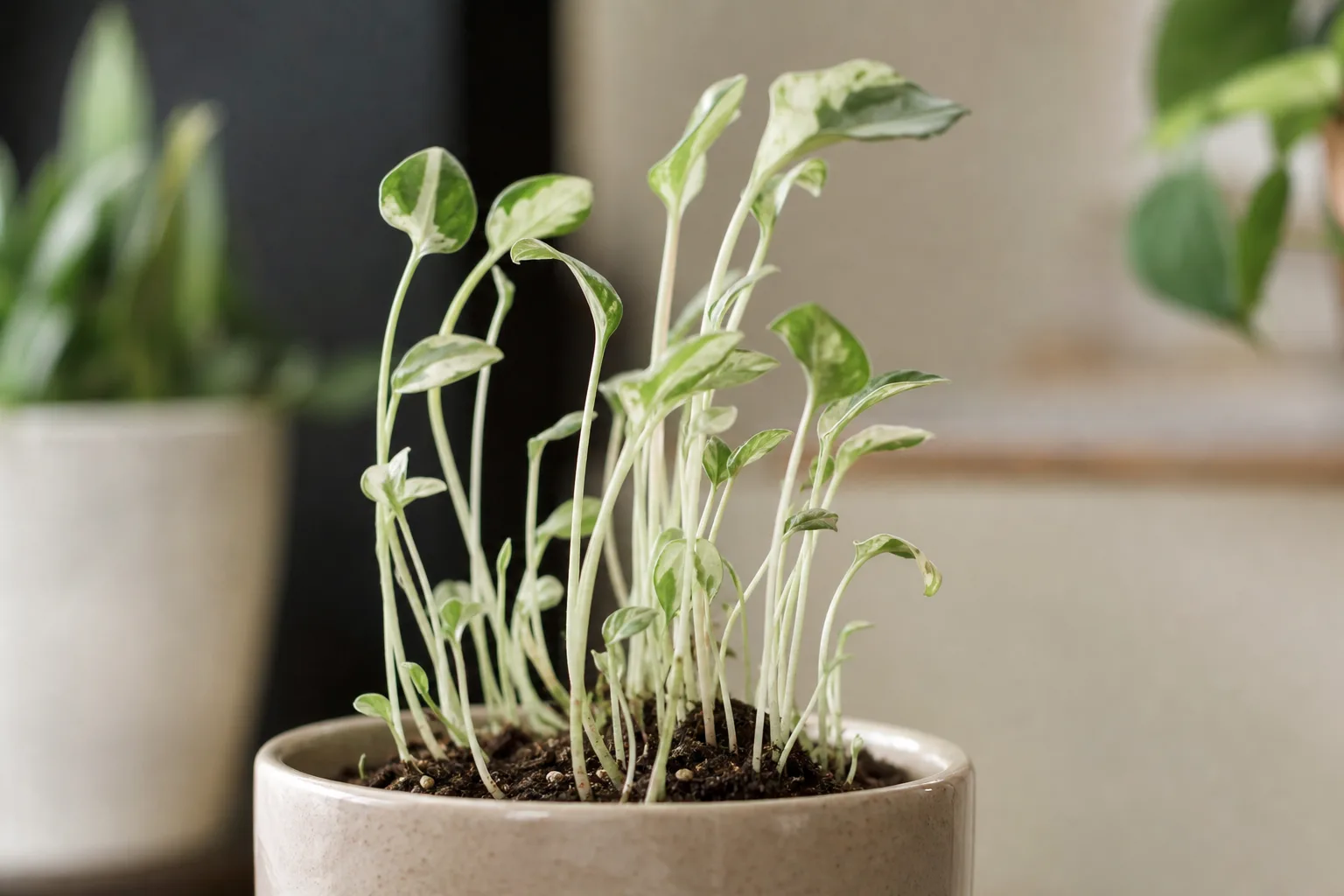
On Manjula, “seedling” usually describes a young plant before it fills out, not a cotyledon-stage sprout. Watch for these patterns:
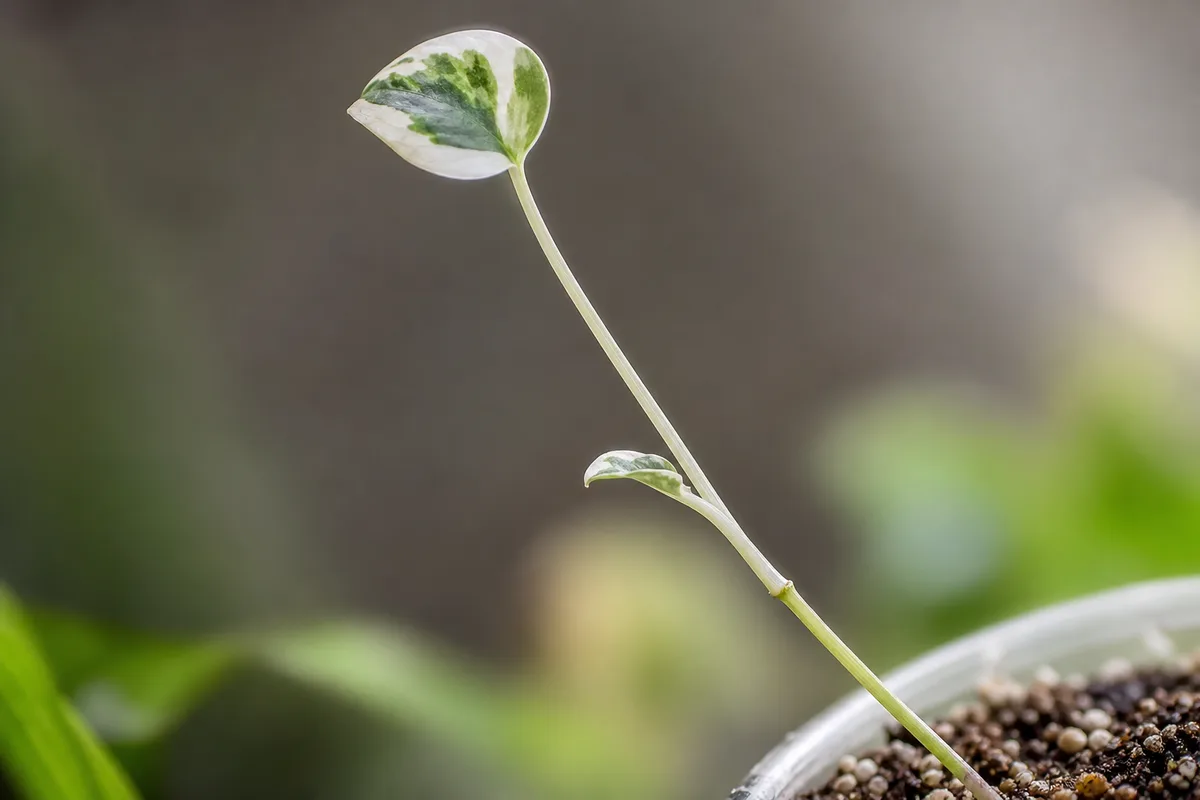
Leggy Seedlings symptoms on Manjula Pothos - compare with healthy tissue on the same plant.
- Thin stems with long internodes - gaps of several centimeters between small, pale leaves
- Reduced variegation on new growth - new leaves emerge mostly green as the plant produces more chlorophyll to capture photons
- Leaning toward one light source - cuttings in water jars or small pots angle sharply toward a window
- Small leaf size - Manjula’s characteristic broad, marbled leaves stay undersized when light is inadequate
- Slow or absent rooting - water cuttings grow leafy tops but form few roots below the node for weeks
Healthy young Manjula starts have relatively short gaps between leaves, visible cream-and-green marbling on new foliage, and firm green stems. A long trailing vine with closely spaced healthy leaves is normal mature growth-not the same as a spindly unrooted cutting.
Why Manjula Pothos young plants stretch
Insufficient light is the primary cause. Pothos can survive dim corners, but variegated cultivars lose compact form and coloring when photons are scarce. Manjula was selected for painterly white variegation; those pale leaf sections contain less chlorophyll, so the plant needs stronger indirect light than Golden or Jade Pothos to photosynthesize without stretching.
Manjula-specific factors that worsen stretch on young plants:
- Water propagation in dim spots - Cuttings often sit on shelves or in north-facing windows while roots form. The leafy top grows toward light while submerged nodes stay stagnant, producing top-heavy spindly starts.
- Humidity domes or sealed bags left too long - Domes help rooting but block light if left on after the cutting leafs out.
- Slower rooting than other pothos - Manjula cuttings commonly take two to four weeks to root, sometimes longer. The vulnerable stretch phase lasts longer than on faster-rooting pothos varieties.
- Buying small tissue-culture or starter pots - Nursery plants grown under bench conditions may arrive already elongated; they need immediate bright light at home, not a dim display shelf.
- Mostly green reverted cuttings - Cuttings taken from reverted vines root more easily but still etiolate in low light; heavily variegated sections need even brighter placement.
Leggy young Manjula is rarely a nutrient problem on fresh potting mix or plain water. Fix light before assuming the start needs feed.
How to confirm the cause
Work through these checks in order:
- Propagation method - Confirm you have a stem cutting or purchased clone, not seeds. Manjula seeds sold online will not produce true Manjula plants.
- Light at leaf level - If the plant sits more than 1.5 m from a window or under a distant ceiling fixture, stretch is likely. Use the hand-shadow test from our light guide: a faint shadow at midday means marginal light for variegated Manjula.
- Direction of lean - Uniform lean toward one window confirms phototropism from weak light, not disease.
- Root status - Water cuttings with long tops and no roots after three weeks point to light or water-change issues. Soil starts with wet mix and soft stems suggest overwatering layered on stretch.
- Variegation pattern on newest leaf - Mostly green new leaves in a dim spot confirm etiolation; sudden all-white leaves may signal stress, not simple stretch.
- Dome or bag status - If plastic still covers a rooted cutting, remove it and reassess after several days in corrected light.
Confirmed leggy Manjula stays green at nodes, grows taller without gaining stem thickness, and produces darker, closer-spaced new leaves within a week once light improves. Mushy submerged nodes or blackening stem bases point to rot-not etiolation alone.
First fix for Manjula Pothos
Move the cutting or young plant to the brightest indirect light available in your home.
Place it within a few feet of an east window or 1–2 m from a south or west window filtered by sheer curtain. If natural light is weak in winter, add a full-spectrum LED or fluorescent lamp 12–18 inches above the leaves for 12–14 hours daily. Light levels of 150 foot-candles or more help maintain variegation and leaf size on young starts. Avoid direct midday sun that scorches variegated tissue.
Do not bury elongated stems deeper as your first move. Do not increase watering or fertilizer on stretched, weak tissue. Fix photons first.
Step-by-step recovery
Once light is corrected:
- Reposition immediately - Move water jars or pots the same day; etiolation continues every hour in dim light.
- Refresh water weekly if propagating in water - Stagnant water encourages rot on slow-rooting Manjula cuttings.
- Pinch or cut back above a node once stems feel firm and light is adequate - This forces side branches and stops the single long runner habit. See pruning for node placement.
- Plant rooted cuttings when roots reach 2–3 cm - Transition to airy potting mix with perlite per our soil guide; keep evenly moist but not soggy for the first two weeks.
- Rotate the pot or jar every few days so growth stays even.
- Hold fertilizer until the plant shows stable new growth for two weeks - Stressed starts do not need feed.
If a cutting has no roots after four weeks in good light, take a fresh section from a healthy parent plant via propagation rather than waiting on a failing spindly stem.
Recovery timeline
Already stretched stem sections do not shorten-judge recovery by new growth, not old internode length.
Under corrected light, Manjula cuttings usually stop stretching within five to seven days and produce more compact leaves within two to three weeks. Side shoots from pinching appear in two to four weeks during active growth season.
Root formation in water typically takes two to four weeks, sometimes longer for highly variegated sections. Soil-rooted starts may take an additional week to settle before pushing visible new leaves.
Worsening signs: continued rapid height gain despite brighter placement, stems softening at nodes while mix stays wet, or leaves yellowing from base upward-those suggest remaining light failure, overwatering, or rot, not normal recovery lag.
Lookalike symptoms
- Leggy mature vines - Long bare stems on an established plant reflect chronic low light over months, not a young cutting problem. See leggy growth on Manjula Pothos for shaping mature vines.
- Normal slow Manjula growth - This cultivar grows more slowly than Golden Pothos; short internodes with healthy variegation are fine even if overall length is modest.
- Reversion to all-green growth - Mostly green new leaves in adequate light may mean the cutting came from reverted tissue, not simple stretch. Prune reverted sections to preserve marbling.
- Damping-off in shared seed trays - Irrelevant for true Manjula propagation; generic pothos from seed will not be Manjula.
What not to do
Do not buy Manjula seeds expecting the patented variegation pattern-commercial Manjula is clone-propagated only. Avoid leaving water cuttings in north windows through winter without supplemental light. Do not seal cuttings in dark humidity tents after leaves unfold.
Do not fertilize stretched cuttings hoping for thicker stems. Avoid overwatering soil starts in dim light-the mix stays wet while the plant uses little moisture. Do not discard healthy tip sections when pruning; root them in brighter conditions instead.
Keep cuttings away from pets when handling-Manjula sap contains insoluble calcium oxalate crystals that irritate mouths if chewed.
How to prevent leggy starts next time
Take cuttings from healthy variegated vines with at least two nodes. Root them in bright indirect light from day one, not after roots appear. Remove humidity covers once leaves are open. Choose a warm spot-Manjula roots best around 21–27°C (70–80°F)-but pair warmth with adequate light; warm dim corners still produce spindly growth.
When buying small pots, repot only if root-bound, but move immediately to proper light rather than a decorative dark shelf. Prune proactively once established so future propagation material comes from compact parent vines.
When to worry
Escalate when:
- Water-rooted cuttings rot at the submerged node while stems soften
- Variegation collapses on every new leaf despite brighter placement
- Cuttings lean so far they break before rooting-restart from a firm parent vine
- Soil stays wet while stretched stems yellow from the base-check overwatering overlap
Slow stretch on an unrooted cutting in dim light is low urgency once you move it. Mushy nodes with foul water or wet mix are high urgency-trim back to firm tissue and restart in fresh water or airy mix.
Related Manjula Pothos guides
- Manjula Pothos overview - cultivar context and full care map
- Leggy growth - mature vines with long bare internodes; this page owns young cutting stretch
- Not enough light - chronic dim-room placement and hand-shadow test
- Light guide - window placement and foot-candle targets
- Propagation - water vs. soil rooting for Manjula cuttings
- Pruning - node pinching after stretch correction
- Soil guide - airy mix when potting rooted cuttings
- Slow growth - normal Manjula pace vs. etiolation
Related tool
Use the Plant Problem Diagnosis Tool to narrow causes for leggy seedlings on this plant before changing multiple variables at once.