Ficus Elastica Ruby Pruning: When, How, and Mistakes
Ficus Elastica Ruby Pruning: When, How, and Mistakes to Avoid
Ficus Elastica Ruby Pruning: When, How, and Mistakes to Avoid
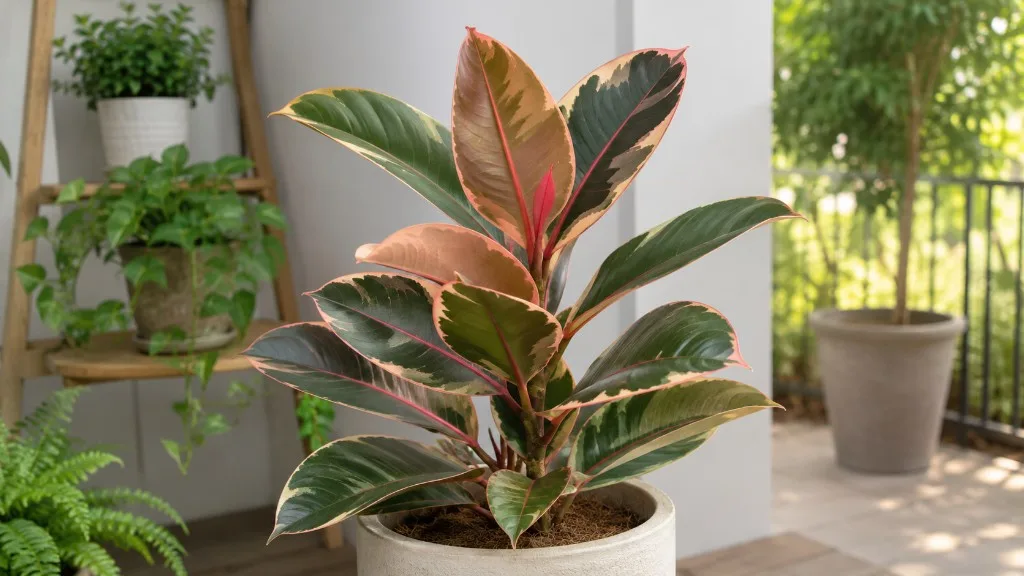
A leggy Ficus Elastica Ruby with one bare trunk and a crown of pink-flushed leaves at the ceiling is a pruning problem, not a watering problem. Ficus Elastica Ruby pruning shortens height, wakes lateral buds at leaf nodes, removes scorched variegated tissue, and supplies stem cuttings - but every cut bleeds milky latex and can trigger temporary leaf drop on this change-sensitive Moraceae species. Ficus elastica ‘Ruby’ photosynthesizes less per leaf than solid green rubber plants because pink and cream sectors carry less chlorophyll, so conservative cuts paired with bright filtered light produce better recovery than aggressive shaping in dim corners.
First, remove only fully yellow, brown, or pest-damaged leaves by snipping each petiole at its base with clean scissors. Do not top the main stem or shorten branches until dead and damaged foliage is cleared and the plant has held leaves steadily for one to two weeks.
The Missouri Botanical Garden lists rubber plant as a common upright indoor tree. NC State Extension describes large leaves and latex sap on Ficus elastica. RHS supports pruning mature specimens for size control. The sections below walk through assessment, node placement, variegation after cuts, and realistic recovery on Ruby.
What Pruning Does for Ficus Elastica Ruby
Pruning Ruby rubber plant can reduce height, encourage branching below topped stems, remove unsightly scorched or yellow variegated leaves, and improve airflow through dense pink-and-green crowns. It does not fix legginess caused by low light - brighter indirect exposure with some morning sun must accompany structural cuts if you want compact, well-colored replacement growth.
Without topping, Ruby tends toward a single vertical leader with strong apical dominance. Cutting the terminal bud above a node redirects hormones to dormant buds on nodes below, often producing two or more new branches during active growth.
What to Check Before You Cut
Walk the plant in good light before touching pruners. Look for mealybugs tucked into leaf axils - variegated Ruby crowns are dense enough to hide colonies until you spread leaves apart. Check whether lower leaves dropped from age, underwatering on Ficus Elastica Ruby, or recent relocation. Feel whether the pot dries at a normal pace; soggy soil and pruning on the same week stacks stress.
Run your hand along each stem and mark nodes where leaves attach. On Ruby, nodes appear as slight swellings at each petiole base. Structural cuts depend on knowing those points before you commit to a height.
Stability, Pests, and Variegation Health
If Ruby dropped leaves after a recent move or repot, wait until new growth holds steady before structural pruning. Treat active mealybugs first - cutting through infested axils spreads pests and opens fresh latex wounds. Pale new leaves that brown at the edges signal light stress; correct placement before expecting variegated sprouts after a hard cut.
When to Prune Ficus Elastica Ruby
Dead or fully dry damaged leaves - remove at the petiole base any time.
Structural cuts - shortening the leader or side branches - fit late spring through early summer when warmth and longer days support bud break. Clemson HGIC recommends spring pruning for rejuvenating tall indoor rubber plants during active growth.
Light tip trimming on soft new shoots is lower risk during the growing season but rarely necessary on slow-growing Ruby.
When Not to Prune
Avoid heavy reshaping immediately after Ficus Elastica Ruby repotting guide, relocation, pest treatment, or a visible leaf-drop episode. Ficus Elastica Ruby reacts to change before it reacts to bad care - stacking pruning with other disruptions often produces another shed. Skip major cuts during winter slowdown unless removing dead material; new branches may stall until spring warmth returns.
The First Cut to Make
Start with hygiene, not height. Snip each fully yellow, brown, or clearly scorched leaf at the petiole base where it meets the stem. Leave green tissue with minor edge blemishes unless the damage is spreading. This single pass improves appearance, removes pest harbors, and lets you assess the live framework before deciding whether topping is warranted.
Only after damaged foliage is gone should you plan structural cuts on stems that are still firm and holding healthy leaves.
Where to Cut - Nodes and Branching
Rubber plant stems bear nodes at every leaf attachment point. Make structural cuts 5–10 mm above a healthy node, angled slightly so water does not pool on the wound. Cutting through the node or leaving a long bare stub above it reduces sprouting success - the stub typically dies back to the nearest node anyway.
Two latent buds often flank each node. Removing the terminal growing tip breaks apical dominance and can activate one or both buds into new branches over the following weeks.
Topping for Height and Fullness
For a single-stem Ruby that has outgrown the room, cut the trunk above a node at your target height. New branches usually emerge from nodes directly below during active growth. For a bushier pot with multiple stems, shorten each stem at different heights so new growth layers rather than crowds from one plane.
On thick mature stems, air layering in spring can root a top section before you remove it - useful when the upper crown is healthy but the lower trunk is bare.
Removing Yellow or Scorched Leaves
Variegated Ruby shows stress on pale sectors first. A leaf that is more than half yellow or fully crisp should come off at the petiole base. Do not pull leaves by hand - tearing leaves ragged latex edges that heal slowly. Partial green on an otherwise firm leaf can stay until the plant sheds it naturally.
How Much You Can Safely Remove
Follow the one-third rule: remove no more than one-third of living foliage per session. Variegated Ruby tolerates less aggressive reduction than all-green rubber plants because pale leaf sections produce less energy per square centimeter. If a tall plant needs major renovation, stage reduction across two spring sessions spaced three to four weeks apart.
Removing dead yellow leaves does not count toward the one-third limit the same way as cutting live green-and-pink tissue - but stripping too many lower leaves on a stressed plant still reduces photosynthetic area. Judge the whole canopy, not just the color of individual leaves.
Tools, Sap, and Safety
Use sharp bypass pruners for stems and clean scissors for petioles. Milky latex sap flows immediately from every cut and can irritate skin and stain surfaces. Wear gloves, keep a damp cloth nearby, and wipe sap from blades and pot rims after each stem cut.
The ASPCA lists fig species as toxic to cats and dogs. Dispose of trimmings where pets and children cannot reach them.
Sterilize blades with 70% isopropyl alcohol between plants and after contact with sap. Iowa State Extension recommends alcohol sanitization for pruning tools. Do not apply wound sealant - clean cuts dry naturally indoors.
Step-by-Step Ruby Rubber Plant Pruning
- Inspect leaf axils and undersides for mealybugs; treat infestations before structural cuts.
- Sterilize pruners, wear gloves, and stage a damp cloth for sap.
- Remove fully yellow, brown, or scorched leaves at petiole bases.
- Step back and decide whether height reduction or branching is still needed.
- Mark target nodes on the stem before cutting - measure twice, cut once on ficus.
- Shorten one stem at a time, 5–10 mm above a node, pausing to assess balance.
- Wipe sap from cuts, tools, and surfaces; bag trimmings away from pets.
- Hold fertilizer two to three weeks; maintain stable Ficus Elastica Ruby light guide and normal Ficus Elastica Ruby watering guide.
Variegation and Light After Cuts
New Ruby leaves unfurl with color shaped by current light, not by where you cut. Pale pink and cream sections scorch in hot direct sun but fade toward green in shade. Position the plant in bright indirect light with gentle morning sun before expecting vivid variegation on replacement foliage.
If new leaves emerge mostly white, reduce stress - avoid another hard prune until the plant produces balanced green-and-pink growth. If new leaves come in mostly green, increase filtered light gradually over two to three weeks rather than jumping into harsh afternoon sun through glass.
Aftercare and Recovery Timeline
After pruning, keep placement, watering, and temperature stable. Water when the top 2–3 cm of mix dries - the same rhythm Ruby prefers before cuts. Average room humidity is sufficient; misting fresh wounds is unnecessary.
Side branches may appear within four to eight weeks during active growth. Variegated Ruby often takes the longer end of that range. New leaves need additional time to harden to full size and final color. Some leaf drop in the first two weeks after a hard cut is common ficus behavior - continued shedding beyond three weeks suggests unresolved stress from watering, drafts, or root issues.
Signs Pruning Worked
- Swollen buds or small new shoots visible at nodes below topped stems
- New leaves opening at normal size with pink or cream flushing
- Existing green leaves holding firm without further yellowing
- Improved balance - multiple branches filling previously bare trunk zones
Signs You Cut Too Much or Too Soon
- Widespread yellowing beyond the first two weeks
- Soft or wrinkled stems below cut points
- No bud activity after eight weeks during warm active growth
- New growth mostly tiny and green despite adequate light - may indicate the plant was pruned while still stressed
If bud break stalls, stabilize care for a full month before attempting another cut.
Using Pruned Stems for Propagation
Healthy topped sections and side branches with at least one node root in water or airy potting mix during warm weather. Take cuttings from well-colored stems for the best variegation odds on offspring. Let cut ends dry until latex stops flowing before soil rooting. Air layering suits thick bare trunks when you want a rooted top before removing it from the parent plant.
Mistakes to Avoid
Topping before removing dead leaves. You lose sight of which stems are actually healthy.
Cutting mid-internode. The stub dies; no branching occurs from bare stem tissue.
Pruning during move or repot shock. Ficus drops leaves aggressively when multiple variables change at once.
Removing too much variegated foliage at once. Slow recovery and greener rebound growth on a plant that already photosynthesizes less per leaf.
Ignoring mealybugs in axils before cuts. Pruning spreads pests through fresh wounds and sap.
Hot direct sun on fresh cuts or pale new leaves. Scorches delicate variegated tissue quickly.
Feeding immediately after a hard prune. Wait until new growth is visible and stable.
Keeping Shape Between Pruning Sessions
Rotate the pot quarterly so all sides receive similar light - uneven exposure produces lopsided crowns that tempt over-correction. Wipe leaves monthly so pale sectors can use available light efficiently. When Ruby adds a soft new tip that throws the silhouette off balance, pinch or shorten that shoot above a node during spring rather than waiting for a single dramatic renovation cut.
Structural pruning every one to two years is typical for indoor Ruby specimens. Between those sessions, hygiene removal of damaged leaves keeps the plant presentable without repeated topping.
When to use this page vs other Ficus Elastica Ruby guides
- Ficus Elastica Ruby overview - Start here for whole-plant context before deep-diving this topic.
- Ficus Elastica Ruby problems hub - Jump to symptom-specific fix guides when this care topic does not resolve the issue.
- Leggy Growth on Ficus Elastica Ruby - Escalate here when pruning adjustments are not enough.
- Slow Growth on Ficus Elastica Ruby - Escalate here when pruning adjustments are not enough.
- Brown Tips on Ficus Elastica Ruby - Escalate here when pruning adjustments are not enough.
Related Ficus Elastica Ruby guides
- Ficus Elastica Ruby overview
- Ficus Elastica Ruby watering
- Ficus Elastica Ruby light
- Ficus Elastica Ruby soil
- Ficus Elastica Ruby propagation
- Ficus Elastica Ruby fertilizer
- Leggy Growth on Ficus Elastica Ruby
- Slow Growth on Ficus Elastica Ruby
- Brown Tips on Ficus Elastica Ruby
- Ficus Elastica Ruby problems