Mealybugs on English Ivy: Causes, Checks & Fixes
Quick answer
Mealybugs on English Ivy hide in leaf axils, stem joints, and the soil line of trailing vines. First step: isolate the plant and rinse or dab every visible white cluster with 70% isopropyl alcohol on a cotton swab-confirm live pests before spraying the whole plant.
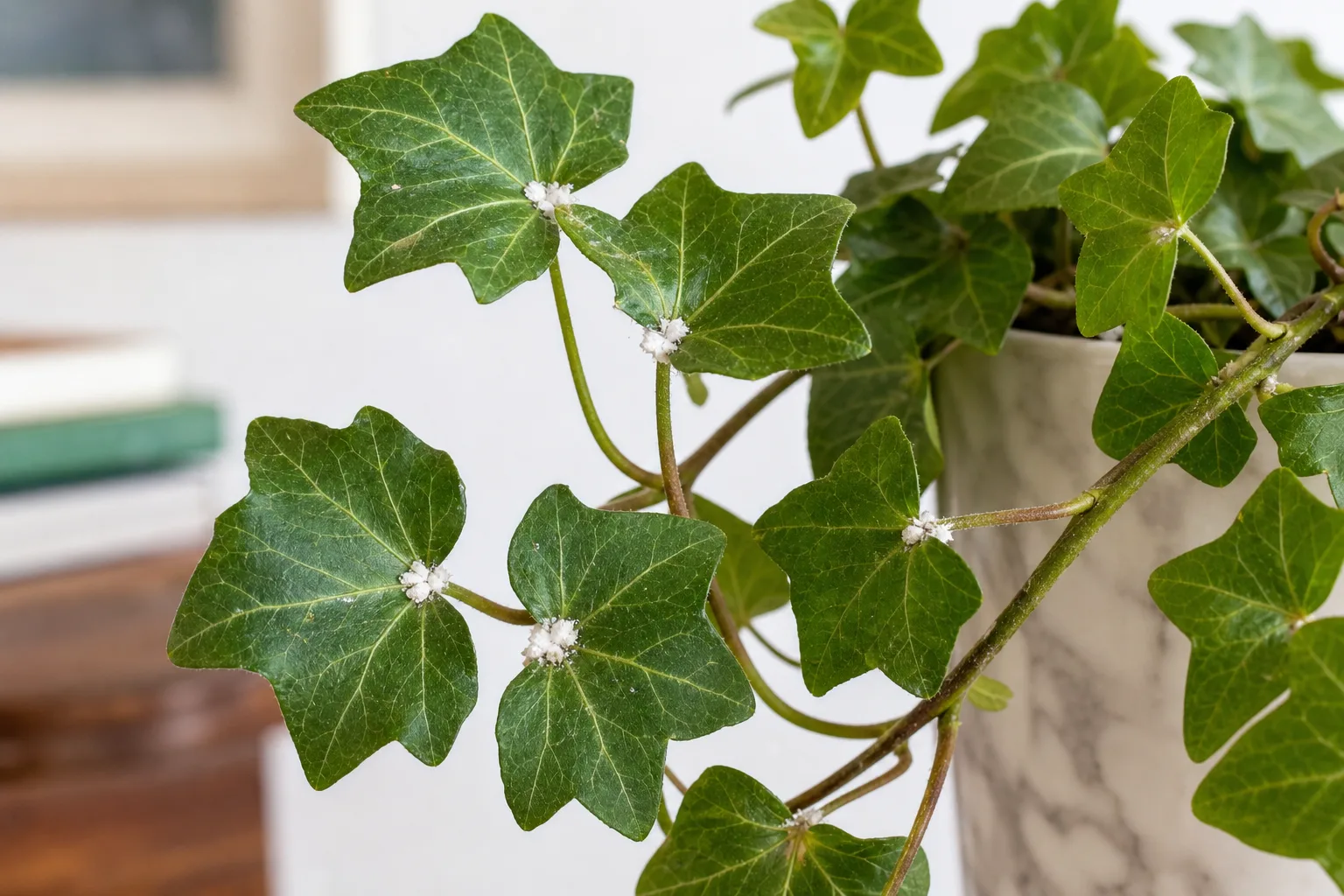
Mealybugs on English Ivy: Causes, Checks & Fixes
This guide covers mealybugs on English Ivy. See also the general Mealybugs guide, watering, and light pages for this plant.
Mealybugs on English Ivy: Causes, Checks & Fixes
Quick answer
English Ivy (Hedera helix) grows as a trailing or climbing evergreen vine with dense overlapping leaves-exactly the architecture mealybugs exploit. These sap-sucking insects cluster in sheltered leaf axils, stem nodes, and the soil line, where casual watering misses them. Heavy infestations yellow leaves, curl new growth, and leave sticky honeydew that grows sooty mold.
First step: isolate the plant and treat every visible cluster by hand. Move the pot away from other houseplants. Use a cotton swab dipped in 70% isopropyl alcohol to dab white cottony masses along stems and under leaf bases. Rinse trailing runners in lukewarm water to dislodge crawlers you cannot see. Confirm live mealybugs (pink smear when crushed) before applying insecticidal soap or neem to the whole vine.
What mealybugs look like on English Ivy
Mealybugs on ivy announce themselves through placement and residue, not random spots.
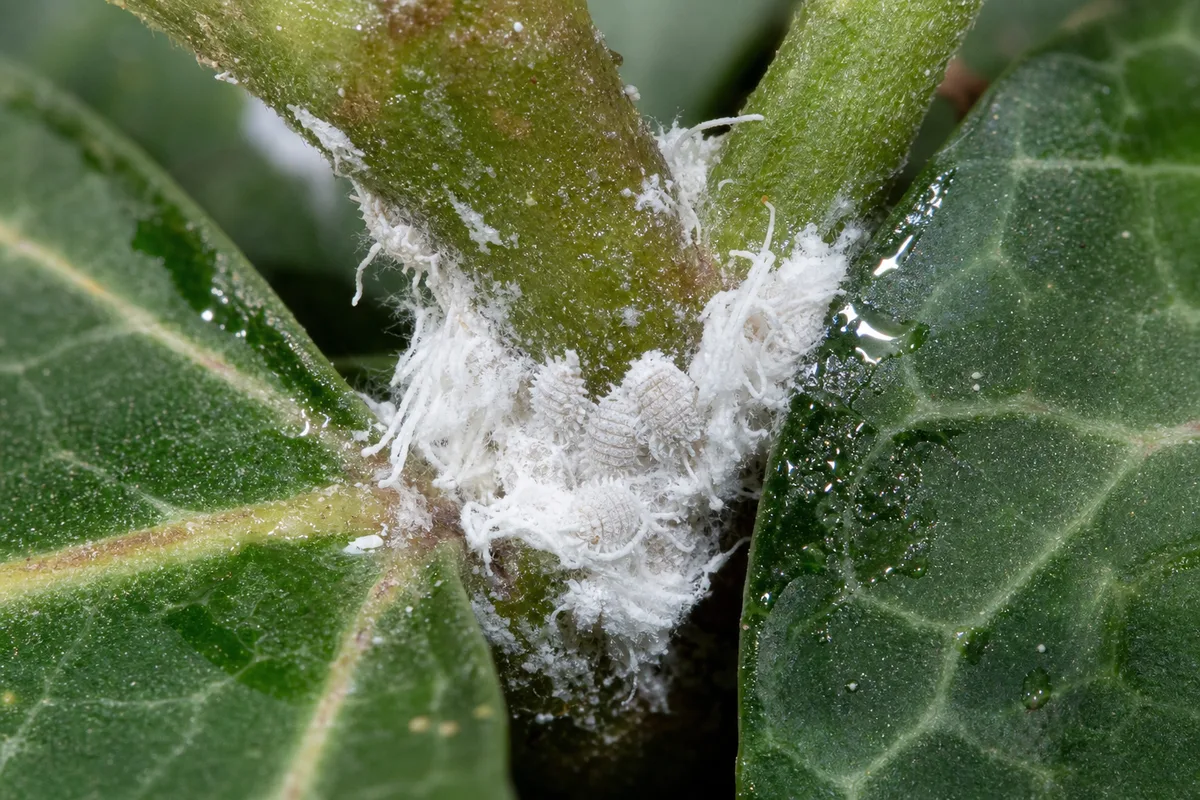
Mealybugs symptoms on English Ivy - compare with healthy tissue on the same plant.
Classic signs:
- White cottony or waxy clusters at leaf axils, stem joints, and runner tips
- Flat oval crawlers along veins when you spread leaves apart-look like moving dust
- Sticky honeydew on leaf surfaces, pots, or windowsills below hanging baskets
- Sooty black mold growing on honeydew in heavy infestations
- Yellowing or stunted new leaves on affected runners when feeding is chronic
- Ant activity on pots-ants farm mealybugs for honeydew
Where ivy hides them best:
- The soil line where multiple stems emerge from mix
- Undersides of juvenile lobed leaves on trailing stems
- Tight corners where runners loop back on themselves in baskets
- Drainage holes and saucer rims on bottom-watered pots
Distinguish from mineral deposits (hard, do not smear pink) and natural leaf texture (even, not clustered along veins).
Why English Ivy gets mealybugs
Sheltered vine architecture. Ivy’s overlapping leaves and continuous runners give mealybugs protected feeding sites at every node. A quick glance at the top of a hanging basket often misses colonies along the inner stems.
Introduction from new plants. Mealybugs spread on infested cuttings and nursery stock. Ivy purchased as a lush basket may carry hidden axil colonies that explode once indoors.
Stress and soft growth. Over-fertilized ivy pushes tender new runners mealybugs prefer. Overwatered ivy in dim corners grows soft tissue and stays damp-conditions that weaken the plant without killing pests.
Warm indoor air. Mealybugs reproduce faster in warm rooms. Ivy near heating vents or bright windows can host overlapping generations if treatment gaps exceed a week.
How to confirm the cause
- Swab test - Dab white clusters; live mealybugs smear pink or red when crushed.
- Axil trace - Follow one runner from soil to tip, spreading every leaf pair. Mealybugs cluster at joints, not randomly on leaf faces.
- Honeydew check - Sticky shine on leaves below clusters confirms active feeding.
- Movement scan - Crawlers look like tiny moving ovals under magnification.
- Neighbor inspection - Check pots within three feet; mealybugs walk to adjacent plants.
- Rule out lookalikes - Scale insects form hard brown shields; powdery mildew is flat white dust on leaf faces, not cotton in axils.
| Sign | Mealybugs | Scale | Mildew |
|---|---|---|---|
| Texture | Cottony, waxy | Hard shell | Flat powder |
| Location | Axils, nodes | Stems, veins | Leaf surface |
| Swab crush | Pink smear | No smear | Wipes off dry |
First fix for English Ivy
Isolate and direct-treat visible insects before broad sprays.
- Move the ivy away from other plants.
- Prune heavily infested runner sections into a sealed bag.
- Dab every visible cluster with 70% isopropyl alcohol on a cotton swab or soft brush.
- Shower or rinse runners in lukewarm water, targeting leaf axils.
- Let foliage dry, then inspect again in bright light.
Make one thorough manual pass first. Spraying alcohol or soap over dry dusty leaves without dislodging hidden axil colonies wastes product and misses the life cycle.
Step-by-step recovery
Weekly treatment cycle (minimum three to four weeks)
- Repeat alcohol dabs on any white clusters you find-mealybugs hatch on a rolling schedule.
- Insecticidal soap on leaf undersides and stems if alcohol alone is not reaching inner runners-soap suffocates soft-bodied insects on contact.
- Systemic option for heavy baskets: Horticultural oil or neem applied per label on a cool day, avoiding hot direct sun that can burn ivy leaves.
- Soil-line check: Mealybugs sometimes feed on roots at the crown-scratch the top quarter-inch of mix and inspect.
When to escalate
- Unpot and rinse roots if colonies persist at the soil line after four weekly passes.
- Discard severely infested hanging baskets where inner stems are inaccessible-propagate clean tip cuttings from uninfected runners instead.
Recovery timeline
- Week 1: Visible cottony masses should shrink after the first alcohol pass.
- Weeks 2–3: New honeydew stops; yellowing halts on treated runners.
- Weeks 4–6: Call the plant clear when three consecutive weekly inspections find no live clusters.
Judge success by clean new tip growth along runners-not by old stippled leaves re-greening.
Lookalike symptoms
- Powdery mildew - White dust on leaf faces in humid shade, not axil cotton.
- Hard water spots - Crusty white when dry; no pink smear on crush.
- Spider mites - Fine webbing and stippling, not waxy clusters.
Mistakes to avoid
- Do not spray alcohol on ivy in hot direct sun-leaf scorch follows.
- Do not compost infested prunings indoors where crawlers spread.
- Do not stop treatment after one pass-newly hatched crawlers restart the cycle.
- Do not fertilize while fighting pests-soft new growth feeds the next generation.
How to prevent mealybugs next time
Quarantine new ivy two weeks and inspect axils before placing near other plants. Check common houseplant pests during watering. Thin dense trailing mats occasionally so stem joints stay visible. Avoid heavy nitrogen feeds that produce soft susceptible runners. Keep ivy in appropriate light per the light guide so growth stays firm, not floppy.
For full species context, see the English Ivy overview.
When to use this page vs other English Ivy guides
- English Ivy watering guide - Use for routine moisture checks before assuming mealybugs is the main issue.
- English Ivy problems hub - Browse all 16 common issues on this species.
- Yellow Leaves on English Ivy - Different entry point when symptoms overlap with mealybugs.
- Slow Growth on English Ivy - Different entry point when symptoms overlap with mealybugs.
- Spider Mites on English Ivy - Different entry point when symptoms overlap with mealybugs.