Aphids on English Ivy: Causes, Checks & Fixes
Quick answer
Aphids on English ivy show up as soft clusters on new vine tips and leaf undersides, often with sticky honeydew on leaves or furniture below. First step: isolate the plant and rinse all leaf undersides with lukewarm water before applying any spray.
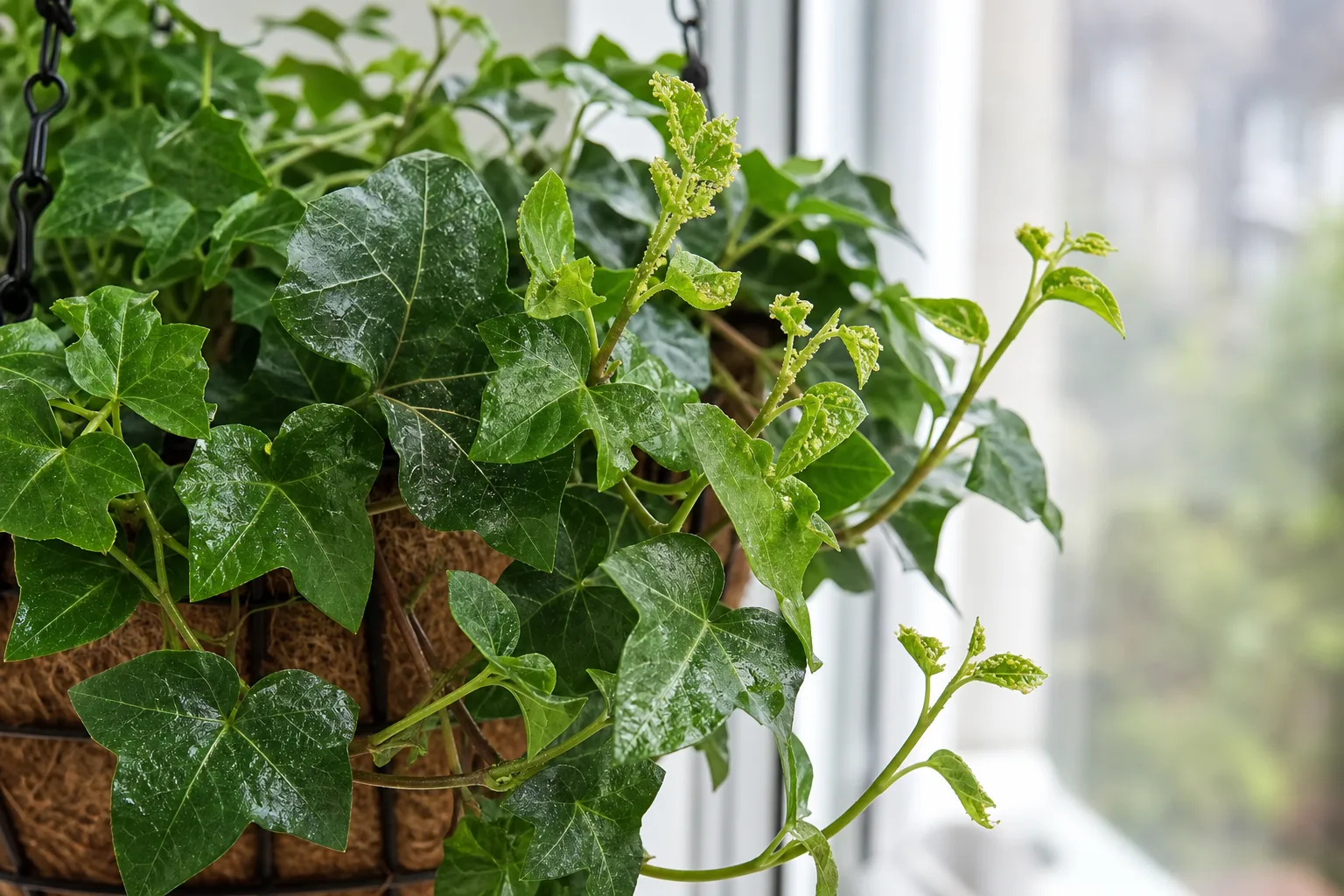
Aphids on English Ivy: Causes, Checks & Fixes
This guide covers aphids on English Ivy. See also the general Aphids guide, watering, and light pages for this plant.
Aphids on English Ivy: Causes, Checks & Fixes
Quick answer
Aphids on English ivy are small sap-sucking insects that colonize the soft tissue English Ivy overview produces constantly at trailing vine tips. Healthy ivy in English Ivy light guide keeps pushing new lobed leaves, and aphids concentrate on those unfolding shoots, stem joints, and the undersides of upper foliage where spray coverage is easy to miss.
First step: isolate the plant and rinse every leaf underside with lukewarm water. Hold trailing stems, tilt the pot in a sink or shower, and direct water upward so undersides get direct contact. This knocks off live insects and washes fresh honeydew before it attracts ants or grows sooty mold. Only after you confirm active aphids should you follow with insecticidal soap or neem on a test leaf.
Why English Ivy gets aphids
English ivy (Hedera helix) grows as a trailing vine indoors, with new tips emerging steadily when light and moisture are adequate. Aphids prefer tender new growth-shoot tips, young leaves, and soft stem tissue just below unfolding foliage. The more actively your ivy grows, the more feeding sites it offers unless you catch colonies early.
Infestations usually arrive rather than spontaneously appear. New nursery plants, cuttings from friends, outdoor summer stays, and open windows are common entry routes. Aphids crawl between pots on shared shelves and winged adults can disperse when a colony outgrows its food source. Because ivy is often grouped with other houseplants on mantels and bookcases, one missed pot can seed several neighbors.
Stressed ivy attracts pests faster than stable plants. Chronic overwatering on English Ivy, dim corners, or hot dry air weakens foliage and can coincide with other ivy problems like spider mites-but aphids themselves are not a sign you are necessarily overwatering. What matters is that weakened vines produce soft shoots aphids can pierce easily, and dense trailing growth hides colonies until honeydew drips onto surfaces below.
English ivy in cool rooms (around 10–21°C / 50–70°F) with moderate humidity often grows steadily without the extreme dry heat that fuels spider mites. That steady growth rhythm means aphids can feed year-round indoors, especially on fertilized plants pushing lush spring and summer shoots. Heavy nitrogen feeding produces particularly soft tissue that aphid populations exploit.
What aphids look like on English Ivy
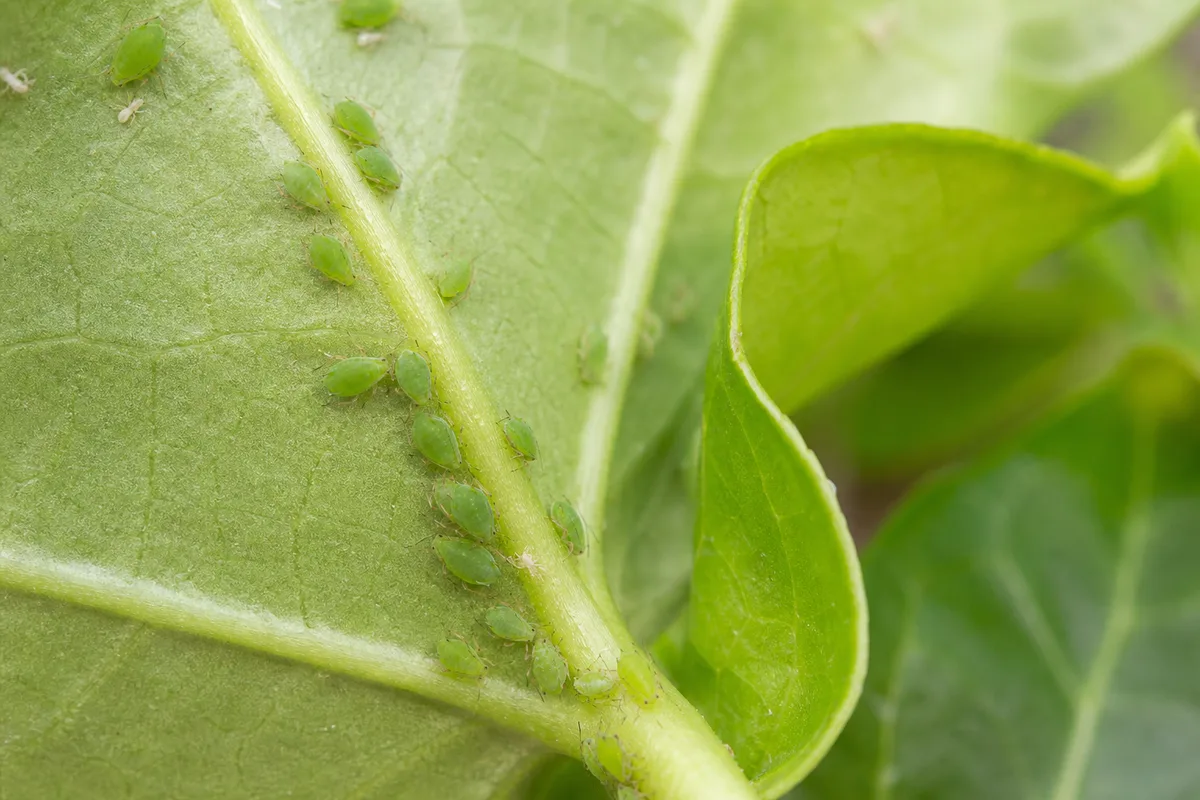
Pear-shaped green aphids clustered on a young leaf underside along the vein - check newest vine tips and unfolding shoots before honeydew drips onto surfaces below.
Insect signs:
- Soft, pear-shaped bodies about 1/16 to 1/8 inch long, usually green but sometimes black, brown, or gray
- Clusters on newest vine tips, leaf undersides along veins, and where petioles meet stems
- Slow movement when disturbed-aphids do not fly off in clouds like whiteflies
- Whitish cast skins left behind on leaves after molting
- Winged adults may appear when populations are large or overcrowded
Plant damage signs:
- Young leaves curling, puckering, or stunting at the tips where feeding is heaviest
- Yellowing on affected shoots while older inner leaves stay green longer
- Shiny, sticky honeydew on upper leaf surfaces, stems, pot rims, or furniture below trailing vines
- Black sooty mold growing on honeydew deposits
- Ant trails along stems or up shelf legs-ants harvest honeydew and protect aphid colonies
On ivy specifically, damage often looks worse at the outer trailing edge of the plant because that is where the newest growth lives. Inner older leaves may appear fine while the visible cascade of vines is coated with insects. Hanging baskets are especially prone to honeydew pooling on lower leaves and floors before the upper plant looks damaged.
How to confirm the cause
Work through these checks in order before you treat:
- Tip-first inspection - Follow the longest trailing stems to their growing points. Aphids cluster at tips and just below the newest leaves. If insects are only on old inner foliage with no new-tip activity, consider whether another pest or old damage is involved.
- Underside check - Lift vines and examine leaf backs with a hand lens. Aphids line up along midribs and veins on the underside of upper leaves, a spot easy to skip during casual watering.
- Movement test - Touch a cluster gently. Aphids shift slowly. Spider mites are nearly invisible without magnification and leave stippling plus webbing. Mealybugs form white cottony masses in leaf axils rather than tight green clusters on tips.
- Honeydew pattern - Sticky residue on leaves, pot saucers, or shelves below the plant points to sap-feeding insects. Uniform light moisture on ivy leaves without insects may be guttation-tiny sap droplets at leaf edges after heavy watering-not aphid honeydew.
- Ant activity - Ants marching up trailing stems strongly suggest aphids or other honeydew producers are present even if you have not spotted the insects yet.
- Nearby plants - Scan other pots on the same shelf. Aphids spread by crawling and flying; finding them on one ivy often means checking neighbors.
If you find soft-bodied clusters on new growth with honeydew or cast skins, aphids are confirmed. Proceed to treatment. If you see stippling and fine silk webbing without pear-shaped insects, read the spider mites guide instead-mites are the more common serious pest on indoor ivy in dry air.
First fix for English Ivy
Isolate the plant and rinse all leaf undersides and vine tips with a firm stream of lukewarm water.
Move the ivy away from other houseplants immediately. In a sink, shower, or outdoors in shade, support the pot so soil does not spill, and spray upward through the trailing vines so water hits the undersides of leaves and stem joints directly. Wrap the pot in plastic if needed to keep mix contained. Let foliage dry in bright indirect light the same day-ivy tolerates rinsing well when it is not sun-stressed.
This single step dislodges many aphids, washes honeydew, and gives you a clear view of what survived before you commit to sprays. Repeat the rinse two or three times in the first week if you still see live insects after each session. Aphids knocked off often climb back up, so one rinse alone is rarely enough for established colonies.
Wear gloves if you have sensitive skin-English ivy sap can irritate skin on contact, and crushing many aphids during wiping can add to that irritation. Keep rinsed plants out of reach of pets; ivy is toxic to cats and dogs if chewed, separate from the pest issue but relevant when you are handling wet vines at floor level.
Step-by-step recovery
After the initial rinse and isolation, escalate only as needed:
Light infestations (a few clusters on one or two tips)
- Rinse every three to four days for two weeks
- Wipe survivors with a cotton swab dipped in rubbing alcohol, testing one leaf first if you are unsure how your ivy reacts
- Remove the worst-curled tip with clean scissors if insects are concentrated and hard to reach
Moderate infestations (multiple vines affected, honeydew present)
- Continue rinsing, then apply insecticidal soap or neem oil labeled for houseplants
- Coat undersides of leaves and all stem surfaces until runoff-contact sprays only kill insects they touch
- Repeat every five to seven days for three to four cycles to catch newly hatched nymphs
- Wipe sooty mold off leaves with a damp cloth once honeydew is gone; the mold itself does not infect ivy tissue
Heavy infestations (colonies on most tips, ants present, neighboring plants affected)
- Prune out the most infested trailing sections and dispose of cuttings in sealed bags-not the compost pail indoors
- Treat all affected plants in the display, not just the ivy that showed symptoms first
- If ants are farming aphids, address ant trails or accept that predators will not help until ants are gone
- Consider whether a severely coated, wilted plant is worth saving versus discarding before the collection is overrun
Do not repot on day one. Aphids feed on foliage, not roots. English Ivy repotting guide stressed ivy adds transplant shock without removing the insects. Do not fertilize during active infestation-lush new growth feeds aphid populations you are trying to shrink.
Recovery timeline
Expect visible improvement within one to two weeks of consistent rinsing and targeted follow-up sprays. Live aphid counts on new tips should drop sharply after the first few treatments. Honeydew stops accumulating once feeding slows; existing sticky patches can be wiped or rinsed away.
Judge recovery by new growth, not old leaves. Clean unfolding leaves at vine tips for two consecutive weeks mean the population is under control. Old curled or sooty-stained leaves may persist until you trim them or they are replaced by newer foliage. Total clearance often takes three to four weekly treatment cycles because of aphid reproduction-eggs and nymphs hatch on a rolling schedule.
If colonies rebound on every new tip despite four weeks of treatment, look for untreated neighboring plants, ant protection, or a missed reservoir on another ivy in the same pot. Persistent failure on a single weak plant may mean discarding it is more practical than risking the rest of a collection.
Lookalike symptoms
Spider mites - The primary indoor ivy pest in dry, warm air. Look for fine stippling, bronzing, and delicate webbing at leaf bases, not soft pear-shaped clusters. Mites are nearly microscopic; the paper-tap test reveals moving specks. Mite damage concentrates on leaf undersides but presents as speckled discoloration rather than honeydew pools.
Mealybugs - White cottony masses in leaf axils and crown joints, not tight green clusters on growing tips. Mealybugs also produce honeydew, so sticky leaves alone do not confirm aphids.
Scale insects - Immobile brown or tan bumps along stems and leaf veins. Soft scales produce honeydew; armored scales do not. Scales do not cluster as moving groups on new tips.
Whiteflies - Tiny white adults fly in a cloud when disturbed. Nymphs are flat and immobile on undersides. Ivy is less commonly hit by whiteflies than aphids, but mixed collections can harbor both.
Guttation - Clear sap beads at leaf margins after heavy watering or cool nights. Not sticky across the whole leaf surface, no insects, no sooty mold, no progressive yellowing tied to clusters.
Dust or hard-water residue - Dry chalky film on upper leaves without stickiness, insects, or tip distortion.
Mistakes to avoid
- Spraying insecticide before rinsing and confirming live aphids-you may burn foliage without reaching insects hidden on undersides
- Treating once and returning the plant to a shared shelf the next day; aphids rebound and spread within a week
- Using dish soap not labeled for plants-harsh detergents scar ivy leaves
- Applying oil or soap to ivy sitting in hot direct sun or wilted from drought
- Ignoring ants, which protect aphids from beneficial predators
- Fertilizing heavily while treating, which pushes soft shoots aphids prefer
- Assuming all stickiness is pests-check for guttation and confirm insects before chemical treatment
- Composting infested prunings indoors where crawlers can migrate
English Ivy care cross-check
Aphid treatment works better when baseline care is stable. After isolation and rinsing, confirm:
- Light - Medium to bright indirect light supports recovery without the hot dry stress that invites spider mites. Leggy pale vines in dim corners are weaker and harder to inspect.
- Watering - Water when the top inch of mix dries. Soggy soil does not cause aphids directly but stresses roots and slows rebound. Let the pot drain fully after rinsing sessions.
- Humidity - Aim for 40–60%. Moderate humidity helps ivy recover rinsed foliage without the extreme dryness that favors mites.
- Airflow - Trailing ivy pressed against walls or crowded on shelves traps humidity and hides pests. Give vines slight space for drying after treatment.
Fixing only the insects while ignoring dim light or chronic overwatering slows new clean growth-the signal that treatment succeeded.
How to prevent aphids next time
- Quarantine new ivy and cuttings for two weeks before integrating with other plants; inspect tips and undersides every few days during isolation
- Scout vine tips weekly when the plant is actively growing-aphids are easiest to rinse off in the first few days
- Rinse or wipe dust from leaf undersides during regular care so colonies are visible early
- Avoid excess nitrogen fertilizer during indoor winter growth; use half-strength feeds only in spring and summer when the plant is clearly active
- Keep trailing vines from touching neighboring pots-aphids crawl across contact points
- Close windows near ivy displays during peak outdoor aphid season if outdoor garden plants are nearby
- Check ivy brought indoors after summer outdoors before it rejoins the collection
Prevention is inspection habit, not a single product. English ivy’s constant new tips mean there is always a fresh place aphids can land; catching them on one tip costs minutes, while treating a honeydew-coated shelf display costs weeks.
When to worry
Escalate quickly if:
- Multiple plants in one display show aphids or sticky honeydew within days
- Ants are established on stems and returning after rinsing
- Sooty mold covers large sections of trailing vines, blocking light to inner leaves
- New tips collapse or stop unfolding despite pest reduction-look for secondary stress or root issues
- Winged aphids appear on several pots, signaling dispersal
A few aphids on one vine tip after a new plant purchase is normal urgency-isolate, rinse, monitor. A collection-wide outbreak with ants and mold is high urgency-treat all hosts, prune heavily infested material, and decide whether any plant is too far gone to keep.
English ivy rarely dies from aphids alone if stems are still firm and new tips eventually emerge clean. Severe, ignored infestations can defoliate trailing sections and weaken the plant enough that recovery takes a full growing season. Honest discard is better than months of reinfestation spreading to every shelf in the room.
Conclusion
Aphids on English ivy are a visible, treatable pest when you catch them at the growing tips before honeydew spreads. The plant’s trailing habit and constant new growth explain both why aphids show up and where to look first. Isolate, rinse undersides thoroughly, confirm live insects, then repeat rinses or add labeled soap or neem only as needed. Recovery shows up as clean new lobed leaves at the vine ends-trim old damaged sections once those tips stay pest-free, and keep weekly tip checks so the next colony never reaches your floor.
When to use this page vs other English Ivy guides
- English Ivy watering guide - Use for routine moisture checks before assuming aphids is the main issue.
- English Ivy problems hub - Browse all 16 common issues on this species.
- Mealybugs on English Ivy - Different entry point when symptoms overlap with aphids.
- Spider Mites on English Ivy - Different entry point when symptoms overlap with aphids.
- Yellow Leaves on English Ivy - Different entry point when symptoms overlap with aphids.