Aphids on Calathea Medallion: Causes, Checks & Fixes
Quick answer
Aphids on Calathea Medallion show up as soft clusters inside rolled leaf spears with sticky honeydew-not normal for this plant. First step: isolate the pot and rinse new growth and leaf undersides with lukewarm water before applying any spray.
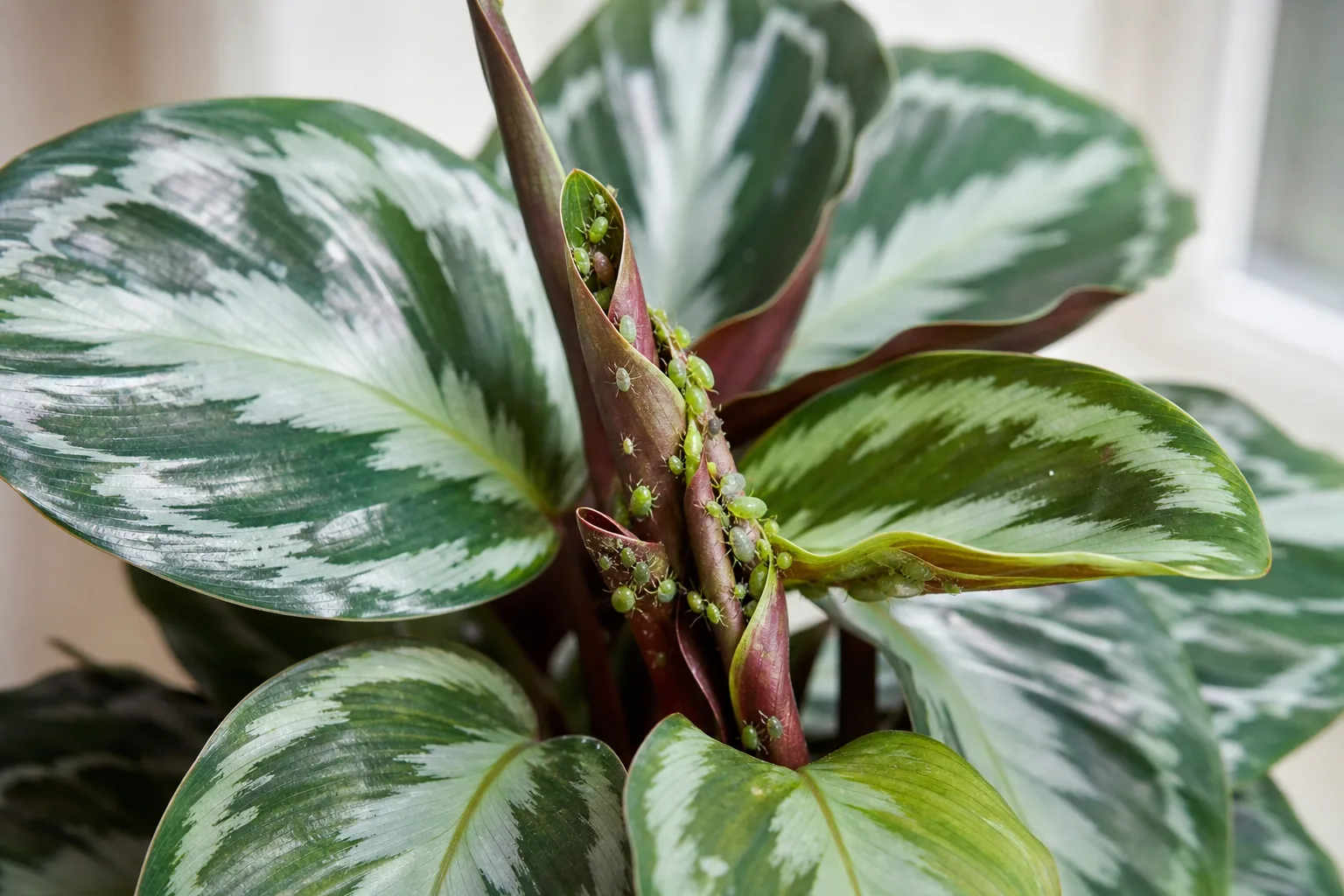
Aphids on Calathea Medallion: Causes, Checks & Fixes
This guide covers aphids on Calathea Medallion. See also the general Aphids guide, watering, and light pages for this plant.
Aphids on Calathea Medallion: Causes, Checks & Fixes
Quick answer
Aphids on Calathea Medallion (Goeppertia veitchiana ‘Medallion’) are small sap-sucking insects that colonize the softest tissue-the rolled new leaf spears in the crown and tender stem tips. They leave shiny honeydew on the plant’s broad, patterned leaves, which can darken into sooty mold and make an otherwise fussy plant look worse than the underlying damage really is.
First step: isolate the plant and rinse new growth and leaf undersides with lukewarm water. Knock off every visible cluster before you reach for spray. Calathea Medallion is not naturally sticky; tacky residue on leaf surfaces almost always means sap-feeding insects, not normal leaf texture or low-humidity curl.
This page is the cultivar deep-dive for Medallion owners-crown blind spots from round leaves, broad-blade rinse support, and rosette drainage after shower treatment. For general Calathea aphid biology shared across cultivars, see the genus Calathea aphids guide.
Why Calathea Medallion gets aphids
Aphids rarely appear from nowhere indoors. They hitchhike on new nursery plants, ride in on cut flowers, or drift in as winged adults through open windows during warm months. Once inside, they spread plant to plant when pots sit close together for humidity-which is exactly how many Calathea Medallion owners group prayer plants on the same tray.
Medallion’s growth habit makes it an easy target. The plant pushes new leaves slowly from a tight central rosette. Each spear stays soft and rolled for days before unfurling, giving aphids a sheltered feeding site that casual watering misses. Broad petioles and leaf bases also trap moisture and hide small colonies.
Stress does not cause aphids, but it makes damage show faster. A Medallion kept in low humidity, irregular watering, or excess nitrogen fertilizer produces tender shoots that aphids prefer. The plant already struggles to keep new leaves clean and flat; sap loss on a developing spear can leave permanent curl or edge damage once that leaf opens.
Because Calathea Medallion is often placed on reachable shelves for humidity care, you may notice honeydew on the pot rim, saucer, or nearby leaves before you spot the insects themselves. Ants farming honeydew on stems are another early warning sign.
What aphids look like on Calathea Medallion
Typical aphid signs:
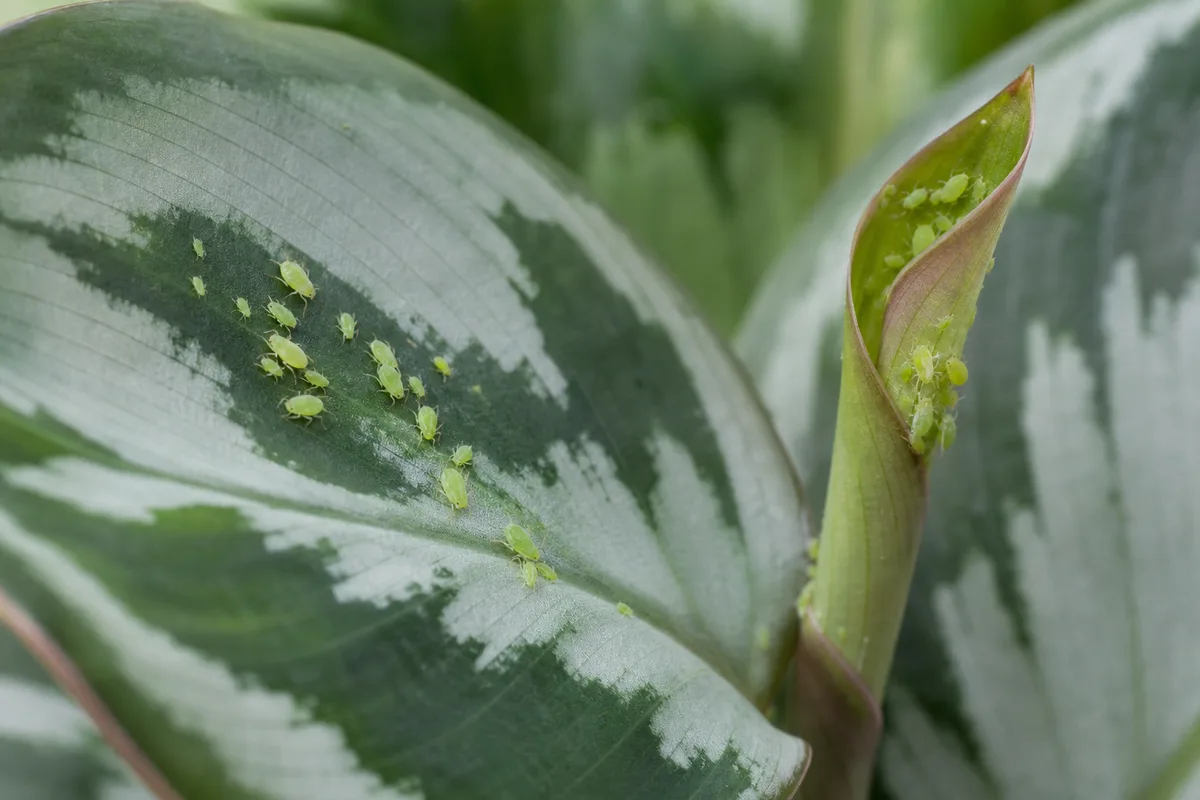
Aphids symptoms on Calathea Medallion - compare with healthy tissue on the same plant.
- Soft clusters on rolled new leaf spears, petiole joints, and stem tips
- Pear-shaped insects about 1/16 to 1/8 inch long-often green, sometimes black, pink, or gray
- Shiny, sticky honeydew on upper leaf surfaces or nearby furniture
- Black sooty mold that wipes off with a damp cloth
- New leaves opening with curl, puckering, or uneven color if feeding happened during unfurling
- Ant trails on stems or pot edges
Where to look first: Drop your eye level to the crown center. Medallion’s round leaves hide the newest spears from above. Tilt the pot and inspect where each leaf meets the stem. Aphids concentrate on tissue that is still expanding, not on older fully hardened leaves-unless the infestation is heavy.
What damaged tissue can recover: Sooty mold and fresh honeydew wash off once insects are controlled. A leaf that unfurled with distortion from heavy feeding will not flatten retroactively. Judge recovery by the next one or two spears opening clean, not by old cosmetic marks.
Photo check: Use a phone macro shot inside a rolled spear and compare honeydew shine on a patterned upper leaf against a dry tap-water mineral spot-the latter feels gritty and dry, not uniformly tacky.
How to confirm the cause
Work through these checks before spraying anything:
- Crown inspection - Look inside the rosette at rolled spears with a hand lens or phone macro photo. Aphids move when disturbed; mealybugs look cottony and slow.
- Sticky test - Rub a finger on a shiny upper leaf patch. Honeydew feels tacky and may pick up dark sooty mold. Dry dust or water spots do not feel uniformly sticky.
- Underside scan - Check leaf backs along midribs and petioles. Aphids often sit on undersides even when honeydew shows on top.
- Neighbor check - Inspect other prayer plants, ferns, or pothos within a few feet. Aphids colonize many houseplant species.
- Rule out lookalikes - Scale has hard brown shells; mealybugs form white wax clusters; spider mites cause stippling and fine webbing, not usually heavy stickiness alone.
- Care cross-check - Confirm the pot is not waterlogged or bone dry. Water stress alone does not create honeydew, but a weakened Medallion shows pest damage faster-see overwatering if the mix stays wet.
If you find moving soft-bodied insects plus sticky residue, aphids are confirmed. No insects and no tackiness means look elsewhere-often low humidity if leaves curl with clean tissue inside the roll.
First fix for Calathea Medallion
Isolate the plant and rinse new growth and leaf undersides under lukewarm running water.
Move the pot away from other plants immediately. Carry it to a sink or shower and use gentle but direct water pressure on the crown, petiole bases, and leaf undersides-where aphids hide. Support each leaf from below so the broad Medallion blades do not snap. Use filtered or dechlorinated water if that is what the plant normally receives; cold tap shocks an already stressed tropical.
Crown drainage after rinsing: Angle the pot 30–45° so water runs out of the rosette center instead of pooling in cupped leaf bases. Blot excess from the crown with a clean towel if needed. Let foliage air-dry in bright indirect light the same day-do not return the pot to a closed humidity dome while the crown is wet. Water sitting overnight in the rosette center can rot the growing point; this is the main risk when showering Medallion for pests.
Do not apply oil or soap on day one if a strong rinse removed most insects and the plant is not wilting. Do not fertilize, repot, or prune heavily while aphids are active-those steps add stress without killing pests.
Insecticidal soap vs. neem on Medallion
After repeated rinses fail to knock colonies down, insecticidal soap is the safer first spray for Medallion’s tender new spears. Soaps kill on contact and leave no residue once dry-important on patterned foliage you wipe often.
Neem oil and horticultural oils can work on aphids but carry higher burn risk on thin Marantaceae leaves, especially on soft unfurling tissue. Extension guidance recommends testing any insecticide on a small leaf area first and waiting at least 48 hours for phytotoxicity before treating the whole plant. If you already use neem successfully on this Medallion for spider mites, you may alternate-but default to soap for aphid clusters on crown spears unless a patch test on one spear shows no spotting.
Never use dish detergent instead of products labeled for plants. Harsh soaps burn tender new Calathea tissue.
Cat-accessible plants: Calathea is popular with cat owners. Insecticidal soap residue on leaves is generally low-risk once dry, but keep cats away from freshly sprayed foliage until it dries completely and rinse treated leaves if your cat chews them.
Step-by-step recovery
After the initial rinse:
- Repeat water knockdown every two to three days until live aphids are hard to find on inspection.
- Apply insecticidal soap if colonies persist after several rinses. Coat leaf undersides, petioles, and crown spears until spray runs off. Soaps only kill on contact and leave no residue once dry.
- Retreat on a five- to seven-day interval for at least two to three cycles to catch newly hatched nymphs. Repeat applications are usually necessary because soaps have no residual activity.
- Wipe sooty mold from upper leaves with a damp cloth once honeydew production stops. Avoid scrubbing patterned surfaces aggressively.
- Trim only if necessary - Remove a spear that is completely coated and cannot be reached by spray, but keep as much foliage as possible for photosynthesis.
- Manage ants if present. Ants protect aphid colonies; blocking ant access helps natural control and makes rinsing more effective.
Keep the plant isolated until you see no live aphids for at least two weeks after the last treatment.
Observed recovery pattern: In one documented case, a Medallion with aphids inside three rolled spears received shower rinses every three days for nine days, then two insecticidal-soap cycles at seven-day intervals. The fourth spear unfurled flat without curl on day 18; older spears that had fed during unfurling kept minor edge distortion.
Recovery timeline
Moderate infestations often collapse within one week of consistent rinsing. Soap-assisted control usually takes two to three weeks with label-interval repeats. New leaf spears should emerge without fresh honeydew within that window if treatment reached the crown.
Old leaves with curl or edge damage from feeding during unfurling will not revert. Success means clean new growth and stable leaf movement-not perfect older foliage.
Lookalike symptoms to rule out
| Symptom pattern | Aphids | Mealybugs | Scale | Spider mites | Water spots / low humidity |
|---|---|---|---|---|---|
| Sticky residue | Yes - honeydew | Yes - honeydew | Yes - honeydew | Rare alone | No - dry |
| Insect appearance | Soft, pear-shaped, mobile | White cottony wax | Hard immobile bumps | Tiny moving dots, webbing | None |
| Where on Medallion | Rolled crown spears, new tips | Leaf axils, crown | Stems, veins | Purple undersides, petiole bases | Whole leaf or margins |
| Leaf damage | Curl on new spears during unfurl | Waxy patches | Yellow halos around bumps | Pinhead stippling | Crisp edges or dry curl, clean inside roll |
| Quick test | Finger sticky on upper leaf | Cottony clusters visible | Won’t rinse off | White-paper tap test | Dry feel, no insects in spear |
For deeper guides: mealybugs · spider mites · low humidity
Mistakes to avoid
Do not spray insecticidal soap or neem on a wilted, sun-stressed, or heat-shocked Medallion. Treat in stable indoor conditions and test one leaf if you are unsure about sensitivity.
Do not return the plant to a humidity group immediately after treatment. Two pest-free weeks in isolation prevents reinfesting neighbors.
Do not ignore ants. Honeydew management includes breaking ant-aphid partnerships.
Do not stack repotting, fertilizer, and heavy pruning with pest treatment. Calathea Medallion recovers best when care changes stay minimal until insects are gone.
Crown rot warning: The biggest shower mistake is letting water sit in the rosette overnight. Always angle the pot for drainage and dry the crown the same day.
Calathea Medallion care cross-check
While treating aphids, keep baseline care steady rather than experimental:
- Light: Medium indirect light. Do not move the plant into direct sun to “help it recover”-sunburn on broad Medallion leaves is permanent.
- Water: Water when the top 2 cm of mix begins to dry, with filtered or rainwater as usual-see the watering guide. Overwatering does not cause aphids but weakens root function during recovery.
- Humidity: Maintain high humidity (60%+) if you already run a humidifier. Pest rinses are not a substitute for humidity management.
- Fertilizer: Hold feeding until new growth looks clean and the plant is actively pushing spears again.
How to prevent aphids
Quarantine every new plant for two weeks before placing it near your Medallion. Inspect the crown and leaf bases during weekly care-not only when leaves look damaged.
Keep nitrogen fertilizer light during active growth. Soft, fast push growth attracts aphids more than steady, moderate development.
If you open windows in summer, check for winged aphids on windowsills and nearby foliage. Yellow sticky traps near infested plants can catch flying adults but do not replace crown inspection.
Continue gentle leaf wiping as part of routine care. Medallion’s wide leaves collect dust; regular cleaning makes pest colonies easier to spot early.
When to worry
Escalate treatment if colonies rebound after three soap cycles, multiple new spears abort before opening, or sooty mold returns within days of washing. A plant losing several consecutive new leaves to combined pest and humidity stress may need division of the healthiest offset after insects are cleared-not mid-infestation.
Aphids alone rarely kill a Calathea Medallion with intact roots and stable care. The bigger risk is cosmetic damage on new leaves and secondary stress from over-treating with repeated harsh sprays.
Related Calathea Medallion guides
overview · watering · spider mites · mealybugs · low humidity · overwatering · genus Calathea aphids