Root Rot on Alocasia Dragon Scale: Causes, Checks & Fixes
Quick answer
Root rot on Alocasia Dragon Scale means the corm and fine roots decay in soil that stays wet too long. First step: stop watering, unpot, and press the corm-if tissue is soft or roots are mushy, rinse, trim to firm white tissue, and repot in dry chunky mix before you water again.
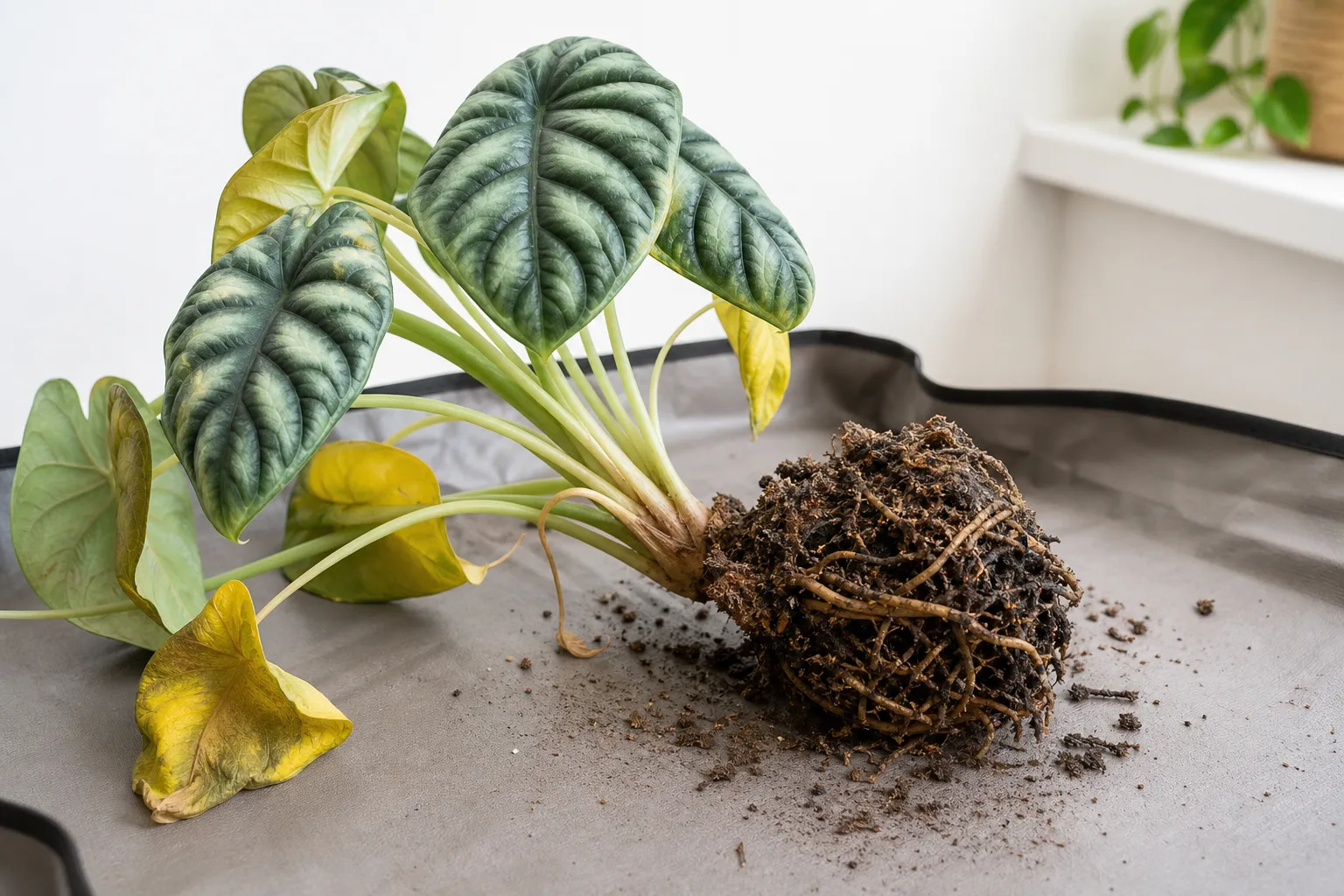
Root Rot on Alocasia Dragon Scale: Causes, Checks & Fixes
This guide covers root rot on Alocasia Dragon Scale. See also the general Root Rot guide, watering, and light pages for this plant.
Root Rot on Alocasia Dragon Scale: Causes, Checks & Fixes
Quick answer
Root rot on Alocasia Dragon Scale (Alocasia baginda ‘Dragon Scale’) is corm and fine-root decay in soil that stays saturated too long-not a mysterious leaf disease. Dragon Scale stores energy in a swollen underground corm; when the chunky mix around it holds water for days, roots suffocate and opportunistic fungi attack weakened tissue.
The emergency signature is wet wilt: limp, collapsed petioles while the pot still feels heavy, because [damaged roots cannot move water upward](https://www.missouribotanicalgarden.org/gardens-gardening/your-garden/help-for-the-home-gardener/advice-tips-resources/insects-pests-and-problems/environmental/[overwatering on Alocasia Dragon Scale](/plants/alocasia-dragon-scale/overwatering/)) even though the mix is damp.
First step: stop watering and unpot today. Rinse the root zone, press the corm for firmness, and trim every mushy root back to firm white tissue. If the corm is still firm-or only partially soft with salvageable white interior-follow the step-by-step recovery below. If the corm is mushy throughout, honest salvage may mean propagation from offsets instead of saving the main plant.
For baseline watering rhythm and dormancy cuts, see the Alocasia Dragon Scale watering guide. This page focuses on confirmed rot triage, surgery, and repot-not early overwatering correction alone.
What root rot looks like on Alocasia Dragon Scale
Dragon Scale pushes thick, sculpted leaves from stiff petioles anchored to a corm below the soil line. Root rot starts underground; above-ground signs often lag until fine feeder roots are already damaged.
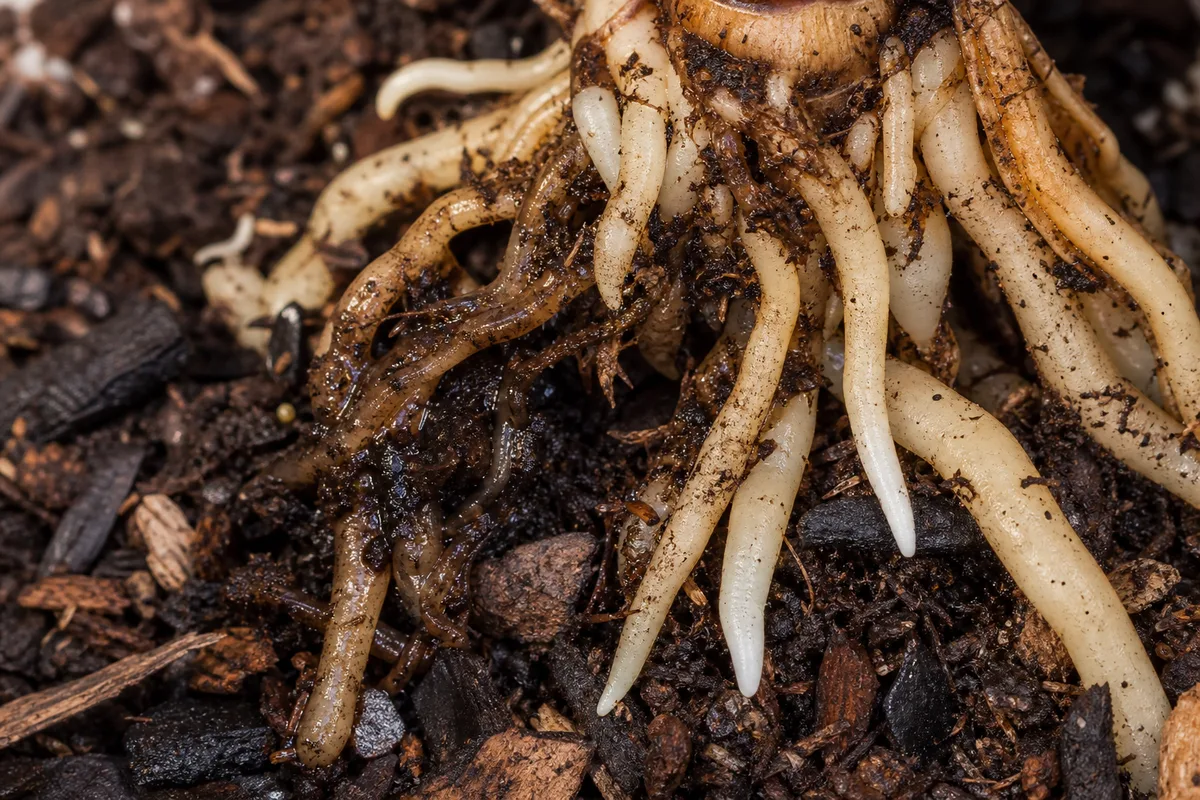
Root Rot symptoms on Alocasia Dragon Scale - compare with healthy tissue on the same plant.
Early signs
- Yellow lower leaves dropping from the outside in while mix at 2–3 cm depth stays damp
- Limp petioles and collapsed blades on a heavy pot-the classic wet-wilt trap
- Rubbery or soft petiole bases where stalks meet wet soil at the crown
- Sour or stagnant smell from the drainage hole or when you brush soil aside
- Fungus gnats when the surface never dries between waterings
- Stalled new spears that brown before unfurling
Advanced signs
- Soft or squishy corm when you press gently at the soil line
- Mushy stem tissue at the crown spreading upward from wet mix
- Roots that slip apart when touched-healthy houseplant roots are firm and white to light tan
- Widespread collapse despite visibly moist soil
What it does not look like: A light, dry pot with firm corm and inward-curling leaves points to underwatering. Gradual leaf drop in cool fall or winter with a firm corm and no sour smell often means dormancy-not rot. Limp leaves on damp soil without mushy roots yet may still be correctable overwatering before full rot sets in.
Root rot vs. overwatering vs. dormancy
These three problems overlap on Dragon Scale because all can involve yellow leaves and leaf drop. The corm firmness test and smell check separate them fastest.
| Signal | Root rot | Overwatering (early) | Dormancy |
|---|---|---|---|
| Corm at soil line | Soft, mushy, or hollow | Usually firm | Firm |
| Root inspection | Brown, slimy, foul | May still be pale; some dark tips | Roots often intact |
| Soil smell | Sour or stagnant | Neutral to slightly musty | Neutral |
| Pot weight | Heavy, wet for days | Heavy, slow to dry | Normal to light |
| Leaf pattern | Limp on wet soil; rapid yellowing | Wet-wilt; edema possible | Gradual drop in cool season |
| Season | Any; worse in winter wet mix | Any | Fall/winter common |
If roots are still firm and pale but soil stays wet, start with the overwatering guide dry-down path. If the corm is firm and leaves drop in cool dim months with lightly moist mix, follow dormancy watering cuts before you unpot for surgery.
Why Dragon Scale gets root rot
Dragon Scale evolved on Borneo’s forest floor, where rain is frequent but substrate drains almost immediately. Indoors, the plant needs moist, airy mix-not standing water around the corm. Fine feeder roots need oxygen; the corm can survive brief stress, but prolonged saturation kills roots first, then invades the corm.
Corm and fine roots in fast-draining conditions
The corm stores starch and water; fine roots branch off it to absorb moisture and oxygen simultaneously. When mix compacts or saucers hold runoff, the lower root zone stays anaerobic. Pathogens such as Pythium and Phytophthora thrive in wet, oxygen-poor soil and colonize dying root tissue-exactly the pattern Dragon Scale shows after chronic overwatering.
Dormancy plus wet mix trap
Dragon Scale often drops leaves and slows growth in cool, dim winter. Many owners keep the summer watering schedule while the plant pulls almost no water. The RHS warns that overwatering during dormancy can cause roots to rot-a leafless corm sitting in wet mix for weeks is one of the most common rot triggers on this cultivar. Cut volume 60–70% and extend intervals to every 3–4 weeks per the PDA dormancy guide; the goal is to keep the corm from desiccating, not to keep mix soggy.
Cool rooms and slow evaporation
In a north-facing room below 18°C (65°F), chunky mix that dried in three days during summer may stay damp for ten. Calendar watering ignores that slowdown. Terracotta wicks moisture from the corm zone faster than glazed cachepots; a decorative outer pot with no drainage can trap standing water where roots cannot see it.
Dense mix and oversized pots
Heavy peat-heavy soil or garden soil holds water around the corm while the surface looks dry. An oversized pot holds wet mix in zones roots never reach-perpetual saturation without obvious surface cues. Dragon Scale needs chunky aroid mix sized to the corm, not a deep reservoir.
How to confirm the cause
Work through these checks before repotting. Wear gloves when handling cut tissue-Alocasia contains calcium oxalate crystals typical of aroids and sap can irritate skin during root surgery.
- Stop watering immediately - More water deepens anaerobic conditions around a rotting corm.
- Lift the pot - Heavy weight plus limp leaves on damp mix supports rot over drought.
- Smell the drainage hole - Sour or swampy odor strongly confirms decay.
- Press the corm - Gently feel the swollen stem at the soil line. Firm tissue may still be salvageable; soft or hollow tissue needs aggressive trim or discard assessment.
- Unpot and rinse - Tip the pot, support the corm with your hand, slide the root ball out. Rinse old mix away under lukewarm water until roots are visible.
- Inspect roots - Healthy roots are white and firm; rotted roots turn soft and brown or black. Trim-line is wherever tissue stays firm when you squeeze gently.
- Check petiole bases - Mushy tissue where stalks meet soil means crown involvement; trim back to firm tissue or assess discard threshold.
- Rule out lookalikes - Dry top 2–3 cm with firm corm means underwatering, not rot.
Corm firmness test
The corm squeeze test is the fastest salvage decision on Dragon Scale:
- Firm throughout - Even with 50%+ root loss, recovery is realistic with trim, dry repot, and warm humid recovery.
- Soft outer layer, firm white interior - Trim decay back into firm white corm tissue with sterilized shears; the plant can resprout from healthy corm material.
- Mushy throughout, collapses under light pressure, foul smell - Often beyond saving; consider corm offsets if any firm tissue remains on side corms.
First fix: stop watering and unpot
Stop watering and unpot the plant today-this is the single clearest first action, not repotting into fresh mix while still guessing, fertilizing, or misting heavily.
- Withhold all irrigation until you have inspected roots.
- Unpot gently-support the corm, do not yank by petioles.
- Rinse the root zone under room-temperature water to expose damage.
- If roots are mushy or the corm is soft, proceed to step-by-step recovery below-not back to the windowsill with wet soil.
Do not apply fertilizer, heavy misting, or “emergency” full soaking. Wet-wilt on rotting roots worsens when more water is added.
Step-by-step recovery
After confirming rot, work through these steps in order. One correction at a time lets you read the plant’s response.
1. Trim to firm tissue
With sterilized shears (wipe with alcohol between cuts), remove every root that is dark, slimy, hollow, or slips apart. Cut back to firm white or pale tan tissue. If the corm base is partially soft, trim decay inward until you reach firm white material-Dragon Scale can regenerate from healthy corm tissue. Discard trimmed material; do not compost infected roots or mix.
2. Optional hydrogen peroxide rinse
Many aroid growers-including the protocol in the watering guide-soak trimmed roots and corm in 1 part 3% hydrogen peroxide to 3–4 parts water for 5–10 minutes. This is an optional surface rinse on exposed tissue after trimming, not a substitute for removing mushy roots. Extension guidance notes limited formal research on hydrogen peroxide as a soil sanitizer; do not use undiluted peroxide or soak longer than 10 minutes.
3. Dry callus briefly
Let trimmed roots and corm air-dry on clean paper for 15–30 minutes so cut surfaces callus slightly before repotting.
4. Repot in dry chunky aroid mix
Use fresh chunky aroid mix-roughly 40% quality potting compost, 30% perlite or pumice, 20% orchid bark, and 10% horticultural charcoal per the watering guide. The mix should drain in under 30 seconds when tested. Choose a clean pot with drainage holes sized to the corm-one size up at most. Scrub and dry the old pot if reusing; do not reuse infected mix. See the repotting guide for depth and handling.
5. Hold water 5–7 days
Let the repotted plant sit in dry mix for 5–7 days so trimmed tissue calluses. Then water lightly-enough to moisten the mix without saturating the entire root zone on day one.
6. Resume check-based watering
After the dry-down period, return to watering when the top 2–3 cm of mix feels dry during active growth per the watering guide. Do not fertilize for 4–6 weeks until new growth is stable.
7. Optimize recovery environment
While roots rebuild, keep temperatures around 22–25°C (72–77°F), humidity 70% at leaf height, and Alocasia Dragon Scale light guide. Do not move into direct sun to “force” recovery-that adds stress. Judge progress by new spears from a firm corm, not by old yellow leaves re-greening.
Recovery timeline
Mild rot (firm corm, partial root loss): Stabilization often begins within one to two weeks after trim and dry repot. First new root hairs and a small spear may appear in 3–4 weeks at warm temperatures with adequate humidity.
Moderate rot (50%+ roots removed, firm corm): Expect 4–8 weeks before visible new growth. The plant may drop remaining leaves and resprout leafless from the corm-that is normal if the corm stays hard.
Severe crown or corm involvement: Recovery slows to months or fails entirely. Wisconsin Extension notes that when most roots are dark and soft, discarding the plant is often the most practical choice-honest assessment beats prolonged nursing of a mushy corm.
Worsening signs after surgery: Continued softening at the corm, spreading mush up petioles, or sour smell returning within days means trim was insufficient or mix is still too wet-re-inspect immediately.
Lookalike symptoms
- Overwatering - Wet soil and limp leaves before roots turn mushy; firm corm and pale roots on inspection. Fix with dry-down and drainage correction; escalate here if roots are slimy.
- Underwatering - Light pot, dry top 2–3 cm, firm corm; perks after bottom-watering. Soaking a rotting plant makes rot worse.
- Dormancy - Leaf drop in cool months with firm corm and no sour smell; reduce water 60–70%, do not unpot unnecessarily.
- Low humidity - Crispy tips on turgid petioles with appropriate soil moisture; humidity fix, not root surgery.
- Cold damage - Sudden collapse below 13°C (55°F); warm the plant and reduce water slightly-inspect roots only if wet-wilt persists.
What not to do
Do not keep watering because leaves look wilted when soil is already wet-watering a plant with rotting roots makes decline faster.
Avoid repotting into dense garden soil or a pot without drainage-Dragon Scale rots faster in compacted mix.
Do not reuse infected substrate or leave the pot in a water-filled saucer-root rot fungi reproduce best in wet soil.
Skip fertilizer, heavy misting, and fungicide sprays on the same day as surgery unless a professional diagnostician recommends otherwise; stressed roots burn easily.
Do not handle trimmed tissue bare-handed if you have sensitive skin-Alocasia sap contains irritant oxalates; wash tools and hands after surgery.
Do not assume leafless means dead-a firm corm after proper trim can resprout in spring even when every leaf is gone.
How to prevent root rot next time
Build prevention around oxygen at the corm zone, not calendar watering:
- Water when the top 2–3 cm of mix feels dry during active growth; cut volume 60–70% in winter dormancy so leafless plants are not in wet mix for weeks.
- Use chunky aroid mix in a pot with drainage holes sized to the corm-not oversized reservoirs.
- Empty saucers within 30 minutes after bottom-watering; never leave Dragon Scale in standing runoff.
- Avoid decorative cachepots that hide pooled water at the root zone.
- Check pot weight and mix depth every few days during season changes-cool dim rooms dry mix slowly.
- After repotting, follow the repotting guide dry-down before resuming full volume.
When to worry - salvage vs. discard
Save and monitor when the corm is firm (or trimmable to firm white tissue), smell is neutral after rinse, and at least some healthy root stubs remain-even if all leaves drop.
Act within 24 hours when the corm is softening, petiole bases turn rubbery, or most roots are mushy on first inspection.
Consider discard or offset propagation when the corm is mushy throughout, collapses under light pressure, or smells foul after aggressive trim-continued wet nursing rarely reverses total corm loss. Check for firm corm offsets before throwing the pot away.
Contact your local extension office if the plant fails to push new growth 8 weeks after corrected surgery, warm temps, and appropriate dry-down-chronic decline may need hands-on diagnosis beyond photos.
Conclusion
Root rot on Alocasia Dragon Scale is a corm emergency triggered by wet, oxygen-poor mix-not a leaf problem you can mist away. Confirm it with sour smell, mushy roots, and corm softness; stop water and unpot first; trim to firm tissue; optionally rinse with dilute peroxide; repot dry in chunky mix; and resume watering only after callus and dry-down. Prevent repeat rot by matching irrigation to the top 2–3 cm dry rule, respecting dormancy dry-down, and keeping saucers empty. For full care context, see the Alocasia Dragon Scale overview.
When to use this page vs other Alocasia Dragon Scale guides
- Alocasia Dragon Scale watering guide - Use for routine moisture checks before assuming root rot is the main issue.
- Alocasia Dragon Scale problems hub - Browse all 16 common issues on this species.
- Overwatering on Alocasia Dragon Scale - Different entry point when symptoms overlap with root rot.
- Yellow Leaves on Alocasia Dragon Scale - Different entry point when symptoms overlap with root rot.
- Wilting on Alocasia Dragon Scale - Different entry point when symptoms overlap with root rot.