Mold on Soil on Alocasia Dragon Scale: Causes, Checks &
Quick answer
Surface mold on Alocasia Dragon Scale (*Alocasia baginda*) is usually harmless saprophytic fungus on a wet top layer-but on this rot-sensitive aroid it signals the mix is staying saturated longer than the corm can tolerate. First step: stop watering and let the top 2–3 cm of chunky mix dry completely before the next drink.
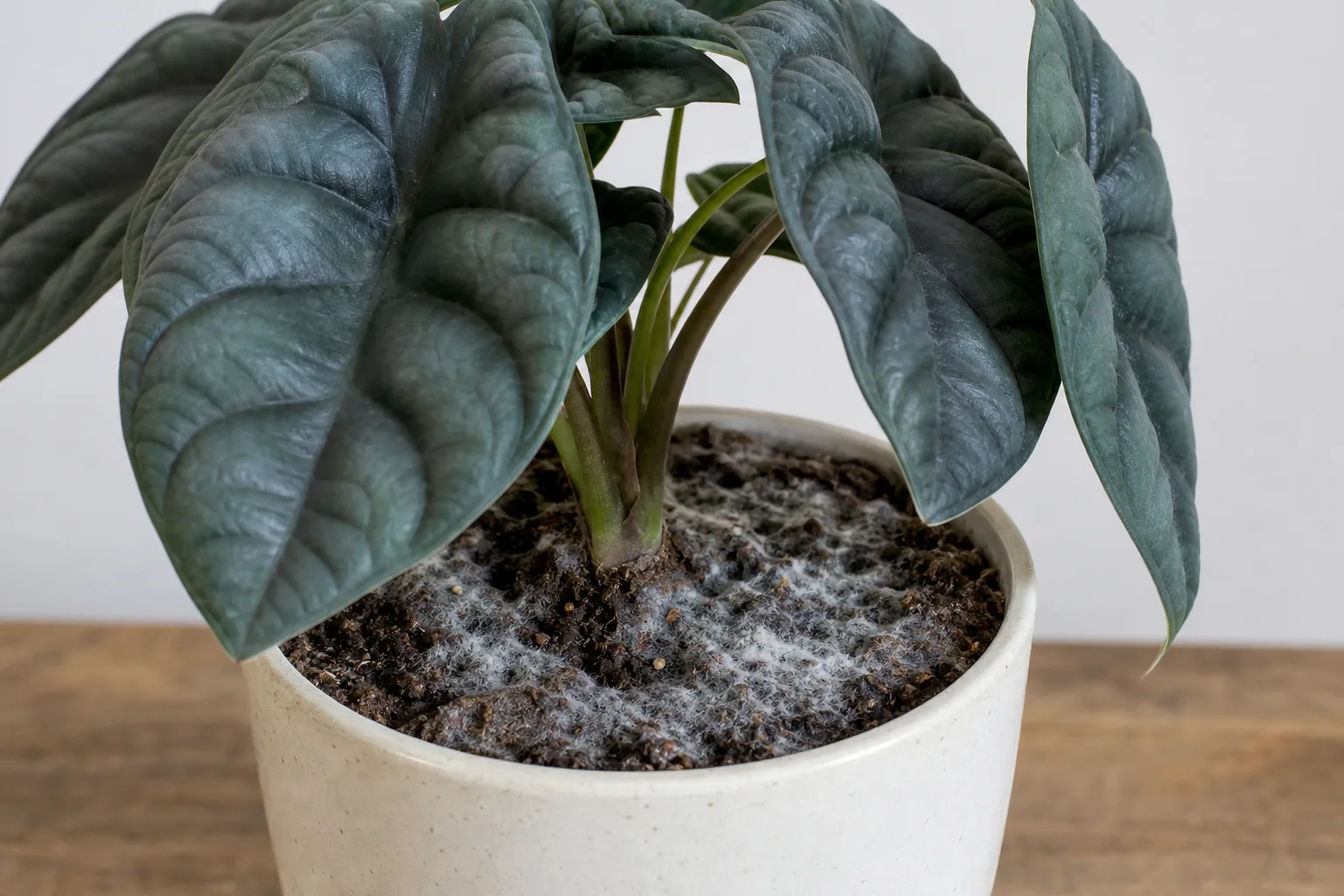
Mold on Soil on Alocasia Dragon Scale: Causes, Checks & Fixes
This guide covers mold on soil on Alocasia Dragon Scale. See also the general Mold on Soil guide, watering, and light pages for this plant.
Mold on Soil on Alocasia Dragon Scale: Causes, Checks & Fixes
Quick answer
White or gray fuzz on the soil surface of your Alocasia Dragon Scale (Alocasia baginda ‘Dragon Scale’) almost always means the top layer of mix has stayed damp too long. The mold itself is usually harmless saprophytic fungus feeding on decaying bark, peat fines, and fallen leaf debris-not a leaf disease. On this Borneo jewel alocasia, the real risk is what the wet surface signals: fine feeder roots and the corm below need oxygen between drinks, and a constantly moist surface is the same environment that leads to root rot.
First fix: stop watering immediately. Do not scrape, repot, or spray fungicide on day one. Let the top 2–3 cm of your chunky aroid mix dry completely-same dry-down band the watering guide uses during active growth. Only after that dry-down should you remove any remaining fuzzy layer if it bothers you.
For baseline humidity targets and seasonal rhythm, see the Alocasia Dragon Scale overview. This page focuses on diagnosing surface mold and knowing when wet soil has moved past cosmetic fungus into corm stress.
What mold on soil looks like on Dragon Scale
On Dragon Scale pots, mold most often appears as a thin white, gray, or occasionally yellowish fuzzy film across the top of the mix. It may cluster near the corm at the soil line or cover the entire surface. You might notice it alongside a musty smell, dark cool-looking soil that stays soft to the touch for days, or small flies hovering when you water.
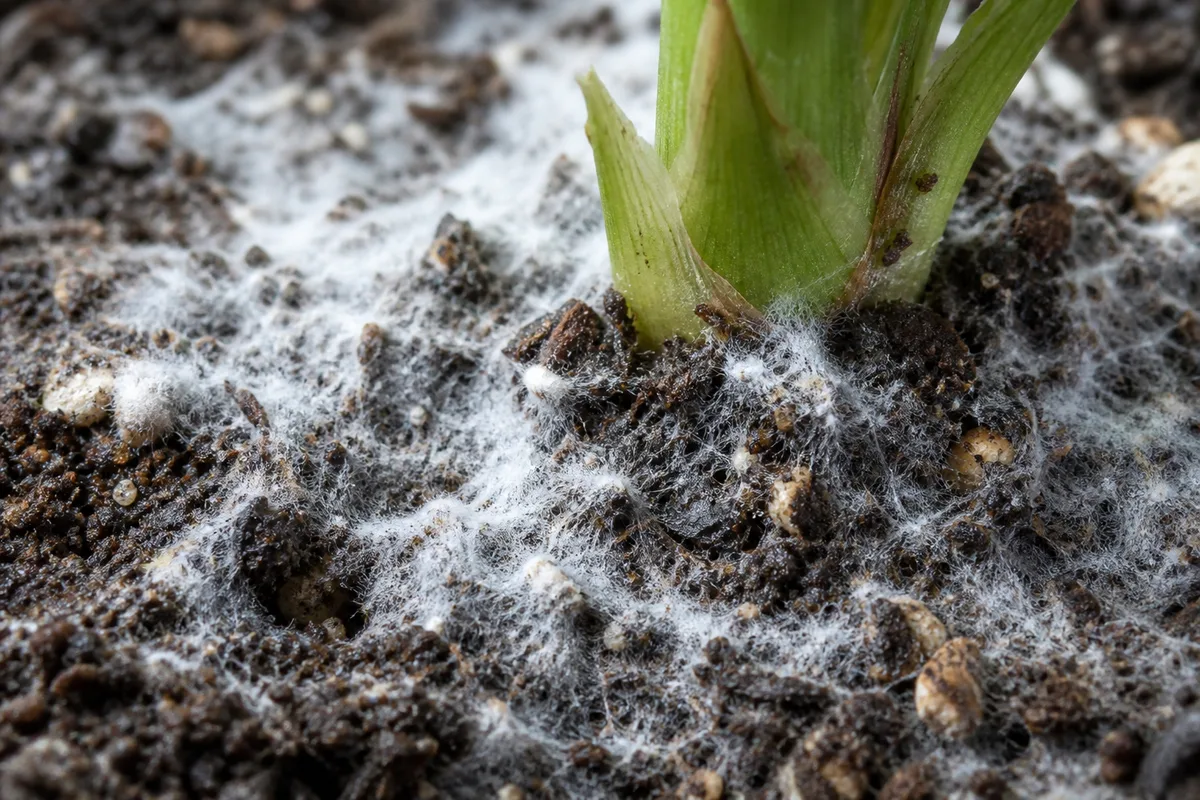
Mold on Soil symptoms on Alocasia Dragon Scale - compare with healthy tissue on the same plant.
Healthy Dragon Scale in active growth should have a dry or lightly dusty soil surface within a few days of a proper watering. The dark sculpted leaves above can look perfect while the mix below is too wet-that is why surface mold catches collectors off guard. During winter dormancy, when the plant drops leaves and the corm rests, a single generous drink in a dim corner can leave the surface soggy for weeks-the highest-risk window for both mold and rot.
Why Alocasia Dragon Scale gets mold on soil
Dragon Scale did not evolve for a wet soil cap. It is a forest-floor aroid from Borneo that expects frequent rain with immediate drainage through loose, airy substrate-moist at depth, never logged at the surface. Saprophytic fungal spores are everywhere indoors; they germinate when organic particles in the top layer stay damp with poor airflow.
Several care patterns trigger mold on Dragon Scale more than on moisture-tolerant foliage plants:
The humidity paradox. This cultivar wants 60–80% relative humidity at leaf height during active growth, which leads many growers to mist heavily, run closed humidity domes, or pack pots tightly on pebble trays. High ambient humidity is fine-but if the soil surface never dries, fungus colonizes decaying matter while the leaves still look glossy. You need humidity for the foliage and dry-down for the mix; those are separate targets.
Overhead watering on textured leaves. Dragon Scale’s bullate, scale-like ridges hold spray water that drips onto the soil and decays. Overhead pours also splash old leaf debris into the mix, giving saprophytes fresh food at the surface-keep the soil surface free of dead leaves and stems to reduce fungal food sources.
Watering on a schedule instead of mix checks. Watering every Sunday regardless of whether the top 2–3 cm is dry keeps the surface wet. Dragon Scale in a warm bright cabinet can need water every five days; the same plant in cool winter dormancy may need almost none for weeks.
Heavy or peat-rich mix. Standard potting soil retains moisture at the surface long after the corm has had enough. Without orchid bark, perlite, and coarse components per the soil guide, the top centimeter stays fungus-friendly even when you think you watered lightly.
Closed cabinets without air exchange. Enclosed grow spaces trap humidity above the pot and slow evaporation from the mix surface. Leaves thrive; the soil cap stays wet-overwatering causes yellowing leaves and root death when lower leaves yellow on heavy pots; see overwatering for Dragon Scale–specific signs.
How to confirm the cause (five-step checklist)
Work through these checks before Alocasia Dragon Scale repotting guide or spraying fungicide:
- Corm firmness at the soil line. Gently press the swollen base below the petioles. Firm and solid is reassuring. Soft, spongy, or giving under pressure means rot-not just surface mold. Escalate to the root rot guide.
- Moisture at 2–3 cm depth. Push your finger or a bamboo skewer into the mix. If it comes out dark and clinging while only the surface looks fuzzy, the problem is wet soil throughout. If the top cm is fuzzy but deeper mix is appropriately dry after one overwatering slip, you likely caught it early.
- Pot weight and drainage. Lift the pot. Heavy days after you thought you watered lightly means water is not exiting. Confirm drainage holes are open and the saucer is empty within 30 minutes of watering.
- Humidity setup vs soil surface. Read a hygrometer at leaf height. High RH with a dry soil surface is normal and healthy. High RH plus a constantly dark wet surface in a closed cabinet points to trapped moisture on the mix, not a humidifier problem alone.
- Companion signs. Fungus gnats hovering when you disturb the pot-they thrive in damp potting soil-green algae on the pot rim, or yellowing lower leaves on an otherwise firm corm all point to the same root-zone moisture issue.
Firm corm vs soft corm: quick decision
| What you find | Likely diagnosis | Next step |
|---|---|---|
| Firm corm, healthy leaves, fuzzy top cm only | Early surface mold from one wet spell | Dry-down cycle; scrape surface after mix dries |
| Firm corm, recurring fuzz within days of scraping | Watering rhythm or mix still too wet | Repeat dry-down; bottom-water; check mix structure |
| Soft corm, sour smell, yellow lower leaves on wet mix | Root rot in progress | Stop watering; follow root rot protocol |
| Leaf drop in cool months, firm corm, lightly moist soil | Dormancy-not mold emergency | Cut water 60–70% per watering guide |
First fix: dry the surface before you scrape
Stop watering and let the top 2–3 cm of mix dry completely.
Do not scrape, repot, or spray on day one. Pausing irrigation gives you a clear read on whether the plant was simply overwatered. In warm active growth with good light, a small Dragon Scale pot in chunky mix often dries at the surface in five to ten days. During dormancy, it may take longer-and that is acceptable as long as the corm does not shrivel bone-dry for months.
Once the surface dry-down test passes:
- Scrape off the top 1–2 cm of fuzzy soil with a spoon and discard it in the trash (not an indoor compost pile).
- Move the pot so leaves have airflow around them; in closed cabinets, crack ventilation or run a low fan so the soil surface can dry between drinks.
- Resume watering only when the top 2–3 cm feels dry-then water thoroughly until runoff exits drainage holes, and empty the saucer.
That single correction resolves most first-time mold cases on Dragon Scale.
If mold comes back within a week
Recurring fuzz means the environment still favors fungus. After one full dry-down cycle:
- Switch to bottom-water as your default so the root zone gets moisture while the surface stays drier-bottom-watering keeps the soil surface dry and matches the watering guide approach for fungus-gnat prevention.
- Top-dress with a thin layer of dry chunky mix (orchid bark or perlite) to replace the removed surface layer.
- Remove fallen leaf debris promptly from around the corm; decaying Alocasia petiole bases are prime saprophyte food on the soil line.
- Repot in spring if the mix is peat-heavy, smells sour, or takes more than ten days to dry at the surface in warm active growth. Use fresh chunky aroid mix and a pot only slightly larger than the root mass.
Repotting is a second-step fix, not an emergency response to a single mold patch on an otherwise healthy plant with a firm corm.
Lookalike symptoms on Dragon Scale pots
| What you see | Likely cause | Key check |
|---|---|---|
| White or gray fuzzy film on soil surface | Saprophytic mold | Fuzzy texture; firm corm; often after overwatering |
| Green slimy film on pot rim or soil | Algae | Low light plus constant surface moisture; not fuzzy |
| Tiny flies when you water or disturb the pot | Fungus gnats | Adults harmless; larvae in wet organic mix |
| Hard white crust on soil or rim | Salt or mineral buildup | Gritty, not fuzzy-see brown tips if margins crisp |
| Yellow lower leaves, limp foliage on heavy wet pot | Overwatering / root rot | Soft corm or sour smell-not surface mold alone |
Getting the diagnosis right matters because scraping mold without fixing wet soil guarantees recurrence within days, while treating rot as cosmetic fungus delays rescue when the corm is already softening.
Mistakes to avoid
Do not drench with fungicide, cinnamon, or hydrogen peroxide as a substitute for drying the soil-Dragon Scale roots need oxygen, not another wet treatment on day one.
Do not increase watering because leaves look slightly wilted while the soil is still damp. Wilting with wet mix means root stress, not thirst-see overwatering.
Do not assume high humidity excuses a wet soil surface. Run the humidifier for leaves; still dry the top 2–3 cm before each drink.
Do not keep a dormant Dragon Scale on the same summer watering schedule through winter-overwatering during dormancy is a common mold and rot trigger.
Do not ignore a softening corm because the mold looks harmless. Surface saprophytes and root rot share the same cause: wet soil lacks oxygen and roots decay when moisture sits at the root zone for too long.
Recovery timeline and warning signs
With a firm corm and corrected watering, surface mold should not return once the top dries between drinks. Improvement usually shows within one dry-down cycle (roughly one to two weeks depending on pot size, mix, and season).
Good signs: Firm corm at the soil line, dry surface before each watering, no new fuzz, clean new spears unfurling from the crown in warm months.
Bad signs: Corm softening, black mushy tissue at petiole bases, sour smell from drainage holes, mold returning within days of scraping without any dry-down, persistent fungus gnats after two corrected cycles.
Rotten corm tissue does not firm up again. You can sometimes save the plant by trimming mushy parts and repotting dry, but catching the problem at the mold stage-when the corm is still solid-is far easier.
How to prevent mold next time
Match watering to Dragon Scale’s rhythm: moist at depth, dry at the surface, with sharply reduced volume during cool dormancy. Pair that with chunky fast-draining mix, bottom-water as your default, prompt debris removal around the corm, empty saucers after every drink, and enough airflow that closed cabinets do not trap moisture on the potting surface.
Treat the first patch of white fuzz as a moisture alarm-not a cosmetic annoyance. On Dragon Scale, fixing wet soil early is what keeps the corm firm, the scaled leaves thick, and root rot out of the picture.
Related guides: Alocasia Dragon Scale overview, watering, soil mix, root rot, overwatering, fungus gnats.
When to use this page vs other Alocasia Dragon Scale guides
- Alocasia Dragon Scale watering guide - Use for routine moisture checks before assuming mold on soil is the main issue.
- Alocasia Dragon Scale problems hub - Browse all 16 common issues on this species.
- Fungus Gnats on Alocasia Dragon Scale - Different entry point when symptoms overlap with mold on soil.
- Overwatering on Alocasia Dragon Scale - Different entry point when symptoms overlap with mold on soil.
- Root Rot on Alocasia Dragon Scale - Different entry point when symptoms overlap with mold on soil.