Fungus Gnats on Alocasia Dragon Scale: Causes, Checks &
Quick answer
Fungus gnats on Alocasia Dragon Scale mean the substrate surface stays wet too long-common when a Jewel Alocasia in dense mix gets watered on a calendar during dormancy. First step: stop watering until the top 2–3 cm of mix are dry.
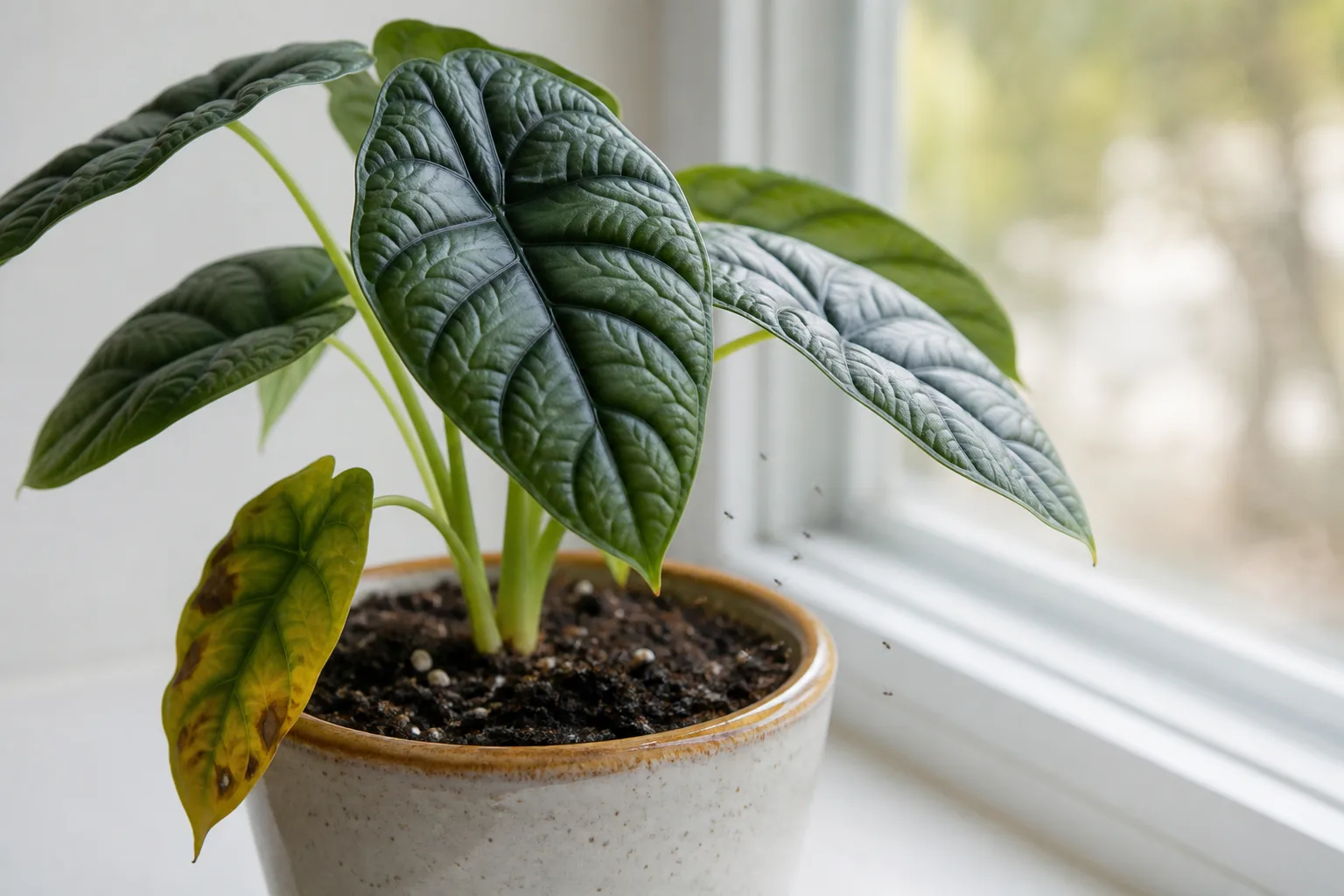
Fungus Gnats on Alocasia Dragon Scale: Causes, Checks & Fixes
This guide covers fungus gnats on Alocasia Dragon Scale. See also the general Fungus Gnats guide, watering, and light pages for this plant.
Fungus Gnats on Alocasia Dragon Scale: Causes, Checks & Fixes
Quick answer
Fungus gnats on Alocasia Dragon Scale (Alocasia baginda group, Jewel Alocasia) are small flies whose larvae live in damp potting mix, not on the plant’s thick, sculpted leaves. On this Borneo-native corm aroid, gnats almost always signal overwatering or slow dry-down-the same conditions that yellow leaves, soften petioles, and invite root rot in poorly drained substrate.
First step: stop watering until the top 2–3 cm of mix are dry - the same dry-check standard in the Dragon Scale watering guide. That single dry cycle breaks the habitat gnats need to lay eggs and lets larvae in the upper mix starve. Do not reach for leaf sprays until you have fixed the moisture rhythm.
For species ID, humidity targets, and the full care hub, see the Alocasia Dragon Scale overview. This page focuses on substrate pests and moisture correction-not foliar pests like spider mites or aphids.
What fungus gnats look like on Dragon Scale
The plant itself often looks mostly fine at first. Damage is subtle compared with leaf pests:
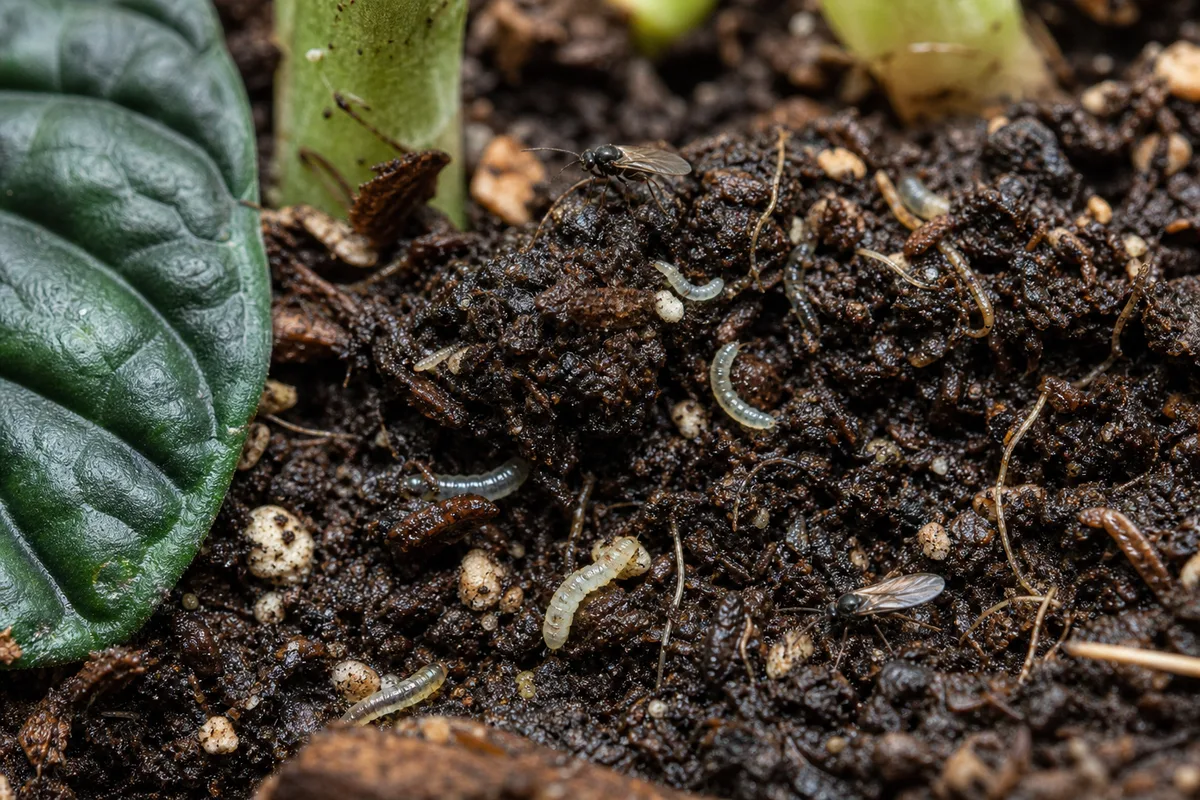
Fungus Gnats symptoms on Alocasia Dragon Scale - compare with healthy tissue on the same plant.
- Adults - Tiny dark or gray flies, about 1/16 to 1/8 inch long, that scatter when you water or brush the pot. They hover near the substrate line and windows-not on the waxy leaf surfaces.
- Larvae - Translucent, worm-like immatures in the top 2 to 3 inches of growing medium. You may see them when repotting or scraping the surface into a white saucer.
- Substrate clues - Surface stays dark and damp five or more days after one drink. Sometimes a thin green algae film appears on wet peat.
- Plant stress (later) - Yellow lower leaves, limp petioles despite moist mix, or stalled new spears when larval feeding and chronic wet roots combine.
Dragon Scale leaves do not get stippling, webbing, or sticky residue from gnats. If you see those patterns, look for spider mites or aphids instead. Gnats are a substrate and watering problem wearing a flying nuisance.
What to look for without a photo: Place a yellow sticky card flush with the pot rim-not on the leaf surface-and scrape the top inch of mix onto a white saucer after a dry-down cycle. Adults cluster at soil level and windows; larvae show as translucent worms against the saucer, not on the bullate leaf texture.
Why Dragon Scale gets fungus gnats
Fungus gnats breed wherever organic potting mix stays continuously moist near the surface. Adults lay eggs in that layer; larvae feed on fungi, algae, decaying peat, and sometimes tender feeder roots. The flies are not picky about species-they follow water.
Dragon Scale is especially vulnerable because:
Corm biology and fine roots. The swollen corm stores energy, but fine feeder roots need oxygen between waterings. Dense peat-heavy mix that never dries at the surface suffocates roots while feeding gnat larvae-double stress on a plant already prone to rot.
Bottom-watering without dry-down. Bottom watering saturates evenly but can leave the surface wet if you never let the top layer dry. The watering guide recommends bottom water as default with periodic top flushes-skipping dry-down invites gnats.
Dormancy overwatering. When the plant drops leaves or slows in fall and winter, water uptake drops sharply. Colorado State Extension notes that cooler temperatures and shorter days slow plant water use-if watering stays on a summer calendar, mix stays wet for weeks and gnat populations spike. See the dormancy table below and the full watering guide dormancy section.
Low light and grow-light shelves. A Dragon Scale on a dim shelf or under a grow light in a closed cabinet uses less water per week than the same plant in bright summer windows. Grow lights add heat without the airflow of an open room, so chunky mix that dried in two days in June may stay surface-wet for a week in January-even when the plant looks “active” under artificial light. The same watering interval that worked in summer leaves substrate wet for days-the surface where gnats breed.
Dormancy watering vs. active growth (gnat risk)
| Season / plant state | Target dry-down | Typical interval | Gnat risk if you ignore it |
|---|---|---|---|
| Active growth (spring–summer) | Top 2–3 cm dry before watering | Roughly every 5–10 days in a 10–15 cm pot | Low when mix drains fast and surface dries between drinks |
| Slow growth (fall shoulder) | Top 2–3 cm dry; cut volume ~30% | Every 10–14 days | Medium-cooler rooms slow evaporation |
| Dormancy (leaf drop, firm corm) | Top 3–4 cm dry; minimal sips only | Every 3–4 weeks | High-summer schedule on a resting corm keeps surface wet for weeks |
| Post-dormancy wake-up | Top 2–3 cm dry; half volume until first full leaf | Light drinks every 7–10 days | Medium until roots rebuild |
RHS guidance for alocasias recommends reducing watering to a minimum in winter when the plant goes dormant-overwatering during dormancy is a primary rot and gnat trigger. Cross-check firm-corm checks in the overwatering guide before you assume gnats alone are the problem.
How to confirm the cause
- Fly test - Water the pot or tap the rim. If tiny flies scatter upward, adults are present.
- Surface moisture - Push a finger 2–3 cm deep. Wet clinging mix five or more days after watering confirms slow dry-down.
- Larva check - Scrape the top inch of mix into a white saucer. Translucent worms confirm active breeding. A potato-slice test-¼-inch potato wedge buried cut-side down-can draw larvae within a few days for easier ID.
- Plant cross-check - Yellow leaves plus soft petioles on wet mix may mean overwatering or early root rot alongside gnats-not gnat damage alone.
- Mold distinction - White fuzzy growth on the surface points to mold on soil from the same wet conditions; gnats and mold often coexist.
First fix for Dragon Scale
Stop watering until the top 2–3 cm of substrate are dry, then resume only when that zone feels dry again.
This single cultural fix breaks the gnat life cycle more reliably than sprays on a still-wet pot. Allowing the top 1–2 inches of growing medium to dry between waterings disrupts egg survival and reduces attractiveness to egg-laying females. Empty saucers, improve airflow around the pot, and confirm drainage holes are open. For hanging or cachepot setups, lift the inner pot so runoff never sits in the outer shell.
Add yellow sticky traps at soil level to monitor adult counts-they catch fliers but do not replace dry-down. UMN Extension recommends sticky traps near the plant base to reduce egg-laying adults. If larvae persist after two weeks of corrected watering, drench the surface with BTI (Bacillus thuringiensis israelensis) labeled for fungus gnat larvae, following product rates.
Do not apply horticultural oil or neem to Dragon Scale leaves for gnats-the pests are not on the foliage, and unnecessary leaf treatments add stress.
Step-by-step recovery
- Dry-down - Let top 2–3 cm dry fully; adjust winter schedule if plant is dormant per the table above.
- Trap adults - Yellow sticky cards at pot rim; replace when covered.
- Top-dress option - A thin layer of coarse sand or diatomaceous earth on the dry surface can deter egg-laying (only after mix is dry, not as a wet-bandage).
- BTI if needed - One or two larval drenches spaced per label after dry-down is established. UC IPM notes BTI may require repeat applications at about five-day intervals because it does not persist indoors.
- Repot if mix is degraded - Sour-smelling, compacted peat that never dries may need fresh chunky aroid mix in a pot sized to the corm.
- Monitor new growth - A firm new leaf spear unfurling without yellowing lower leaves means moisture rhythm is restored.
Recovery timeline
Adult fly counts usually drop within one to two weeks once the surface stays dry between waterings. Larval generations need two to three weeks of dry surface conditions to cycle out-matching the roughly three-to-four-week life cycle at room temperature. Yellow leaves from chronic wet roots may take longer to stabilize-watch for firm corm and new spears, not old leaf re-greening.
What not to do
- Do not spray leaves for soil-dwelling gnats.
- Do not keep watering on a calendar during dormancy.
- Do not let the pot sit in a full saucer after bottom-watering.
- Do not repot into heavier peat without perlite and bark-gnats return in dense wet mix.
How to prevent fungus gnats next time
Follow the watering guide dry-check: top 2–3 cm dry, then water. Use airy aroid mix, quarantine new plants six weeks, and empty saucers within 30 minutes. During dormancy, cut volume 60–70% and extend intervals per the dormancy table. NC State Extension recommends letting the top inch of soil dry between waterings and bottom-watering when possible to keep the surface drier.
When to worry
Escalate if yellow leaves spread while substrate stays wet, petioles soften at the base, a sour smell comes from drain holes, or gnat swarms increase weekly despite dry-down watering. At that point, inspect the corm and roots for rot-gnats are a warning, not the primary killer.
Conclusion
Fungus gnats on Alocasia Dragon Scale are a moisture rhythm problem, not a leaf pest. The flies follow persistently wet substrate-especially during dormancy, on grow-light shelves, or when bottom-watering skips surface dry-down. Stop watering until the top 2–3 cm are dry, trap adults at soil level, and use BTI only if larvae persist after culture fixes. Firm corm and clean new spears mean you solved the cause; soft petioles on wet mix mean escalate to the root rot guide.
Frequently asked questions
How can I confirm fungus gnats on Alocasia Dragon Scale?
Tiny dark flies rise from damp substrate when you water or disturb the pot; larvae look like translucent worms in the top inch of mix. Gnats hover near soil and windows-not on the thick sculpted leaf surfaces like spider mites or aphids would. A yellow sticky card at the pot rim and a white-saucer scrape of the top inch confirm faster than inspecting the waxy foliage.
Are fungus gnats dangerous to Alocasia Dragon Scale?
Adults are mostly a nuisance, but larvae in constantly wet mix can feed on organic matter and tender feeder roots-problematic for a corm-based aroid already sensitive to overwatering. Chronic wet soil plus gnats often precedes yellow leaves and soft petioles. Treat gnats as an early moisture warning, not a standalone pest emergency.
Should I use neem oil on Dragon Scale leaves for gnats?
No-gnats live in the substrate, not on the waxy textured leaves. Fix moisture first with dry-down watering aligned to the Dragon Scale watering guide. Yellow sticky traps catch adults; Bacillus thuringiensis israelensis (BTI) targets larvae in wet mix if needed after two weeks of corrected watering.
Why do gnats appear when my Dragon Scale is dormant?
During dormancy the corm uses minimal water while many growers keep the same watering schedule. Mix that stays wet for weeks without active root uptake is ideal gnat habitat. Cut irrigation 60–70% in winter, let the top 3–4 cm dry between minimal sips, and press the corm for firmness before every drink-see the dormancy table above and the watering guide.
How do I prevent fungus gnats on Alocasia Dragon Scale?
Use chunky aroid mix with bark and perlite, bottom-water as default with periodic top flushes, water only when the top 2–3 cm are dry, and quarantine new plants six weeks. Empty saucers within 30 minutes, and cross-check the soil and watering guides for the full moisture rhythm.
Related Alocasia Dragon Scale guides
- Alocasia Dragon Scale overview - species ID, humidity targets, and care hub
- Watering - top 2–3 cm dry-down, dormancy cuts, bottom vs. top flush
- Soil - chunky aroid mix and pot sizing for corm oxygen
- Overwatering - wet-wilt and firm-corm checks when gnats signal chronic wet soil
- Root rot - escalation when soft corm or mushy roots appear
- Mold on soil - white fuzzy surface growth from the same wet conditions
- Spider mites and aphids - foliar pests that do not breed in substrate