Drooping Leaves on Alocasia Dragon Scale: Causes, Checks &
Quick answer
Drooping on Alocasia Dragon Scale usually builds over days or weeks-not overnight. Lift the pot and probe the top 2–3 cm of mix before you act: a heavy wet pot with limp lower leaves points to overwatering; a light dry pot with papery edges points to thirst; moist soil with papery margins in dry air points to low humidity. First step: confirm wet vs. dry vs. dry air, then make one correction.
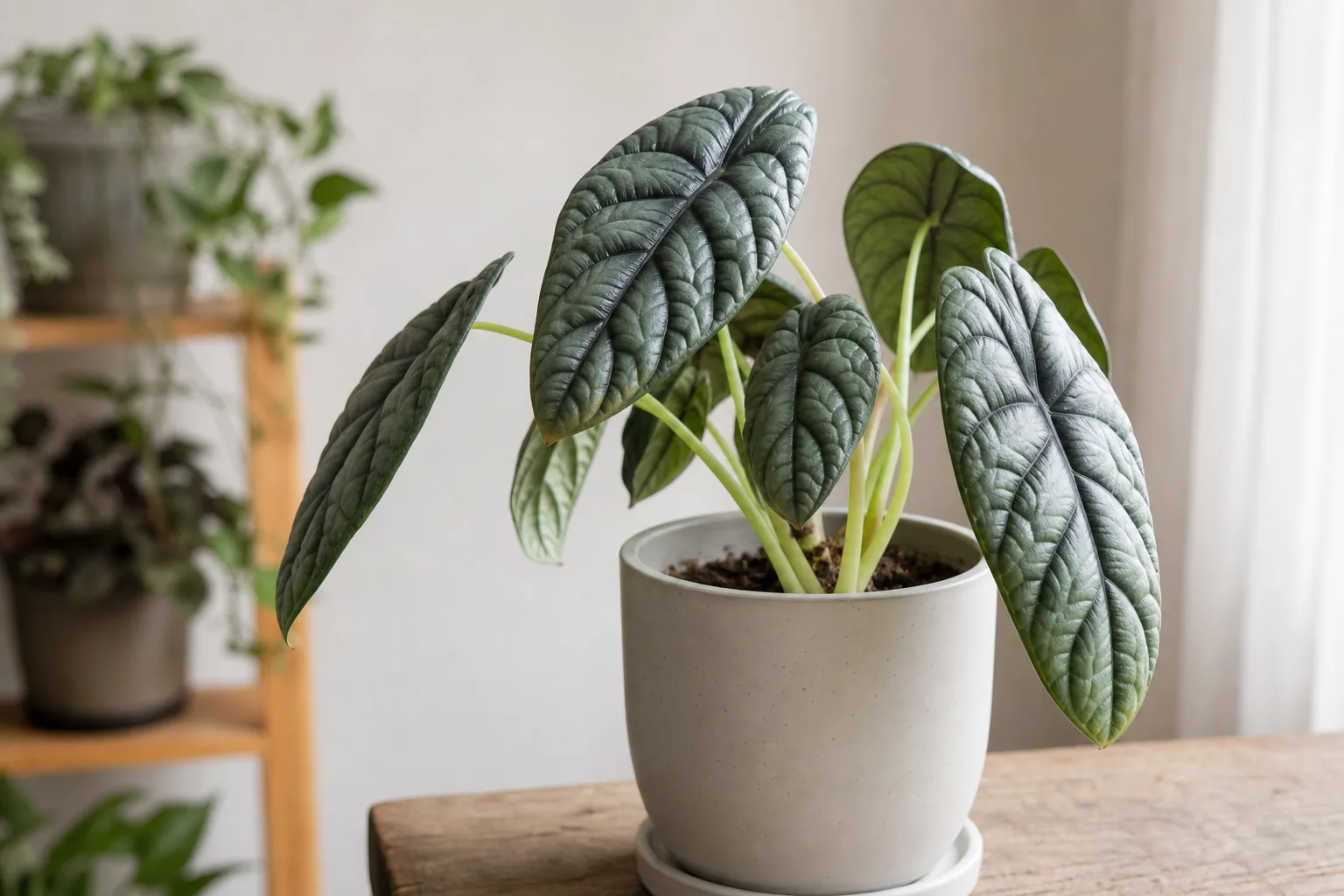
Drooping Leaves on Alocasia Dragon Scale: Causes, Checks & Fixes
This guide covers drooping leaves on Alocasia Dragon Scale. See also the general Drooping Leaves guide, watering, and light pages for this plant.
Drooping Leaves on Alocasia Dragon Scale: Causes, Checks & Fixes
Quick answer
Drooping leaves on Alocasia Dragon Scale (Alocasia baginda ‘Dragon Scale’) is gradual limpness-petioles that lose their stiff, upright hold over days or weeks, lower leaves that hang before the crown collapses, or textured blades that feel less rigid than they did last month. This is different from sudden wilt; if leaves that were fine yesterday flopped hard overnight, see wilting for the acute path.
Jewel alocasias store energy in a corm and push thick, sculpted leaves on heavy petioles. That architecture makes slow cultural drift visible: a watering rhythm that worked in summer stays too wet in a cool room, humidity that was acceptable in spring drops when heating runs, or light that supported growth in summer becomes too dim for the plant to maintain turgor. The same limp look can mean opposite problems.
First step: lift the pot and probe the top 2–3 cm of substrate. A heavy, waterlogged pot with limp lower leaves and soft petiole bases points to overwatering on Alocasia Dragon Scale. A light, dry pot with papery leaf edges points to underwatering on Alocasia Dragon Scale. Moist-but not soggy-soil with drooping foliage and crispy margins in a dry room points to low humidity. All leaves gradually yellowing and dropping in fall or winter with a firm corm often means dormancy.
For baseline watering rhythm and dormancy cuts, see the Alocasia Dragon Scale watering guide.
What drooping leaves look like on Alocasia Dragon Scale
Healthy Dragon Scale foliage is stiff and architectural-the ridged “scale” texture holds its shape because thick petioles support each leaf like a short stem. Drooping shows up as a slow loss of that rigidity.
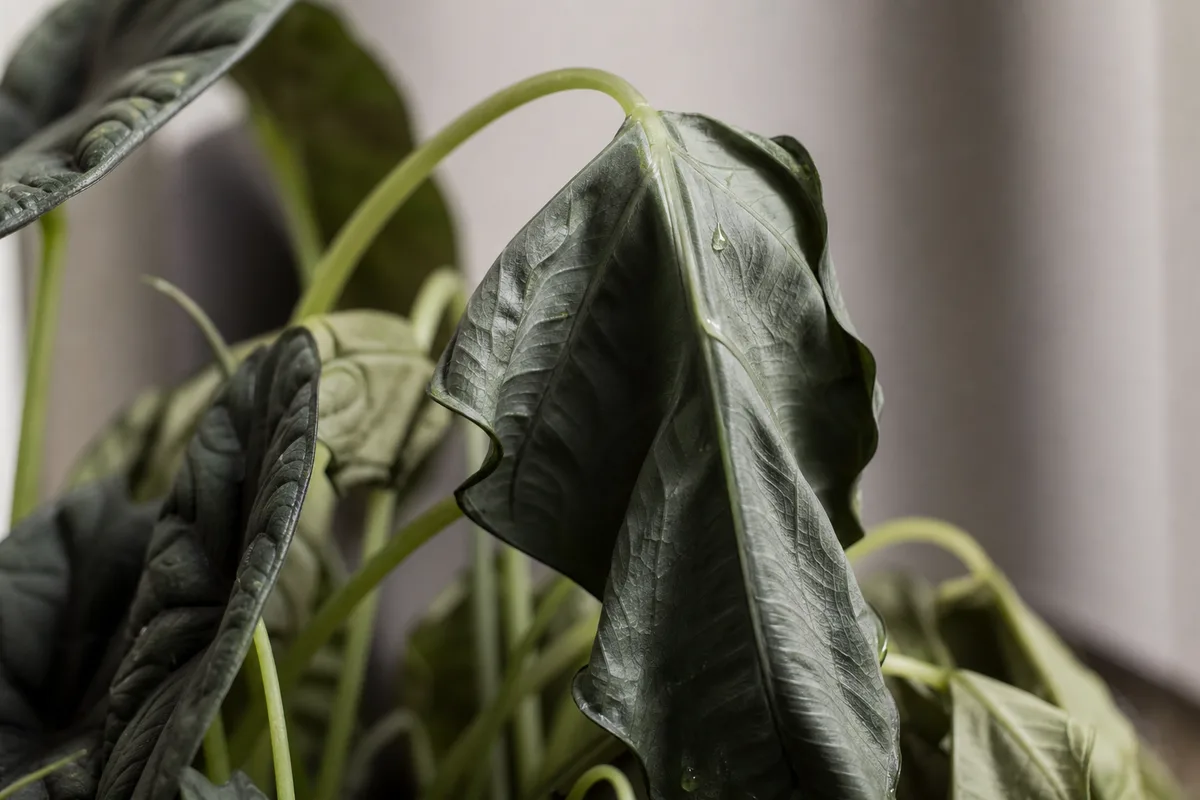
Drooping Leaves symptoms on Alocasia Dragon Scale - compare with healthy tissue on the same plant.
Common patterns:
- Limp lower leaves first - Often the oldest foliage hangs while newer spears still look upright. On wet mix, those lower leaves may yellow from the tip or edge inward.
- Heavy petioles that bend - The leaf blade may still look textured, but the petiole arches instead of holding the leaf at its usual angle. This is easy to miss until you compare to a firm leaf from a month ago.
- Papery margins on moist soil - Edges turn brown and feel dry while the mix at 2–3 cm depth is still slightly damp. Soil moisture looks “fine” but the plant cannot replace water lost to dry air fast enough.
- Whole-plant gradual slump - Every leaf hangs lower over one to three weeks without a single obvious event. Usually creeping overwatering in cool weather, sustained low humidity, or dim light-not one missed watering.
- Progressive leaf drop in fall or winter - Leaves yellow, droop, and fall one by one while the corm stays firm. This is dormancy presentation, not sudden death.
The corm at the soil line is your tiebreaker. A firm corm narrows the field to watering direction, humidity, light, or seasonal rest. A soft, rubbery corm with sour-smelling wet mix means rot-and that is urgent regardless of how slowly the droop developed.
Why Alocasia Dragon Scale gets drooping leaves
Dragon Scale evolved on Borneo forest floors where substrate stays moist but drains fast and air humidity stays high. Indoors, any one of those variables drifting out of range produces gradual limpness before outright collapse.
Overwatering and slow root stress
The most common serious cause is soil that stays wet too long-especially in cool rooms where evaporation slows. Calendar watering from summer carried into fall keeps the root zone saturated while the plant uses less water. Roots in saturated soil lose oxygen and function, so leaves lose turgor even though the mix feels moist. Lower leaves yellow first; petiole bases may feel soft. Fungus gnats often appear when the surface stays damp for days. See overwatering and root rot if wet soil persists.
Underwatering during active growth
Less common but faster to fix: extended dry spells during warm months when the plant is pushing new spears. Mix pulls away from pot sides, the pot feels light, and leaves feel papery rather than waterlogged. A thorough drink usually perks foliage within hours if roots are intact. See underwatering for the dry-side pattern.
Low humidity collapse
Alocasia need medium to high humidity through the growing season. Dragon Scale’s thick leaves lose water through transpiration; when room air drops below about 50% RH-common near heating vents in winter-petioles weaken before the top of the mix fully dries. Brown leaf tips and edges are a classic sign of low air humidity, and early drooping often precedes visible browning. Soil can read correctly moist at depth while leaves still hang. See low humidity for the full humidity path.
Cold drafts and temperature drift
Alocasia dislike cool temperatures below 16°C (60°F) and draughts. A plant near a winter window or AC vent may droop gradually as root function slows. Cold plus wet substrate is especially damaging-roots stop taking up water while pathogens thrive in stagnant mix.
Repot shock and root disturbance
Alocasia Dragon Scale repotting guide-especially in fall or with rough handling-can trigger leaf drop and limpness over one to three weeks even when watering is correct. The corm usually stays firm. Hold extra water briefly and raise humidity while new root hairs form.
Seasonal dormancy
In most homes, light and temperature drop through winter. Alocasia may lose foliage during dormancy and survive on the corm alone. Owners often misread this gradual droop and leaf loss as death and either overwater into rot or discard a healthy plant. A firm corm with dry to lightly moist mix in cool months means rest, not emergency-cut watering sharply per the watering guide dormancy section.
Drooping vs. wilting - which page to use
Drooping (this page) is slow decline over a week or more as culture drifts.
Wilting is acute collapse-upright yesterday, flopped hard today. See wilting for sudden flop after one heavy watering, a missed drink in a heat spell, or a cold draft.
| Pattern | Pot feel | Corm | Mix at 2–3 cm | Likely cause |
|---|---|---|---|---|
| Gradual lower-leaf hang | Heavy | Firm or softening | Wet for days | Overwatering |
| Gradual whole-plant limp | Light | Firm | Dry | Underwatering |
| Limp with papery edges | Moderate | Firm | Moist | Low humidity |
| Leaves drop over weeks | Light to moderate | Firm | Dry to lightly moist | Dormancy |
| Limp 1–3 weeks post-repot | Variable | Firm | Variable | Repot shock |
How to confirm the cause
Work through these checks in order. Each step narrows the field before you commit to a fix.
- Pot weight - Lift the pot. Heavy and saturated for many days fits overwatering. Light and dry fits thirst. Moderate weight with papery leaves fits humidity stress.
- Moisture at 2–3 cm - Push a chopstick or finger to the second knuckle. Surface color lies; root-zone moisture does not. Check soil moisture before watering again.
- Corm firmness - Gently press near the soil line. Firm: culture or dormancy issue. Soft with sour smell: rot-stop watering and inspect roots.
- Humidity at leaf height - Use a hygrometer near the crown. Below 50% RH with moist soil and limp foliage strongly suggests transpiration stress, not thirst.
- Season and recent changes - Fall/winter leaf drop with firm corm fits dormancy. Repot within the last three weeks explains temporary limpness. New nursery peat in a cachepot explains slow wet-soil droop.
- Newest growth - A firm spear still emerging while older leaves droop often means partial root stress or humidity failure, not total collapse.
Lookalike symptoms to rule out
- Sudden hard flop - Wilting, not gradual droop
- Fine stippling and webbing on older leaves - Spider mites in dry air, not watering alone
- Sticky honeydew on new unfurling leaves - Aphids on soft growth
- Crispy margins on wet soil with no pests - Low humidity or fluoride in tap water; see brown tips
First fix for Alocasia Dragon Scale
Lift the pot, probe the top 2–3 cm of mix, and press the corm-then act on what you find, not on what the leaves look like.
If soil is wet and heavy: Stop watering until the top 2–3 cm dries. Move to Alocasia Dragon Scale light guide with good airflow. Do not fertilize. If lower leaves keep yellowing or the corm softens, unpot within 48 hours and follow the root rot path. Watering a wet-soil drooping plant is the most common fatal mistake on jewel alocasias.
If soil is dry and the pot is light: Water thoroughly until a little runs from drainage holes, then let the top 2–3 cm dry before the next drink. Return to the rhythm in the watering guide.
If mix is moist but air is dry (below ~50% RH): Raise humidity to 60–70% at leaf height with a humidifier-not misting alone. Hold watering steady until petioles firm up; adding water to a humidity problem worsens root stress.
If all leaves are dropping in fall/winter with a firm corm: Cut irrigation 60–70%, extend intervals to every 3–4 weeks, and wait. Do not repot, fertilize, or discard the pot.
Make one correction at a time. Stacking repot, prune, and fertilizer on the same day hides which step helped or hurt.
Step-by-step recovery by cause
Wet-soil droop (overwatering)
Stop irrigation. Let the top half of the mix dry down over one to two weeks in warm, bright indirect light. Empty saucers. If roots are still mostly firm when you unpot, repotting is not required-dry-down alone may stabilize the plant. If roots are dark and mushy, trim rot and repot in fresh chunky aroid mix.
Dry-soil droop (underwatering)
One thorough watering, then resume the top 2–3 cm dry rule. Expect perk-up within hours if roots are healthy. Leaves that hung for weeks may stay cosmetically limp even after recovery.
Humidity droop
Run a humidifier near the plant for several days. Grouping with other aroids helps marginally; a meter reading at crown height is more reliable than guessing. Do not increase watering unless the chopstick test shows dry mix at depth.
Dormancy droop
Reduce water to a bare minimum-just enough to keep the corm from desiccating. Keep temperatures above 10°C (50°F) and away from cold drafts. New growth typically appears in spring when light and warmth return.
Repot-shock droop
Hold water unless mix is fully dry and the corm looks slightly deflated. Keep humidity at 65–70% and bright indirect light. New white root tips or a fresh spear within two to four weeks mean recovery is underway.
Recovery timeline
Expectations depend on how long the plant was stressed and whether roots were damaged:
- Single dry spell in active growth - Leaves often firm within hours; full appearance returns in one to three days.
- Two to three weeks of slow overwatering without rot - Two to four weeks of corrected dry-down before stable new growth.
- Low humidity correction - Petioles may firm within three to seven days once RH stays above 60%; old crispy edges do not heal.
- Dormancy leaf drop - Months of bare corm are normal; first spear in late winter or spring is success.
- Root rot with surgery on Alocasia Dragon Scale - Four to eight weeks or longer before a new leaf. Judge by firm corm and emerging spear, not old foliage.
Cosmetically drooped leaves rarely return to perfect rigidity. Recovery means droop stops spreading and new growth looks healthy.
What not to do
- Do not water because leaves look limp - Wet roots plus more water accelerates rot. Always confirm soil moisture at depth first.
- Do not discard a leafless plant in winter - Check corm firmness before assuming death.
- Do not fertilize a stressed Dragon Scale - Salts stress recovering roots. Feed only after new growth is active.
- Do not repot on day one unless you confirm mushy roots or soil that will not dry.
- Do not mist heavily as a humidity fix - Brief misting does not sustain 60% RH and keeps textured leaves wet too long in humid cabinets.
- Do not stack repot, prune, and pesticide on the same day as a watering correction.
Dragon Scale contains calcium oxalate crystals typical of the Araceae family and can irritate skin; keep out of reach of pets and children when handling stressed tissue.
How to prevent drooping leaves next time
Build the connected system from the watering guide: chunky aroid mix, drainage holes, top 2–3 cm dry before watering in active growth, 60–70% humidity at leaf height, and sharp irrigation cutback through dormancy. Lift the pot weekly to learn its weight-calendar schedules fail when seasons change.
Keep the plant above 16°C (60°F) during growth and away from AC vents and cold winter glass. Use a hygrometer in winter when heating dries room air. Inspect new spears and the corm base during routine care so gradual limpness is caught before the whole crown sags.
Quarantine and acclimate new plants. Dense nursery peat in a decorative cachepot is a common source of slow wet-soil droop-repot into chunky mix when the plant is stable, not while it is already limp.
For the full Alocasia Dragon Scale overview, see baseline light, soil, and humidity targets.
When to worry
Treat drooping as urgent if:
- The corm feels soft, squishy, or hollow
- Soil smells sour or stagnant while leaves keep yellowing
- Lower leaves yellow rapidly while mix stays wet
- Drooping worsens over 48 hours after you corrected obvious underwatering
- Multiple leaves collapse to the soil despite a firm corm-possible stem rot at the crown
Gradual dormancy leaf drop on a firm corm in cool months is lower urgency. Soft crown tissue with wet soil is not-inspect roots within a day or two.
If symptoms match acute collapse rather than slow decline, switch to the wilting guide for the wet-wilt vs. dry-wilt first fix.
When to use this page vs other Alocasia Dragon Scale guides
- Alocasia Dragon Scale watering guide - Use for routine moisture checks before assuming drooping leaves is the main issue.
- Alocasia Dragon Scale problems hub - Browse all 16 common issues on this species.
- Underwatering on Alocasia Dragon Scale - Different entry point when symptoms overlap with drooping leaves.
- Overwatering on Alocasia Dragon Scale - Different entry point when symptoms overlap with drooping leaves.
- Root Rot on Alocasia Dragon Scale - Different entry point when symptoms overlap with drooping leaves.