21 Types of White Hydrangeas for Your Garden
Compare 21 white hydrangeas by flower shape, mature size, bloom timing, light, and pruning so you can choose a cultivar that fits your garden.
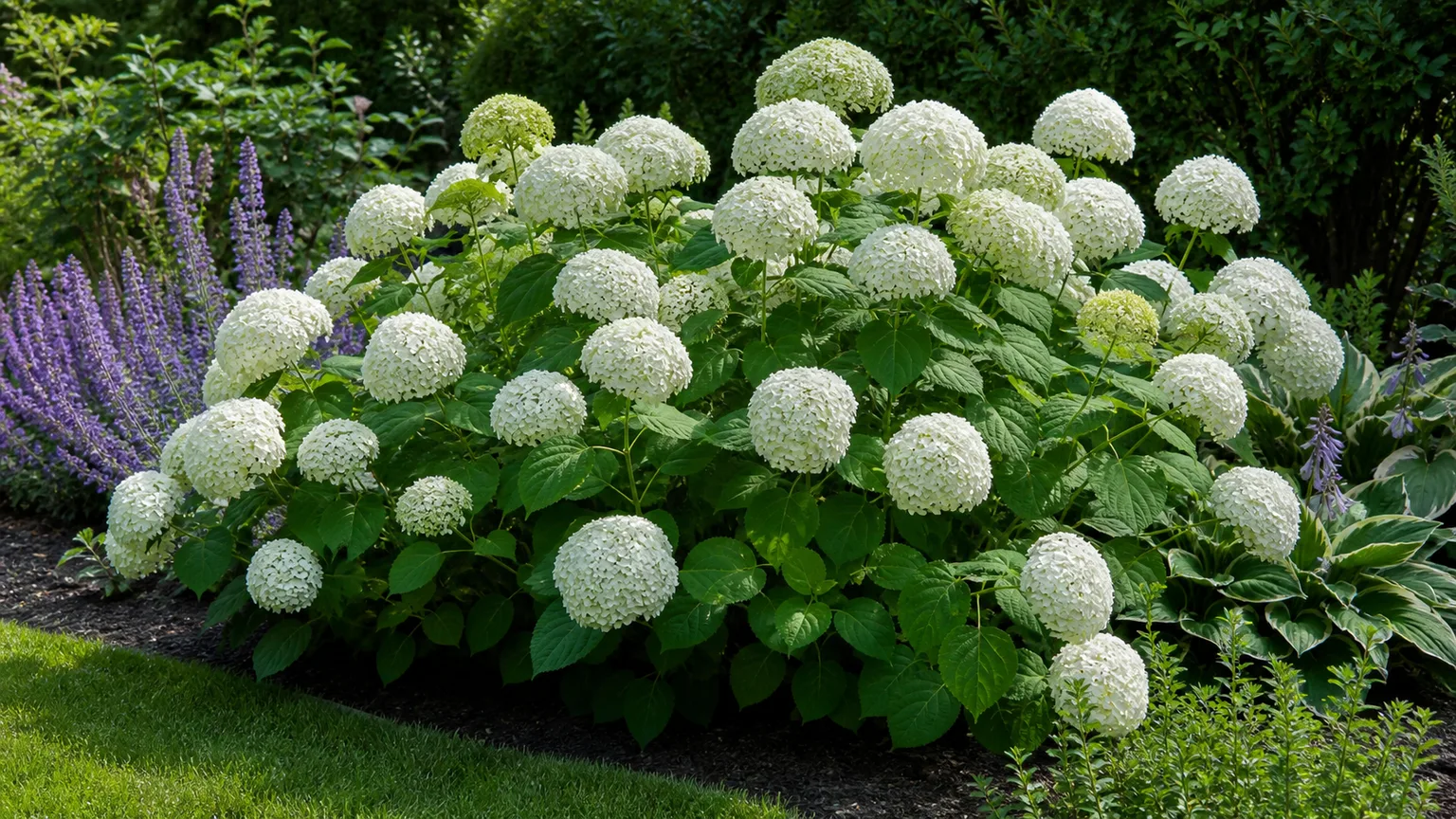
White hydrangeas are not one uniform plant. Some carry huge round snowball heads, some make delicate lacecaps with a visible center of tiny flowers, and others raise long cones above a sun-loving shrub. One selection even climbs a wall. Choosing by flower photograph alone can leave you with a shrub that outgrows its space or loses buds after an ill-timed pruning cut, so start with the plant’s species, mature shape, and bloom wood.
The 21 selections below include dependable white-flowering cultivars and plants whose flowers open white before aging green, cream, pink, or burgundy. That change is normal: hydrangea flower heads are made largely of showy sepals, and their color often shifts as the display matures. In cultivars with blue-pink pigment, acidic soil makes aluminum more available and can produce bluer tones, while less available aluminum in higher-pH soil favors pink; cultivar genetics also matter. Soil pH will not make a genetically white cultivar stay at its opening color. Oregon State University Extension
Start with flower form, growth habit, and bloom wood
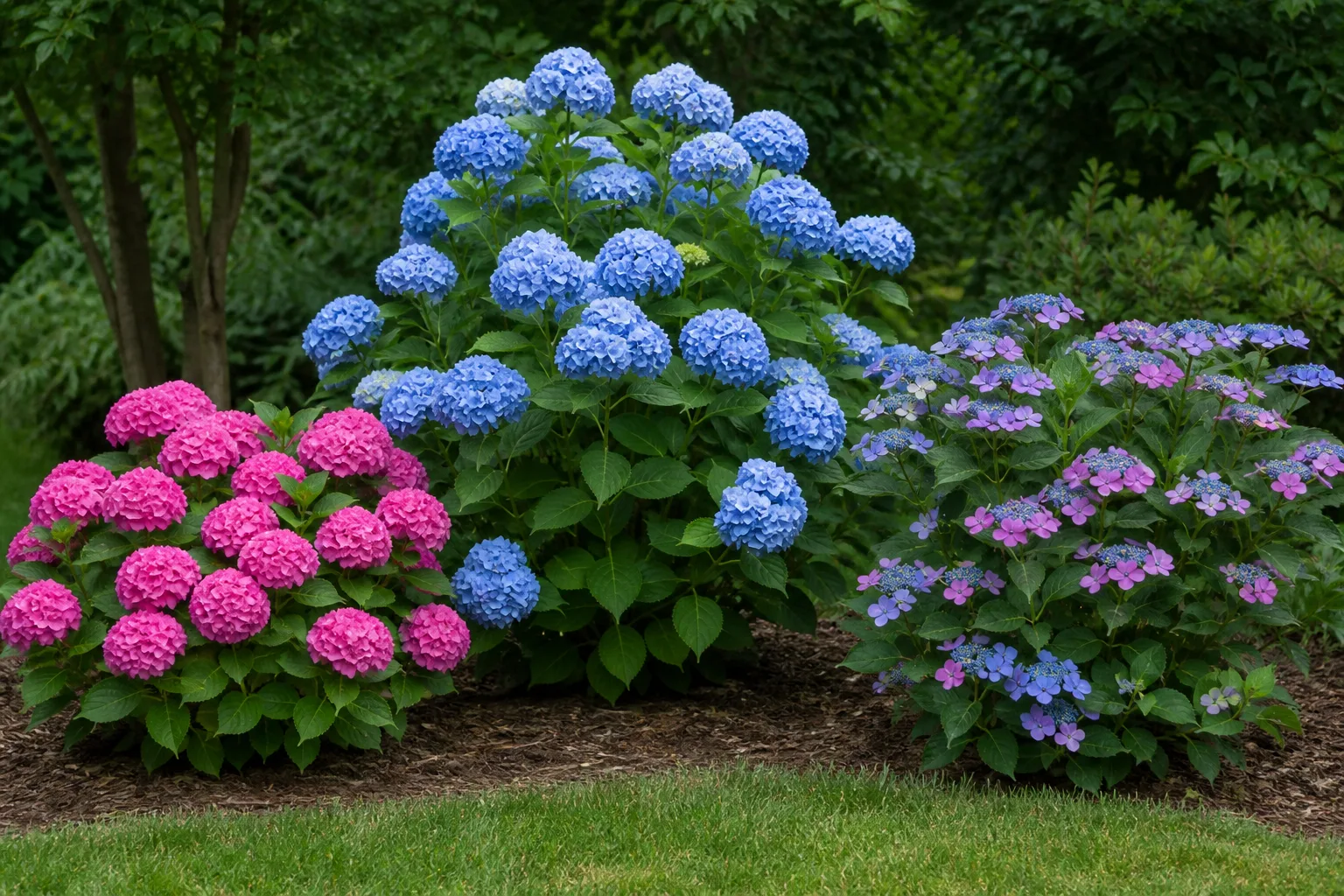
A mophead is a rounded flower head that looks full from a distance. A lacecap is flatter, with small fertile flowers in the center and a ring of larger showy florets around them. A panicle is a cone-shaped cluster; it belongs to panicle hydrangeas and also appears on oakleaf hydrangeas, which are a separate species with distinctive lobed leaves and fall color. The name describes the flower shape, not the plant’s pruning group.
The second distinction is whether a plant flowers on old wood (stems formed the previous season) or new wood (current-season growth). Bigleaf, mountain, oakleaf, and climbing hydrangeas generally carry flower buds on old wood, so winter dieback or late pruning can remove blooms. Smooth and panicle hydrangeas bloom on new wood and are more forgiving where cold winters or spring freezes threaten buds. For general care, aim for moist but well-drained soil and prune only after identifying the species. Oregon State University Extension Missouri Botanical Garden
Choose a white hydrangea by garden job
| If you want… | Start with… | The main trade-off |
|---|---|---|
| A classic snowball in a cold-winter garden | ‘Annabelle’ or ‘Incrediball’ | Large round heads can be heavy after rain; allow room and avoid deep shade. |
| A compact plant for a path or container | ‘Bobo,’ ‘Tiny Quick Fire,’ or ‘Munchkin’ | Small cultivars still need regular water in a pot and may have different bloom windows. |
| A shrub for brighter sun | ‘Limelight Prime,’ ‘Chantilly Lace,’ or ‘Puffer Fish’ | Panicles tolerate sun best when roots stay evenly moist; flower color changes with age. |
| A white shrub with strong autumn foliage | ‘Munchkin,’ ‘Snow Queen,’ or ‘Gatsby Gal’ | Oakleaf hydrangeas flower on old wood, so avoid hard spring pruning. |
| A shaded wall or fence | Climbing hydrangea | It establishes slowly, needs sturdy support, and is not a compact shrub. |
| A lacecap in a partly shaded bed | ‘Glacier Bay,’ ‘Veitchii,’ or ‘Shirofuji’ | Bigleaf and mountain types can lose buds in harsh winters; confirm local hardiness. |
These are starting points, not guarantees. A plant sold as a 3-foot cultivar can be wider in a long growing season, and nursery tags may list ideal rather than local performance. Check the mature dimensions for the exact cultivar you are buying, then leave air space around it instead of planting to its current pot size.
Smooth hydrangeas for big blooms and cold climates
Smooth hydrangeas (Hydrangea arborescens) are North American shrubs that flower on new wood. They can be pruned in late winter or early spring without sacrificing the season’s flower buds, though severe annual cuts can leave softer growth and exceptionally large flower heads that are more likely to bend. Choose the cultivar’s shape and stem strength rather than assuming every smooth hydrangea behaves identically. Fine Gardening
‘Annabelle.’ This classic smooth hydrangea makes rounded, white mopheads that can reach dinner-plate proportions on a mature shrub. It is a strong choice for a light-shade border or mass planting, and its flower heads age toward green rather than turning blue when soil pH changes. Older stems may arch under the weight of rain-soaked blooms, so plant it where a relaxed outline is welcome or grow several together for mutual visual support. Missouri Botanical Garden
‘Incrediball.’ Also sold as ‘Abetwo,’ this selection was chosen for very large, rounded white flower heads on sturdier stems than the old ‘Annabelle’ type. It usually reaches around 4 to 5 feet tall and wide, which makes it better as a substantial border shrub than a tiny foundation plant. Sturdy does not mean storm-proof: good light, a healthy woody framework, and steady root moisture help the branches support the flowers. Garden Design [Proven Winners]
‘Hayes Starburst.’ If you like the hardiness of smooth hydrangea but prefer a more intricate flower, look for this double-flowered selection. Its white-to-pale-green heads are made of starry florets, giving the plant a softer, less solid look than Annabelle’s round globes. It is a smaller shrub, often listed around 2 to 4 feet tall and wide; give it moist soil and partial shade in hot-summer gardens, and do not mistake its finer flower texture for a lacecap. Missouri Botanical Garden
Bigleaf, cascade, and mountain hydrangeas
Bigleaf hydrangeas (Hydrangea macrophylla) contribute the broad leaves and rounded or lacecap flowers many people picture first. Their buds generally form on old wood, so a white-flowered cultivar may survive winter while still failing to bloom after a severe freeze. White is also a cultivar trait, not a soil-treatment result: pH amendments cannot reliably turn a white flower into a blue one. Some white blooms develop a pink cast or green flecks as they age. Virginia Cooperative Extension
‘Seaside Serenade Glacier Bay.’ A compact lacecap with bright white florets on nearly black stems, Glacier Bay gives a shaded border a crisp, graphic contrast. It is commonly listed at about 3 feet tall and wide, with a long summer-to-fall display and partial-sun exposure. This is a good candidate for a container near a protected patio, but it still needs consistent moisture and winter protection where old-wood buds are exposed to severe cold. Monrovia
Fairytrail Bride. This unusual cascade hydrangea is not a standard upright shrub: its stems spread horizontally and carry white, frilly lacecap flowers, making it suited to a hanging basket, raised planter, or retaining wall. Give it room to drape and light shade rather than placing it where the trailing growth will be clipped away. The seller lists a spread of about 4 feet and zones 5–9, but local exposure and container winter conditions can narrow that range. Proven Winners
‘Grin and Tonic.’ This compact bigleaf is for gardeners who like a flower head that changes rather than remaining a flat block of white. Its mophead blooms open green and shift to white, sometimes developing green markings as they mature. The plant is generally offered for small beds and patio pots; the exact timing and prominence of the color transition depend on bloom age, temperature, and growing conditions. Cape Cod Hydrangea Society
‘Madame Emile Mouillere.’ This old-fashioned white mophead has rounded flower clusters that can develop a pink tinge as the bloom ages. It is a good choice when you want a traditional bigleaf form and can give the shrub shelter from harsh winter winds. It flowers on older stems, so prune after the main bloom rather than shearing it in spring; otherwise, you may remove the buds you expected to see. Virginia Cooperative Extension
‘Veitchii.’ This bigleaf lacecap pairs showy white outer florets with a flatter center of smaller flowers. Its delicate, airy shape suits woodland edges and informal borders better than a tightly clipped hedge. Like other old-wood bigleaf hydrangeas, it is most dependable in a protected, partly shaded site; if flower color is the deciding factor, buy a plant in bloom from a local nursery, since developing and aging florets can show subtle pink or blue tones. Virginia Cooperative Extension
Double Delights ‘Wedding Gown.’ Sold under the cultivar name ‘Dancing Snow,’ Wedding Gown produces white, double florets in dense, rounded heads. It can work in a small garden or large container where a conventional full-size bigleaf would be too large, and it is notable for being bred to flower on current-season growth as well as older stems. That trait can improve the chance of flowers after some winter damage, but it does not remove the need for a climate-appropriate site and steady moisture. Chicago Botanic Garden
Mountain hydrangeas (Hydrangea serrata) are close relatives of bigleaf types and share their old-wood flowering habit, but many are more compact. They can be an elegant option for a cool, sheltered bed where a smaller lacecap fits better than a broad mophead; still, read the local nursery’s zone guidance instead of assuming every mountain cultivar is equally cold-hardy.
‘Shirofuji.’ This compact mountain hydrangea is prized for delicate white, star-shaped double flowers and leaves that can color red when young and again in autumn. It brings a finer texture than the large-headed bigleaf cultivars and is useful where a low, partly shaded shrub is wanted. The cultivar has received the Royal Horticultural Society’s Award of Garden Merit, but that recognition is not a substitute for matching its old-wood buds to your winter conditions. RHS
Panicle hydrangeas for sun and long-lasting color
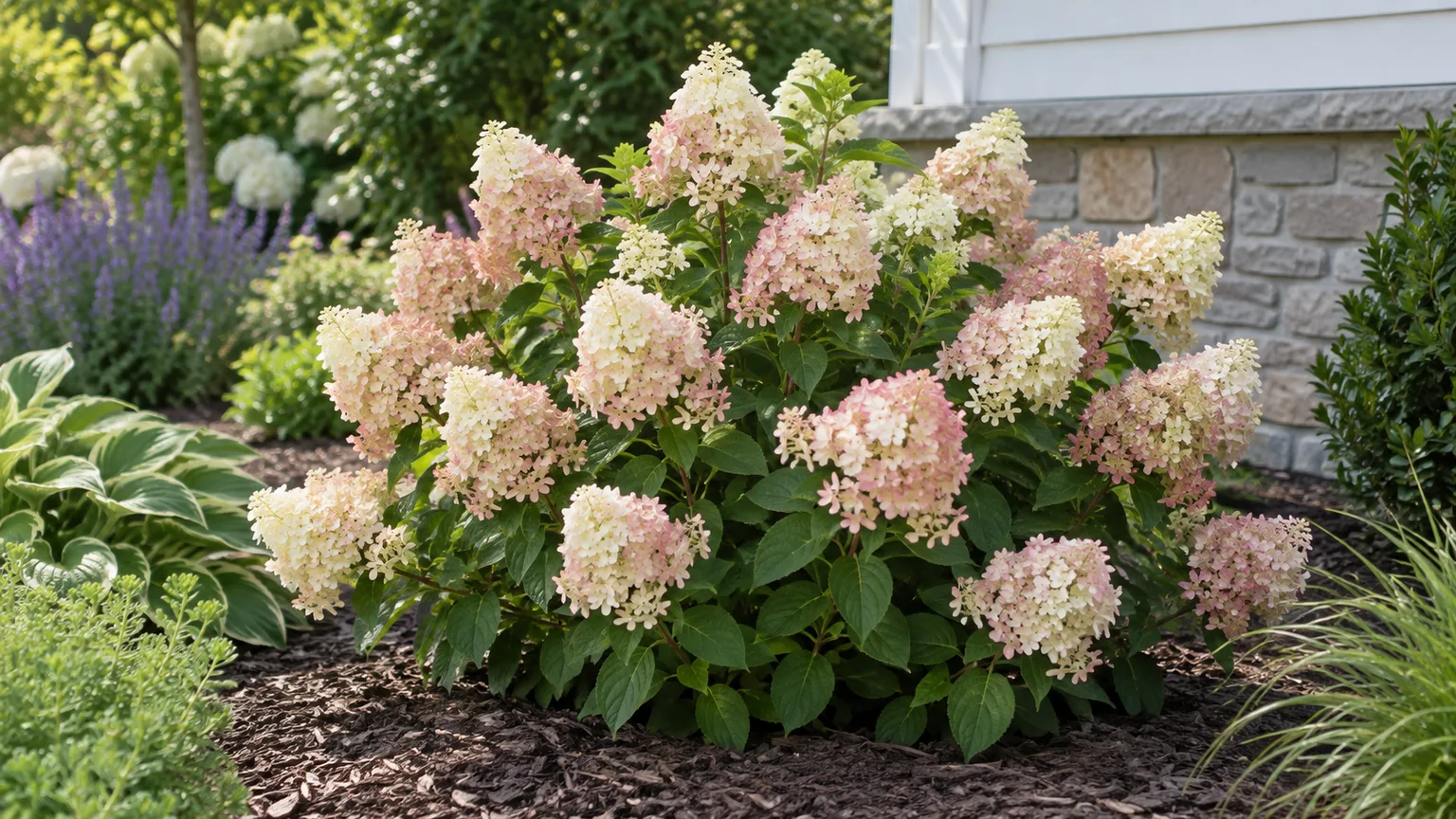
Panicle hydrangeas (Hydrangea paniculata) are among the most adaptable choices for a sunny site. They flower on new wood, accept pruning in late winter or early spring, and offer cultivars from dwarf mounds to large shrubs. Most open white, cream, or greenish white and then develop pink, red, or green tones with age; those seasonal changes are not caused by soil pH. Even a sun-tolerant panicle needs water while establishing and during prolonged dry spells. Oregon State University Extension
Compact selections for small beds
‘Tiny Quick Fire.’ One of the smallest panicle hydrangeas, this selection is often about 1.5 to 3 feet tall and 2 to 3 feet wide. It flowers early, with white cone-shaped clusters that shift toward pink or red as summer advances, making it useful at the front of a sunny border or in a pot. Small size does not mean drought-proof: containers heat and dry faster than garden soil, so check the root ball during hot spells. Proven Winners
‘Bobo.’ This compact panicle hydrangea is known for an abundance of white cones held all along its stems, often down close to the foliage. Flowers gradually become pink as they age, and the dense display can make the plant look nearly covered in bloom. It is a useful low hedge, path-side shrub, or container selection, but leave room for roughly a 3-foot mound instead of trying to keep it miniature through repeated hard pruning. Garden Design
‘Puffer Fish.’ Choose Puffer Fish for full, fluffy white panicles on a compact, sturdy plant. The large heads first open white, then age green, and a fresh white flush can appear at the panicle tip, so the shrub carries more than one stage of bloom at once. It reaches roughly 3 to 5 feet tall and wide and suits a sunny mixed border or roomy container; its white-to-green shift is natural maturation, not a response to acidic soil. Proven Winners
Taller and lacy panicles
‘Chantilly Lace.’ This upright selection makes long, conical flower heads with a mix of showy sterile florets and smaller fertile flowers. The heads open creamy white and mature pink, creating a gradual late-season change rather than a fixed pure-white effect. Expect a larger shrub—often listed around 5 to 8 feet tall—and give it a sunny or partly sunny site with well-drained soil; use its mature width when spacing it by a path or window. RHS
‘Brussels Lace.’ This older panicle cultivar has a more open, lacy cone than the dense, rounded heads of many newer varieties. Small fertile flowers mingle with larger sterile florets, which open cream-white and age pink, producing a looser texture that reads well in a mixed border. It can become a substantial shrub, so do not choose it for a tight spot just because the name sounds delicate. RHS
‘Limelight Prime.’ This improved panicle cultivar is valued for an earlier display and strong stems, with blooms moving from green through white and into pink or red tones as they mature. At roughly 4 to 6 feet tall and 4 to 5 feet wide, it fits a sunny foundation bed or mixed border where a medium-size shrub is wanted. It flowers on the current year’s growth, which lets you prune or cut flowers without removing next season’s buds. Proven Winners
‘Polar Ball.’ This panicle hydrangea is selected for its rounded, full flower heads and large white sterile florets. The flowers begin with a green cast, open white, and may fade to only a light blush rather than the stronger red of some panicle cultivars. It is a larger shrub than the compact choices, so check local mature-size data before planting beside a walkway. The registered cultivar is Hydrangea paniculata ‘WRHPBB2’; “Polar Ball” is its trade name. Canadian Food Inspection Agency
Oakleaf hydrangeas for flowers and fall color
Oakleaf hydrangeas (Hydrangea quercifolia) are native North American shrubs with lobed leaves, upright flower panicles, peeling bark, and strong fall foliage color. The flower cones often start white or cream and gradually blush pink or bronze. Their buds form on old wood, so prune only to remove dead or wayward stems, ideally after flowering; a spring haircut can cost you that year’s display. Missouri Botanical Garden

‘Munchkin.’ Developed at the U.S. National Arboretum, Munchkin is a smaller oakleaf hydrangea with upright white flower panicles about 6 to 7 inches long and mahogany-red autumn foliage. At about 3 feet tall and 4 to 5 feet wide when mature, it fits a compact woodland border better than large, spreading oakleaf selections. Its smaller footprint does not change the old-wood pruning rule: let it flower, then remove only what needs shaping. U.S. National Arboretum
‘Snow Queen.’ Snow Queen is an oakleaf cultivar with upright white panicles that can age pink, set against deeply lobed leaves that turn bronze or red in autumn. It is larger than Munchkin—often around 4 to 6 feet tall and 6 to 8 feet wide—so it works better as a specimen, informal screen, or broad woodland shrub. Its flowers and fall color provide two seasons of interest, but the shrub needs enough width to keep its natural branching habit. Missouri Botanical Garden
‘Gatsby Gal.’ This selection offers the oakleaf combination in a comparatively compact package: upright, full white flower panicles above lobed leaves that turn wine-red in fall. It typically grows about 5 to 6 feet tall and wide, making it a sensible choice where a large oakleaf would crowd a path but a 3-foot shrub would feel undersized. Pick it for flowers plus autumn foliage, not for a plant that stays white all season. Proven Winners
Climbing hydrangea for a shady wall
Climbing hydrangea is usually Hydrangea anomala subsp. petiolaris, a self-clinging woody vine rather than a compact panicle shrub. It covers a north- or east-facing wall with broad white lacecap flower heads in early summer, and its peeling stems give the structure winter interest. Establishment can be slow, so patience matters more than heavy feeding; choose a sound support and check that the vine will not cover windows, gutters, or delicate trim. RHS RHS

Climbing hydrangea flowers on old wood. If a mature vine needs shaping, shorten wayward shoots after flowering and preserve as much of the flower-bearing framework as possible. It is a useful answer for vertical shade where most white hydrangeas would be difficult, but the ultimate plant is large and permanent; do not install it against a surface that cannot support or tolerate a mature woody climber.
Match the cultivar to light, climate, and available space
Sun and moisture
Panicle hydrangeas generally take more sun than bigleaf, mountain, and climbing types. Smooth and oakleaf hydrangeas can grow in part shade, but deep shade often reduces flower production; in hot climates, afternoon shade can protect foliage and help the root zone stay evenly moist. The useful target is not “full sun at any cost” or “shade for every hydrangea.” Match the species to your hottest part of the day and the soil’s ability to hold moisture without staying soggy. Oregon State University Extension Missouri Botanical Garden
Water newly planted shrubs thoroughly as the root ball begins to dry, then adjust frequency to soil and weather rather than following a fixed daily schedule. A hydrangea that wilts in afternoon heat may recover in the evening, but repeated stress can shorten the display and scorch leaves. Mulch the root zone to slow evaporation, keep mulch away from stems, and improve drainage if water pools after rain. Containers need more frequent checks because their small soil volume dries quickly.
Hardiness and pruning
Cold tolerance and flower reliability are related but not identical. Smooth and panicle hydrangeas set flowers on current-year growth, so a winter-killed stem can regrow and still flower. Bigleaf, mountain, oakleaf, and climbing types depend more on older stems; a shrub may survive winter while its flower buds do not. If you garden near a cultivar’s hardiness limit, use a sheltered site and ask a local extension service or nursery how it performs in your region. Fine Gardening
Prune smooth or panicle types in late winter or early spring if you need to reduce size or build a sturdy framework. You can leave their dried flower heads over winter for structure and cut them back before growth begins. For bigleaf and mountain types, remove dead wood in spring only after you can see which buds survived, then do shaping soon after flowering. Oakleaf and climbing hydrangeas need even less routine pruning. The safest rule is to identify the species first and prune only for a clear reason. RHS
Do not buy a large-flowered cultivar expecting a tiny plant because a tag lists its size at maturity. If the planting strip is only 30 inches wide, choose a dwarf cultivar or a different shrub rather than planning to shear a large hydrangea every year. Repeated shearing can remove buds, distort the natural outline, and encourage weak regrowth; spacing correctly at planting is easier than containing a mismatched plant later.
Common buying and care mistakes
- Choosing by a single flower photo: hydrangea blooms change as they age, and a nursery image may show the brief opening stage. Ask what the cultivar looks like later in the season.
- Assuming every white flower can be recolored: soil pH affects blue or pink tones in some bigleaf and mountain cultivars, but most white selections stay white, cream, or green as they mature. Do not add soil acidifiers simply to preserve a white flower.
- Treating all panicles as one size: compact ‘Bobo’ and ‘Tiny Quick Fire’ are not substitutes for the tall ‘Chantilly Lace’ or older Brussels Lace. Read the cultivar name and mature width on the plant label.
- Pruning all hydrangeas at the same time: smooth and panicle types tolerate spring pruning; bigleaf, oakleaf, mountain, and climbing hydrangeas can lose old-wood buds if cut back at the wrong time.
- Planting a shade-loving type in reflected heat: a west-facing wall, pavement, and hot afternoon sun can dry a moisture-loving root zone quickly. Morning sun with afternoon protection is a safer starting point for many non-panicle types.
- Forgetting pet access: hydrangea plant material is toxic to dogs, cats, and horses if eaten. Keep prunings and fallen leaves away from animals and contact a veterinarian or animal poison-control service if ingestion is suspected. ASPCA
Conclusion
The best white hydrangea is the one whose species, mature outline, and pruning needs fit the spot you have. Start with the visual job: smooth types for hardy snowballs, bigleaf or mountain choices for lacecaps and rounded heads in sheltered shade, panicles for a sunny border, oakleaf shrubs for flowers and fall foliage, and climbing hydrangea for a supported wall.
Then verify the cultivar’s actual mature size and how its blooms age. If you need dependable flowers after cold winters, favor a new-wood bloomer; if a bigleaf lacecap is the look you want, protect its older buds and give it a moist, partly shaded site. That short selection check is more reliable than choosing a shrub because its nursery photo happens to be at peak white.