How to Grow and Care for Slipper Plants
Slipper plant care starts with sun and drainage. Find out how to water, pot, prune, propagate, and protect *Euphorbia lomelii* from cold and rot.
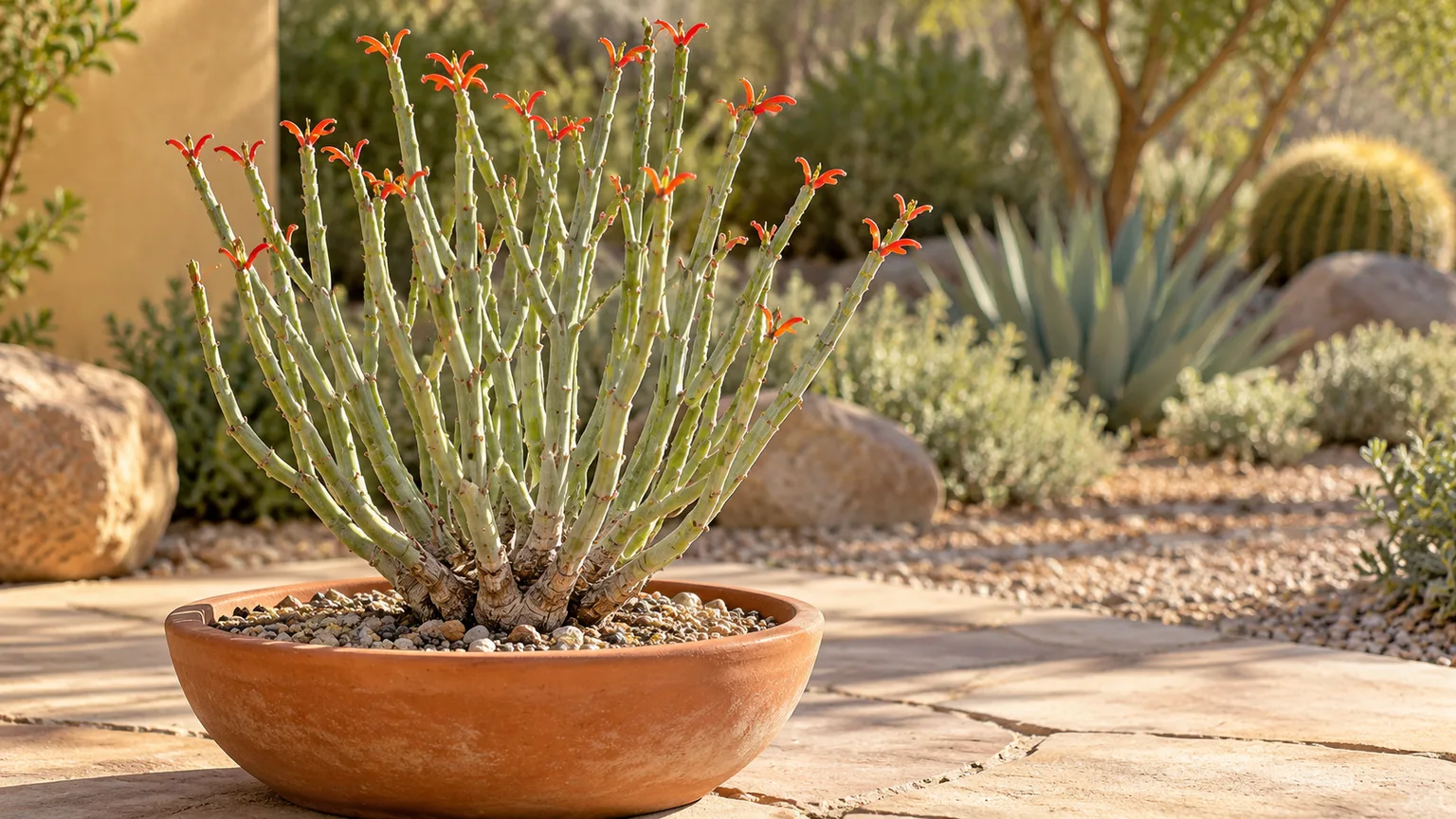
Slipper plant (Euphorbia lomelii, also called lady’s slipper) is a desert succulent with pale, upright stems and small red-orange flowers shaped like tiny slippers. It is at its best in a hot, bright spot where rain drains away quickly; indoors, the challenge is usually getting enough direct light without compensating for dim conditions by watering too often. The Royal Horticultural Society lists Pedilanthus macrocarpus as a synonym and Mexico as the plant’s range, which helps distinguish this species from unrelated plants sold as “lady’s slipper.” (RHS plant profile)
The simple care rule is sun, air around the roots, and a full dry-down between drinks. The details change with climate and container, though. A plant in a hot desert bed can handle different watering and cold exposure from the same plant in a small pot on a damp patio or in a winter windowsill.
Identify the slipper plant before choosing its care
The common name points to the distinctive bracts, not to an orchid or the tropical lady’s slipper (Paphiopedilum). Slipper plant belongs to the diverse spurge family, Euphorbiaceae, and is often sold under its older botanical name, Pedilanthus macrocarpus. The RHS recognizes the current name Euphorbia lomelii and records the former name as a synonym, so both names may appear on nursery tags and older references.
Its most recognizable feature is a cluster of fleshy, jointed, mostly leafless stems. Small leaves may appear briefly and then drop; that alone is not a reason to increase watering. The flowering structures sit at stem tips and look like red, orange, or yellow slippers. This stem-forward shape is what makes the plant useful as a sculptural accent among lower, finer-textured desert plants.
Decide between an outdoor bed and a container
In a warm, dry climate, use slipper plant as an outdoor accent in a sunny bed, rock garden, or raised planting where runoff moves away from its woody crown. Give it breathing room from paths and play areas: the stems can break if brushed repeatedly, and pruning or accidental damage exposes milky sap. In a cooler or rainy climate, a container is more controllable because you can move it under cover before cold, prolonged rain, or a freeze.
It can live indoors, but “bright room” is not always bright enough for a sun-loving desert plant. A south- or west-facing window with several hours of strong direct sun is a better starting point than a shaded shelf; rotate the pot occasionally so one side does not lean toward the glass. If stems become thin or stretch toward the window, move the plant closer to the light gradually or use a strong grow light positioned according to its maker’s directions.
Slipper plant can also spend warm months outside and winter indoors. Acclimate it over about a week or two: start in bright shade, then add morning sun in stages. Moving a plant straight from an indoor window to intense afternoon sun can scorch the exposed stems, even though an established specimen ultimately prefers very bright conditions.
Give it bright light without sunburn
For the most compact growth and reliable flowering, choose full sun outdoors, especially in coastal or temperate regions where sunlight is less intense than in a desert. In the hottest low-desert locations, a little protection from brutal late-afternoon summer sun may prevent stress in a recently planted specimen, but deep shade is a poor long-term compromise. If a plant stays green but grows weakly, spaces out its stem joints, leans, or flowers sparsely, check light before adding fertilizer.
The RHS points out that Euphorbia is a large genus with species adapted to very different conditions; a genus-level label does not mean every spurge wants the same sun, soil, or moisture. Its general guidance recommends matching the species to the site rather than applying one rule across the genus. For this particular desert succulent, prioritize a sunny position and fast drainage. (RHS Euphorbia growing guide)
Choose a gritty mix and a pot that drains
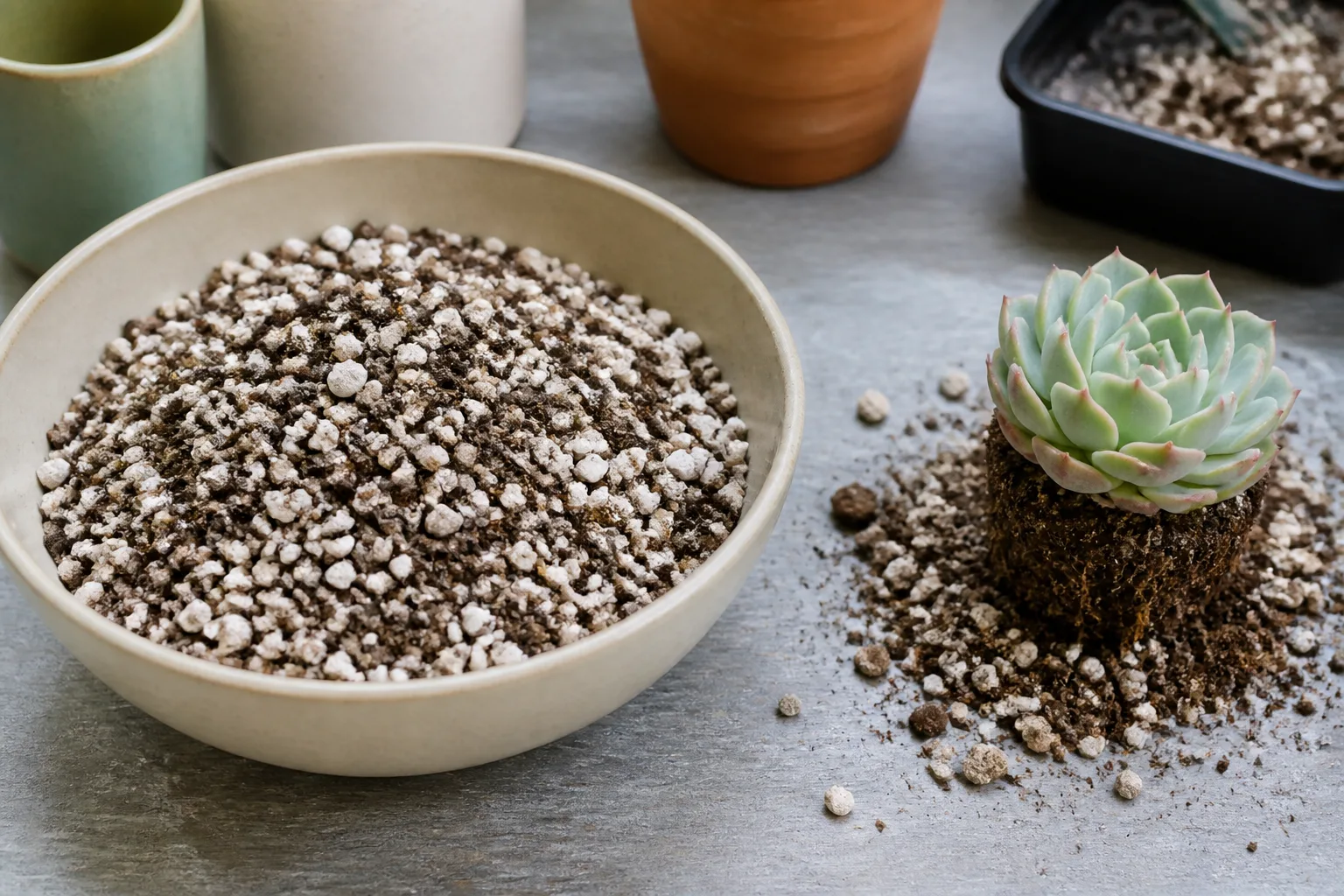
Use a coarse, open mix that lets water run through and admits air as it dries. A commercial cactus-and-succulent mix can work, but improve a dense, peat-heavy product with pumice, perlite, or another stable mineral aggregate. The goal is not a pot full of rocks; it is a mix that wets evenly when watered, then dries through the root zone before the next watering.
A drainage hole matters more than a decorative layer of gravel at the bottom. Water trapped under fine potting mix can leave the lower roots wet even while the surface looks dry. Choose a stable pot with a hole, clear its saucer after watering, and avoid a container so large that a small root system sits in unused wet soil for days. Unglazed clay can help a mix dry faster in humid conditions, while plastic or glazed ceramic holds moisture longer; neither material is automatically best. Match the pot to how quickly your room or patio dries, and make sure its weight and width can support stems that may become top-heavy.
When in-ground planting makes sense
Plant directly in the ground only if the site is frost-light, sunny, and naturally well drained or can be improved without creating a basin. On heavy clay, a raised mound or a broad amended bed is safer than digging a small planting hole and filling it with loose mix; the hole can behave like a sump during rain. Keep mulch and irrigation emitters away from the crown, and do not place it where roof runoff repeatedly saturates the soil.
The plant’s use in warm-climate landscape design is not just theoretical: a garden blogger documenting Arizona State University’s Polytechnic Campus photographed slipper plant in a desert planting and described it as a landscape specimen. That is useful evidence of the setting it suits, not proof that every garden climate or soil will work. (Succulents and More: ASU Polytechnic Campus)
Water by soil condition, not a calendar
Water thoroughly, let the excess drain, and wait until the mix has dried through the root zone before watering again. Do not stop at “the top feels dry”: push a wooden skewer well into the pot or lift it to compare its weight after watering and after drying. A light pot and a dry skewer several inches down are better cues than a weekly reminder.
How long that takes depends on pot size and material, airflow, season, light, and whether the plant is actively growing. A small clay pot in warm sun may dry far sooner than a large glazed pot indoors. In warm weather, check more often; in cool, dim winter conditions, check less often and water only when the mix is actually dry. Do not pour a fixed amount every two weeks simply because a calendar says so.
For a newly planted specimen, do not withhold all water in the name of drought tolerance. Until roots establish, check the surrounding soil and provide a measured drink when the root zone has dried, then lengthen the interval as the plant settles. In rainy climates, natural precipitation may already exceed its needs; shelter a container or improve drainage rather than trying to counter persistent wet soil with a fan or a handful of gravel. When you do water, wet the whole root ball, not just one small patch next to the stem, and let the pot drain freely. If water runs down the pot wall without soaking the center, re-wet slowly in two passes; if runoff remains in the cachepot or saucer, empty it.
Protect slipper plants from cold and winter wet
Treat Euphorbia lomelii as a warm-climate succulent, not as a reliably frost-proof shrub. Temperature limits reported for plants can differ because duration, wind, soil moisture, plant maturity, and whether roots are in the ground or a pot all affect damage. The RHS species profile lists Mexico as the range but does not give a precise minimum temperature, and its broader Euphorbia guidance stresses that hardiness varies across the genus. A single low-temperature number should not be treated as a guarantee for your specimen.
If frost is forecast, move a potted plant to a bright, frost-free place before the cold arrives. For an in-ground plant in a marginal location, use a sheltered microclimate and temporary frost protection, but understand that covering will not make waterlogged soil safe. Cold plus wet is especially risky because roots and the woody base stay chilled and oxygen-poor. Keep the plant drier while it is cool, and resume more active watering only as warmth and new growth return.
Indoors, place the pot by the brightest available window and away from cold drafts, heaters, and windows that become icy at night. A cool rest is less stressful than a warm, dark room with frequent watering. Do not fertilize a plant that is barely growing through winter.
Use little or no fertilizer
Established plants in the ground rarely need routine feeding if they are growing steadily and the soil drains properly. Too much nitrogen can produce softer growth without solving the real causes of weak stems, such as insufficient light or a root zone that stays damp. If a container plant has been in the same mix for years and active growth is weak despite suitable light and watering, use a diluted, balanced succulent fertilizer once during its growing season rather than following a frequent schedule.
Do not feed a newly repotted, dormant, wilted, or rotting plant. Fertilizer salts add stress when damaged roots cannot use them. First correct the light, drainage, or watering issue and wait for healthy new growth; that is a better sign of recovery than a short-lived response to fertilizer.
Understand the flowers and how to encourage them
The bright “slippers” are showy bracts surrounding the much smaller true flowers. Color ranges from red and orange to yellow, and bloom timing can vary with climate and growing conditions. A well-established plant in strong light is more likely to flower than one kept in a dim room, but one missed bloom cycle does not automatically indicate a serious problem.
To encourage flowering, give the plant the brightest safe exposure available, avoid overfeeding, and keep roots healthy through the cool season. Do not force flowers by withholding water until stems shrivel or by adding bloom fertilizer to a plant that lacks light. If the stems are firm and the plant continues normal growth, correct the growing conditions and allow time; this species is not a fast-growing annual that can be pushed into bloom on demand.
Prune only when there is a reason
You do not need to cut the whole plant down every year. Remove dead, damaged, or badly crossing stems, and trim only when a mature plant is too wide for its location. Keep as much healthy structure as possible: the upright stems are the plant’s main visual feature, and a severe cut removes growth the plant took time to build.
Work in dry weather with clean, sharp pruners. Wear gloves and eye protection, keep your face away from the cut, and avoid touching your eyes. If sap contacts skin, wash it off promptly with soap and water; if it gets into an eye, rinse with clean water and seek medical advice if irritation continues. Let the cut surface dry rather than sealing it with wax or paste.
Propagate from stem cuttings with care
Stem cuttings are the most practical home method when a healthy plant has enough growth to spare. Choose a firm, actively growing stem and take a cutting with clean, sharp pruners. Because cutting a Euphorbia releases latex, put on gloves and eye protection first, work away from children and pets, and do not handle the cutting with bare hands.
Let each cutting callus before planting
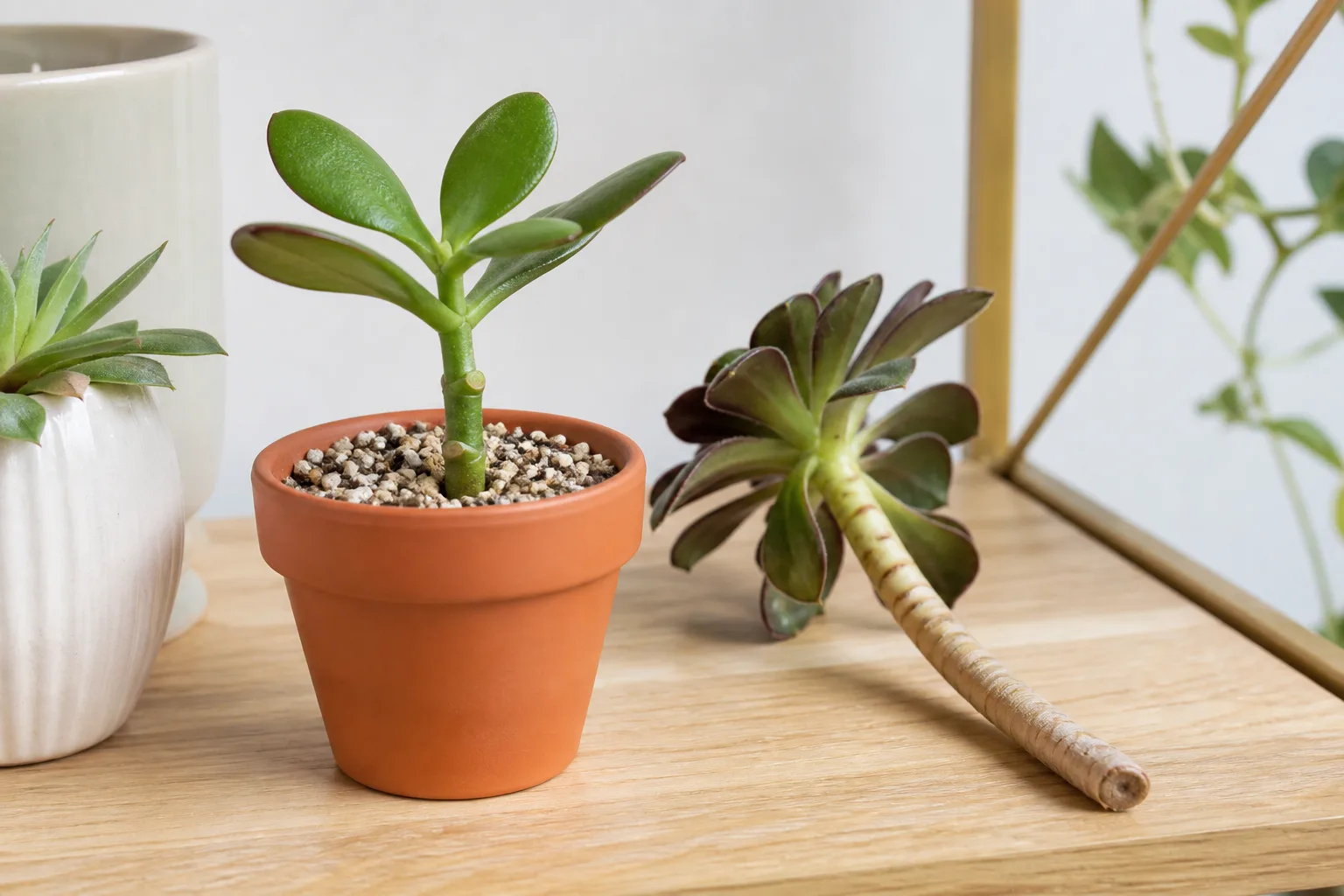
Set the cutting in a warm, dry, shaded place with good airflow. Wait until the cut end forms a dry, sealed callus; the time can range from a few days to longer for a thick stem, so judge the cut rather than relying on a fixed number of hours. Planting a wet cut directly into damp soil invites rot at the wound.
Once sealed, insert the lower end into a small pot of dry, gritty mix and support the stem so it does not wobble. Place it in bright indirect light while roots begin to form, not in harsh sun or a sealed humidity bag. Keep the medium barely dry at first; then give a small amount of water around the edge only after the cutting is stable and the mix has dried. Rooting is gradual, so resist tugging it up to check progress. When you see firm new growth, transition it toward stronger light a little at a time.
Division may be possible if a mature plant has naturally formed separate rooted crowns, but it is not the default method. Slipper plants grow slowly, and levering apart a woody crown can injure the roots or leave divisions too small to establish. If you try it, work during warm active growth, preserve substantial roots on each section, use dry free-draining mix, and handle the sap precautions as carefully as you would for a cutting. Seed is another possibility when a plant sets viable seed, but it is slower and less predictable than taking a healthy stem cutting; do not sow seed expecting a quick flowering plant.
Repot a crowded plant without disturbing it often
Repot only when roots have filled the pot, drainage has become poor, the plant is unstable, or the old mix stays wet much longer than it used to. A slipper plant does not need a large pot simply because its stems are tall. Move up by one modest size, use a container with a drainage hole, and keep the woody base at its previous soil level rather than burying it deeply.
Let the mix dry before repotting so the root ball is easier to handle and less likely to tear. Thick gloves, long sleeves, and a folded towel or blunt tongs help steady the plant without squeezing stems. After repotting, keep it in bright shade briefly while disturbed roots settle, then return it gradually to stronger sun; avoid a heavy watering immediately if roots were damaged or the mix is already moist.
Diagnose soft, yellow, or falling stems
A few tiny leaves appearing and dropping is part of the plant’s sparse foliage habit. Firm green stems are more informative than short-lived leaves. If stems are turning yellow or pale across the plant, consider inadequate light, cold stress, or roots that stay wet; check the whole plant and the soil before deciding which is most likely.
Soft, dark, or collapsing tissue at the base points to a more urgent moisture or rot problem than a firm stem with a dry surface blemish. Stop watering, remove the plant from standing water, and inspect the mix and roots. If the crown is firm and only one section has rotted, use a clean blade to remove damaged tissue above the affected area and consider taking healthy cuttings; if rot reaches the woody base and roots, recovery is less certain.
Shriveled stems can indicate prolonged dryness, but do not respond by soaking a plant that is sitting in wet mix. Check whether water is reaching and draining from the root ball. A hydrophobic mix may shed water around the sides, while a pot without an open drainage hole can remain saturated; fix that setup before adjusting the amount or frequency of water.
Check for pests and disease
Inspect stem joints and the base of the plant for mealybugs, scale, or fine webbing. Mealybugs can look like white cotton tucked into joints; scale appears as small fixed bumps; spider mites may leave stippling and delicate webbing. A small hand lens and a slow inspection are more useful than spraying the entire plant based on one speck.
Isolate a container plant if you find pests, then remove visible insects with a cotton swab or soft brush. For any pesticide or soap product, check that its label allows use on succulents and follow the label exactly; some sprays can mark or burn stems in hot direct sun. Recheck new growth over the next few weeks, since one cleaning rarely catches every hidden insect. Persistent dampness is more likely to create root or stem trouble than a typical foliage disease, so improve airflow and drainage before reaching for fungicide.
Handle the milky sap safely
Slipper plant is a Euphorbia and releases milky latex when a stem is broken or cut. Treat that sap as an irritant: wear gloves and eye protection for pruning or propagation, wash tools and exposed skin, and keep cuttings away from children and animals. Do not assume “succulent” means safe to chew.
The ASPCA lists pencil cactus (Euphorbia tirucalli) as toxic to dogs, cats, and horses because of irritant sap; that is a different Euphorbia species, so its database entry is not a species-specific toxicity test for slipper plant. Still, keeping pets from chewing any Euphorbia and contacting a veterinarian or animal poison service after a suspected ingestion is the cautious choice. (ASPCA pencil cactus listing)
Conclusion
Grow slipper plant where its roots can dry and its stems can receive strong light: a sunny, sharply drained outdoor site in a warm climate, or a bright container you can shelter from cold and winter rain. Water only after the root zone has dried, use fertilizer sparingly, and prune selectively rather than on an annual schedule.
When the plant looks stressed, check stem firmness, light, drainage, and the recent weather before changing several things at once. That simple sequence protects the slow-growing plant, helps you act before rot advances, and makes cuttings and routine care safer for everyone nearby.